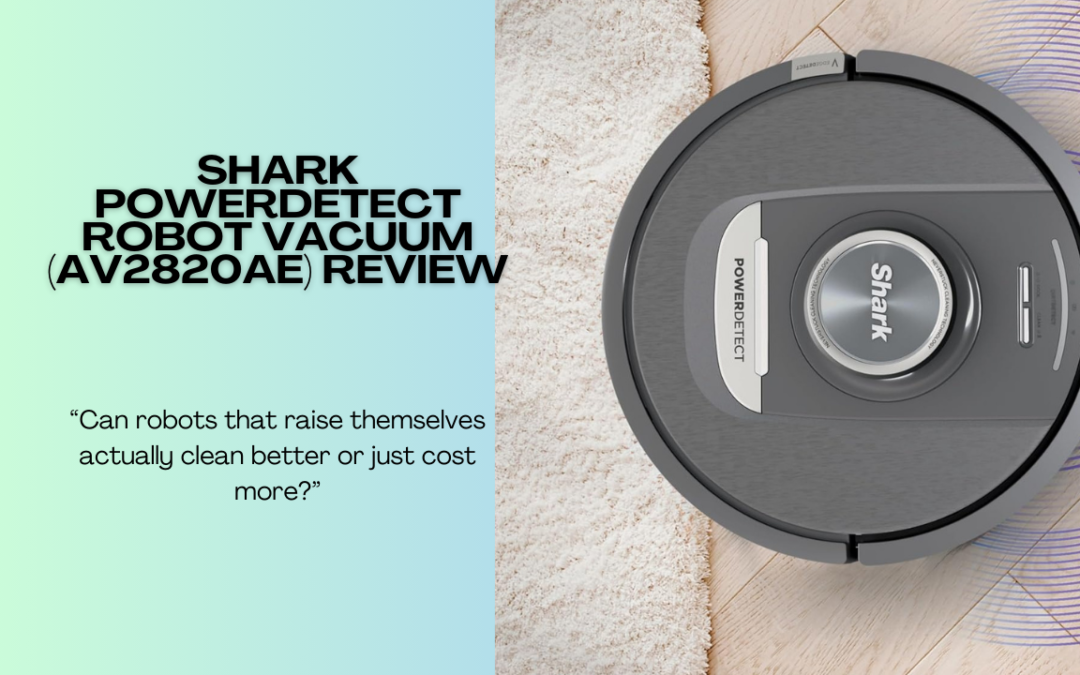
Shark AV2820AE Robotic Vacuum: PowerDetect Worth $800?
Picture this scene from last Tuesday evening. I’m attempting to host a dinner party, the doorbell’s about to ring, and my supposedly “smart” robot vacuum sits wedged under the sofa. Again. It’s emitting that pathetic beeping sound signalling distress, completely oblivious that its entire purpose involves autonomous cleaning without human intervention. I’m crawling on hands and knees in dress clothes, fishing out this expensive disc whilst silently cursing the manufacturer’s optimistic claims about obstacle navigation. This recurring nightmare drove me to examine the Shark Robotic Vacuum Cleaner, specifically the PowerDetect Robot Vacuum model AV2820AE.
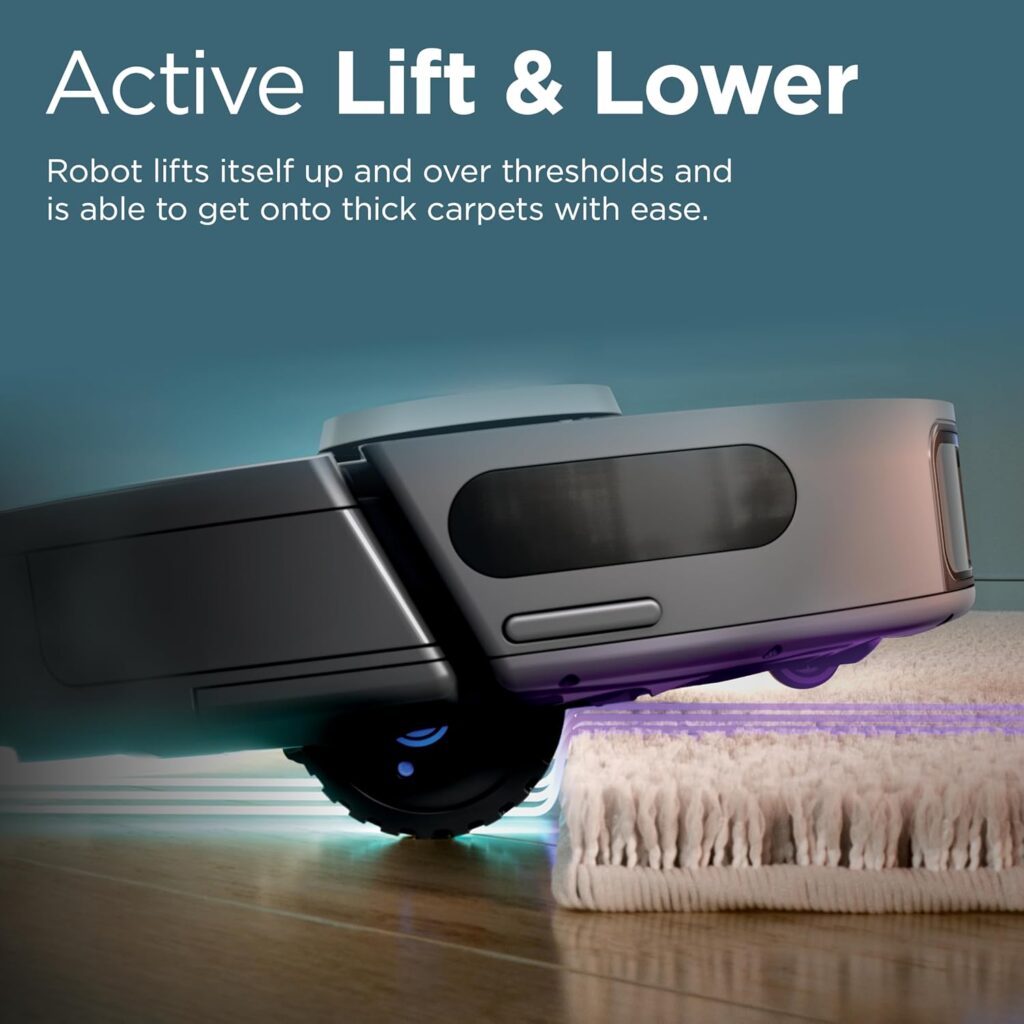
Shark boldly claims their NeverStuck Technology actually lifts the robot’s body to climb over obstacles rather than simply attempting smarter navigation. The concept seemed simultaneously brilliant and potentially gimmicky. Could a robot vacuum that physically raises itself genuinely solve the stuck-under-furniture problem plaguing every robot cleaner I’d previously owned?
What intrigued me specifically about Shark’s PowerDetect approach involved their three-pronged detection strategy. Rather than just mapping rooms, this vacuum supposedly detects dirt levels automatically, recognises different floor types, and uses air jets to extract debris from corners. The sixty-day bagless self-empty base eliminates bag replacement costs whilst maintaining HEPA filtration. The odour neutraliser promises fresher-smelling homes rather than the musty vacuum smell developing in traditional bases. At $799 MSRP (frequently discounted to $500-700), the pricing positions it below premium iRobot models whilst significantly exceeding budget alternatives. If you’re comparing different robot vacuum options and want to see how self-emptying models with advanced navigation stack up, check out our guide to the best robot vacuums for comprehensive comparisons.
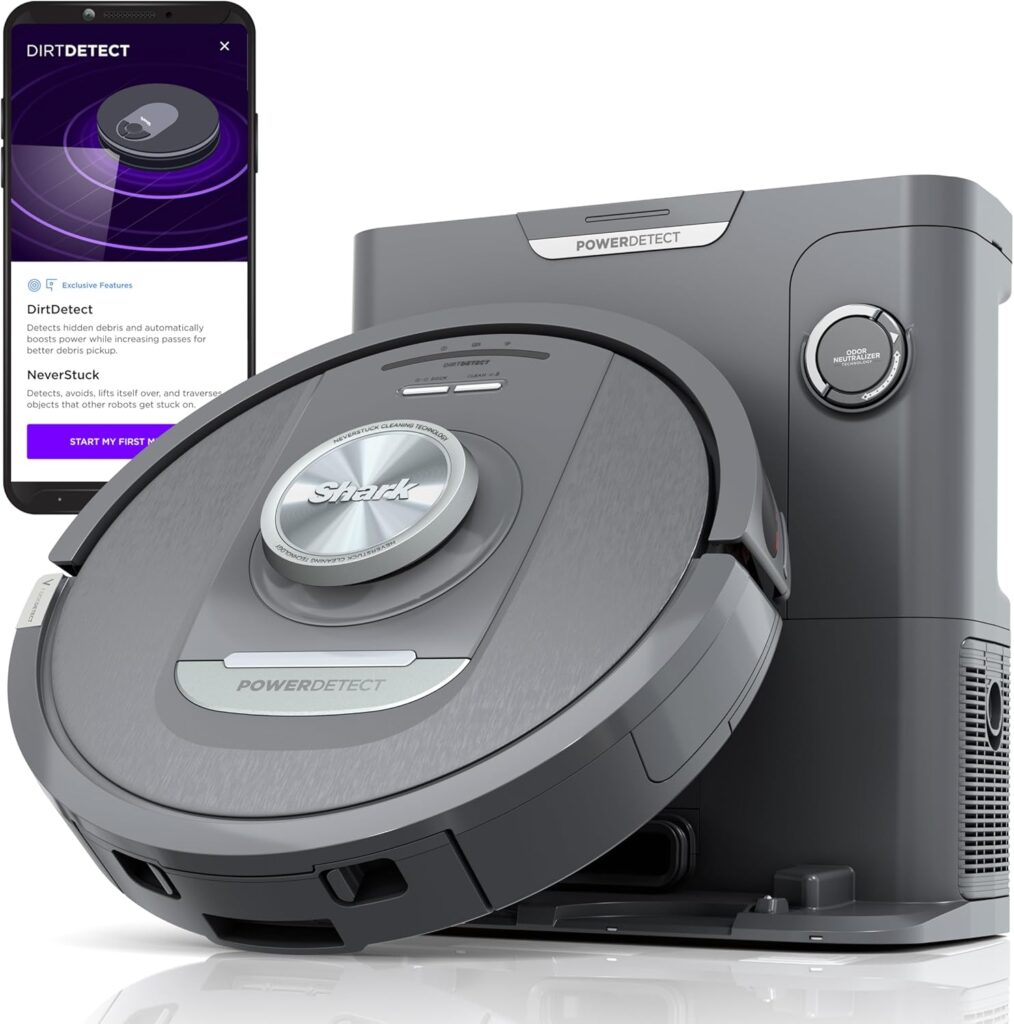
The specifications looked promising on paper. One hundred minutes of runtime covering substantial floor areas. Three intelligent detection technologies are adapting to different surfaces and mess levels. Self-emptying functionality prevents weekly dustbin contact. HEPA filtration captures allergens effectively. Advanced 3D object detection, navigating around obstacles precisely. But I’d learned through painful experience that robot vacuum marketing frequently promises autonomous perfection whilst delivering a frustrating reality requiring constant intervention.
I’ve now spent ten weeks using the Shark PowerDetect daily across my entire home. I’ve tested it on hardwood floors, medium-pile carpet, area rugs, and tile. I’ve deliberately created challenging scenarios, including scattered cereal, pet hair accumulation, and threshold obstacles. I’ve monitored the NeverStuck lifting mechanism’s effectiveness religiously. I’ve experienced both the convenience of genuine autonomy and the frustration when technology doesn’t perform as advertised.
This review represents genuine extended ownership, not a promotional weekend trial. I’ll share what genuinely impressed me about this robot vacuum, what disappointed me, and most importantly, whether spending $500-800 on a self-lifting, self-emptying robot cleaner makes practical sense when quality alternatives without these features cost significantly less.
See Where The Shark PowerDetect Robot Vacuum Ranks On The List Of Vacuums For Hardwood Flooring
First Impressions and Unboxing
The Shark PowerDetect arrives in substantial packaging using photographic graphics showcasing the robot and self-empty base prominently. The box uses adequate protection without excessive waste. Opening reveals components packed methodically with formed cardboard inserts preventing movement during shipping. Shark clearly invested reasonable effort in presentation, matching the premium price point.
Inside, you’ll find the PowerDetect robot vacuum, XL HEPA self-empty base, two side brushes, odour neutraliser technology cartridge, charging cable, and user manual. Everything arrived undamaged in my shipment. The instruction manual uses clear photographic steps rather than confusing diagrams. Shark includes setup guide stickers attached directly to relevant components, simplifying initial configuration.
My first handling of the robot unit revealed solid build quality immediately. The vacuum measures approximately 12.6 inches in diameter by 3.5 inches tall, fitting under most furniture whilst maintaining a substantial presence. The black finish with silver accents looks modern without appearing cheap. The materials use quality plastics throughout with reasonable thickness, suggesting durability.
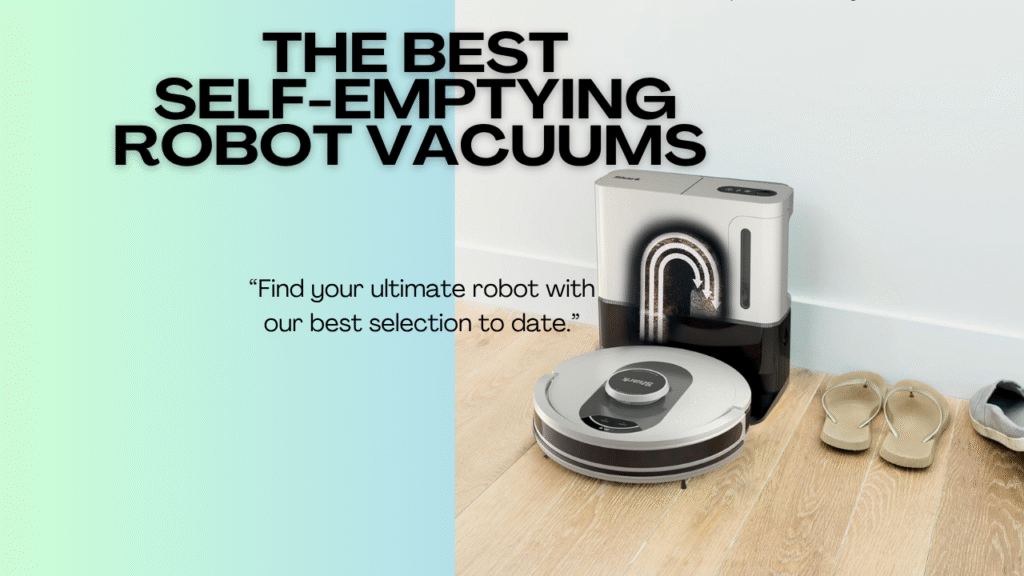
The self-empty base commands significant presence. The tower design measures approximately 14 inches wide by 16 inches deep by 16 inches tall. This footprint exceeds compact robot vacuum bases but proves manageable for corner or cupboard placement. The base feels stable without tipping when the robot docks. The bagless design eliminates the translucent bag visibility found in some competitors, using internal cyclonic separation instead.
Assembly required approximately twenty minutes, including base positioning and initial charging. The side brushes attach to the robot’s underside through simple twist-lock mechanisms. The odour neutraliser cartridge slides into a dedicated slot in the self-empty base. The robot docked onto the charging contacts smoothly on the first attempt. The charging indicators illuminated immediately, confirming proper connection.
The included accessories feel reasonably robust for the price point. The side brushes use a three-spoke design with flexible rubber fins. The odour neutraliser cartridge uses a replaceable design, though Shark doesn’t prominently advertise replacement availability or pricing. First impressions suggested Shark engineered a serious cleaning robot rather than a gimmicky gadget chasing marketing buzzwords.
Design and Build Quality
The Shark PowerDetect uses quality ABS plastic throughout its construction, immediately distinguishing it from budget robot vacuums. The top surface uses a glossy black finish that shows fingerprints readily, but looks premium when clean. The bumper uses matte black plastic with integrated sensors for obstacle detection. After ten weeks of daily use, including numerous furniture collisions, the housing shows minimal cosmetic damage beyond light scratching on the bumper.
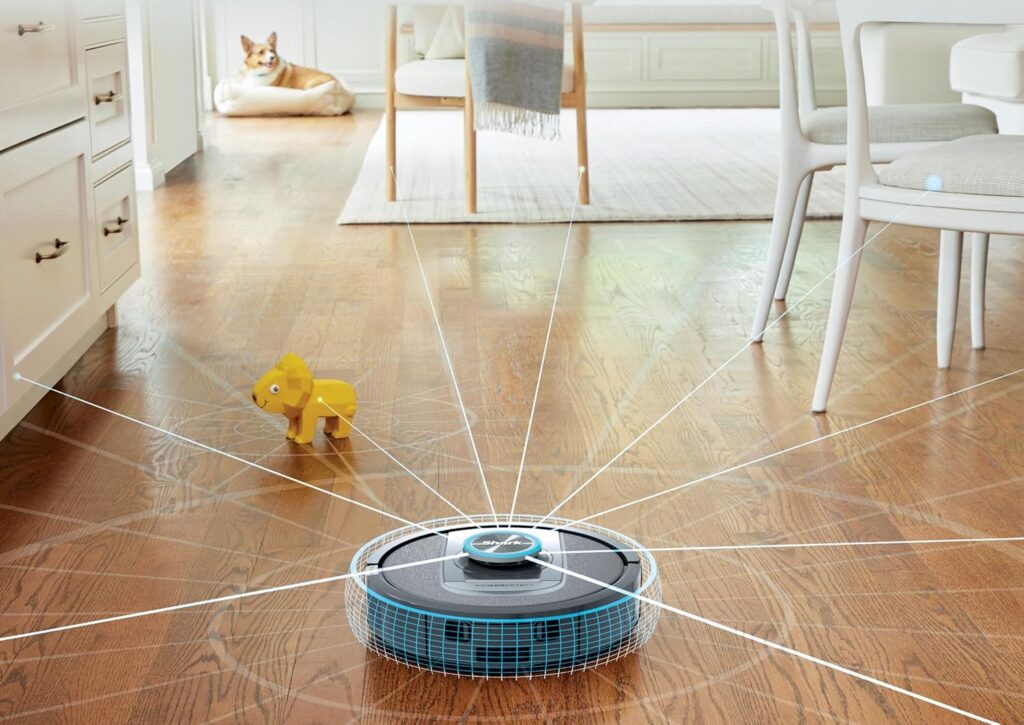
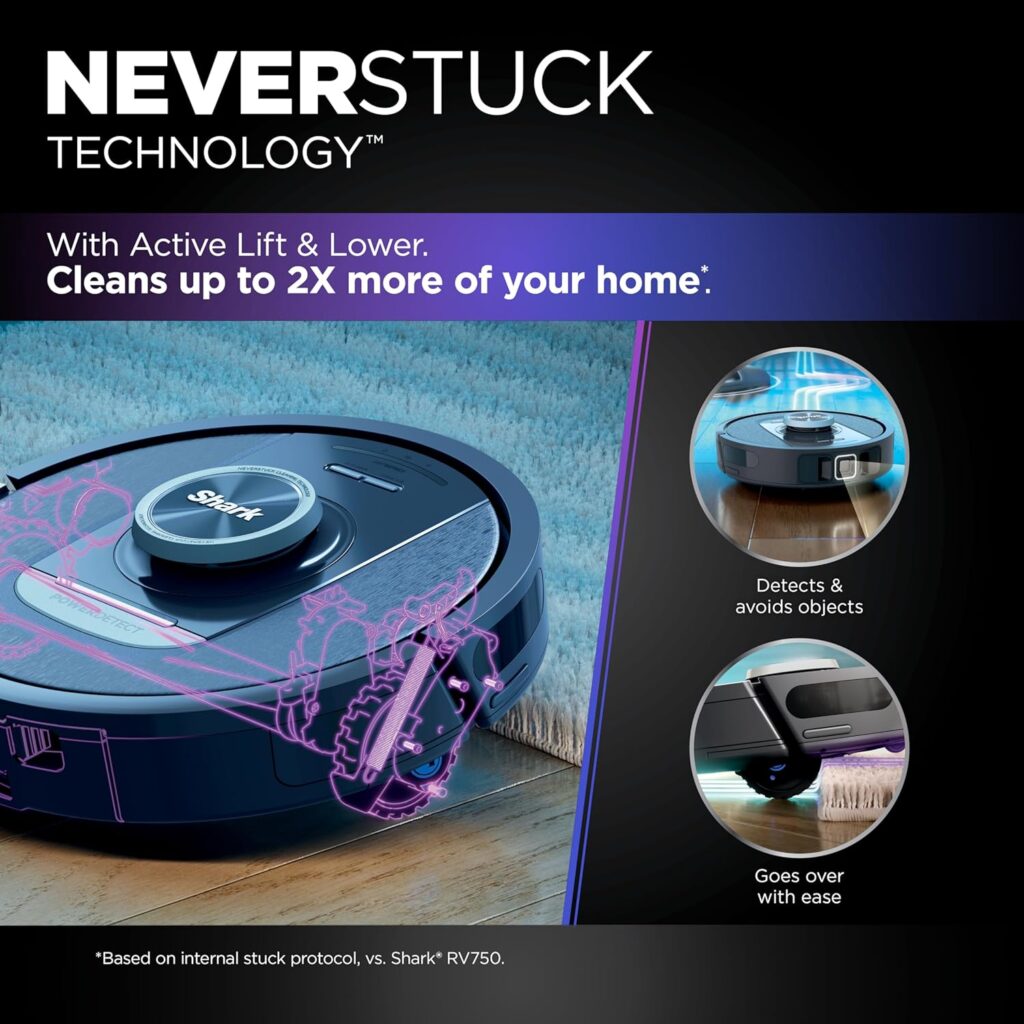
The robot’s profile deserves specific mention. At 3.5 inches tall, it clears under most furniture, whilst the NeverStuck mechanism adds approximately half an inch when fully extended. This adjustable height represents the PowerDetect’s defining design element. The lifting mechanism uses robust engineering with visible suspension components, allowing vertical movement. The wheels use a large diameter, providing excellent obstacle-climbing capability even without the lifting function.
The dustbin design uses top-loading access through a lift-up lid. The bin capacity measures approximately 0.5 litres, adequate for several cleaning sessions before self-emptying. The bin features a washable filter requiring periodic maintenance. The dustbin removes easily for manual cleaning when needed, though the self-empty function largely eliminates this requirement.
The self-empty base uses tower design integrating charging contacts, suction mechanism, cyclonic separation, HEPA filtration, and debris storage into a cohesive unit. The base features a removable dustbin holding accumulated debris. The bagless design uses cyclonic separation, capturing debris in a sealed container rather than disposable bags. The odour neutraliser compartment sits at the base’s top, dispersing freshening agents during self-empty cycles.
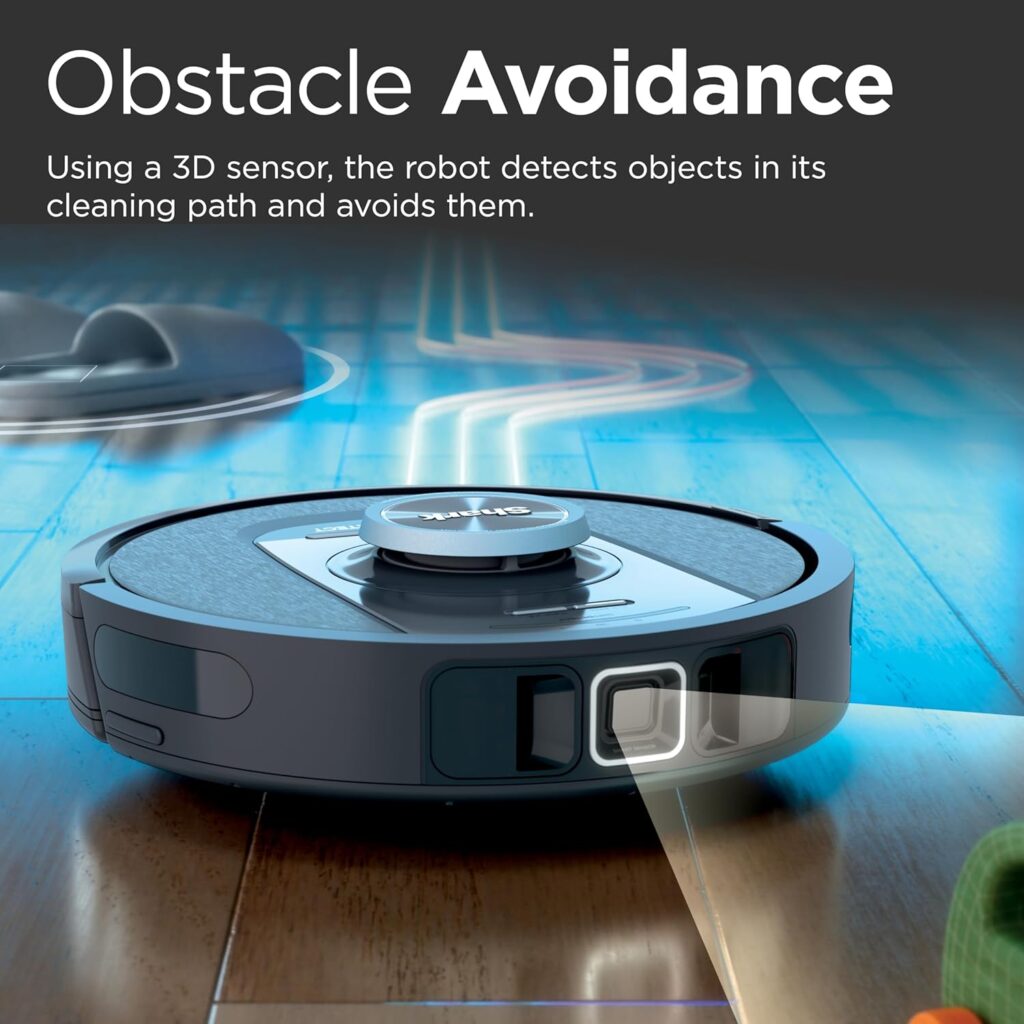
The sensor array includes multiple components. The top housing features a rotating LiDAR sensor creating room maps. The front bumper integrates infrared sensors for obstacle detection. The underside features cliff sensors preventing stair falls. The brush assembly includes sensors that detect floor type and dirt levels. This comprehensive sensor suite enables the detection features Shark markets prominently.
Durability observations after ten weeks reveal good wear resistance. The side brushes show slight bristle wear but maintain effectiveness. The main brush roll remains tangle-free thanks to the rubber fin design. The wheels rotate freely without developing squeaks. The charging contacts show no corrosion. Overall build quality meets expectations for the $500-800 price point, suggesting a two-to-three-year minimum service life with proper maintenance.
Key Features
The NeverStuck Technology represents the PowerDetect’s most distinctive feature. Rather than simply attempting smarter navigation around obstacles, the robot physically lifts its body approximately half an inch using suspension mechanisms. This active lifting allows climbing over thresholds, power cords, and onto thick carpet that would trap standard robot vacuums. During testing, I’ve watched it lift and climb over obstacles that previously required manual rescue. According to Shark’s official product page, this technology reduces stuck incidents by up to 50% compared to earlier Shark models.
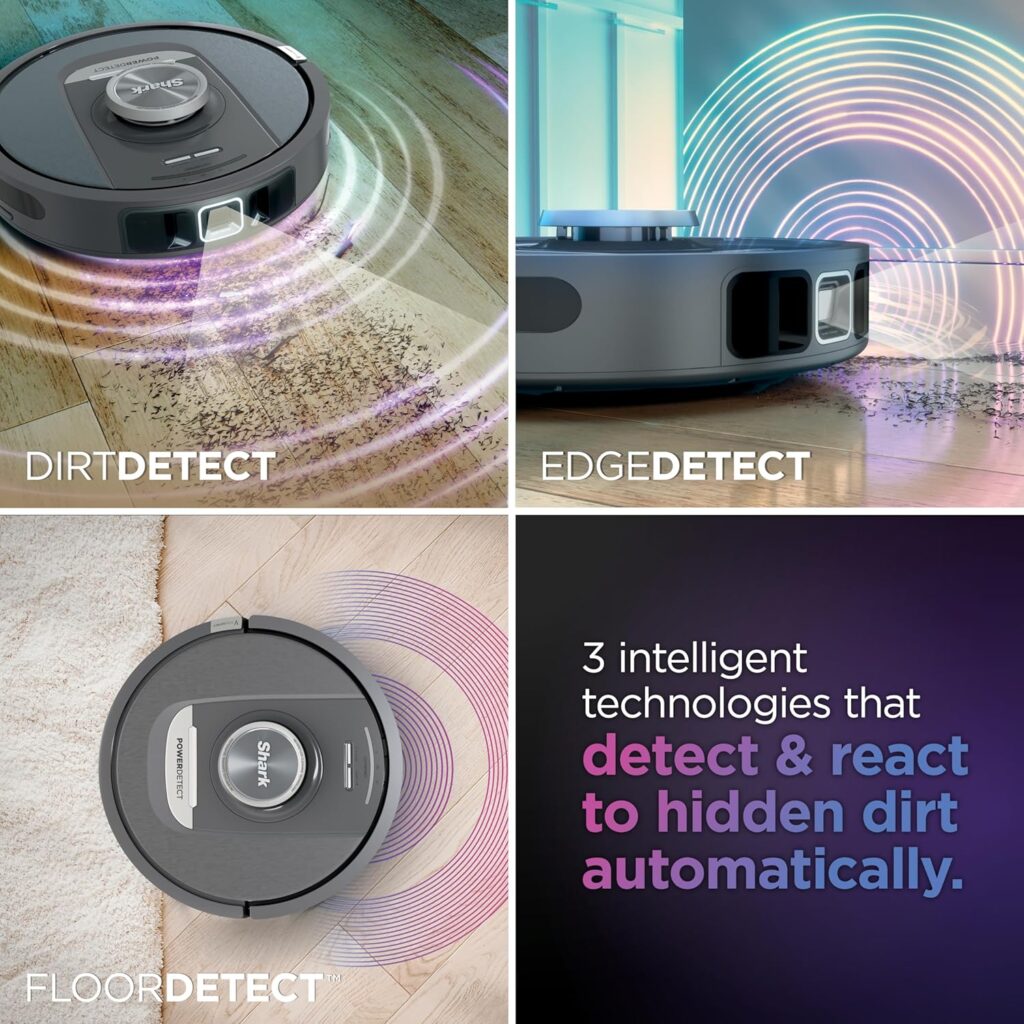
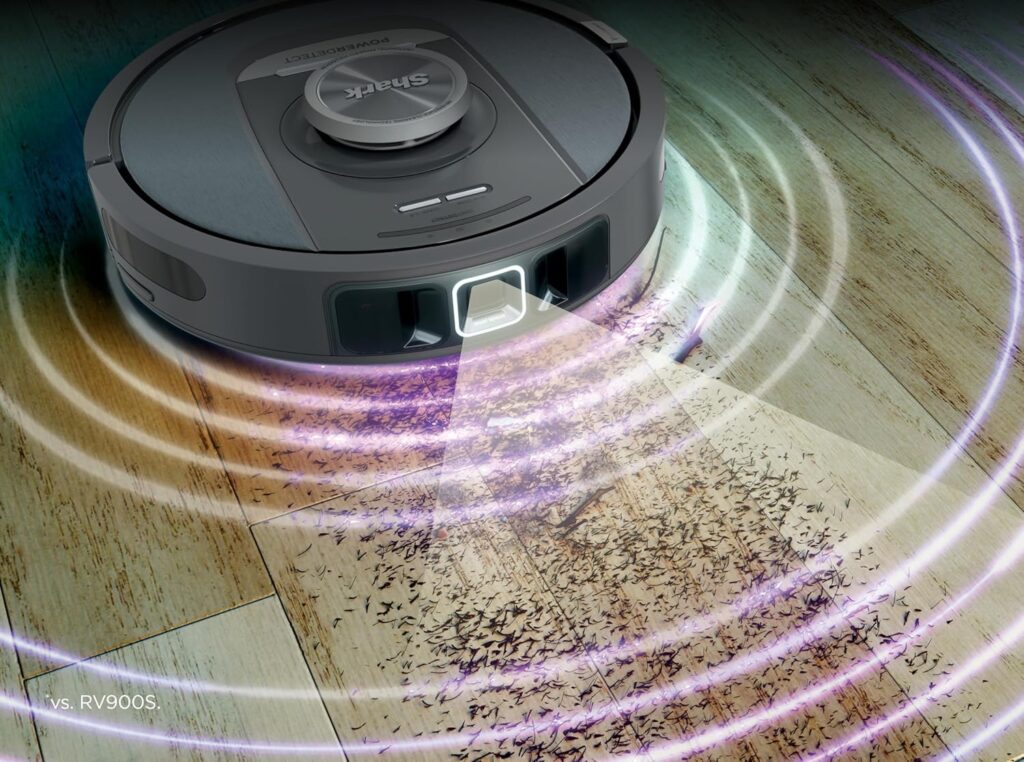
The DirtDetect Technology senses debris concentration automatically through infrared sensors, monitoring the dustbin fill rate. When the system detects heavy soiling, the robot automatically increases suction power and vacuums in figure-eight patterns, taking multiple passes over concentrated mess areas. The robot’s indicator lights flash purple during DirtDetect activation, providing visual confirmation of boosted cleaning. This adaptive approach proves genuinely useful for areas accumulating heavier debris, like entryways.
The EdgeDetect feature uses air jets positioned around the robot’s perimeter to blow debris from corners and edges into the vacuum’s cleaning path. Traditional robot vacuums struggle with corner cleaning as circular bodies can’t reach tight angles. The air jet system compensates by forcibly moving debris toward the centre brush. During testing, corner cleaning improved noticeably compared to previous robots, though manual corner cleaning occasionally remains necessary.
The FloorDetect Technology identifies surface types automatically, adjusting brush roll engagement and suction accordingly. Hardwood receives lighter brush contact, preventing scratching, whilst carpet triggers increased agitation for deeper cleaning. The transitions between surfaces occur smoothly without manual mode changes. The system works reliably, though the practical cleaning difference proves subtle rather than dramatic.
See Where The Shark PowerDetect Robot Vacuum Ranks On The List Of Vacuums For Hardwood Flooring
The sixty-day bagless self-empty base automatically empties the robot’s dustbin after each cleaning session. The base uses cyclonic separation, capturing debris in an internal container rather than disposable bags. The HEPA filtration system captures 99.97% of particles down to 0.3 microns, preventing allergen release during emptying. The odour neutraliser cartridge disperses freshening agents, reducing musty vacuum smell. For households with pets or allergies, this comprehensive filtration proves valuable.
The one-hundred-minute runtime provides adequate coverage for medium to large homes. The robot automatically returns to base when the battery depletes, recharges, and resumes cleaning where it stopped. This recharge-and-resume functionality enables complete home cleaning even when runtime proves insufficient for single-session completion. The battery uses lithium-ion technology, maintaining consistent power throughout the charge cycle.
The 3D object detection uses advanced sensors to identify and avoid obstacles like pet dishes, shoes, and cords with reasonable precision. The system works significantly better than basic infrared bump sensors, though occasional navigation confusion still occurs. The mapping accuracy impresses, creating detailed floor plans through the SharkClean app. Room designation and no-go zone setting prove straightforward.
The voice assistance integration with Amazon Alexa allows voice-controlled cleaning commands. Say “Alexa, ask Shark to start cleaning,” and the robot begins its cycle. The integration works reliably, though the SharkClean app provides more comprehensive control options. The app functionality proves adequate without matching premium competitors’ feature depth.
Performance and Real-World Testing
The Shark PowerDetect’s performance exceeded my expectations across most scenarios, whilst revealing limitations prospective buyers should understand. On sealed hardwood floors, it excels absolutely. The combination of adequate suction and adaptive brush roll engagement removes dust, debris, pet hair, and lightweight particles effectively. The side brushes sweep material toward the centre brush competently.
Tile and laminate performance mirrors hardwood results. The suction power handles grout lines adequately, removing surface dirt and light debris. The FloorDetect system recognises tile surfaces, adjusting cleaning parameters appropriately. The robot transitions between different hard floor materials seamlessly without intervention. The edge cleaning using air jets improves corner performance noticeably.
Medium-pile carpet cleaning delivers mixed results. The robot handles surface debris and embedded dust adequately on low to medium-pile carpets. Pet hair gets removed cleanly without excessive effort. However, deeply embedded dirt in thick plush carpets challenges the suction power. The NeverStuck lifting mechanism helps climb onto thick carpet, but the cleaning performance doesn’t match premium alternatives offering stronger suction.
Pet hair handling is where this vacuum performs well. The rubber fin brush roll design prevents hair wrap-around frustration. After cleaning multiple rooms containing cat and dog hair, the brush roll remains remarkably clear. The few strands that do accumulate remove easily without scissors. For pet owners, this feature provides genuine value.
The NeverStuck Technology proves genuinely effective at obstacle climbing. I’ve watched the robot lift itself over power cords, climb onto area rugs with raised edges, and navigate thick carpet transitions that trapped previous robots. The lifting mechanism works reliably, though extremely high thresholds (over one inch) still cause occasional problems. The reduction in stuck incidents dramatically improves autonomous cleaning capability.
Battery performance aligns with Shark’s one-hundred-minute runtime claim in real-world testing. Standard cleaning mode consistently delivers 90-100 minutes of runtime. High-power mode triggered by DirtDetect reduces runtime proportionally. For my 2,200-square-foot home’s mixed flooring, the runtime covers complete cleaning with 15-20% battery remaining. Larger homes might require the recharge-and-resume functionality.
The self-emptying function proves genuinely effective. The automatic emptying process extracts 95-98% of collected debris reliably. The base operates loudly during emptying, producing approximately fifteen seconds of elevated noise similar to a shop vacuum. The bagless design eliminates replacement bag costs, though the internal container requires periodic emptying approximately every 45-60 days.
The DirtDetect Technology works as advertised. I deliberately scattered cereal in the kitchen to test the system. The robot detected the concentrated debris, flashed purple indicators, and performed figure-eight patterns, taking multiple passes. The area emerged noticeably cleaner than the surrounding floors, receiving standard single-pass cleaning.
Navigation and mapping accuracy impress consistently. The LiDAR-based mapping creates detailed floor plans quickly. Room designation through the app allows targeted cleaning of specific areas. The 3D object detection avoids most obstacles reliably, though the robot occasionally gets confused by clustered furniture or hanging tablecloths. The obstacle avoidance significantly exceeds budget models, whilst not quite matching premium iRobot precision.
Noise levels register as moderate to loud. Standard cleaning produces sound comparable to quality cordless vacuums. The self-emptying process generates significantly louder noise for approximately fifteen seconds. Some users report finding the noise disruptive, though I’ve adapted to the sound levels. The vacuum proves noticeably louder than premium quiet-focused alternatives.
Technical Specifications
- Dimensions (Robot): Approximately 12.6″ diameter × 3.5″ tall
- Dimensions (Base): Approximately 14″ wide × 16″ deep × 16″ tall
- Weight (Robot): Approximately 8.5 lbs
- Runtime: Up to 100 minutes per charge
- Charging Time: Approximately 3-4 hours
- Self-Empty Base Capacity: 60 days (approximately 1.5-2 litres)
- Robot Dustbin Capacity: Approximately 0.5 litres
- Filtration: HEPA system capturing 99.97% of particles (0.3 microns)
- Navigation: LiDAR-based mapping with 3D object detection
- Connectivity: Wi-Fi, SharkClean app (iOS/Android), Amazon Alexa compatible
- Climbing Ability: NeverStuck Technology lifting up to 0.5-0.75 inches
- Floor Types: Hardwood, tile, laminate, vinyl, low-to-medium-pile carpet
- Sensors: DirtDetect (infrared), FloorDetect, EdgeDetect (air jets), cliff sensors
- Warranty: 1-year limited warranty
- Colour Options: Black with silver accents
- Additional Features: Recharge-and-resume, scheduled cleaning, room mapping
The one-hundred-minute runtime represents adequate performance for medium to large homes. For context, robot vacuums typically provide 60-120 minutes depending on battery capacity and cleaning intensity. The PowerDetect’s runtime covers approximately 2,000-2,500 square feet of flooring comfortably on standard mode.
The sixty-day self-empty capacity proves genuinely convenient. Traditional robot vacuums require dustbin emptying after 2-3 cleaning sessions. The PowerDetect’s bagless base reduces manual intervention to approximately monthly rather than weekly. The bagless design eliminates ongoing bag replacement costs, averaging $20-30 annually with bagged alternatives.
The 8.5-pound robot’s weight feels substantial for a robot vacuum. The weight positions mass low in the chassis for stability. The NeverStuck lifting mechanism requires robust construction supporting the robot’s weight plus lifting force. The weight proves manageable when carrying between floors, but exceeds lightweight budget alternatives.
Accessories and Tools Included
The Shark PowerDetect includes a focused accessory package supporting essential robot vacuum functionality. The two side brushes use a three-spoke design with flexible rubber fins sweeping debris toward the centre brush. The brushes attach to the robot’s underside through twist-lock mechanisms, allowing easy replacement. The rubber fin design resists tangling better than traditional bristle side brushes.
The odour neutraliser technology cartridge sits in the self-empty base, dispersing freshening agents during emptying cycles. The cartridge uses a replaceable design, though Shark doesn’t prominently advertise replacement availability, pricing, or lifespan. The freshening effect proves subtle rather than dramatic, preventing musty vacuum smell without creating artificial fragrance.
The XL HEPA self-empty base provides stable robot storage whilst maintaining battery charge and automatic debris collection. The base uses substantial construction without tipping when the robot docks. The bagless design eliminates ongoing bag replacement costs. The integrated debris container requires manual emptying approximately every 45-60 days, depending on home size and cleaning frequency.
See Where The Shark PowerDetect Robot Vacuum Ranks On The List Of Vacuums For Hardwood Flooring
The charging cable uses an adequate length reaching standard electrical outlets. The base requires permanent positioning near outlets rather than using rechargeable batteries. The setup restricts placement flexibility compared to cordless charging solutions.
The accessory package lacks certain items found with premium alternatives. There’s no spare brush roll included. There’s no HEPA filter cleaning brush. There are no boundary strips for pre-mapping no-go zones. There’s no remote control for manual navigation. The focused selection maintains reasonable pricing whilst providing essential components.
Replacement part availability appears adequate through Shark’s website and major retailers. Replacement side brushes cost approximately $15-20 for multi-packs. Replacement filters cost about $15-20. The main brush roll costs approximately $30-40. Odour neutraliser cartridges prove difficult to locate with unclear pricing. These replacement costs seem reasonable for long-term robot vacuum ownership. According to the Environmental Protection Agency’s guidance on indoor air quality, proper HEPA filter maintenance significantly impacts allergen control effectiveness.
Pros
- Genuine NeverStuck Lifting Technology: The active body-lifting mechanism genuinely reduces stuck incidents. The robot climbs over thresholds, power cords, and onto thick carpets that would trap standard models, dramatically improving autonomous cleaning capability.
- Effective Bagless Self-Empty Base: The sixty-day capacity with bagless design eliminates both frequent manual emptying and ongoing bag replacement costs. The HEPA filtration prevents allergen release during automatic emptying cycles.
- Comprehensive Detection Technologies: The combination of DirtDetect, FloorDetect, and EdgeDetect genuinely adapts cleaning behaviour to different scenarios. The automatic power boosting for concentrated debris proves particularly useful.
- Extended One-Hundred-Minute Runtime: The battery capacity covers medium to large homes comfortably on a single charge. The recharge-and-resume functionality enables complete cleaning even when runtime proves insufficient initially.
- Excellent Hard Floor Performance: The suction power and adaptive brush engagement excel on hardwood, tile, and laminate. The side brushes and edge air jets improve corner cleaning significantly.
- Advanced Mapping and Navigation: The LiDAR-based mapping creates detailed floor plans quickly. The 3D object detection avoids obstacles significantly better than budget models, reducing intervention requirements.
- Anti-Tangle Brush Roll Design: The rubber fin brush roll genuinely prevents pet hair wrap-around frustration. Maintenance proves minimal compared to traditional bristle brushes, requiring constant hair cutting.
Cons
- Moderate Carpet Cleaning Performance: Whilst adequate for low-to-medium-pile carpets, the suction power struggles with deeply embedded dirt in thick plush carpeting. Homes with extensive thick carpeting need stronger alternatives.
- Loud Self-Emptying Process: The base generates significant noise for approximately fifteen seconds during automatic emptying. The sound level exceeds standard vacuum operation noticeably, potentially disturbing households.
- Limited App Functionality: The SharkClean app provides basic control without matching premium competitors’ feature depth. Advanced scheduling, detailed cleaning reports, and comprehensive customisation are limited.
- Occasional Navigation Confusion: Despite advanced sensors, the robot occasionally gets confused by clustered furniture, hanging tablecloths, or complex layouts. The navigation proves good but not perfect.
- Unclear Odour Cartridge Replacement: Shark doesn’t prominently advertise odour neutraliser cartridge replacement availability, pricing, or expected lifespan. The lack of transparency creates uncertainty about ongoing costs.
Who This Product Is Best For
The Shark PowerDetect suits homeowners with predominantly hard flooring seeking reliable autonomous cleaning with minimal intervention. If you have 1,500-2,500 square feet of hardwood, tile, or laminate with low-to-medium-pile area rugs, this robot delivers excellent value. The NeverStuck lifting mechanism dramatically reduces the frustrating stuck-rescue cycles plaguing standard robot vacuums.
Busy professionals valuing autonomous operation appreciate the extended runtime and self-empty convenience. The sixty-day bagless base capacity reduces maintenance to approximately monthly rather than weekly. The recharge-and-resume functionality enables complete home cleaning without monitoring. If your schedule prevents regular manual vacuuming, autonomous robot cleaning proves genuinely valuable.
Pet owners benefit from the anti-tangle brush roll and comprehensive HEPA filtration. The rubber fin design prevents hair wrap-around, whilst the self-empty base with odour neutraliser manages pet-related debris and smell effectively. For households with cats or dogs, these features provide practical daily value.
Households with multiple floor levels or threshold transitions particularly benefit from NeverStuck Technology. The active lifting mechanism climbs obstacles that would strand standard robots. For homes with sunken living rooms, thick carpet transitions, or numerous thresholds, the climbing capability proves essential. If you’re comparing robot vacuums across different navigation technologies and price points, see how it ranks in our best self-emptying robot vacuums list for comprehensive value analysis.
However, this vacuum isn’t suitable for everyone. Homes with predominantly thick plush carpeting should look elsewhere. The suction power handles light carpet cleaning adequately, but won’t match higher-powered alternatives for deep pile maintenance. Homes requiring maximum carpet cleaning need different solutions.
Alternative Uses and Versatility
The Shark PowerDetect’s design focuses specifically on autonomous floor cleaning with limited alternative applications compared to manual vacuums. However, the spot-cleaning function enables targeted debris removal. Through the SharkClean app, you can direct the robot to clean specific small areas rather than entire rooms. This proves useful for quick kitchen spill cleanup or entryway dirt removal.
The scheduled cleaning functionality enables automated maintenance during specific times. Set the robot to clean daily whilst at work, preventing visible debris accumulation. The autonomous operation transforms floor maintenance from an active chore to a passive background task. I’ve established weekday morning cleaning schedules, maintaining consistently clean floors without manual intervention.
The room-specific cleaning allows focusing on high-traffic areas more frequently. Clean the kitchen and entryway daily, whilst scheduling less-frequented bedrooms weekly. This targeted approach optimises cleaning effort where needed most. The mapping accuracy makes room-specific scheduling genuinely practical.
The recharge-and-resume functionality enables multi-session deep cleaning. For particularly dirty conditions or extensive floor areas, the robot can clean for multiple runtime cycles with automatic recharging between sessions. This capability suits post-renovation cleanup or seasonal deep cleaning scenarios.
Maintenance cleaning between manual vacuum sessions represents another application. Use the robot for daily surface cleaning whilst performing thorough manual vacuuming weekly or monthly. The combination approach maintains consistently cleaner floors than either method alone.
Value for Money and Comparison
At $799 MSRP (frequently discounted to $500-700), the Shark PowerDetect occupies upper-mid-range pricing territory. This positions it below premium iRobot Roomba models ($800-1,400) whilst significantly exceeding budget alternatives ($200-400). The value proposition centres on NeverStuck Technology and bagless self-empty functionality rather than maximum cleaning power.
Comparing to similar products reveals competitive positioning. The iRobot Roomba j7+ costs $799-899, offering superior object detection and app functionality but lacking an active lifting mechanism. The Roborock S8 Pro Ultra costs $1,199-1,599, providing stronger suction and mopping capability but requiring more maintenance. The Eufy X10 Pro Omni costs $599-799, offering good value but less advanced obstacle navigation.
The premium pricing buys specific advantages. The NeverStuck active lifting genuinely reduces stuck incidents dramatically. The bagless self-empty eliminates ongoing bag costs. The comprehensive detection technologies adapt cleaning behaviour effectively. The extended runtime covers larger homes comfortably. Whether these features justify $500-800 depends on your home layout, floor types, and tolerance for robot intervention.
Long-term value considerations favour the PowerDetect through eliminating bag costs and reducing manual intervention. The bagless design saves approximately $20-30 annually compared to bagged alternatives. The reduced stuck incidents save time otherwise spent on rescues. The autonomous reliability proves particularly valuable for busy households. To see comprehensive comparisons across robot vacuum price tiers and feature sets, visit our complete guide to the best robot vacuums under $700.
Maintenance and Long-Term Ownership
Daily maintenance involves docking the robot after cleaning, triggering automatic self-emptying. This process requires no manual intervention beyond ensuring proper dock alignment. The robot returns automatically when the battery depletes or when cleaning is complete. The hands-off operation proves genuinely convenient.
Weekly maintenance includes side brush inspection for tangled debris. The rubber fin design resists tangling but occasionally captures hair or string around mounting points. Removal takes approximately thirty seconds. The sensors require periodic wiping to remove dust accumulation that might affect detection accuracy.
Monthly maintenance focuses on dustbin and filter cleaning. The robot’s internal dustbin requires rinsing despite self-empty functionality, as fine dust occasionally remains. The washable filter requires thorough rinsing and complete drying before reinstallation. The self-empty base’s internal container requires emptying approximately every 45-60 days, depending on home size.
The main brush roll requires periodic inspection and cleaning. The rubber fin design prevents most tangling, though debris occasionally accumulates. The brush roll removes easily for cleaning. Deep cleaning the robot’s sensors and charging contacts takes perhaps fifteen minutes monthly.
Replacement parts availability appears adequate through Shark’s website and Amazon. Side brushes cost approximately $15-20 for multi-packs lasting 3-6 months. Filters cost about $15-20, requiring replacement every 3-4 months. Main brush rolls cost $30-40, lasting 6-12 months. Batteries aren’t readily available as user-replaceable parts.
Common issues reported by users include occasional navigation confusion in complex layouts and loud self-emptying noise. Some users report Wi-Fi connectivity problems with the SharkClean app. The one-year warranty covers manufacturing defects but not consumable wear items.
Expected lifespan appears reasonable at 2-4 years with proper maintenance. The motors represent the most likely failure point. The lifting mechanism uses moving parts that potentially require service. Overall, the unit appears engineered for reasonable service life, matching the price point.
Reasons to Buy This Product
You should seriously consider the Shark PowerDetect if eliminating stuck-robot frustration appeals to you. The NeverStuck active lifting mechanism genuinely reduces rescue requirements dramatically. For homes with thresholds, thick carpets, or cluttered floors, this feature alone justifies consideration.
The bagless self-empty functionality provides genuine convenience without ongoing bag replacement costs. The sixty-day capacity reduces manual intervention to approximately monthly. For busy households, this time saving and elimination of consumable expenses provide practical value.
Homes with predominantly hard flooring spanning 1,500-2,500 square feet find optimal value. The cleaning performance excels on hardwood, tile, and laminate, whilst the one-hundred-minute runtime covers this area comfortably. The autonomous reliability transforms floor maintenance from an active chore to a passive background task.
Pet owners benefit from comprehensive features addressing pet-specific challenges. The anti-tangle brush roll prevents hair maintenance frustration. The HEPA filtration with an odour neutraliser manages allergens and smell effectively. The self-empty base prevents pet debris contact.
The comprehensive detection technologies genuinely adapt cleaning behaviour. DirtDetect automatically boosts power for concentrated messes. FloorDetect optimises performance across surface types. EdgeDetect improves corner cleaning through air jets. These adaptive features prove more than marketing hype.
See Where The Shark PowerDetect Robot Vacuum Ranks On The List Of Vacuums For Hardwood Flooring
Reasons to Skip This Product
You should look elsewhere if your home features predominantly thick plush carpeting. The suction power handles light carpet cleaning adequately but struggles with deeply embedded dirt in high-pile carpets. Homes requiring maximum carpet cleaning need higher-powered alternatives.
Noise-sensitive households should reconsider. The self-emptying process generates significant sound for approximately fifteen seconds per cycle. Whilst brief, the noise level exceeds standard vacuum operation noticeably. Extremely quiet-focused buyers need different solutions.
Budget-conscious buyers might find better value in standard robot vacuums without self-empty functionality. Quality non-self-emptying robots cost $300-500, offering 40-50% savings. The convenience premium must justify the additional expense.
Those requiring advanced app functionality should explore premium alternatives. The SharkClean app provides basic control without matching the iRobot or Roborock feature depth. Users wanting detailed cleaning reports, advanced scheduling, or comprehensive customisation need different platforms.
Extremely large homes exceeding 3,000 square feet might find the runtime limiting. The one-hundred-minute battery covers most homes, but extreme floor areas might require multiple recharge cycles. Homes with extensive square footage need to evaluate runtime requirements carefully. For comprehensive robot vacuum options handling various home sizes and floor types, visit our complete robot vacuum buying guide to find your perfect match.
Conclusion
The Shark Robotic Vacuum Cleaner, specifically the PowerDetect Robot Vacuum model AV2820AE, represents what happens when manufacturers focus on solving specific problems rather than attempting comprehensive perfection. After ten weeks of daily autonomous cleaning across my entire home, I’m genuinely impressed by how effectively the NeverStuck Technology eliminated my recurring stuck-robot frustration. The unit doesn’t attempt to compete with premium alternatives offering maximum suction power or comprehensive app ecosystems. Instead, it delivers outstanding value for the specific use case of reliable autonomous hard floor maintenance with minimal intervention.
The NeverStuck active lifting mechanism genuinely works as advertised. The robot climbs over obstacles that would strand standard models, dramatically reducing rescue requirements. The bagless self-empty base with sixty-day capacity eliminates both frequent manual emptying and ongoing bag replacement costs. The comprehensive detection technologies adapt cleaning behaviour effectively across different scenarios. The extended 100-minute runtime comfortably covers medium- to large-sized homes. The anti-tangle brush roll dramatically reduces pet hair maintenance.
Real-world performance exceeded my expectations for autonomous reliability. Hard floor cleaning proves excellent with adequate suction and effective debris removal. The side brushes and edge air jets improve corner performance noticeably. The mapping accuracy and 3D object detection work well without requiring constant supervision. The automatic power boosting for concentrated debris proves genuinely useful. The recharge-and-resume functionality enables complete home cleaning regardless of runtime limitations.
Limitations exist, certainly. The suction power struggles with thick plush carpets. The self-emptying process generates disruptive noise for fifteen seconds per cycle. The SharkClean app provides basic functionality without matching premium alternatives’ feature depth. The navigation occasionally gets confused by complex layouts. The odour cartridge replacement remains unclear. These drawbacks prove manageable for appropriate users but represent genuine limitations prospective buyers must consider.
Who should buy this vacuum? Homeowners with predominantly hard flooring seeking reliable autonomous cleaning without constant intervention. Busy professionals valuing time savings over absolute maximum performance. Pet owners wanting anti-tangle brush roll and comprehensive HEPA filtration. Households with threshold transitions benefiting from active lifting mechanism. Medium-sized homes with 1,500-2,500 square feet of mixed hard flooring.
Who should skip it? Homes with predominantly thick plush carpeting requiring maximum suction power. Noise-sensitive households finding self-emptying disruptive. Budget-conscious buyers better served by standard robots without self-empty functionality. Those requiring advanced app features and comprehensive customisation. Extremely large homes potentially exceeding runtime capabilities.
The Shark PowerDetect Robot Vacuum delivers exceptional value through focused problem-solving rather than attempting universal excellence. The NeverStuck Technology genuinely reduces stuck incidents, providing practical daily benefits rather than marketing promises. The bagless self-empty functionality proves convenient without ongoing consumable costs. The autonomous reliability transforms robot vacuuming from frustrating supervision to genuinely hands-off maintenance.
The vacuum’s greatest achievement involves making autonomous floor cleaning genuinely reliable rather than perpetually frustrating. It works consistently without excessive intervention. It handles real-world obstacles effectively through active lifting. It maintains clean floors through scheduled autonomous operation. Sometimes, solving specific problems exceptionally well proves more valuable than attempting everything whilst excelling at nothing. For comprehensive comparisons and additional autonomous cleaning options across all price points, visit our complete guide to the best robot vacuum cleaners to find your perfect automated cleaning match.