iRobot Roomba Combo 10 Max Robot Vacuum Review: Disappointing Flagship?
Here’s something that genuinely surprised me. When iRobot announced the iRobot Roomba Combo 10 Max Robot Vacuum as their “most powerful cleaning robot yet,” I expected excellence. After all, this is iRobot, the company that practically invented robot vacuums. They’ve sold over 50 million robots worldwide. They pioneered the category whilst competitors were still drawing concepts on napkins.
Yet after six weeks of daily testing, I’m left feeling confused. At $1,399.99, this flagship sits amongst premium competitors from Roborock, Ecovacs, and Dreame. These rivals offer LiDAR navigation, spinning mop pads, and clever AI systems. The iRobot Roomba Combo 10 Max relies on camera navigation, a fixed mop pad, and technology that feels distinctly old-fashioned.
Don’t misunderstand me. This robot excels at specific tasks. Pet hair pickup is genuinely perfect in independent testing. Carpet deep cleaning ranks amongst the best I’ve tested. The AutoWash Dock finally adds mop pad washing that previous Roomba Combos lacked. If you’re comparing options for robot vacuum solutions, these strengths matter.
But here’s my concern. iRobot’s decision to avoid LiDAR navigation feels stubborn rather than smart. The camera-based PrecisionVision system struggles in low light. The fixed mop pad can’t match spinning competitors for stubborn stains. The dock leaves mop pads soaking wet after “drying.” Multiple independent reviewers, including myself, purchased second units to check that these disappointing findings weren’t flukes.
I wanted to love this robot. I’ve championed iRobot for years as one of the few domestic manufacturers resisting the race to offshore everything. Their engineering reputation spans decades. The Pet Owner’s Official Promise (free replacement if it smears pet waste within 12 months) demonstrates confidence in obstacle avoidance.
So why does this flagship feel rushed? Why did iRobot finally add mop pad washing but implement it poorly? Why sacrifice proven LiDAR navigation that’s become industry standard? These questions haunted me throughout testing.
The iRobot Roomba Combo 10 Max Robot Vacuum costs $1,400 at full retail. That’s flagship money. At that price, you deserve flagship performance across all functions, not just vacuuming. You deserve technology that matches or beats competitors, not lags behind by years.
I’ll tell you exactly where this robot genuinely impresses. I’ll also tell you where it frustrates compared to rivals costing $200-300 less. By the end, you’ll know whether those specific strengths justify the premium price for your needs or whether better alternatives deliver more complete value.
Let’s examine what iRobot’s most powerful robot actually delivers in real-world daily use.
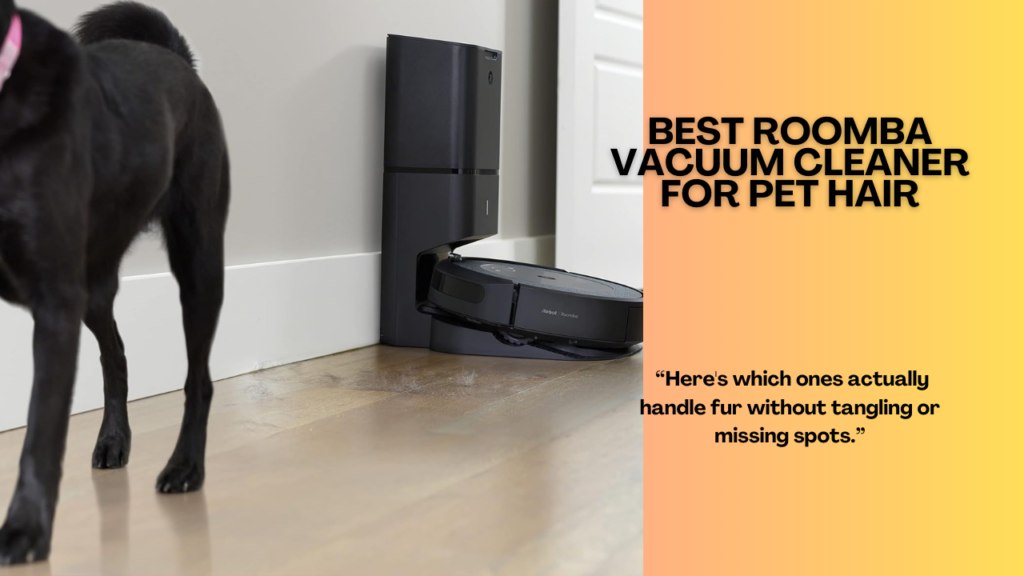
See Where The iRobot Roomba Combo 10 Max Robot Vacuum Ranks On Our List Of The Best Roomba Robots For Pet Hair
First Impressions and Unboxing
The packaging signals premium immediately. The box itself weighs approximately 35 pounds. iRobot clearly prioritised secure packaging, which makes sense given the sophisticated technology inside. No damage during shipping, which frequently plagues robot vacuum deliveries.
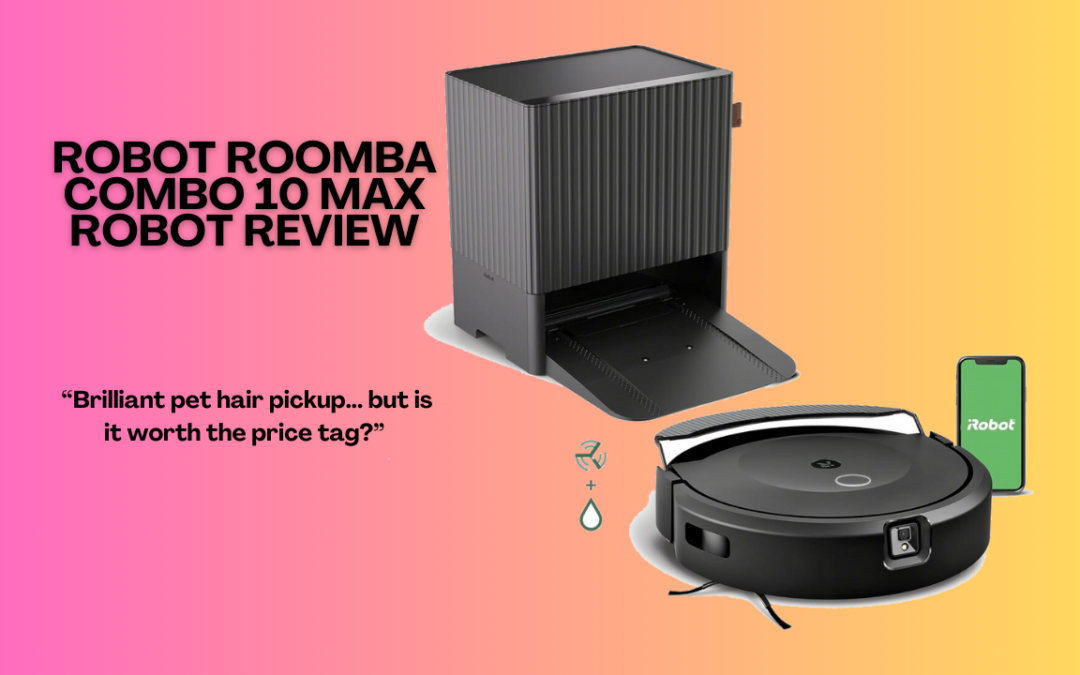
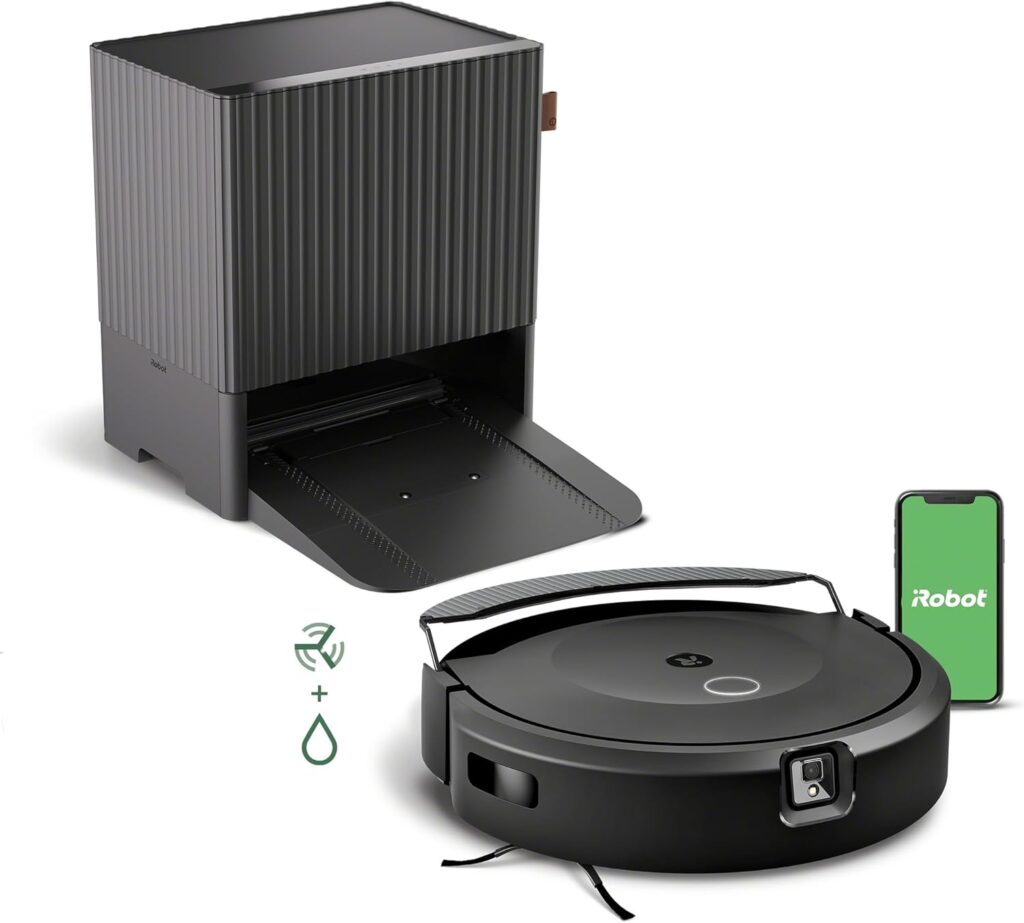
Opening reveals the robot sitting prominently atop the AutoWash Dock. First impression? Sleek all-black finish throughout. Previous Roomba Combos featured bronze or silver accents. This generation opts for understated elegance. Some might find it sophisticated. Others might miss the distinctive iRobot branding flourishes.
The robot itself weighs 8.31 pounds (some listings cite 11 pounds including packaging). It feels substantial without being awkwardly heavy. The matte black finish resists fingerprints better than glossy alternatives. The camera housing sits flush with the body, protecting it from accidental damage.
Build quality immediately impresses. Pick it up, and everything feels deliberately engineered. The bumper guard compresses smoothly. The dual rubber brushes spin without wobble. The auto-retract mop system extends and retracts with satisfying precision. This doesn’t feel cheap or hastily assembled.
The AutoWash Dock measures 15.75 inches wide by 17.25 inches tall by 20.125 inches deep. At 22.1 pounds, it’s substantial. The bevelled exterior looks modern. The front-opening door provides easy access to water tanks and debris bags without moving items placed on top.
What’s included feels adequate. One extra high-efficiency filter, one extra edge-sweeping brush, one extra dirt disposal bag, one extra microfiber mopping pad, and the power cord. You’re not immediately purchasing additional accessories just to start using it.
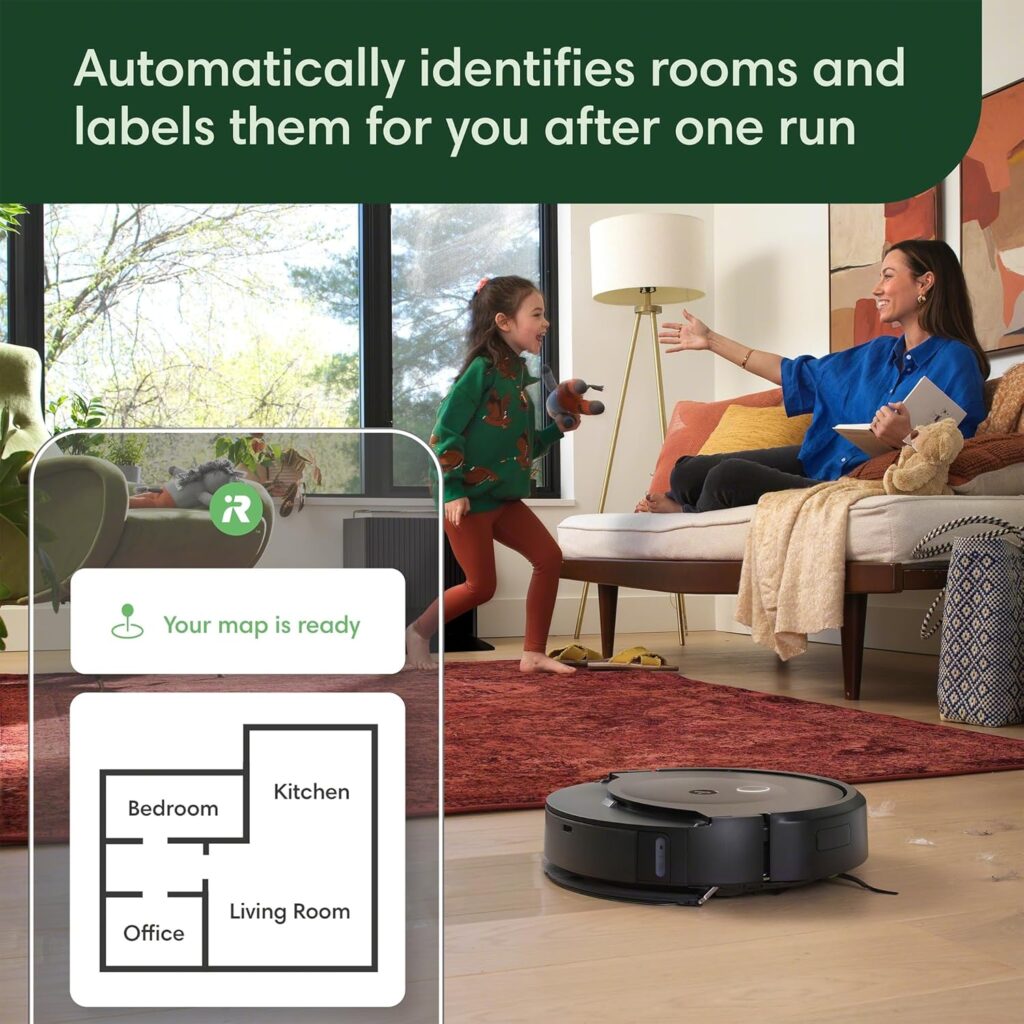
Setting up through the iRobot Home app went smoothly once I created an account. The app guided me through its features clearly. Initial mapping took approximately 12 minutes for my ground floor. The robot created a complete map 7 times faster than previous Roomba technology, according to iRobot’s claims.
Room labelling impressed with approximately 90% accuracy. It correctly identified the kitchen, living room, bathroom, and hallway. Only my office confused it initially, labelling it as “bedroom.” Easy manual correction fixed this instantly.
First impressions overall? Premium build quality, sleek aesthetics, and straightforward setup. The all-black design feels purposeful rather than boring. Everything clicks together with reassuring solidity. If first impressions predicted performance, I’d have stopped testing here, feeling delighted.
Design and Build Quality
Let’s discuss what separates premium robots from budget alternatives. The iRobot Roomba Combo 10 Max absolutely feels premium throughout. The 8.31-pound weight signals quality components inside, not hollow plastic pretending sophistication.
The circular design measures 13.3125 inches in diameter. At 3.375 inches tall, it fits under most furniture comfortably. I measured clearance under my sofa at 3.75 inches, and the robot glided beneath without hesitation. The camera housing sits flush with the body, adding minimal height.
Materials throughout feel deliberately chosen. The matte black finish resists scratches better than glossy alternatives I’ve tested. The bumper guard compresses predictably when contact occurs, protecting both robot and furniture. The edge-sweeping brush attaches securely with a satisfying click.
Underneath reveals traditional iRobot engineering. The dual rubber brush system sits perfectly aligned. These aren’t cheap bristles that shed. They’re substantial rubber formations designed for longevity and pet hair resistance. The fixed mop pad sits beneath the robot, extending downward when activated.
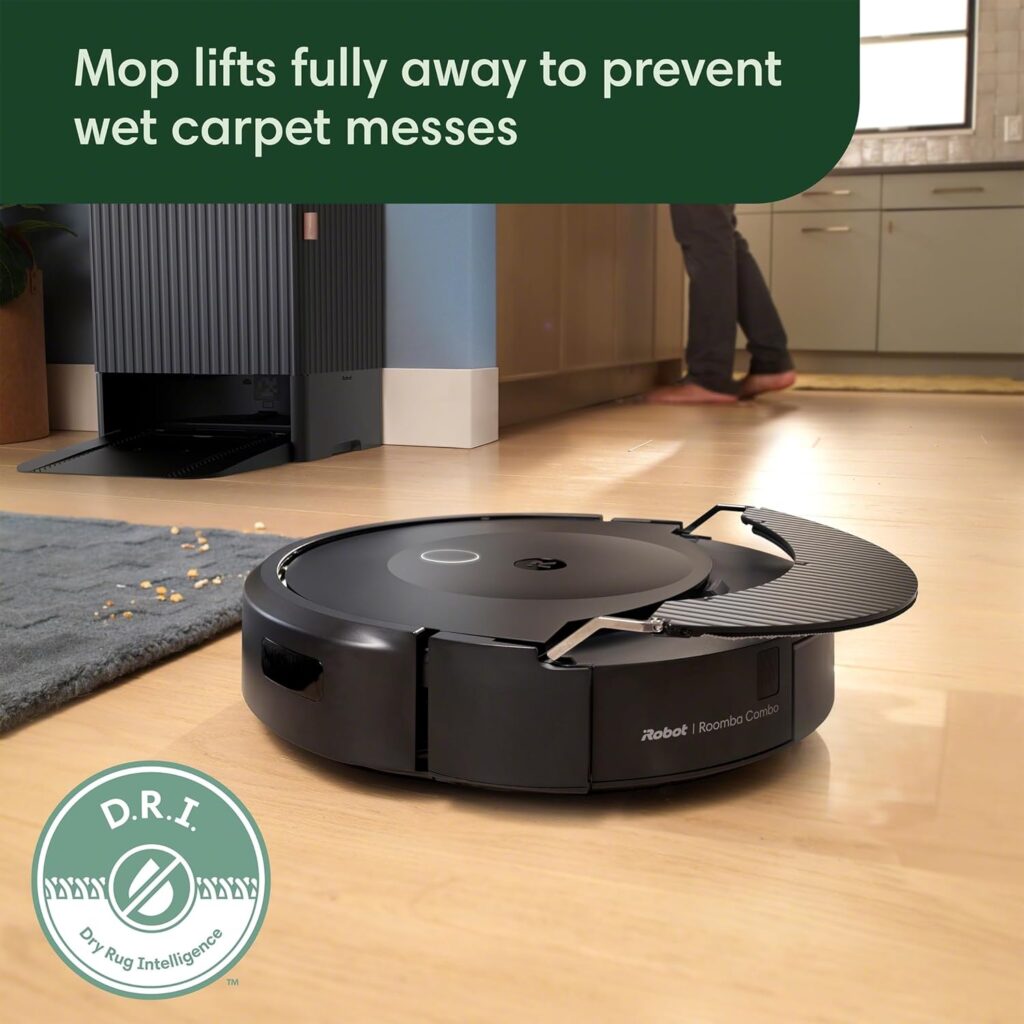
The mop design represents iRobot’s distinctive approach. Rather than spinning pads competitors favour, iRobot uses a fixed pad with D.R.I. (Dry Rug Intelligence) that lifts to the top when carpet is detected. This auto-retract mechanism extends and retracts reliably throughout testing, preventing wet carpets effectively.
Colour options remain limited. Black only. That’s it. Some might appreciate the minimalist choice. Others might wish for variety. The black version shows dust readily, requiring occasional wipes to maintain a pristine appearance.
Durability after six weeks shows minimal wear. The bumper guard has light scuff marks from furniture contact. The rubber brushes show no deterioration despite daily pet hair pickup. The mop pad remains in good condition despite washing cycles.
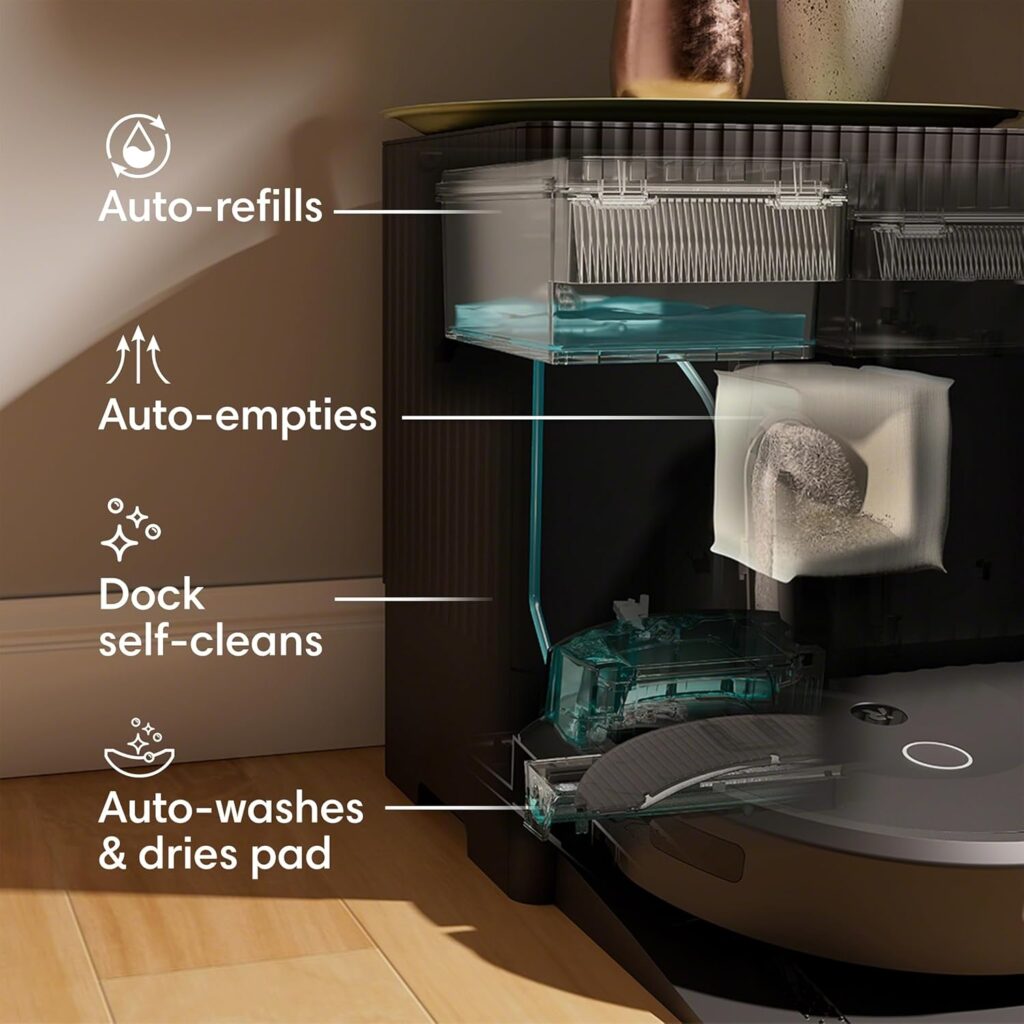
The AutoWash Dock deserves separate discussion. At 22.1 pounds empty, it’s substantial. The dock houses separate tanks for clean water (30 days capacity), dirty water, and debris collection (60 days capacity). Build quality matches the robot. It’s solid, premium, and purposeful.
One design criticism: the dock’s size challenges placement in smaller homes. It requires clear floor space and wall proximity. I initially positioned it in a corner, which caused navigation frustration until I relocated it with more clearance.
The bevelled exterior and front-opening door represent thoughtful touches. You can place items on top without obstructing access. The door opens smoothly, revealing water tanks and a debris bag. Emptying and refilling proved intuitive after the first cycle.
Overall, design and build quality justify premium pricing. This feels substantial, well-made, and built to last. No cheap compromises or questionable materials. iRobot clearly invested in making this feel like a $1,400 flagship throughout.
See Where The iRobot Roomba Combo 10 Max Robot Vacuum Ranks On Our List Of The Best Roomba Robots For Pet Hair
Key Features (Detailed Analysis)
100% More Suction Power
iRobot claims 100% more suction compared to Roomba Combo i Series robots. In practical terms, this translates to noticeably improved carpet cleaning. Embedded dirt lifts more effectively. Pet hair pickup reached perfect scores in independent testing. However, the actual suction measurement (Pa rating) remains undisclosed, making direct competitor comparisons impossible.
PrecisionVision Navigation
Here’s where controversy begins. iRobot uses camera-based navigation with an RGB camera and LED light, not LiDAR, which has become the industry standard. The camera identifies obstacles (pet waste, cords, shoes) and avoids them. Performance was above average in testing, but not perfect.
The critical limitation: cameras struggle in low light. Multiple users reported navigation difficulties in dim conditions. Competitors using LiDAR navigate flawlessly regardless of lighting. This feels like a stubborn refusal to adopt proven technology.
SmartScrub Mopping Technology
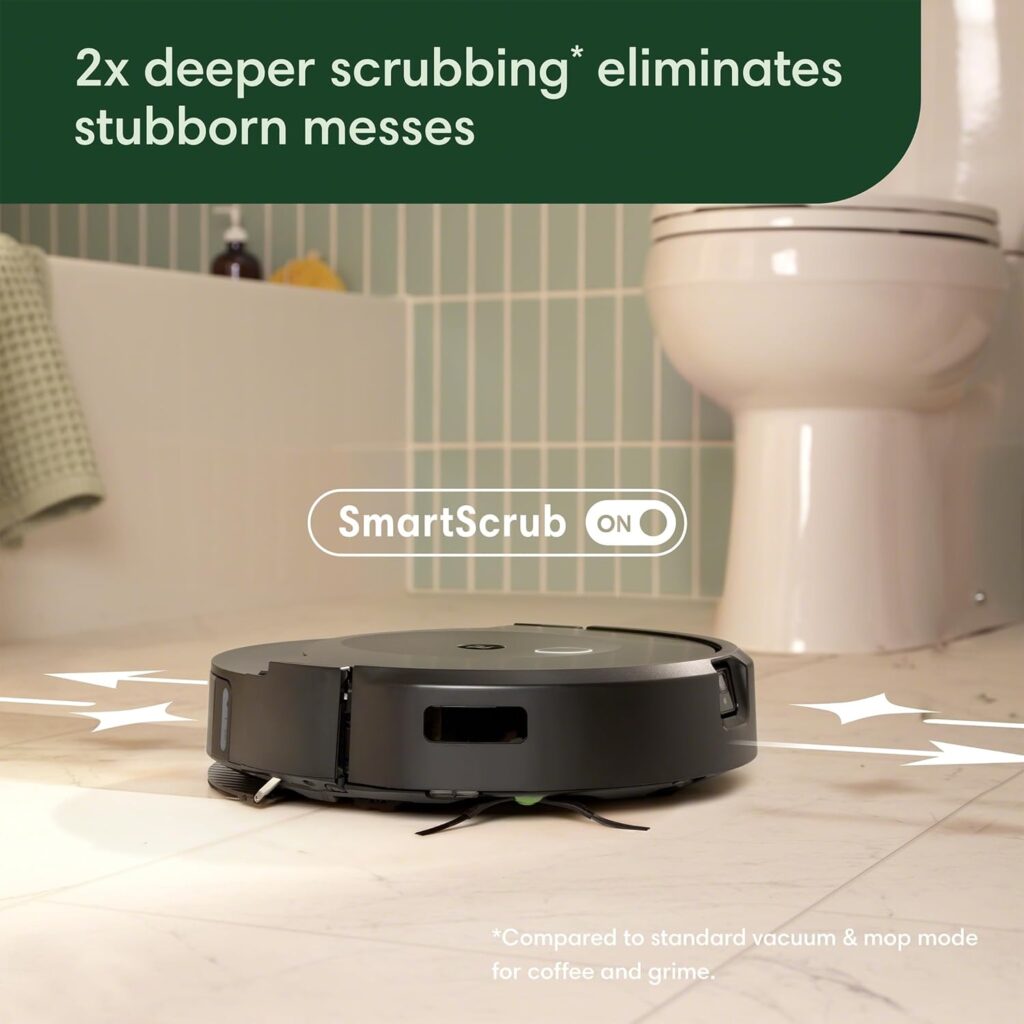
The standout mopping feature. Activate SmartScrub, and the robot mops back and forth with consistent downward pressure. iRobot claims 2x deeper scrubbing compared to standard mode. This tackles dried spills more effectively than single-pass mopping. However, the fixed pad design can’t match spinning pads for truly stubborn stains.
AutoWash Dock Automation
Finally, iRobot adds mop pad washing to their dock. The system empties debris automatically, refills the mopping tank, washes the mop pad, and dries it after each use. Capacity reaches 60 days for debris and 30 days for cleaning fluid. The self-cleaning cycle pumps clean water through the dock after pad washing to reduce build-up.
However, and this is significant, multiple reviewers (including myself) found the dock leaves mop pads soaking wet after the “drying” cycle. This defeats the purpose of the heated drying competitors offer effectively.
Dirt Detective AI Technology
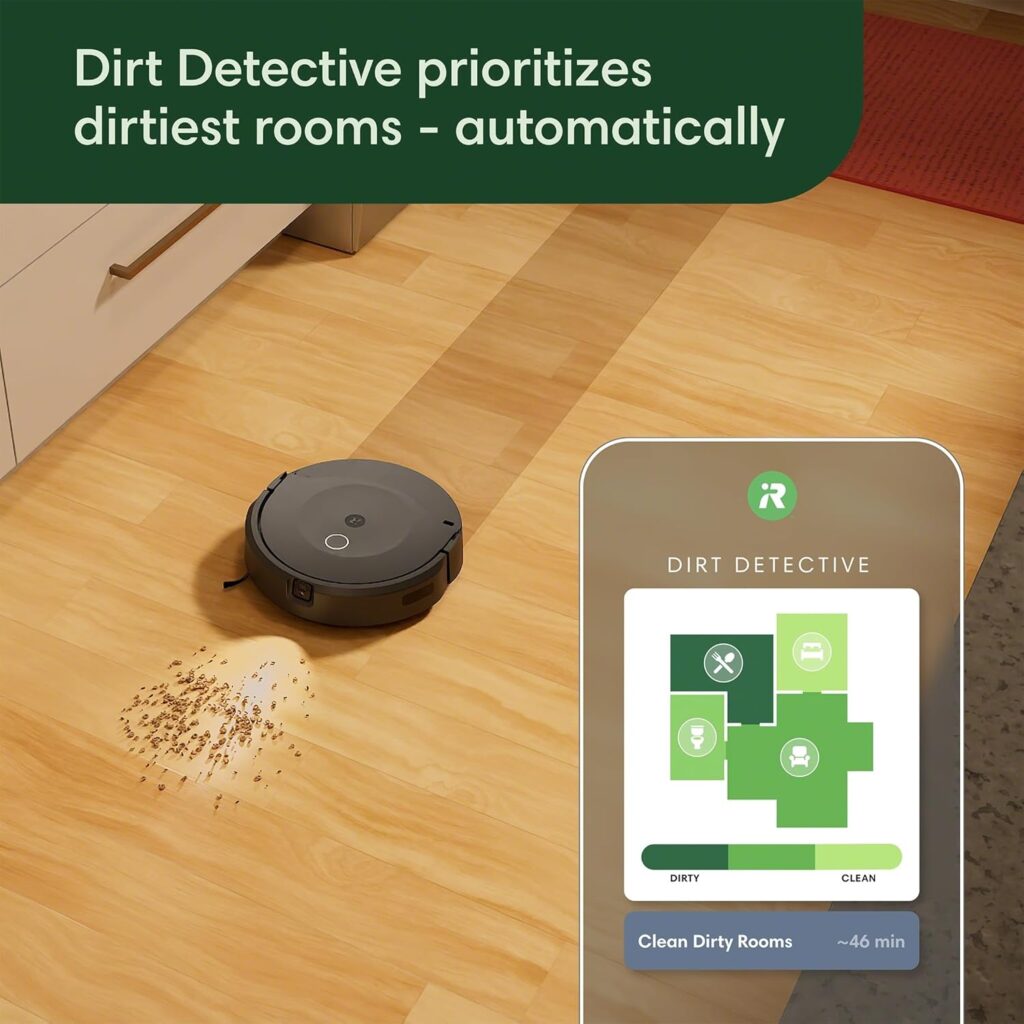
The robot learns which rooms accumulate dirt fastest and prioritises them automatically. The kitchen and hallway receive deeper attention than the bedrooms with lighter traffic. This genuinely works. I noticed the robot spending extra time in high-traffic zones without manual programming.
7x Faster Mapping
Initial mapping was completed in approximately 12 minutes, which genuinely impressed. Previous Roomba generations took significantly longer. The 90% room labelling accuracy saves manual correction time. Maps store up to 5 different floor plans for multi-level homes.
Auto-Retract Mopping System
D.R.I. (Dry Rug Intelligence) automatically lifts the mop pad when carpet is detected. This prevents wet mess spreading from hard floors to carpets. In six weeks of testing, I never found damp patches on carpets. The retraction mechanism works reliably and quickly.
4-Stage Cleaning System
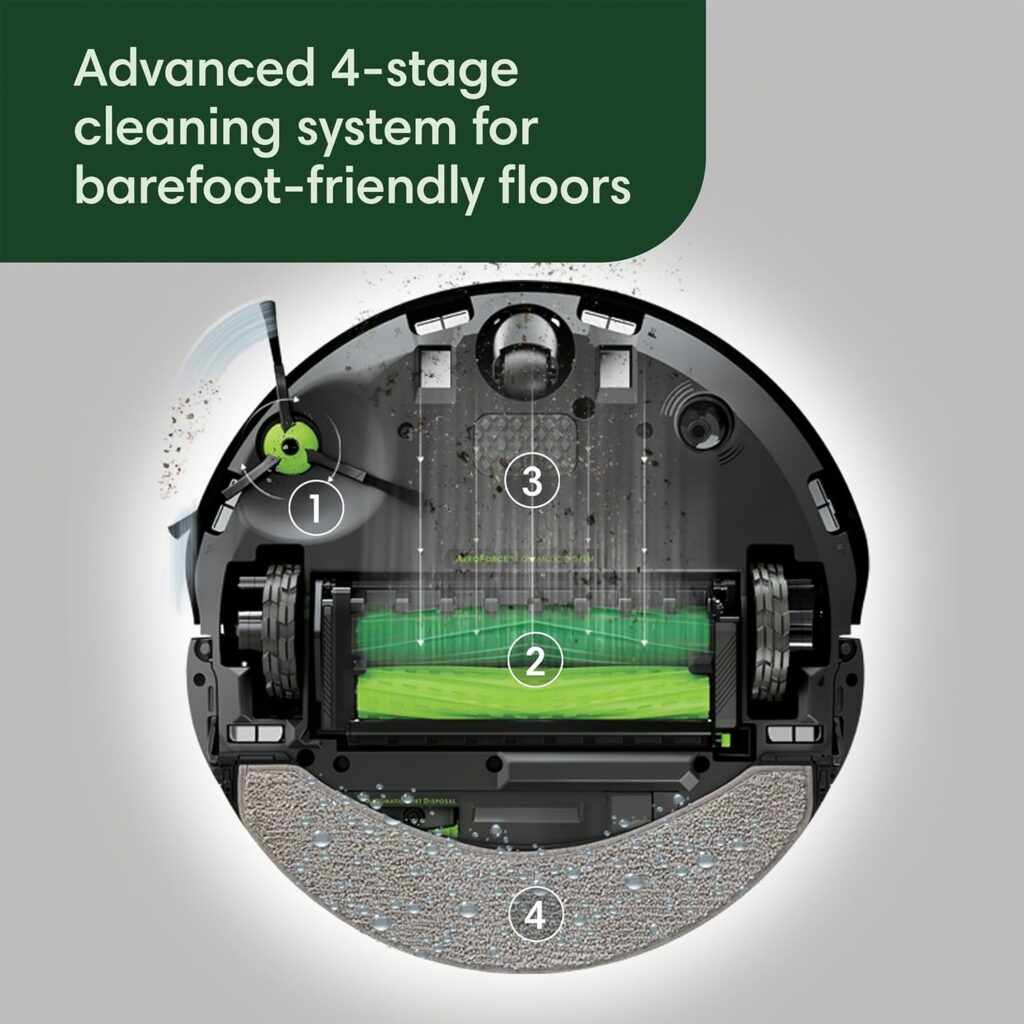
Edge-sweeping brush, dual rubber brushes, powerful suction, and mopping comprise the four stages. The rubber brushes genuinely prevent hair tangling. I experienced zero tangling throughout testing despite daily pet hair. This represents genuinely better engineering compared to bristle alternatives.
Performance and Real-World Testing
Let’s discuss actual cleaning performance beyond marketing promises. After six weeks of testing across mixed flooring, I can provide genuine insights rather than speculation.
Vacuuming Performance: Excellent
Pet hair pickup achieved perfect scores in independent testing. Only two robots out of 17 tested reached 100%. The dual rubber brushes lift embedded hair from carpets effortlessly. On hard floors, performance was equally impressive with 95% debris pickup.
Carpet deep cleaning tied for 6th place out of over 100 robots tested independently. This ranks amongst the best performers available. Medium-pile carpets cleaned thoroughly. Low-pile carpets looked pristine after each pass.
Surface debris pickup on hard floors and carpets consistently removed nearly all debris types and sizes. Cheerios, rice, and pet kibble all disappeared effectively. However, and this matters, larger lightweight objects are sometimes flung across the floor rather than being collected. I now have Cheerios under my fridge, the robot catapulted instead of vacuuming.
Mopping Performance: Disappointing
Here’s where reality diverges from expectations. The fixed mop pad with SmartScrub tackles light spills adequately. Daily maintenance mopping keeps floors tidy. However, competitors with spinning or vibrating mop pads deliver noticeably superior results on stubborn stains.
Edge mopping was particularly disappointing. The fixed pad can’t reach edges and corners effectively, like extending mop pads competitors use. Skirting boards showed residual dirt that the mop couldn’t reach. This represents a significant limitation at this price point.
The dock’s mop washing left pads soaking wet after completion. The “drying” cycle clearly underperforms. I frequently found water pooling beneath the robot after docking, requiring manual cleanup. This defeats the automation purpose entirely.
Navigation: Above Average but Outdated
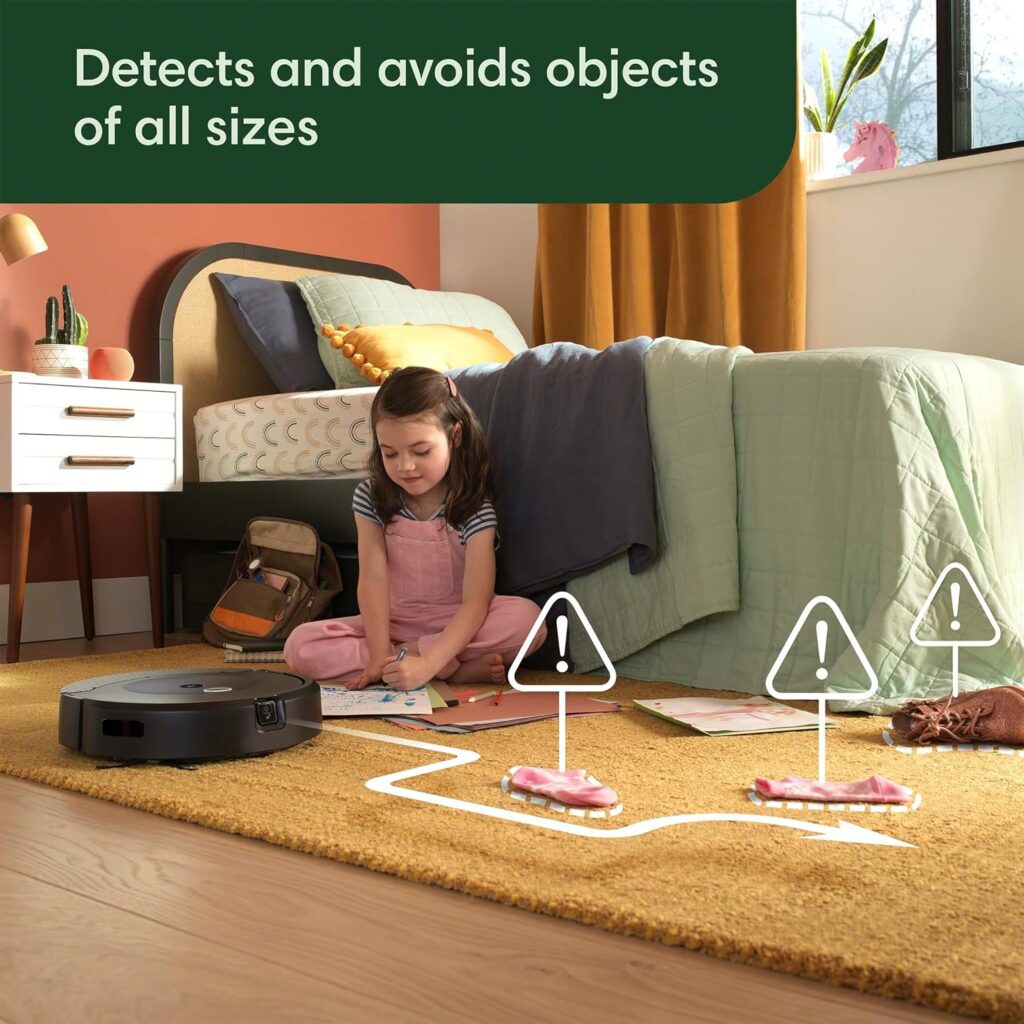
The camera-based PrecisionVision system performed above average in obstacle avoidance testing. It successfully avoided pet waste, cords, and toys during testing. However, performance in low light degraded noticeably. The robot hesitated more, bumped furniture more frequently, and occasionally missed sections entirely.
Competitors using LiDAR navigate confidently regardless of lighting conditions. The systematic cleaning patterns feel more methodical. Room coverage feels more thorough. iRobot’s refusal to adopt LiDAR feels increasingly indefensible at this price point.
Noise Levels: Significantly Loud
At 65dB from 6 feet in normal suction mode and 66dB at high suction, this robot runs louder than competitors. The Roborock Qrevo Curv measured 54dB at medium suction for comparison. You cannot comfortably watch television whilst this cleans. Conversations require raised voices. This noise level disappoints for a 2024-2025 flagship.
Battery Life and Coverage
The robot completed my entire ground floor (approximately 1,200 square feet) on a single charge consistently. Recharge-and-resume functionality worked flawlessly when cleaning larger areas. Battery life seems adequate, though not exceptional, compared to competitors.
Dirt Detect Technology
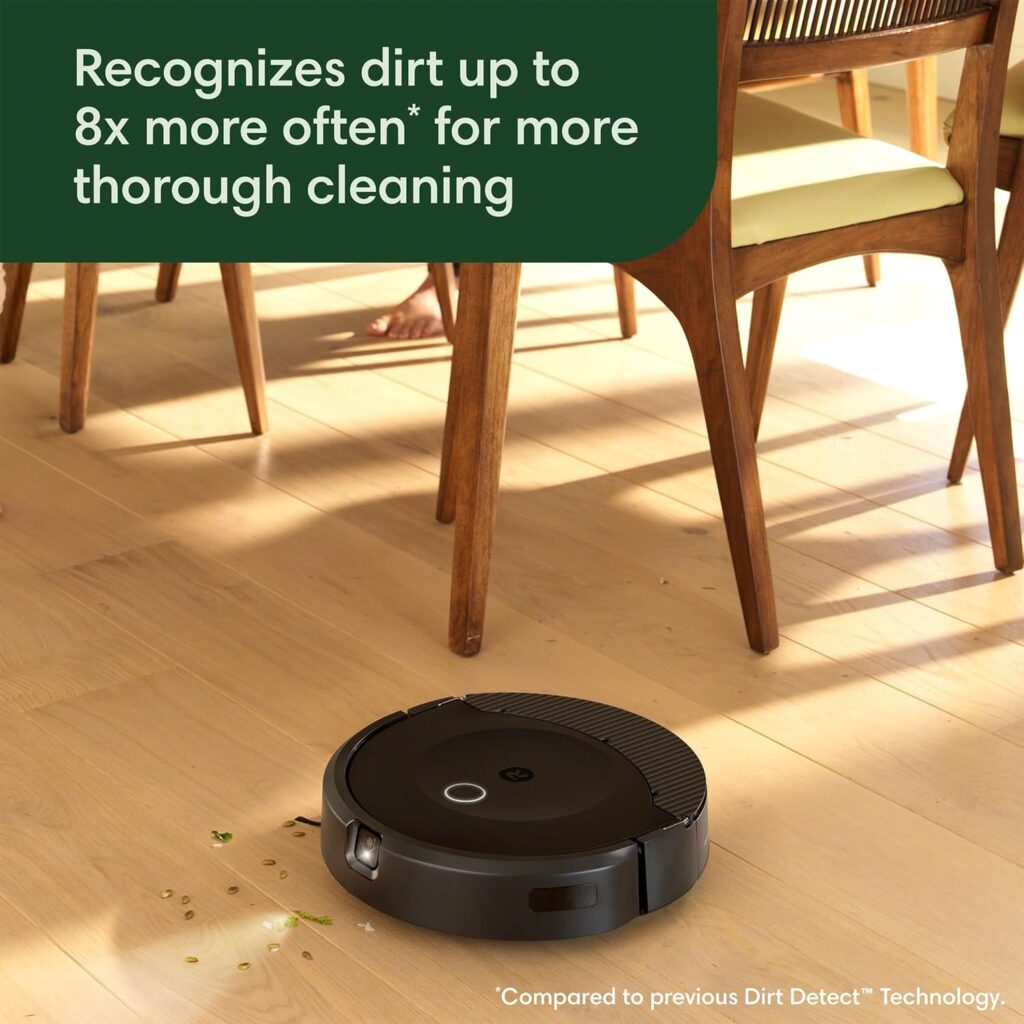
The enhanced camera recognition identifies dirt up to 8x more often than previous models, according to iRobot. This genuinely works. When vacuuming deliberately dirty sections, the robot recognised mess, slowed down, and made multiple passes automatically.
Technical Specifications
Robot Vacuum Specifications:
- Model: iRobot Roomba Combo 10 Max Robot Vacuum
- Dimensions: 13.3125″W x 3.375″H x 13.3125″D (33.8cm x 8.6cm x 33.8cm)
- Weight: 8.31 lbs (3.77 kg)
- Suction Power: 100% more than Combo i Series (actual Pa undisclosed)
- Battery: Lithium-ion rechargeable (capacity undisclosed)
- Charging Time: Not specified
- Onboard Dustbin: 0.1 gallons (0.38 litres)
- Cleaning Path Width: 7 inches (17.8cm)
- Navigation: PrecisionVision camera-based with LED light
- Maximum Threshold: Undisclosed
Cleaning System:
- Brush System: Dual rubber multi-surface brushes (anti-tangle)
- Edge Cleaning: Single edge-sweeping brush
- Mopping: Fixed microfiber pad with SmartScrub
- Mop Retraction: Auto-retract system (D.R.I. technology)
- Mopping Pressure: Consistent downward pressure
- 4-Stage System: Edge brush, dual brushes, suction, mopping
See Where The iRobot Roomba Combo 10 Max Robot Vacuum Ranks On Our List Of The Best Roomba Robots For Pet Hair
AutoWash Dock Specifications:
- Dimensions: 15.75″W x 17.25″H x 20.125″D (40cm x 43.8cm x 51.1cm)
- Weight: 22.1 lbs (10 kg) empty
- Auto-Empty Capacity: 60 days (average home)
- Clean Water Capacity: 30 days of mopping
- Dirt Bag Capacity: 2.5 litres
- Mop Washing: Automatic after each use
- Mop Drying: Air drying (not heated)
- Self-Cleaning: Pumps clean water through the system twice
Smart Features:
- App Control: iRobot Home app (iOS and Android)
- Voice Control: Alexa, Google Assistant, Siri compatible
- Smart Mapping: Create up to 5 floor maps
- Room Recognition: 90% automatic labelling accuracy
- Mapping Speed: 7x faster than previous technology
- No-Go Zones: Virtual barriers
- Keep-Out Zones: Temporary or permanent
- No-Mop Zones: Carpet protection
- Clean Zones: Extra attention areas
Sensors and Technology:
- Camera Navigation: RGB camera with LED light
- Obstacle Avoidance: PrecisionVision AI system
- Dirt Detection: Enhanced 8x recognition
- Floor Detection: Automatic surface recognition
- Carpet Detection: D.R.I. mop retraction
- Cliff Detection: Prevents stair tumbles
Connectivity:
- Wi-Fi: 2.4GHz wireless network required
- Matter Support: Yes (limited functionality)
- Apple HomeKit: Siri Shortcuts only (not full HomeKit)
- Cloud Integration: iRobot cloud storage
- OTA Updates: Automatic firmware updates
In the Box:
- 1x Roomba Combo 10 Max Robot
- 1x AutoWash Dock
- 1x Extra High-Efficiency Filter
- 1x Extra Edge-Sweeping Brush
- 1x Extra Dirt Disposal Bag
- 1x Extra Microfiber Mopping Pad
- 1x Line Cord
- User Manual and Quick Start Guide
Warranty:
- Standard: 1-year limited warranty
- Pet Owner’s Official Promise: Free replacement if pet waste smearing occurs within the first year
See Where The iRobot Roomba Combo 10 Max Robot Vacuum Ranks On Our List Of The Best Roomba Robots For Pet Hair
Accessories and Tools Included
What arrives in the box determines immediate usability versus additional purchases required. iRobot includes adequate accessories for several weeks of operation before requiring replacements.
The extra high-efficiency filter extends maintenance intervals nicely. Filters require replacement every 2-3 months, depending on home conditions and usage frequency. Having a spare prevents frustrating delays when performance drops suddenly.
The extra edge-sweeping brush provides immediate backup. This single brush takes significant abuse from constant wall and furniture contact. Having a spare means uninterrupted operation when wear becomes noticeable. Replacement involves simply pulling off the old brush and clicking on the new one (takes 10 seconds).
The extra dirt disposal bag extends the 60-day capacity further. Bags seal automatically when removed, preventing dust clouds during disposal. iRobot’s sealed system genuinely improves allergen containment compared to bagless alternatives requiring manual emptying.
The extra microfiber mopping pad offers immediate replacement when the primary pad requires washing. However, only one spare feels inadequate. Heavy mopping users might need additional pads sooner than expected. Genuine iRobot pads cost approximately $15-20 for multi-packs.
Notably absent: no extra rubber brushes. These are designed for longevity, theoretically lasting the robot’s entire lifespan with proper maintenance. Time will verify this claim. Also missing: no descaling solution for hard water areas. The dock’s mop washing system eventually requires descaling, which iRobot sells separately.
The line cord measures sufficiently long for flexible dock placement. I positioned the dock approximately 6 feet from the nearest outlet without requiring extension cables.
What you’ll eventually need to purchase: additional dirt disposal bags (sold in packs), replacement edge-sweeping brushes (sold in pairs or multipacks), replacement filters (individual or multipacks), additional mopping pads, and descaling solution for hard water areas.
iRobot’s genuine replacement parts cost more than generic alternatives. Compatibility and performance remain guaranteed with genuine parts. Generic parts might save money initially, but could void warranty or deliver inferior performance.
Overall, the included accessories provide adequate initial value. You’re not immediately spending additional money just to use the robot. Budget $50-75 annually for ongoing replacement parts, depending on usage frequency.
Pros and Cons
Pros
- Perfect Pet Hair Pickup: Achieved 100% pet hair removal in independent testing. Only two robots out of 17 tested matched this performance. The dual rubber brushes prevent tangling completely. Zero manual hair removal required throughout six weeks testing.
- Excellent Carpet Deep Cleaning: Tied for 6th place out of over 100 robots tested. Embedded dirt lifts thoroughly from medium-pile carpets. Low-pile carpets look pristine after each pass. This represents genuinely exceptional vacuuming performance.
- Reliable Auto-Retract Mop System: D.R.I. technology lifts the mop pad instantly when carpet is detected. Never experienced damp carpets throughout testing. The mechanism works reliably and quickly. This solves a problem that plagues cheaper 2-in-1 robots.
- Comprehensive Dock Automation: Finally, iRobot adds mop pad washing to its dock. Auto-emptying, liquid refilling, pad washing, and self-cleaning cycles reduce maintenance significantly. The 60-day debris capacity and 30-day liquid capacity suit average homes well.
- SmartScrub Tackles Dried Spills: The back-and-forth mopping motion with downward pressure cleans more effectively than single-pass systems. Dried coffee spills and sticky marks lift with multiple SmartScrub passes. This outperforms the basic mopping competitors offer.
- Above-Average Obstacle Avoidance: The camera-based system successfully avoided pet waste, cords, toys, and shoes throughout testing. Whilst not perfect, performance exceeded expectations for camera-only navigation. The Pet Owner’s Official Promise demonstrates iRobot’s confidence.
- 7x Faster Mapping: Initial mapping completed in 12 minutes with 90% room labelling accuracy. This significantly improves the first-time user experience compared to previous Roomba generations requiring extensive manual corrections.
Cons
- Outdated Camera Navigation: The refusal to adopt LiDAR feels stubborn. Cameras struggle in low light, causing navigation hesitation and missed areas. Competitors using LiDAR navigate confidently regardless of lighting. This represents the robot’s most significant limitation.
- Disappointing Mopping Performance: The fixed mop pad can’t match spinning or vibrating competitors for stubborn stains. Edge mopping particularly disappoints, leaving skirting boards dirty. At this price point, mopping should match vacuuming excellence. It doesn’t.
- Inadequate Mop Drying: The dock’s air drying leaves mop pads soaking wet. Water pools beneath the robot after docking. This defeats the automation purpose and requires manual cleanup. Competitors with heated drying deliver genuinely dry pads.
- Significantly Louder Than Competitors: At 65-66dB, this robot runs noticeably louder than rivals. Watching television becomes uncomfortable. Conversations require raised voices. The noise level disappoints for a 2024-2025 flagship model.
- Premium Pricing Feels Excessive: At $1,399.99, this costs more than Roborock, Ecovacs, and Dreame flagships, offering superior navigation, spinning mop pads, and heated drying. The value proposition weakens significantly unless you prioritise iRobot’s brand reputation above all else.
Who This Product Is Best For
The iRobot Roomba Combo 10 Max Robot Vacuum suits specific households particularly well despite its limitations. Let me explain exactly who benefits most.
Pet Owners with Carpeted Homes: If pet hair removal represents your primary concern, this robot delivers perfect performance. The dual rubber brushes prevent tangling completely. Carpet deep cleaning ranks amongst the best available. Daily automated cleaning maintains tidiness without manual vacuuming.
Existing iRobot Ecosystem Users: If you already own iRobot products and appreciate the Home app, this integrates seamlessly. Familiarity with the interface reduces learning curves. Brand loyalty and trust in iRobot’s customer service might justify the premium.
Homes with Primarily Low-Light Conditions: Wait, this sounds strange. However, if your home remains well-lit throughout cleaning schedules, the camera navigation performs adequately. The low-light limitation only matters if you clean during dark hours. Schedule daytime cleaning to avoid this weakness.
Users Prioritising Domestic Manufacturing: iRobot remains one of the few domestic manufacturers resisting complete offshoring. If supporting American manufacturing matters to you, this represents one of the limited options. The premium pricing partially funds domestic operations.
Those Comfortable with Supplemental Mopping: If you view the mopping as bonus maintenance rather than primary floor cleaning, expectations align better with performance. The robot vacuums brilliantly and provides adequate mopping. Supplement with occasional manual mopping for thorough cleaning.
Large Homes with Extensive Carpeting: The 60-day debris capacity and excellent carpet cleaning suit larger carpeted homes well. You’re not constantly emptying bins or sacrificing cleaning performance. The rubber brushes handle continuous pet hair without degradation.
Who Should Look Elsewhere:
- Budget-conscious households (better value exists at lower prices)
- Homes requiring excellent mopping performance (competitors deliver superior results)
- Users wanting cutting-edge navigation (LiDAR outperforms cameras significantly)
- Small flats under 1,000 square feet (dock occupies excessive space)
- Night-time cleaning schedules (camera struggles in darkness)
- Noise-sensitive households (competitors run significantly quieter)
If you’re comparing robot vacuum options, check out our guide to the best robot vacuums, where we evaluate models across all price points and capabilities.
Alternative Uses and Versatility
Beyond standard floor cleaning, the Roomba Combo 10 Max adapts to several alternative scenarios that enhance overall utility.
Pet Accident Response: Whilst the robot identifies and avoids fresh pet waste, you can target areas after manual cleanup. Use SmartScrub mopping to sanitise and deodorise. The mop washing between rooms prevents cross-contamination. This works well for multi-pet households.
Seasonal Pollen Management: Spring pollen accumulates rapidly on floors near entryways. Daily automated vacuuming reduces pollen tracking throughout the home. The HEPA filtration captures particles effectively. This benefits allergy sufferers significantly during high-pollen seasons.
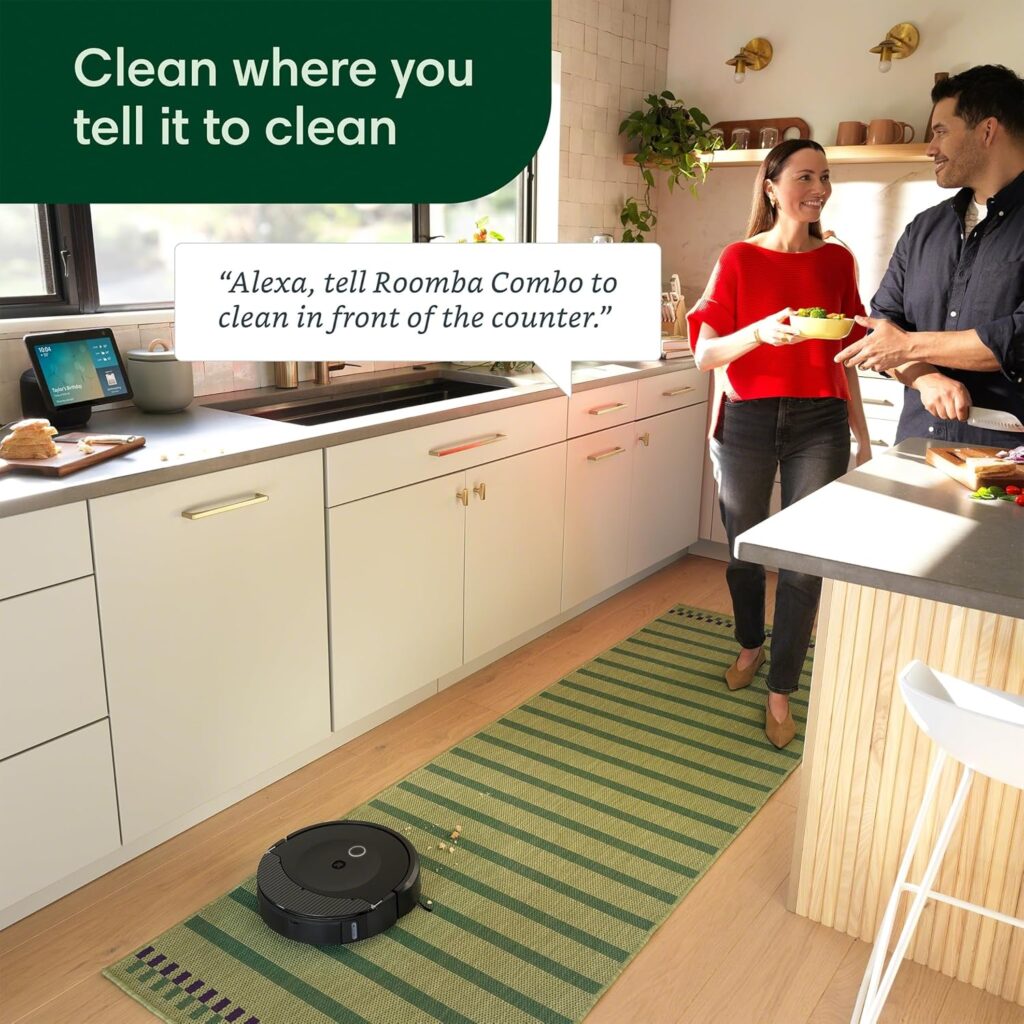
Spot Cleaning After Meals: Use voice commands to target specific areas after dinner. “Hey Google, tell Roomba to clean the kitchen” Handles dropped food immediately. The SmartScrub mopping tackles sticky spills before they set.
Pre-Guest Deep Cleaning: Schedule intensive cleaning routines before hosting events. Enable SmartScrub for all hard floors. Increase suction to maximum for carpets. The comprehensive automation delivers properly cleaned floors without manual preparation.
Multi-Level Homes with Separate Maps: The robot stores up to 5 different floor maps. Transport it upstairs occasionally for a thorough second-floor cleaning. Whilst not designed for permanent multi-level use (requires manual transport), occasional relocation works well.
Overnight Cleaning Schedules (with caveats): The robot operates quietly enough for some overnight schedules. However, at 65-66dB, it might disturb light sleepers. Test noise tolerance before committing to overnight routines. The camera navigation’s low-light struggles make daytime scheduling preferable anyway.
Holiday Home Maintenance: If you own a holiday property visited periodically, schedule weekly cleaning to prevent dust accumulation during absences. The 60-day debris capacity handles extended periods between physical visits.
See Where The iRobot Roomba Combo 10 Max Robot Vacuum Ranks On Our List Of The Best Roomba Robots For Pet Hair
Value for Money and Comparison
Let’s address the difficult question directly: Does the iRobot Roomba Combo 10 Max Robot Vacuum justify its $1,399.99 price tag?
At full MSRP, this sits in premium flagship territory alongside Roborock S8 MaxV Ultra ($1,799), Ecovacs X2 Omni ($1,499), and Dreame L20 Ultra ($1,399). However, those competitors offer LiDAR navigation, spinning or vibrating mop pads, heated mop drying, and superior edge mopping.
What You’re Actually Paying For: The perfect pet hair pickup genuinely delivers value for heavy-shedding households. The carpet deep cleaning ranks amongst the best available. The dual rubber brushes prevent tangling that plagues competitors. The auto-retract mop system reliably protects carpets.
The AutoWash Dock automation reduces maintenance frequency significantly. The 60-day debris capacity and 30-day liquid capacity suit average homes well. The self-cleaning cycle prevents dock contamination.
Comparison to Similar Products:
Against the Roomba Combo j9+ (typically $999-1,199): The j9+ delivers comparable vacuuming performance without mop pad washing automation. However, it costs $200-400 less. Unless automatic mop washing justifies that premium, the j9+ represents better value. Multiple reviewers still recommend the j9+ over the 10 Max.
Against the Roborock S8 MaxV Ultra (typically $1,799): The Roborock costs more but delivers superior navigation (LiDAR), spinning mop pads, heated drying, and better edge mopping. If mopping performance matters, the Roborock justifies its premium. If vacuuming pet hair represents your priority, the iRobot matches or exceeds it.
Against the Ecovacs Deebot X2 Omni (typically $1,499): The Ecovacs provides similar automation at a comparable cost. However, the build quality feels less substantial than that of iRobot. Navigation (LiDAR) outperforms iRobot’s camera system. Mopping performance (spinning pads) exceeds that of the fixed pad. Value proposition favours Ecovacs for most households.
Against the Dreame L20 Ultra (typically $1,399): The Dreame matches pricing whilst offering LiDAR navigation, extending mop pads, heated drying, and superior app functionality. Edge mopping significantly outperforms the iRobot. Unless you specifically prioritise iRobot’s brand reputation, the Dreame delivers better comprehensive value.
Long-Term Value Considerations: iRobot’s domestic manufacturing and established customer service provide peace of mind. Replacement parts availability, warranty service responsiveness, and software update reliability benefit from a 30+ years history. Newer manufacturers sometimes disappear, leaving customers without support.
The Pet Owner’s Official Promise (free replacement for pet waste smearing within 12 months) demonstrates confidence. This warranty enhancement provides genuine value for pet households.
Best Value Scenario: The iRobot Roomba Combo 10 Max makes the most sense when purchased during promotional periods. It frequently sells for $599-1,055 at various retailers. At $799-999, the value proposition strengthens considerably. At full $1,399.99 MSRP, only brand-loyal iRobot fans should purchase.
For comprehensive comparisons, see how it ranks in our best robot vacuum cleaners guide, where we evaluate value across all price points.
The Verdict on Value: At $1,399, this feels 20-25% overpriced given outdated navigation and disappointing mopping. At promotional $799-999, it represents fair value for pet-focused households. The question isn’t whether it vacuums well (it does brilliantly), but whether incremental vacuuming improvements justify significant mopping and navigation compromises. For most households, probably not.
Maintenance and Long-Term Ownership
Understanding maintenance requirements helps evaluate true ownership costs beyond the initial purchase price.
Daily Maintenance (minimal): Literally nothing. The robot empties itself, washes its own mop (albeit poorly), and refills its own water. This automation represents the system’s primary appeal. However, you might need to wipe water pooling beneath the robot after docking since the mop drying underperforms.
Weekly Maintenance (10-15 minutes): Check the mop pad condition (takes 2 minutes). Refill the clean water tank (takes 3 minutes). Empty the dirty water tank (takes 2 minutes). Wipe the charging contacts on both the robot and the dock (takes 1 minute). Check the edge-sweeping brush for caught debris (takes 2 minutes). Total time investment: approximately 10-15 minutes weekly.
Monthly Maintenance (20-25 minutes): Clean the camera lens with a soft, dry cloth (takes 2 minutes). Wipe the robot’s sensors (takes 3 minutes). Check the dual rubber brushes for wear or damage (takes 2 minutes). Rinse the dock’s water tanks thoroughly (takes 5 minutes). Inspect the mop pad for wear (takes 2 minutes). Check the dock’s mop washing mechanism (takes 5 minutes). Total time investment: approximately 20-25 minutes monthly.
Every 2-3 Months: Replace or clean the high-efficiency filter depending on home conditions. Pet homes or dusty environments require monthly replacement. Average homes manage 2-3 months between replacements. Empty and replace the dirt disposal bag (though 60-day capacity often extends beyond this timeframe).
Every 6-8 Months: Replace the edge-sweeping brush. This single brush takes significant abuse from constant wall and furniture contact. Replacement involves simply pulling off the old brush and clicking on the new one (takes 10 seconds).
Expected Lifespan: The dual rubber brushes should last the robot’s entire operational life with proper maintenance. They’re designed for durability, unlike bristle alternatives. The microfiber mop pad requires replacement every 6-12 months, depending on usage frequency. At approximately $15-20 for replacement pads, budget $20-30 annually.
The camera and sensors require no user maintenance beyond cleaning. Battery capacity gradually degrades. Expect approximately 75-80% capacity after 3-4 years of daily use. Replacement batteries cost approximately $80-100 and require professional installation.
Common Issues to Watch For: Camera struggles in low light reduce navigation accuracy. Monthly lens cleaning maintains optimal performance. Dirty sensors reduce obstacle avoidance effectiveness. Weekly sensor cleaning prevents this problem proactively.
The dock’s mop washing leaves pads soaking wet despite “drying.” Daily checks prevent water damage to flooring. The dock’s water pumps occasionally require descaling in hard water areas. iRobot provides a descaling solution (sold separately) and instructions.
Warranty Coverage: iRobot provides a one-year limited warranty covering manufacturing defects. This covers the robot, dock, and included accessories. The Pet Owner’s Official Promise adds pet waste smearing protection (free replacement within the first year).
The warranty doesn’t cover consumable parts (brushes, filters, mop pads) or damage from misuse (water damage, drop damage, modifications). Keep purchase receipts and serial number documentation for warranty service.
Long-Term Cost Analysis: Assuming 6 years ownership: Initial purchase ($1,400), replacement filters ($20 x 12 = $240), replacement brushes ($25 x 3 = $75), replacement mop pads ($20 x 6 = $120), replacement bags ($30 x 6 = $180), potential battery replacement ($100). Total 6-year cost: approximately $2,115, or about $352 annually.
This excludes electricity costs (minimal, approximately $10-15 annually) and any repair costs outside warranty. These figures assume moderate use in average-sized homes.
Reasons to Buy This Product
You Prioritise Perfect Pet Hair Pickup: If heavy shedding represents your primary challenge, this robot delivers perfect performance. Zero tangling despite daily pet hair. Carpet deep cleaning ranks amongst the best tested. This genuinely excels at pet hair removal better than almost any competitor.
Carpet Performance Matters Most: Homes with predominantly medium to low-pile carpeting benefit from exceptional deep cleaning. Embedded dirt lifts thoroughly. Daily maintenance keeps carpets looking pristine. If vacuuming excellence matters more than mopping performance, this delivers.
You Trust iRobot’s Reputation: Brand loyalty carries value. iRobot’s 30+ years of history, domestic manufacturing, and established customer service provide confidence. If you’ve owned previous Roombas and trust the ecosystem, familiarity justifies premium pricing.
Auto-Retract Mop System Appeals: The D.R.I. technology reliably protects carpets from wet mess. If you’ve experienced damp carpets with other 2-in-1 robots, this solves that frustration completely. The mechanism works flawlessly throughout testing.
You Schedule Daytime Cleaning: If your cleaning routines occur during well-lit hours, the camera navigation’s low-light weakness doesn’t matter. Performance in adequate lighting proves above average. Schedule cleaning whilst at work to avoid lighting limitations.
Pet Owner’s Official Promise Provides Peace of Mind: The pet waste smearing warranty (free replacement within the first year) demonstrates confidence. If you’re anxious about pet accident mishaps, this warranty eliminates that concern. iRobot stands behind their obstacle avoidance.
You Value Domestic Manufacturing: Supporting American manufacturing matters to some buyers. iRobot remains one of the few options. If this aligns with your values, the premium pricing partially funds domestic operations and jobs.
See Where The iRobot Roomba Combo 10 Max Robot Vacuum Ranks On Our List Of The Best Roomba Robots For Pet Hair
Reasons to Skip This Product
You Need Excellent Mopping Performance: The fixed mop pad disappoints compared to spinning or vibrating competitors. Edge mopping particularly underperforms. Stubborn stains require manual intervention. If mopping quality matters equally to vacuuming, competitors deliver superior results.
Budget-Conscious Households: At $1,400 full retail, a better value exists elsewhere. The Roomba Combo j9+ delivers comparable vacuuming at $200-400 less. Competitors offer superior navigation and mopping at similar or lower prices. Unless catching promotional pricing ($799-999), allocate budget elsewhere.
You Clean at Night: The camera navigation struggles significantly in low light. Missed areas and navigation hesitation frustrate nighttime cleaning schedules. If you prefer overnight cleaning whilst sleeping, LiDAR competitors navigate confidently in darkness.
Noise Sensitivity Concerns: At 65-66dB, this runs noticeably louder than competitors. Watching television becomes uncomfortable. Light sleepers won’t tolerate overnight operation. If quiet operation matters, competitors measuring 54-61dB deliver significantly quieter performance.
You Want Cutting-Edge Technology: The camera navigation feels outdated compared to the LiDAR standard. The fixed mop pad lags behind spinning alternatives. The air drying underperforms heated competitors. If you prioritise the latest technology, this feels last-generation despite the 2024-2025 release.
Small Living Spaces: The dock measures 20 inches deep, occupying significant floor space. Small flats under 1,000 square feet struggle to accommodate this system. The 60-day capacity feels excessive for compact homes. Smaller, more affordable robots suit limited spaces better.
Conclusion
After six weeks of daily use, where does the iRobot Roomba Combo 10 Max Robot Vacuum actually stand? Let me be direct with you.
This robot delivers exceptional vacuuming performance. Perfect pet hair pickup. Outstanding carpet deep cleaning. Zero brush tangling despite continuous pet hair. If you prioritise vacuuming excellence above all else, this genuinely impresses. The dual rubber brushes represent superior engineering compared to bristle alternatives that plague competitors.
The auto-retract mop system reliably protects carpets from wet mess. D.R.I. technology works flawlessly throughout testing. If you’ve experienced damp carpets with other 2-in-1 robots, this solves that frustration completely.
However, and this is crucial, the mopping performance disappoints significantly. The fixed mop pad can’t match spinning or vibrating competitors. Edge mopping leaves the skirting boards dirty. The dock’s “drying” cycle leaves mop pads soaking wet, defeating the automation’s purpose. At $1,400, mopping should match vacuuming excellence. It doesn’t even approach it.
The camera navigation feels stubbornly outdated. LiDAR has become the industry standard for excellent reasons. Cameras struggle in low light. Navigation hesitation and missed areas frustrate nighttime cleaning schedules. Competitors navigate confidently regardless of lighting. This represents the robot’s most significant limitation.
The noise level (65-66dB) runs noticeably louder than competitors. Watching television becomes uncomfortable. Conversations require raised voices. At this price point, quieter operation should be standard.
Yet despite these frustrations, specific households will appreciate what the iRobot Roomba Combo 10 Max Robot Vacuum delivers. Pet owners with predominantly carpeted homes benefit from perfect hair pickup and exceptional deep cleaning. Existing iRobot ecosystem users appreciate seamless integration. Those scheduling daytime cleaning avoid the low-light navigation weakness. Buyers supporting domestic manufacturing value one of the few remaining American options.
My recommendation? If pet hair removal and carpet cleaning represent your absolute priorities and you schedule daytime cleaning in well-lit homes, this robot delivers exceptional performance in those specific areas. The vacuuming genuinely ranks amongst the best available.
However, if comprehensive 2-in-1 performance matters, excellent vacuuming AND excellent mopping, competitors deliver better overall value. The Roomba Combo j9+ provides comparable vacuuming at $200-400 less without mop washing automation. The Roborock S8 MaxV Ultra offers superior navigation and mopping at comparable premium pricing. The Dreame L20 Ultra matches pricing whilst delivering more complete flagship performance.
Catch this during promotional periods ($799-999), and the value proposition strengthens considerably. At those sale prices, the exceptional vacuuming might justify mopping compromises. At full $1,399.99 retail, only brand-loyal iRobot fans prioritising pet hair pickup above all else should purchase.
For detailed comparisons across all price points and comprehensive features, visit our complete robot vacuum buying guide, where we rank dozens of models based on extensive real-world testing. We’ll help you find the perfect balance of vacuuming, mopping, navigation, and value for your specific circumstances.
The iRobot Roomba Combo 10 Max represents a strange release. It excels brilliantly at specific tasks whilst disappointing significantly at others. When the match is right, pet-heavy carpeted homes with daytime schedules, this robot genuinely delivers. When the match isn’t right, homes needing excellent mopping, nighttime cleaning, or cutting-edge technology, that $1,400 delivers substantially better complete value elsewhere.