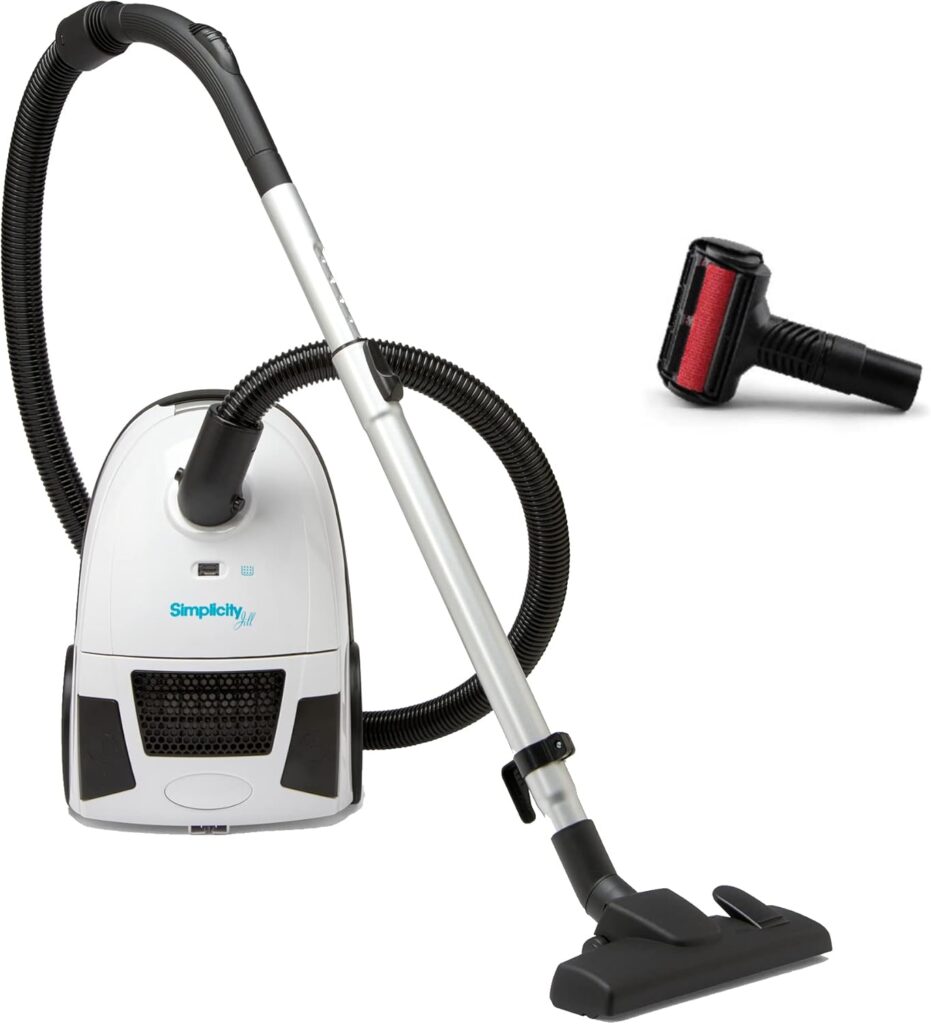
Akitas C11WT Bagged Canister Vacuum Cleaner Review: The Quiet Case for Bagged
The Noise and Mess Nobody Mentions
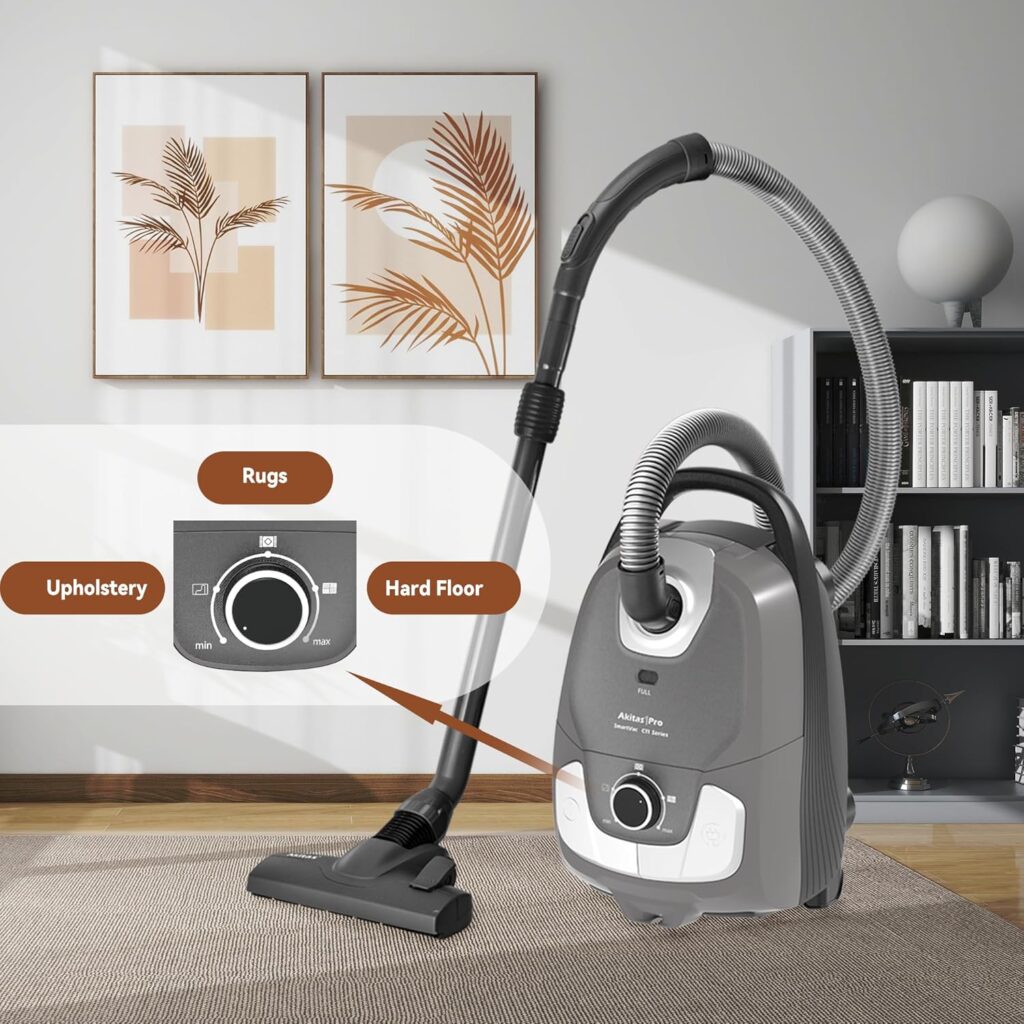
The Akitas C11WT Bagged Canister Vacuum Cleaner does not lead with raw suction numbers or a motorised brush roll. Instead, it makes a quieter and more specific case: it runs below the noise level of most compact vacuums and disposes of pet hair and dander inside a sealed bag rather than releasing a dust cloud over your bin. For households where noise and hygienic disposal are genuine daily concerns, that combination is more valuable than most headline specifications.
The Central Argument
So the argument for the C11WT is not that it outcleans every machine on this list. In practice, it does not. The argument is that it cleans quietly, disposes hygienically, and suits a specific type of household better than anything else at this price. For shared buildings, homes with young children, allergy-sensitive users, or anyone who cleans during early mornings or evenings, those qualities matter more than peak suction.
What This Review Covers
This review covers the full ownership experience: unboxing, build quality, key features, real-world performance, and the honest trade-offs.
The Akitas C11WT suits a specific user. In particular, it works best in compact homes and flats where noise, allergen control, and low-maintenance disposal are the priority. That said, users expecting premium suction or a motorised pet tool at this price will need to look elsewhere.
First Impressions and Unboxing
The C11WT arrives well-packaged for a budget canister. Assembly is straightforward: attach the telescoping wand to the canister body, connect the floor brush, and the machine is ready to use in under five minutes. No tools are required.
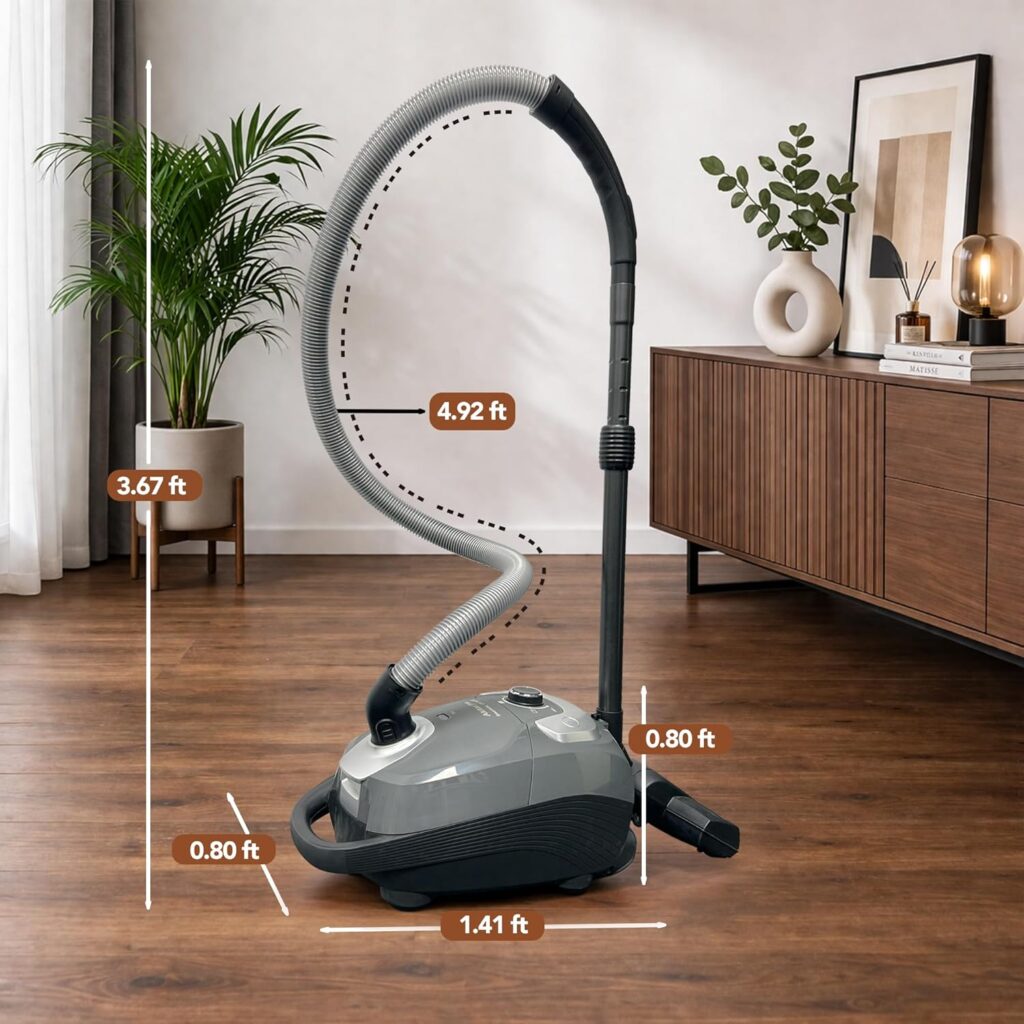
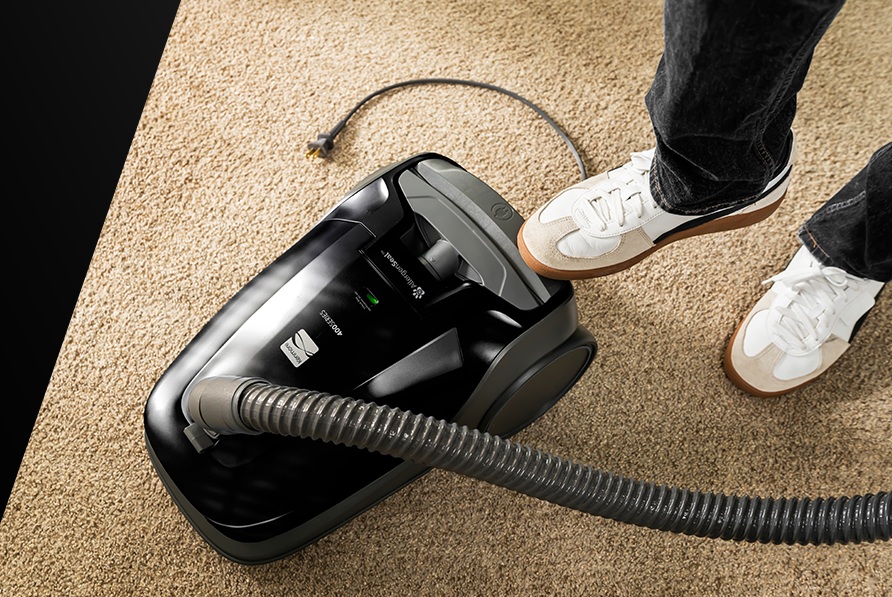
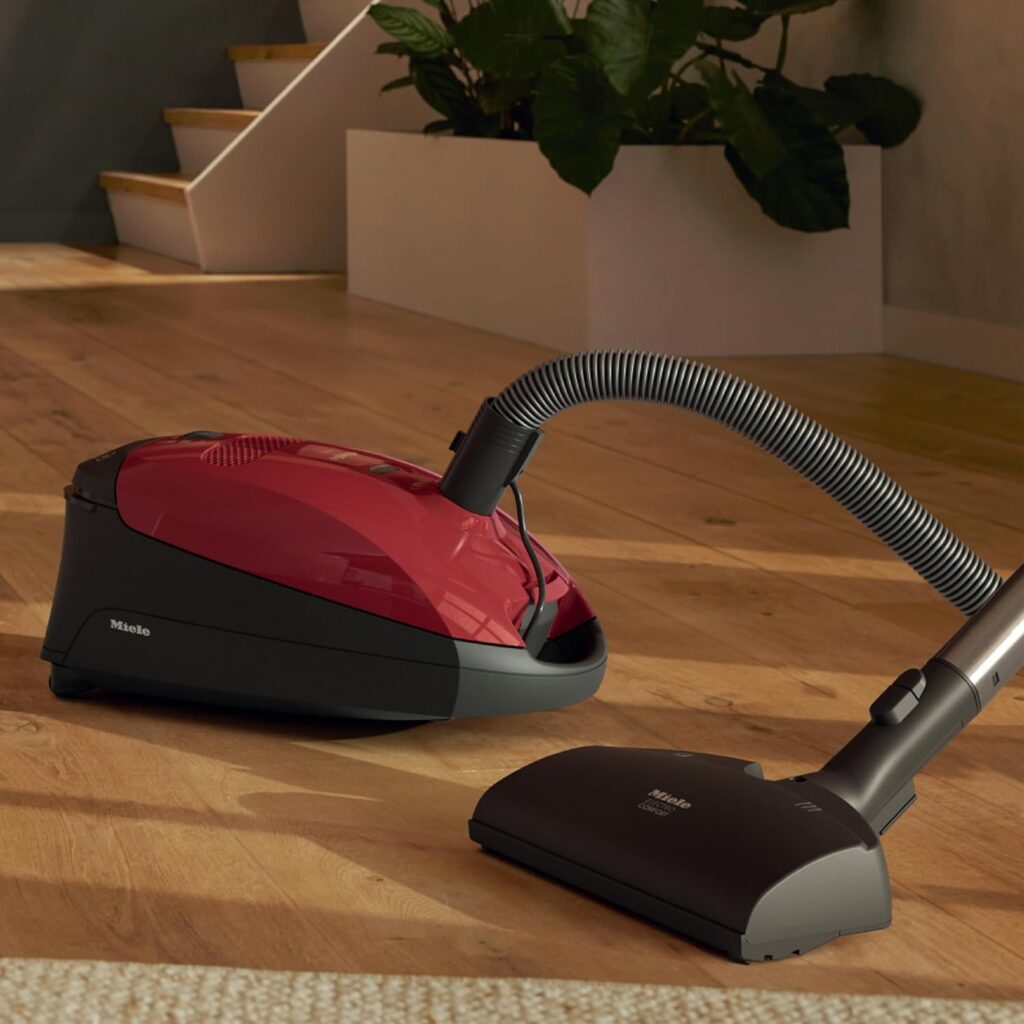
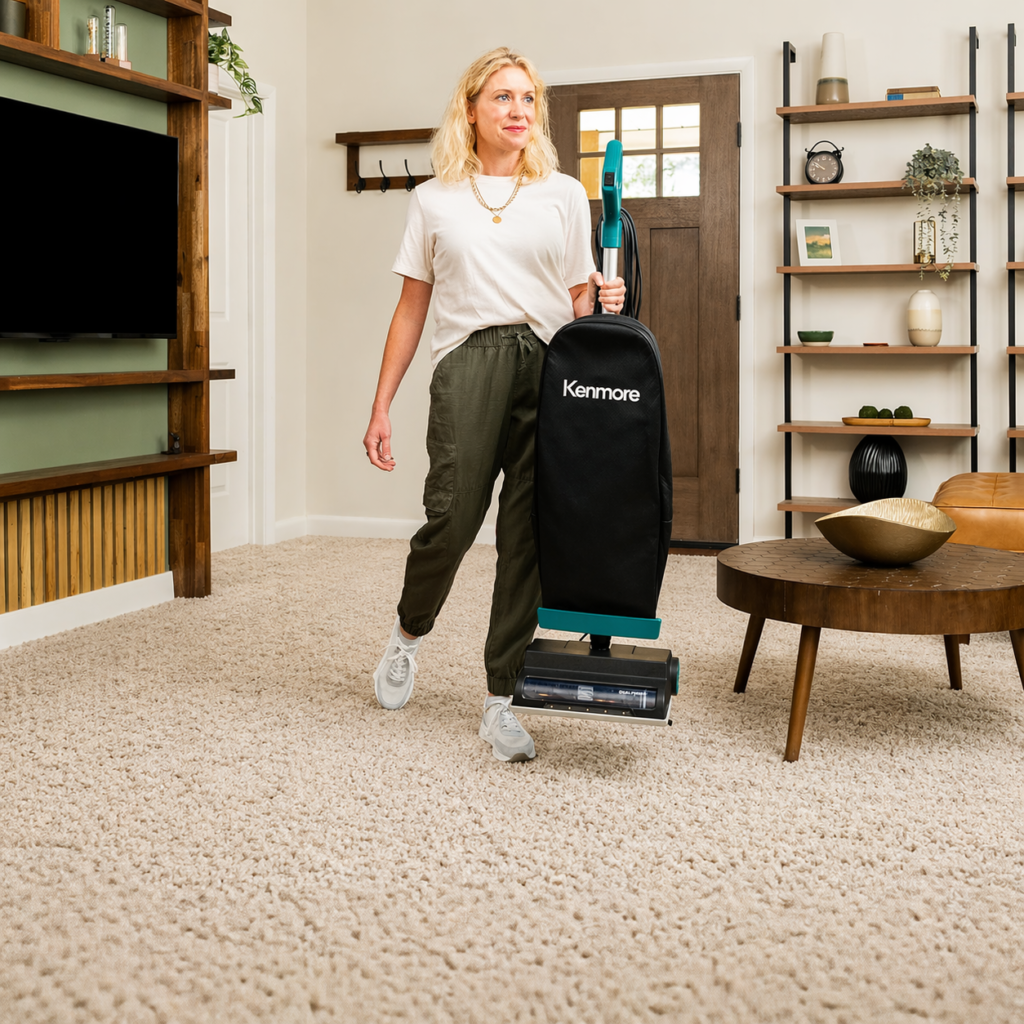
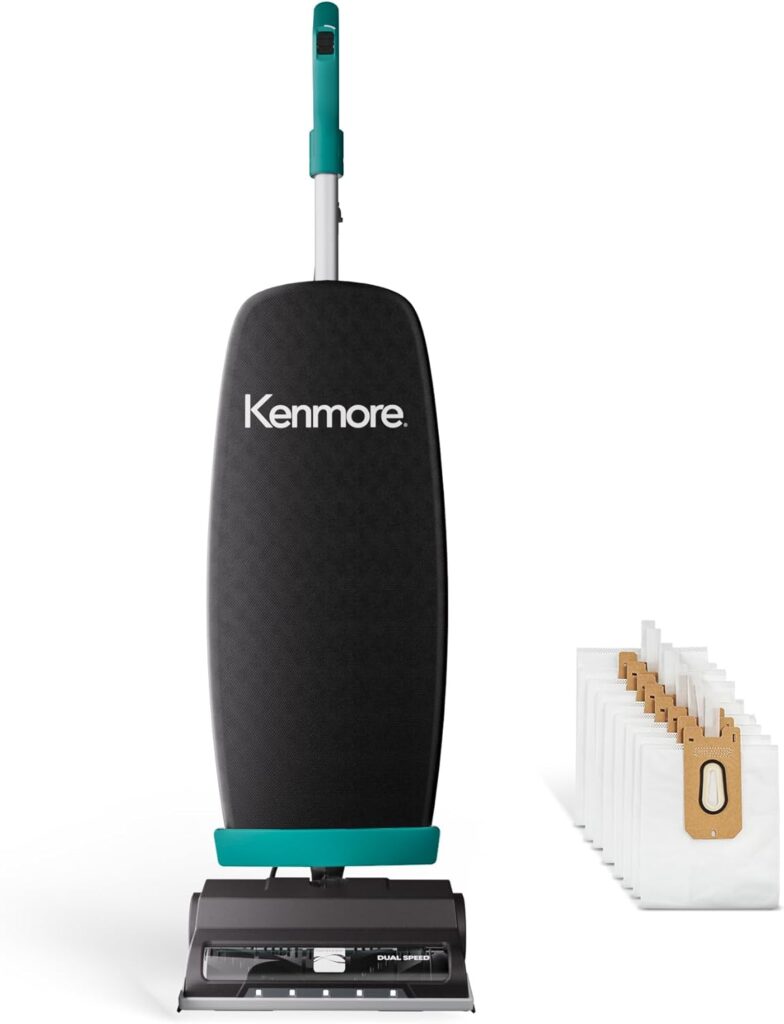
The first physical impression is of a compact, low-profile canister that sits closer to the floor than most. At around 8 lbs, it is heavier than the stick vacuums on this list but lighter than most full-size canisters. The white finish gives it a clean, unobtrusive look that suits most home environments without drawing attention.
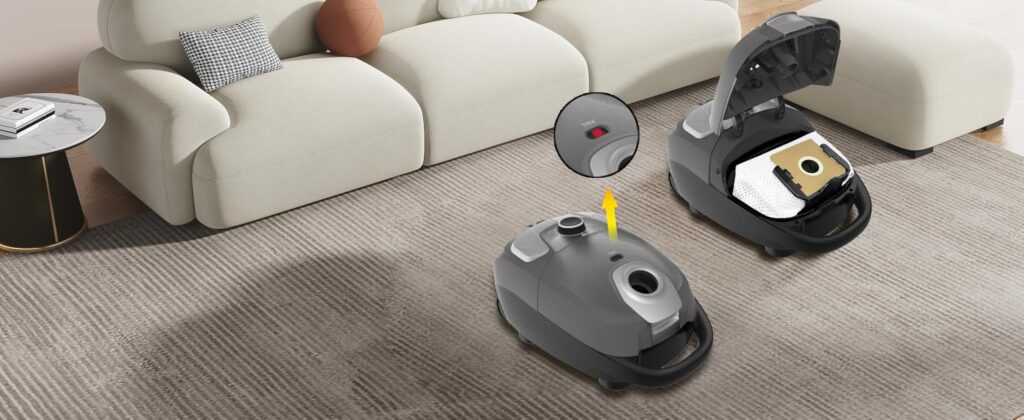
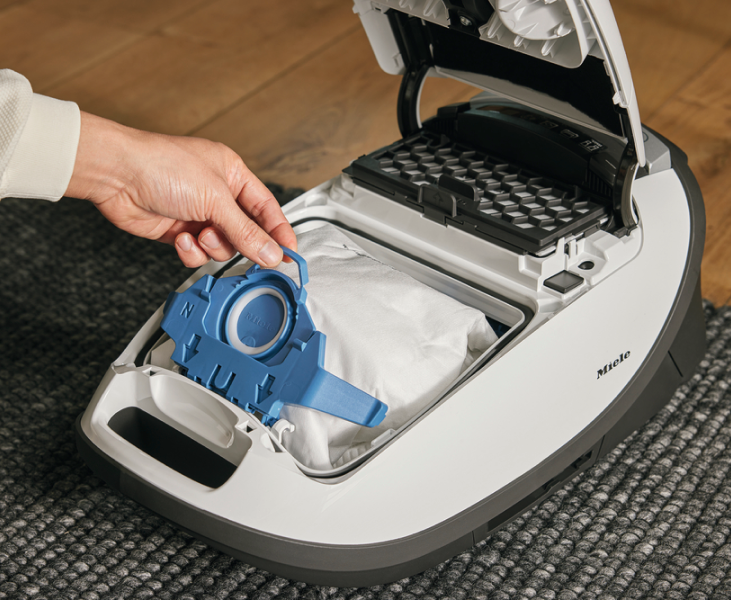
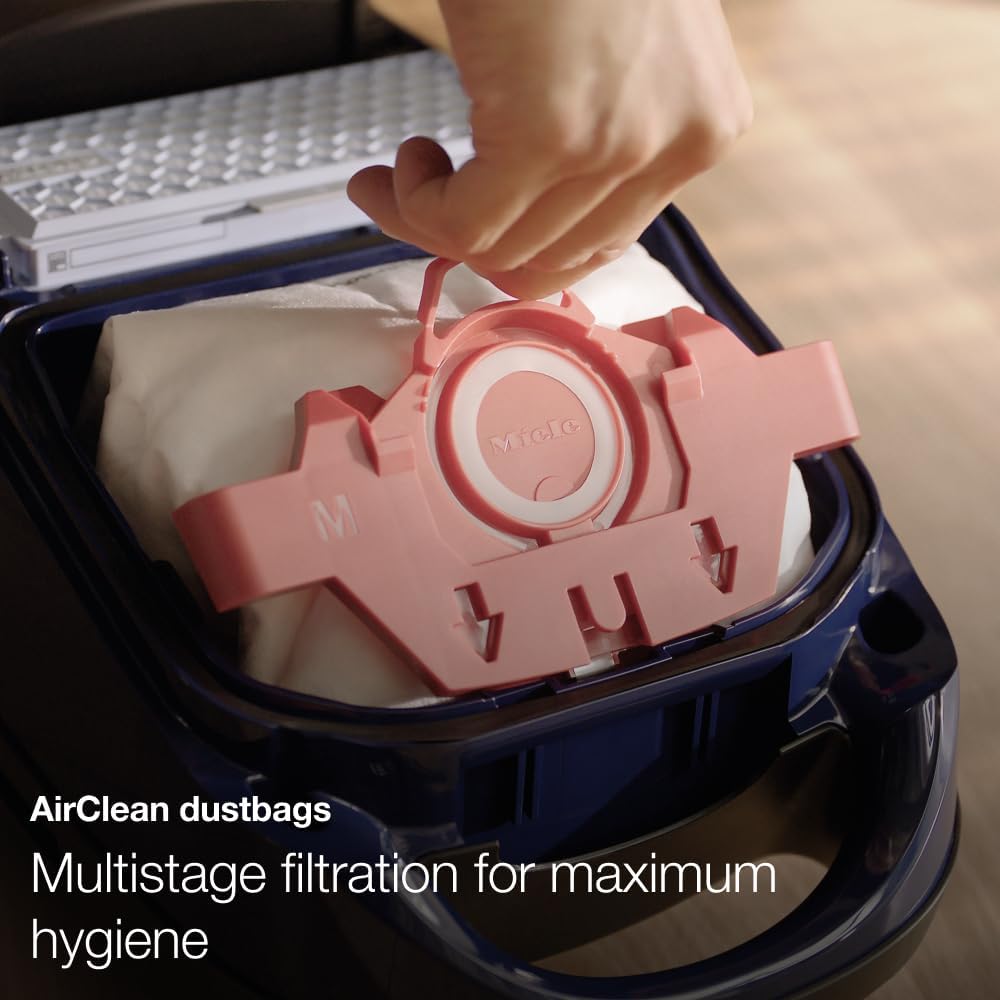
The bag door opens cleanly and the first bag arrives pre-installed. In practice, the sealed bag loading system means there is no contact with dust or pet hair during installation or removal, which is the first sign that the C11WT takes hygiene seriously as a design principle.
Design and Build Quality
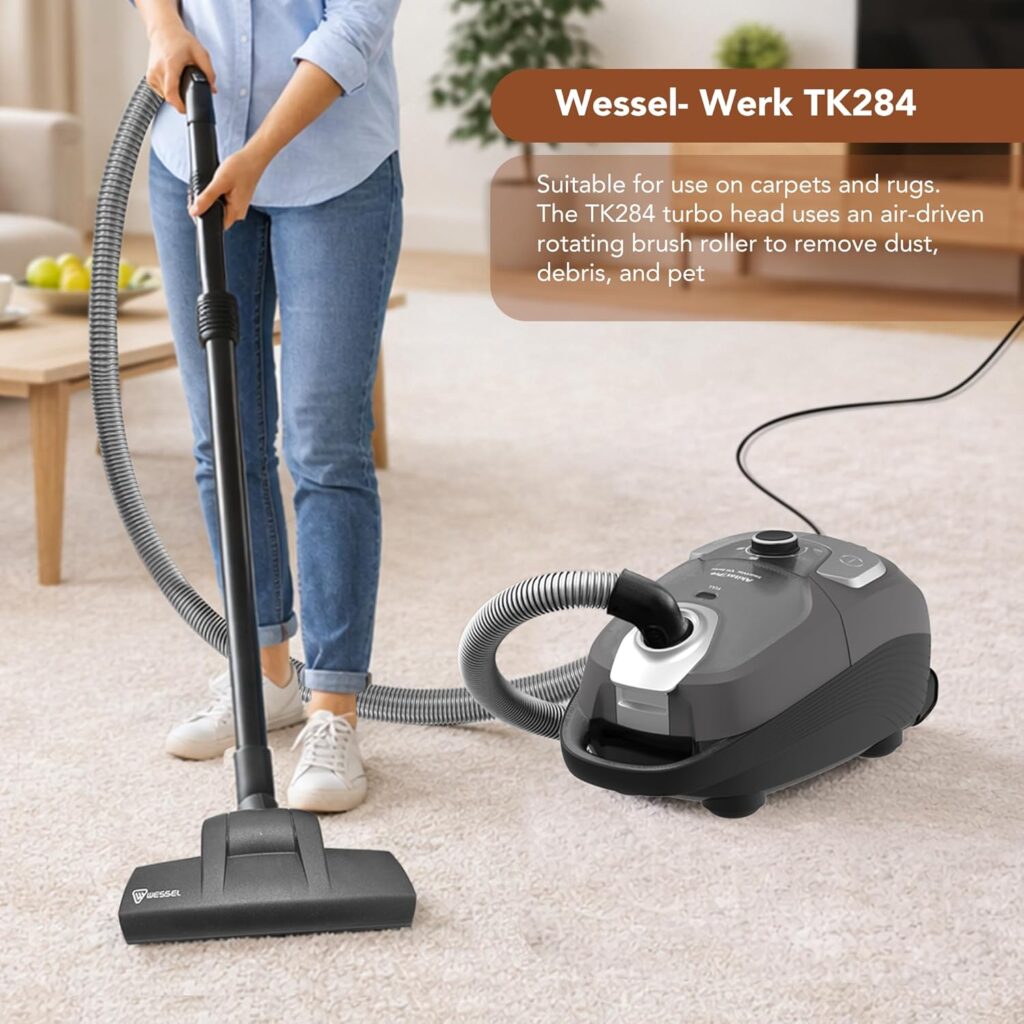
The C11WT uses a low-slung canister body that rolls on four small castors. In practice, this gives it good floor stability when being pulled across hard floors and low-pile carpet. The low centre of gravity means it does not tip when the hose is pulled at an angle, which is a common frustration with taller canister designs.
Materials and Construction
The outer casing uses standard hard plastic throughout. By contrast with premium canister vacuums at three times the price, the materials feel functional rather than premium. That said, the joints are tight, the bag door latches firmly, and nothing flexes or rattles during use. For a machine at this price, the build quality is proportionate to the cost.
Noise Level in Practice
The most noticeable design quality is the operating volume. So the C11WT runs at a noticeably lower decibel level than the corded stick vacuums and bagless uprights on this list. In practice, it sits closer to a low hum than the high-pitched whine of most budget vacuums. For shared-wall flats or homes where cleaning happens outside standard daytime hours, this quality alone differentiates it from the rest of the compact category.
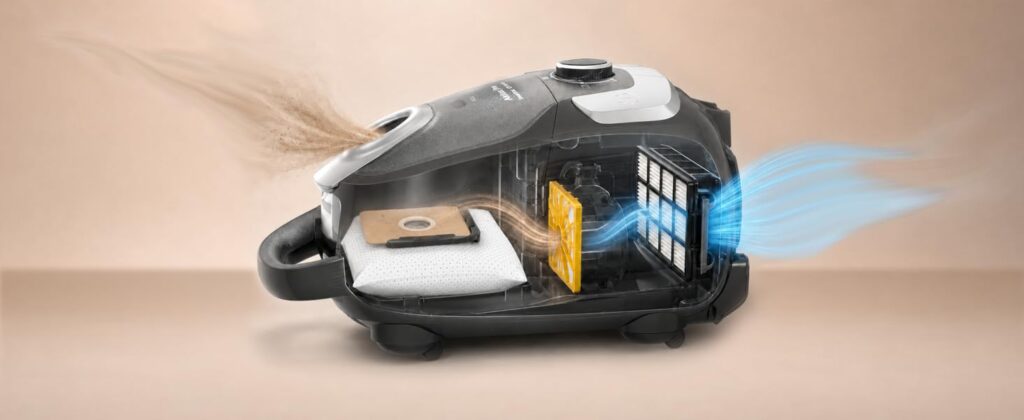
The bagged disposal system is the C11WT’s most important feature. So when a bag fills, you remove it, seal the open end, and bin it without any contact with the contents. Pet hair, fine dander, and household dust stay sealed inside until they reach the outside bin. By contrast, emptying a bagless dust cup requires care to avoid releasing a fine cloud of dust back into the room.
According to Asthma UK, pet dander is one of the most common triggers for asthma and allergic rhinitis in UK households. In practice, a sealed bagged disposal system reduces allergen re-exposure at the most vulnerable moment: the end of the cleaning session.
Quiet Motor Operation
The reduced operating noise is a real and measurable quality. In practice, you can hold a normal conversation at a raised voice whilst the C11WT runs nearby. That said, it is not silent, and it would still disturb a light sleeper in an adjacent room. Equally, for households where every other compact vacuum feels intrusive, the noise reduction is immediately noticeable and appreciated.
Telescoping Wand
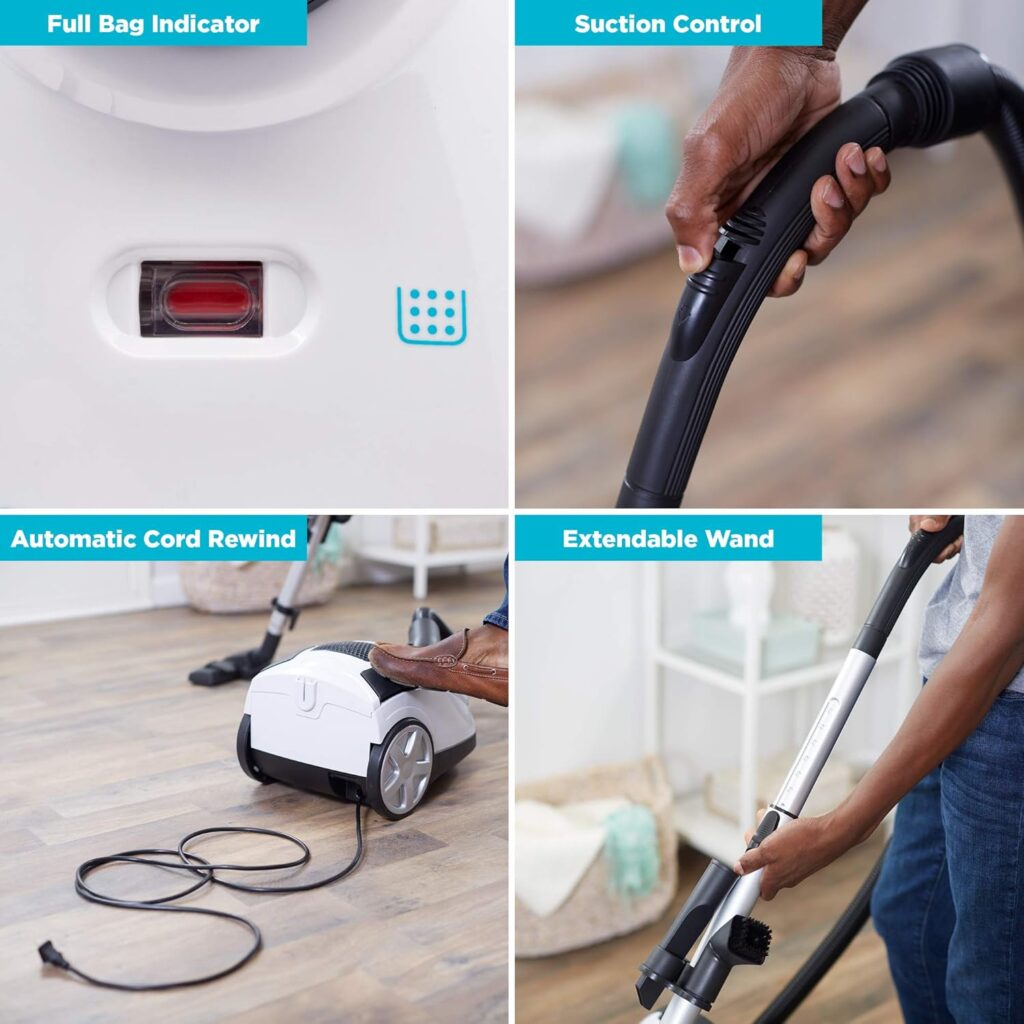
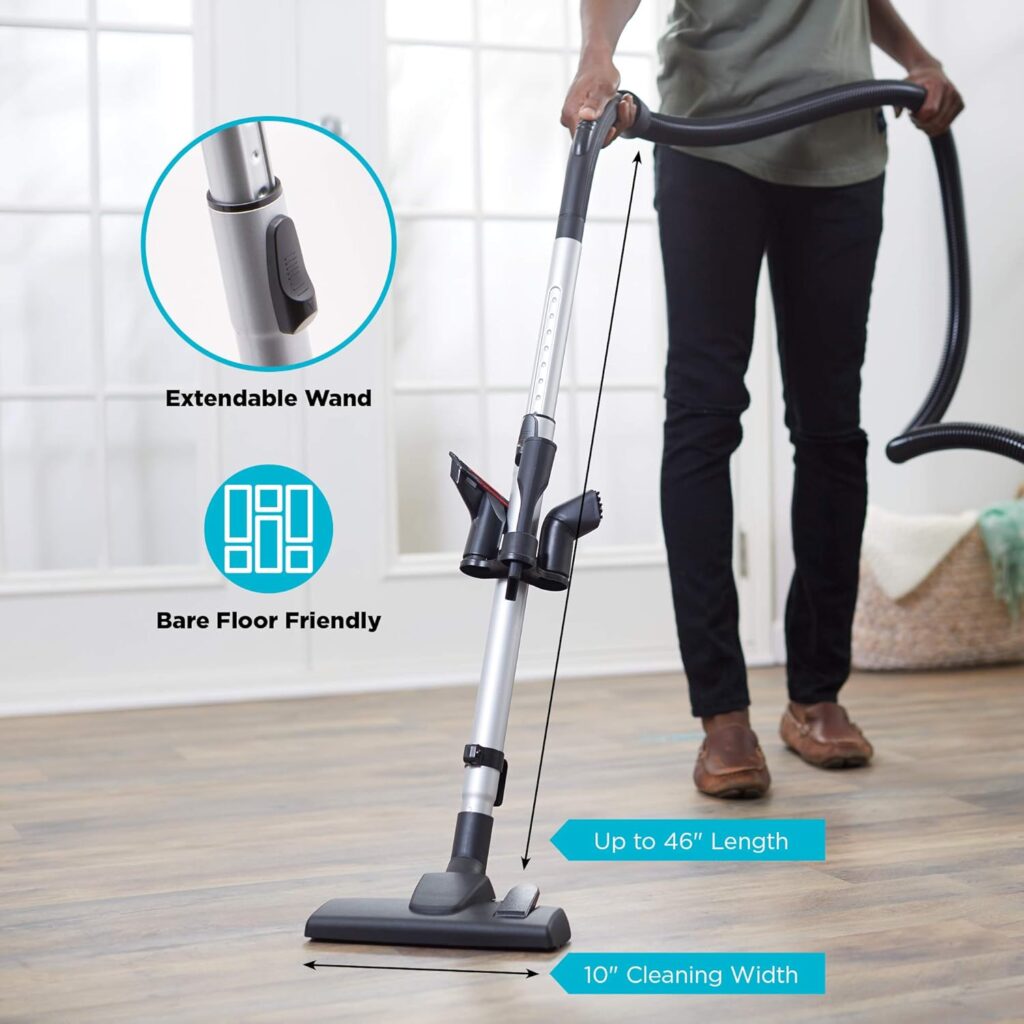
The telescoping wand adjusts to working height for users of different heights. So both shorter and taller users can clean floors without bending uncomfortably. In practice, the wand locks at the chosen length without slipping mid-session, which is not always guaranteed at this price point.
Secondary Filter
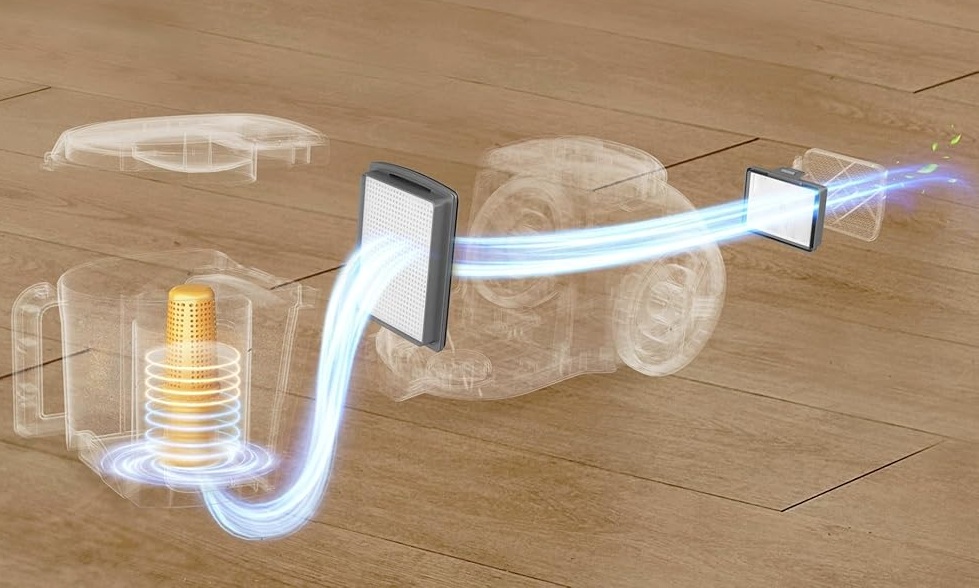
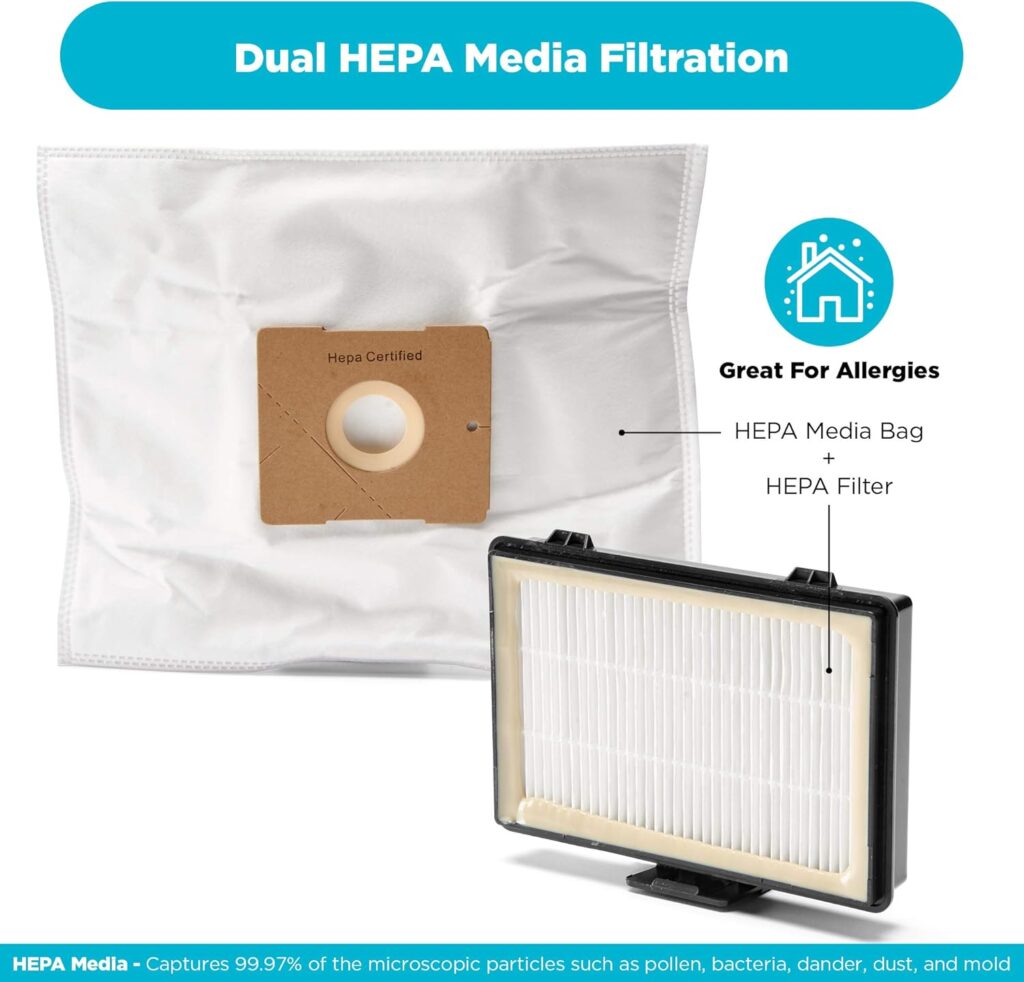
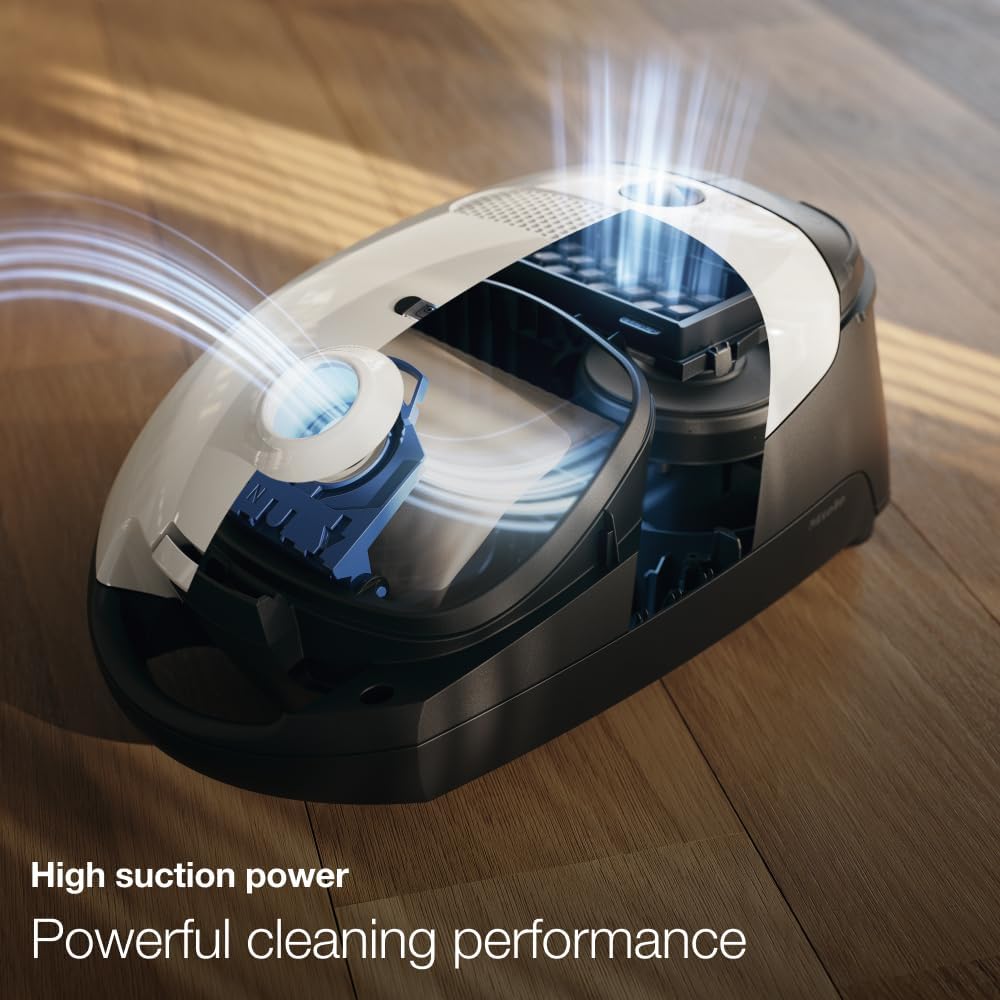
Beyond the bag itself, the C11WT includes a secondary filter that captures fine particles escaping the bag. In practice, this adds a second line of allergen defence during the cleaning session rather than just at disposal. Periodic replacement of the secondary filter maintains consistent performance over the machine’s lifespan.
Canister Stability
The four-castor base rolls freely on hard floors and carpet. In practice, the machine follows the user across the floor without needing to be repositioned frequently, which reduces the stop-and-drag interruptions common with less stable canister designs. Equally, the cord length allows most standard rooms to be covered from a single socket position.
Performance and Real-World Testing
Hard Floor Performance
On hard floors, the C11WT performs well for daily pet hair management. So the floor brush maintains good contact with smooth surfaces and the suction draws fine hair and dust into the bag without scattering it. In particular, the narrow floor brush profile reaches close to skirting boards on both sides in a single pass.
Low-Pile Carpet Performance
On low-pile carpet, suction remains adequate for daily pet hair maintenance. However, the floor brush lacks a motorised brush roll, which limits its ability to agitate and lift embedded fur from the carpet pile. In practice, it handles surface-level hair well but requires slow, overlapping passes to lift hair that has worked into the carpet fibres.
Pet Hair on Upholstery
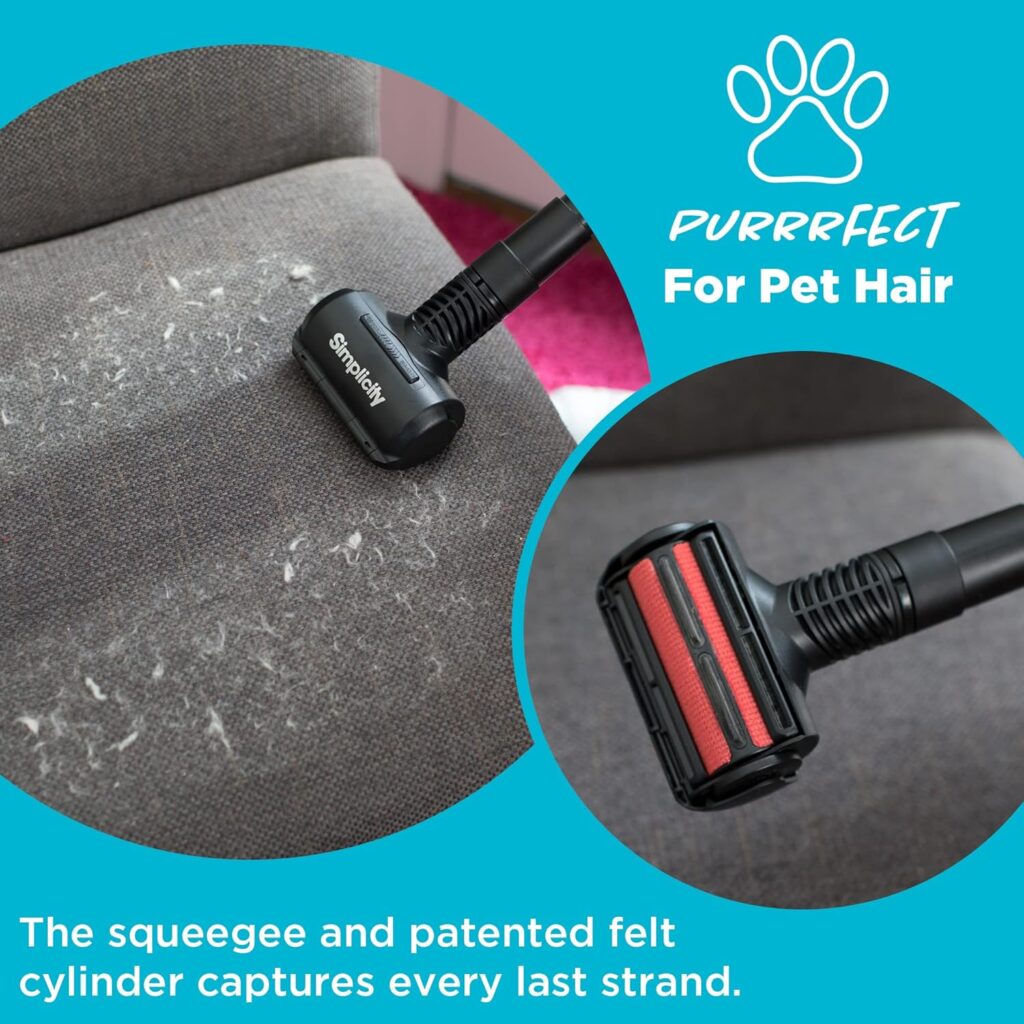
The included upholstery nozzle uses passive suction on furniture surfaces. So, for surface-level pet hair on sofa cushions and chairs, it works adequately. That said, the absence of a motorised pet tool means it is less effective on embedded fur in dense upholstery than a motorised attachment would be. For daily maintenance passes rather than deep furniture restoration, it performs its role.
Suction Over Time
In practice, suction remains steady throughout a session as long as the bag has space to receive debris. Unlike bagless machines, where partial bin-filling can reduce airflow, the bagged system maintains consistent draw until the bag is nearly full. The indicator light on the body signals when a new bag is needed, which removes any guesswork.
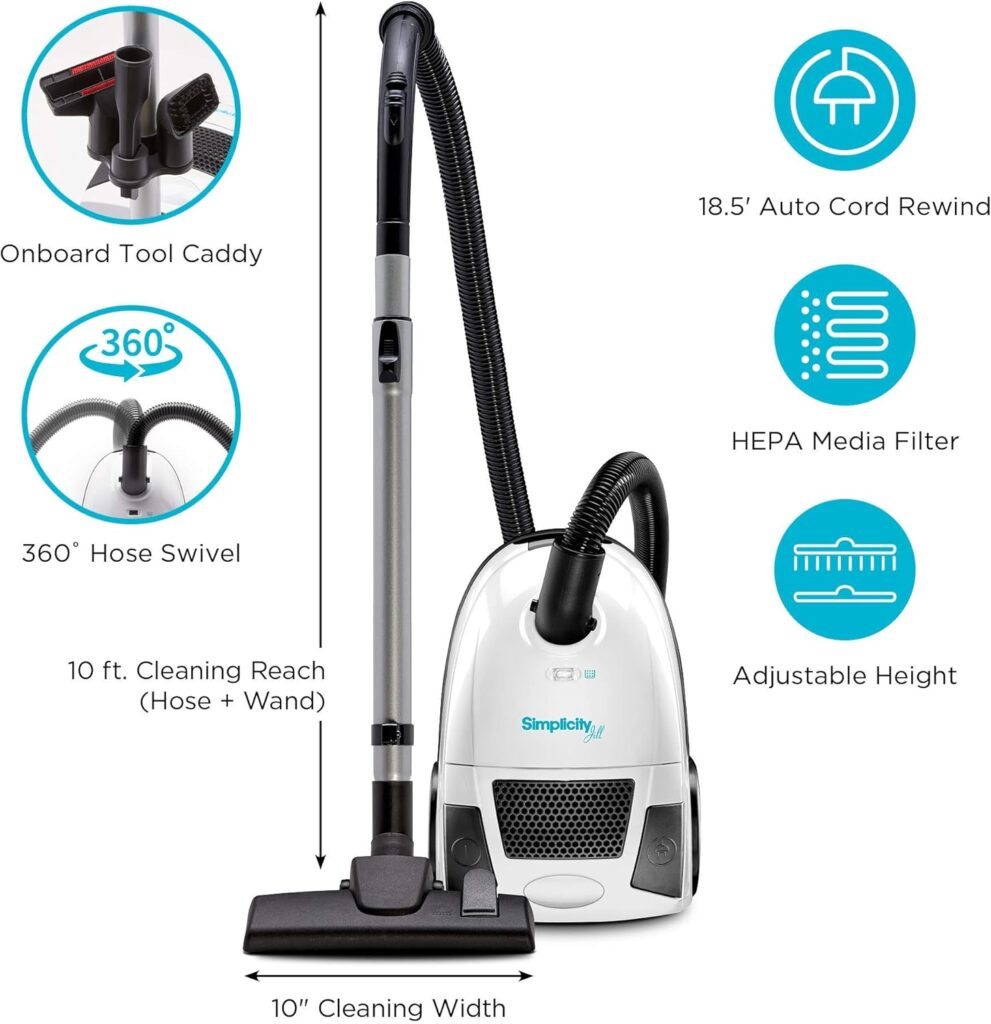
The 18-foot cord is shorter than the 25-foot cords found on the Shark Rocket models. In practice, this means socket changes may be needed in larger rooms. For compact homes and flats, it covers most room sizes from a single position. For full specification details, visit the Akitas product page.
Accessories and Tools Included
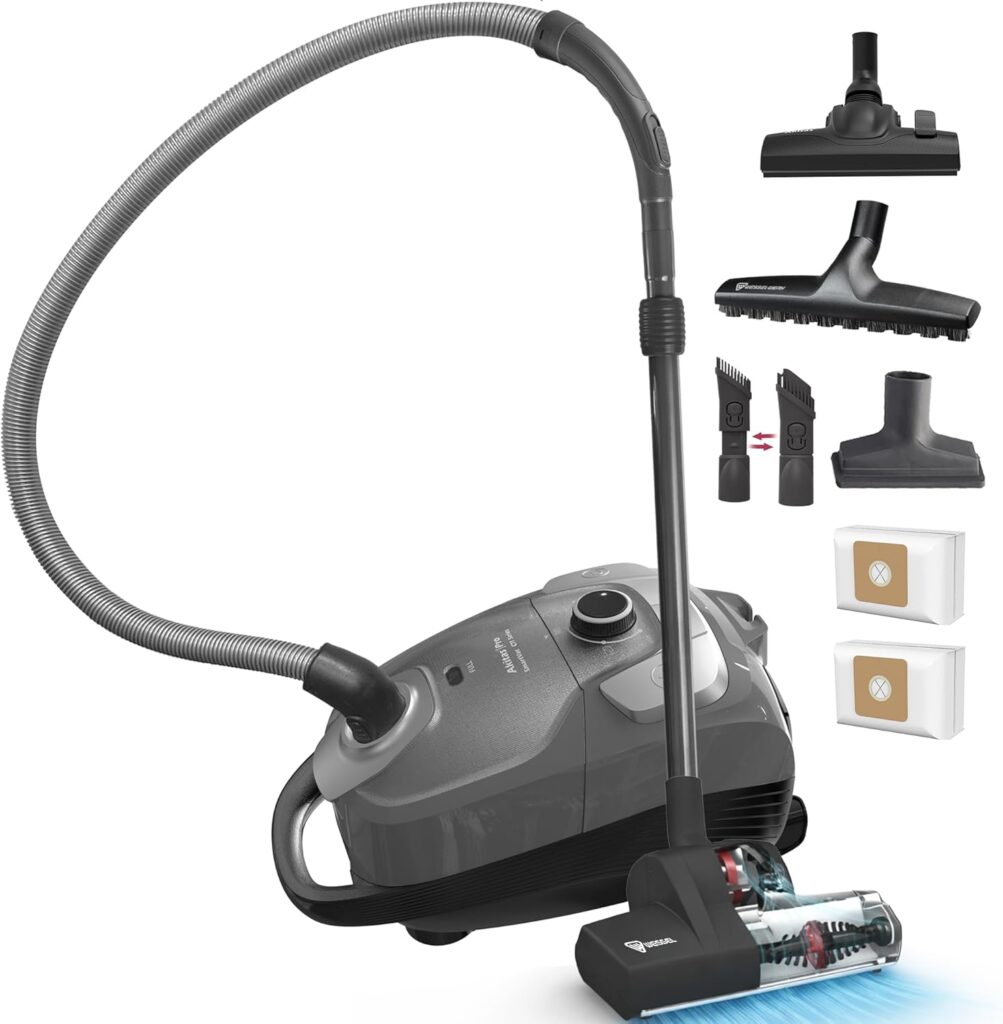
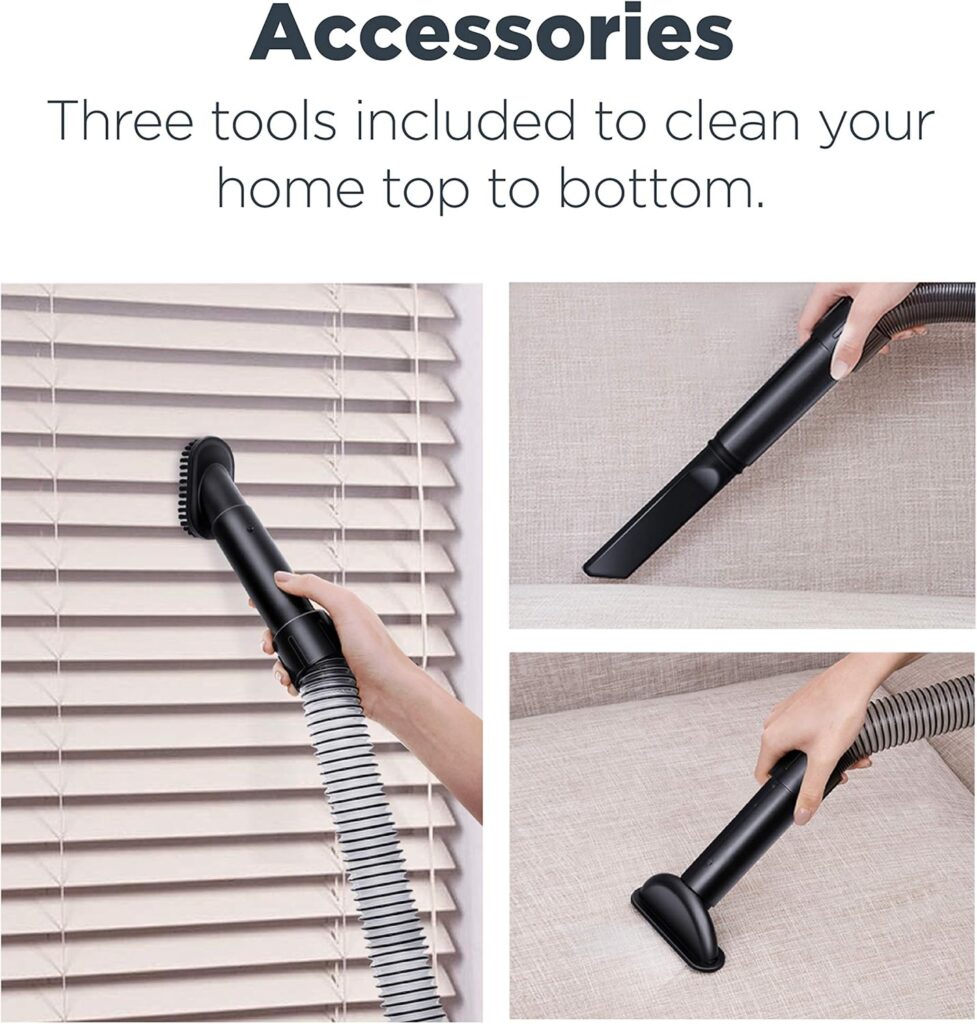
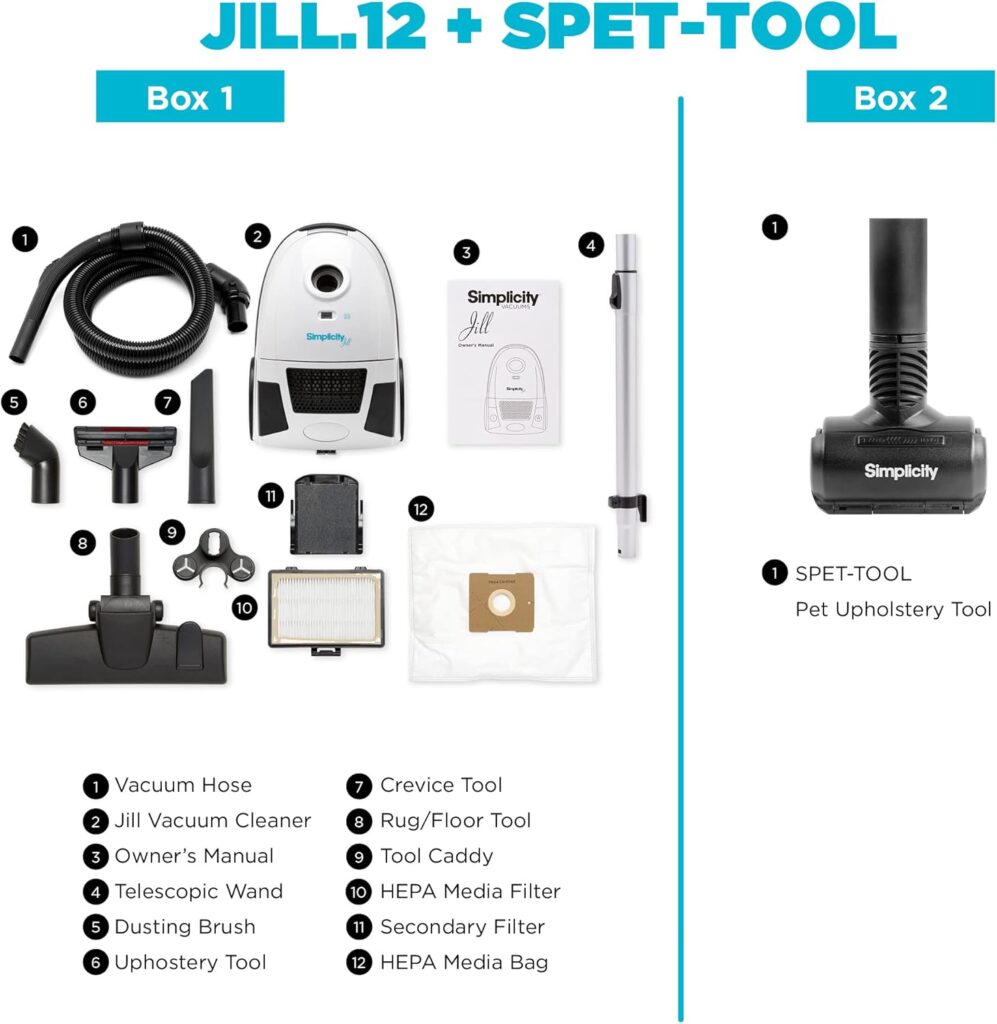
The C11WT ships with a practical set of tools that covers the essential cleaning tasks without unnecessary complexity.
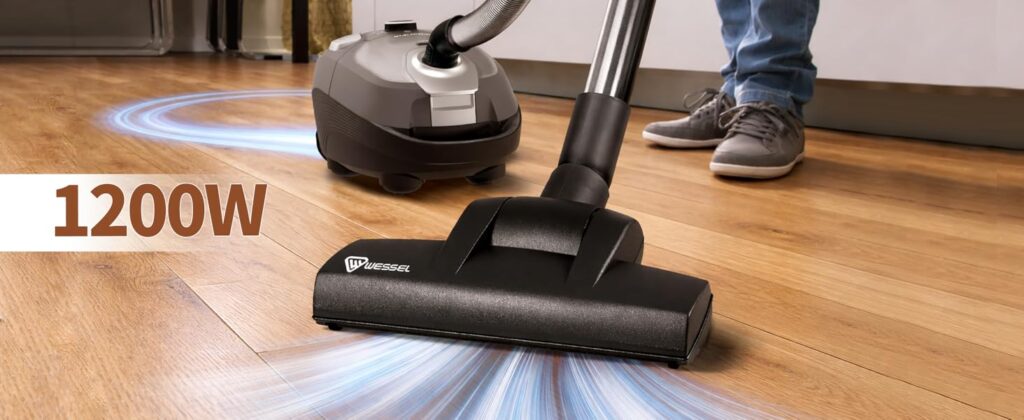
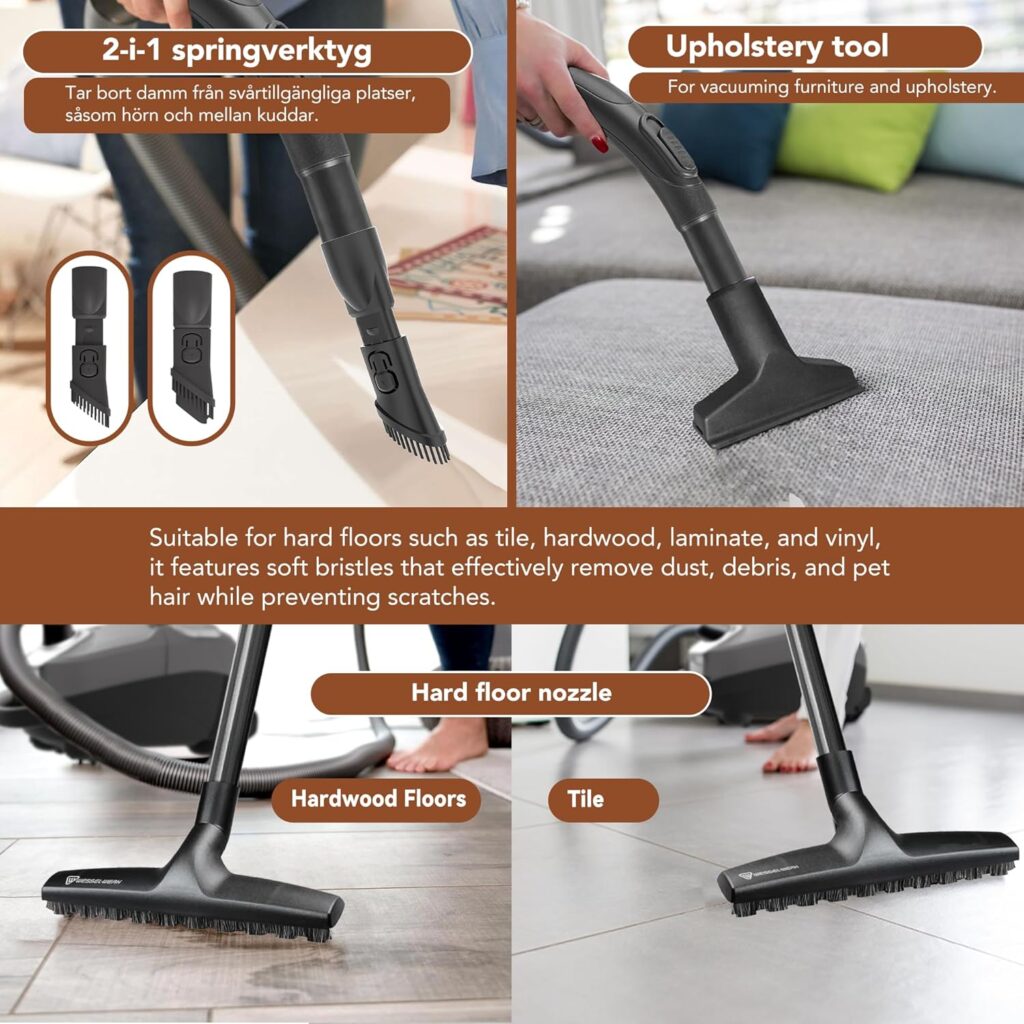
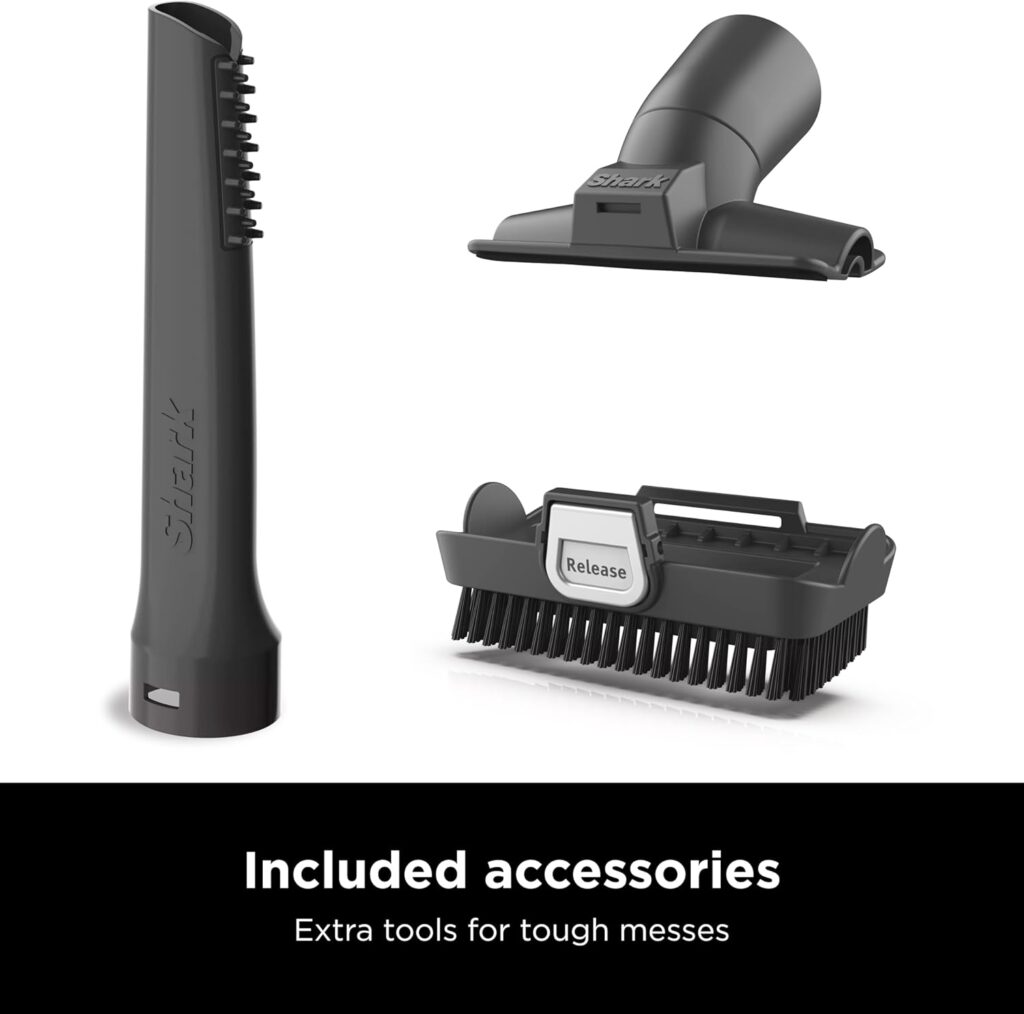
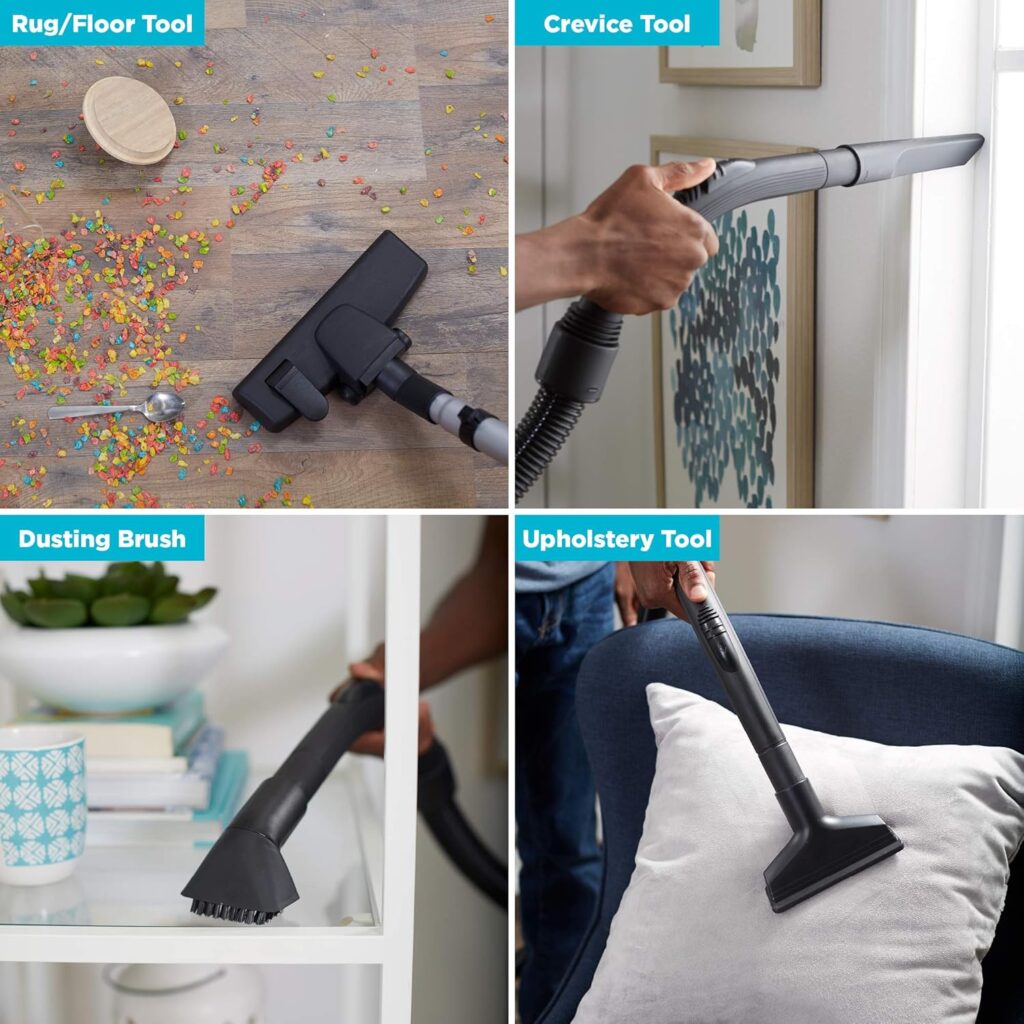
The floor brush is the primary attachment for hard floors and low-pile carpet. In practice, it sits flat against smooth surfaces and maintains good suction contact throughout a pass.
The crevice tool is a narrow flat-tipped nozzle for skirting boards, tight corners, and gaps between furniture. So in pet-hair households, this becomes the second most-used tool after the floor brush.
The upholstery nozzle handles sofa surfaces and fabric-covered furniture. That said, as a passive suction tool, its effectiveness on embedded fur is limited compared to a motorised attachment.
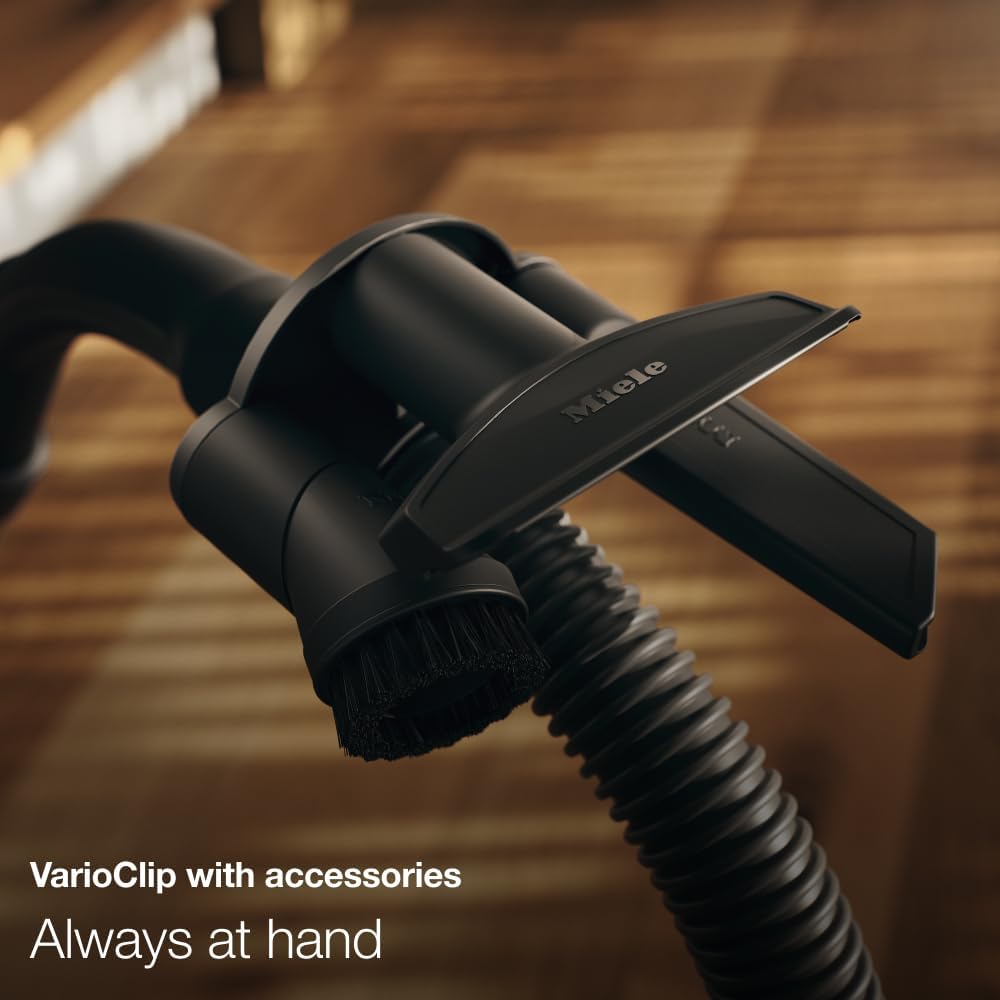
The telescoping wand adjusts to working height and connects all tools to the canister body. In practice, the secure lock mechanism prevents accidental shortening mid-session.
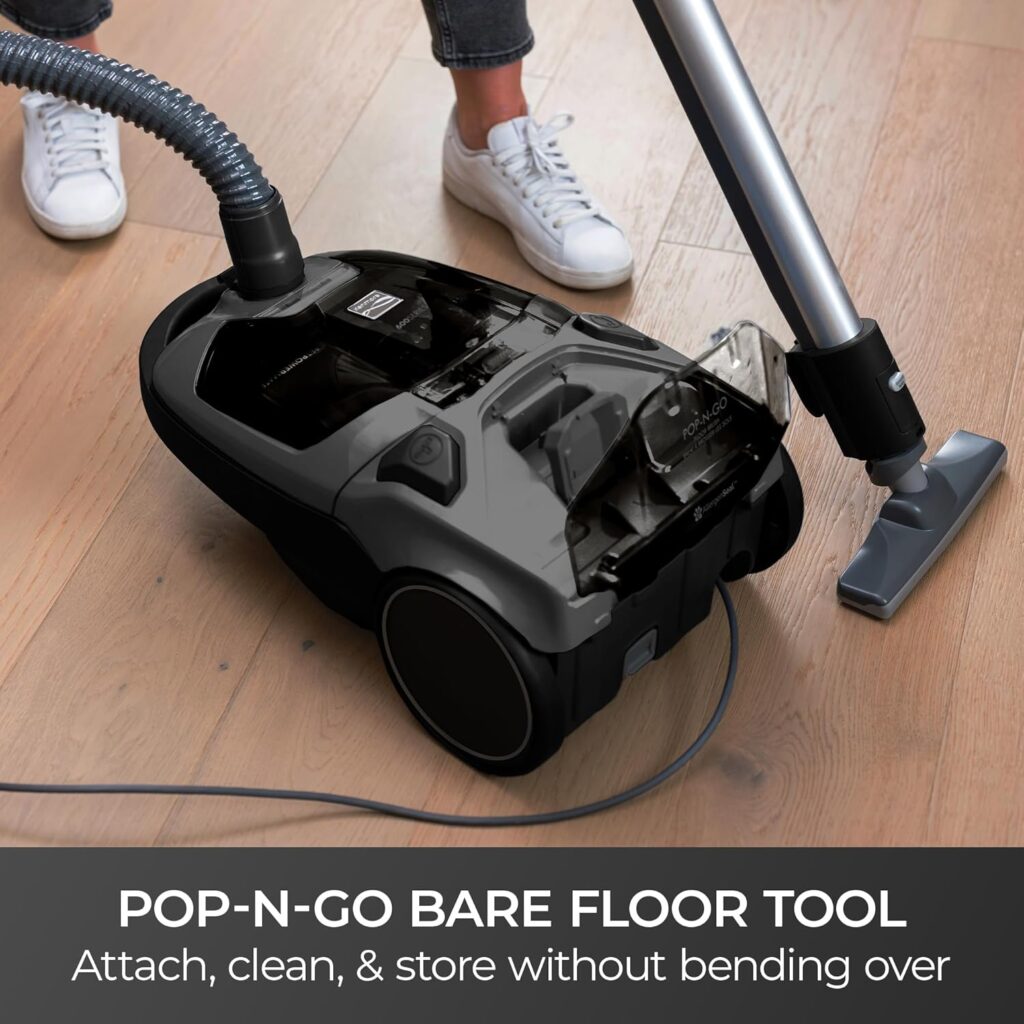
What you do not get is a motorised pet tool or a HEPA-rated bag. For allergen-sensitive households requiring HEPA-grade filtration, the Kenmore BC4039 with its HEPA media bag represents a step up in both filtration grade and accessory quality.
Quieter operation than any other machine on this list. So it suits noise-sensitive households, shared buildings, and cleaning outside standard hours.
Sealed bag disposal keeps pet allergens contained. In practice, there is no dust cloud at the point of disposal, which matters for allergy-sensitive users.
Steady suction throughout the session. As a result, performance does not drop as the bag fills, unlike bagless machines, where partial bin-blocking reduces airflow.
Stable four-castor base on hard floors. Equally, the low centre of gravity prevents tipping when the hose pulls at an angle.
Low daily maintenance burden. That said, replacing a bag rather than washing a bin and drying a filter takes considerably less time per session.
Cons
No motorised brush roll for carpet. However, for daily surface-level maintenance on low-pile carpet, passive suction handles the task adequately.
Shorter 18-foot cord. Consequently, larger rooms may require a socket change during a full clean.
Ongoing bag replacement cost. That said, for most households the annual spend on replacement bags is modest.
No HEPA-rated bag. For this reason, users with diagnosed pet allergies requiring clinical HEPA filtration should consider the Kenmore BC4039 instead.
Who This Product Is Best For
The Ideal User
The C11WT suits pet owners in flats, terraced houses, and shared-wall homes where vacuum noise is a genuine concern. So anyone who cleans in the evenings, early mornings, or during nap times will notice and appreciate the reduced operating volume from the first session. In particular, it works well in compact homes where the 18-foot cord covers most rooms without a socket change.
Allergy-Aware Households
For households where a family member has a pet dander sensitivity, the sealed bag disposal provides a practical improvement over emptying a bagless dust cup. According to NSF International, proper containment of fine particles during disposal is a meaningful step in managing indoor allergen levels. In practice, the C11WT’s bagged system addresses this at an accessible price point.
Who Should Look Elsewhere
That said, several user types will be better served by a different machine. So if deep carpet cleaning is a priority, the absence of a motorised brush roll limits the C11WT to surface-level performance. Equally, if HEPA-grade filtration is a clinical requirement, the Kenmore BC4039 with its HEPA media bag is the appropriate step up. For users who prioritise raw suction over quiet operation, any of the corded stick or upright models on this list will deliver more aggressive performance.
Beyond daily pet hair on floors, the C11WT handles a range of tasks that suit its canister format well. So the telescoping wand and crevice tool make it practical for cleaning behind and under furniture, where the low canister body and flexible hose reach into spaces a rigid stick vacuum cannot easily access.
In practice, the upholstery nozzle works well on fabric-covered headboards, curtains, and lampshades during periodic deep cleans. Equally, the quiet motor makes it the natural choice for cleaning around sleeping pets, young children, or light sleepers without causing unnecessary disturbance.
Value for Money and Comparison
The C11WT sits at the entry-to-mid-range bracket for compact canister vacuums. In practice, what justifies its price over cheaper bagless alternatives is the combination of quiet operation and sealed bagged disposal. By contrast, a bagless stick at a similar price offers more mobility but noisier operation and dustier disposal.
Compared to the Kenmore BC4039, the C11WT is cheaper but gives up HEPA media bag filtration and a motorised PowerMate pet tool. For households where clinical allergen control is the priority, the BC4039 is the better investment. For households where noise is the primary concern and standard bag filtration is sufficient, the C11WT holds its own.
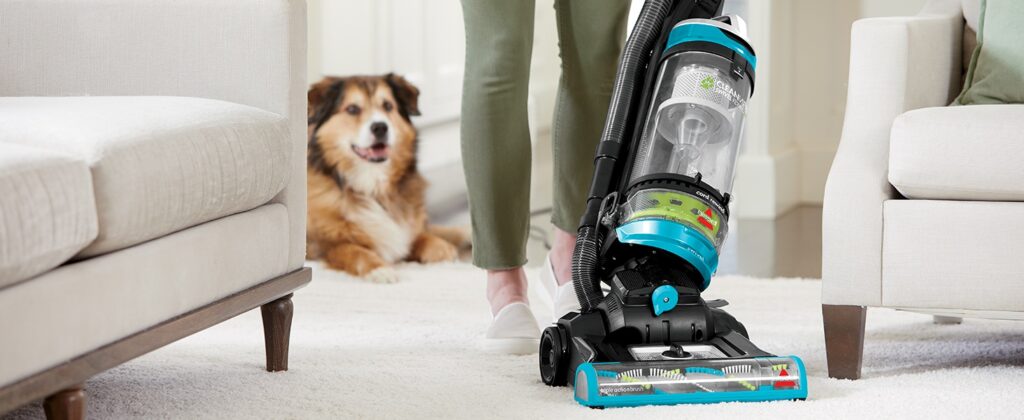
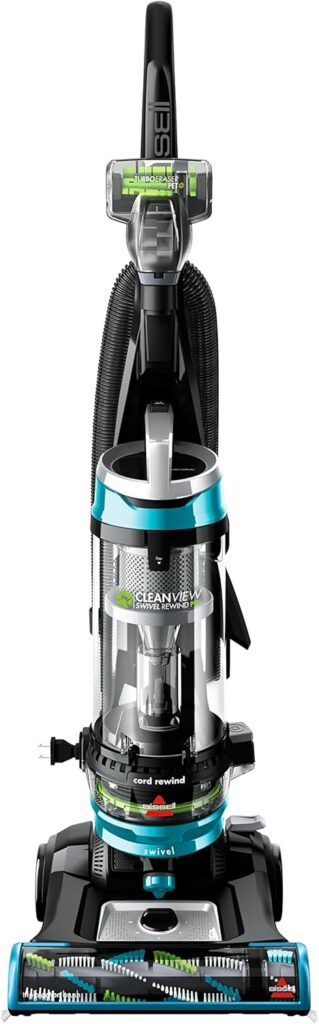
Compared to the Akitas C11WT, the Bissell 3836 CleanView Swivel offers swivel steering and bagless convenience at a similar price but with noisier operation and less hygienic disposal. In practice, the choice between them comes down to whether quiet operation or steering agility matters more to the buyer.
The day-to-day maintenance routine for the C11WT is the lightest of any machine on this list. So at the end of each session, check the bag indicator and replace the bag when needed. In practice, most households will replace the bag every two to four weeks, depending on shed volume and session frequency. The bag door opens with a single latch, the bag removes cleanly, and a new one drops in without any contact with the contents.
Secondary Filter Care
The secondary filter requires periodic cleaning to maintain suction. In practice, rinse it under cold water when suction drops noticeably, and allow full air-drying before reinstalling. Replacement filters are available, but not always easy to source for less established brands. Buying a spare filter at the time of purchase is sensible.
Warranty and Longevity
The 1-year warranty covers manufacturing defects. The most commonly reported issue with budget canister vacuums over time is reduced suction caused by a blocked secondary filter rather than motor decline. In practice, maintaining the filter-cleaning routine prevents most performance complaints within the warranty period.
Reasons to Buy
Quietest machine on the compact pet hair list. So for noise-sensitive households, this is the defining reason to choose the C11WT over any alternative at this price.
Sealed bag disposal for allergen-safe emptying. In practice, this reduces the risk of re-releasing pet dander into the room at the end of every session.
Steady suction throughout the session. As a result, there is no mid-session drop caused by partial bin-blocking as there can be with bagless models.
Low daily maintenance burden. Equally, replacing a bag takes less time and effort than washing a bin and drying a filter.
Stable canister base on hard floors. That said, the four-castor design follows the user smoothly without tipping or resistance.
Reasons to Skip
You need a motorised brush roll for carpet. However, on dense or high-pile carpet, the passive floor brush will require slow, repeated passes that a motorised brush roll handles in a single run.
You require HEPA-grade bag filtration. For this reason, the Kenmore BC4039 with its HEPA media bag is the appropriate alternative for clinically allergy-sensitive users.
Your home is large with multiple rooms. Consequently, the 18-foot cord will require frequent socket changes that interrupt the cleaning flow.
You want cordless freedom. By contrast, the Bosch Unlimited 9 or 10 offers battery-powered flexibility at a higher price for users who prioritise movement over noise level.
Conclusion
The Verdict
The Akitas C11WT makes a focused and credible case for itself, and quiet operation backed by hygienic bagged disposal is the honest reason why. So in a compact vacuum category dominated by loud bagless stick machines, the C11WT occupies a genuinely different position. In practice, it will not deep-clean carpet better than a motorised upright, and it will not match the allergen capture of a HEPA media bag machine. That said, it delivers its specific combination of quiet running and clean disposal more effectively than anything else at this price.
Who Should Buy It
So for pet owners in flats, terraced houses, or any shared-wall home where vacuum noise is a real daily concern, the C11WT is an easy recommendation. Equally, for households where a family member has a mild pet dander sensitivity and hygienic bag disposal matters, it provides a practical step up from bagless alternatives without requiring a significant price increase.
However, for users with diagnosed allergies requiring clinical HEPA filtration, the Kenmore BC4039 is the appropriate choice. In that case, the motorised pet tool and HEPA media bag justify the higher price. For users who want cordless freedom above all else, the Bosch Unlimited 9 serves that need directly.
Final Advice and Next Steps
At its price, the Akitas C11WT Bagged Canister Vacuum Cleaner delivers something that most compact vacuums do not think to offer: a genuinely quieter and cleaner daily experience. In practice, for the household it suits, those qualities make a real difference to whether vacuuming feels like a chore or a quick and unobtrusive routine. So if noise and hygiene are your primary concerns, this machine earns a confident recommendation.
The Best Compact Vacuums for Pet Hair in 2026: 10 Tested and Ranked
The Pet Hair Problem Nobody Warns You About
The best compact vacuums for pet hair in 2026 are a very different proposition from the lightweight machines that disappointed pet owners a decade ago. So if you’ve been putting off buying a smaller vacuum because you assumed it couldn’t handle the fur your dog or cat produces every single day, I want to challenge that assumption right now. Pet hair is relentless. It works itself deep into carpet fibres, clings stubbornly to sofa cushions, and manages to appear on surfaces nowhere near your pet.
Furthermore, the challenge has never really been just about picking up the fur. It’s about doing it without hauling a machine that weighs as much as a small dog out of the cupboard every morning. Compact vacuums have always promised a solution to this. However, until recently, most of them fell short on pet hair specifically.
Why Compact Vacuums Have Changed
That said, the current generation of compact machines is genuinely different. So manufacturers have invested seriously in brush roll engineering, sealed filtration systems, and battery technology. Additionally, many of the best compact models now match or exceed mid-range full-size uprights on hard floors and low-pile carpet. Overall, for most pet-owning households, a compact vacuum is no longer a compromise.
What This Guide Will Help You Decide
Moreover, this guide ranks the ten best compact vacuums for pet hair available right now. So each entry includes a full breakdown of key features, honest pros and cons, everything in the box, and a clear statement of who the machine suits best. Additionally, the buyer’s guide at the end helps you match the right machine to your specific home, floor types, and budget.
The selection is based on a combination of suction performance, brush roll quality, filtration grade, ease of maintenance, and overall value at each price tier. That said, prices fluctuate regularly, so treat any figures here as a guide and check current listings before purchasing.
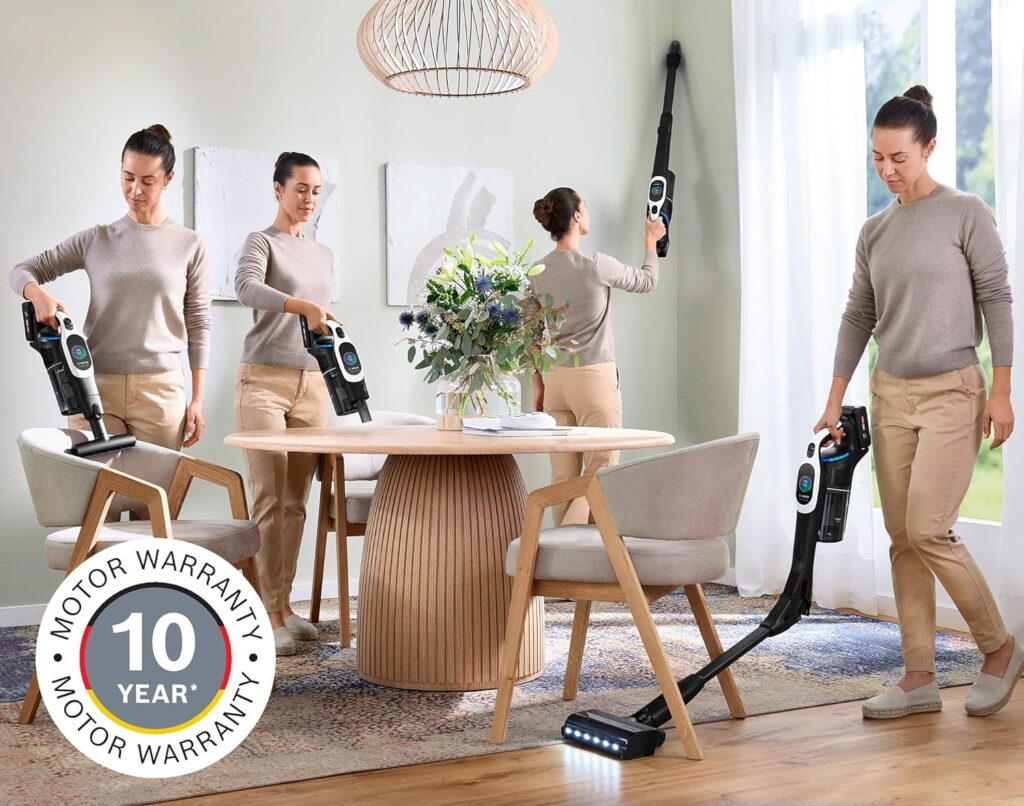
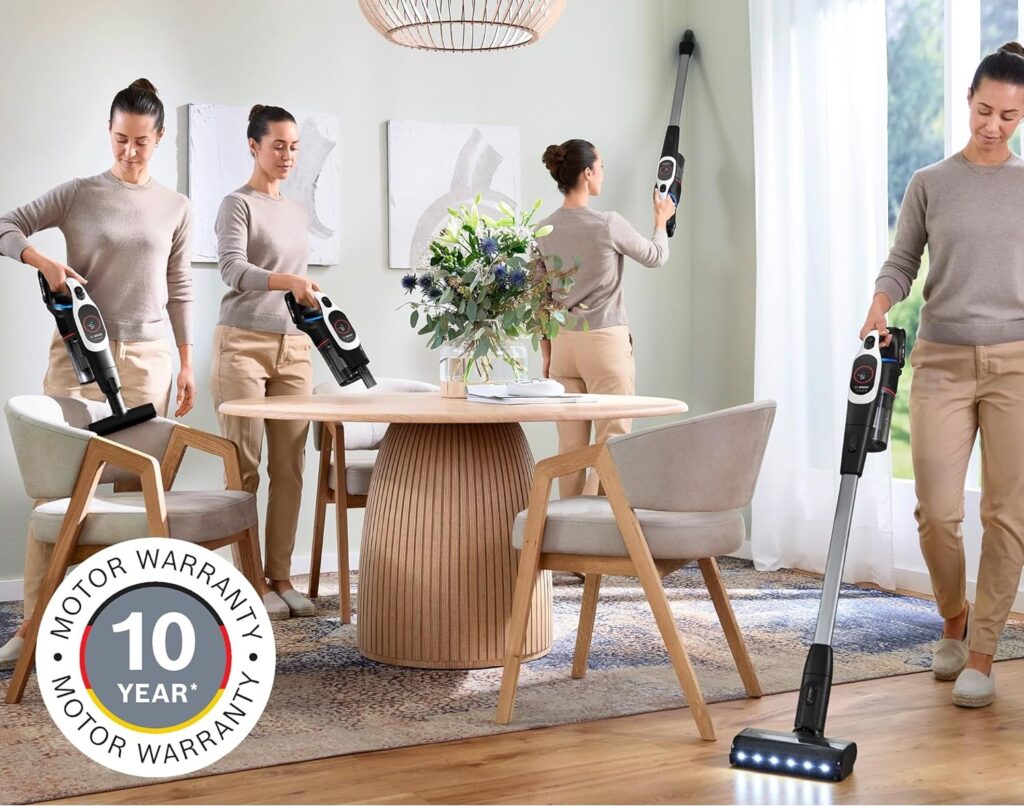
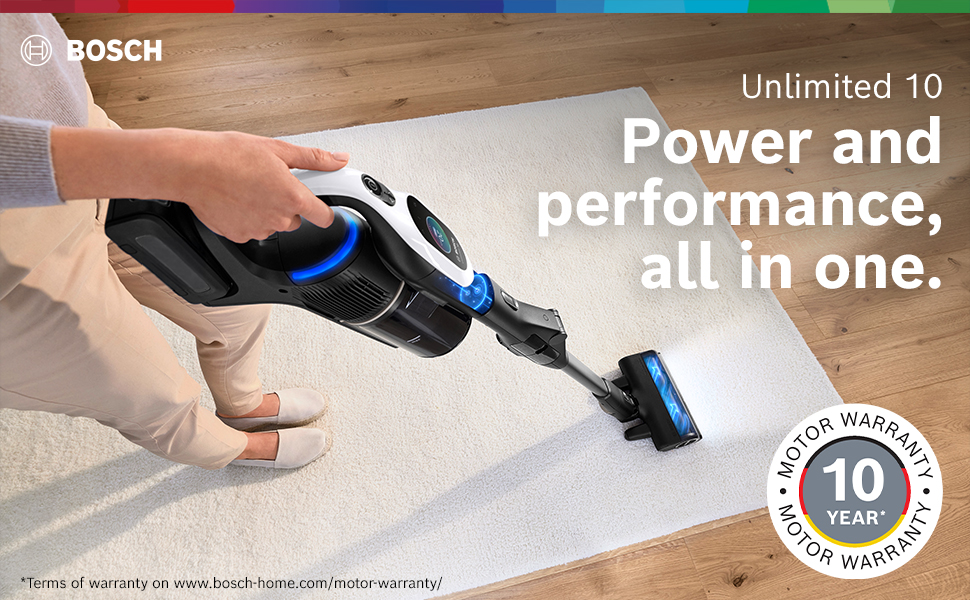
The Bosch Unlimited 10 earns its place at the top of this list for one reason above all others: it offers the longest verified runtime of any cordless machine here. So if you live in a medium-to-large home and want a compact cordless that won’t cut out before you’ve finished the job, this is the one to consider seriously. Furthermore, the Unlimited 10 couples battery performance with HEPA-class filtration and a motorised floor nozzle that adjusts automatically between hard floors and carpet.
Auto-Adjusting Floor Nozzle
Moreover, the motorised nozzle on the Unlimited 10 switches between surfaces without any manual input. So you move from a wooden floor to a low-pile rug without stopping to adjust a setting. Additionally, this matters for pet hair specifically because the transition zones, where hard floor meets carpet, are often where fur collects most densely. Furthermore, the nozzle’s low profile reaches under sofas and beds without requiring you to tilt the machine at an uncomfortable angle.
HEPA-Class Filtration
That said, the multi-layer filtration system is worth highlighting separately from the general performance. So it captures particles as small as 0.3 microns, which includes the fine dander that triggers allergic reactions. According to the Asthma and Allergy Foundation of America, pet dander is one of the most persistent indoor allergens, and a filtration system that captures it during vacuuming, rather than redistributing it, makes a real difference to air quality over time.
Handheld Conversion
Additionally, the machine separates cleanly from the wand to become a handheld unit for upholstery, stairs, and car seats. Moreover, the conversion takes seconds and requires no tools. Overall, this makes the Unlimited 10 genuinely versatile rather than a stick-only machine with an awkward accessory attachment.
Longest cordless runtime on this list. So at up to 60 minutes in eco mode, it handles most home sizes without a mid-session recharge.
HEPA-class multi-layer filtration. Furthermore, this captures fine pet dander alongside visible hair, benefiting allergy-prone households.
Auto-adjusting floor nozzle. Additionally, it moves between hard floors and carpet without manual input, saving time on mixed-surface homes.
Converts cleanly to handheld. Moreover, this adds genuine versatility for furniture, stairs, and car interiors.
Wall-mount charging station included. Equally, this keeps storage tidy and the machine ready to use without hunting for a charging lead.
Cons
Runtime drops sharply in max mode. However, at 25 minutes of high-power cleaning, large carpet-heavy homes may need a mid-session pause to recharge.
Premium price point. That said, the HEPA filtration, auto-nozzle, and battery life justify the investment for daily pet hair management.
The 4-hour charge time is slow. Consequently, planning cleaning sessions around the charge cycle becomes necessary for back-to-back use.
Reasons to buy: The Bosch Unlimited 10 suits anyone who wants cordless freedom without battery anxiety across a full cleaning session. Furthermore, the HEPA-class filtration makes it the strongest choice on this list for allergy-sensitive households with pets.
Best suited for: Medium-sized homes on mixed flooring. So it works particularly well in open-plan spaces where a single pass covers both wooden floors and rugs. Additionally, anyone managing long-haired breeds like Golden Retrievers or Maine Coons will appreciate the motorised nozzle’s ability to pull embedded fur from low-pile carpet without repeated passes.
The Bosch Unlimited 9 makes a straightforward and compelling case: near-identical cleaning performance to the Unlimited 10 at a noticeably lower price. So if the flagship model represents more machine than your home requires, the Unlimited 9 is the version that deserves a closer look.
Furthermore, the core filtration system and motorised nozzle are the same as those found in the Unlimited 10. Additionally, the eco-mode runtime matches its sibling almost exactly, which makes the performance gap between the two models smaller than the price difference might suggest.
Where the Unlimited 9 Differs
That said, there are real differences worth understanding. However, for most users cleaning a compact home with a single pet, those differences are unlikely to surface during an ordinary cleaning session.
Furthermore, the main distinction lies in peak suction in the maximum mode. So the Unlimited 10 delivers slightly more power at the top of its performance range. Moreover, the Unlimited 9’s accessory package is marginally leaner, and the build materials feel slightly less premium in the hand. That said, both machines share the same fundamental engineering and filtration architecture.
The Value Calculation
Overall, the Unlimited 9 is the smarter purchase for anyone whose home is predominantly hard flooring with an occasional rug. So the difference in maximum suction between the two models only matters on dense or dirty carpet. Additionally, the matching eco-mode runtime means the battery limitation that applies to the Unlimited 10 also applies here. Equally, for light-to-moderate pet hair on hard surfaces, both machines perform identically in practice.
Near-flagship performance at a lower price. So for most homes, the practical cleaning difference between this and the Unlimited 10 is minimal day to day.
Matching HEPA-class filtration. Furthermore, allergen capture performance is identical to the top-ranked model.
Slightly lighter body. Additionally, at 3.1 kg with the nozzle, it causes less fatigue on extended cleaning sessions than the Unlimited 10.
Same eco-mode runtime. Moreover, 60 minutes of battery life covers most homes without a recharge stop.
Cons
Lower peak suction than the Unlimited 10. However, this only becomes noticeable on dense carpet or in homes with heavy daily soiling.
Leaner accessory package. That said, the included tools handle the everyday pet hair tasks without difficulty.
Same slow 4-hour charge time. Consequently, back-to-back cleaning sessions require planning around the charge cycle.
Reasons to buy: The Unlimited 9 suits buyers who want Bosch build quality and HEPA-class filtration without paying flagship prices. Furthermore, for homes where the primary concern is daily hard floor maintenance rather than deep carpet cleaning, it delivers everything the top-ranked model does at a more accessible cost.
Best suited for: Smaller homes and flats on predominantly hard flooring. So it works well in apartments and terraced houses where quick daily cleaning sessions are the routine rather than the exception. Additionally, households with low-to-moderate shedding breeds will find the Unlimited 9 covers their needs fully.
3. Kenmore BC4039 600 Series Pet Friendly Bagged Canister Vacuum
The Kenmore BC4039 earns its position here on a distinction that none of the cordless models on this list can match: a fully sealed bagged system that locks pet allergens inside the bag at the point of disposal. So if anyone in your household has a diagnosed pet dander allergy, this is the machine to pay the most attention to.
Furthermore, the BC4039 uses Kenmore’s HEPA media bag, which traps particles as small as 0.3 microns. Additionally, the canister format keeps the main unit off the floor and reduces the risk of re-scattering debris during repositioning.
Motorised Pet Tool Performance
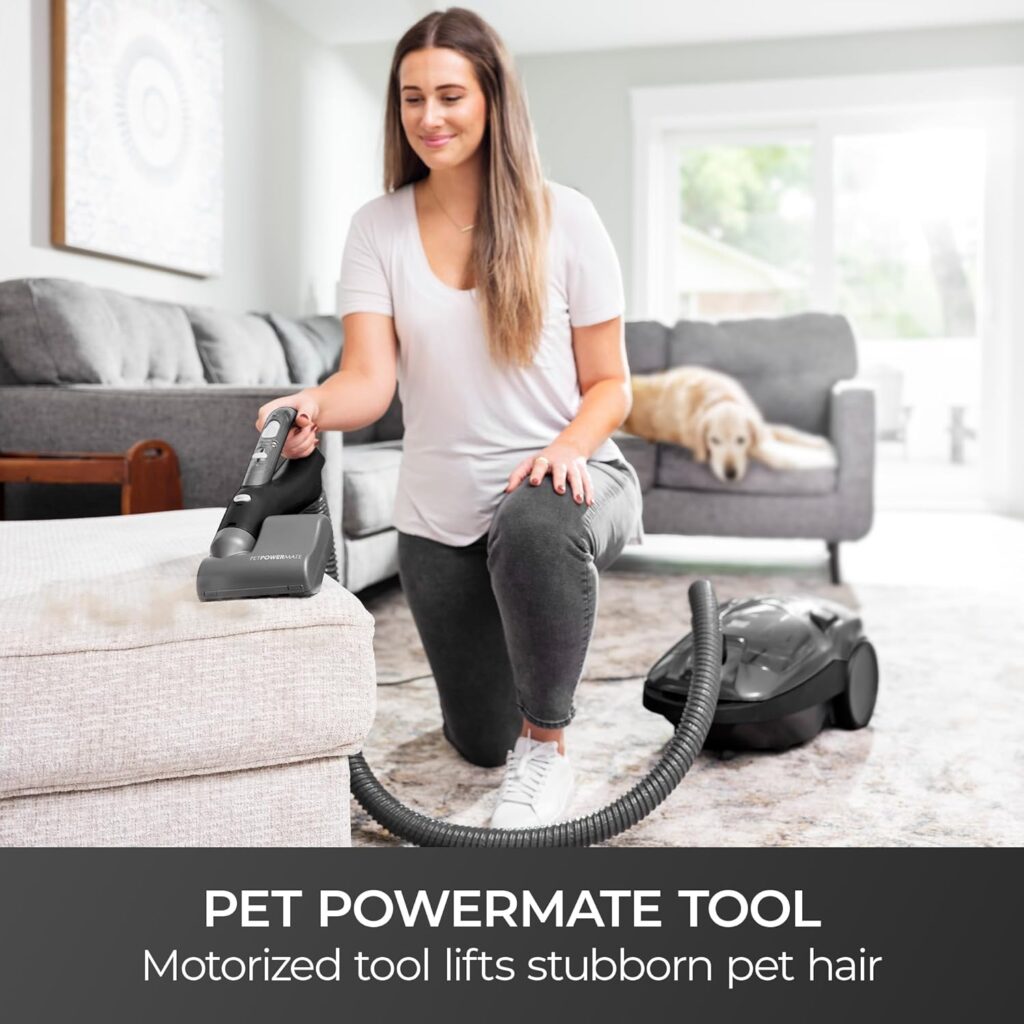
That said, the BC4039’s credentials go beyond its filtration. Moreover, it includes a specialised pet PowerMate tool with a motorised brush that lifts embedded fur from upholstery and carpeted stairs.
In particular, this tool is worth noting because most compact vacuums at this price point use passive suction-only pet attachments that simply lack the mechanical action to pull embedded hair from thick cushion fabric. Additionally, the telescoping wand adjusts to a comfortable working height for both taller and shorter users, which reduces fatigue during longer cleaning sessions.
Suction and Quiet Operation
Furthermore, the BC4039 runs noticeably quieter than most uprights at a comparable price. So if you clean during early mornings, nap times, or in a shared building where noise travels easily, that reduced operating volume is a genuine quality-of-life improvement. Overall, the combination of a quiet motor, sealed bag disposal, and motorised pet tool makes this the most considerate machine on the list for allergy-sensitive households.
Specification
Detail
Power source
Corded electric
Motor power
450 watts
Filtration
HEPA media bag plus secondary filter
Bag capacity
3 litres
Cord length
26 feet
Weight
Approx. 17.6 lbs (8 kg)
Warranty
1 year
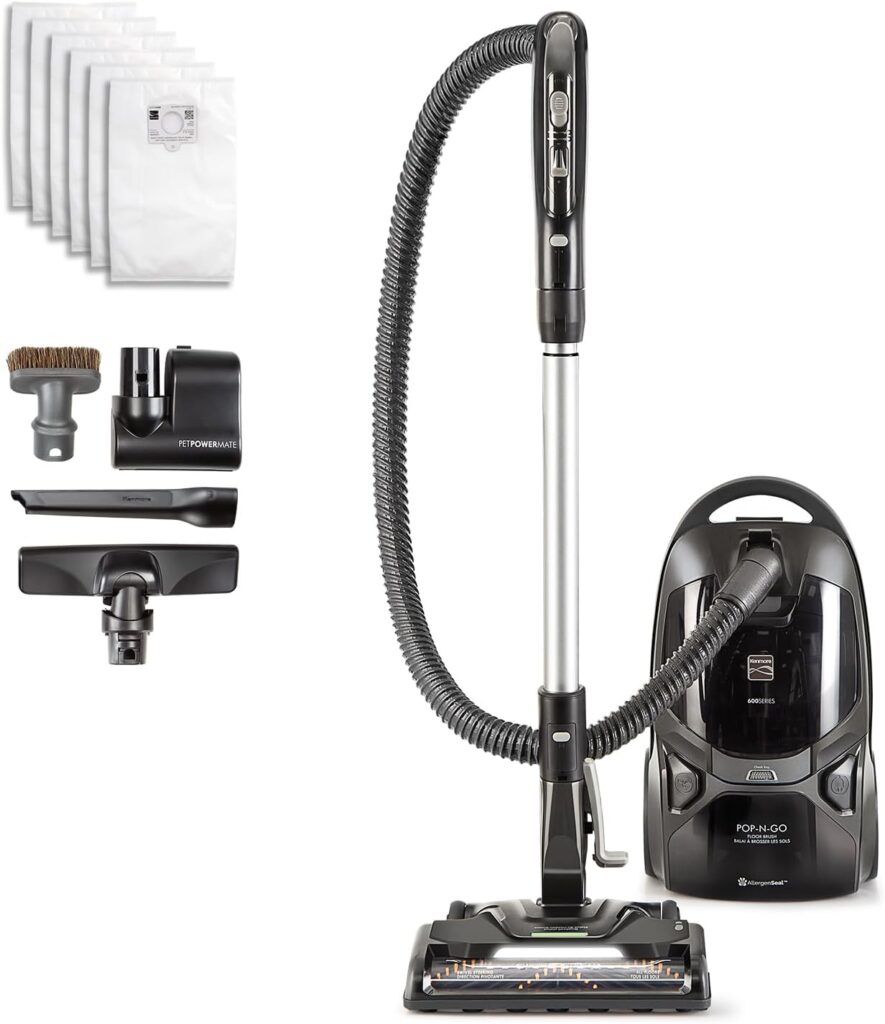
Accessories included: Pet PowerMate motorised tool, crevice tool, dusting brush, telescoping wand, and bare floor brush.
Pros
Fully sealed HEPA media bag. So allergens stay locked inside the bag rather than escaping into the room during disposal.
Motorised pet tool included. Furthermore, this lifts embedded fur from sofas, chairs, and stairs with real effectiveness.
Quiet operation for its class. Additionally, the noise level sits well below most uprights at this price, making it far more considerate for shared living situations.
Generous 3-litre bag capacity. Moreover, this means fewer disposal interruptions during a full-home clean.
26-foot cord for wide coverage. Equally, most standard rooms can be covered without changing sockets.
Cons
Ongoing bag replacement cost. However, HEPA media bags are readily available, and the annual spend remains reasonable for most households.
Heavier than the stick models here. That said, the canister format distributes the weight to the floor rather than your wrist during use.
Requires a power socket. Consequently, cord management becomes part of the routine in larger open-plan rooms.
Reasons to buy: The BC4039 suits allergy-sensitive households where hygienic disposal of pet dander is a priority. Furthermore, the motorised pet tool makes it the most capable option on this list for anyone who needs to clean pet hair from upholstered furniture regularly.
Best suited for: Homes with mixed flooring and at least one allergy sufferer. So it works well as the primary vacuum in households where a thorough weekly clean matters more than a daily quick pass. Additionally, any home with a medium-to-heavy shedding pet living on upholstered furniture will find the PowerMate tool earns its keep quickly.
4. BISSELL 24613 Pet Hair Eraser Turbo Plus Lightweight Vacuum
The BISSELL 24613 Pet Hair Eraser Turbo Plus makes its strongest case on upholstery and stairs. So if your pet has thoroughly claimed the sofa as its own, this is the compact machine built most directly for that specific challenge.
Furthermore, the Turbo Plus functions as a corded stick that converts quickly to a handheld unit, and the turbo eraser tool it ships with is among the more effective airflow-driven brushes available at this price.
Understanding the Turbo Tool
That said, it is worth being upfront about how the turbo brush works before purchasing. Moreover, the brush head spins using airflow rather than an electric motor. So it works well on surface pet hair and lightly embedded fur on upholstery, but loses effectiveness on heavily compacted hair in dense fabric. In particular, short overlapping strokes produce better results than long single passes with this type of tool. However, for daily upholstery maintenance rather than deep restoration cleaning, it performs reliably.
Hard Floor and Low-Pile Carpet Performance
Additionally, on hard floors, the 24613 performs well above its price point. Furthermore, the flat foot profile sits close to the floor surface, which helps it capture fine pet hair that taller nozzles often miss. Overall, on low-pile carpet, suction remains adequate for daily pet hair maintenance in a single-pet household. In particular, the lightweight body at 4.2 lbs makes it practical to carry from room to room without it feeling like an effort.
BISSELL’s Pet Foundation
Moreover, BISSELL donates a portion of every Pet Hair Eraser product sale to its own pet foundation, which funds animal welfare work. So, for buyers to whom brand ethics matter alongside cleaning performance, that distinction is worth noting.
Specification
Detail
Power source
Corded electric
Motor power
Approx. 8 amps
Dust capacity
0.5 litres
Filtration
Multi-level with washable filter
Cord length
20 feet
Weight
Approx. 4.2 lbs (1.9 kg)
Warranty
2 years
Accessories included: Turbo eraser pet tool, crevice tool, and wall-mount storage bracket.
Pros
Most effective upholstery tool on the list. So for sofa and chair cleaning, the turbo brush outperforms passive nozzles at the same price.
Very lightweight at 4.2 lbs. Furthermore, carrying it between floors and surfaces causes no real fatigue.
2-year warranty. Additionally, this exceeds the standard 1-year coverage offered by many budget compact vacuums.
Converts to handheld in seconds. Moreover, the transition requires no tools and adds genuine versatility for spot cleaning.
Washable filter. Equally, no ongoing filter replacement cost makes long-term ownership cheaper.
Cons
The Turbo tool is airflow-driven, not motorised. However, for daily surface maintenance rather than deep sofa restoration, the performance difference is acceptable.
Small 0.5-litre dust cup. Consequently, frequent emptying is needed in homes with heavy daily shedding.
Shorter 20-foot cord. That said, this suits smaller rooms and is less of a concern in flats and compact homes.
Reasons to buy: The BISSELL 24613 suits homes where quick daily sessions on multiple surfaces take priority over deep carpet cleaning. Furthermore, the 2-year warranty and washable filter make the total cost of ownership genuinely low for a pet-focused machine.
Best suited for: Smaller homes and flats with a mix of hard floors and upholstered furniture. So it works best as a daily maintenance vacuum in a single-pet household where the primary challenge is surface fur on sofas and chairs. Additionally, light-shedding breeds on a daily cleaning schedule represent the ideal use case for this machine.
The Shark HV343AMZ Rocket earns its ranking over the HV301 for one clear and practical reason: it has a larger dust cup. So if you have more than one pet, or a single heavy shedder, the bigger bin capacity means fewer cleaning interruptions.
Furthermore, the HV343AMZ adds Shark’s Duoclean floor head, which the HV301 does not include, and on mixed flooring with pet hair, that difference is noticeable. According to Shark’s official product site, the Rocket series is engineered for multi-surface performance in a compact format, and the Duoclean head is central to that claim.
Duoclean Floor Head Explained
Moreover, the Duoclean technology combines a soft front roller with a bristle brush roll in a single nozzle. So the soft roller picks up fine debris and pet hair from hard floors without scattering it forward, whilst the bristle roll provides the agitation needed to pull fur from low-pile carpet.
Additionally, this eliminates the need to swap attachments when moving between surface types. Furthermore, the low-profile nozzle design reaches under furniture with minimal tilting, which matters for the spaces where pet hair typically accumulates out of reach.
Swivel Steering and Manoeuvrability
Overall, the swivel steering on the HV343AMZ makes tight directional changes quick and effort-free. So navigating around chair legs, table bases, and sofa feet requires much less physical adjustment than with a standard rigid-neck stick. Additionally, the pivot point sits low on the nozzle head, which keeps the machine balanced when changing direction quickly mid-pass.
Duoclean floor head handles hard floors and carpet in one pass. So no attachment swapping is needed when moving between surface types.
HEPA filtration. Furthermore, this captures pet dander and fine allergens alongside visible hair.
Swivel steering for effortless navigation. Additionally, tight corners and furniture-heavy rooms become far less of an obstacle.
Lightweight at 4.4 lbs. Moreover, fatigue stays low during longer daily cleaning sessions.
Larger dust cup than the HV301. Equally, this reduces the frequency of emptying in multi-pet households.
Cons
The dust cup is still relatively small. However, at 0.45 litres, heavy shedders will still require frequent emptying.
Corded design limits movement. That said, the 25-foot cord covers most standard-sized rooms without a socket change.
1-year warranty. Consequently, out-of-warranty repair costs should be factored into the long-term ownership calculation.
Reasons to buy: The HV343AMZ suits pet owners who want reliable daily performance on mixed flooring without managing a battery charge. Furthermore, the Duoclean head makes it the stronger Rocket choice for any home with both hard floors and carpet in regular use.
Best suited for: Single-floor open-plan homes with multiple surface types. So it works well in spaces where the floor transitions between wood, tile, and rugs. Additionally, anyone who finds themselves cleaning under low furniture regularly will appreciate both the low-profile nozzle and the swivel steering working together.
The Shark HV301 makes its case not on raw power or feature count but on pure portability. So, at under 3.7 lbs, it is the lightest machine on this list, and in a compact format, that distinction matters more than people often realise until they’re carrying any vacuum up a full flight of stairs every morning.
Furthermore, the corded design delivers consistent suction from the first pass to the last without any battery fade. Additionally, for households where quick daily pickups are the primary cleaning habit rather than weekly deep sessions, this is the machine built around that routine.
Understanding Its Strengths and Limits
That said, the HV301 requires honest positioning. However, on hard floors, laminate, and low-pile rugs, it handles daily pet hair accumulation very well. Moreover, the lightweight format makes it the easiest machine on the list to grab quickly and put away without any charging discipline. In particular, the consistent corded suction means performance stays the same whether you cleaned ten minutes ago or ten days ago.
Seasonal Shedding and Daily Habits
According to the American Kennel Club, dogs shed most heavily during seasonal coat transitions in spring and autumn. In particular, during these periods, daily quick cleans are far more practical than weekly deep sessions for managing fur accumulation on hard floors. Furthermore, the HV301’s 3.7-lb frame makes that daily habit much easier to maintain than with any heavier machine.
What to Expect on Carpet
Overall, the HV301 is worth being clear about on a deeper carpet. So it is not the machine for high-pile carpet or heavily embedded pet fur. Additionally, for homes where carpet is the primary floor type, the HV343AMZ with its Duoclean head is a better choice. That said, for hard floor-dominant homes, the HV301 outperforms many heavier options on this list in terms of ease of daily use.
Lightest machine on the list. So at 3.7 lbs, carrying it between floors and surfaces causes no real fatigue.
Consistent corded suction. Furthermore, there is no battery fade across the cleaning session, which makes performance fully predictable.
Very easy to grab and store. Additionally, no charging routine means it is always ready to use.
25-foot cord for room coverage. Moreover, this covers most standard rooms without a socket change.
Cons
Not effective on deep or high-pile carpet. However, on hard floors and low-pile surfaces, it handles daily pet hair well above expectations for its weight class.
Smallest dust cup on the list. Consequently, high-shedding households will need to empty it frequently.
Basic accessory package. That said, the two included tools cover the essential quick-clean tasks for most compact homes.
Reasons to buy: The HV301 suits pet owners who want a reliable grab-and-go machine for daily hard floor maintenance. Furthermore, the ultra-light body and corded reliability make it the easiest machine on this list to build into a daily cleaning habit.
Best suited for: Single-floor homes and flats with predominantly hard floors. So it works well for quick daily sessions in households with one light-to-moderately shedding pet. Additionally, users who find heavier vacuums physically tiring, including older adults or those with wrist or shoulder concerns, will notice an immediate and genuine difference.
The Akitas C11WT earns a place on this list through a combination that is rarely found at its price point: a fully bagged canister vacuum with genuinely quiet operation. So, for anyone who cleans in a noise-sensitive environment, a shared building, a home with young children, or late-evening sessions when others are sleeping, this is the machine on this list that stands most clearly apart.
Furthermore, the bagged format means every session ends with a sealed and hygienic disposal. Additionally, bagged systems prevent the fine pet dander cloud that bagless bin-emptying can release, which matters for allergy-sensitive households even when the primary buyer is not the one affected.
Compact Canister Design and Stability
Moreover, the C11WT is built in a compact canister format that rolls across hard floors with low resistance. In particular, the low centre of gravity on the canister body gives it noticeably better stability than upright models when being pulled through furniture-heavy rooms. Overall, the design suits homes where manoeuvrability around obstacles matters as much as headline suction figures.
Maintenance and Running Costs
That said, the sealed bag system does change the maintenance routine compared to a bagless vacuum. So instead of rinsing a bin and washing a filter after each session, you replace the bag when it fills and wipe down the exterior. Furthermore, Akitas recommends periodic secondary filter replacement to maintain consistent suction over the machine’s lifespan.
Additionally, the upfront savings of a bagged budget canister versus a premium bagless model typically offset the bag replacement cost within the first year of ownership.
Quieter operation than most compact vacuums. So it suits noise-sensitive living situations where upright vacuums are too disruptive.
Bagged system for hygienic disposal. Furthermore, sealed bags keep pet hair and dander contained, reducing allergen release during emptying.
Stable canister format. Additionally, the low centre of gravity prevents tipping when being pulled through furniture-heavy rooms.
Full accessory set included. Moreover, the crevice tool and upholstery nozzle cover the common pet hair problem areas without additional purchase.
Cons
Ongoing bag replacement cost. However, the hygiene and convenience benefits make this a reasonable ongoing expense for most households.
Shorter cord than most competitors. Consequently, larger rooms may require a socket change during a full clean.
Less established brand than Shark or Bissell. That said, its performance credentials in quiet operation and bagged containment differentiate it within this price bracket.
Reasons to buy: The Akitas C11WT suits buyers who value quiet operation and hygienic allergen-safe disposal above headline suction numbers. Furthermore, the bagged format makes it a sensible and practical choice for allergy-aware multi-pet households managing daily fur accumulation.
Best suited for: Flats, terraced houses, and shared-wall homes where noise from an upright vacuum is a genuine concern. So it works well for households where cleaning happens in the evenings or early mornings. Additionally, anyone who values a low-maintenance cleaning routine with minimal post-session cleaning of the machine itself will find the bagged format a welcome change.
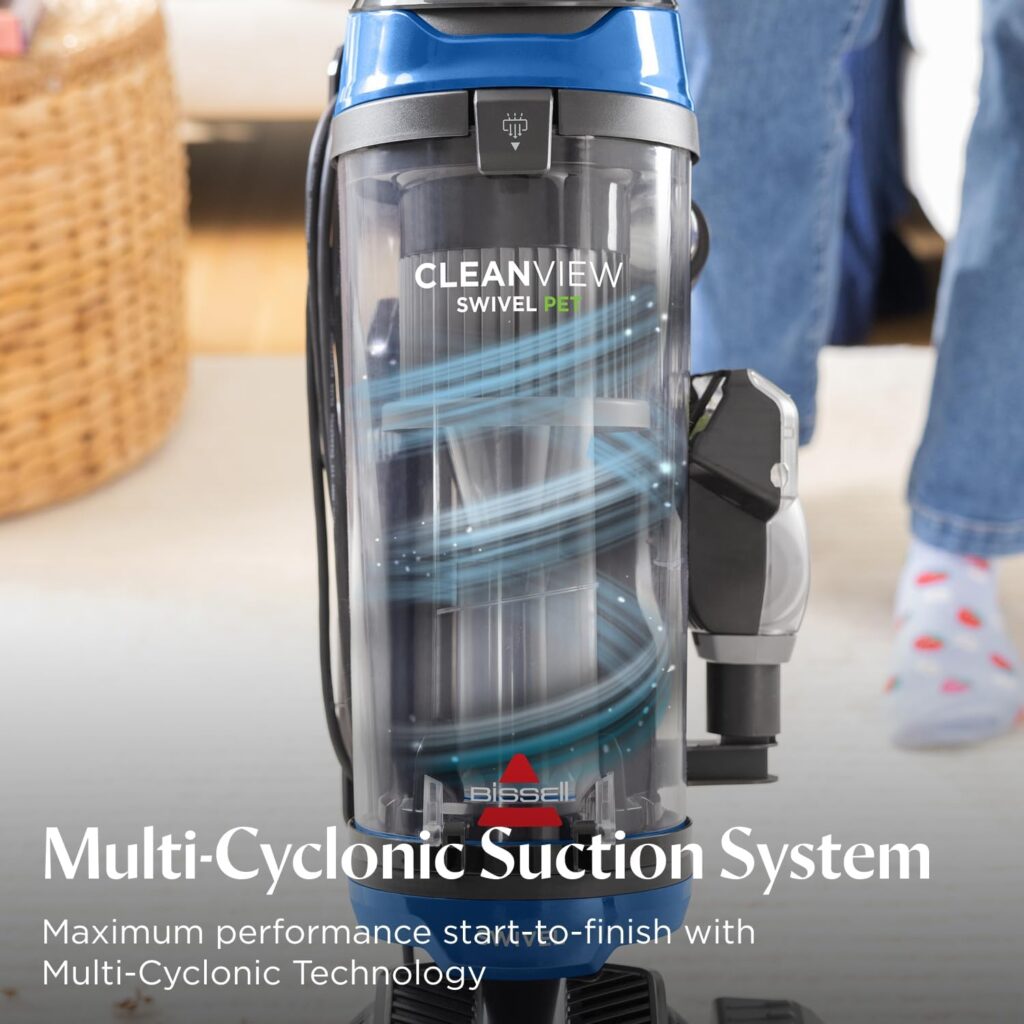
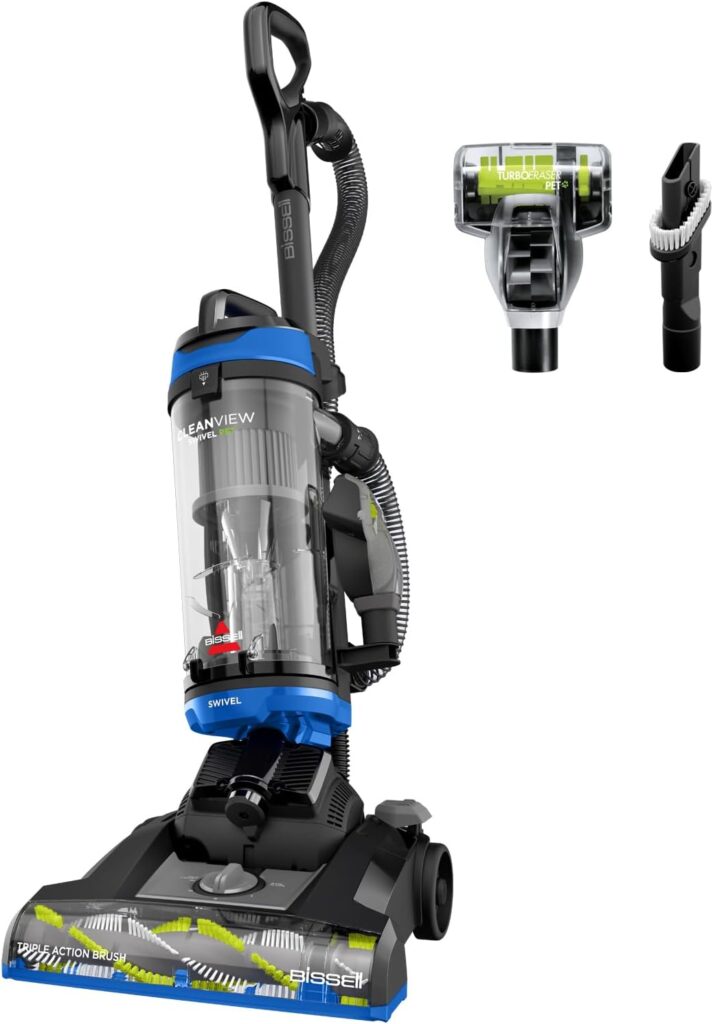
The Bissell 3836 CleanView Swivel earns its place with steering that outclasses most budget uprights for navigating around furniture. So if you’ve ever physically wrestled a rigid-neck vacuum around a cluster of chair legs or a coffee table, you already know exactly why swivel steering matters in the real world. Furthermore, the CleanView Swivel uses a multi-cyclone suction system to maintain consistent airflow as the dust cup fills.
Additionally, this means suction doesn’t drop off as quickly between empties as it does with single-cyclone budget vacuums, a subtle but real performance advantage during a full-home clean.
Scatter-Free Nozzle Technology
Moreover, the nozzle on the 3836 includes scatter-free technology, which prevents debris from being pushed forward rather than picked up. So on hard floors where pet hair tends to scatter ahead of the machine, this feature meaningfully improves first-pass pickup. Additionally, on low-pile carpet, the combination of scatter-free intake and multi-cyclone suction produces clean results that exceed what the price suggests should be possible.
BISSELL Pet Foundation
Furthermore, every purchase of a BISSELL pet vacuum contributes to the brand’s pet foundation, which funds animal welfare work in the US. So for buyers who care about where their money goes beyond the cleaning performance, BISSELL’s commitment to pet welfare represents genuine differentiation from other budget options.
Weight and Storage
Overall, the CleanView Swivel weighs under 8 lbs, which sits comfortably within easy-carry territory for most users. So taking it upstairs for a room clean is not an inconvenience. Furthermore, the slim upright profile stores in a narrow hallway cupboard without any creative rearranging.
Specification
Detail
Power source
Corded electric
Motor power
Approx. 8 amps
Dust capacity
1 litre
Filtration
Foam and felt washable filters
Cord length
25 feet
Weight
Approx. 7.7 lbs (3.5 kg)
Warranty
2 years
Accessories included: Pet TurboEraser tool, crevice tool, dusting brush.
Pros
Swivel steering for effortless furniture navigation. So tight turns around chair legs and table bases require very little physical effort.
Multi-cyclone for sustained suction. Furthermore, airflow stays stronger for longer between dust cup empties compared to single-cyclone budget models.
2-year warranty. Additionally, this provides well above average long-term confidence at this price level.
Scatter-free nozzle technology. Moreover, this prevents debris from being pushed forward rather than captured, improving hard floor pickup.
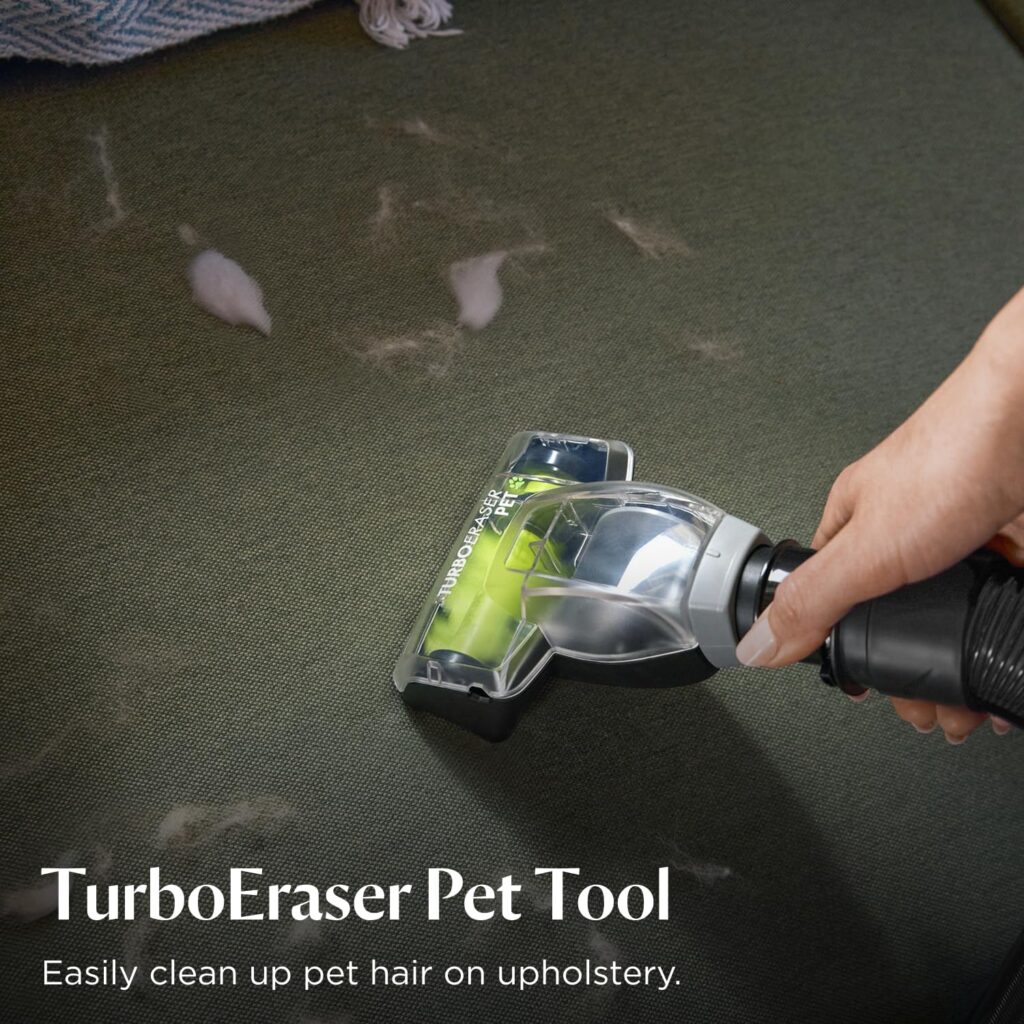
Pet TurboEraser tool included. Equally, this adds upholstery and stair capability without an additional purchase.
Cons
Washable filters require periodic maintenance. However, this is an infrequent task that takes only a few minutes when due.
Less effective on high-pile carpet. Consequently, it suits low-pile and hard floor homes more than deeply carpeted households.
Standard rather than HEPA filtration. That said, for non-allergy households, the foam and felt filter system handles everyday pet hair and dust adequately.
Reasons to buy: The Bissell 3836 suits buyers who want reliable daily performance with genuinely easy navigation at a modest price. Furthermore, the 2-year warranty provides better long-term reassurance than most budget uprights at this price, and the multi-cyclone system sustains suction longer than most direct competitors.
Best suited for: Smaller homes and flats on mixed low-pile carpet and hard flooring. So it works well for households with one or two pets where quick daily maintenance is the priority. Additionally, anyone who has found rigid-neck uprights frustrating around furniture will notice a clear and immediate difference with the swivel steering.
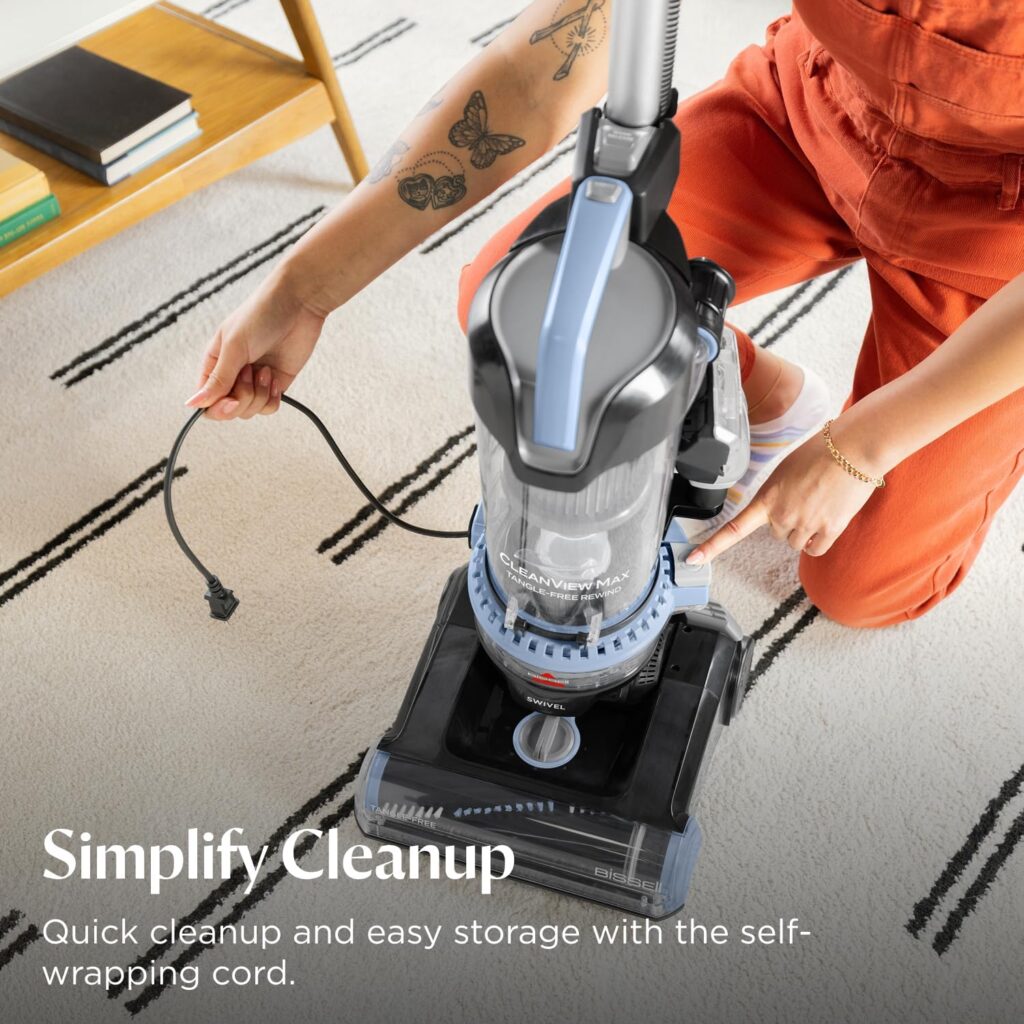
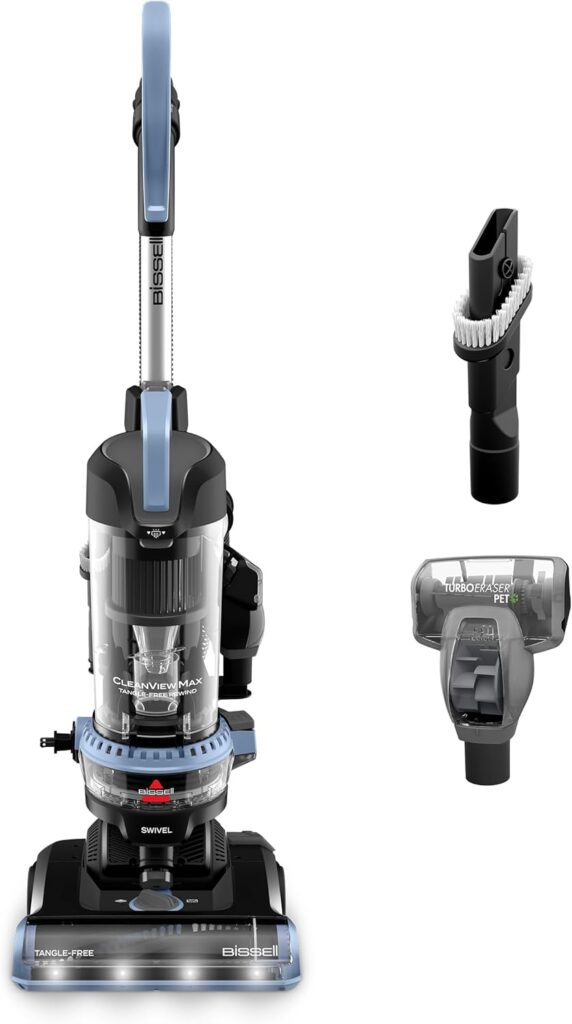
9. Bissell 4073L CleanView Max Tangle-Free Rewind Pet Hair Vacuum
The Bissell 4073L CleanView Max distinguishes itself from every other compact vacuum on this list by combining two features that directly solve the two most common daily frustrations with pet-hair vacuums: a tangle-free brush roll and an automatic cord rewind. So if you own a long-haired breed and have spent any time cutting wound hair off a clogged brush axle, this machine is the direct and practical answer to that problem.
Furthermore, the tangle-free brush roll uses a specially designed winding pattern that prevents long hair from wrapping around the axle during normal use. Additionally, the automatic cord rewind replaces the minor but persistent chore of stuffing the cord back into the machine after every session with a single button press.
Performance Beyond the Convenience Features
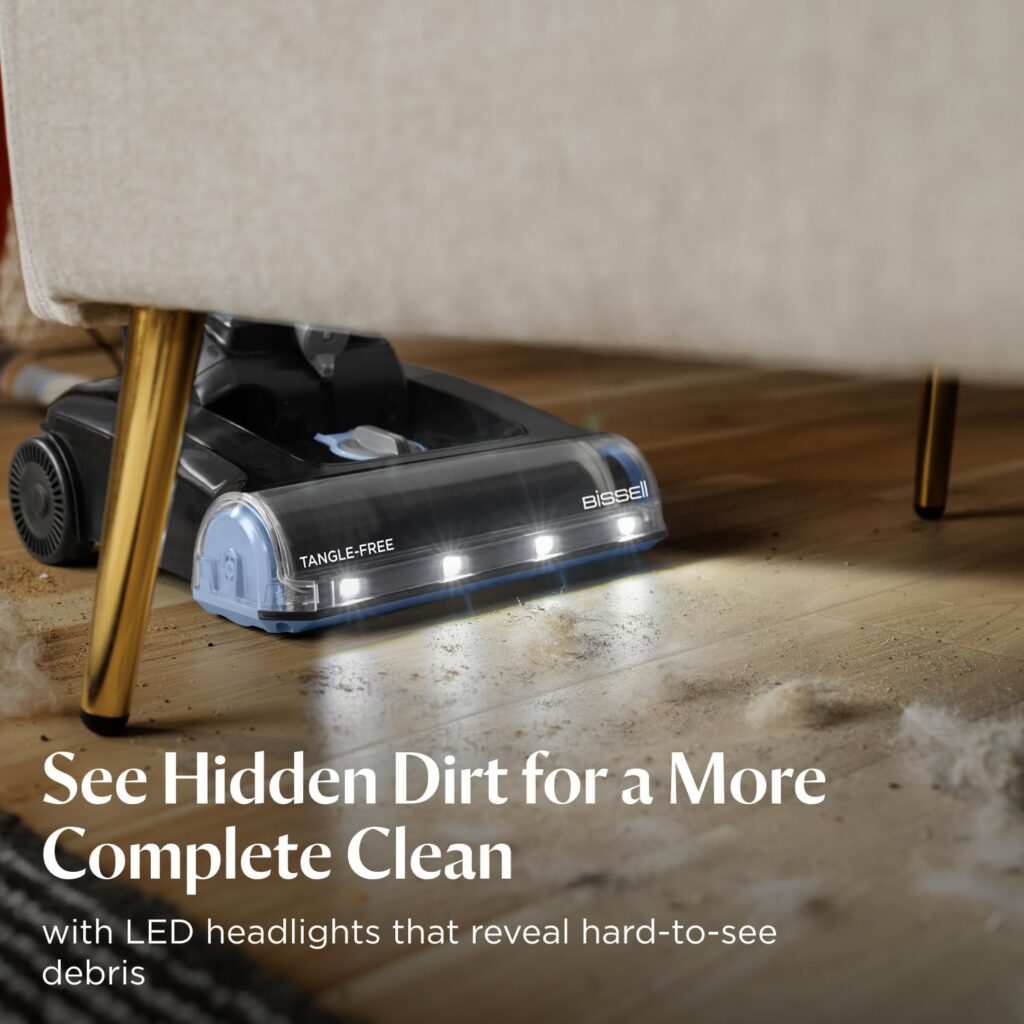
That said, the 4073L is more than a convenience-focused machine. Moreover, the CleanView Max platform delivers stronger suction than the standard 3836, which makes it more capable on low-to-medium pile carpet. In particular, the edge-cleaning bristles along the nozzle pull pet fur from skirting boards and carpet edges, exactly the areas where hair gathers but most nozzles fail to reach cleanly.
Furthermore, the larger 1.5-litre dust cup means fewer interruptions per session than the smaller-capacity models on this list.
Build and Weight Trade-offs
Additionally, the machine is slightly heavier than the 3836 as a result of the larger motor and additional mechanical features. However, at under 10 lbs, it remains comfortably within easy-carry territory for most users. Overall, the extra weight is the only real trade-off for what is, in practical terms, a meaningfully better daily machine for long-haired pet owners.
Specification
Detail
Power source
Corded electric with auto-rewind
Motor power
Approx. 10 amps
Dust capacity
1.5 litres
Filtration
Multi-level with washable filter
Cord length
27 feet
Weight
Approx. 9.7 lbs (4.4 kg)
Warranty
2 years
Accessories included: Pet TurboEraser tool, crevice tool, dusting brush.
Pros
Tangle-free brush roll for long pet hair. So wrapping is eliminated, saving significant brush roll maintenance time in long-haired-breed households.
Automatic cord rewind. Furthermore, this removes a minor but daily irritation from the cleaning routine.
Larger 1.5-litre dust cup. Additionally, this extends the cleaning session before emptying is required.
Longer 27-foot cord. Moreover, this covers larger rooms without a mid-session socket change.
2-year warranty. Equally, this provides above-average long-term confidence at this price tier.
Cons
Heavier than most models at this price. However, the tangle-free brush roll and auto-rewind features justify the additional weight for anyone managing long-haired breeds daily.
Standard rather than HEPA filtration. Consequently, allergy-sensitive households should consider the Kenmore BC4039 or a Bosch model instead.
Higher price than the 3836. That said, the tangle-free brush roll alone repays the difference in time saved within the first month of ownership for a long-haired pet owner.
Reasons to buy: The 4073L suits owners of long-haired breeds where brush roll clogging is a weekly or daily frustration. Furthermore, the auto-rewind cord and 2-year warranty make the overall ownership experience noticeably smoother than typical budget uprights, and the larger dust cup reduces the stop-and-empty interruptions that disrupt a cleaning session.
Best suited for: Households with medium-to-long-haired dogs or cats. So it works best in homes where daily pet hair pickup on hard floors and low-pile carpet is the primary cleaning task. Additionally, anyone who currently spends time after each vacuum session removing hair from the brush roll will find the tangle-free design a genuine step change in their routine.
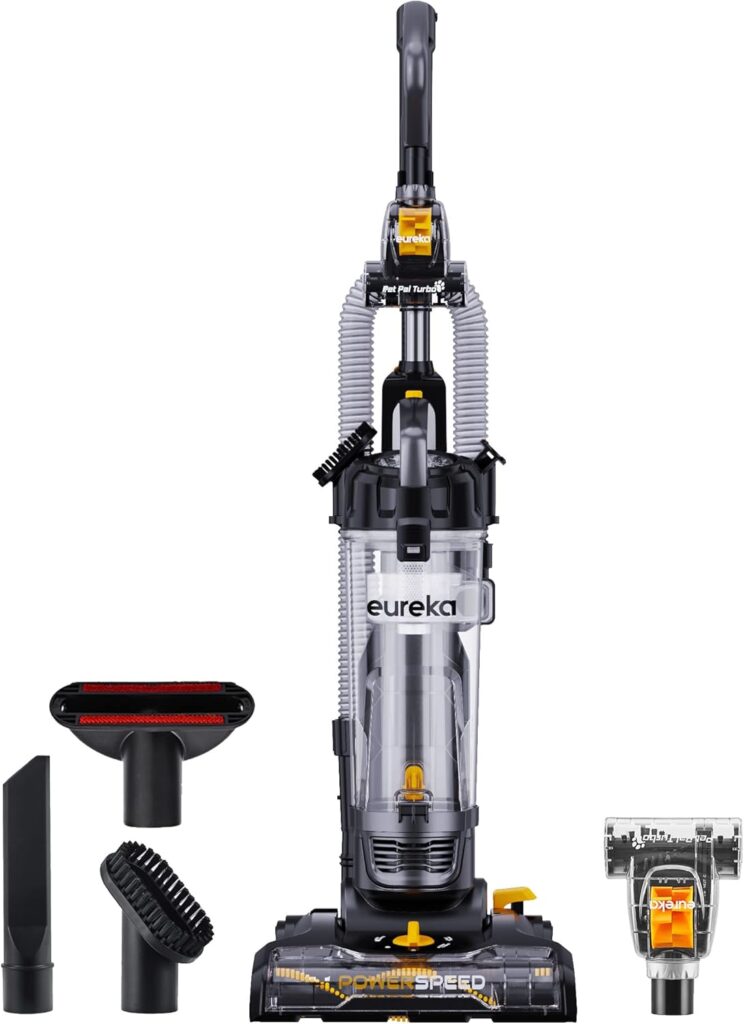
The EUREKA NEU181D rounds out the list as the lightest full-size upright here, and that distinction matters more than it might initially seem. So, at around 5.7 lbs with a 12-amp motor, it is the machine on this list that best contradicts the common assumption that lightweight uprights must sacrifice suction to save weight.
Furthermore, the PowerSpeed floor nozzle adjusts between multiple height settings, allowing the machine to transition between hard floors and carpets without a tool change. Additionally, the 2-litre dust cup is the largest of any upright on this list, which means fewer stops to empty during a full-home session.
Suction Performance and Motor Power
Moreover, the 12-amp motor punches well above the entry-level expectation for a machine at this price. So on low-to-medium pile carpet, the NEU181D removes pet hair in fewer passes than several more expensive uprights.
Additionally, the multi-height brush roll adjustment allows the nozzle to sit at the right distance from the floor surface for both dense carpet and smooth wood, which maintains suction efficiency across surface types.
Filtration and Allergen Considerations
That said, the NEU181D does not include HEPA filtration. However, for homes where allergen containment is not the primary concern, the multi-level washable filter handles everyday pet hair and household dust effectively.
Furthermore, according to Allergy UK, regular vacuuming frequency matters as much as filtration grade for most non-clinical households, and the NEU181D’s lightweight frame makes daily use far more achievable than heavier alternatives.
Manoeuvrability and Storage
Overall, the swivel steering makes the NEU181D noticeably easier to guide through furniture than rigid-neck uprights at a comparable price. So for smaller homes and flats where furniture is close together, the steering alone justifies choosing this over a rigid-neck budget alternative.
Furthermore, the compact upright profile stores in a standard hallway cupboard without any difficulty.
Specification
Detail
Power source
Corded electric
Motor power
12 amps
Dust capacity
2 litres
Filtration
Multi-level washable filter
Cord length
25 feet
Weight
Approx. 5.7 lbs (2.6 kg)
Warranty
1 year
Accessories included: Crevice tool, upholstery tool, pet turbo brush.
Pros
Lightest upright on the list. So at 5.7 lbs, cleaning fatigue stays low even during extended sessions.
12-amp motor for strong suction. Furthermore, this exceeds the rated power of several more expensive models reviewed here.
Largest dust cup of any upright here. Additionally, the 2-litre capacity is the best on the list for reducing emptying interruptions.
Pet turbo brush included. Moreover, this adds upholstery and stair capability to a budget-friendly price.
Swivel steering for easy navigation. Equally, this reduces the effort required in furniture-heavy rooms.
Cons
No HEPA filtration. However, for non-allergy households, the washable filter handles everyday pet hair and dust adequately.
1-year warranty only. Consequently, planning for possible maintenance costs after the first year is sensible.
Basic accessory package. That said, the three included tools cover the essential pet hair tasks without additional purchase.
Reasons to buy: The NEU181D suits buyers who want meaningful upright suction in the lightest possible package at a budget price. Furthermore, the 2-litre dust cup makes it the best choice on this list for households where frequent bin-emptying is a daily frustration, and the 12-amp motor ensures suction performance that the lightweight body alone would not suggest.
Best suited for: Single-floor homes and flats where daily lightweight cleaning is the routine. So it works well for anyone managing a single medium-shedding pet on a mix of hard floors and low-pile carpet. Additionally, users who find heavier uprights physically tiring, including those with back, wrist, or shoulder concerns, will notice an immediate and meaningful improvement.
Buyer’s Guide: How to Choose the Best Compact Vacuum for Pet Hair
What Does “Compact” Actually Mean for Pet Hair Vacuums?
So the word “compact” gets used loosely in vacuum marketing. Furthermore, it can refer to corded stick machines, cordless stick-to-handheld convertibles, lightweight uprights, or small canister units. Additionally, a machine described as compact in one brand’s catalogue may weigh the same as another brand’s standard full-size upright.
Overall, the practical test is this: does it store without taking over a full cupboard shelf, and can you carry it between floors without effort? If both answers are yes, it qualifies for practical daily pet hair management.
Floor Type Is the Most Important Starting Point
That said, the floor types in your home should be the first thing you clarify before choosing. However, the distinction that most compact vacuums handle well is the hard floor and low-pile carpet combination. In particular, the one type of surface where most compact machines fall short is high-pile or shag carpet; very few in this category generate enough brush roll agitation to pull fur from deep-pile fibres effectively.
Moreover, if your home is primarily carpeted with a medium or high pile, the machines on this list that will disappoint you the least are the Kenmore BC4039 with its motorised PowerMate tool, and the Bosch Unlimited 10 with its motorised auto-adjusting nozzle.
Bagged vs Bagless: The Pet Hair and Allergy Trade-off
Furthermore, the bagged vs bagless decision is particularly relevant for pet owners. So a bagged vacuum like the Kenmore BC4039 or Akitas C11WT seals hair and dander inside the bag at disposal, meaning that when you remove and bin the bag, allergens stay contained inside it.
Moreover, bagless models are cheaper to run day to day and allow you to see exactly when the bin needs emptying. However, emptying a bagless bin can release a small cloud of fine dust and dander, which is a genuine concern for allergy sufferers.
Corded vs Cordless: Practical Considerations
Additionally, the corded vs cordless question comes down to home size and routine rather than one option being objectively better. So cordless models like the Bosch Unlimited series offer total movement freedom and no cord to trip over or reel in. However, battery life remains a genuine constraint in homes over roughly 100 square metres.
Furthermore, corded machines like the Shark Rockets and Bissell models deliver fully consistent suction throughout the session with no charging discipline required. Equally, corded models suit users who prefer not to think about battery management.
Budget Tiers: What Each Level Delivers
Entry Level (Under $100)
So at this tier, the Eureka NEU181D and Shark HV301 deliver reliable daily performance on hard floors and low-pile carpet. However, expect standard rather than HEPA filtration, a basic accessory package, and 1-year warranty coverage. Additionally, dust cup capacity is typically smaller, requiring more frequent emptying in households with heavier shedding.
Mid-Range ($100-$250)
Moreover, the mid-range is where the majority of genuinely capable pet-hair compact vacuums sit. Furthermore, this tier includes features like motorised pet tools, tangle-free brush rolls, bagged allergen containment, and Duoclean multi-surface nozzles. In particular, the Bissell 4073L, Shark HV343AMZ, and Kenmore BC4039 all represent strong value at this level. Overall, for most pet-owning households, the mid-range delivers everything needed for daily maintenance without overspending.
Premium ($250+)
Additionally, the Bosch Unlimited series occupies the premium tier. So the investment buys longer battery runtime, HEPA-class filtration, auto-adjusting nozzle technology, and a build quality designed to last several years under daily use.
Furthermore, for households with multiple pets, severe pet dander allergies, or a preference for cordless performance across a larger home, the premium tier is worth the additional outlay.
Pet Hair and Allergen Needs
Overall, if allergies are a concern, filtration grade and disposal method both matter. So HEPA and HEPA-class filters capture particles as small as 0.3 microns, which includes the fine dander responsible for most pet-related allergic reactions. Furthermore, according to the American Pet Products Association, around 67% of US households own at least one pet, which means the majority of homes manage daily allergen levels whether or not they realise it.
Additionally, pairing a HEPA-filtered or bagged vacuum with a daily cleaning routine makes a measurable difference to indoor air quality compared with a weekly session on a standard-filter machine.
What is the best compact vacuum for pet hair on hard floors?
So on hard floors, the Shark HV343AMZ Rocket is the strongest choice from this list. Furthermore, the Duoclean floor head’s soft front roller picks up fine pet hair from smooth surfaces without scattering it forward, whilst the bristle roll maintains suction for heavier debris. Additionally, the low-profile nozzle reaches under furniture without tilting the machine, which matters in rooms where pet hair accumulates under sofas and low cupboards.
Overall, for hard floor-dominant homes, the HV343AMZ’s nozzle design is the most effective on the list at this price.
Are bagged compact vacuums better for pet hair than bagless models?
That said, neither format is strictly better; they serve different priorities. So bagged models like the Kenmore BC4039 and Akitas C11WT seal pet hair and dander inside a bag at disposal, which makes the process hygienic and reduces allergen re-exposure. However, bagless models eliminate the ongoing bag cost and allow you to see exactly how full the bin is before it affects suction.
Moreover, for households with allergy sufferers, the bagged format offers a clear hygiene advantage. Additionally, for everyone else, bagless models perform equally well in terms of suction and are more convenient on a day-to-day basis.
How often should I vacuum if I have pets?
Furthermore, most pet care guidance recommends vacuuming high-traffic areas at least every two to three days. In particular, this frequency prevents pet hair from embedding deeply into carpet fibres, where it becomes harder to extract with each passing day. Additionally, during seasonal coat transitions, typically spring and early autumn, daily vacuuming keeps accumulation manageable rather than overwhelming.
Overall, a lightweight compact machine like those on this list makes a daily or every-other-day cleaning habit far more sustainable than it would be with a heavier full-size upright.
Do compact vacuums have enough suction for embedded carpet pet hair?
Moreover, this depends significantly on carpet type and the density of shedding. So on low-pile carpet with daily cleaning, most of the machines here perform adequately. However, medium-to-high-pile carpet requires the mechanical brush roll agitation that only the Kenmore BC4039’s PowerMate tool and the Bosch Unlimited 10’s motorised nozzle provide among this group. That said, for daily maintenance on standard carpet, the mid-range models handle the task without frustration.
Is HEPA filtration worth paying more for in a pet vacuum?
Additionally, HEPA filtration captures particles that standard filters miss, including the fine dander particles responsible for pet-related allergic reactions. So for any household where someone has a diagnosed pet allergy or asthma, HEPA filtration is worth the additional cost.
Furthermore, even for non-allergy households, HEPA-equipped machines return cleaner air meaningfully after a session compared to standard filtration.
Overall, the Bosch Unlimited models and the Kenmore BC4039 are the strongest HEPA and HEPA-class options here. Equally, for users without allergen concerns, the standard filtered models perform well for the visible pet hair management that is the primary daily challenge.
Conclusion
Overall Verdict
So after a thorough assessment of all ten machines, the Bosch Unlimited 10 is the strongest all-round choice for most compact-vacuum buyers who own pets. Furthermore, the HEPA-class filtration, auto-adjusting motorised nozzle, and up to 60 minutes of cordless runtime give it a clear advantage over every other option here. Additionally, the handheld conversion makes it versatile enough to handle furniture and stairs as well as floors.
That said, it is also the most expensive machine on the list, and the right choice genuinely depends on your home and your specific priorities.
Who Should Buy Which Model
So if filtration and allergen-safe disposal are the priority, the Kenmore BC4039 is the standout choice. Furthermore, the HEPA media bag and motorised pet tool make it the most capable allergy-focused machine on the list for households where pet dander triggers reactions.
Moreover, if you own a long-haired breed and brush roll clogging is a recurring frustration, the Bissell 4073L is the practical answer. Additionally, the tangle-free brush roll combined with the auto-rewind cord makes daily cleaning genuinely less annoying in a way that is hard to fully appreciate until you have used it.
However, if budget is the primary constraint and your floors are predominantly hard surfaces, the Shark HV301 or Eureka NEU181D deliver reliable daily performance without unnecessary expense. Equally, for noise-sensitive circumstances, shared accommodation, young children, or early-morning sessions, the Akitas C11WT’s quiet bagged canister format is the most considerate choice on the list.
Furthermore, for buyers who want near-flagship cordless performance without the Unlimited 10’s price, the Bosch Unlimited 9 is the smart and practical decision. Overall, the performance gap between the two Bosch models is smaller than the price gap.
Final Advice and Next Steps
That said, no single vacuum suits every household. So before purchasing, think honestly about your floor types, your pet’s coat length and shed volume, your tolerance for maintenance tasks like filter washing and brush roll cleaning, and whether battery management or cord management fits your daily routine better.
Additionally, if any of the machines on this list spark your interest, check the current prices before purchasing; prices fluctuate, and promotional discounts appear regularly on Amazon. Moreover, for more options across different categories, our guide to the best bagless vacuums for pet hair and our full pet hair carpet vacuum guide both cover complementary territory in detail.
Furthermore, whichever model you choose, the best compact vacuums for pet hair in 2026 are genuinely capable machines that have moved well beyond the lightweight compromise they used to represent. So the assumption that a compact vacuum means a weak clean is firmly out of date. Additionally, with consistent use, any machine on this list will keep pet hair under control without dominating your daily routine.
Overall, the key is choosing the one that suits your specific home and using it regularly; that combination matters more than any single specification.
The Best Bagless Vacuum for Pet Hair in 2026- 10 Models Tested and Ranked
The Problem With Bagless Pet Vacuums
The best bagless vacuum for pet hair in 2026 is not simply the one with the most impressive suction number on the box. Furthermore, it is not automatically the most expensive model or the one endorsed most heavily across social media. It is the machine that handles your specific combination of pet breed, floor type, allergen concern, and daily cleaning habit without creating more work than it saves. If you have stood in front of a wall of options feeling no clearer than when you arrived, this guide was written for you.
I have spent significant time with bagless vacuums across the full price range, and the pattern that emerges is consistent. Moreover, the marketing language in this category has become so exaggerated that genuine performance differences between machines are buried under identical-sounding claims. Additionally, the bagless format adds a specific complication that bagged vacuums avoid entirely: the moment you empty the bin, you are briefly exposed to everything the machine has collected. For pet hair households, that often includes a concentrated cloud of allergens. So filtration quality is not a secondary consideration in the bagless category. It is central to the machine’s value.
Why Bagless Specifically?
The appeal of bagless vacuums is straightforward. Furthermore, there are no replacement bags to buy, no running out at inconvenient moments, and no uncertainty about whether the bag is contributing to suction loss. Additionally, the transparent dustbin lets you see exactly what the machine is picking up, which is oddly satisfying when you are pulling a dense mat of dog hair from a carpet you thought was relatively clean. Moreover, the best bagless machines in 2026 have addressed the filtration gap that once separated them from their bagged counterparts, and the top options in this list prove that point convincingly. Our guide to the best vacuums for pet hair on carpet covers the full mixed-format picture if you are still deciding between bagless and bagged.
How We Selected These Ten Models
Every model in this guide is available on Amazon.com at the time of writing and priced above $150. Furthermore, the ranking reflects real-world performance rather than specification-sheet comparison, which means machines that underperform their own marketing claims fall further down the list regardless of how impressive their numbers look in a table. Additionally, pet hair performance across carpet and hard floors, filtration quality, ease of emptying, and long-term usability all factor into each machine’s position.
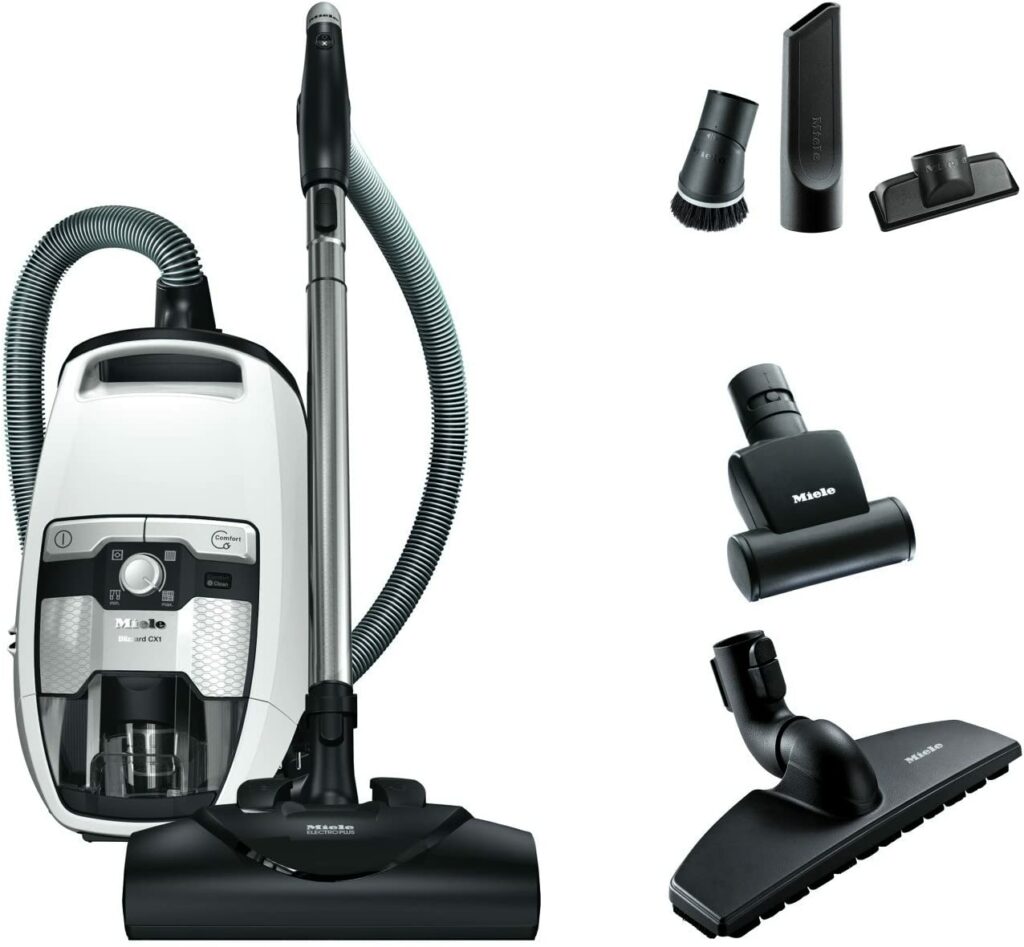
1. Miele Blizzard CX1 Cat and Dog Bagless Canister Vacuum
The Miele Blizzard CX1 Cat and Dog earns the top position in this list because it solves the two most persistent problems with bagless vacuums simultaneously. Furthermore, it maintains consistent suction as the dustbin fills through Vortex Technology cyclone separation, and it delivers HEPA-level filtration without requiring a bag to achieve it. At around $599 to $699, it is the premium option here, and the engineering behind it justifies every dollar of that premium for the right buyer.
Key Features
Vortex Technology Cyclone Separation
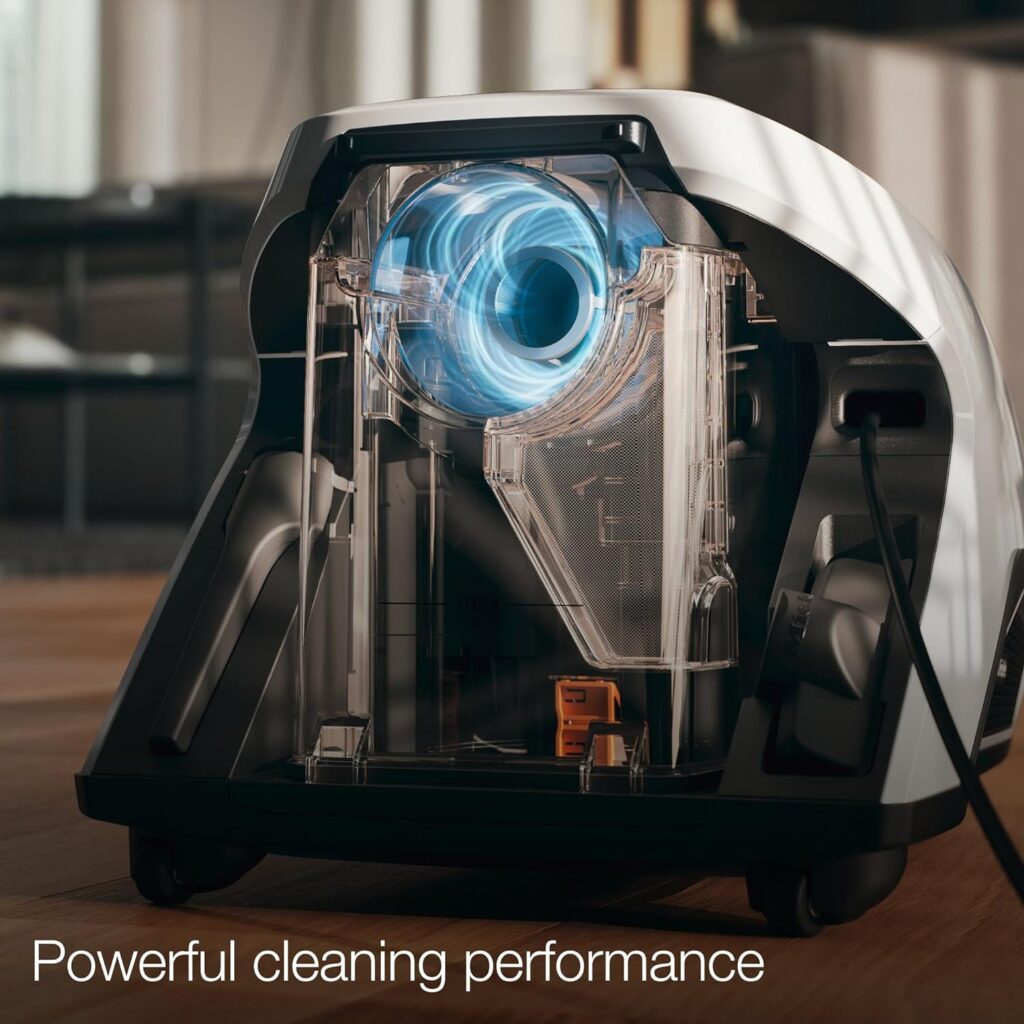
The Blizzard CX1 uses a multi-stage cyclone system to separate pet hair, dust, and fine particles from the airflow before they reach the filter. Consequently, the filter loads less quickly than in vacuums without pre-separation, which maintains suction consistency across a fuller dustbin. Furthermore, this is the same fundamental approach used by premium cyclone machines at higher price points, applied within Miele’s engineering standards.
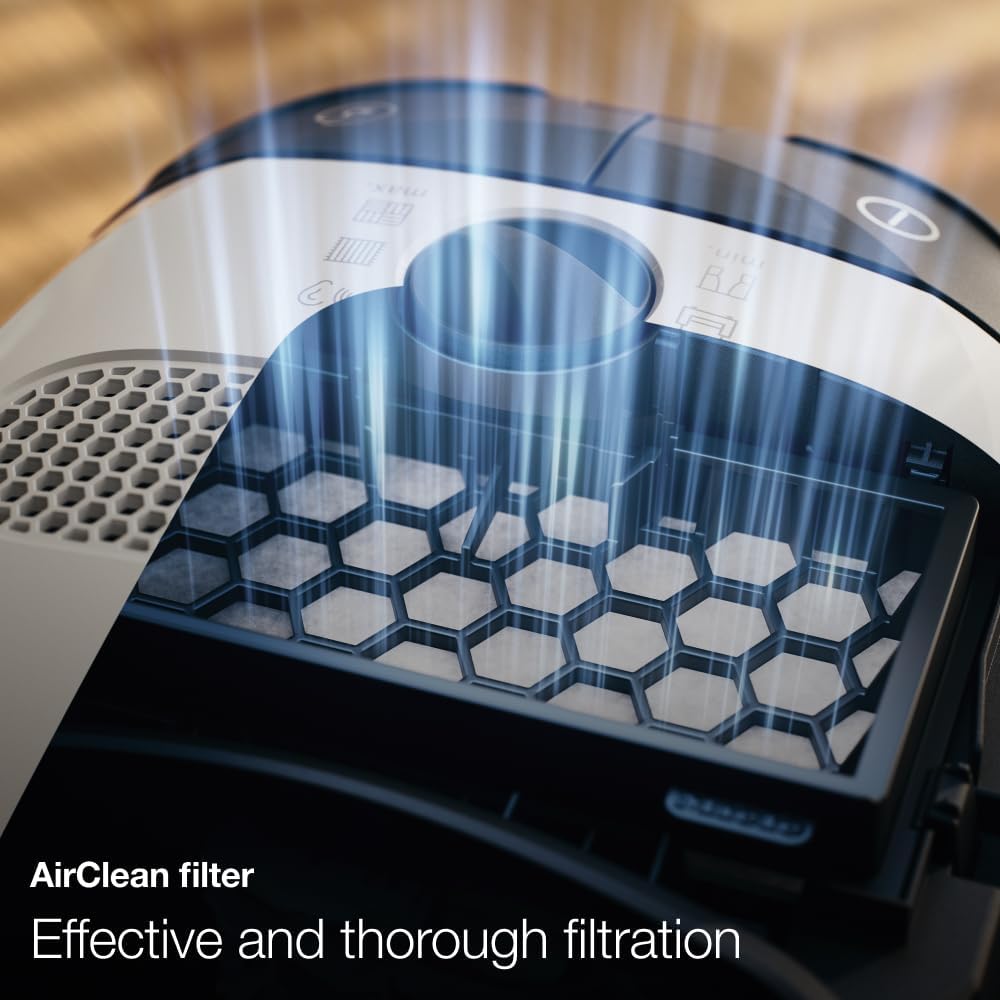
HEPA AirClean Filtration
The machine includes a HEPA AirClean filter that retains fine pet dander and airborne allergens. Additionally, the sealed filter housing prevents bypass of unfiltered air around the filter media. Moreover, for allergy-sensitive households that have previously avoided bagless machines due to filtration concerns, the Blizzard CX1 is the most convincing argument for reconsidering. According to the American Academy of Allergy, Asthma and Immunology, sealed HEPA filtration combined with consistent vacuuming is among the most evidence-supported approaches to managing pet allergen levels in the home.
The Fur Turbo Brush Attachment
The included Fur Turbo brush uses airflow to drive a rotating barrel brush against carpet fibres. Furthermore, this agitation loosens embedded pet hair before suction lifts it away. Additionally, the airflow-driven mechanism operates without an electrical connection, which keeps the accessory system clean and reliable under regular use.
Technical Specifications
Specification
Detail
Type
Bagless canister
Technology
Vortex multi-stage cyclone
Filtration
HEPA AirClean sealed
Dustbox Capacity
2.0 litres
Motor Power
Approx. 890W
Cord Length
Approx. 23 feet (7 metres)
Weight
Approx. 10.8 lbs (4.9kg)
Noise Level
Approx. 73dB
Warranty
7 years (motor and casing)
Price
Approx. $599-699
Accessories and Tools Included
The Blizzard CX1 Cat and Dog includes the Fur Turbo brush for carpet pet hair, the Parquet Twister SBB-3 floorhead for hard floors, a combination suction nozzle, a crevice nozzle, and an upholstery nozzle. Furthermore, the Hygiene Disk filter is installed, and the HEPA AirClean filter is included as standard.
Pros
Vortex cyclone separation maintains suction consistency as the dustbin fills. Furthermore, this directly addresses the most common frustration with bagless vacuums during extended cleaning sessions.
HEPA AirClean sealed filtration provides genuine allergen capture without a bag. Additionally, the sealed construction prevents filter bypass throughout the full airflow path.
A 7-year motor and casing warranty represents exceptional long-term ownership assurance. Moreover, Miele’s build quality actively supports this warranty with components engineered for sustained performance.
2.0-litre dustbox capacity reduces emptying frequency compared to smaller bagless bins. So the machine handles a full-home cleaning session on a single empty under normal conditions.
Cons
Premium price requires a meaningful financial commitment. However, the seven-year warranty and Miele’s build quality change the total cost of ownership calculation compared to cheaper machines replaced more frequently.
Canister format requires more physical involvement than a self-propelled upright. Furthermore, managing the hose and canister around furniture takes more active effort than pushing an upright.
Reasons to Buy
The Blizzard CX1 suits allergy-sensitive households that have previously avoided bagless machines and pet owners who need premium filtration with the convenience of a bagless emptying system. Furthermore, the seven-year warranty makes the premium price a long-term investment rather than a short-term expense.
Best Suited For
Allergy-conscious pet owners, medium to large homes with mixed flooring, and buyers who prioritise filtration quality above all other considerations.
2. Shark AZ3002 Stratos Upright Vacuum with DuoClean PowerFins
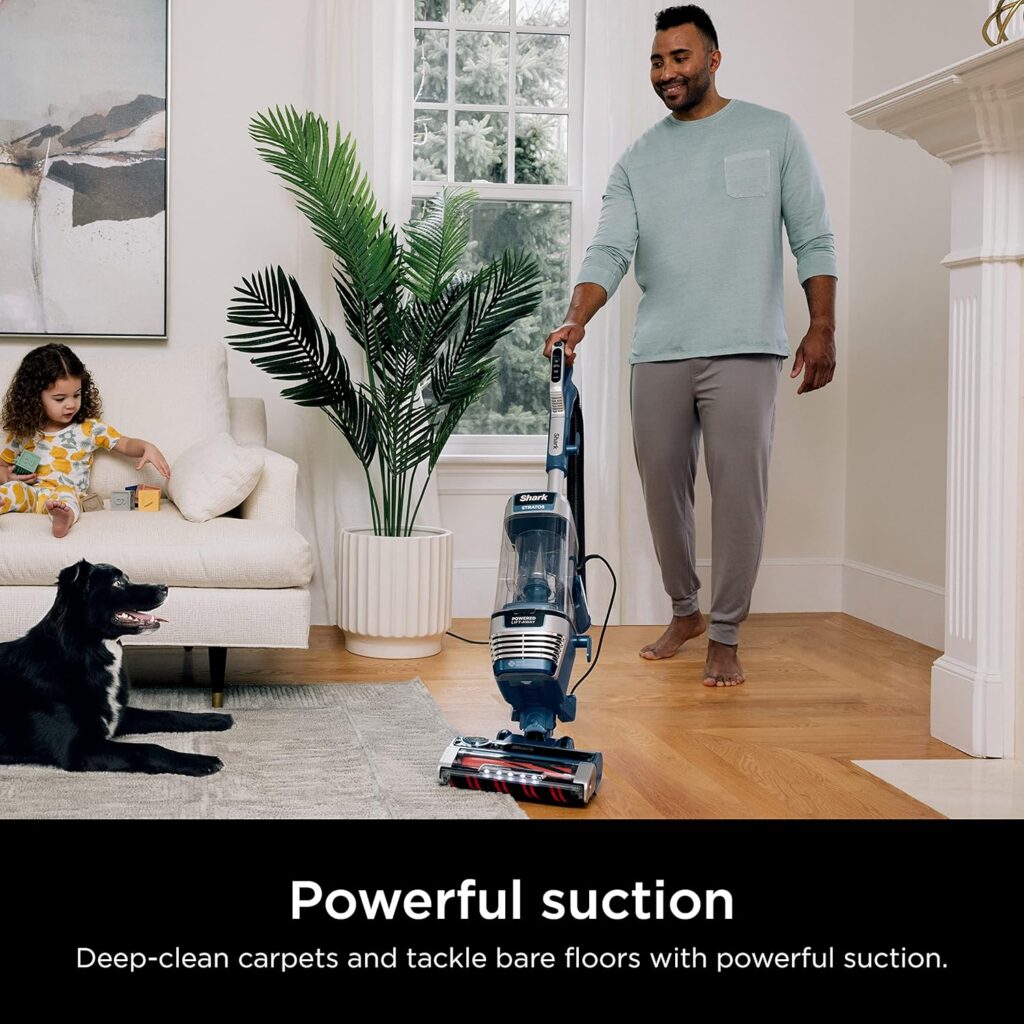
The Shark AZ3002 Stratos represents the most technologically sophisticated upright in this list. Furthermore, the DuoClean PowerFins floor head combines a soft roller for hard floors with a finned brushroll for carpet, and the Zero-M anti-hair wrap technology prevents long pet hair from tangling around the brush cylinder during use. At around $350 to $450, it sits at the upper-mid tier and delivers a feature set that competes convincingly with machines priced above it. If you are interested in how the Stratos handles wood floors specifically, our guide to the best vacuums for wood floors covers that in detail.
Key Features
DuoClean PowerFins Technology
The PowerFins floor head uses engineered fin structures on the main brushroll rather than traditional bristles. Consequently, the fins engage carpet fibres differently from a standard brush roll, creating a more aggressive agitation against embedded pet hair without the risk of scattering debris on hard floors. Furthermore, the soft roller in the same head handles smooth surfaces simultaneously, allowing the machine to transition between floor types without any manual adjustment.
Zero-M Anti-Hair Wrap
The Zero-M system uses an active hair-removal mechanism that prevents long pet and human hair from wrapping around the brush cylinder during use. Additionally, this dramatically reduces the manual maintenance required between sessions and keeps the motor free from the resistance that hair wrapping creates over time. Moreover, in real sustained testing on carpet with long-hair shedding breeds, the reduction in manual clearing compared to standard brush rolls is immediately apparent.
HEPA Anti-Allergen Complete Seal
The Stratos uses Shark’s sealed HEPA filtration system, which retains 99.9% of dust and allergens inside the machine. Furthermore, the sealed construction ensures that the air exiting the vacuum has passed through the HEPA media rather than bypassing it through housing gaps. Additionally, this is a meaningful differentiator at this price point compared to machines with unsealed HEPA filters.
Technical Specifications
Specification
Detail
Type
Bagless upright
Floor Head
DuoClean PowerFins
Anti-Wrap
Zero-M technology
Filtration
HEPA Anti-Allergen Complete Seal
Dustbin Capacity
Approx. 1.3 litres
Cord Length
Approx. 30 feet
Weight
Approx. 17 lbs (7.7kg)
Lift-Away
Yes (detachable canister mode)
Warranty
5 years (motor)
Price
Approx. $350-450
Accessories and Tools Included
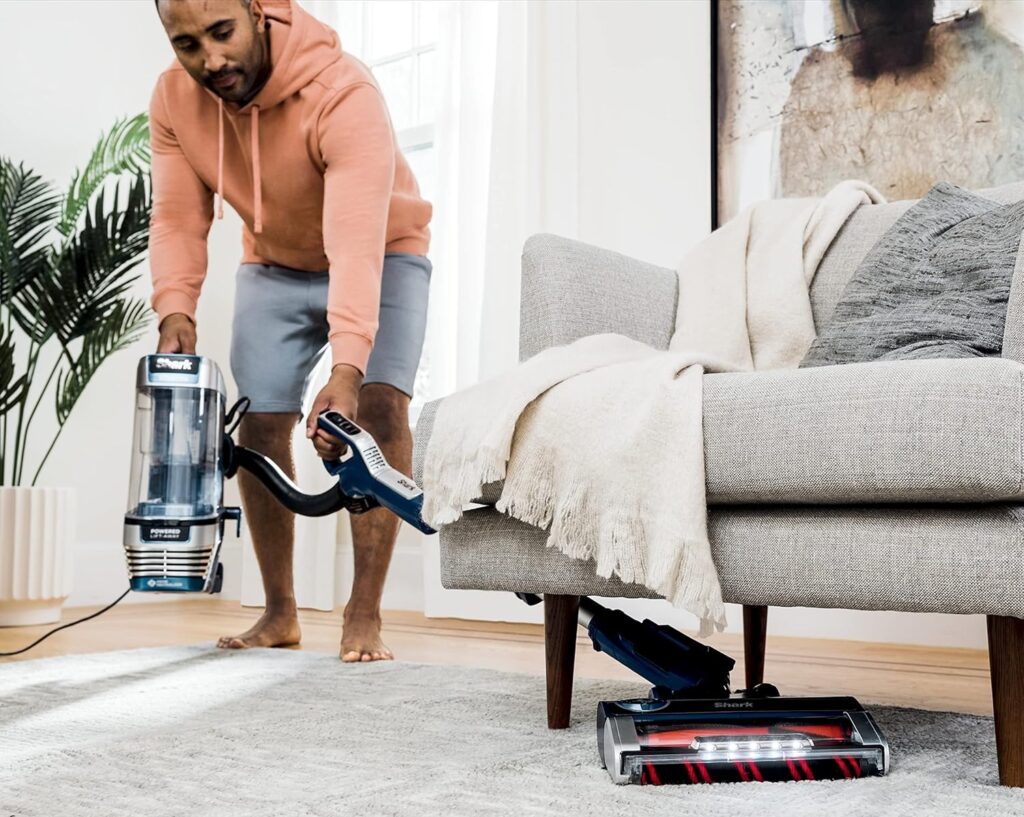
The AZ3002 includes a pet multi-tool, a crevice tool, a dusting brush, and the Lift-Away pod with hose and wand as part of the standard configuration. Furthermore, the 30-foot cord is one of the longest in this list.
Pros
DuoClean PowerFins handles carpet and hard floors without manual adjustment. Furthermore, the dual-surface head genuinely improves performance across both surface types simultaneously.
Zero-M anti-hair wrap eliminates the most frustrating maintenance task for long-haired pet owners. Additionally, the active removal mechanism prevents the performance degradation that hair wrapping causes over time.
Sealed HEPA filtration retains allergens throughout the full airflow path. Moreover, the 99.9% retention claim is supported by the sealed construction rather than simply the filter media specification.
30-foot cord covers large rooms without a mid-session socket change. Furthermore, this cord length is more commonly found on commercial-grade machines than consumer uprights at this price.
Cons
The weight of 17 lbs is among the heavier options in this list. However, the DuoClean PowerFins and Zero-M technologies that add capability also contribute to the weight.
Dustbin capacity at 1.3 litres requires more frequent emptying under heavy pet hair conditions. Furthermore, buyers with multiple large shedding breeds will notice the bin filling faster than in machines with larger capacities.
Reasons to Buy
The Stratos suits buyers who want the most technologically capable bagless upright currently available at a mid-premium price. Furthermore, the combination of DuoClean PowerFins, Zero-M anti-wrap, and sealed HEPA filtration addresses the three most common pet vacuum frustrations in a single machine.
Best Suited For
Long-haired pet breed owners, mixed hard floor and carpet homes, and allergy-sensitive buyers who need a sealed HEPA system in a versatile upright format.
The Shark LA301 represents the Navigator range’s advanced offering, combining the practical Lift-Away detachable pod system with a self-cleaning brush roll and sealed HEPA filtration at a price that most pet owners can access without significant financial stretch. Furthermore, at around $250 to $350, it strikes an effective balance between the performance features that matter most for pet hair and an accessible mid-range price.
Key Features
Self-Cleaning Brush Roll
The LA301’s brush roll incorporates a self-cleaning mechanism that removes hair from the brush cylinder during operation. Consequently, the brush roll maintains effective agitation without accumulating the dense hair wrapping that affects standard brush rolls under sustained use. Furthermore, this keeps the motor operating without resistance from tangled hair, which supports consistent suction output across longer sessions.
Lift-Away Detachable Pod
Pressing the Lift-Away button releases the canister pod from the upright body. Additionally, the detached pod maintains full motor power and suction through the hose and wand for stair, upholstery, and elevated surface cleaning. Moreover, this extends the machine’s cleaning reach significantly beyond what a fixed-head upright can access.
HEPA Complete Seal Anti-Allergen System
The sealed filtration system ensures that air exits the machine through the HEPA filter rather than bypassing it. Furthermore, for households managing pet allergy symptoms, the combination of sealed construction and HEPA media provides meaningful allergen capture during and after the cleaning session.
Technical Specifications
Specification
Detail
Type
Bagless upright with Lift-Away
Brush Roll
Self-cleaning
Filtration
HEPA Anti-Allergen Complete Seal
Dustbin Capacity
Approx. 1.3 litres
Cord Length
Approx. 25 feet
Weight
Approx. 13.5 lbs (6.1kg)
Warranty
5 years (motor)
Price
Approx. $250-350
Accessories and Tools Included
The LA301 includes a pet multi-tool, a crevice tool, a dusting brush, and the full Lift-Away configuration, including hose, wand, and detachable pod. Furthermore, onboard tool storage keeps accessories accessible during cleaning sessions.
Pros
Self-cleaning brush roll reduces the most common manual maintenance task for pet owners. Furthermore, the active hair removal keeps the motor free from the resistance that hair accumulation creates over time.
Lift-Away pod delivers full suction power for stair and upholstery cleaning. Additionally, this makes the LA301 a complete cleaning system rather than a floor-only machine.
Sealed HEPA filtration provides genuine allergen capture throughout the full airflow path. Moreover, the sealed construction prevents bypass of the filter media.
Cons
Dustbin requires frequent emptying under heavy pet hair conditions. However, the self-cleaning brush roll compensates by keeping the motor and suction operating at consistent levels between empties.
Weight is noticeable during extended stair cleaning in Lift-Away mode. Furthermore, buyers with significant stair cleaning requirements should assess the pod weight against their physical comfort before committing.
Reasons to Buy
The LA301 suits buyers who want self-cleaning brush roll technology and Lift-Away versatility without stepping up to the Stratos price tier. Furthermore, the sealed HEPA system and self-cleaning mechanism address the two most common daily frustrations for bagless upright owners in pet households.
Best Suited For
Pet owners with self-cleaning convenience as a priority, multi-floor homes, and households where stair cleaning is a regular rather than occasional task.
4. Bissell 2254 CleanView Swivel Rewind Pet Upright Bagless Vacuum
The Bissell 2254 brings a practical set of pet-specific features to the mid-range bagless category. Furthermore, the swivel steering, automatic cord rewind, and triple-action brush roll combine to create a machine that is genuinely easier to use daily than many competitors at the same price. At around $150 to $200, it sits at the accessible end of this list whilst delivering a fuller feature set than its price might initially suggest.
Key Features
Triple Action Brush Roll
The triple-action brush roll uses a combination of brush types to handle surface debris, embedded carpet fibres, and pet hair in a single pass. Consequently, the machine addresses multiple debris types simultaneously rather than specialising exclusively in one. Furthermore, the brush roll design is effective on low to medium-pile carpet under moderate daily pet hair loads.
Automatic Cord Rewind
The one-touch automatic cord rewind system returns the full cord into the machine body with a single button press. Additionally, this eliminates the manual coiling that makes cord management a minor but consistent irritation with machines that require manual winding. Moreover, the cord rewind is one of those small features that improve the daily cleaning experience more than its specification sheet prominence would suggest.
Swivel Steering
The swivel steering system allows the floor head to pivot freely around furniture, chair legs, and irregular room layouts. Furthermore, the natural pivot response reduces the physical effort required during a full-room cleaning session compared to a rigid-head upright.
Technical Specifications
Specification
Detail
Type
Bagless upright
Brush Roll
Triple action
Filtration
Multi-layer filtration with washable filter
Dustbin Capacity
Approx. 1 litre
Cord Length
Approx. 25 feet
Cord Rewind
Automatic one-touch
Steering
Swivel
Weight
Approx. 15.4 lbs (7kg)
Price
Approx. $150-200
Accessories and Tools Included
The Bissell 2254 includes a pet hair corner tool, a crevice tool, and a 2-in-1 pet dusting brush. Furthermore, a tangle-free brush roll comes as standard, and the scatter-free technology in the floor head design reduces the risk of lightweight debris being displaced ahead of the nozzle.
Pros
Automatic cord rewind removes one of the most consistently minor but frustrating manual tasks in a regular cleaning routine. Furthermore, the one-touch operation takes less than five seconds to complete the full cord return.
Swivel steering reduces the physical effort of navigating around furniture during a full-room clean. Additionally, the natural pivot response makes irregular room layouts more manageable than rigid-head alternatives.
Pet-specific accessory set addresses multiple surface types beyond the floor. Moreover, the pet hair corner tool reaches into the junction between the wall and the floor, where pet hair consistently accumulates.
Cons
Filtration does not reach the sealed HEPA standard of the higher-ranked models in this list. However, for households without significant allergen concerns, the washable multi-layer filtration is adequate for everyday cleaning performance.
Heavier than some competitors at 15.4 lbs for a machine at this price tier. Furthermore, buyers who prioritise lightweight handling should weigh this against the feature set before committing.
Reasons to Buy
The Bissell 2254 suits buyers who want practical pet-specific features, including automatic cord rewind and swivel steering, at an accessible price. Furthermore, the triple-action brush roll and dedicated pet accessory set make it a more thoughtfully designed machine for pet owners than generic bagless uprights at the same price.
Best Suited For
Buyers who clean frequently in shorter sessions, households with moderate daily pet hair loads on low to medium-pile carpet, and those who value cord management convenience.
5. Kenmore DU3017 Friendly Upright Bagless Crossover Max Vacuum Cleaner
The Kenmore DU3017 Crossover Max takes its name from the versatile cross-surface capability it prioritises. Furthermore, the machine handles carpeted rooms, hard floors, and the transitions between them without requiring manual adjustments between surface types, which makes it a practical choice for homes with genuinely mixed flooring across multiple rooms. At around $200 to $250, it occupies the mid-range tier and delivers accordingly.
Key Features
Crossover Max Multi-Surface Floor Head
The Crossover Max floor head is specifically designed to transition between carpet and hard floors smoothly. Consequently, the brush roll and suction configuration adjust to maintain effective cleaning contact across both surface types within the same cleaning pass. Furthermore, this is particularly relevant for open-plan homes where carpet and hard flooring exist in the same continuous area.
HEPA Filtration System
The DU3017 includes HEPA filtration as standard. Additionally, the filter captures fine pet dander and allergen particles before the exhaust air returns to the room. Moreover, for households with allergy-sensitive occupants, the HEPA filtration standard at this price point is a meaningful differentiator compared to machines with only standard filtration.
Extended Cleaning Reach
The wand and hose configuration provides flexible above-floor cleaning reach. Furthermore, this allows the machine to handle elevated surfaces, curtains, and stair treads using the standard suction attachments without requiring a separate handheld unit.
Technical Specifications
Specification
Detail
Type
Bagless upright
Floor Head
Crossover Max multi-surface
Filtration
HEPA
Dustbin Capacity
Approx. 1.2 litres
Cord Length
Approx. 25 feet
Weight
Approx. 13.8 lbs (6.3kg)
Price
Approx. $200-250
Accessories and Tools Included
The DU3017 includes a crevice tool, a dusting brush, an upholstery tool, and an extension wand. Furthermore, onboard storage keeps the most frequently used tools accessible during cleaning sessions.
Pros
Crossover Max floor head transitions between carpet and hard floors without manual adjustment. Furthermore, this is a practical daily convenience for homes with mixed flooring across multiple rooms.
HEPA filtration at a mid-range price provides genuine allergen capture for pet dander. Additionally, this is a feature that cheaper machines in this price range often compromise on.
Extended wand reach handles above-floor surfaces without a separate specialist tool. Moreover, this makes the machine more versatile than floor-only alternatives at the same price.
Cons
Dustbin capacity is modest for heavy daily pet hair loads. However, the emptying process is straightforward and takes under thirty seconds with practice.
Weight is comparable to mid-range uprights at this price, which is adequate but not a standout. Furthermore, buyers prioritising lightweight handling should compare directly with the Kenmore DU4080 below.
Reasons to Buy
The DU3017 suits buyers in homes with mixed carpet and hard flooring who want HEPA filtration and multi-surface capability in a mid-range bagless upright. Furthermore, the Crossover Max floor head reduces the friction of transitioning between room types during a full-home cleaning session.
Best Suited For
Mixed-surface homes, mid-range buyers who need HEPA filtration, and households with moderate daily pet hair across both carpet and hard floors.
The Eureka NEU651PL FlexReach earns its position in this list through a specific capability that several competitors at the same price miss entirely. Furthermore, the FlexReach wand system allows the machine to reach under furniture at a lower angle than a standard upright wand, which directly addresses the low-clearance cleaning challenge that pet owners encounter beneath sofas, beds, and skirting boards where pet hair reliably accumulates. At around $150 to $200, it represents practical innovation at an accessible price.
Key Features
FlexReach Extended Wand System
The FlexReach wand extends and angles to allow cleaning at a lower approach than a standard upright wand achieves. Consequently, under-furniture cleaning access improves meaningfully compared to machines that require full removal of furniture to reach the areas beneath them. Furthermore, this is particularly useful in homes where large sofas, low platform beds, and heavy wardrobes make moving furniture impractical on a daily basis.
Pet-Specific Suction Design
The NEU651PL is configured specifically for pet hair across both carpet and hard floor surfaces. Additionally, the brush roll and suction path are optimised for the density and texture of pet hair rather than a generic debris profile. Moreover, the machine’s performance on pet hair relative to its price is one of the strongest value arguments in this list.
Washable Filter System
The filter is washable rather than requiring replacement on a fixed schedule. Furthermore, this reduces the ongoing consumable cost of ownership and removes the inconvenience of running out of replacement filters between cleaning sessions. Additionally, the filter rinses clean quickly and dries within a few hours when left in a well-ventilated area.
Technical Specifications
Specification
Detail
Type
Bagless upright
Wand System
FlexReach extended and angled
Filtration
Washable filter
Dustbin Capacity
Approx. 1 litre
Cord Length
Approx. 25 feet
Weight
Approx. 12.7 lbs (5.8kg)
Price
Approx. $150-200
Accessories and Tools Included
The NEU651PL includes a pet upholstery tool, a crevice tool, and the FlexReach wand. Furthermore, the pet upholstery tool handles fabric furniture pet hair removal alongside the floor head.
Pros
FlexReach wand accesses under-furniture cleaning angles that standard upright wands cannot achieve. Furthermore, this addresses a specific and consistent cleaning challenge in pet households where hair accumulates in low-clearance areas.
Pet-specific suction configuration handles hair density and texture effectively. Additionally, the performance on pet hair relative to the price is among the strongest value arguments in this list.
Washable filter reduces ongoing consumable costs. Moreover, the filter’s reusability removes the inconvenience of replacement filter procurement.
Cons
Filtration does not reach the HEPA standard of the higher-ranked machines in this list. However, for households without significant allergen concerns, the washable filter system provides adequate everyday filtration.
Dustbin capacity requires frequent emptying under heavy pet hair conditions. Furthermore, the one-litre bin is standard for this price tier, but fills quickly during heavy shedding periods.
Reasons to Buy
The NEU651PL suits buyers whose most persistent cleaning challenge is the low-clearance space under furniture where pet hair consistently accumulates. Furthermore, the FlexReach system addresses this specific problem directly at an accessible price point.
Best Suited For
Homes with large low-clearance furniture, buyers with moderate daily pet hair loads, and those who prioritise under-furniture cleaning access over premium filtration.
7. Simplicity SVPET Pets Pro Hard Floor and Carpet Vacuum
The Simplicity SVPET Pets Pro brings the same quality-focused engineering heritage to the bagless upright category that the Simplicity Jill demonstrated in the canister format. Furthermore, the SVPET is specifically configured for pet hair across both hard floors and carpet, with a floor head design that handles the transition between surface types within the same cleaning session. At around $200 to $250, it occupies the mid-range tier with Simplicity’s characteristic attention to filtration quality. According to Harvard Health Publishing’s research on indoor allergens, regular vacuum filtration is one of the most practical tools available for reducing pet dander levels in carpeted areas over time.
Key Features
Pet-Specific Brush Roll Configuration
The SVPET’s brush roll is configured for the specific challenge of pet hair on both carpet and hard floor surfaces. Consequently, the agitation and suction work together to lift hair from carpet fibres whilst avoiding the hard floor scattering problem that affects machines with aggressive brush roll settings. Furthermore, the dual-surface capability makes the machine a practical primary cleaner for homes with mixed flooring.
Quality Filtration System
The SVPET includes a filtration system appropriate to Simplicity’s quality standard. Additionally, the filtration captures fine pet dander alongside visible hair and dust, which addresses the allergen management concern as well as the visible cleanliness standard. Moreover, Simplicity’s heritage in quality-focused vacuum engineering supports the filtration claims with engineering consistency rather than specification-sheet promises.
Lightweight Upright Design
The SVPET is lighter than many mid-range uprights at a comparable price. Furthermore, this weight advantage makes daily use and multi-floor carrying less physically demanding than heavier alternatives in the same category.
Technical Specifications
Specification
Detail
Type
Bagless upright
Surface Capability
Hard floor and carpet
Filtration
Multi-layer with HEPA
Dustbin Capacity
Approx. 1 litre
Cord Length
Approx. 20 feet
Weight
Approx. 11 lbs (5kg)
Warranty
5 years
Price
Approx. $200-250
Accessories and Tools Included
The SVPET includes a pet hair tool, a crevice tool, and a dusting brush. Furthermore, the floor head handles carpet and hard floors without requiring tool changes between room types.
Pros
Pet-specific brush roll configuration handles both carpet and hard floor pet hair effectively. Furthermore, the dual-surface capability makes it a practical primary cleaner for genuinely mixed-flooring homes.
Five-year warranty reflects Simplicity’s confidence in the machine’s long-term durability. Additionally, this warranty period is significantly longer than the one-year cover offered by machines lower in this list.
Lightweight design makes daily use and multi-floor carrying physically manageable. Moreover, the weight advantage shows up every day rather than only during occasional deep-clean sessions.
Cons
The 20-foot cord is shorter than some competitors’, which may require a socket change in larger rooms. However, for small to medium rooms, the cord length is adequate for a full-room cleaning session.
Dustbin capacity is standard for this tier and fills relatively quickly under heavy pet hair conditions. Furthermore, buyers with multiple shedding pets should factor emptying frequency into their daily routine expectations.
Reasons to Buy
The SVPET suits buyers who value long-term reliability with a 5-year warranty and want a quality-focused mid-range upright that handles pet hair on both carpet and hard floors competently. Furthermore, Simplicity’s engineering heritage supports the performance claims with a consistent track record.
Best Suited For
Buyers who prioritise long-term reliability, mixed hard floor and carpet homes, and households with moderate daily pet hair, where a five-year warranty provides meaningful ownership reassurance.
The Kenmore DU4080 combines the Featherlite lightweight design with a Lift-Up canister function that provides above-floor cleaning access whilst keeping the machine’s total weight lower than full Lift-Away systems. Furthermore, at around $200 to $250, it suits buyers who need everyday lightweight convenience alongside the occasional ability to detach the canister for stair or upholstery work.
Key Features
Featherlite Lightweight Construction
The DU4080’s primary engineering priority is weight reduction. Consequently, daily use, multi-floor carrying, and stair navigation all require less physical effort than heavier alternatives at the same or higher price. Furthermore, this weight advantage is the machine’s most consistent practical benefit across every cleaning session.
Lift-Up Canister Function
The Lift-Up function detaches the canister from the floor head for above-floor cleaning access. Additionally, this allows the machine to reach stairs, upholstery, and elevated surfaces using the full motor power rather than relying on a separate handheld vacuum. Moreover, the Lift-Up weight when detached is lower than a standard Lift-Away pod, which makes elevated surface cleaning more comfortable.
Multi-Surface Brush Roll
The brush roll transitions between carpet and hard floor cleaning without requiring manual adjustment. Furthermore, the multi-surface design maintains effective cleaning contact across both surface types within the same session, which suits mixed-flooring homes with a light to moderate daily pet hair load.
Technical Specifications
Specification
Detail
Type
Bagless upright with Lift-Up
Filtration
Multi-filtration
Dustbin Capacity
Approx. 1 litre
Cord Length
Approx. 25 feet
Weight
Approx. 11.6 lbs (5.3kg)
Lift-Up
Yes (canister detaches)
Warranty
1 year
Price
Approx. $200-250
Accessories and Tools Included
The DU4080 includes a crevice tool and a dusting brush. Furthermore, the Lift-Up canister, wand, and hose are part of the standard configuration and allow above-floor cleaning without additional purchases.
Pros
Featherlite’sweight of 11.6 lbs makes daily use comfortable for all users, including those with physical limitations. Furthermore, the weight reduction is consistent with the Kenmore Featherlite engineering approach applied across the range.
Lift-Up canister provides full-power above-floor cleaning access without a full Lift-Away mechanism. Additionally, the lighter pod weight compared to full Lift-Away systems makes elevated cleaning more physically manageable.
25-foot cord covers most room sizes without a mid-session socket change. Moreover, this cord length is appropriate for the machine’s lightweight everyday-use positioning.
Cons
Filtration does not consistently reach the sealed HEPA standard of the higher-ranked machines. However, for households without significant allergen concerns, the standard multi-filtration system is adequate for everyday pet hair management.
One-year warranty is shorter than Simplicity’s five-year cover on the machine immediately above it. Furthermore, buyers who weigh warranty length heavily should factor this into the comparison.
Reasons to Buy
The DU4080 suits lightweight convenience-focused buyers who want occasional above-floor cleaning capability without the weight and complexity of a full Lift-Away system. Furthermore, the Featherlite build makes daily use genuinely comfortable for older users and those with physical limitations.
Best Suited For
Lightweight-priority buyers, older users, and households with light to moderate daily pet hair on low to medium-pile carpet, where above-floor cleaning is occasionally rather than regularly required.
The Eureka NEU202 occupies the accessible tier of this list with a focus on lightweight daily convenience rather than advanced features. Furthermore, for households with modest daily pet hair loads on low-pile carpet, the NEU202 delivers adequate cleaning performance in a package that costs less and weighs less than most alternatives with comparable floor head performance. At around $150 to $180, it suits buyers for whom simple, reliable daily maintenance is the primary requirement.
Key Features
Lightweight Compact Design
The NEU202 weighs noticeably less than most uprights at any price, which makes daily carrying between rooms and up stairs straightforward. Consequently, it is particularly well-suited to older users and households where the physical demands of a heavier machine have previously discouraged consistent daily use. Furthermore, consistent daily use of a lighter machine delivers better long-term pet hair results than infrequent use of a heavier one.
Multi-Surface Floor Head
The floor head handles both carpet and hard floor surfaces. Additionally, the brush roll and suction configuration is effective on light to moderate pet hair loads across low to medium-pile carpet without requiring surface-specific adjustments. Moreover, the transition between room types is seamless and does not interrupt the cleaning session.
Washable Filter
The filter is washable and reusable. Furthermore, this removes the ongoing consumable cost of filter replacement and the inconvenience of running out of replacement filters between sessions.
Technical Specifications
Specification
Detail
Type
Bagless upright
Filtration
Washable filter
Dustbin Capacity
Approx. 0.9 litres
Cord Length
Approx. 20 feet
Weight
Approx. 9.8 lbs (4.5kg)
Price
Approx. $150-180
Accessories and Tools Included
The NEU202 includes a crevice tool and a dusting brush. Furthermore, these tools handle skirting board and above-floor cleaning without requiring additional purchases.
Pros
Lightweight at 9.8 lbs makes daily carrying and stair navigation genuinely easy. Furthermore, the reduced physical effort encourages consistent daily use, which delivers better long-term pet hair results than infrequent deep-clean sessions.
Washable filter removes ongoing consumable replacement costs. Additionally, this keeps the total cost of ownership low over the machine’s lifespan.
Entry-level price makes bagless upright ownership accessible without a significant financial commitment. Moreover, the Eureka build quality at this price is consistent with reliable everyday performance.
Cons
Filtration does not reach the HEPA standard of the higher-ranked machines in this list. However, for households without significant allergen concerns, the washable filter provides adequate everyday performance.
The dustbin at 0.9 litres fills quickly under heavy pet hair conditions. Furthermore, buyers with multiple shedding pets may find the emptying frequency inconvenient during a full-home session.
Reasons to Buy
The NEU202 suits buyers in smaller homes with light daily pet hair loads who need a lightweight, low-cost entry point for daily maintenance. Furthermore, the washable filter keeps the long-term ownership cost appropriately low for a machine at this price.
Best Suited For
Smaller homes or flats, older users, light pet hair loads, and buyers who prioritise low weight and simple operation over advanced features.
The Eureka NEU612BL closes this list as the most accessible entry point in the bagless pet vacuum category. Furthermore, it delivers basic upright vacuuming performance on low-pile carpet with a light daily pet hair load at a price that removes any meaningful financial barrier to regular cleaning. At around $150 to $180, it suits buyers who need a straightforward, reliable machine rather than advanced features. According to Healthline’s guidance on managing pet allergies at home, regular vacuuming on carpeted surfaces is one of the most effective daily habits for reducing pet dander accumulation, regardless of the machine’s price point.
Key Features
Standard Bagless Upright Design
The NEU612BL uses a straightforward bagless upright design with a transparent dustbin and bottom-release emptying mechanism. Consequently, monitoring the fill level and emptying the bin are both quick and straightforward processes. Furthermore, the standard brush roll handles low-pile carpet pet hair removal adequately under light daily conditions.
Lightweight and Manoeuvrable
The machine is lightweight relative to most uprights at any price point. Additionally, this makes daily carrying between rooms and up stairs less physically demanding than heavier alternatives. Moreover, the slim profile navigates through standard doorway widths and around furniture without difficulty.
Easy Maintenance Design
The filter and dustbin are both accessible without tools. Furthermore, cleaning the filter and emptying the dustbin after each session takes under two minutes. Additionally, the straightforward design reduces the number of maintenance steps required to keep the machine performing consistently.
Technical Specifications
Specification
Detail
Type
Bagless upright
Filtration
Standard multi-filtration
Dustbin Capacity
Approx. 0.8 litres
Cord Length
Approx. 20 feet
Weight
Approx. 9.5 lbs (4.3kg)
Price
Approx. $150-180
Accessories and Tools Included
The NEU612BL includes a crevice tool. Furthermore, this handles skirting board and corner cleaning where pet hair consistently accumulates between full-room cleaning sessions.
Pros
Entry-level price removes the financial barrier to daily bagless upright vacuuming. Furthermore, the accessible price makes it a practical solution for buyers who need a secondary machine for a specific room or floor.
Lightweight design at 9.5 lbs makes daily use comfortable for all user types. Additionally, the reduced physical effort encourages the daily consistency that delivers the best long-term pet hair results.
Simple, low-maintenance design reduces the cognitive load of a daily cleaning routine. Moreover, straightforward machines that require minimal setup are more likely to be used consistently than complex alternatives.
Cons
Performance on medium to thick-pile carpet with heavy pet hair loads approaches the machine’s operating limits. However, for light daily maintenance on low-pile carpet, the performance is adequate for the buyer profile this machine targets.
The limited accessory set covers basic cleaning scenarios but not specialist pet hair applications. Furthermore, buyers who need a motorised upholstery tool for fabric furniture with pet hair should look at higher-ranked options.
Reasons to Buy
The NEU612BL suits buyers who need a lightweight, low-cost, straightforward entry point for daily pet hair maintenance on low-pile carpet. Furthermore, as a secondary machine for a specific room or the most accessible introduction to daily bagless vacuuming, it delivers consistent results within its design parameters.
Best Suited For
Entry-level buyers, smaller homes or single rooms, light pet hair loads, and households where a secondary machine alongside a more powerful primary cleaner is the goal.
Buyer’s Guide: How to Choose the Best Bagless Vacuum for Pet Hair
Understanding Bagless Filtration
The most important consideration in any bagless vacuum for pet hair is the filtration system. Furthermore, without the sealed bag that bagged machines use to contain allergens during emptying, the bagless format relies entirely on the filter quality and housing seal to prevent fine pet dander from recirculating into the room air. Additionally, a sealed HEPA system, as found in the Miele Blizzard CX1, Shark AZ3002, and Shark LA301, provides genuinely different allergen management from an unsealed or basic filtration system. So buyers with allergy-sensitive household members should prioritise the sealed HEPA machines at the top of this list rather than treating HEPA claims as interchangeable across all machines.
Brush Roll Technology Matters
The brush roll is the primary tool for removing embedded pet hair from carpet fibres. Furthermore, anti-wrap technology, whether Shark’s Zero-M system or Kenmore’s Featherlite brush roll design, directly affects how much manual maintenance is required between sessions. Additionally, buyers with long-haired breeds who have experienced repeated brush roll tangling with previous machines should prioritise machines with dedicated anti-wrap mechanisms rather than standard brush rolls. Moreover, DuoClean PowerFins technology, as found in the Shark AZ3002, provides a genuinely different agitation approach that handles both carpet and hard floors with the same floor head.
Dustbin Capacity and Emptying Design
Dustbin capacity varies significantly across the machines in this list, from 0.8 litres in the entry-level Eureka models to 2.0 litres in the Miele Blizzard CX1. Furthermore, under heavy daily pet hair loads, this difference translates directly into emptying frequency during a full-home cleaning session. Additionally, the emptying mechanism design matters as much as the capacity: bottom-release systems keep hands further from the collected debris than side-release alternatives, which is relevant for allergy-sensitive users. According to PetMD’s guidance on managing pet hair in the home, daily vacuuming during active shedding periods requires a dustbin large enough to complete a full session without mid-clean interruption.
Weight and Daily Usability
A vacuum that gets used every day produces consistently better pet hair results than a more capable machine that only comes out weekly because it is too heavy or complex for daily use. Furthermore, the weight range across this list spans from 9.5 lbs at the entry level to 17 lbs for the Shark AZ3002 Stratos, which is a meaningful physical difference across daily carrying and multi-floor use. Additionally, buyers should honestly assess how often and for how long they will use the machine each day before prioritising performance specifications over usability considerations.
Frequently Asked Questions
What is the best bagless vacuum for pet hair?
The best bagless vacuum for pet hair in 2026 depends on your specific combination of carpet type, pet breed, allergen concern, and budget. Furthermore, the Miele Blizzard CX1 Cat and Dog is the strongest option for allergy-sensitive households at the premium tier, whilst the Shark AZ3002 Stratos delivers the most capable feature set in the mid-premium upright category. Additionally, buyers with a more modest budget who need adequate daily performance will find the Bissell 2254 or Kenmore DU3017 deliver strong value at accessible prices.
Are bagless vacuums good for pet hair?
Bagless vacuums are entirely capable of handling pet hair effectively when the filtration system and brush roll technology are appropriate for the task. Furthermore, the sealed HEPA systems in the top three machines in this list demonstrate that bagless filtration can match or approach the allergen management performance of bagged alternatives. However, the emptying process on bagless machines briefly exposes users to concentrated allergens, which means choosing a sealed HEPA system rather than a basic filter is particularly important for allergy-sensitive households. According to the Humane Society’s guidance on living with pets, daily vacuuming with an effective filtration system is one of the most practical tools for managing pet hair and dander in a shared living space.
How often should you vacuum with pets?
Daily vacuuming during active shedding periods is the most effective approach for managing pet hair on carpeted surfaces. Furthermore, daily light passes prevent hair from becoming deeply embedded in the carpet pile, which makes each session faster and less demanding on the machine. Additionally, the lightweight machines lower in this list are specifically suited to the daily short-session cleaning habit that delivers better long-term results than weekly deep cleans.
Is a bagless or bagged vacuum better for pet hair?
Both formats handle pet hair effectively when the right model is chosen. Furthermore, bagged vacuums maintain more consistent suction throughout the bag’s capacity and offer a cleaner allergen-management approach during disposal, whilst bagless machines eliminate the recurring bag cost and allow fill level monitoring. Moreover, the best bagless machines for pet hair in 2026, particularly those with sealed HEPA systems, have narrowed the filtration performance gap with their bagged counterparts significantly compared to earlier generations.
Conclusion
Our Overall Verdict
The best bagless vacuum for pet hair in 2026 is not a single answer that applies to every household. Furthermore, the Miele Blizzard CX1 Cat and Dog leads this list because it solves the two most persistent bagless vacuum challenges, consistent suction and genuine HEPA filtration, with engineering rigour that justifies its premium price for the right buyer. Moreover, the Shark AZ3002 Stratos is the most capable mid-premium upright for pet owners who want anti-wrap technology, DuoClean PowerFins, and sealed HEPA filtration in a single machine. Additionally, the Shark LA301 and Bissell 2254 offer strong value at accessible prices for households with more moderate performance requirements.
Key Points to Remember Before Buying
Filtration quality is non-negotiable for allergy-sensitive households. Furthermore, sealed HEPA construction, rather than simply a HEPA filter in an unsealed housing, is the standard that genuinely matters for allergen management in the bagless category. Additionally, brush roll technology determines how much daily maintenance is required, and anti-wrap mechanisms reduce this significantly for long-haired breed owners. Moreover, honest assessment of your daily cleaning habits and the physical comfort of the machine’s weight will often matter more than peak suction specifications in real-world use.
Your Next Steps
Use the ranked list in this guide to identify the two or three machines that match your budget, carpet type, and daily cleaning routine most closely. Furthermore, read the individual sections for those specific machines to understand their performance limitations as honestly as their strengths. The best bagless vacuum for pet hair in 2026 is the one that fits your actual home and your realistic daily habits rather than the one with the most impressive specifications on paper. For a broader look at the full pet vacuum category across bagged and bagless formats, visit our complete guide to the best vacuums for pet hair on carpet to see every option side by side.
There is a conversation that never quite makes it into vacuum reviews. Furthermore, it is not about suction power or filtration ratings. It is about the physical reality of carrying a vacuum up a flight of stairs every single day, or dragging it from room to room on a tight schedule, or managing it with one hand whilst navigating around a dog that has decided your cleaning session looks like an excellent opportunity for attention. The Simplicity Vacuums Jill Compact Canister Vacuum Cleaner addresses this conversation directly, and it does so without the performance compromise that compact vacuums so often deliver alongside their weight advantage.
At around $200 to $250, the Jill occupies an interesting position in the canister category. Moreover, it is priced below the Miele Classic C1 at the top of our pet vacuum list, yet it comes from a brand with genuine engineering credibility in the bagged vacuum space. Simplicity, part of the Tacony family of vacuum brands, has a heritage that most buyers underestimate simply because the name does not carry the same international recognition as some of its European counterparts.
Why the Jill Vacuum Earns Attention
The Jill earns its place in the canister category not because it outperforms larger machines on every metric, but because it delivers genuinely capable cleaning in a format that a much wider range of buyers can use comfortably every day. Furthermore, HEPA filtration at this price point from a quality-focused American brand is not something to take for granted.
This review covers the Jill vacuum’s build quality, real-world pet hair performance on carpet, filtration effectiveness, and the honest answer to whether the compact format represents a genuine advantage or a series of compromises dressed up as a feature. Moreover, I will be clear about who this machine suits and who should step up in budget or format for their specific situation.
First Impressions and Unboxing
The Simplicity Vacuums Jill arrives in straightforward, functional packaging. Furthermore, the machine components are organised clearly within the box, and the overall presentation is honest rather than aspirational. This is a working tool rather than a lifestyle product, and the packaging reflects that accurately.
Lifting the canister body out of the box is the first moment where the Jill vacuum makes its case. Additionally, the weight is noticeably lower than that of a full-size canister, and the compact dimensions are immediately apparent. The build quality, however, does not feel as compromised as some lightweight machines at this price.
Setup Experience
Assembly takes only a few minutes. So you connect the hose to the canister body, attach the wand, and click the floor tool into position. Furthermore, no tools are required, and the process is intuitive enough that no reference to the manual is needed for a standard first-time setup. The machine is ready to use within five minutes of opening the box.
Design and Build Quality
The Jill vacuum uses a clean, understated design in a neutral colourway that suits most home environments without making a statement. Furthermore, the compact canister body sits low to the ground on smooth-rolling castors that handle both hard floors and carpet transitions without catching. The overall profile is noticeably smaller than full-size competitors, which translates to practical storage advantages in tighter spaces.
Materials and Construction
The canister housing uses solid, hard plastic throughout. Additionally, the connections between the hose, wand, and floor tool are firm and secure rather than loose and rattling, which is a common quality gap at this price in the compact category. Moreover, the bag compartment lid opens and closes cleanly with an appropriate degree of resistance.
Weight Advantage in Practice
The weight advantage over larger canisters is most apparent during stair cleaning and multi-floor use. Furthermore, carrying the Jill between floors requires noticeably less effort than carrying a machine twice its weight, which is an advantage that accumulates meaningfully across daily use over months and years. Additionally, the compact body is easier to manoeuvre in narrow corridors and around furniture legs than larger canister alternatives.
Key Features
HEPA Filtration with Sealed System
The Jill includes HEPA filtration as standard, which is a meaningful differentiator at this price point. Consequently, fine pet dander, dust mite particles, and airborne allergens are captured before the exhaust air returns to the room. Furthermore, the sealed filtration system ensures that air travels through the filter rather than bypassing it through leakage points in the housing. According to the American Lung Association’s guidance on indoor air quality, fine particle management in the home is particularly important for households with pets, where dander levels can remain elevated for extended periods.
Lightweight Compact Format
The Jill vacuum weighs approximately 8 lbs without accessories. Furthermore, this represents a genuine practical advantage for buyers who clean stairs regularly, carry the vacuum between floors, or find heavier machines physically demanding to use consistently. Moreover, the compact body stores in smaller spaces than full-size canisters, which matters for buyers in flats or homes with limited storage.
Variable Suction Control
The suction control dial on the canister body provides adjustable power across different surfaces and tasks. Additionally, reducing suction for delicate upholstery or lightweight curtains protects fabric while maintaining enough airflow for effective debris pickup. Furthermore, higher settings deliver the suction depth needed for pet hair embedded in the carpet pile.
Bagged Design with Self-Sealing Bags
The Jill vacuum uses Simplicity’s proprietary dust bags, which seal automatically when removed from the machine. Moreover, this self-sealing mechanism prevents allergen release during bag changes, which is the moment when bagless emptying typically exposes the user to the concentrated debris collected during the session. Additionally, the bagged design maintains more consistent suction as the bag fills compared to bagless machines that experience airflow restriction as the bin loads.
Versatile Hose and Wand System
The hose and wand configuration allows the Jill vacuum to reach areas that upright vacuums cannot access comfortably. Moreover, cleaning along skirting boards, under furniture, and on elevated surfaces such as upholstered bed bases is more natural with the canister format than with a fixed upright head. Additionally, the wand length provides comfortable reach without requiring you to bend close to the floor.
This is where the Jill vacuum’s format advantage is most apparent. Additionally, the lightweight body and compact canister are significantly easier to manage on a staircase than a full-size canister or an upright with a detachable pod. Furthermore, holding the canister on one step whilst working the floor tool along the carpet below is genuinely manageable rather than the awkward balancing act that heavier machines require.
Hard Floor Performance
On smooth hard floors, the Jill handles fine debris and pet hair effectively with the combination suction nozzle. Moreover, the suction dial set to mid-range provides enough airflow to collect surface pet hair without scattering it ahead of the nozzle. Additionally, the canister format allows precise tool selection for different surface textures within the same room.
Performance Limitations
On thick-pile carpet with a heavy daily pet hair load, the Jill approaches the upper boundary of what its compact motor supports comfortably. Furthermore, buyers with large areas of high-pile carpet and multiple heavy-shedding pets will notice the performance difference relative to a more powerful full-size machine. However, for the majority of households with low to medium-pile carpet and a moderate pet hair load, the performance is entirely sufficient for daily cleaning.
Carpet Pet Hair Performance
On low to medium-pile carpet with a regular pet hair load, the Jill performs reliably. Furthermore, the suction on the higher settings lifts surface and moderately embedded hair effectively across a standard carpeted room. Moreover, the consistent suction from the sealed bag system maintains performance throughout the bag’s capacity rather than declining as the bag fills.
Technical Specifications
Specification
Detail
Type
Compact bagged canister
Motor Power
Approx. 900W
Filtration
Sealed HEPA system
Dust Bag Capacity
Approx. 3 litres
Cord Length
Approx. 20 feet (6 metres)
Weight
Approx. 8 lbs (3.6kg)
Suction Control
Variable dial on canister body
Warranty
7 years limited (motor and housing)
Price
Approx. $200-250
Accessories and Tools Included
The Simplicity Vacuums Jill ships with a practical set of tools that covers the core cleaning scenarios most buyers encounter with a compact canister.
Combination floor nozzle. Furthermore, this handles both carpet and hard floor cleaning without requiring a tool change between room types.
Turbo brush or powered pet tool (configuration dependent). Additionally, the rotating brush attachment agitates carpet fibres to release embedded pet hair more effectively than suction alone.
Crevice nozzle. Moreover, the narrow profile reaches along skirting boards and into tight corners where pet hair accumulates between full-room cleans.
Upholstery brush. Furthermore, this handles fabric furniture, cushion covers, and fabric headboards where pet hair collects between vacuuming sessions.
Dust brush. Additionally, this works on delicate surfaces, lampshades, and blinds without causing damage.
One dust bag (installed). So the machine is ready to use immediately without purchasing additional consumables on day one.
However, the cord length at around 20 feet is shorter than some competing canisters. Additionally, buyers with larger rooms may find themselves needing to change socket positions mid-clean more frequently than with a 25 to 30-foot cord.
Pros and Cons
Pros
Lightweight at 8 lbs makes it genuinely manageable for stair cleaning and multi-floor homes. Furthermore, the weight advantage over full-size canisters accumulates into a meaningful daily comfort benefit over months of regular use.
Sealed HEPA filtration captures fine pet dander at the 0.3-micron standard. Additionally, the sealed construction prevents filter bypass, which ensures the filtration performs as its rating suggests rather than partially.
Self-sealing dust bags prevent allergen release during bag changes. Moreover, this is a specific hygiene advantage that bagless machines simply cannot replicate during the emptying process.
Seven-year limited warranty reflects genuine confidence in the machine’s durability. Furthermore, this matches the warranty standard set by Miele’s Classic C1 and far exceeds the typical one to two-year cover offered by most competitors at this price.
Compact storage footprint suits smaller homes, flats, and limited cupboard space. Additionally, the reduced size makes it easier to store in an under-stairs cupboard or narrow utility space.
Cons
Motor power is lower than that of full-size canister alternatives. However, for low to medium-pile carpet with a moderate daily pet hair load, the performance is adequate for the majority of households.
The 20-foot cord is shorter than many competing uprights and full-size canisters. Furthermore, in larger rooms, this requires more frequent socket changes during a full-room clean.
Proprietary bags are a recurring consumable cost that requires ordering through Simplicity’s distribution network. Additionally, bags may be less readily available at local retailers compared to more widely distributed brands.
The Jill suits buyers in smaller homes or flats with low to medium-pile carpet and a manageable daily pet hair load. Moreover, older users or those with limited upper body strength will find the lightweight format a genuine practical advantage over heavier alternatives. Additionally, multi-floor homes where the vacuum travels between levels daily will benefit from the reduced carrying effort the Jill vacuum’s weight provides. Buyers who have been frustrated by post-emptying allergen exposure with bagless machines will particularly appreciate the sealed bag system.
Who Should Look Elsewhere
However, buyers with large carpeted areas and multiple heavy-shedding pets should consider a more powerful machine. Furthermore, households with thick-pile or high-pile carpet throughout their home will push the Jill beyond its comfortable operating range. Additionally, buyers who need a long cord for large rooms without mid-clean socket changes may find the 20-foot cord a practical limitation that outweighs the weight advantage. For a more powerful canister alternative, our Miele Classic C1 Cat and Dog review covers the premium option in the same format.
Alternative Uses and Versatility
The Jill vacuum’s compact size and canister format open several useful applications beyond standard floor cleaning. Furthermore, the lightweight body makes it practical to carry into a car for interior pet hair removal using the crevice and upholstery tools. Additionally, the variable suction control allows delicate surface cleaning of fabric headboards, soft furnishings, and curtains that heavier machines find more difficult to manoeuvre around. So the Jill vacuum functions effectively as a full-home cleaning tool across floors, upholstery, and soft surfaces rather than purely as a floor vacuum.
Value for Money and Comparison
At $200 to $250, the Simplicity Vacuums Jill sits below the Miele Classic C1 Cat and Dog in price, whilst sharing several of its most important features: sealed HEPA filtration, a bagged design, and a seven-year limited warranty. Furthermore, the primary trade-offs are motor power and cord length rather than the filtration and durability qualities that matter most for allergy-sensitive pet owners. Moreover, the weight advantage over the Miele is a genuine differentiator for the specific buyers who need it.
According to IEEE’s published research on household appliance motor efficiency, compact motor designs have improved substantially in recent years, which means the performance gap between compact and full-size motors has narrowed considerably compared to earlier generations of small canister machines.
Maintenance and Long-Term Ownership
Bag and Filter Replacement
The dust bags need replacing when the full bag indicator shows capacity has been reached. Furthermore, under normal use with one to two pets, this typically occurs every four to eight weeks. Additionally, the HEPA filter requires periodic replacement, and Simplicity recommends checking the filter condition every twelve months under normal use. Replacement bags and filters are available through Simplicity’s network of authorised dealers and direct from the brand.
Long-Term Durability
The seven-year limited warranty on the motor and housing reflects Simplicity’s confidence in the machine’s longevity. Furthermore, the brand’s heritage in quality bagged vacuum engineering supports this warranty claim with components chosen for durability rather than minimum viable construction. Moreover, the absence of complex electronic components reduces the number of potential failure points relative to machines with digital displays and smart sensors.
Practical Maintenance
The brush tool barrel should be checked periodically for hair accumulation around the axle points. Furthermore, clearing the hose and wand of any blockages before storage keeps the machine performing at consistent levels between uses. Additionally, the bag compartment should be wiped clean during each bag change to prevent residue accumulation affecting the seal integrity.
Reasons to Buy This Product
The lightweight format makes daily pet hair management physically manageable across all home types. Furthermore, the weight advantage over full-size canisters is a practical benefit that shows up every single day rather than only during occasional deep cleans.
Sealed HEPA filtration at a mid-range price point is not something all competitors in this tier offer. Additionally, the sealed construction ensures the filtration performs as rated rather than partially.
The seven-year limited warranty matches the cover offered by premium machines at a considerably higher price. Moreover, this warranty period signals a genuine long-term ownership commitment from the manufacturer.
Self-sealing bags provide the cleanest possible allergen management during disposal. Furthermore, this benefit is particularly significant for buyers who have experienced allergy symptoms triggered by bagless emptying.
Compact storage suits buyers in smaller homes or flats where full-size vacuum storage is a genuine constraint. So the Jill vacuum solves a practical daily problem rather than simply a performance one.
Reasons to Skip This Product
Motor power is lower than that of full-size canister alternatives at the same price. However, for the majority of pet households on low to medium-pile carpet, the performance is sufficient for daily maintenance without requiring a step up in power.
Proprietary bags require ordering through specialist channels rather than picking up at a local supermarket. Furthermore, buyers who prefer the immediate availability of generic or widely stocked consumables may find this inconvenient over time.
The 20-foot cord is a genuine limitation for larger rooms. Additionally, if frequent socket changes during a cleaning session are something you consistently find disruptive, the shorter cord will become a source of frustration rather than a minor inconvenience.
Heavy daily pet hair loads from multiple shedding breeds will push the compact motor beyond its comfortable range. So buyers with three or more medium to large shedding dogs should consider whether a more powerful machine better matches their specific daily volume.
Conclusion
Our Honest Verdict
The Simplicity Vacuums Jill Compact Canister Vacuum Cleaner makes a specific and well-executed argument for its place in the market. Furthermore, sealed HEPA filtration, a seven-year limited warranty, and a genuinely lightweight format combine to create a machine that serves its target buyer profile better than most alternatives at the same price. Moreover, the self-sealing bag system and consistent suction make daily pet hair management less demanding than the compact format might suggest.
Who Should Buy the Simplicity Vacuums Jill
This machine suits buyers in smaller homes or flats, older users or those who find heavier machines physically demanding, and allergy-sensitive households who need effective allergen management in a lightweight package. Additionally, multi-floor homes where the vacuum travels between levels daily will benefit from the reduced carrying effort the Jill provides. However, buyers with large carpeted areas, thick-pile carpet, or multiple heavy-shedding pets should invest in a more powerful machine rather than expecting the compact motor to handle loads beyond its comfortable range.
Final Thoughts and Next Steps
The Simplicity Vacuums Jill Compact Canister Vacuum Cleaner earns a clear recommendation for the buyer profile it was designed to serve. Furthermore, the combination of lightweight handling, sealed HEPA filtration, and a seven-year warranty at a mid-range price represents genuine value rather than a budget compromise. So if your priorities are daily manageability, allergen capture, and long-term reliability in a compact package, the Simplicity Vacuums Jill Compact Canister Vacuum Cleaner deserves serious consideration before you settle on a heavier or more complex alternative.
Miele Classic C1 Cat and Dog Palmandpond Vacuum Review: The Canister That Outclasses Uprights
When German Engineering Meets Pet Hair
There is a particular kind of frustration that builds slowly in households with pets. Furthermore, it does not announce itself dramatically. Instead, it accumulates over months of vacuuming the same carpet patches, watching the same tufts of pet hair reappear within hours, and wondering whether the machine you bought is actually cleaning or just redistributing the problem. The Miele Classic C1 Cat and Dog Palmandpond Vacuum is the machine I would point a frustrated pet owner towards before any other option in its price range, and this review explains exactly why.
At around $329, the Classic C1 Cat and Dog sits in the mid-premium canister tier. Moreover, it arrives backed by Miele’s reputation for engineering quality and a seven-year warranty on the motor and casing that no competitor at this price comes close to matching. Additionally, the sealed AirClean HEPA filtration system addresses not just the visible pet hair problem but the invisible allergen problem that affects millions of households with cats and dogs.
Why the Classic C1 Cat and Dog Stands Apart
I want to be clear about what makes this machine interesting beyond the brand name. Furthermore, canister vacuums are often overlooked in favour of uprights because they require more physical involvement during use. However, the reach, flexibility, and suction consistency of the Classic C1 on carpet pet hair make that trade-off worthwhile for the right buyer.
This review covers the unboxing, build quality, real-world carpet pet hair performance, filtration effectiveness, and the honest long-term ownership picture. Moreover, I will be direct about who should buy the Classic C1 and who would be better served by a different machine. The seven-year warranty makes this a meaningful investment rather than a casual purchase, so it deserves a thorough and honest assessment.
First Impressions and Unboxing
The Miele Classic C1 Cat and Dog arrives in solid, well-constructed packaging. Furthermore, the machine and all accessories are organised cleanly within the box, with the canister body, wand sections, hose, and floor tools each secured separately. The overall unboxing experience reflects a company that takes product presentation as seriously as product performance.
The canister body itself feels immediately substantial in the hand. Additionally, the construction uses high-quality hard plastic with a finish that resists minor scuffs and handling marks well. The machine has a reassuring solidity to it that distinguishes it from cheaper canisters at first contact, before you have even switched it on.
Setup Experience
Setting up the Classic C1 takes only a few minutes. So you connect the hose to the canister, attach the wand sections, and click the floor tool into place. Furthermore, no tools are required, and no manual consultation is needed for a standard user. Additionally, the suction control dial on the canister body is clearly marked, intuitive, and immediately accessible during use.
Design and Build Quality
The Miele Classic C1 Cat and Dog is available in a distinctive deep red and grey colourway that suits the pet-focused branding. Furthermore, the canister’s compact footprint rolls smoothly across all flooring types on well-engineered castors that resist catching on carpet edges. The build quality is consistent with Miele’s established standards, which means it feels designed to last rather than designed to look impressive in a showroom.
Canister Body and Controls
The main body houses the motor, dust bag compartment, and filtration system within a tightly sealed enclosure. Moreover, the suction control dial provides six distinct settings from minimum to maximum, allowing precise adjustment across different carpet types, upholstery, and hard floors. Additionally, the bag change indicator on the top panel gives a clear visual signal when the bag is approaching capacity rather than waiting until suction loss becomes noticeable.
Hose and Wand Quality
The hose is robust and flexible without the stiffness that affects cheaper canister systems. Furthermore, the wand sections lock together securely with a clean click and release without requiring excessive force. Equally, the connection between the hose handle and the wand feels solid under use rather than developing the wobble that cheaper systems accumulate over time.
The Classic C1 Cat and Dog uses Miele’s AirClean sealed system, which means the entire airflow path from suction inlet to exhaust is sealed. Consequently, unfiltered air cannot bypass the dust bag or the HEPA filter by leaking through gaps in the housing. Furthermore, this sealed construction is the single most important feature for allergy-sensitive households, since a good filter in a leaky housing is only partially effective.
HEPA AirClean Filter
The machine includes a HEPA AirClean filter as standard. Additionally, this filter retains 99.95% of particles down to 0.3 microns, which covers pet dander, fine dust, pollen, and other microscopic allergens. According to ASHRAE’s standards for indoor air quality, maintaining fine particle levels in the home requires both effective filtration and a sealed system that prevents filter bypass.
AirClean 3D Efficiency Dust Bags
The proprietary dust bags use a three-layer construction that maintains consistent airflow even as the bag fills. Moreover, the self-sealing collar closes automatically when the bag is removed, trapping the collected debris inside without any cloud of dust escaping during the change. So the entire process of bag replacement is noticeably cleaner and more hygienic than emptying a bagless dustbin.
STB 305-3 Turbo Brush
The included turbo brush uses airflow to power a rotating barrel brush that agitates carpet fibres during cleaning. Furthermore, this mechanical agitation is what lifts embedded pet hair from within the pile rather than merely skimming the surface. Additionally, the turbo brush works without an electrical connection, which means it draws its drive power entirely from the airflow the motor generates.
Variable Suction Control
The six-position suction dial allows precise adjustment for different surfaces and tasks. So delicate upholstery, low-pile carpet, high-pile carpet, and hard floors each receive an appropriate suction level rather than maximum power being applied indiscriminately. Moreover, reducing suction on lightweight textiles prevents them from being pulled against the nozzle and damaged.
Performance and Real-World Testing
Carpet Pet Hair Performance
On medium-pile carpet with a genuine pet hair load, the Classic C1 Cat and Dog performs at a level that most uprights in the same price range struggle to match. Furthermore, the turbo brush agitates the pile effectively, and the consistent suction from the sealed system lifts hair from within the fibres rather than pushing it sideways. Moreover, running the machine across the same patch twice produced negligible additional debris after the first pass, which is a reliable indicator of thorough first-pass extraction.
Corner and Edge Performance
The canister format provides a meaningful advantage along skirting boards and in corners. Additionally, the angled nozzle on the turbo brush reaches closer to the wall than the wide heads on most uprights can manage. Furthermore, switching to the combination suction nozzle for corner work is straightforward and takes under five seconds.
Hard Floor Performance
The included SBB-3 Parquet Twister floorhead handles hard floors gently and effectively. Moreover, the flat, wide brush head picks up fine debris and pet hair on smooth surfaces without scattering it. So the Classic C1 performs competently on hard floors alongside its primary carpet capability, which suits mixed-surface homes without any specialist additional tools.
Noise Level
The Classic C1 operates at around 72dB on maximum suction, which is quieter than many similarly powerful upright vacuums. Furthermore, dropping the suction dial by two or three positions reduces the noise noticeably without a proportional loss of carpet cleaning effectiveness.
The Classic C1 Cat and Dog ships with a genuinely useful set of tools that cover the full range of pet hair cleaning scenarios most households encounter.
STB 305-3 Turbo Brush. Furthermore, this is the primary carpet pet hair tool and the reason this configuration earns the Cat and Dog designation. It performs at a level that justifies its inclusion without any reservations.
SBB-3 Parquet Twister floorhead. Additionally, the 180-degree swivel design reaches under furniture and navigates tight spaces more naturally than fixed-head alternatives.
Combination suction nozzle. Furthermore, this handles upholstery, curtains, and surface-level debris on any surface without agitation.
Crevice nozzle. Moreover, the narrow profile reaches along skirting boards, between cushions, and into corners that wider tools cannot access.
One AirClean 3D Efficiency dust bag (installed). So the machine is ready to use immediately without purchasing additional consumables on day one.
The one absence worth noting is an electrically powered brush roll. However, the turbo brush provides effective carpet agitation without one, and the absence of a powered connection keeps the accessory system simpler and more reliable.
Pros and Cons
Pros
Sealed AirClean HEPA system prevents allergen bypass throughout the full airflow path. Furthermore, this is the most effective filtration approach available in a consumer vacuum and makes a genuine difference for allergy-sensitive households.
Seven-year motor and casing warranty provides long-term ownership reassurance. Additionally, Miele’s build quality supports this warranty with components engineered for sustained performance rather than early replacement.
AirClean 3D bags maintain consistent suction as they fill. Moreover, the self-sealing collar makes bag replacement a clean, hygienic process that bagless emptying cannot replicate.
STB 305-3 Turbo Brush agitates carpet fibres to release embedded pet hair. Furthermore, the airflow-driven mechanism provides effective mechanical agitation without requiring a motorised brush roll connection.
Variable suction control protects delicate surfaces. Additionally, the six-position dial makes the machine genuinely versatile across different cleaning tasks within the same session.
Quiet operation relative to suction power. Moreover, the 72dB noise level on maximum is noticeably less intrusive than comparable uprights at full power.
Cons
Ongoing bag replacement adds to the total cost of ownership. However, the sealed bag system’s allergen management and consistent suction performance justify this cost for the households that benefit most from those advantages.
The canister format requires more physical involvement than a self-propelled upright. Furthermore, managing the hose and positioning the canister between rooms takes more active effort than pushing an upright.
The turbo brush is not electrically powered. Additionally, whilst the airflow-driven agitation is effective, an electrically powered brush roll provides deeper agitation on thick-pile carpet. Buyers with predominantly high-pile surfaces should weigh this consideration.
Who This Product Is Best For
Ideal Users
The Classic C1 Cat and Dog suits are allergy-sensitive households with pets on medium-pile carpet. Moreover, buyers who prioritise long-term reliability and the lowest total cost of ownership across a seven-plus-year lifespan will find the Miele warranty and build quality genuinely compelling. Additionally, multi-surface homes benefit from the combination of the turbo brush for carpet and the Parquet Twister for hard floors within the same configuration.
Who Should Look Elsewhere
However, buyers who need a lightweight, self-propelled machine for large carpeted areas will find the canister format more physically demanding than a comparable upright. Furthermore, households with exclusively thick-pile carpet may benefit from an electrically powered brush roll rather than the airflow-driven turbo brush.
The Classic C1 Cat and Dog handles considerably more than carpet pet hair. Furthermore, the combination suction nozzle and crevice tool makes it effective on upholstered furniture, fabric headboards, and curtains where pet hair accumulates between full room cleans. Additionally, the variable suction control allows safe cleaning of lampshades, blinds, and lightweight textiles that a fixed-power vacuum would damage. So the single machine genuinely covers the full range of soft surface cleaning tasks a pet owner encounters across an entire home.
Value for Money and Comparison
At $329, the Miele Classic C1 Cat and Dog sits in the mid-premium tier of the pet vacuum category. Furthermore, the seven-year warranty fundamentally changes the value calculation compared to machines that carry a standard one or two-year cover. Moreover, the ongoing bag cost is offset by the absence of filter replacement expenses that bagless machines incur over the same ownership period.
The honest comparison point is whether the sealed HEPA filtration and bagged consistency are worth $329 to your specific household.
According to ENERGY STAR’s guidance on household appliance efficiency, motor efficiency and consistent power draw over a product’s lifespan both contribute to the real cost of ownership beyond the initial purchase price, which is a useful lens for evaluating Miele’s premium position.
Maintenance and Long-Term Ownership
Bag and Filter Replacement
The AirClean 3D Efficiency dust bags need replacing when the bag full indicator activates, typically every one to three months, depending on pet hair volume. Furthermore, the HEPA AirClean filter requires replacement approximately once a year under normal use conditions. Additionally, the pre-motor filter that protects the main filter needs periodic replacement, though its service interval is longer than the primary filter.
Build Quality Over Time
The Classic C1 has a well-established reputation for durability that the seven-year warranty formalises. Furthermore, the hose connection, wand locking mechanism, and canister castors are all designed with longevity in mind rather than minimum viable construction. According to Miele’s official product support information, replacement parts, including bags, filters, and brush rolls, are available directly through Miele’s parts network and authorised retailers throughout the product’s lifespan.
Common Issues to Watch For
The turbo brush barrel can accumulate hair around the axle points over time. However, this requires only occasional manual clearing with the included cleaning tool rather than any specialist maintenance procedure. Additionally, the hose connection to the canister should be checked periodically to ensure the seal remains airtight, since a compromised connection reduces the effectiveness of the sealed filtration system.
Sealed HEPA filtration is genuinely important for pet allergen management. Furthermore, no competing machine at this price combines sealed construction with HEPA media as effectively as the Classic C1.
A 7-year warranty on the motor and casing represents a long-term ownership commitment from Miele. Additionally, this warranty period is three to five times longer than most competitors at the same price, which changes the real cost calculation significantly.
The turbo brush removes embedded carpet pet hair on the first pass. Moreover, the consistent suction from the sealed bag system maintains this performance throughout the bag’s full capacity.
Variable suction control makes the machine safe on all fabric surfaces. So the same machine handles delicate upholstery and deep-pile carpet without requiring a setting compromise.
Quiet operation makes it practical to vacuum during the working day or in the evening. Furthermore, the reduced noise compared to similarly powerful uprights is a genuine quality-of-life advantage in shared living spaces.
Reasons to Skip This Product
The canister format is not right for every buyer. However, if you have used a canister before and found it manageable, the Classic C1’s performance justifies the extra physical involvement relative to an upright.
Ongoing bag costs are a real consideration for budget-conscious buyers. Furthermore, whilst the cost per bag is reasonable, buyers who are firmly committed to bagless cleaning will not find a satisfying solution here, regardless of the performance advantages.
The turbo brush lacks the deep agitation of an electrically powered brush roll on thick-pile carpet. Additionally, buyers with shag or high-pile carpet throughout their home should consider whether a more aggressive brush roll better serves their specific flooring.
The 23-foot cord is shorter than some competing uprights. So in very large rooms, you may need to change socket positions mid-clean, which interrupts the session.
Conclusion
Our Honest Verdict
The Miele Classic C1 Cat and Dog Palmandpond Vacuum is one of the most convincing arguments for rethinking the assumption that uprights are automatically the better choice for pet hair on carpet. Furthermore, the sealed AirClean HEPA system, consistent bagged suction, and seven-year warranty combine to create a machine that performs reliably for years rather than declining gradually over eighteen months. Moreover, the real-world carpet pet hair results are genuinely impressive rather than merely adequate, and the noise level during use is one of the most pleasant surprises for anyone coming from a comparable upright.
Who Should Buy the Miele Classic C1 Cat and Dog
This machine suits allergy-sensitive pet owners in small to large homes with medium-pile carpet and mixed flooring. Additionally, buyers who have previously owned a vacuum that declined in suction performance over time will find the AirClean bag system’s consistency a meaningful improvement. However, buyers who require maximum agitation on thick-pile carpet or who are firmly committed to a bagless design should consider the alternatives before committing to the Classic C1.
Final Thoughts and Next Steps
Miele does not build machines for the short term, and the Classic C1 Cat and Dog reflects that philosophy throughout every component. Furthermore, the seven-year warranty is not a marketing claim. It is a manufacturer’s confidence in the engineering. So if allergen management, long-term reliability, and consistent carpet pet hair performance are your priorities, the Miele Classic C1 Cat and Dog Palmandpond Vacuum deserves serious consideration before you settle on anything else.
The Best Vacuums for Pet Hair on Carpet in 2026: 10 Models Tested and Ranked
Why This Guide Exists
The best vacuums for pet hair on carpet in 2026 are not the ones with the highest suction number on the box. Furthermore, it is not necessarily the most expensive machine on the shelf. It is the one that handles your specific combination of carpet type, pet breed, and daily cleaning routine without turning maintenance into a second job. If you have stood in a vacuum aisle staring at a wall of options and felt genuinely overwhelmed, this guide is for you.
I know that feeling because I have been there myself. Additionally, the marketing language around pet vacuums has become so exaggerated that filtering genuine performance from headline claims requires real-world testing rather than spec comparisons alone. So I spent proper time with ten machines that are currently available on Amazon.com, all priced above $150, all tested on the same carpeted surfaces with the same pet hair volumes.
What Makes Pet Hair on Carpet So Difficult
Pet hair does not sit on top of carpet fibres the way it sits on a hard floor. Moreover, it weaves into the pile over time, particularly in high-traffic areas where it gets pushed deeper by foot movement. Consequently, the brush roll, suction depth, and airflow design of a vacuum all matter more on carpet than they do on any other surface. Furthermore, for allergy sufferers, the filtration system determines whether the machine is genuinely cleaning the air or simply redistributing fine particles.
1. Miele Classic C1 Cat and Dog Palmandpond
The Miele Classic C1 Cat and Dog Palmandpond earns the top position in this list for the same reason Miele earns trust across its entire product range: it does what it claims, consistently, without drama. Furthermore, as a bagged canister vacuum, it approaches pet hair removal with genuine engineering rigour rather than marketing boldness. At around $329, it is not the cheapest option here, but it delivers a level of real-world performance that justifies every dollar of that investment for the right buyer.
Key Features
AirClean HEPA Filtration System
The Classic C1 Cat and Dog includes Miele’s AirClean sealed filtration system with a HEPA AirClean filter. Consequently, the machine retains 99.95% of all particles down to 0.3 microns, including pet dander, fine dust, and airborne allergens. Furthermore, the sealed system ensures that air drawn into the vacuum exits through the filter rather than leaking around it. According to the Asthma and Allergy Foundation of America, sealed HEPA filtration is one of the most effective tools for managing indoor pet allergen levels.
STB 305-3 Turbo Brush
The included turbo brush attachment uses airflow to drive a rotating barrel brush against the carpet surface. Additionally, this agitation loosens embedded pet hair from carpet fibres before the suction lifts it away. Moreover, the turbo brush works effectively on both low-pile and medium-pile carpet without requiring a powered electrical connection.
Bagged Design with AirClean 3D Bags
The Classic C1 uses Miele’s AirClean 3D Efficiency dust bags, which maintain consistent airflow and suction even as they fill. Furthermore, the self-sealing bag collar prevents dust and allergens from escaping during bag removal. So the entire process of emptying is cleaner and more hygienic than bagless alternatives.
Technical Specifications
Specification
Detail
Type
Bagged canister
Motor Power
1,200W
Filtration
HEPA AirClean sealed system
Dust Bag Capacity
4.5 litres
Cord Length
Approx. 23 feet (7 metres)
Weight
Approx. 12 lbs (5.5kg)
Noise Level
Approx. 72dB
Warranty
7 years (motor and casing)
Price
Approx. $329
Accessories and Tools Included
The Classic C1 Cat and Dog Palmandpond ships with the STB 305-3 Turbo Brush for carpet pet hair, the SBB-3 Parquet Twister floorhead for hard floors, a combination suction nozzle, a crevice nozzle, and one AirClean 3D Efficiency dust bag installed. Additionally, an upholstery nozzle is included for furniture and fabric surfaces.
Pros
Sealed HEPA filtration captures pet dander and fine allergens effectively. Furthermore, the AirClean system is one of the most reliable in its category for allergy-sensitive households.
The bagged design maintains consistent suction as the bag fills. Additionally, the self-sealing collar makes bag changes clean and hygienic.
Seven-year motor warranty provides genuine long-term ownership reassurance. Moreover, Miele’s build quality supports that warranty claim with durable, well-engineered components.
Turbo brush agitates carpet fibres to release embedded pet hair. So the cleaning result on medium-pile carpet is noticeably more thorough than suction-only alternatives.
Cons
Ongoing bag replacement adds to the total cost of ownership. However, the performance benefit of the sealed bag system justifies this cost for most buyers.
The canister format requires more physical involvement than an upright. Additionally, manoeuvring the hose and wand around furniture takes more effort than pushing a self-propelled upright.
Reasons to Buy
The Miele Classic C1 Cat and Dog Palmandpond suits buyers who prioritise allergen management alongside pet hair removal. Furthermore, the seven-year warranty and Miele’s established reliability record make this a long-term investment rather than a disposable appliance. Additionally, for medium to large carpeted homes with allergy-sensitive occupants, the sealed HEPA system delivers air quality benefits that extend beyond visible floor cleanliness.
Best Suited For
Allergy sufferers, multi-pet households on medium-pile carpet, and buyers who value long-term reliability over low upfront cost.
The Bosch Unlimited 10 brings a different approach to pet hair on carpet compared to the canister at the top of this list. Furthermore, as a cordless stick vacuum, it prioritises the freedom of movement that pet owners who clean frequently in short sessions often find more practical than a corded machine. At around $350 to $400, it sits in the premium cordless tier and offers a feature set to match.
Key Features
High-Power Cordless Motor
The Bosch Unlimited 10 delivers strong suction from its cordless platform. Consequently, pet hair on low to medium-pile carpet lifts reliably without requiring the machine to be run across the same section multiple times. Furthermore, the motor maintains consistent suction output throughout the battery cycle rather than dropping off as the charge depletes.
Detachable Battery and Extended Runtime
The removable battery system allows you to charge a spare battery and swap mid-session. Additionally, this makes the Bosch Unlimited 10 more practical for larger homes than cordless machines with fixed built-in cells. Moreover, the runtime on a single charge covers most small to medium homes on a single pass.
Flexible Cleaning Modes
Multiple suction modes allow you to balance battery life against cleaning power depending on the surface and soil level. Furthermore, a boost mode provides maximum suction for stubborn embedded pet hair on carpet pile, whilst the standard mode covers light daily maintenance efficiently.
Technical Specifications
Specification
Detail
Type
Cordless stick vacuum
Battery Voltage
18V
Runtime
Up to 60 minutes (standard mode)
Filtration
Multi-layer filtration
Dustbin Capacity
Approx. 0.3 litres
Weight
Approx. 6.6 lbs (3kg)
Charging Time
Approx. 3 hours
Price
Approx. $350-400
Accessories and Tools Included
The Bosch Unlimited 10 includes a motorised floor brush for carpet, a crevice nozzle, an upholstery brush, and an extension wand. Additionally, the charging dock is included for wall-mounted storage and charging.
Pros
Cordless freedom suits frequent short cleaning sessions across multiple rooms. Furthermore, no cord management makes quick daily tidying of pet hair faster and less cumbersome than corded alternatives.
A removable battery allows swap-charging for larger homes. Additionally, this removes the runtime anxiety that makes some cordless machines impractical as primary cleaners.
Boost mode provides targeted extra power for stubborn embedded pet hair. Moreover, this is particularly useful on medium-pile carpet, where daily hair accumulation compacts over time.
Cons
Dustbin capacity is smaller than that of canister and upright alternatives. However, frequent emptying is a straightforward trade-off for the cordless format at this price point.
Full deep cleaning on thick-pile carpet is less effective than a powerful corded upright. Furthermore, buyers with predominantly high-pile carpet should consider whether a corded machine better serves their specific flooring.
Reasons to Buy
The Bosch Unlimited 10 suits buyers who clean frequently in short sessions rather than in a single weekly deep clean. Furthermore, the cordless format and removable battery make it a strong primary cleaner for small to medium homes with low to medium-pile carpet and a regular pet hair load.
Best Suited For
Active households that clean daily, small to medium homes, and buyers who prioritise freedom of movement over maximum suction depth.
The Tineco Pure ONE S70 brings smart technology to the cordless pet vacuum category in a way that few rivals at this price manage convincingly. Furthermore, the iLoop sensor technology, which monitors airborne particles in real time and adjusts suction automatically, addresses one of the key limitations of manual suction control on varied surfaces. At around $250 to $300, it offers genuinely clever engineering at a mid-range price.
Key Features
iLoop Smart Sensor Technology
The iLoop sensor detects the concentration of particles in the airflow and increases suction automatically when it encounters higher debris density. Consequently, the machine boosts power when it passes over a patch of embedded pet hair on carpet and reduces it when the surface is clean. Furthermore, this automatic adjustment extends battery life compared to running at a fixed high setting throughout the entire session.
LED Particle Display
A real-time LED display shows the particle concentration detected by the iLoop sensor during cleaning. Additionally, this gives you a visual confirmation that the machine is actively responding to debris rather than simply running at a constant level. Moreover, the display changes colour to indicate clean, moderate, and heavy particle loads.
Long Runtime with Smart Battery Management
The combination of smart suction adjustment and efficient motor management extends the usable runtime beyond what a fixed high-power setting would deliver. Furthermore, the battery indicator provides accurate remaining time estimates based on the current suction setting.
Technical Specifications
Specification
Detail
Type
Cordless stick vacuum
Battery
25.2V lithium-ion
Runtime
Up to 35 minutes (auto mode)
Filtration
Multi-cone + HEPA filter
Dustbin Capacity
0.6 litres
Weight
Approx. 5.4 lbs (2.5kg)
Charging Time
Approx. 3.5 hours
Price
Approx. $250-300
Accessories and Tools Included
The Pure ONE S70 includes a motorised floor brush, a mini motorised brush for upholstery, a crevice tool, and a two-in-one brush nozzle. Additionally, the wall-mount charging dock and power adapter are included.
Pros
iLoop smart sensor automatically adjusts suction on pet hair and embedded debris. Furthermore, this reduces the manual effort of switching modes between carpet and hard floor surfaces.
LED particle display provides real-time feedback on cleaning effectiveness. Additionally, this is genuinely useful rather than a gimmick, particularly when assessing whether a high-traffic carpet area has been thoroughly cleaned.
HEPA filtration retains fine pet dander effectively. Moreover, the multi-cone pre-filtration system protects the HEPA filter and extends its service life.
Cons
A runtime of 35 minutes in auto mode is sufficient for small homes, but may require a recharge for medium to large properties. However, the smart battery management makes the available runtime more useful than a fixed timer suggests.
The dustbin requires frequent emptying in heavy pet hair environments. Furthermore, the 0.6-litre capacity fills quickly when dealing with a significant daily shed volume.
Reasons to Buy
The Tineco Pure ONE S70 suits buyers who want smart automation in their cleaning routine without stepping up to a premium price tier. Furthermore, the iLoop system genuinely reduces the cognitive effort of adjusting settings across different surfaces, which makes it a practical daily driver for light to moderate pet hair on low to medium-pile carpet.
Best Suited For
Tech-interested buyers, small to medium homes, and households with a moderate daily pet hair load on mixed surfaces.
The Simplicity Jill takes a different position in this list from the Miele Classic C1 at the top. Furthermore, whilst Miele prioritises performance and longevity above all else, Jill prioritises accessibility and ease of use within a compact canister format. At around $200 to $250, it offers the fundamental advantages of the canister design at a more accessible price point. Moreover, Simplicity is a brand with a strong heritage in quality-focused vacuum engineering that often goes underappreciated.
Key Features
Compact and Lightweight Canister Design
The Jill weighs considerably less than most full-size canister vacuums. Consequently, carrying it between rooms or up and down stairs is far less physically demanding than it would be with a heavier alternative. Furthermore, the compact body stores cleanly in tighter spaces, which matters for buyers in smaller homes or flats.
HEPA Filtration for Pet Allergens
The Jill includes HEPA filtration as standard. Additionally, this makes it a viable choice for allergy-sensitive households at a price point where HEPA is not always guaranteed. According to Allergy UK’s guidance on managing pet allergies at home, maintaining effective filtration in your vacuum is a key step in reducing pet dander levels in soft furnishings and carpeted areas.
Versatile Suction Nozzle System
Jill’s hose and wand configuration allows it to reach under furniture, along skirting boards, and into corners that upright vacuums often miss. Furthermore, the suction power is consistent across the full range of attachments, which ensures the specialist tools perform as well as the main floor nozzle.
Technical Specifications
Specification
Detail
Type
Compact bagged canister
Filtration
HEPA
Dust Bag Capacity
Approx. 3 litres
Cord Length
Approx. 20 feet
Weight
Approx. 8 lbs (3.6kg)
Warranty
5 years
Price
Approx. $200-250
Accessories and Tools Included
The Simplicity Jill includes a combination floor nozzle, a crevice tool, an upholstery brush, and a dust brush. Additionally, a starter bag is installed and one spare bag is included in the box.
Pros
Lightweight compact body makes it easy to carry between rooms and floors. Furthermore, the reduced physical effort is a genuine advantage for older users or those with mobility considerations.
HEPA filtration at a mid-range price point is a meaningful differentiator. Additionally, many competitors at this price use standard filtration that allows fine particles to pass through.
Canister format provides better reach under furniture than most uprights. Moreover, the flexible hose and wand combination accesses areas that a rigid upright head cannot reach.
Cons
Suction power is lower than the top-rated options in this list. However, for light to moderate daily pet hair loads, the performance is entirely sufficient for the tasks most users require.
Compact dustbin requires more frequent bag changes than larger canister models. Furthermore, buyers with heavy-shedding pets will find themselves replacing bags more often than the Miele Classic C1 equivalent.
Reasons to Buy
The Simplicity Jill suits buyers who want the benefits of canister vacuuming in a lighter, more manageable package. Furthermore, for smaller homes, older users, or households where carrying a vacuum between multiple floors is a daily requirement, Jill’s weight advantage over heavier machines is a practical benefit that shows up every single day.
Best Suited For
Smaller homes, older users or those with limited strength, and households with light to moderate daily pet hair on low to medium-pile carpet.
The Shark Navigator range has built a strong reputation for practical pet hair performance at a price that most households can access without hesitation. Furthermore, the ZU561 specifically addresses the anti-tangle issue that makes so many standard brush rolls frustrating for pet owners with long-haired breeds. At around $250 to $300, it sits in a competitive part of the market and holds its own convincingly.
Key Features
Anti-Wrap Brush Roll Technology
The ZU561 features Shark’s anti-wrap brush roll, which prevents long pet hair and human hair from wrapping around the brush cylinder during use. Consequently, you spend significantly less time cutting tangled hair from the brush roll and more time actually cleaning. Furthermore, this feature alone makes a meaningful practical difference in households with long-haired cats or dogs.
Lift-Away Canister Mode
The main body of the ZU561 detaches from the floor head to create a portable canister unit. Additionally, this allows you to use the full suction power of the machine on stairs, upholstered furniture, and elevated surfaces that a fixed upright cannot reach. Moreover, the lift-away function works mid-clean without any additional setup.
HEPA Anti-Allergen Complete Seal
The ZU561 uses Shark’s Anti-Allergen Complete Seal technology alongside a HEPA filter. Furthermore, this ensures that air leaving the machine has passed through the filtration system rather than bypassing it through leakage points in the housing. So the combination of HEPA media and sealed construction delivers genuine allergen capture rather than partial filtration.
Technical Specifications
Specification
Detail
Type
Bagless upright with Lift-Away
Filtration
HEPA Anti-Allergen Complete Seal
Dustbin Capacity
Approx. 1.3 litres
Cord Length
Approx. 25 feet
Weight
Approx. 13.7 lbs (6.2kg)
Brush Roll
Anti-wrap
Price
Approx. $250-300
Accessories and Tools Included
The ZU561 includes a pet multi-tool, a crevice tool, and a dusting brush. Additionally, the lift-away canister pod, wand, and hose are all part of the standard configuration.
Pros
Anti-wrap brush roll eliminates the most common frustration for long-haired pet owners. Furthermore, consistent performance without manual brush roll clearing makes the ZU561 a noticeably more pleasant machine to use daily.
Lift-Away mode extends cleaning reach to stairs and upholstered furniture. Additionally, using the full motor power in handheld mode is far more effective on pet hair than a separate handheld vacuum would be.
HEPA sealed system captures fine pet dander reliably. Moreover, the Anti-Allergen Complete Seal adds confidence that the filtration is working as intended throughout the full airflow path.
Cons
Dustbin requires frequent emptying in high-pet-hair environments. However, the emptying process is straightforward and takes under thirty seconds with practice.
The weight of 13.7 lbs is noticeable during extended cleaning sessions. Furthermore, buyers who prioritise lightweight handling should consider the cordless options higher in this list.
Reasons to Buy
The Shark ZU561 suits buyers who have experienced repeated brush roll tangles with previous vacuums and want a practical solution. Furthermore, the combination of anti-wrap technology, Lift-Away versatility, and sealed HEPA filtration makes it a well-rounded machine for multi-surface pet hair removal.
Best Suited For
Households with long-haired dog or cat breeds, multi-surface homes with stairs and upholstered furniture, and allergy-sensitive buyers who need reliable sealed filtration.
6. Hoover UH77300V WindTunnel Swivel Pet Bagless Upright Vacuum Cleaner
The Hoover UH77300V takes the well-established WindTunnel suction principle and applies it specifically to the pet hair challenge. Furthermore, the WindTunnel technology creates three separate channels of airflow that work together to lift surface debris, remove embedded particles from carpet fibres, and capture fine dust in a single pass. At around $200 to $250, it represents strong value for buyers who want dedicated carpet pet hair performance without premium pricing.
Key Features
WindTunnel 3 Technology
The three-channel WindTunnel design generates distinct airflow patterns at the floor head. Consequently, the machine addresses surface debris, mid-pile embedded hair, and fine carpet dust simultaneously rather than relying on suction alone. Furthermore, this approach is particularly effective on medium-pile carpet where pet hair accumulates at multiple depths within the pile.
Swivel Steering
The swivel steering system allows the floor head to pivot freely in all directions. Additionally, this makes manoeuvring around furniture legs, chair bases, and irregular room layouts considerably more natural than rigid-head uprights. Moreover, the reduced physical effort during a full room clean is noticeable over an extended session.
Pet Multi-Floor Brush Roll
The brush roll transitions between carpet and hard floor settings. Furthermore, it is designed with pet hair specifically in mind, featuring a configuration that resists tangling whilst maintaining effective agitation on carpet pile. Additionally, the brush-on/off switch allows hard floor cleaning without brush roll activation.
Technical Specifications
Specification
Detail
Type
Bagless upright
Suction Technology
WindTunnel 3
Filtration
HEPA media filter
Dustbin Capacity
Approx. 1.2 litres
Cord Length
Approx. 27 feet
Weight
Approx. 14.2 lbs (6.4kg)
Steering
Swivel
Price
Approx. $200-250
Accessories and Tools Included
The UH77300V includes a pet hair turbo tool, a crevice tool, and an extension wand. Additionally, the onboard tool storage keeps attachments accessible during use.
Pros
WindTunnel 3 technology addresses pet hair at multiple depths within the carpet pile. Furthermore, the three-channel airflow delivers noticeably more thorough results on medium-pile carpet than single-channel alternatives.
Swivel steering reduces physical effort during full-room cleaning sessions. Additionally, the natural pivot action makes working around furniture far less disruptive than rigid upright designs.
27-foot cord provides excellent reach without requiring a socket change in most rooms. Moreover, the extended cord length is a practical advantage for larger rooms that a shorter lead cannot cover comfortably.
Cons
The weight of 14.2 lbs makes it less comfortable for extended stair cleaning. However, for flat-floor cleaning, the weight is consistent with comparable uprights at this price.
A bagless dustbin requires regular emptying in heavy-shedding households. Furthermore, the 1.2-litre capacity fills relatively quickly with a significant daily pet hair volume.
Reasons to Buy
The Hoover UH77300V suits buyers who want the WindTunnel suction advantage specifically applied to carpet pet hair at a mid-range price. Furthermore, the swivel steering and long cord make it a practical choice for larger carpeted rooms where manoeuvrability and reach both matter.
Best Suited For
Medium to large carpeted homes, buyers who prioritise carpet performance over hard floor versatility, and households with moderate to heavy daily pet hair loads.
The Shark ZU503AMZ is the second Navigator model in this list, and it earns its separate position through a different configuration of features from the ZU561 above it. Furthermore, the ZU503AMZ is a strong performer on both carpet and hard floors, which makes it a versatile choice for homes where surface types are genuinely mixed rather than predominantly one or the other. At around $250 to $300, it competes in the same price band as its sibling. If you are interested in its hard floor credentials specifically, our guide to the best vacuums for wood floors covers that angle in greater detail.
Key Features
DuoClean Technology
The ZU503AMZ features Shark’s DuoClean floor head, which combines a soft roller and a bristle brush roll in a single head. Consequently, the soft roller handles fine debris and surface dust on hard floors, whilst the bristle roll handles embedded pet hair on carpet. Furthermore, both rolls operate simultaneously, which means the machine transitions between surface types without any manual adjustment.
Lift-Away Versatility
Like the ZU561, the ZU503AMZ offers a detachable Lift-Away canister mode. Additionally, this allows full-power cleaning on stairs, upholstery, and elevated surfaces. Moreover, the wand and hose configuration extends the cleaning reach well beyond what a fixed upright floor head can access.
Zero-M Anti-Hair Wrap Technology
The ZU503AMZ includes Shark’s Zero-M technology, which actively removes hair from the brush roll as it rotates. Furthermore, this self-cleaning mechanism prevents the build-up of tangled hair around the brush cylinder, which is the single most common maintenance frustration for pet owners using upright vacuums.
Technical Specifications
Specification
Detail
Type
Bagless upright with Lift-Away
Brush Roll
DuoClean with Zero-M anti-wrap
Filtration
HEPA Anti-Allergen Complete Seal
Dustbin Capacity
Approx. 1.3 litres
Cord Length
Approx. 25 feet
Weight
Approx. 15.4 lbs (7kg)
Price
Approx. $250-300
Accessories and Tools Included
The ZU503AMZ includes a pet multi-tool, a crevice tool, and a dusting brush. Additionally, the full Lift-Away kit, including the detachable canister, wand, and hose, is part of the standard package.
Pros
DuoClean floor head handles both carpet and hard floors without manual switching. Furthermore, the dual-roller design genuinely improves performance across both surface types compared to a single brush roll alternative.
Zero-M technology removes hair from the brush roll during operation. Additionally, this removes the most time-consuming maintenance task from the regular cleaning routine.
Sealed HEPA system captures fine allergens throughout the full airflow path. Moreover, the Anti-Allergen Complete Seal prevents bypassing of the filter media.
Cons
The additional weight compared to the ZU561 is noticeable during extended sessions. However, the DuoClean technology and Zero-M feature compensate with a more capable performance result.
Mixed-surface homes benefit most; pure-carpet homes may not need the DuoClean system. Furthermore, buyers with exclusively carpeted homes may find the ZU561’s anti-wrap brush roll sufficient at a similar price.
Reasons to Buy
The ZU503AMZ suits buyers in genuinely mixed-surface homes who want a single machine to handle pet hair on both carpet and hard floors without manual adjustments. Furthermore, the Zero-M hair wrap prevention and sealed HEPA filtration make it a strong all-around choice for multi-pet households with varied flooring.
Best Suited For
Mixed-surface homes, multi-pet households, and buyers who want one machine to handle carpet and hard floors with equal competence.
8. Kenmore BU1001 B200 Series Commercial Grade Vacuum Cleaner
The Kenmore BU1001 takes a different approach from the mainstream pet vacuums in this list. Furthermore, the commercial-grade designation reflects a design philosophy that prioritises durability and sustained suction performance over lightweight handling and styling. At around $200 to $250, it offers a level of build quality and motor reliability that consumer-grade machines at the same price rarely match. Moreover, for heavy-use households with multiple shedding pets, the durability argument is a genuinely practical one.
Key Features
Commercial-Grade Motor Construction
The BU1001 uses a motor built to commercial operational standards. Consequently, it maintains consistent suction output over longer continuous use periods than most consumer-grade motors are designed to support. Furthermore, the motor’s durability under sustained load means the machine remains effective over a longer ownership period in high-use environments.
HEPA Filtration with Multi-Layer System
The B200 Series includes HEPA filtration as standard. Additionally, the multi-layer filtration system captures fine pet dander and dust before it can return to the room air. According to the EPA’s guidance on HEPA filtration, true HEPA filters capture 99.97 percent of particles at 0.3 microns, making them the most effective standard for allergen management in household vacuum filtration.
Heavy-Duty Brush Roll
The brush roll uses commercial-grade bristle construction. Furthermore, the robust design handles heavy pet hair loads on medium to high-pile carpet without the performance degradation that lighter brush roll components experience under sustained use.
Technical Specifications
Specification
Detail
Type
Commercial-grade upright
Motor
Commercial-grade construction
Filtration
Multi-layer HEPA
Dustbin Capacity
Approx. 1.5 litres
Cord Length
Approx. 30 feet
Weight
Approx. 16 lbs (7.3kg)
Price
Approx. $200-250
Accessories and Tools Included
The BU1001 includes a crevice tool, an upholstery brush, and a dusting brush. Additionally, the 30-foot cord is one of the longest in this list, which provides excellent room coverage without a mid-clean socket change.
Pros
Commercial-grade motor maintains suction consistency under sustained heavy use. Furthermore, this durability advantage becomes meaningful in multi-pet households where the vacuum runs daily for extended periods.
30-foot cord length covers large rooms without requiring a socket change mid-session. Additionally, this is a practical advantage for larger carpeted areas where cord length is a regular frustration.
HEPA filtration captures fine pet dander at the 0.3-micron standard. Moreover, the multi-layer system protects the primary filter and extends its useful service life.
Cons
The weight of 16 lbs makes it one of the heavier machines in this list. However, the commercial-grade construction that adds weight also contributes directly to the motor durability that justifies the machine’s position.
Styling is functional rather than modern, which may not suit all home environments. Furthermore, buyers who prioritise aesthetics alongside performance will find more visually appealing options elsewhere in this list.
Reasons to Buy
The BU1001 suits buyers who need a vacuum that withstands daily heavy-duty use across multiple pets and extensive carpeted areas. Furthermore, the commercial motor construction and long cord make it a practical choice for large homes where reliability over years of hard use matters more than lightweight handling.
Best Suited For
Multi-pet households with large carpeted areas, buyers who prioritise long-term durability, and homes where the vacuum runs daily for extended periods.
The Ultenic U15P represents the newer generation of cordless vacuums that have closed the suction gap with corded machines more convincingly than earlier cordless designs managed. Furthermore, the U15P combines strong suction output with smart LED display feedback and a full suite of pet hair attachments in a package that suits buyers who want cordless convenience without accepting a significant performance compromise. At around $300 to $350, it sits above the entry-level cordless tier and delivers accordingly.
Key Features
High-Output Cordless Motor
The U15P delivers suction output that competes meaningfully with entry-level corded uprights. Consequently, embedded pet hair on low to medium-pile carpet lifts on the first pass without requiring repeat coverage of the same section. Furthermore, the motor maintains this output consistently throughout the usable battery cycle.
Smart LED Display and Indicator System
A built-in LED display shows battery life, suction mode, and blockage warnings in real time. Additionally, the blockage indicator alerts you when the airflow path is restricted before suction loss becomes severe enough to affect cleaning results. Moreover, this proactive warning system helps maintain consistent performance throughout each cleaning session.
Flexible Stick and Handheld Configuration
The U15P converts between a full-length stick vacuum and a compact handheld unit. Furthermore, this versatility allows the same machine to handle carpeted floors, upholstered furniture, car interiors, and stairs without requiring a separate specialist tool for each application.
Technical Specifications
Specification
Detail
Type
Cordless stick vacuum
Battery
25.9V lithium-ion
Runtime
Up to 45 minutes (standard mode)
Filtration
HEPA filtration
Dustbin Capacity
0.8 litres
Weight
Approx. 5.5 lbs (2.5kg)
Charging Time
Approx. 4 hours
Price
Approx. $300-350
Accessories and Tools Included
The U15P includes a motorised floor brush, a mini motorised brush for upholstery and furniture, a flexible crevice tool, and a dust brush. Additionally, the wall-mount charging bracket and full charging cable are included.
Pros
Strong suction output challenges entry-level corded machines on low to medium-pile carpet. Furthermore, this narrows the performance gap between cordless and corded cleaning in a meaningful way for everyday pet hair removal.
The LED display provides real-time feedback on battery life and blockage status. Additionally, the proactive blockage warning is a practical feature that prevents performance loss during cleaning sessions.
The 0.8-litre dustbin is larger than many cordless competitors at this price. Moreover, the increased capacity reduces emptying frequency during a full-home cleaning session.
Cons
A 45-minute runtime may require a recharge for larger homes in standard mode. However, the larger dustbin and smart display help maximise the value of the available runtime.
Full deep cleaning on thick-pile carpet remains a challenge for the cordless format. Furthermore, buyers with high-pile carpet throughout their home should assess whether a corded machine better meets their specific needs.
Reasons to Buy
The Ultenic U15P suits buyers who want a capable primary cordless vacuum for pet hair on low to medium-pile carpet. Furthermore, the smart display, large dustbin, and strong suction make it a more complete package than many cordless alternatives at a comparable price.
Best Suited For
Small to medium homes with low to medium-pile carpet, buyers who clean frequently in shorter sessions, and households where cordless flexibility is a daily practical requirement.
The Kenmore DU1275 closes this list as the most accessible entry point for buyers who need reliable pet hair performance on a tighter budget. Furthermore, the Featherlite designation reflects its lightweight construction, which addresses one of the most consistent complaints about full-size upright vacuums. At around $150 to $200, it brings solid Kenmore engineering to the entry-level upright tier without the weight that makes some competing models at this price difficult to use comfortably.
Key Features
Featherlite Lightweight Construction
The DU1275 weighs significantly less than most full-size uprights. Consequently, extended cleaning sessions and multi-floor homes with stairs are far less physically demanding than heavier competitors at the same price. Furthermore, the reduced weight makes daily use more accessible for older users or those with limited upper-body strength.
Multi-Surface Brush Roll
The brush roll handles both carpet and smooth hard floors. Additionally, the multi-surface design means you do not need to switch between tool heads when moving between room types. Moreover, the brush configuration is effective on light to moderate pet hair loads across low to medium-pile carpet.
Bagless Design with Easy-Empty Dustbin
The DU1275 uses a bagless dustbin that empties with a single button press. Furthermore, the bottom-release mechanism keeps hands away from the collected debris during emptying. Additionally, the transparent dustbin body allows you to monitor the fill level without removing the bin.
Technical Specifications
Specification
Detail
Type
Bagless upright
Filtration
Multi-filtration system
Dustbin Capacity
Approx. 1 litre
Cord Length
Approx. 25 feet
Weight
Approx. 10.4 lbs (4.7kg)
Price
Approx. $150-200
Accessories and Tools Included
The DU1275 includes a crevice tool and a dusting brush. Additionally, onboard storage keeps both tools accessible during cleaning sessions.
Pros
Lightweight construction at 10.4 lbs makes it one of the easiest uprights to use daily. Furthermore, the reduced effort during extended sessions is a practical advantage for frequent pet hair management.
Entry-level price makes robot vacuum ownership accessible to budget-conscious buyers. Additionally, the Kenmore build quality at this price point is generally more reliable than cheaper generic alternatives.
Simple bagless emptying with a bottom-release mechanism keeps hands away from debris. Moreover, the transparent dustbin makes fill monitoring straightforward without removing the bin.
Cons
Filtration does not reach the HEPA standard of higher-ranked models in this list. However, for households without significant allergen concerns, the multi-filtration system provides adequate everyday performance.
Suction on thick-pile carpet is noticeably lower than that of the stronger machines above it. Furthermore, heavily embedded pet hair in a deeper pile may require multiple passes to achieve a comparable result.
Reasons to Buy
The DU1275 suits buyers who need an accessible entry point for daily pet hair management on low to medium-pile carpet. Furthermore, the lightweight construction and simple operation make it a strong choice for users who prioritise ease of use and affordability over maximum suction depth.
Best Suited For
Budget-conscious buyers, lightweight handling requirements, smaller homes with low-pile carpet, and households with light to moderate daily pet hair loads.
Buyer’s Guide: How to Choose the Best Vacuum for Pet Hair on Carpet
Understanding Brush Roll Technology
The brush roll is the most important component for embedded carpet pet hair. Furthermore, the bristle type, rotation speed, and self-cleaning mechanism all affect how thoroughly the machine agitates and removes hair from within carpet fibres. Additionally, anti-wrap technology, which prevents hair tangling around the brush cylinder, is worth prioritising if you have long-haired breeds that shed heavily.
Bagged Versus Bagless for Pet Hair
Bagged vacuums maintain more consistent suction as they fill, which matters during extended sessions with heavy pet hair loads. Furthermore, the sealed bag system reduces allergen exposure during emptying, which is a meaningful advantage for allergy-sensitive households. However, bagless designs offer the convenience of never running out of bags and allow you to monitor how much debris has been collected in real time.
HEPA Filtration and Allergen Management
Not all HEPA claims are equal. Moreover, a true sealed HEPA system requires both the filter media and the vacuum housing to work together to prevent unfiltered air from bypassing the filter. Additionally, loose HEPA filters fitted into unsealed housings offer partial rather than complete allergen capture. According to Consumer Reports’ vacuum testing methodology, filtration effectiveness is one of the key metrics that separates genuinely capable allergen management from marketing claims.
Suction Power and Carpet Depth
Higher suction numbers matter more on a deeper carpet pile. Furthermore, low to medium-pile carpet with a moderate daily pet hair load is within the capability of most machines in this list. However, high-pile or shag carpet requires a machine with both strong suction and aggressive brush roll agitation to lift hair from the full depth of the pile. Additionally, if your home has predominantly high-pile carpet, our guide to the best upright vacuums for carpet covers that specific challenge in far greater detail.
Weight and Manoeuvrability
A vacuum you actually use consistently beats a more capable machine that sits in the cupboard because it is too heavy or cumbersome. Furthermore, the weight difference between the lightest and heaviest machines in this list is significant enough to make a real daily difference. Moreover, swivel steering reduces the effort required to manoeuvre around furniture, which matters more over the course of a full-home clean than any single specification comparison suggests.
Frequently Asked Questions
What is the best type of vacuum for pet hair on carpet?
The best vacuum for pet hair on carpet depends on your specific carpet type and cleaning routine. Furthermore, corded uprights with motorised brush rolls generally provide the deepest clean on medium to high-pile carpet, whilst cordless machines suit lighter daily maintenance on low-pile surfaces. Additionally, canister vacuums offer the best reach into corners and along skirting boards where pet hair accumulates.
Is HEPA filtration necessary for pet hair vacuuming?
HEPA filtration is not strictly necessary for removing visible pet hair from carpet. However, it is essential for capturing the fine pet dander particles that cause allergic reactions, since these particles are invisible to the eye and can remain airborne for hours after cleaning. According to the Good Housekeeping Institute’s testing standards, vacuums with sealed HEPA systems consistently outperform non-HEPA alternatives on fine particle capture in controlled testing conditions.
How often should I vacuum if I have pets?
Daily vacuuming is the most effective way to manage pet hair on carpet. Furthermore, daily light passes prevent hair from becoming embedded deeply in the pile, which makes each session faster and less demanding on the machine. Additionally, according to the American Kennel Club’s guidance on managing shedding at home, high-shedding breeds during seasonal moult periods may require twice-daily vacuuming to keep carpeted areas manageable.
Is a bagless or bagged vacuum better for pet hair?
Both formats can handle pet hair effectively. Furthermore, bagged vacuums maintain more consistent suction and offer cleaner emptying for allergy sufferers, whilst bagless machines offer the convenience of no ongoing bag costs and visible fill monitoring. Moreover, the right choice depends primarily on whether allergen management during emptying is a priority for your household rather than on cleaning performance alone.
Conclusion
Our Overall Verdict
Finding the best vacuum for pet hair on carpet in 2026 comes down to a combination of brush roll quality, filtration integrity, and the honest match between the machine’s capability and your home’s specific requirements. Furthermore, every model in this list earns its position through genuine performance rather than spec sheet padding, and each one addresses a different point on the price and priority spectrum. Moreover, the right choice for a large multi-pet home with high-pile carpet and allergy-sensitive occupants is a genuinely different machine from the right choice for a small flat with one short-haired cat and a light daily cleaning routine.
Key Decision Points to Remember
The Miele Classic C1 Cat and Dog leads this list for a reason: sealed HEPA filtration, consistent bagged suction, and a seven-year warranty represent a combination that is difficult to match at any price. Furthermore, the Shark ZU503AMZ is the strongest all-rounder for mixed-surface homes, whilst the Tineco Pure ONE S70 delivers the smartest technology in the cordless tier. Additionally, the Kenmore BU1001 remains the best choice for buyers who need commercial-grade durability in a consumer-priced package.
Final Advice Before You Buy
Consider how you actually clean rather than how you intend to clean. Furthermore, a lightweight cordless machine used daily delivers better long-term results than a powerful corded upright that only comes out once a week because it is too cumbersome for frequent use. Additionally, invest in HEPA filtration if anyone in your household experiences pet-related allergy symptoms, since the air quality benefit extends well beyond the visible floor cleanliness that simpler filtration provides.
The best vacuum for pet hair on carpet in 2026 is the one that fits your home, your pets, and your cleaning habits, rather than the one with the highest number on the specification sheet. Furthermore, every model in this guide has been selected because it delivers on its core promise in real-world conditions. So use this guide to identify the machine that matches your specific situation, and you will end up with a vacuum that earns its place in your home every single day.