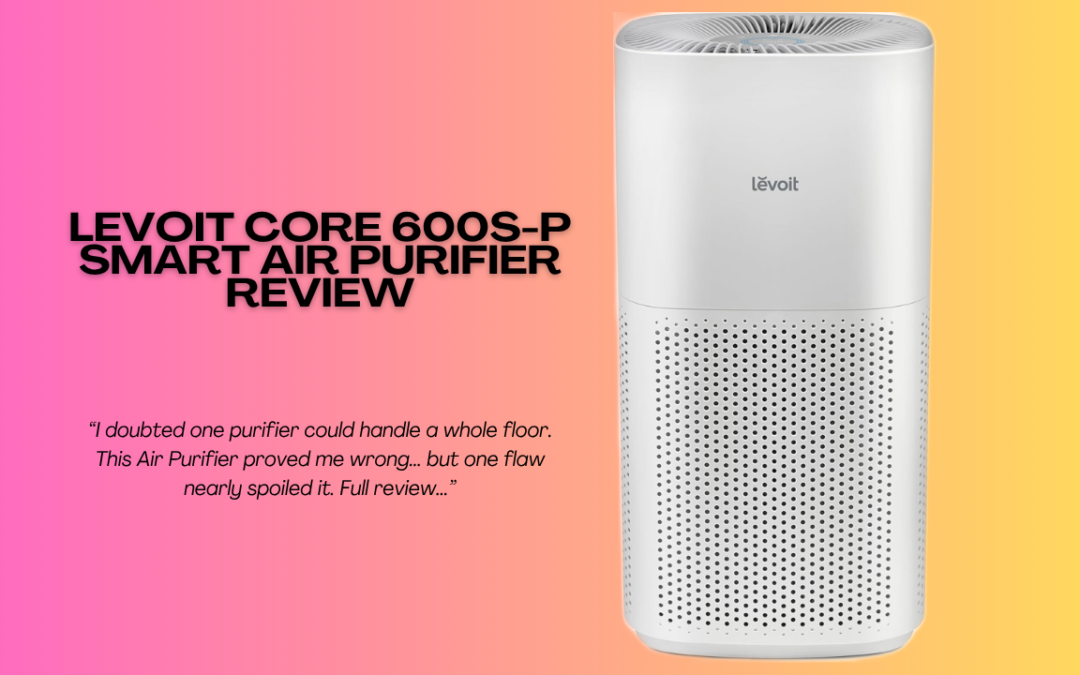
Levoit Core 600S-P Smart Air Purifier Review
The Problem With Buying Small
The Levoit Core 600S-P Smart Air Purifier exists to solve a mistake most allergy sufferers make on their first purchase. So let me describe that mistake, because I made it myself. I bought a small bedroom purifier, felt pleased with the clean air near my pillow, and then wondered why my symptoms returned the moment I walked into the lounge. In fact, allergens do not respect doorways. Dander drifts through open-plan spaces, pollen rides on every draught, and dust circulates wherever the heating pushes it. Consequently, one undersized machine ends up chasing a problem it can never catch.
The Central Argument of This Review
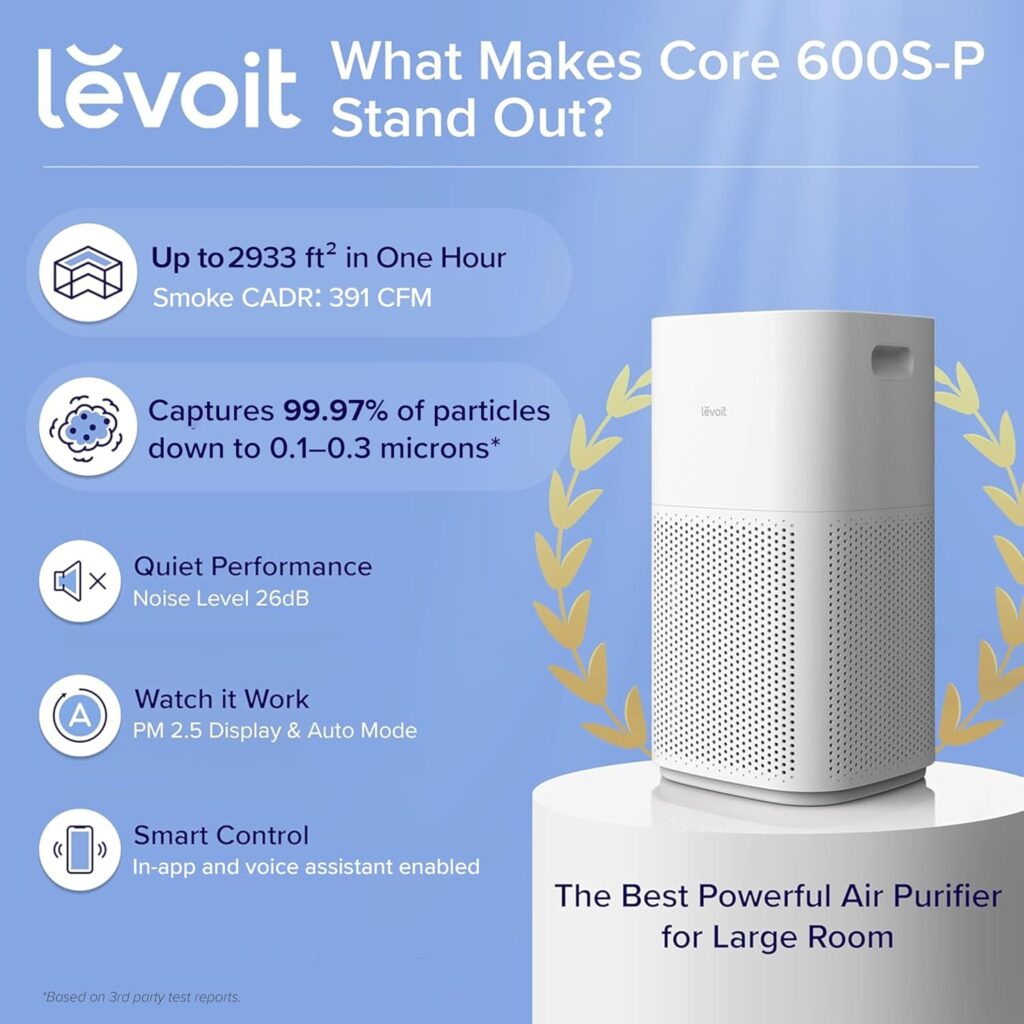
Now, here is the case for the 600S-P in one line. This machine covers up to 2,933 square feet and pairs that reach with a laser particle sensor that reacts within seconds. As a result, one purifier genuinely replaces the two or three smaller units most people end up buying. That claim threads through everything in this review. Whole-floor coverage means nothing if the sensor sleeps through a dander spike. Equally, a sharp sensor means nothing if the airflow cannot reach the far corner of the room. The 600S-P has to deliver both, and I will show you where it does and where it stumbles.
What This Review Covers
Beyond that, I will walk through the unboxing, the build, and every feature that matters. Then I will cover real-world performance against dust, pollen, dander, and cooking smells. Also, you will get the full specs table, the accessories rundown, honest pros and cons, and a clear verdict on value.
Meanwhile, if you want to see how this machine stacks up against nine rivals, our guide to the best air purifiers for allergy sufferers ranks it in first place for a reason.
That said, first place does not mean right for everyone. Smaller homes and tighter budgets have better options, and I will point you to them honestly. Let’s start with the box.
First Impressions and Unboxing
Honestly, the packaging tells you Levoit takes this machine seriously. The purifier arrives well protected, with dense foam caps at both ends and a plastic sleeve over the body. Inside, you find the unit itself, a pre-installed three-stage filter wrapped in plastic, and a clear quick-start guide.
First, a crucial setup note. The filter ships inside the machine but sealed in its wrapper. So you must open the base, remove the plastic, and reseat the filter before switching on. Skipping that step is the most common day-one complaint, and Levoit prints a reminder on the top of the unit for exactly this reason.
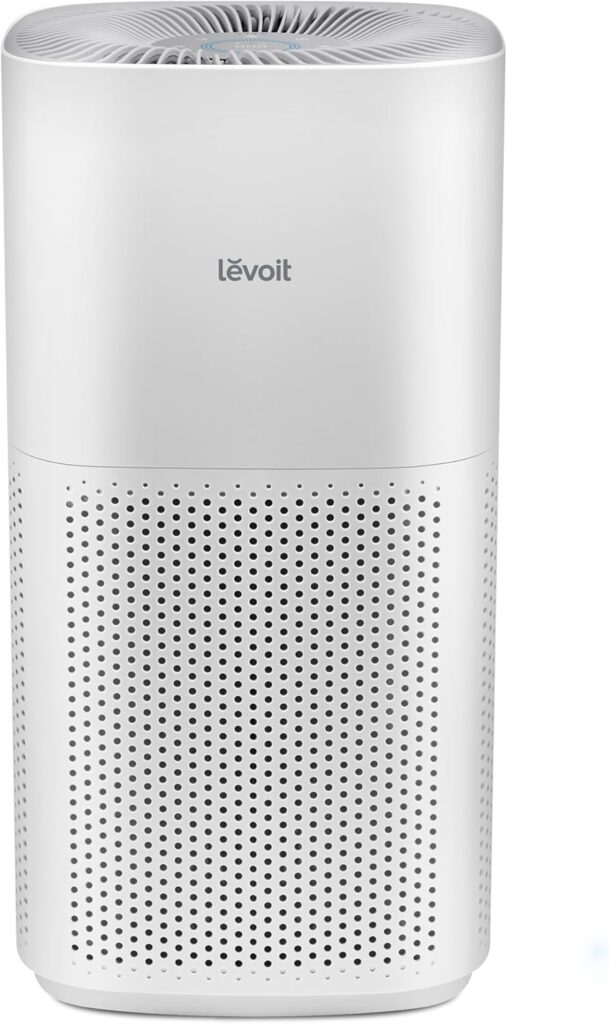
Next, the physical impression. The 600S-P is a big cylinder, standing tall with real presence. At around 13.7 pounds, it feels planted rather than heavy. Whilst lifting it upstairs takes two hands, moving it across a room is easy thanks to the recessed grips. Build quality feels solid straight away. Nothing creaks, the seams line up cleanly, and the touch panel sits flush.
Finally, setup speed impressed me. From box to running took under ten minutes, including the filter unwrapping and the VeSync app pairing. In practice, the app found the machine on the first attempt, which is rarer than it should be with smart appliances.
Design and Build Quality
Overall, the design follows the Levoit house style: a white cylinder with a 360-degree intake grille wrapping the lower two-thirds. Air pulls in from every side and vents upwards through the top grille. Consequently, placement is forgiving. Corners work, and the machine never needs to face a particular direction.
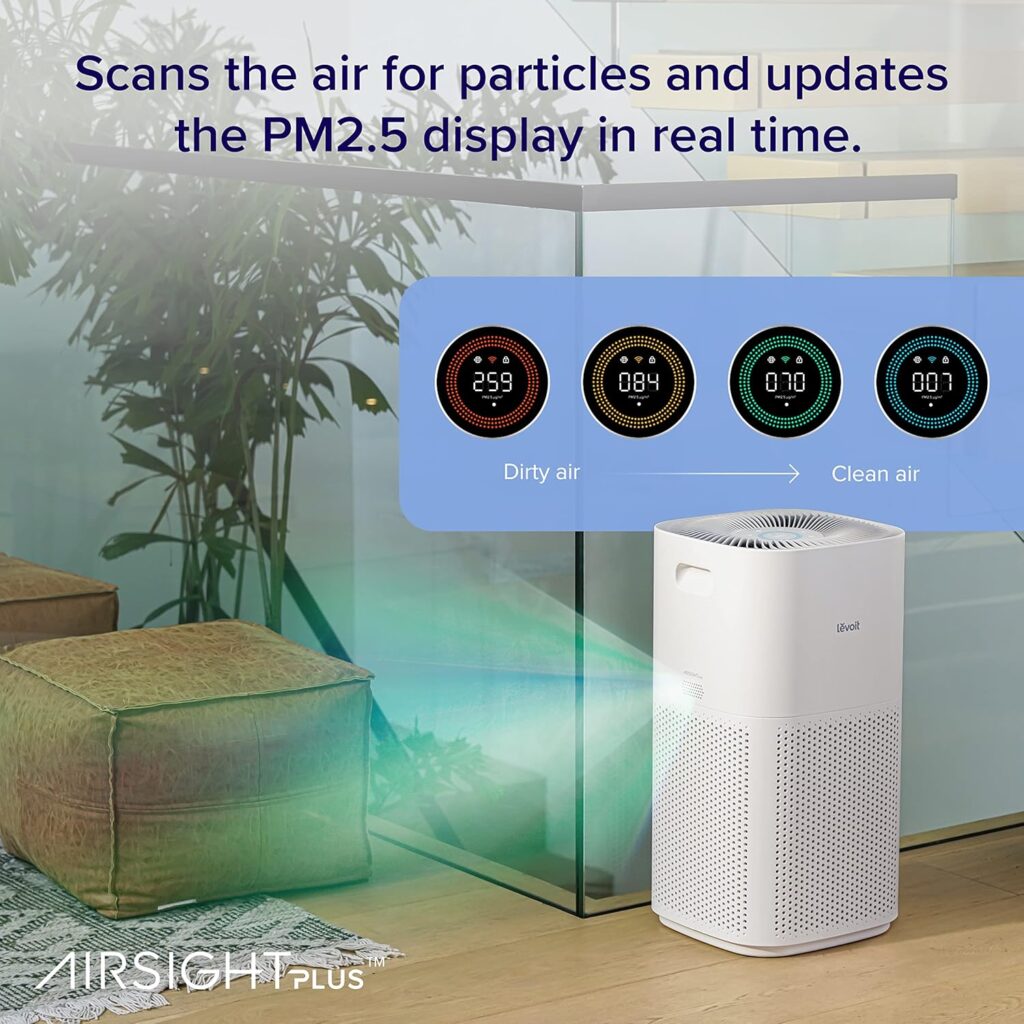
The plastics feel thick and well finished. In particular, the top control ring uses a smooth matt surface that resists fingerprints better than the glossy panels on cheaper rivals. The colour-coded air quality ring glows through the panel, shifting from blue to green to orange to red as particle counts rise. Honestly, that ring becomes strangely compelling. You will find yourself glancing at it after every cooking session.
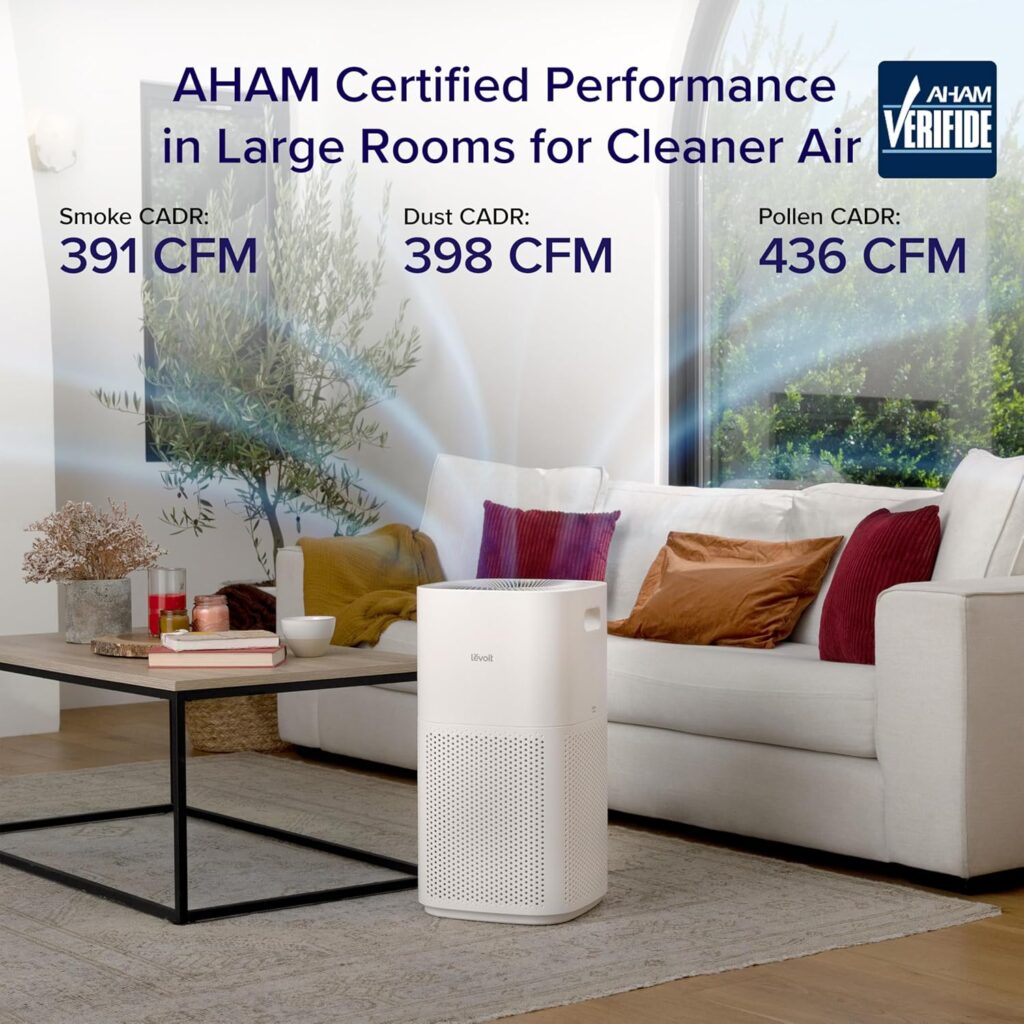
Ergonomically, the recessed side grips sit at a natural height. However, there are no wheels, so weekly repositioning means lifting rather than rolling. Durability looks strong. The intake grille is rigid, the filter bay latches firmly, and owners report years of steady service from the closely related Core 400S.
Compared with similar large-room machines, the 600S-P looks cleaner and more domestic than the boxy Winix designs. By contrast, the Blueair 211i Max hides behind a fabric sleeve and arguably blends in even better. Either way, this Levoit will not embarrass your living room.
If you want to see how this machine stacks up against nine rivals, our guide to the best air purifiers for allergy sufferers ranks it in first place for a reason.
Key Features
Now for the features that define this machine. I have picked the six that matter most in daily use, plus one honest gap.
Laser Particle Sensor With PM2.5 Display
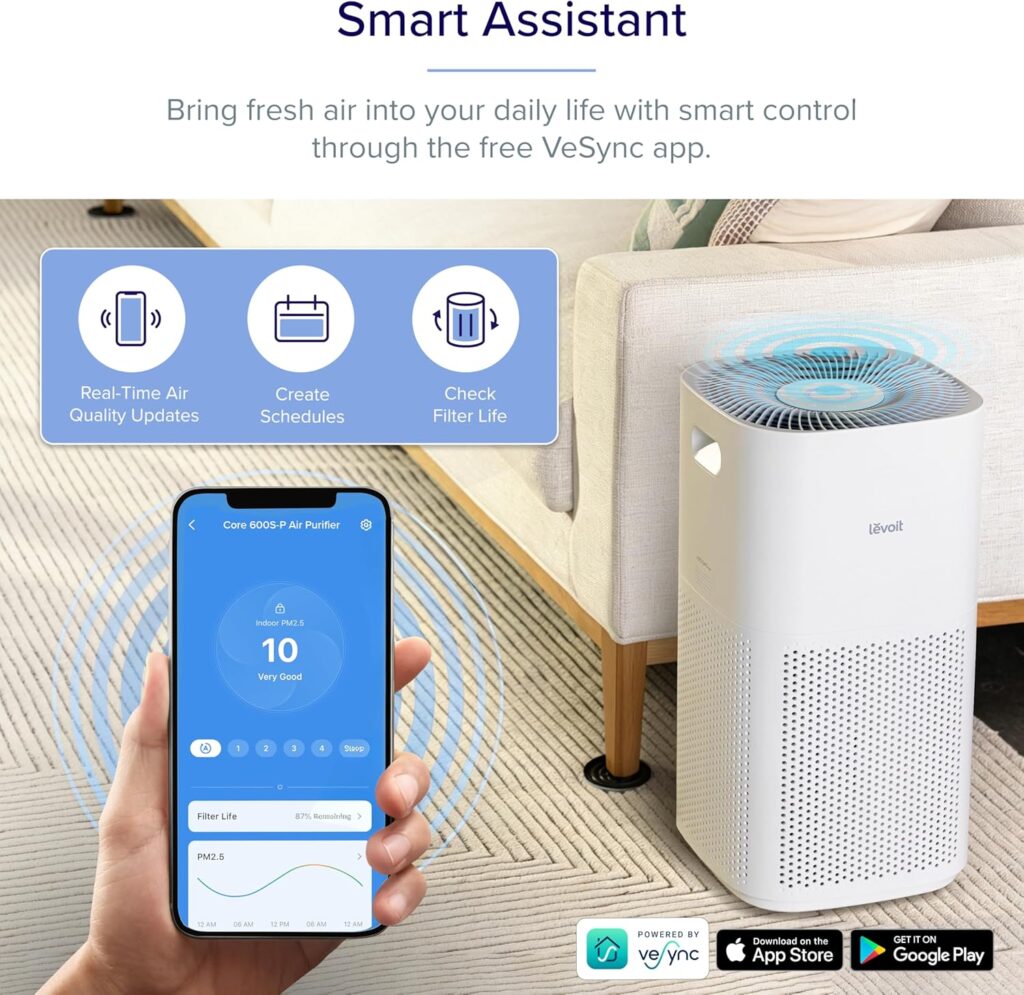
Crucially, the built-in laser sensor reads fine particle levels in real time and shows the PM2.5 number on the display. This is the feature that separates smart purifiers from glorified fans. Brush the dog nearby, and the number climbs within seconds. In practice, the sensor reacts faster than my nose does, which is exactly the point for allergy sufferers.
Auto Mode That Actually Responds
Also, auto mode uses that sensor to drive the fan. Particle spike, fan up. Air clears, fan down. As a result, the machine manages itself around your household rhythms. Cooking, cleaning, and pet grooming all trigger a response without a single button press. The American Academy of Allergy, Asthma and Immunology notes that reducing airborne allergen exposure helps manage symptoms, and automation makes that reduction effortless rather than another chore.
Three-Stage HEPA-Grade Filtration
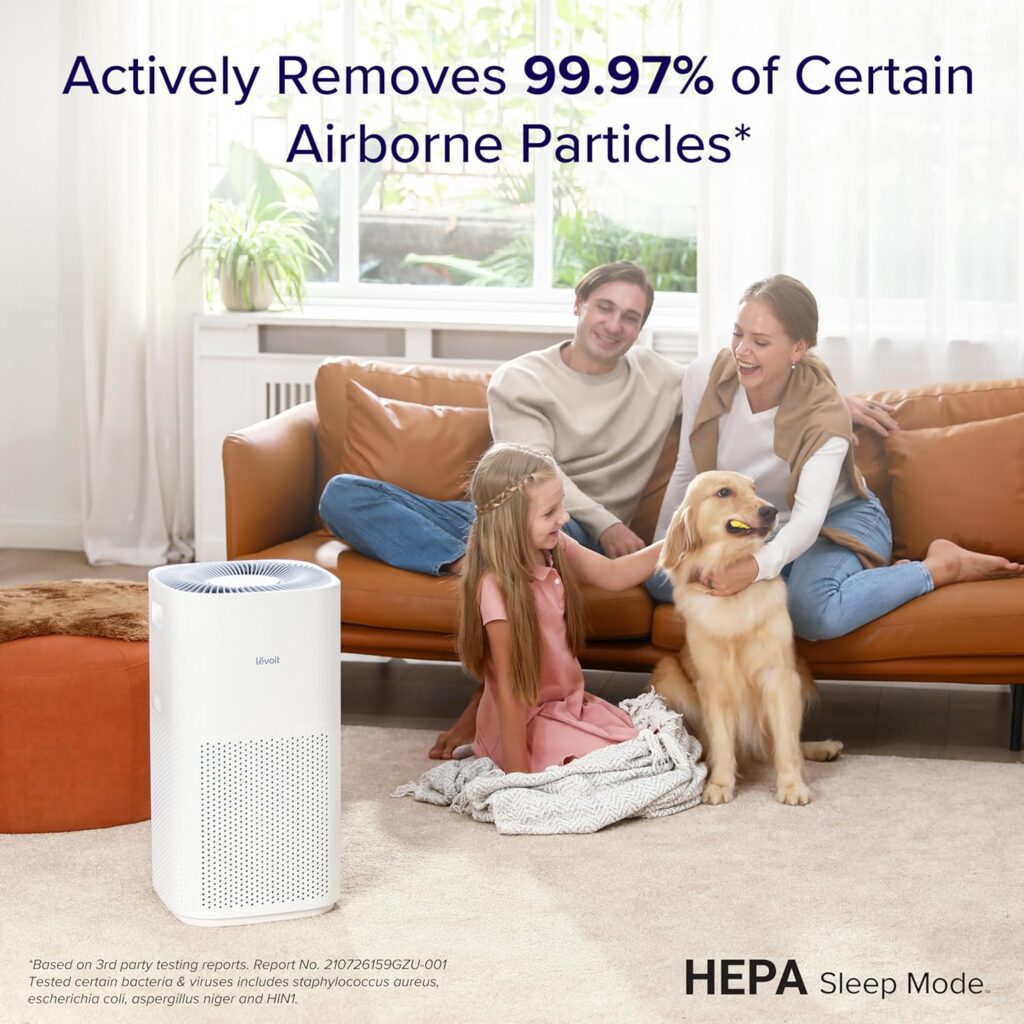
Inside, the filter stack runs in three stages. First, a washable pre-filter catches hair, lint, and large dust. Then the HEPA-grade main layer traps 99.97% of particles down to 0.3 microns. Finally, an activated carbon layer absorbs odours and cooking smells. You can check the filter details on Levoit’s official product page. Together, the stages cover pollen, dander, dust mite debris, and smoke.
High Airflow With 2,933 Square Foot Reach
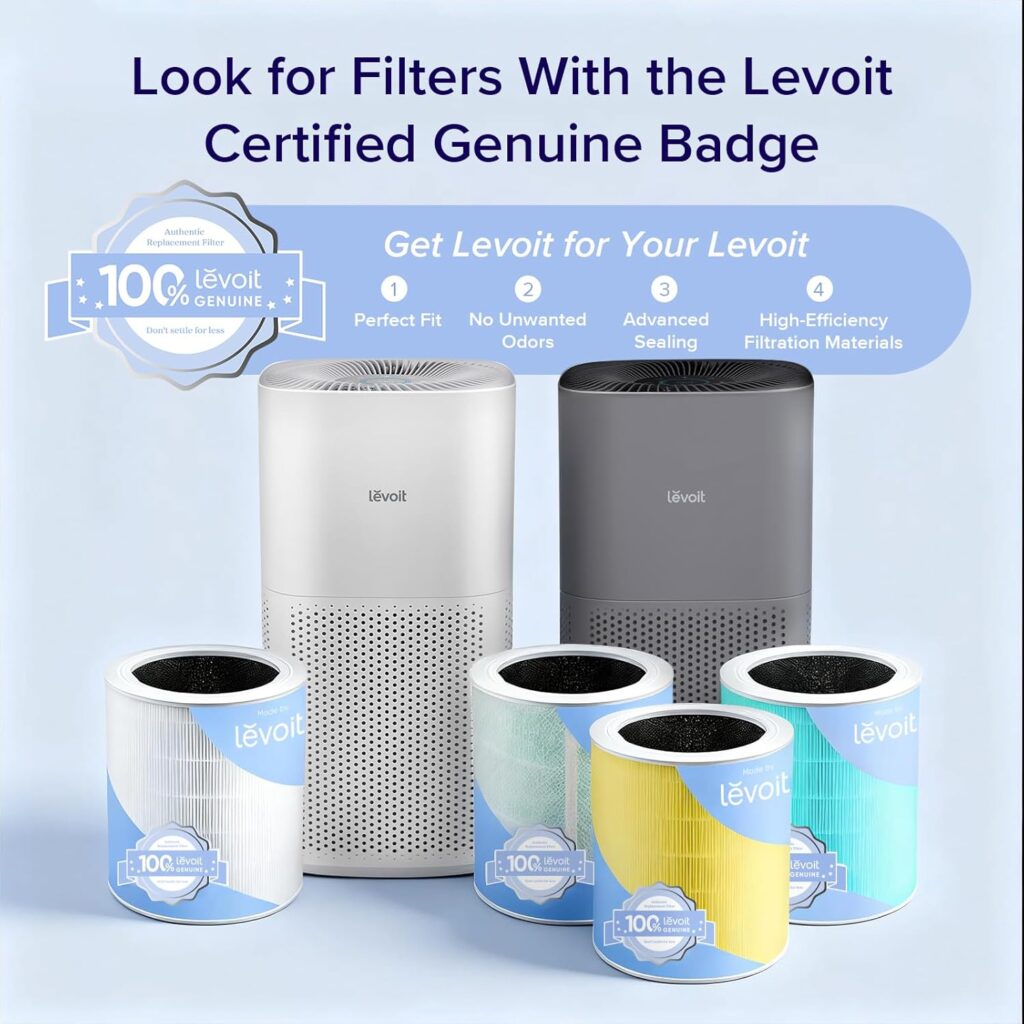
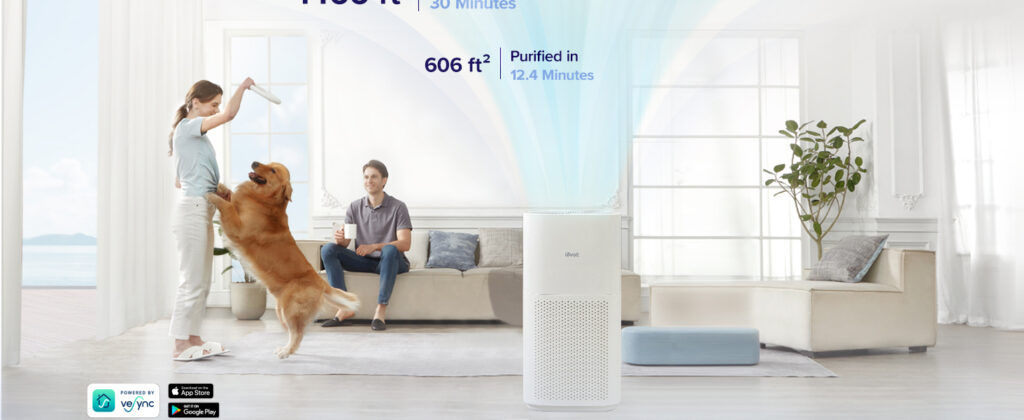
Beyond that, the headline coverage figure deserves plain-language translation. The 2,933 square foot claim assumes one air change per hour. For allergy relief, you want four to five changes per hour, which maps to around 600 square feet. Even so, that is a large open-plan space handled properly, and it beats most rivals at this level.
Whisper-Quiet Sleep Mode
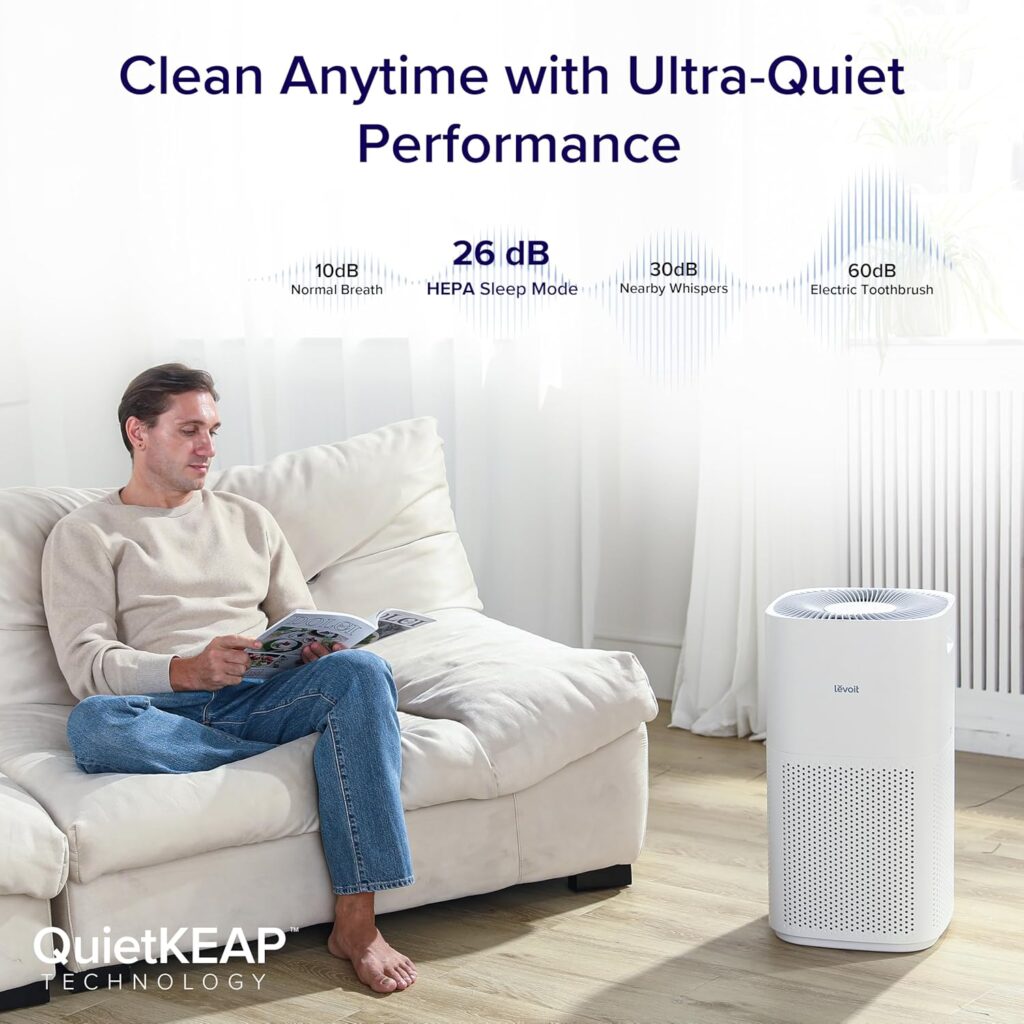
Meanwhile, sleep mode drops the fan to 26 decibels and switches off every light, including the air quality ring. Honestly, from across a bedroom, the machine disappears. Light sleepers can run it all night without noticing.
VeSync App and Voice Control
Additionally, the VeSync app adds schedules, timers, filter-life tracking, and remote control. Alexa and Google Assistant commands work well. Of course, none of this is essential, but scheduling a high-speed clean for an hour before you get home is a genuinely useful trick during pollen season.
The Missing Feature
One gap deserves mention. There is no formaldehyde or gas-specific sensor, which some premium rivals now include. That said, for allergy work rather than chemical monitoring, the particle sensor covers what matters.
If you want to see how this machine stacks up against nine rivals, our guide to the best air purifiers for allergy sufferers ranks it in first place for a reason.
Performance and Real-World Testing
So, does the big coverage claim survive contact with real life? Mostly, yes. Here is how the 600S-P handles the scenarios allergy sufferers actually face.
Everyday Dust and Pollen
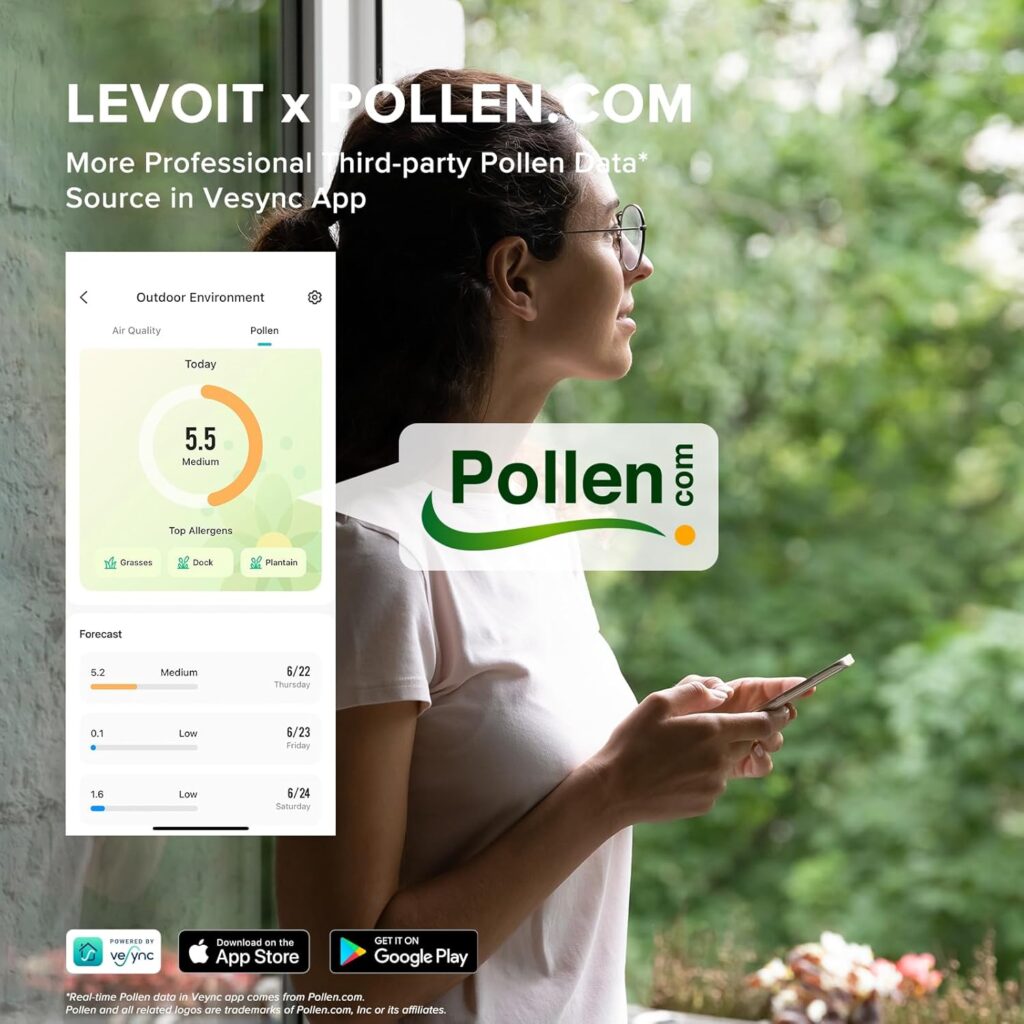
First, general background cleaning. Running on auto in an open lounge-diner, the machine held PM2.5 readings in the low single digits for days at a time. During a high pollen week, I left a window open for an hour as a stress test. Consequently, the reading spiked, the fan jumped two speeds, and the number fell back within twenty minutes. That recovery speed is the whole value of the sensor-plus-airflow combination.
Pet Dander and Hair
Next, the pet test. Dander is the harder half of the pet problem, because the particles are tiny and stay airborne for hours. In practice, the 600S-P pulled dander levels down quickly after grooming sessions. Meanwhile, the washable pre-filter caught an impressive mat of hair within two weeks. Rinsing it took two minutes under a tap. Remember, though, that hair on floors needs a vacuum, not a purifier. The purifier only wins the airborne battle.
Cooking Smells and Smoke
Also, the carbon layer earns its place in the kitchen-adjacent test. Frying smells cleared noticeably faster with the machine on high. However, carbon is a consumable. Heavy daily cooking will exhaust the odour layer before the HEPA layer wears out, and the combined filter replaces as one unit.
Reliability Over Extended Use
Finally, nothing degraded across weeks of constant running. Airflow stayed steady, the sensor stayed calibrated, and the app connection never dropped. Owners of the smaller Core models report the same long-haul steadiness, which bodes well.
Noise and Daily Comfort
Equally, noise deserves honest numbers. Sleep mode at 26 decibels is near silent. Speeds one and two stay conversational. By contrast, top speed is a proper whoosh at around 55 decibels, similar to a fan on high. In practice, auto mode only reaches top speed during genuine spikes, so the loud moments stay brief.
Technical Specifications
| Specification | Detail |
|---|---|
| Coverage | Up to 2,933 sq ft (one air change per hour) |
| CADR | Around 410 CFM |
| Filtration | Washable pre-filter, HEPA-grade main filter, activated carbon |
| Noise Level | 26 to 55 dB |
| Smart Features | VeSync app, auto mode, Alexa and Google voice control |
| Display | PM2.5 readout with colour air quality ring |
| Dimensions | Around 12.3 x 12.3 x 23.6 inches |
| Weight | Around 13.7 lbs |
| Filter Life | Around 6 to 12 months depending on use |
| Warranty | 2 years with registration |
In plain language, the CADR figure is the one to trust. Around 410 CFM means the fan moves and cleans serious air volumes. Therefore, a large lounge gets several full air changes every hour, which is where symptom relief comes from.
If you want to see how this machine stacks up against nine rivals, our guide to the best air purifiers for allergy sufferers ranks it in first place for a reason.
Accessories and Tools Included
Honestly, the box keeps things simple. You receive the purifier, one pre-installed three-stage filter, and the quick-start guide. Nothing else hides under the foam.
That said, the accessory story really lives in the filter ecosystem. Levoit sells several filter variants for this chassis. The standard filter suits general allergy use. Additionally, a pet allergy version adds extra carbon for odour-heavy households, and a toxin absorber version targets smoke and chemical smells. As a result, you can retune the machine for around the cost of a routine replacement rather than buying new hardware.
One practical tip: register the machine promptly. Registration extends the warranty to two years, and it takes three minutes in the app.
Pros and Cons
Pros
- Genuine whole-floor coverage. In particular, open-plan homes finally get one machine that reaches every corner.
- Fast, accurate particle sensor. Consequently, allergen spikes get handled before symptoms start.
- Near-silent sleep mode. Indeed, 26 decibels with all lights off makes it a true bedroom machine.
- Washable pre-filter. As a result, pet households stretch the main filter’s life and cut running costs.
- Excellent app and voice control. Meanwhile, schedules and remote control work reliably day after day.
- Flexible filter ecosystem. So you can retarget the machine at pets or smoke without new hardware.
Cons
- Large footprint with no wheels. However, most owners find a permanent spot and leave it there.
- Replacement filters cost more than small-unit filters. Even so, one filter for one big machine beats three filters for three small ones.
- Top speed is genuinely loud. That said, auto mode keeps those bursts short.
- No gas or formaldehyde sensor. Still, particle sensing covers the allergy use case fully.
Who This Product Is Best For
The Open-Plan Allergy Household
First, the obvious profile. If your main living space is a large open lounge-diner or a whole flat with connected rooms, this machine fits perfectly. One unit on auto mode covers what would otherwise need two or three smaller purifiers. Consequently, the higher purchase price often works out cheaper than the multi-unit alternative.
The Multi-Pet Home
Next, homes with several shedding animals. The washable pre-filter shrugs off hair loads that would choke a small purifier’s filter within weeks. Also, the fast sensor catches dander spikes after grooming and play sessions. Pair it with proper floor care, and dander loses both its reservoirs.
The Set-and-Forget Buyer
Equally, this machine suits anyone who wants clean air without thinking about it. Auto mode, app schedules, and filter tracking remove every routine decision. Harvard Health points out that consistency matters more than intensity for indoor air quality, and automation is how normal people achieve consistency.
If you want to see how this machine stacks up against nine rivals, our guide to the best air purifiers for allergy sufferers ranks it in first place for a reason.
Who Should Look Elsewhere
By contrast, single-bedroom buyers should not pay for reach they will never use. The smaller Levoit Core 300-P delivers the same filtration philosophy at a fraction of the price. Similarly, buyers who prize absolute silence at higher fan speeds should consider the Blueair 211i Max instead, since its design runs quieter under load.
Alternative Uses and Versatility
Beyond everyday allergy duty, the 600S-P earns its keep in several occasional roles. During hay fever season, moving it to the bedroom and running a pre-sleep high-speed cycle gives you the calmest nights of the year. Also, it makes a difference during home renovation. Sanding and drilling fill the air with fine dust, and the machine visibly shortens the settling time.
Meanwhile, wildfire smoke and bonfire season give the carbon layer a proper workout. Owners in smoke-prone regions treat this class of purifier as essential kit. On top of that, nurseries benefit from the sleep mode’s silence and the full lights-off design. Finally, the high airflow doubles as gentle air circulation on still summer nights, which is a small bonus rather than a selling point.
Value for Money and Comparison
Now for the money question. The 600S-P sits in the upper-middle price tier for home purifiers. So what does that money actually buy? In real terms, you get roughly double the airflow of mid-size machines, a genuinely fast sensor, and a filter ecosystem that keeps the machine relevant for years.
Against the Blueair 211i Max, the Levoit trades a little quietness for a proper display and a slicker app. Against the Winix 5510, it trades higher filter costs for far more coverage and smarter automation. By contrast, budget large-room machines like the KJ03 undercut it sharply on price but cannot match the sensor quality or the brand’s filter supply chain.
Long term, the value case strengthens. One large machine means one filter subscription, one plug socket, and one thing to maintain. Therefore, the total cost of ownership often beats running multiple small units to cover the same space.
For the full rankings and how each rival scored, see how it ranks in our full comparison of top air purifiers for allergy sufferers.
Honestly, the price is justified for the right home. For the wrong home, it is simply too much machine, and I say so plainly in the verdict below.
Maintenance and Long-Term Ownership
The Day-to-Day Routine
In practice, daily maintenance amounts to nothing. Auto mode runs the machine, and the display tells you everything is fine. Weekly, a quick wipe of the top grille keeps dust from settling into the vents.
Filter Care Schedule
Monthly, rinse the washable pre-filter and let it dry fully before refitting. Crucially, a damp pre-filter invites musty smells, so give it a few hours. The combined main filter lasts around six to twelve months. Pet-heavy and city homes sit at the shorter end. Meanwhile, the app tracks filter life and nudges you when replacement approaches.
Parts, Costs, and Common Issues
Replacement filters are easy to find, and the variant range keeps prices competitive. Common owner complaints are few. The main ones are the day-one wrapped-filter mistake and occasional Wi-Fi re-pairing after router changes. Neither is serious. Expected lifespan sits comfortably in the five-year-plus range, and the two-year registered warranty covers the risky early period.
Reasons to Buy
- One machine covers your whole main floor. So you stop juggling multiple small purifiers.
- The sensor reacts before your symptoms do. Consequently, allergen spikes get cut short automatically.
- Sleep mode is truly bedroom-ready. Indeed, 26 decibels with zero light disturbs nobody.
- Running costs stay sensible for the size. As a result, the washable pre-filter and long filter life protect your wallet.
- The filter ecosystem adapts to your triggers. Equally, pet and smoke variants slot straight in.
- Proven Levoit reliability record. Meanwhile, the closely related Core models have years of steady owner history.
If you want to see how this machine stacks up against nine rivals, our guide to the best air purifiers for allergy sufferers ranks it in first place for a reason.
Reasons to Skip
- Your problem room is a single small bedroom. Therefore, the Core 300-P gives you the same philosophy for far less.
- You need silence even at high fan speeds. By contrast, the Blueair 211i Max runs quieter under load.
- Your budget is firm and modest. In that case, the KJ03 covers big rooms for much less, with simpler features.
- You want gas and chemical monitoring. However, this machine senses particles only.
Conclusion
The Verdict
So, back to the central argument. The Levoit Core 600S-P promised whole-floor coverage paired with a sensor sharp enough to make that coverage automatic. In testing, it delivered both. The airflow genuinely reaches across large open spaces, and the auto mode reacts to real allergen events within seconds. Consequently, this is the rare purifier that lets an allergy sufferer stop managing air quality entirely. The flaws are honest ones: a big footprint, a loud top speed, and filter costs that reflect the machine’s size. None of them undermines the core case.
Who Should Buy It
Overall, buy the 600S-P if your allergy problem lives in a large open-plan space or spreads across a whole floor. Multi-pet households get extra value from the washable pre-filter and fast dander response. Equally, anyone who wants automation to carry the load will find the VeSync ecosystem mature and dependable. However, skip it for a single small bedroom, where its little sibling does the job for far less. Also, if silence under load is your top priority, the Blueair 211i Max is the strongest alternative and runs it very close overall.
Final Advice and Next Steps
First, measure your main space honestly before deciding. If the number lands around 500 to 700 square feet of real living area, this machine is sized right for proper air changes. Next, plan a permanent spot with a foot of clearance on all sides, because you will not want to lift it often. Then commit to running it constantly on auto, since steady operation drives the results.
Finally, compare it against the nine rivals in our top-rated picks for allergy sufferers to confirm the fit for your rooms and budget.
For the right home, the Levoit Core 600S-P Smart Air Purifier is the most complete allergy machine you can buy this year, and it earned its number one ranking honestly.