BLUEAIR Blue Pure 211i Max Review
The Noise Problem Nobody Warns You About
The BLUEAIR Blue Pure 211i Max solves the problem that quietly kills most air purifier purchases. Let me explain what I mean. People buy a purifier, run it on high for a week, and then get worn down by the constant drone. So the machine gets turned down, then turned off, then shoved in a cupboard. Consequently, the allergens win by default. In fact, the most common reason purifiers fail is not weak filtration. It is that owners cannot live with the noise required to get real cleaning done.
The Central Argument of This Review
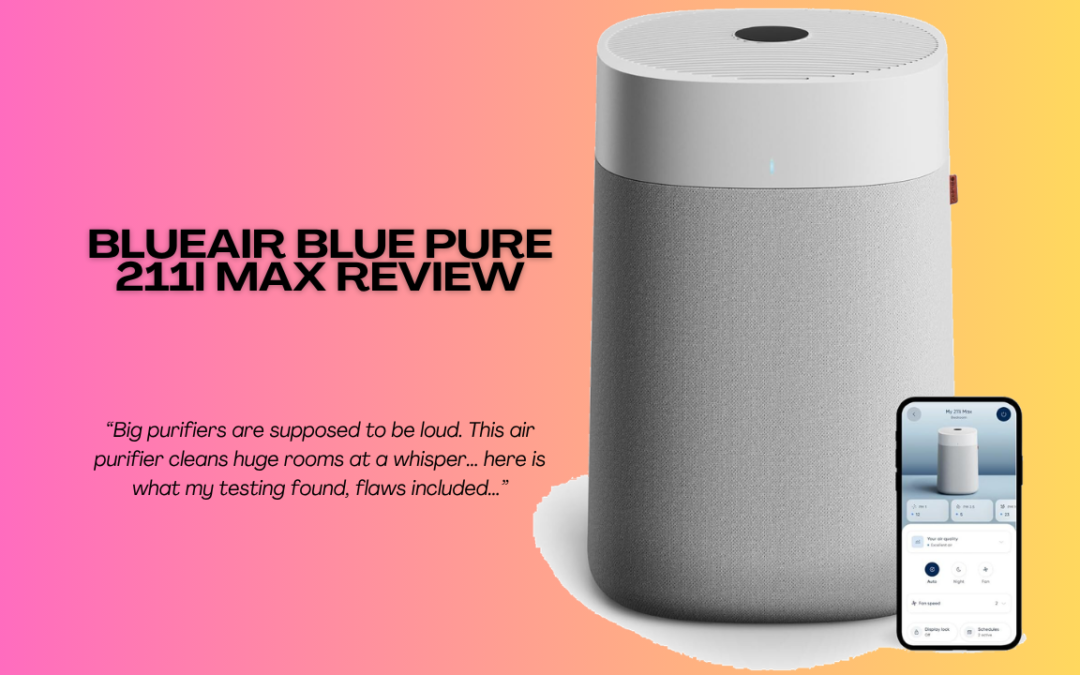
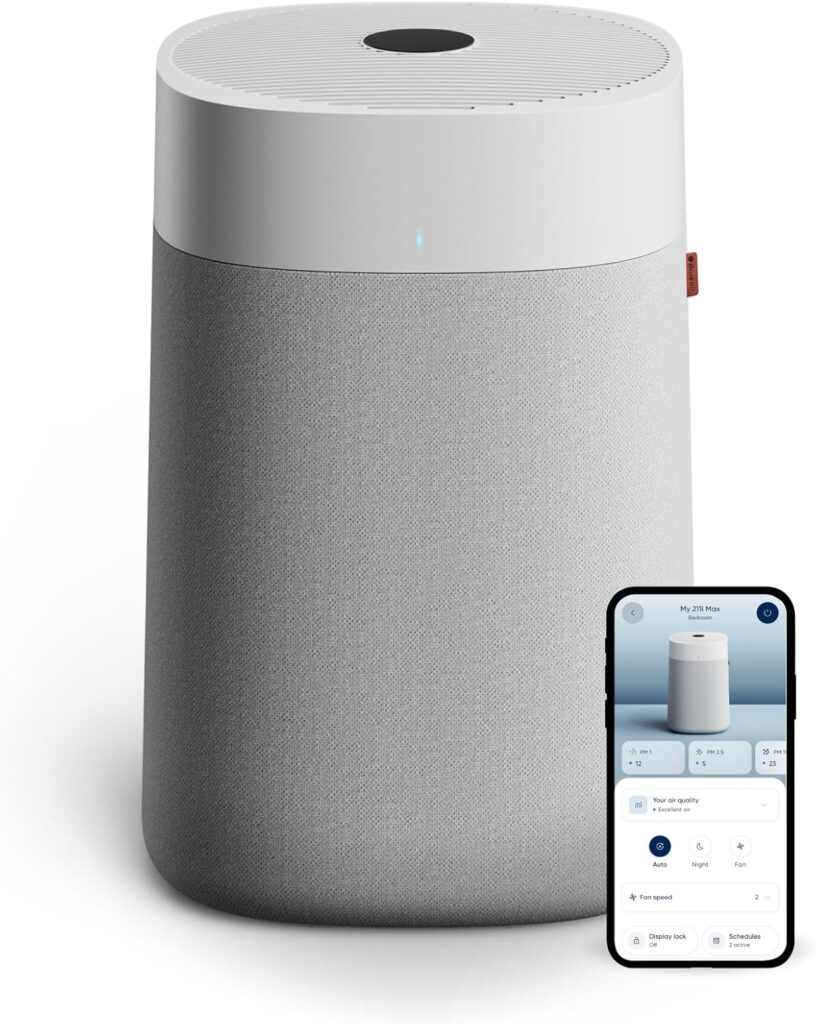
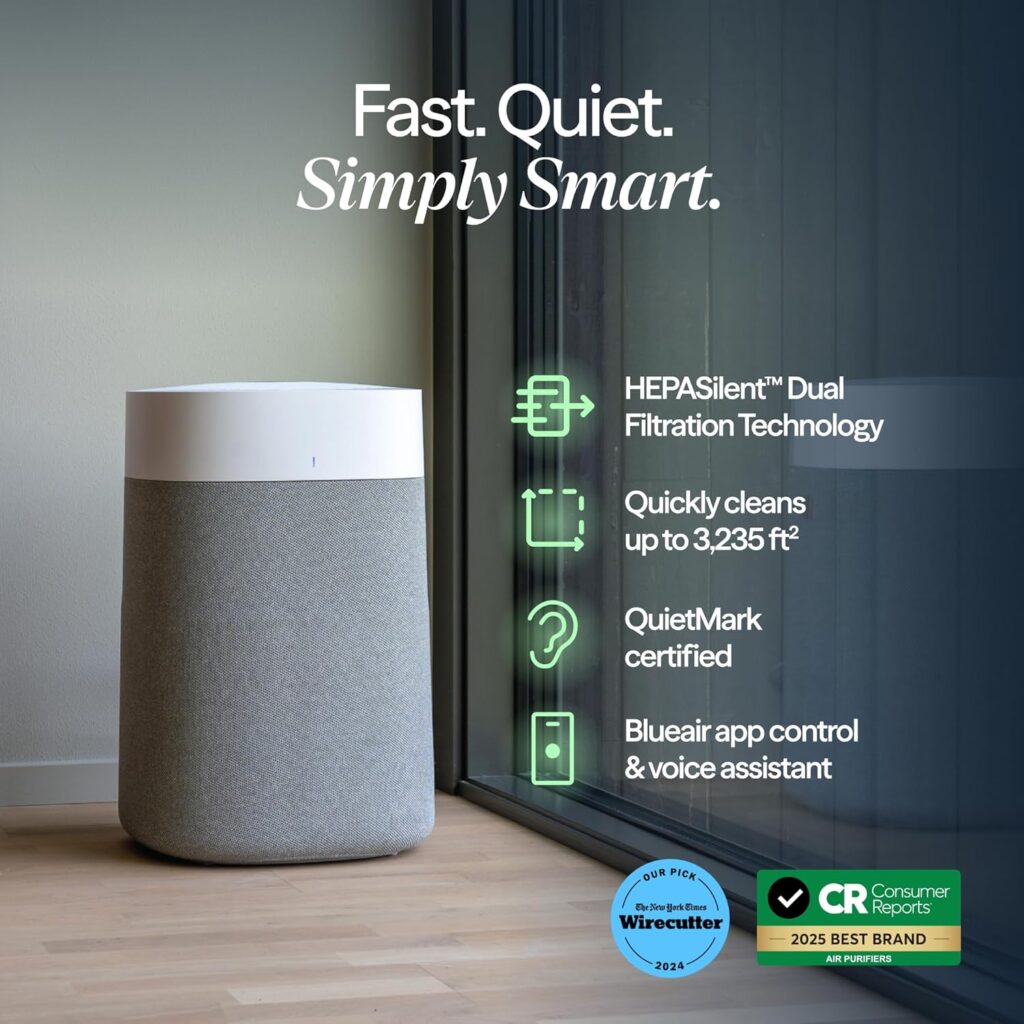
Now, here is the case for the 211i Max in one line. This machine cleans rooms up to 3,235 square feet whilst staying quieter than any large purifier I have tested. Blueair’s HEPASilent technology charges particles before they reach the filter, so the fan works less hard for the same result. As a result, the noise floor sits at a gentle 23 decibels, and even the working speeds stay civilised. That is the argument this whole review tests. Quiet means nothing if the cleaning is weak. Equally, big coverage means nothing if you switch the machine off by Thursday. The 211i Max claims to deliver both at once.
What This Review Covers
Beyond that, I will take you through the unboxing, the fabric-wrapped design, and every feature worth knowing. Then comes real-world performance against pollen, dander, dust, and cooking smells. Also, you will get the full specifications, the accessories rundown, honest pros and cons, and a straight verdict on the price.
Meanwhile, if you want the full field of rivals, this machine took second place in our guide to the best air purifiers for allergy sufferers, and it pushed the winner desperately hard.
That said, second place overall makes it first place for a specific type of buyer. By the end, you will know whether that buyer is you.
First Impressions and Unboxing
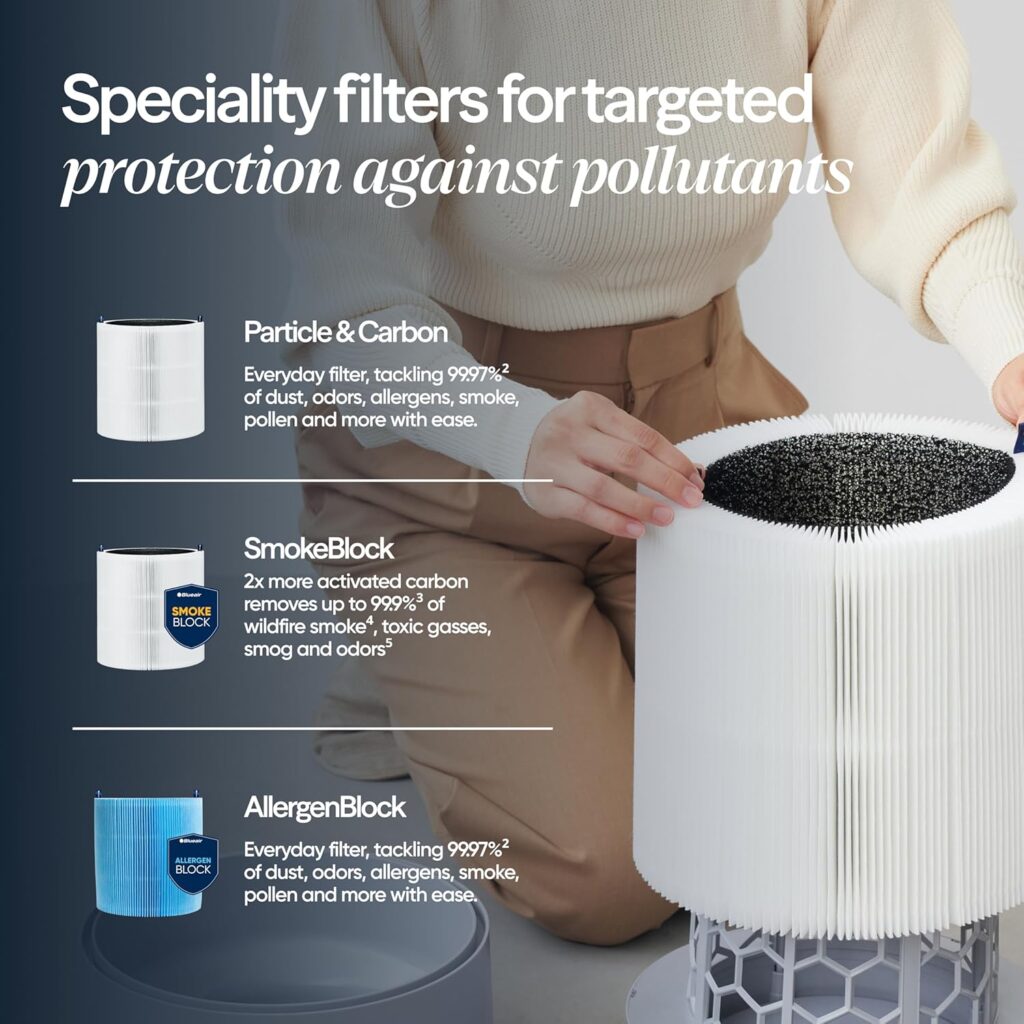
Honestly, Blueair’s packaging feels closer to furniture delivery than appliance shipping. The box is sturdy, the foam is dense, and the machine slides out cleanly. Inside, you find the purifier with its particle-and-carbon filter pre-installed, the washable fabric pre-filter already fitted around the body, and a short quick-start guide.
First, the mandatory setup note. The main filter ships in a plastic wrapper inside the unit. Therefore, you must lift off the top, remove the wrapper, and reseat the filter before the first run. The process takes two minutes and needs no tools.
Next, the physical impression surprised me. At around 15 pounds, the 211i Max is lighter than it looks, and the fabric wrap makes it pleasant to handle. Whilst it stands tall, the footprint stays modest for the coverage on offer. Build quality feels excellent. The top grille is rigid, the seams are tight, and nothing rattles when you move it.
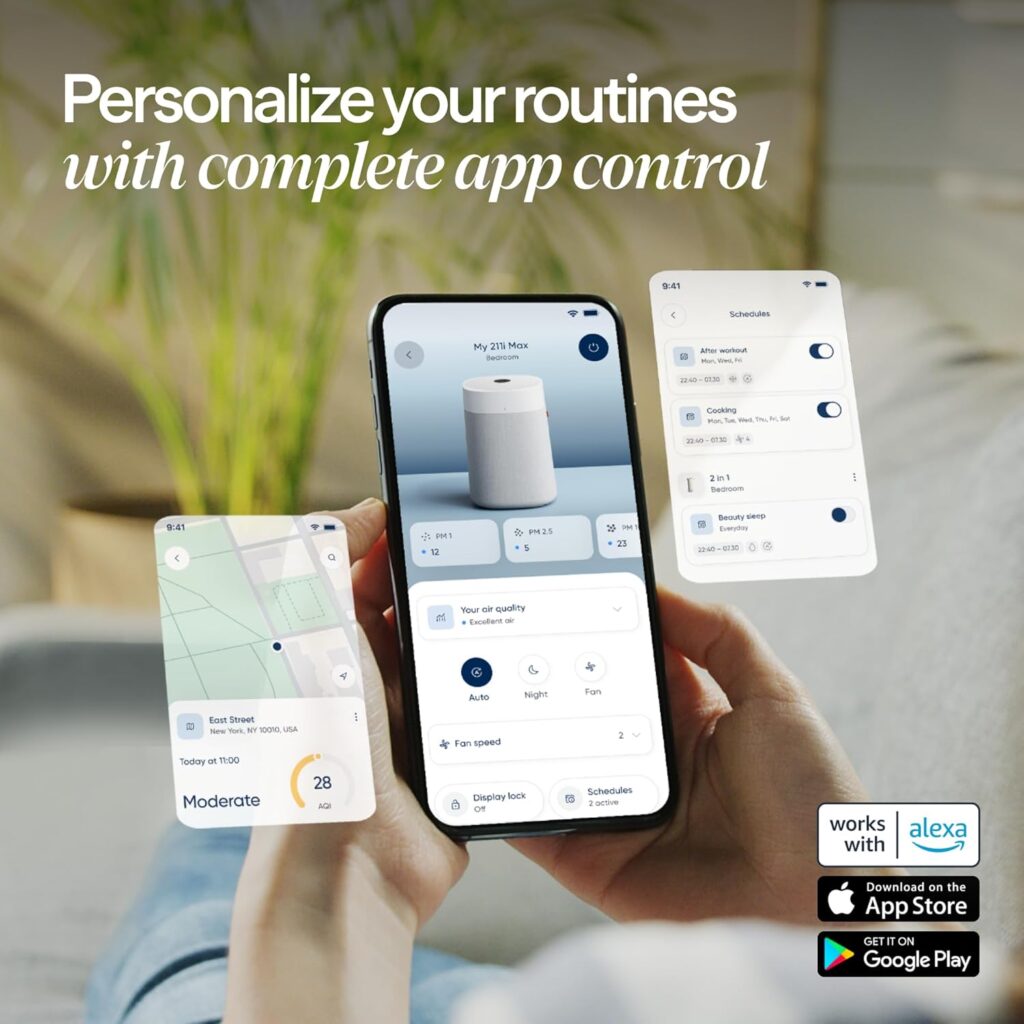
Finally, setup speed was painless. From box to running took eight minutes, including the app pairing. In practice, the Blueair app found the machine on the first attempt and walked through Wi-Fi setup without a single hiccup.
Design and Build Quality
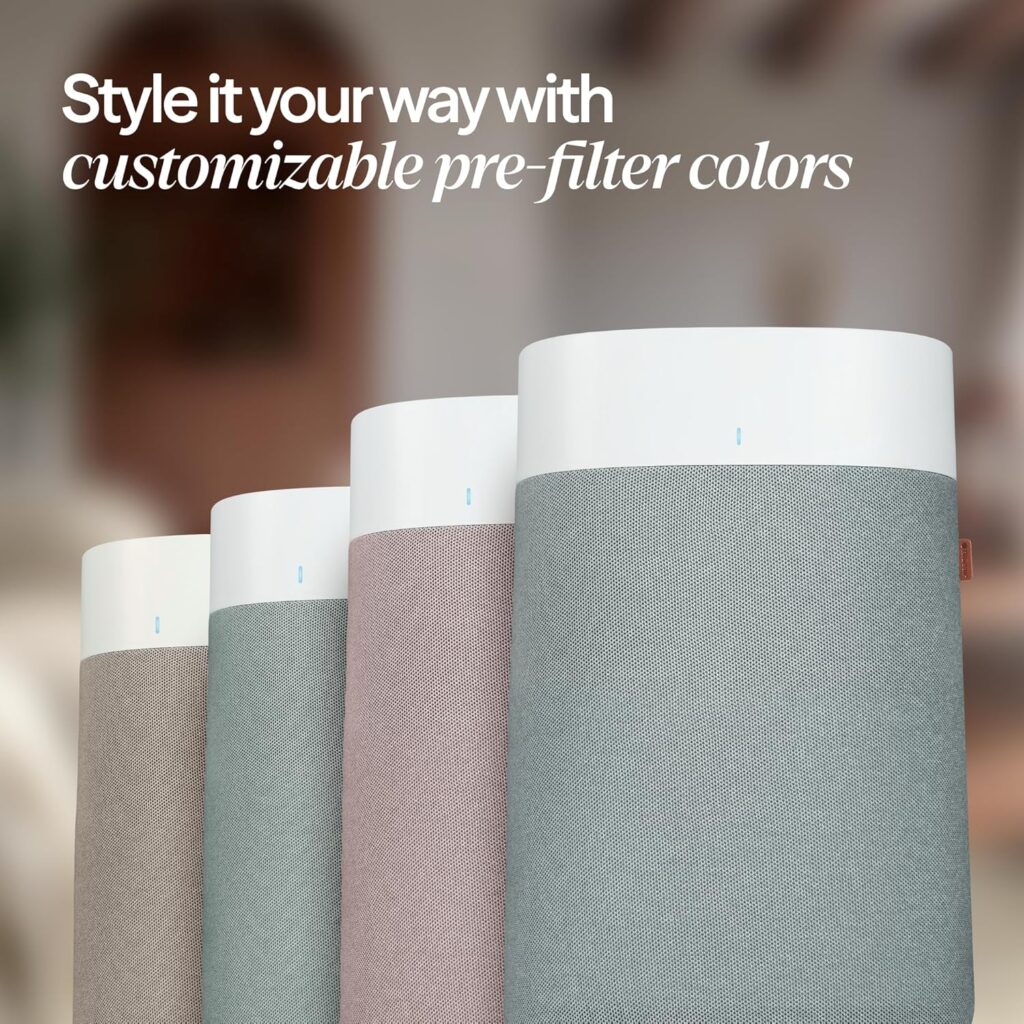
Overall, the 211i Max looks less like an appliance and more like a soft-furnished side table. The washable fabric pre-filter wraps the whole lower body and comes in several colours. Consequently, the machine blends into a living room instead of announcing itself. That sounds trivial until you remember that purifiers only work when they stay out in the open.
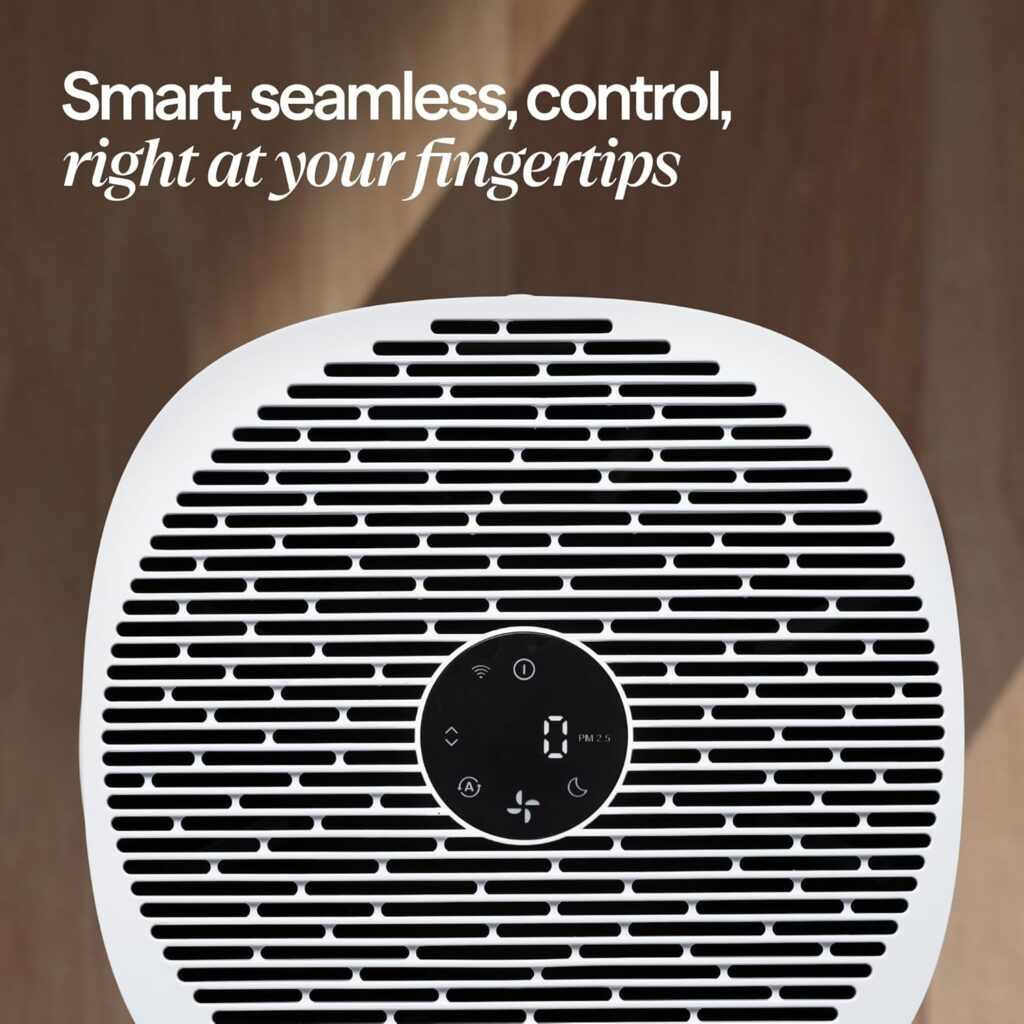
Construction quality impresses throughout. The internal frame is solid plastic with no flex, and the top control surface uses clean, minimal buttons. In particular, the single-button simplicity will please anyone tired of cluttered touch panels. A small display shows the air quality status, and an LED ring gives an at-a-glance reading from across the room.
Ergonomically, lifting the unit is easy thanks to the lightweight and grippy fabric. However, there are no wheels or handles, so plan a settled spot. Durability looks strong. Blueair’s fabric pre-filters survive repeated machine washes, and the brand’s older 211 models have long owner track records.
Compared with rivals at this level, the design choice is clear. The Levoit Core 600S-P offers a proper PM2.5 readout and a flashier panel. By contrast, the Blueair hides its cleverness behind calm minimalism. Neither approach is wrong. Your preference here says a lot about which machine you should buy.
If you want the full field of rivals, this machine took second place in our guide to the best air purifiers for allergy sufferers, and it pushed the winner desperately hard.
Key Features
Now for the features that define this machine. Six matter most in daily life, plus one honest omission.
HEPASilent Dual Filtration
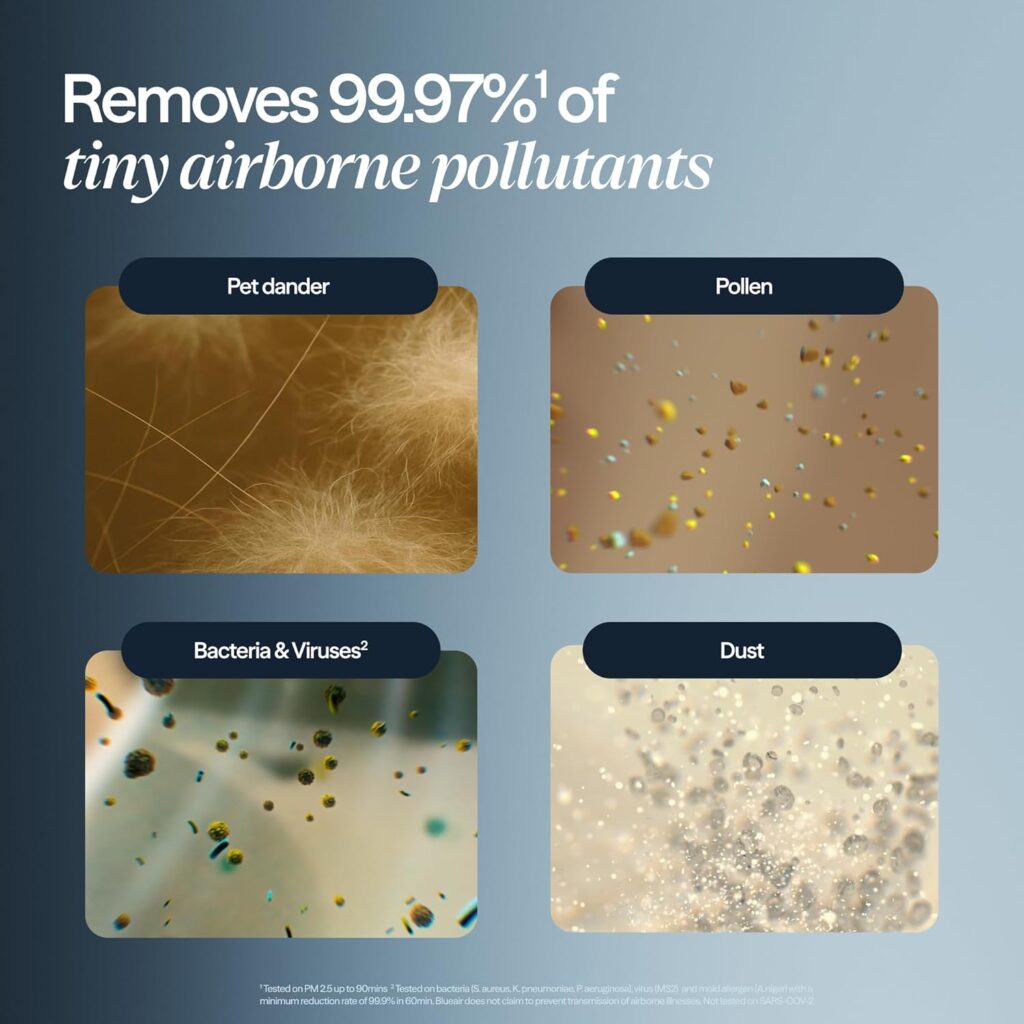
Crucially, HEPASilent is the technology the whole product stands on. An electrostatic charge is applied to incoming particles, making them cling to the filter fibres far more readily. Then mechanical filtration catches the rest. You can read the full technical explanation on Blueair’s official site. In practice, the unit removes 99.97% of particles down to 0.1 microns whilst running slower fan speeds than rivals need. As a result, you get large-room cleaning at small-room noise levels.
Class-Leading 3,235 Square Foot Coverage
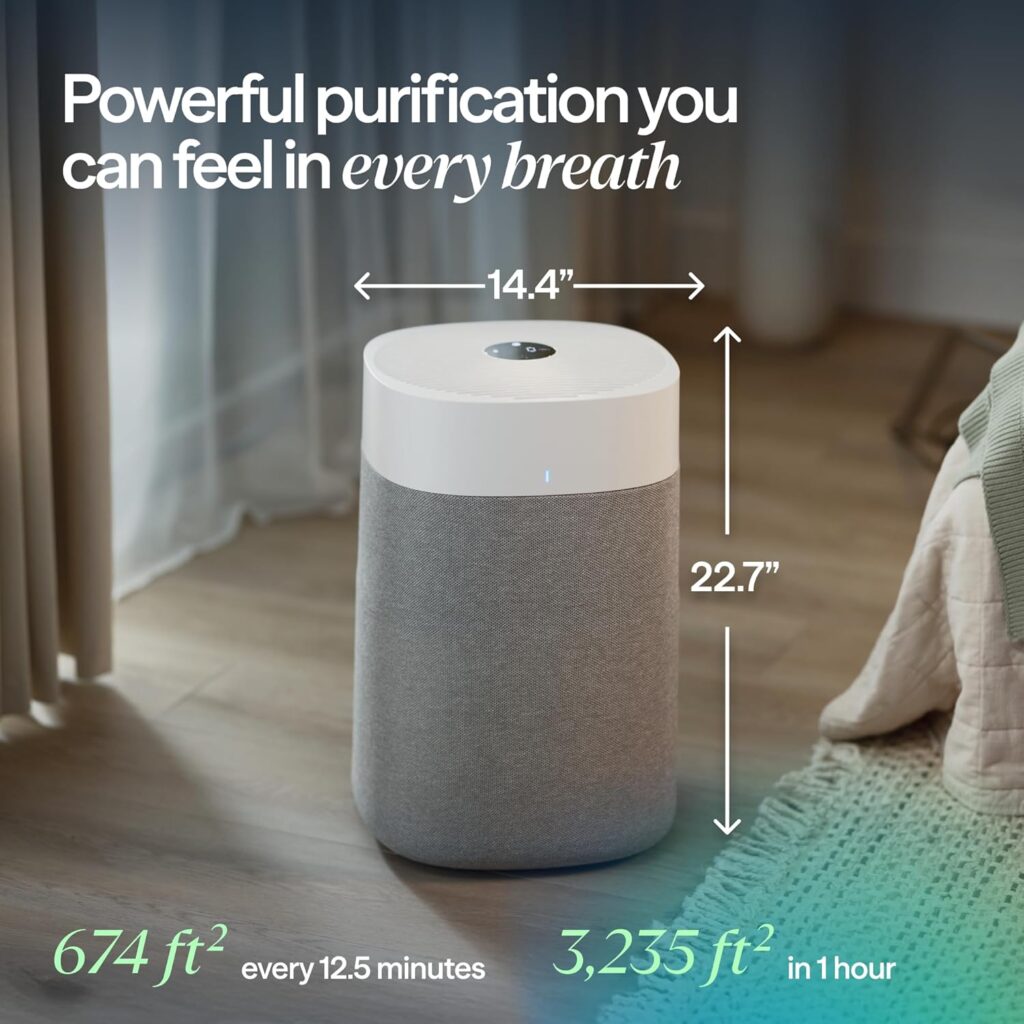
Also, the headline number deserves plain translation. The 3,235 square foot figure assumes one air change per hour. For proper allergy relief, you want four to five changes, which maps to around 635 square feet. Even so, that covers a large open-plan space at the rate that actually shifts symptoms. Guidance from ASHRAE treats air change rates as the core measure of ventilation effectiveness, and this machine hits strong rates in genuinely big rooms.
Washable Fabric Pre-Filter
Beyond that, the fabric wrap doubles as the first filtration stage. Hair, lint, and coarse dust stop at the fabric before ever reaching the main filter. Consequently, the expensive part lasts longer. When the fabric loads up, it goes straight in the washing machine. Honestly, this is the cheapest running-cost trick in the industry, and more brands should copy it.
RealTrack Air Quality Monitoring
Meanwhile, the built-in sensor tracks particles and feeds both the LED ring and the Blueair app. Auto mode adjusts the fan on its own. The readings respond quickly to real events like cooking or dusting, though the display shows status bands rather than exact numbers.
Whisper-Quiet Operation Across All Speeds
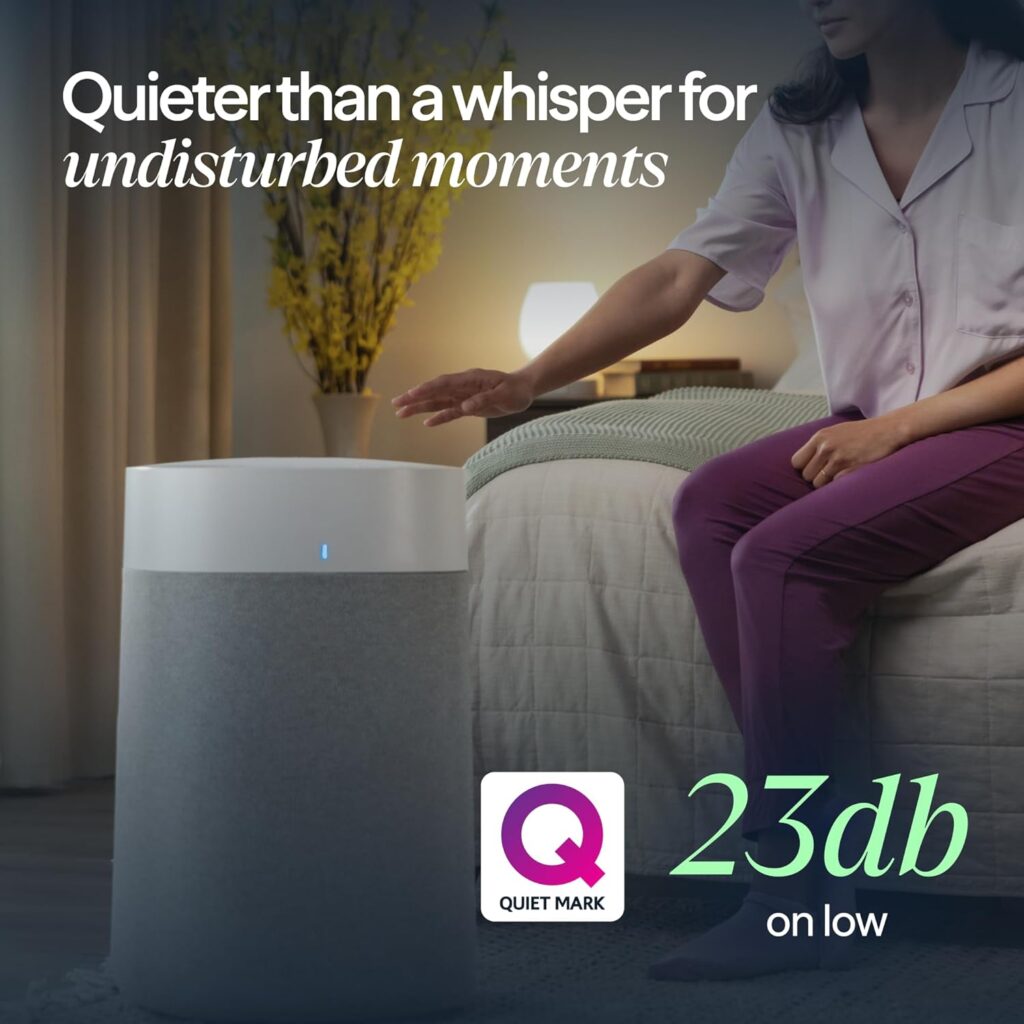
Additionally, the noise story extends beyond the lowest setting. Speed one runs at 23 decibels, which is functionally silent. Even the top speed peaks around 53 decibels, softer than most rivals’ middle settings. For light sleepers, this range changes what is possible overnight.
Energy-Sipping Running Costs
Equally, the low fan effort translates into low electricity use. Running around the clock costs pennies per day. Over a year of constant use, the difference against thirstier machines becomes real money.
The Missing Feature
One gap stands out. There is no exact PM2.5 number on the unit itself. That said, the app fills the gap for anyone who wants figures rather than colours.
If you want the full field of rivals, this machine took second place in our guide to the best air purifiers for allergy sufferers, and it pushed the winner desperately hard.
Performance and Real-World Testing
So, does quiet operation come at a cleaning cost? Here is how the 211i Max handled the scenarios that matter to allergy sufferers.
Everyday Dust and Pollen
First, background cleaning. Running on auto in a large lounge, the machine held the air quality ring steady in the blue zone for days. During a deliberate pollen stress test with a window open, the sensor caught the change and stepped up within a minute. Consequently, the room recovered to clean readings in under half an hour. The remarkable part was the sound. Even during the recovery burst, conversation continued at normal volume.
Pet Dander and Hair
Next, the pet test. Dander levels dropped quickly after grooming sessions, tracked through the app readings. Meanwhile, the fabric pre-filter collected a visible coat of hair within a fortnight. A quick wash restored it completely. According to Asthma UK, airborne allergen reduction plays a real part in managing allergic asthma at home, and this machine handles the airborne half of the pet problem well. The settled half still belongs to your vacuum.
Cooking Smells and Smoke
Also, the carbon layer earns its keep near kitchens. Frying odours faded noticeably faster with the machine running. However, the carbon content is lighter than some rivals carry. Heavy daily cooking or wildfire season will exhaust it sooner, and the combined filter replaces as one unit.
Noise and Daily Comfort
Equally, the noise deserves its own numbers, because it is the product’s whole thesis. Speed one is inaudible from a metre away. Speed two blends into normal household background sound. By contrast, the Levoit 600S-P at matching airflow runs clearly louder. In practice, I never once felt tempted to switch the Blueair off, which is precisely the behaviour that keeps allergies controlled.
Reliability Over Extended Use
Finally, weeks of constant running produced no drama. Airflow stayed steady, the app connection held, and the sensor never needed recalibrating. Blueair’s long history with the 211 family suggests this steadiness continues for years.
Technical Specifications
| Specification | Detail |
|---|---|
| Coverage | Up to 3,235 sq ft (one air change per hour) |
| CADR | Around 410 CFM |
| Filtration | HEPASilent electrostatic and mechanical, activated carbon |
| Pre-Filter | Washable fabric wrap, machine washable |
| Noise Level | 23 to 53 dB |
| Smart Features | Blueair app, auto mode, voice control |
| Dimensions | Around 12.8 x 12.8 x 22.3 inches |
| Weight | Around 15 lbs |
| Filter Life | Around 6 to 9 months depending on use |
| Warranty | Extended up to 5 years with registration |
In plain language, focus on two numbers. The 410 CFM CADR means serious cleaning volume. Meanwhile, the 23 decibel floor means you will actually leave the machine running to deliver it.
If you want the full field of rivals, this machine took second place in our guide to the best air purifiers for allergy sufferers, and it pushed the winner desperately hard.
Accessories and Tools Included
Honestly, the box keeps things minimal. You receive the purifier, the pre-installed particle and carbon filter, the fitted fabric pre-filter, and the quick-start guide.
That said, the accessory story lives in the fabric wraps. Blueair sells replacement pre-filters in a range of colours. Consequently, you can refresh the look of the machine or match a redecorated room for a small cost. The main combined filters are widely stocked and simple to swap.
One practical tip: buy a second fabric pre-filter early. Then one can run on the machine whilst the other dries after washing, and the purifier never sits unprotected.
Pros and Cons
Pros
- The quietest large-room purifier I have tested. Indeed, the 23 decibel floor makes overnight running effortless.
- Class-leading coverage. In particular, big open-plan spaces get proper air change rates.
- Washable fabric pre-filter. Consequently, running costs drop and the main filter lasts longer.
- Furniture-grade looks. As a result, the machine stays out in the open where it can actually work.
- Very low energy use. Meanwhile, round-the-clock running costs pennies.
- Strong five-year registered warranty. Equally, few rivals back their machines this long.
Cons
- No exact PM2.5 readout on the unit. However, the app shows the detail for those who want it.
- Lighter carbon layer than some rivals. That said, general household odours are still handled well.
- No wheels or carry handle. Even so, the low weight makes occasional moves easy.
- Status bands feel vague at first. In practice, most owners stop missing exact numbers within a week.
Who This Product Is Best For
The Light Sleeper With Allergies
First, the obvious profile. If night-time congestion ruins your sleep but fan noise wakes you, this machine ends the dilemma. It cleans a large master bedroom on a setting you genuinely cannot hear. Consequently, you wake clearer without ever noticing the machine that did the work.
The Large Open-Plan Household
Next, homes with big connected living spaces. The coverage handles lounge-diners, studios, and open ground floors at proper air change rates. Also, the calm styling means nobody argues about where the machine lives.
The Design-Conscious Buyer
Equally, this is the purifier for people who refuse ugly appliances. The fabric wrap reads as soft furnishing rather than machinery. Whilst that sounds shallow, a purifier hidden in a cupboard cleans nothing, so looks genuinely affect outcomes.
Who Should Look Elsewhere
By contrast, data lovers who want a live PM2.5 number on the unit should pick the Levoit Core 600S-P instead. Similarly, heavy cooks and smoke-prone regions may want a machine with a thicker carbon stage. Finally, single small bedrooms simply do not need this much reach, and cheaper compact units serve them better.
If you want the full field of rivals, this machine took second place in our guide to the best air purifiers for allergy sufferers, and it pushed the winner desperately hard.
Alternative Uses and Versatility
Beyond daily allergy duty, the 211i Max fits several occasional roles nicely. During hay fever peaks, its quiet high-airflow cleaning makes it the best bedroom guest on this list. Also, it suits home offices brilliantly, since even the working speeds stay below concentration-breaking levels.
Meanwhile, nurseries benefit from the near-silent floor and the soft, cornerless fabric body. On top of that, the machine helps during decorating and DIY weekends, pulling fine dust out of the air whilst paint dries. Finally, party hosts will appreciate the quick post-gathering clean-up. Run it on high for an hour, and the room smells reset by morning.
Value for Money and Comparison
Now for the money question. The 211i Max sits in the premium tier for home purifiers. So what does the price actually buy? In real terms, you get the largest coverage figure in its class, the lowest noise for that coverage, washable pre-filtration, and a five-year registered warranty.
Against the Levoit Core 600S-P, the Blueair trades display detail and app flash for superior quietness and nicer looks. Against the Winix 5510, it trades the washable carbon layer for double the reach and a calmer sound profile. By contrast, budget big-room machines undercut it heavily on price but cannot approach the noise engineering.
Long term, the value case strengthens. Low energy use, washable pre-filters, and the long warranty all compress the total cost of ownership. Therefore, the premium up front buys years of cheap, quiet running.
For the full head-to-head scores, see how it ranks in our complete comparison of top air purifiers for allergy sufferers.
Honestly, for quiet-first buyers, the price is justified without hesitation. For spec-sheet buyers chasing numbers per pound, cheaper machines make a fair case.
Maintenance and Long-Term Ownership
The Day-to-Day Routine
In practice, daily upkeep is nothing at all. Auto mode runs the show, and the LED ring confirms the air is behaving. Weekly, a quick glance at the fabric wrap tells you when hair is building up.
Filter Care Schedule
Monthly, or whenever it looks loaded, the fabric pre-filter goes in the washing machine on a gentle cycle. Crucially, let it dry fully before refitting. The main combined filter lasts around 6 to 9 months. Pet-heavy homes sit at the shorter end. Meanwhile, the app tracks usage and flags replacement time clearly.
Placement and Airflow Habits
Beyond the filters, placement decides how much of the machine’s reach you actually use. Keep at least a foot of clearance around the fabric intake on all sides. Avoid tucking it behind sofas or under console tables, since blocked intakes throttle even the best airflow. In particular, resist the urge to hide it in a corner behind curtains. The 360-degree intake works best with open space around the whole body. Also, keep bedroom or office doors closed whilst it runs, because a machine sized for one space cannot clean a whole landing through a doorway. Finally, give the top outlet grille a clear path upwards. Shelving directly above the unit bounces clean air straight back down and wastes effort.
Parts, Costs, and Common Issues
Replacement filters and fabric wraps are easy to source. Owner complaints are genuinely rare. The most common notes are the wrapped-filter setup step and occasional app re-pairing after router changes. Expected lifespan runs comfortably past five years, and the registered warranty covers that whole span. For an appliance running twenty-four hours a day, that assurance matters.
If you want the full field of rivals, this machine took second place in our guide to the best air purifiers for allergy sufferers, and it pushed the winner desperately hard.
Reasons to Buy
- You will actually leave it running. So the quietness turns specs into real symptom relief.
- Your space is genuinely large. Consequently, the class-leading coverage earns its keep daily.
- You want low running costs. Indeed, washable pre-filters and sipping energy use protect your wallet.
- Looks matter in your home. As a result, the fabric styling keeps the machine out where it works.
- You value a long warranty. Equally, five registered years beats nearly every rival.
- Night-time symptoms are your worst symptoms. Meanwhile, the 23 decibel floor makes overnight cleaning effortless.
Reasons to Skip
- You want live PM2.5 numbers on the machine. Therefore, the Levoit Core 600S-P suits you better.
- Heavy cooking or smoke is your main enemy. By contrast, machines with thicker carbon stages last longer on odours.
- Your problem room is one small bedroom. In that case, a compact unit does the job for far less.
- Your budget is firmly mid-range. However, remember the long-term costs here run unusually low.
Conclusion
The Verdict
So, back to the central argument. The BLUEAIR Blue Pure 211i Max promised the biggest coverage in its class at noise levels you could sleep beside. In testing, it kept that promise completely. The HEPASilent system cleans large spaces on fan speeds that stay out of your awareness, and that quietness is not a comfort bonus. It is the reason the machine keeps running, and a running purifier is the only kind that controls allergies. The flaws are modest: a vague on-unit display, a lighter carbon stage, and a premium price.
Who Should Buy It
Overall, buy the 211i Max if quiet operation decides whether a purifier survives in your home. Light sleepers, home workers, and open-plan households get the most from it. Equally, design-conscious buyers finally get a big machine that looks like it belongs. However, skip it if you want exact air quality numbers at a glance, where the Levoit Core 600S-P remains the strongest alternative and the overall winner of our rankings by a narrow margin.
Final Advice and Next Steps
First, be honest about your noise tolerance, because that answer picks between the top two machines on its own. Next, measure your main space and confirm it lands in the large-room band where this machine makes sense. Then plan to register the warranty on day one, since five years of cover costs three minutes of form filling.
Finally, compare it against the full field in our top-rated picks for allergy sufferers before you commit.
For anyone who has ever switched a purifier off just to hear themselves think, the BLUEAIR Blue Pure 211i Max is the machine that finally stays on, and that makes it worth every penny of its premium.
Related reviews: Levoit Core 600S-P Smart Air Purifier Review |