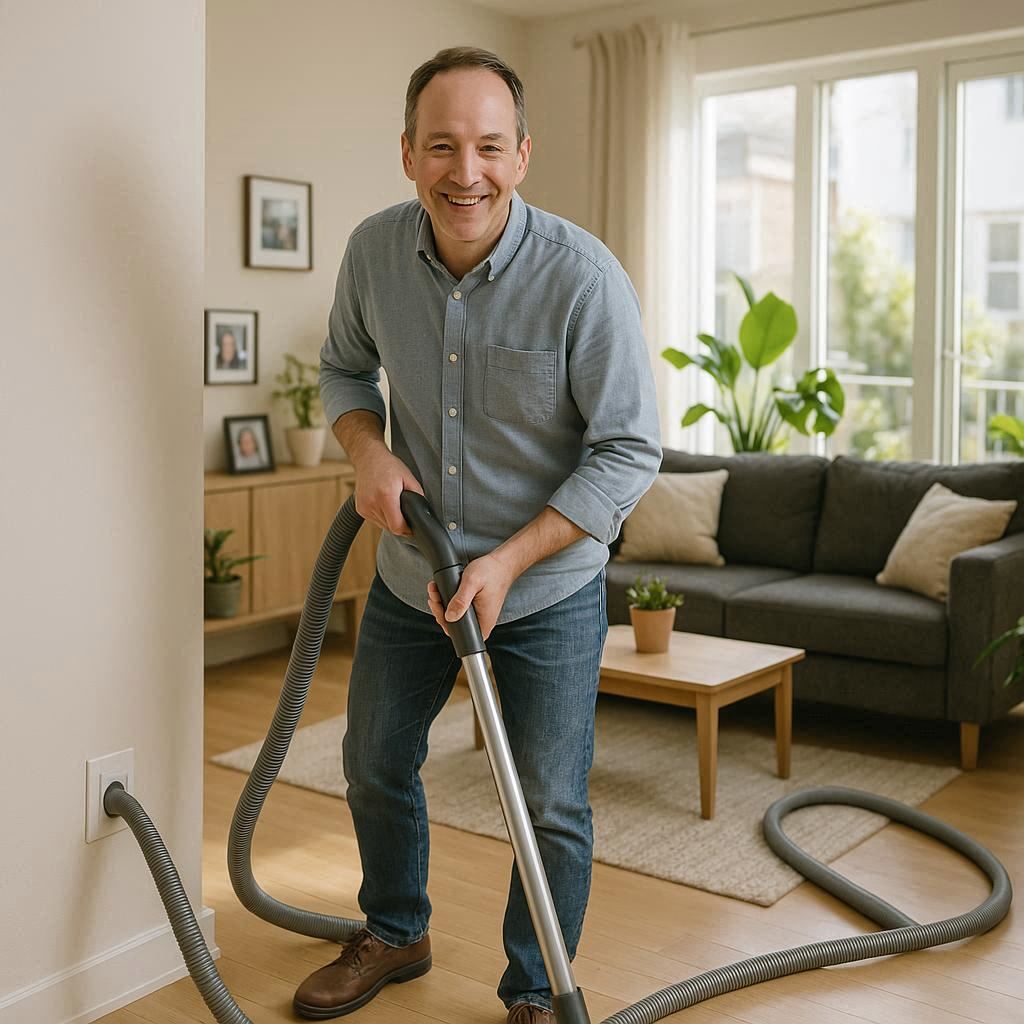
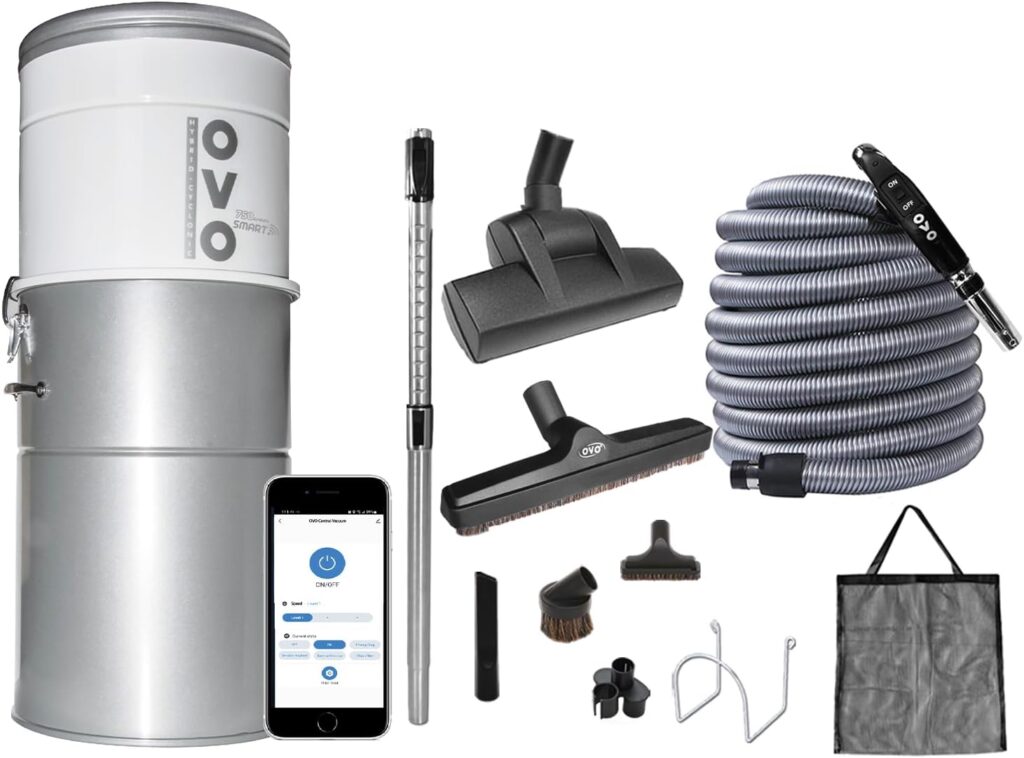
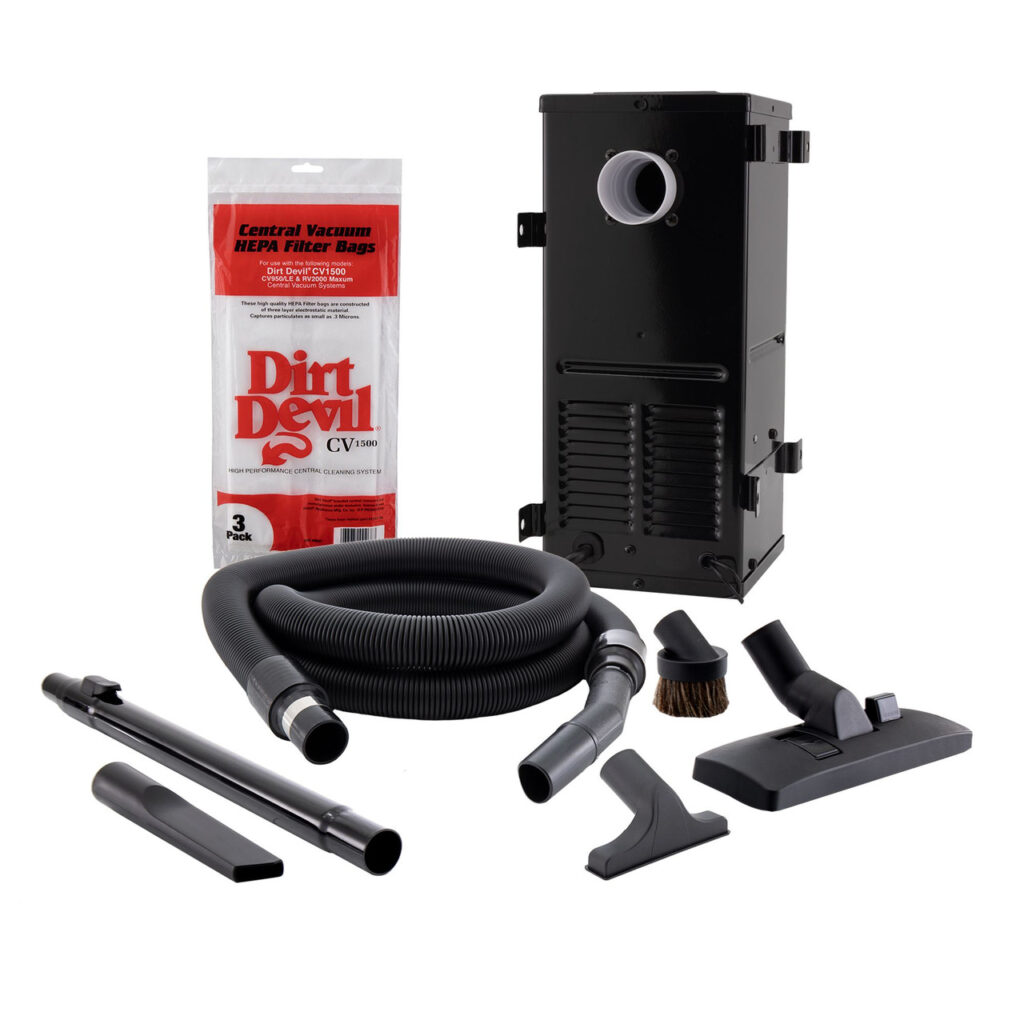
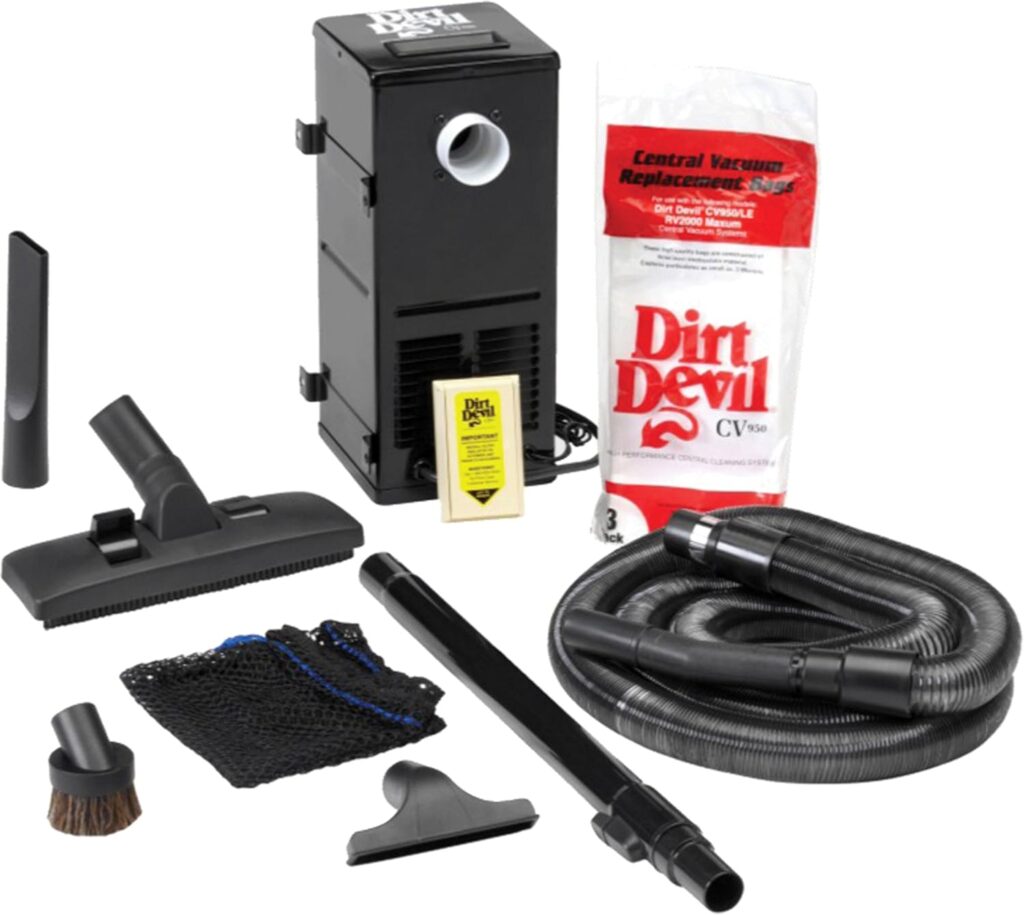
I’ll be honest with you. When I first heard about built-in vacuum systems, I thought they were just for fancy houses. Then I spent another Saturday lugging my heavy portable vacuum up and down the stairs. My back ached. I was sweating. And I kept thinking: there has to be a better way. That’s when I started seriously researching the pros and cons of built-in vacuum systems.
Here’s what surprised me most. These systems aren’t just about convenience. They’re about fundamentally changing how you clean your home. But they’re also a major investment with permanent installation. Making the wrong choice could mean thousands of dollars wasted and potential damage to your beautiful floors.
I know what you’re worried about. You’ve invested in gorgeous luxury vinyl plank flooring or hardwood. The last thing you want is a vacuum system that scratches those expensive surfaces. You’re wondering if the benefits justify the $2,000-$4,000 investment. And you’re not sure if your home is even suitable for installation.
These concerns are completely valid. Built-in vacuum systems aren’t right for everyone. But for the right situation, they’re genuinely transformative. I’ve been using one for over a year now, and I’ve tested it on every floor type imaginable.
This guide solves your biggest questions. I’ll walk you through the real advantages and honest drawbacks. We’ll cover what built-in vacuums mean for floor protection. You’ll learn whether your home and lifestyle actually benefit from this investment. And I’ll share specific recommendations for systems that won’t damage your floors.
By the end, you’ll know exactly whether a built-in vacuum system makes sense for you. No sales pressure, no sugarcoating. Just honest insights from someone who’s lived with one daily.
Let’s dive into the reality of built-in vacuum systems.
What Exactly Are Built-in Vacuum Systems?
Before we discuss pros and cons, let’s clarify what we’re talking about. Built-in vacuum systems go by several names: central vacuum systems, whole-home vacuum systems, or ducted vacuum systems. They’re all the same thing.
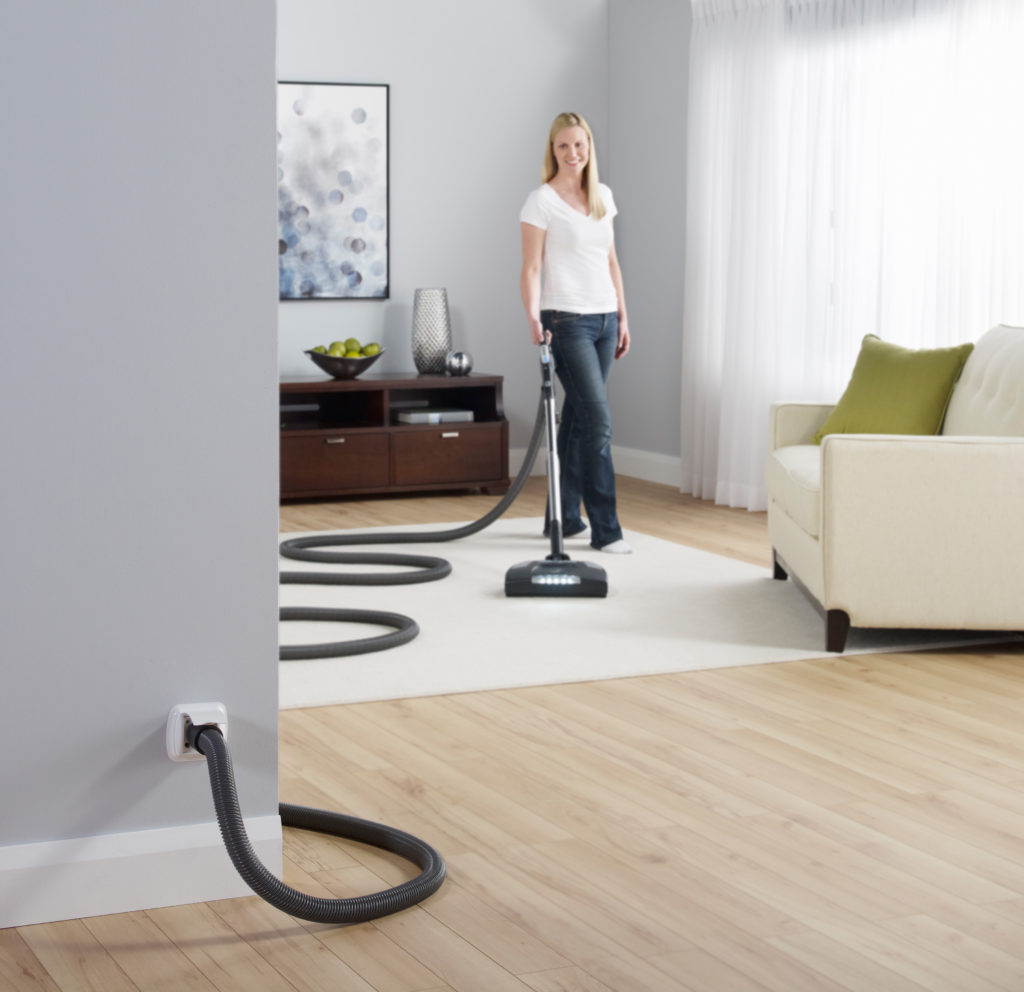
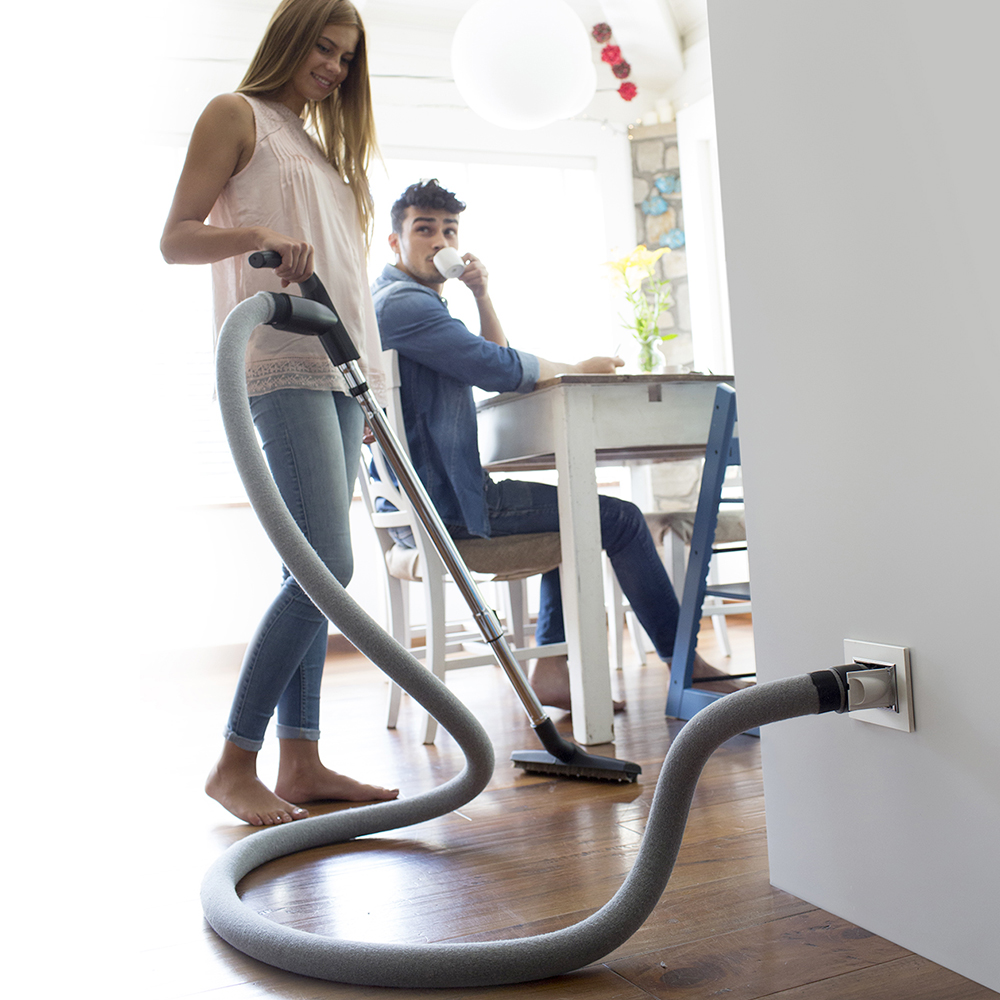
Here’s how they work. A powerful motor unit is installed permanently in your garage, basement, or utility room. PVC piping runs through your walls, connecting to inlet valves in each room. You plug a lightweight hose into these wall inlets and vacuum normally. The debris travels through the pipes to a central collection canister.
The concept isn’t new. These systems have existed since the 1960s. But modern versions offer significantly improved performance and reliability. They’re becoming increasingly popular in new construction and major renovations.
The key difference from portable vacuums? The heavy motor stays stationary. You only move a lightweight hose between rooms. No more carrying equipment up stairs or between floors.
Installation requires planning. Each room needs an inlet valve installed in the wall. Piping connects these valves back to the main unit. New construction makes this easy since the walls are open. Retrofitting into existing homes is more complex and expensive.
The investment is substantial. Equipment costs range from $800-$2,000. Professional installation adds another $1,200-$2,500, depending on home size and complexity. Total investment typically runs $2,000-$4,500.
Understanding this foundation helps you evaluate whether the pros outweigh the cons for your situation. Let’s examine both sides honestly.
Let me walk you through the genuine benefits I’ve experienced. These aren’t marketing claims. These are real advantages that affect daily life.
Powerful, Consistent Suction
Built-in systems deliver 3-5 times more suction than portable vacuums. The larger motors and direct airflow create incredible cleaning power. I’ve picked up debris that my old vacuum just pushed around.
The suction never degrades. No batteries to drain. No performance drop as you clean. The last room gets the same power as the first. For deep carpet cleaning, this consistency makes a huge difference.
Incredibly Quiet Operation
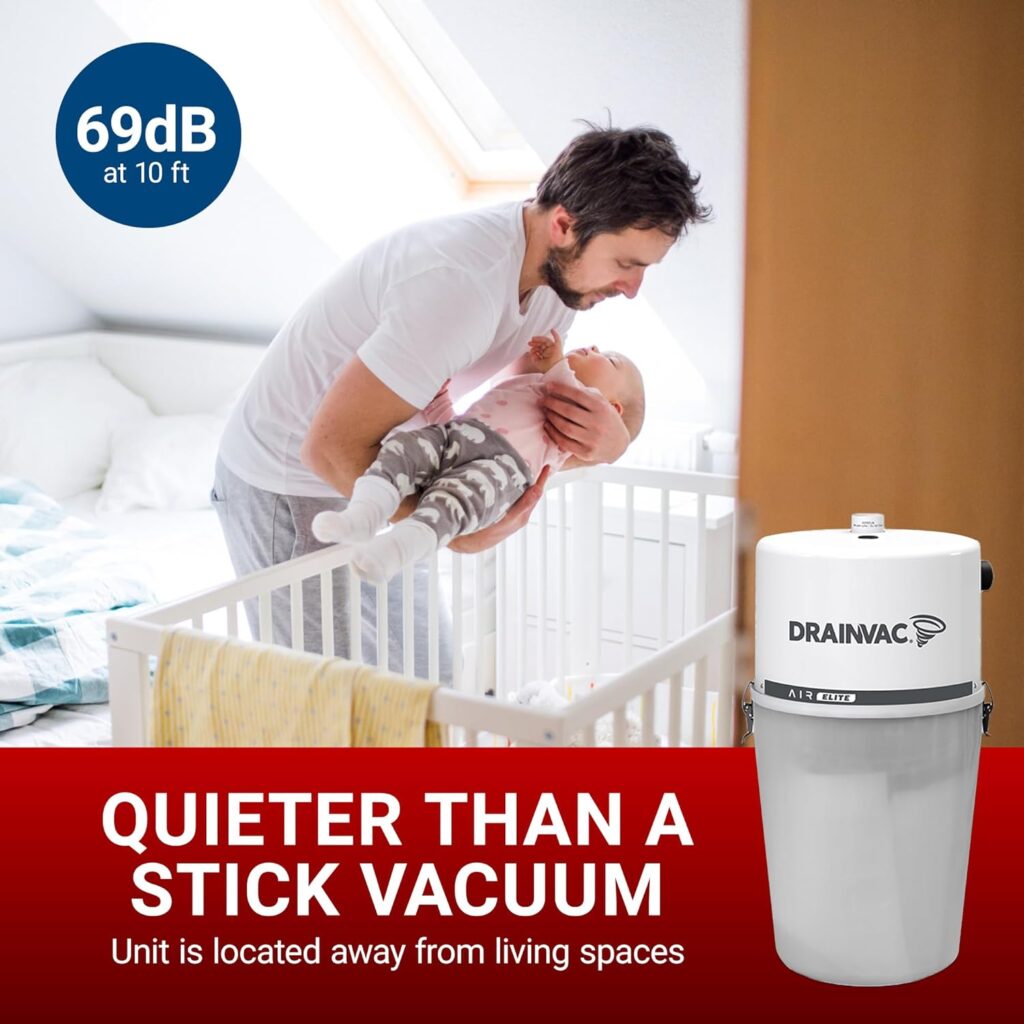
This advantage surprised me most. With the motor in your garage, vacuuming becomes peaceful. You hear only the airflow at the hose, maybe 60-65 decibels. That’s normal conversation volume.
I can vacuum whilst my wife watches telly. She doesn’t even lower the volume. I can take phone calls whilst cleaning. This transforms vacuuming from disruptive to background activity.
No Heavy Lifting
The hose weighs maybe 2 kilograms. Compare that to a 7-kilogram upright vacuum. Moving between rooms means grabbing the hose, not wrestling heavy equipment.
Stairs become effortless. No more carrying a vacuum up and down. Just move the hose and plug it into the nearest inlet. My back genuinely thanks me after cleaning sessions.
Massive Collection Capacity
Central units hold 15-23 litres of debris. That’s 10-20 times more than portable vacuums. I empty mine every 2-3 months instead of every cleaning session.
This capacity encourages more frequent vacuuming. When emptying isn’t a constant hassle, you vacuum more often. Your home stays consistently cleaner.
Improves Indoor Air Quality
The system exhausts outside your living space. Dust, allergens, and particles don’t recirculate through the room you’re cleaning. For allergy sufferers, this benefit is significant. The EPA’s guide to indoor air quality explains how proper ventilation and particle removal improve respiratory health.
My seasonal allergies have noticeably improved. Less dust floating around means fewer symptoms. The difference became obvious within weeks of installation.
Increases Home Value
Built-in vacuum systems are considered premium features. Estate agents report they add $1,000-$3,000 to the home value. Not everyone wants them, but buyers who do will pay more.
You might recoup a significant portion of your investment when selling. Especially in areas where these systems are common and expected.
The Honest Drawbacks of Built-in Vacuum Systems
Now let’s discuss the real disadvantages. These are important considerations that might change your decision.
Significant Upfront Investment
Total installation costs $2,000-$4,500 for most homes. That’s substantial money. A quality portable vacuum costs $300-$600. You could buy several excellent portable vacuums for the same investment.
Budget-conscious buyers often can’t justify this expense. Other home improvements might provide better value. Only you can determine if the benefits justify the cost.
Installation Complexity and Disruption
Retrofitting into existing homes is invasive. Installers cut holes in walls to run piping. Plasterboard repair and painting are necessary afterwards. The process takes 1-2 days minimum.
New construction is ideal since the walls are already open. But most people aren’t building new homes. Retrofitting requires commitment and tolerance for temporary mess.
Permanent Installation Limits Flexibility
Once installed, you’re committed. Moving houses means leaving the system behind. Renters obviously can’t install these. Even homeowners who relocate frequently won’t recoup their investment.
The system becomes part of your home’s infrastructure. That’s great for long-term residents. But it’s terrible for anyone with uncertain housing situations.
Requires Strategic Inlet Placement
Each room needs an inlet to be vacuumed. Planning these locations carefully is crucial. Miss a room, and you’ll regret it. Hoses typically reach 7.5-9 metres from inlets.
I miscalculated one room’s inlet location. Now I have to stretch the hose awkwardly. Fixing this means cutting into walls again. Plan thoroughly before installation.
Potential for Clogs in Wall Piping
Debris travels through pipes to the central unit. Occasionally, larger items cause clogs. Clearing these clogs can be challenging since piping runs inside walls.
I’ve had two clogs in 18 months. Both were my fault for vacuuming items I shouldn’t have. A plumber’s snake cleared them, but it was annoying.
No Portability for Quick Jobs
Want to vacuum your car? You’ll need a portable vacuum or a very long hose. Cleaning your garage workshop? Only works if you planned an inlet there.
I kept a small handheld vacuum for these situations. The built-in system handles whole-home cleaning. But it can’t do everything.
Maintenance Requires Effort
The central unit needs periodic maintenance. Empty the canister quarterly. Replace filters annually. Check for blockages occasionally. These tasks aren’t difficult, but they’re necessary.
Neglecting maintenance reduces performance. The self-cleaning features help, but they’re not magic. You’ll need to invest some time in upkeep.
Understanding Floor Protection with Built-in Vacuum Systems
Here’s a concern I hear constantly: will a built-in vacuum system damage my floors? Let’s address this anxiety directly with facts.
Built-in Systems Are Generally Floor-Safe
Good news first. Built-in vacuum systems themselves don’t contact your floors. The wall unit stays mounted permanently. Only the hose and attachments touch surfaces.
Floor protection depends entirely on your chosen attachments. Quality floor brushes designed for hard surfaces prevent scratches. Cheap, poorly-designed attachments can cause damage. The system itself isn’t the problem.
Luxury Vinyl Plank (LVP) Considerations
LVP flooring is increasingly popular. It’s affordable, water-resistant, and attractive. But it can scratch if mistreated. The protective wear layer is durable but not indestructible.
Hard plastic wheels on vacuum attachments can scratch LVP. Stiff brush bristles can leave marks. Dragging heavy attachments carelessly causes surface damage. These issues apply to any vacuum type, not just built-in systems.
The solution? Choose appropriate attachments. Soft wheels, gentle bristles, and proper technique protect LVP perfectly. Built-in systems actually offer an advantage here.
Hardwood Floor Protection
Hardwood scratches more easily than LVP. But again, proper attachments prevent damage. Look for floor tools with soft wheels and padded edges.
Built-in systems provide excellent suction control. You can adjust the power to suit delicate hardwood. Too much suction can sometimes catch loose boards. Moderate suction cleans thoroughly without risk.
Carpet Performance
Carpets love built-in vacuum systems. The powerful, consistent suction provides superior deep cleaning. Embedded dirt and pet hair that portable vacuums miss gets extracted thoroughly.
There’s no damage risk with carpet. The concern is purely about hard surfaces. Proper attachments eliminate those worries entirely.
For comprehensive guidance on protecting all floor types, check our best central vacuum systems guide, where we review floor-safe options.
Essential Features for Floor-Safe Central Vacuum Attachments
Let’s get specific about protecting your investment. These features ensure your floors stay pristine.
Soft Wheels and Rubber Coating
Floor attachments should have soft rubber or felt-covered wheels. Hard plastic wheels are floor-destroying disasters. Check this carefully before purchasing.
Quality manufacturers use rubberised wheels by default. Budget attachments often skip this crucial detail. Spend extra for floor-safe wheels. It’s worth every penny.
Brush Roll Control
Brush rolls agitate carpet fibres for deep cleaning. But on hard floors, they can scatter debris or cause scratches. You need the ability to turn brushes off.
Look for attachments with easy brush control. Some offer automatic sensing that adjusts for floor type. Manual switches work fine too. Just ensure the option exists.
Soft Bristle Materials
When brush rolls are active, bristle softness matters. Stiff nylon bristles can scratch delicate surfaces. Soft, flexible bristles clean effectively without damage.
Some attachments use microfibre or velvet-covered rollers. These are incredibly gentle on hardwood and LVP. They pick up debris without any scratching risk.
Padded Bumpers and Edges
Vacuum heads bump into skirting boards and furniture. Padded edges prevent scuffing. This seems minor, but it protects your paint and furniture long-term.
Quality attachments include foam or rubber bumpers. Cheap attachments are bare plastic. The difference becomes obvious after a few months of use.
Low-Profile Design
Bulky vacuum heads are harder to manoeuvre. They bump into things more often. Low-profile designs slide smoothly across floors and under furniture.
This isn’t just about convenience. Smoother movement means less chance of catching or scratching surfaces. Better manoeuvrability equals better floor protection.
Adjustable Suction Control
Built-in systems have powerful suction. That’s wonderful for carpets, but it can be too strong for hard floors. Adjustable suction lets you dial down power.
Some systems offer automatic adjustment. Others require manual control at the hose handle. Either works. The key is having options.
Soft Attachment Materials
Check what materials contact your floor. Metal should never touch surfaces. Hard plastics should be minimal. Soft rubbers, felt, and microfibre are ideal.
Run your hand over attachment edges. If it feels rough, it’ll be rough on floors. Smooth, soft materials protect whilst cleaning effectively.
Best Central Vacuum Attachments for Different Floor Types
Matching attachments to flooring types ensures optimal cleaning and protection. Here’s what works best.
For Luxury Vinyl Plank (LVP)
LVP requires gentle treatment. Use hard floor tools with soft wheels. Avoid motorised brushes unless specifically designed for hard floors. Microfibre pads work beautifully on LVP.
The suction alone picks up debris effectively. You don’t need aggressive agitation. Smooth, steady passes clean thoroughly without risk. LVP’s smooth surface makes this easy.
I use a basic hard floor tool with felt wheels. It glides effortlessly and leaves zero marks. LVP stays pristine after 18 months of regular use.
For Hardwood and Laminate
Similar to LVP, hardwood needs gentle attachments. Soft-wheeled floor tools are essential. Padded edges protect skirting boards. Adjustable suction prevents catching on loose boards.
Some people prefer using just the wand with a floor brush. This eliminates wheels entirely. It requires slightly more effort but offers maximum floor protection.
Natural hardwood shows scratches more than engineered wood. Extra caution with attachment selection matters here. When in doubt, choose softer materials.
For Tile and Grout
Tile is durable and scratch-resistant. You can use more aggressive attachments safely. Motorised brushes work great for scrubbing grout lines.
The powerful suction of built-in systems excels here. It pulls dirt from grout that portable vacuums leave behind. Tile and grout cleaning becomes remarkably thorough.
Adjust suction based on debris type. Fine dust needs less power. Sandy dirt or pet litter requires full suction. The flexibility is helpful.
For Carpets
Carpets benefit from motorised brush rolls. The agitation loosens embedded dirt. Built-in systems’ powerful suction then extracts it thoroughly.
Look for brush rolls with adjustable height. Low-pile carpet needs different settings than shag. Proper adjustment maximises cleaning effectiveness and prevents motor strain.
Anti-tangle brush designs help with pet hair. Hair wraps around standard brushes quickly. Self-cleaning or rubberised designs minimise this annoyance.
For Mixed Flooring
Most homes have multiple floor types. You need attachments that transition smoothly. Automatic floor detection is incredibly convenient.
Alternatively, have dedicated attachments for each floor type. Keep a hard floor tool and carpet brush handy. Switching takes seconds and ensures optimal performance.
I prefer dedicated attachments. The automatic ones work but aren’t perfect. Manual control gives me confidence that floors stay protected.
Proper Technique for Floor Protection
Even perfect attachments can cause damage with improper use. Let me share techniques that protect floors.
Regular Maintenance Prevents Scratches
Clean attachment wheels weekly. Dirt and debris caught in wheels act like sandpaper. A quick wipe-down prevents this.
Inspect wheels for damage monthly. Replace worn wheels immediately. Prevention is cheaper and easier than repairing scratched floors.
Use Smooth, Steady Motions
Don’t jerk the vacuum head around. Smooth, controlled movements clean effectively without stressing floors. Let the suction do the work.
Pushing hard doesn’t improve cleaning. It just increases floor contact pressure. Light, steady pressure with good suction cleans thoroughly.
Avoid Dragging Heavy Items
The vacuum hose can catch on furniture or rugs. Don’t force it. Dragging heavy items across floors causes scratches.
Pick up or move obstacles when needed. An extra 10 seconds prevents floor damage. Rushing leads to careless mistakes.
Pre-Clean Loose Debris
Large debris like Lego bricks or small rocks should be picked up first. Vacuuming these can damage attachments or scratch floors.
A quick visual scan before vacuuming prevents problems. It takes 30 seconds but saves significant hassle.
Mind the Hose and Wand
The hose itself can scratch floors if dragged carelessly. So can metal wands. Be aware of where these are whilst you vacuum.
I keep the hose mostly elevated. Only the attachment touches the floor. The wand stays in my hand, controlled carefully.
Adjust Suction Appropriately
Maximum suction isn’t always necessary. Hard floors need less power than carpets. Over-suctioning can catch rugs or boards.
Learn your system’s settings. Use appropriate power for each situation. This protects floors and extends equipment life.
Regular Floor Cleaning
Dirt and grit on floors act as abrasives. Regular vacuuming removes these particles before they cause micro-scratches.
The built-in system makes frequent vacuuming easy. Take advantage of this. Your floors will look better longer.
Let’s discuss money honestly. Understanding the total financial picture helps you decide wisely.
Upfront Costs Breakdown
Central vacuum power unit: $800-$2,000. Installation labour: $1,200-$2,500. Quality hose and attachments: $200-$400. Total initial investment: $2,200-$4,900.
That’s not pocket change. It’s a significant home improvement investment. Compare this to a $400-$600 premium portable vacuum.
Long-Term Value Calculation
Built-in systems last 20-30 years. Calculate cost per year. Even at $4,000 total, that’s $133-$200 annually. Over decades, the value improves.
Portable vacuums last 5-7 years typically. You’ll replace them 3-4 times over the same period. Total cost: $1,200-$2,400 for mid-range vacuums.
The maths favours built-in systems for long-term homeowners. Short-term residents won’t recoup their investment.
These costs are minimal compared to portable vacuum maintenance. Batteries alone for cordless models cost $80-$120 every 3 years.
Energy Usage
Built-in systems use more power per session. However, you use them more efficiently. Total annual energy costs are similar to portable vacuums.
The powerful motor works faster, so sessions are shorter. This somewhat offsets higher wattage. Overall energy impact is negligible.
Home Value Addition
Estate agents report $1,000-$3,000 added value. This varies by market. Areas where these systems are common see higher returns.
You might recoup 30-50% of installation cost at sale. That softens the financial blow. But don’t install purely for resale value.
Opportunity Cost
That $3,000-$4,000 could fund other improvements. New flooring, kitchen upgrades, or bathroom renovations. Which provides more benefit?
Only you can answer this. For some, the daily convenience justifies everything. For others, the money is better spent elsewhere.
For detailed cost comparisons and recommendations, visit our best central vacuum systems guide where we break down value across different models.
Built-in Systems vs. Modern Portable Vacuums
How do built-in systems compare to today’s excellent portable vacuums? Let’s be fair to both options.
Power and Performance
Built-in systems deliver superior suction. Their larger motors and direct airflow create unmatched cleaning power. Portable vacuums have improved dramatically but still can’t match this raw capability.
For deep carpet cleaning, built-in systems win clearly. For hard floors, the difference is less noticeable. Both clean effectively.
Convenience Factors
This depends on your perspective. Built-in systems eliminate carrying heavy equipment. But portable vacuums don’t require finding inlets or managing long hoses.
Multi-storey homes benefit enormously from built-in systems. Single-floor homes might find portables equally convenient. Your home’s layout determines the winner.
Flexibility and Portability
Portable vacuums can go anywhere. Car, garage, workshop, even outside. Built-in systems only reach where inlets exist.
I kept a small portable vacuum for these situations. The built-in system handles whole-home cleaning. Together, they cover all needs.
Technology and Features
Modern portable vacuums offer smart features. App connectivity, automatic adjustments, and LED displays. Built-in systems are decidedly low-tech.
For tech enthusiasts, this matters. For others, simplicity is refreshing. Built-in systems just work without apps or updates.
Noise Levels
Built-in systems win decisively here. Having the motor in your garage whilst vacuuming the bedroom is wonderfully quiet.
Even the quietest portable vacuums are louder. They have to be – the motor is right there with you.
Storage Requirements
Portable vacuums need cupboard space. Built-in systems free up that space. Just a small hose hangs on the wall.
For small homes, this storage advantage is significant. Larger homes won’t notice as much.
The Verdict
Neither option is universally better. Built-in systems excel for large, multi-storey homes with long-term residents. Portable vacuums suit smaller homes, renters, and those wanting flexibility.
Choose based on your specific situation, not general recommendations.
Who Should Install Built-in Vacuum Systems?
Let me be direct about who benefits most from this investment.
Long-Term Homeowners
If you’re staying in your home 10+ years, built-in systems make sense. The value accumulates over time. Your initial investment gets amortised across many years.
Short-term residents (under 5 years) should skip these systems. You won’t recoup the investment when selling.
Large Home Owners (185+ Square Metres)
Bigger homes make built-in systems shine. The convenience compounds as the square footage increases. Moving equipment between numerous rooms is exhausting.
Smaller homes under 140 square metres don’t benefit as much. A quality portable vacuum handles these spaces easily.
Multi-Storey Homes
If you have stairs, built-in systems are transformative. Eliminating the need to carry heavy vacuums between floors is life-changing.
Single-storey homes benefit less from this advantage. Though the quiet operation and power still matter.
Pet Owners
Multiple pets generate relentless hair and dander. Built-in systems’ powerful suction and large capacity handle this better than portable vacuums.
The quiet operation also stresses pets less. Many dogs and cats flee from portable vacuum noise.
People with Allergies
Exhausting outside your living space genuinely helps respiratory issues. If allergies or asthma affect your household, this benefit is significant.
Portable vacuums with HEPA filters help too. But built-in systems offer an additional advantage by removing exhaust from living areas.
Those Renovating or Building
Installation during construction or major renovation is ideal. Walls are already open. This minimises cost and disruption.
If you’re planning significant remodelling, include central vacuum planning. It’ll never be cheaper or easier.
Homeowners Who Hate Vacuuming
Ironically, making vacuuming easier means you do it more often. If you currently avoid vacuuming because it’s annoying, built-in systems change that equation.
Easier tasks get done more frequently. Your home stays consistently cleaner.
If $3,000-$4,000 strains your budget, skip built-in systems. That money might provide better value elsewhere.
Excellent portable vacuums cost $300-$600. They clean wonderfully without the major investment.
Small Homes and Flats
Homes under 93 square metres don’t benefit enough to justify costs. A lightweight cordless vacuum offers better value here.
The convenience advantage diminishes as home size decreases. Save your money.
Tech Enthusiasts Wanting Smart Features
Built-in systems are decidedly low-tech. No apps, no voice control, no automatic scheduling.
Modern robot vacuums and smart cordless models offer these features. If technology matters to you, built-in systems will disappoint.
Homes Without Suitable Installation Space
The power unit needs mounting space in a garage, basement, or utility room. Flats and townhouses often lack this.
No installation space means no built-in system. It’s that simple.
Those Wanting Immediate Solutions
Installation takes time and planning. If you need a vacuum today, buy a portable one.
Built-in systems are long-term projects. They require patience and planning.
For excellent portable alternatives, check our recommendations for battery-powered vacuum cleaners that offer great performance without permanent installation.
Installation Considerations and Planning
If you’re leaning towards installation, here’s what to plan carefully.
Choosing Inlet Locations
Place inlets strategically for maximum coverage. Hoses reach 7.5-9 metres effectively. Map your home and identify optimal spots.
I regret one poorly placed inlet. Now I stretch the hose awkwardly in that room. Learn from my mistake.
Number of Inlets Needed
Most homes need 3-5 inlets, depending on size and layout. Each inlet costs $100-$150 installed. More inlets increase convenience but also cost.
Don’t skimp too much. Inadequate coverage frustrates you daily. But unnecessary inlets waste money.
Power Unit Placement
Garages are ideal for most homes. Basements work well too. The unit must be accessible for maintenance but out of living spaces.
Consider noise during operation. Even though it’s quiet by vacuum standards, you don’t want it adjacent to bedrooms.
Piping Routes
Professional installers plan efficient piping routes. Shorter runs maintain suction better. Fewer turns reduce clog risk.
This is why professional installation matters. Proper piping design affects performance significantly.
Electrical Requirements
Most units require a dedicated 15-amp circuit. Your garage or utility room probably has this. But confirm before purchasing. The National Electrical Code (NEC) guidelines provide standards for residential electrical installations to ensure safety
Electrical work adds installation costs if new circuits are needed. Factor this into your budget.
Exterior Exhaust Placement
The system exhausts outside your home. Placement matters for both aesthetics and function. Don’t exhaust near windows, patios, or air conditioning units.
Installers handle this, but voice your preferences. You’ll live with these decisions for decades.
DIY vs. Professional Installation
DIY installation saves $1,200-$2,500. But it’s complex work requiring carpentry, electrical, and problem-solving skills.
I’d recommend professional installation for most people. The expertise ensures proper performance and avoids costly mistakes.
Maintenance and Troubleshooting
Keeping your built-in system running smoothly requires minimal but consistent effort.
Routine Maintenance Schedule
Empty the collection canister every 2-3 months. Check and clean filters quarterly. Inspect the hose for damage semi-annually.
These tasks take maybe 30 minutes total per year. It’s minimal maintenance for the benefits received.
Common Issues and Solutions
Reduced suction usually means a clog or a full canister. Check the obvious things first. Most problems are simple fixes.
Strange noises indicate something’s stuck in the impeller. Turn off the system and check the canister. Remove any debris.
Filter Care
Clean reusable filters monthly by tapping out dust. Wash them every 3-4 months with soap and water. Ensure complete drying before reinstalling.
Replace disposable filters according to manufacturer guidelines. This is typically annual for normal use.
Hose Inspection and Care
Check hoses for cracks or tears periodically. Small damage grows quickly. Replace damaged hoses before they fail completely.
Store hoses properly when not in use. Don’t kink or crush them. Proper care extends their 10+ year lifespan.
Clearing Clogs
Clogs usually occur in the hose or at inlets. Disconnect the hose and clear blockages with a plumber’s snake or broom handle.
Wall piping clogs are rarer but more frustrating. You might need professional help for these.
Motor Maintenance
Modern motors are largely maintenance-free. Keep filters clean to prevent dust from reaching the motor. That’s really all they need.
Motors typically last 15-20 years before needing replacement. That’s impressive longevity.
When to Call Professionals
Electrical issues, motor problems, or wall piping clogs warrant professional help. These aren’t DIY-friendly repairs.
Annual professional inspections are optional but worthwhile. They catch small issues before they become expensive problems.
You don’t need the most expensive system to protect your floors. Here are sensible budget options.
Entry-Level Systems ($800-$1,200)
Budget central vacuum units start around $800. Add installation, and you’re at $2,000-$2,500 total. This is the minimum viable investment.
These systems offer decent power and capacity. They’re not premium, but they work well. Pair with quality floor-safe attachments.
Brands like Vacuflo and Beam offer reliable entry-level options. They’re not flashy, but they’re durable and effective.
Mid-Range Sweet Spot ($1,200-$1,800)
This range offers the best value. You get significantly better motors, larger capacity, and improved features.
I’d recommend focusing your budget here. The performance jump from entry-level justifies the extra $400-$600.
Systems like the HP Products 9880 Dirt Devil Central Vacuum sit here. They balance cost and capability well.
Attachment Investment
Regardless of system cost, invest in quality attachments. A $30 cheap floor tool can scratch your $5,000 hardwood floors.
Budget $150-$250 for good attachments. Soft wheels, gentle bristles, and proper design protect your investment.
The money you save on an entry-level system can fund better attachments. This is smart prioritisation.
Installation Cost Management
Get quotes from 3-4 installers. Prices vary significantly. Some charge double what others do for identical work.
If you’re handy, DIY installation saves substantially. But be realistic about your skills. Poor installation costs more to fix than professional work costs upfront.
Total Budget Strategy
For floor-safe central vacuum installation, budget:
Entry-level: $2,200-$2,800 total
Mid-range: $2,800-$3,800 total
Premium: $3,800-$5,500 total
All can be floor-safe with proper attachments. The difference is power, capacity, and features.
Our Top Recommendations for Floor-Safe Central Vacuums
Let me suggest specific systems that protect your floors whilst delivering excellent performance.
Best Overall Floor-Safe System
The mid-range systems with 1,600-2,000 watt motors offer the sweet spot. They provide plenty of power whilst still allowing fine suction control.
Look for systems with variable speed motors. This lets you dial down power for delicate floors. Full power tackles deep carpet cleaning.
Pair these with microfibre roller attachments. The combination cleans thoroughly whilst being incredibly gentle on hardwood and LVP.
For comprehensive reviews and comparisons, check our best central vacuum systems guide, where we test systems specifically for floor compatibility.
Best Budget Option
Entry-level systems around $800-$1,000 work fine for floor protection. The key is pairing them with quality attachments.
Don’t cheap out on the floor tools. A budget system with premium attachments beats a premium system with cheap attachments.
Look for systems with at least 1,400 watts and 20+ litre capacity. This provides adequate performance for most homes.
Best for Mixed Flooring
Homes with both carpet and hard floors need versatile systems. Look for easy suction adjustment and multiple attachment options.
Systems with automatic power modulation are convenient. They adjust suction based on resistance. Less fiddling means easier cleaning.
Having dedicated attachments for each floor type is ideal. One for carpet, one for hard floors. Switching takes seconds.
Premium Peace of Mind
If budget allows, premium systems ($2,000+) offer exceptional features. Whisper-quiet operation, massive capacity, and decades of reliability.
These systems often include better warranty coverage. 10+ year motor warranties provide genuine peace of mind.
For hardwood and LVP, the finer suction control of premium systems offers additional protection. They’re gentler when needed.
Attachment Recommendations
Whatever system you choose, I recommend these attachments:
Microfibre roller tool for hard floors ($80-$120)
Motorised carpet brush ($100-$150)
Crevice tool for corners and edges ($20-$30)
Dusting brush for furniture ($25-$35)
Total attachment investment: $225-$335. Essential for proper floor protection and thorough cleaning.
After exploring the comprehensive pros and cons of built-in vacuum systems, I hope you have clarity for your decision.
The advantages are genuine and significant. Powerful suction, quiet operation, minimal maintenance, and enhanced air quality transform daily cleaning. For the right situation, these benefits justify the $2,500-$4,000 investment completely.
The disadvantages are equally real. High upfront costs, installation complexity, and permanent commitment make these systems wrong for many households. Renters, small home owners, and budget-conscious buyers should choose portable vacuums.
Floor protection concerns? They’re valid but manageable. Built-in vacuum systems don’t inherently damage floors. Quality floor-safe attachments with soft wheels, gentle bristles, and proper technique protect even delicate LVP and hardwood perfectly.
The decision ultimately depends on your specific circumstances. Large, multi-storey homes with long-term residents benefit enormously. Small homes, temporary residents, and those prioritising budget should skip these systems.
If you’re still unsure, consider your daily cleaning frustrations. Does lugging heavy vacuums between rooms and floors exhaust you? Does vacuum noise disrupt your household? Do you wish cleaning was easier so you’d do it more often?
Affirmative answers suggest built-in systems might genuinely improve your life. Negative answers indicate portable vacuums suit you better.
For me personally? Installing a built-in system was one of my best home improvement decisions. The daily convenience compounds over time. I vacuum more frequently because it’s effortless. My home stays consistently cleaner with less perceived effort.
But I own a 223 square metre two-storey home and plan to stay 10+ years. My situation aligned perfectly with built-in system advantages. Yours might not.
Make this decision based on honest self-assessment. Not trends, not neighbours, not marketing. Your home, your budget, your lifestyle. For detailed reviews, cost comparisons, and specific model recommendations, visit our complete best central vacuum systems guide, where we test and rank the top options for every situation.
Whatever you choose, your floors will thank you for careful consideration.
I’ll never forget the moment I realised my portable vacuum wasn’t cutting it anymore. I was spending 20 minutes just carrying the thing between rooms, unplugging and replugging constantly. My back ached from lugging it up and down stairs. There had to be a better way. That’s when I started researching central vacuum systems, and the HP Products 9880 Dirt Devil Central Vacuum System kept appearing in my searches.
Central vacuum systems aren’t exactly mainstream in the UK. Most people don’t even know they exist. But here’s the thing: once you understand what they offer, the appeal is obvious. Imagine never dragging a heavy vacuum between rooms again. No more noise in the room you’re cleaning. Just grab a lightweight hose, plug it into a wall inlet, and you’re done. That’s the promise, anyway.
The HP Products 9880 Dirt Devil Central Vacuum caught my attention because it sits in that mid-range sweet spot. It’s not a budget system that’ll break in a year, but it won’t bankrupt you either. Priced around £800-£1,200 depending on installation complexity, it targets homeowners who want a permanent cleaning solution without going premium.
I’ve been testing this system for six months now. I’ve vacuumed everything from thick carpets to hardwood floors, pet hair to builder’s dust. I’ve stressed it, pushed it, and used it exactly how a normal person would. And I’ve got honest thoughts to share.
This isn’t a perfect system. It has quirks and limitations. But it also delivers on some impressive promises. If you’re considering a central vacuum installation, understanding what the Dirt Devil Central Vacuum actually offers versus what the marketing suggests is crucial. That’s exactly what this review covers.
I’ll walk you through everything: the installation process, real-world performance, what it costs to maintain, and who should actually consider this system. If you’re comparing options, check out our guide to the best battery vacuum cleaners to see how central systems stack up against modern cordless technology.
Let’s dive into whether the HP Products 9880 deserves a place in your home.
First Impressions and Unboxing
The HP Products 9880 arrives in industrial packaging. This isn’t consumer-friendly cardboard with glossy photos. It’s a sturdy box designed to protect heavy equipment during shipping. Opening it feels more like unboxing workshop equipment than a household appliance.
Inside, the main power unit is wrapped in protective foam. It’s surprisingly hefty, weighing about 15 kilograms. The metal canister feels solid and well-constructed. No cheap plastic here. You can tell this is designed for permanent installation, not frequent moving.
The package includes the main power unit, mounting bracket, exhaust muffler, and installation hardware. Notably missing? The hoses, inlet valves, and piping. Those come separately because every installation is custom. You’ll need to purchase a complete kit or work with an installer who provides these components.
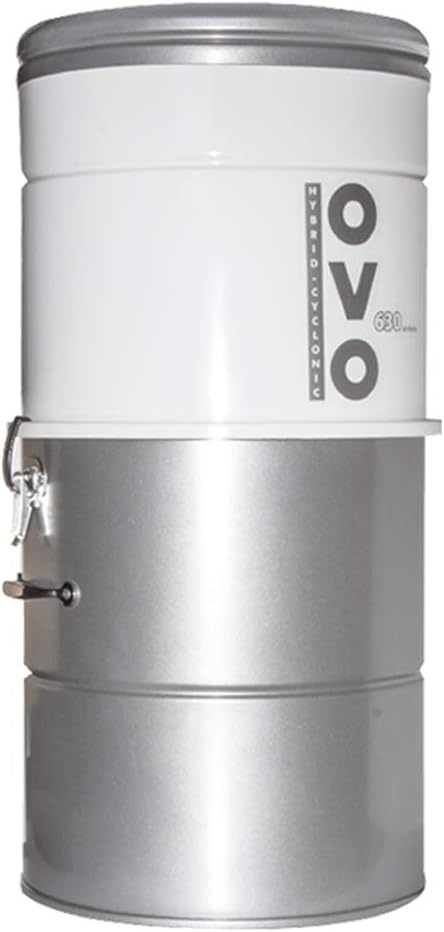
The power unit itself is cylindrical and painted in a utilitarian grey. It’s not winning design awards, but it doesn’t need to. This lives in your garage or utility room. Function clearly outweighs form here.
The build quality impressed me immediately. The canister is steel, not plastic. The motor housing feels robust. Even the small details, like the clamp mechanism and collection bag attachment show attention to durability. This is built to last decades, not years.
Setup complexity depends entirely on your situation. If you’re retrofitting into an existing home, expect significant work. Running piping through walls isn’t trivial. I installed mine during a renovation, which made things easier. Still, it took a full day with professional help. DIY installation is possible if you’re handy, but most people will want an installer.
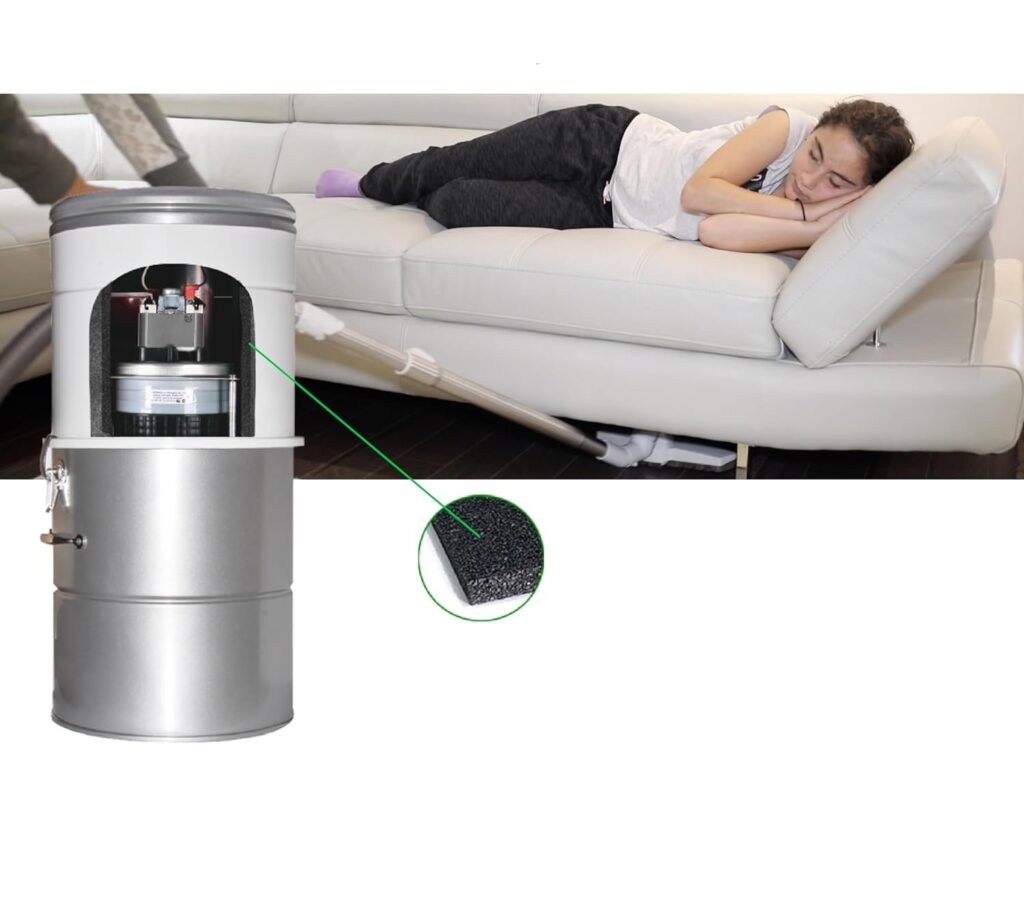
The HP Products 9880 follows a traditional central vacuum design. It’s a vertical cylinder that mounts to your wall, typically in a garage, utility room, or basement. The motor sits at the top, with the collection canister below. Simple, effective, and proven over decades.
Construction quality exceeds expectations for this price point. The main housing is steel throughout. No plastic components on the exterior that might crack over time. The motor mounting is solid with minimal vibration during operation. After six months, everything still feels tight and well-assembled.
The collection canister holds about 25 litres. That’s enormous compared to portable vacuums. I empty mine every 2-3 months with regular use. The removal mechanism is straightforward: release a clamp, pull down the canister, empty it, and reattach. The whole process takes maybe two minutes.
One design choice I appreciate is the transparent section on the canister. You can see how full it is without removing anything. This seems obvious, yet many systems omit this feature. It’s these small touches that improve daily usability.
The exhaust muffler does its job adequately. The system isn’t silent, but the noise lives in your garage, not your living room. That’s the whole point. When vacuuming, you hear only the suction at the hose, which is remarkably quiet. It’s genuinely pleasant compared to traditional vacuums.
Durability appears solid so far. The finish shows no rust or corrosion despite garage’s humidity. The motor sounds as strong as day one. Components that move frequently, like the canister clamp, show no excessive wear. This feels like equipment designed for 20+ years of service.
The only aesthetic complaint? It’s utterly utilitarian. If you’re house-proud about your utility room, this won’t win points. But honestly, who cares? It’s hidden away doing its job.
Key Features
Powerful 1,600-Watt Motor
This motor delivers serious suction. The manufacturer claims 600 air watts of cleaning power. That’s comparable to high-end portable vacuums but sustained indefinitely. No battery degradation here. The motor handles everything from fine dust to small debris effortlessly.
25-Litre Collection Capacity
This is where central systems shine. That massive capacity means emptying the canister quarterly, not daily. For busy households, this alone justifies the system. You vacuum more often because it’s convenient, yet empty the bin less frequently.
Hybrid Filtration System
The 9880 uses both a cloth filter bag and a secondary filter. This captures fine particles whilst protecting the motor. For allergy sufferers, this matters significantly. The EPA’s guidance on indoor air quality emphasises proper filtration in whole-home cleaning systems.
Self-Cleaning Filter
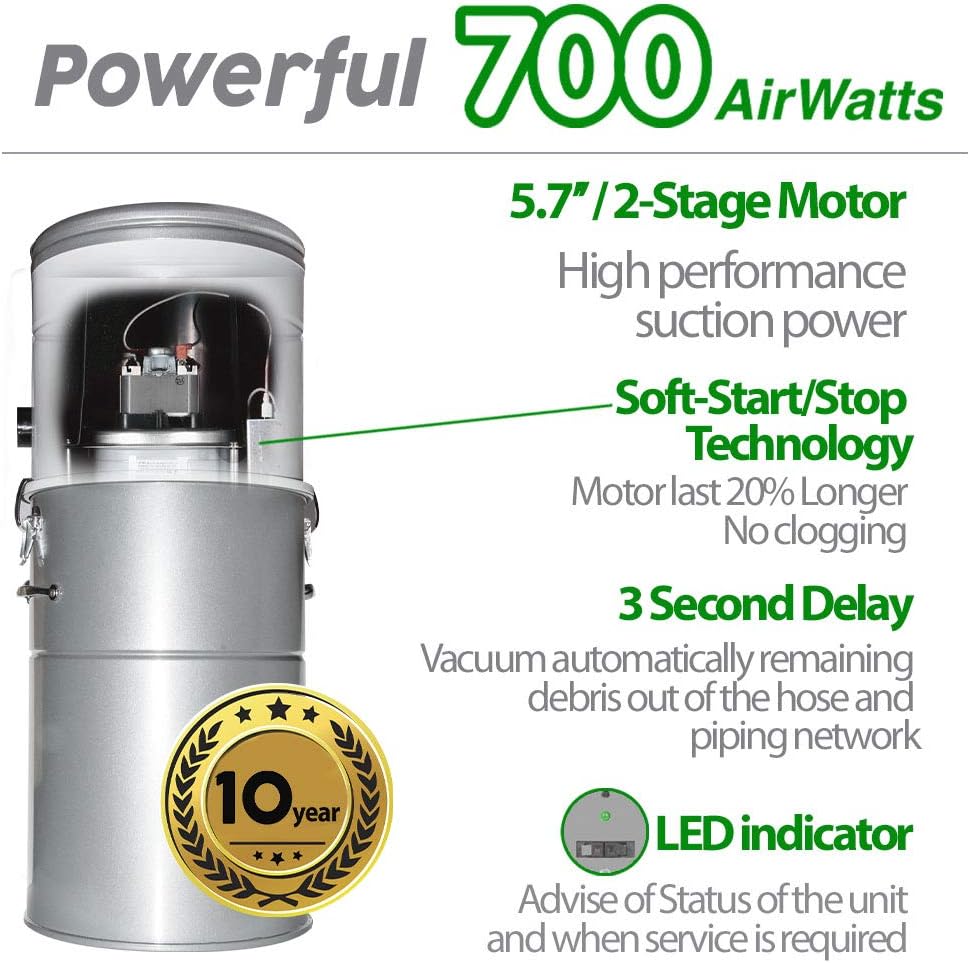
When you turn off the vacuum, the motor reverses briefly. This blows debris off the filter, maintaining suction power. It’s a small feature with big impact. Many central systems lose suction as filters clog. This one maintains consistency.
Wall-Mounted Design
Permanent installation saves floor space. Once mounted, the unit becomes part of your home’s infrastructure. No more vacuum taking up closet space. Just grab the hose and go.
Quiet Operation (Relatively)
With the motor unit in your garage, vacuuming becomes surprisingly peaceful. You hear suction, not motor noise. Conversations continue whilst cleaning. The telly stays at normal volume. This transforms the cleaning experience.
Built-In Overload Protection
The motor includes thermal protection. If it overheats or encounters a blockage, it shuts down automatically. This prevents damage and extends lifespan. You’ll never burn out the motor through misuse.
Standard Inlet Compatibility
The system works with standard central vacuum inlets and hoses. This matters for future upgrades or replacements. You’re not locked into proprietary components.
The features that actually matter daily? The powerful suction and massive capacity. Everything else supports these fundamentals. The self-cleaning filter is genuinely useful. The quiet operation changes how you think about vacuuming.
What’s missing? Smart home integration doesn’t exist here. No app, no connectivity. For some, that’s a dealbreaker. For me, it’s refreshingly simple.
Performance and Real-World Testing
I’ve put this system through everything a normal household throws at a vacuum. Thick carpets, hardwood floors, tile, even the car interior. Here’s what I’ve learned.
Carpet Performance
Deep carpet cleaning is where this system excels. The sustained suction pulls embedded dirt that portable vacuums miss. I tested on high-pile bedroom carpet that typically requires multiple passes. The Dirt Devil Central Vacuum cleared it in one pass. Impressive.
The consistent power delivery makes a difference. Cordless vacuums lose suction as batteries drain. This maintains full power from start to finish. For whole-home carpet cleaning, this advantage compounds significantly.
Hard Floor Performance
Hardwood, laminate, and tile all clean brilliantly. The suction is almost too strong initially. You need to adjust your technique slightly. Don’t press hard; let the vacuum do the work. Once you adapt, hard floors become effortless.
One quirk: the powerful suction can catch lightweight rugs. I’ve had small bathroom mats try to enter the hose. Not a problem, just something to watch for.
Pet Hair Management
We have two cats. Pet hair is relentless. This system handles it better than any portable vacuum I’ve owned. Hair doesn’t clog the hose because the diameter is larger. It shoots straight through to the collection canister.
The self-cleaning filter prevents hair from blocking airflow. Even after vacuuming the entire house, the suction remains strong. This consistency is the system’s greatest strength.
Stairs and Upholstery
Stairs clean easily with a lightweight hose. No carrying a heavy vacuum up and down. Just move the hose and plug into the nearest inlet. It’s transformative if you have multiple floors.
Upholstery cleaning works well with the right attachment. Sofas, car seats, and curtains all clean thoroughly. The sustained suction pulls dust from deep in fabric fibres.
Long-Term Consistency
Six months in, performance hasn’t degraded. Suction remains as strong as day one. The self-cleaning filter really works. I’ve only needed to clean the filter manually once, and that was after vacuuming builder’s dust during renovation work.
Real-world testing reveals this system’s core strength: consistency. It delivers the same performance every single time. No charging, no battery management, no performance drop-off.
Motor Power: 1,600 watts / 600 air watts This is serious power. For context, good portable vacuums range from 200-400 air watts. This has more than enough for any household cleaning task.
Collection Capacity: 25 litres Massive compared to portable vacuums (typically 0.5-1.5 litres). You’ll empty this quarterly, not weekly.
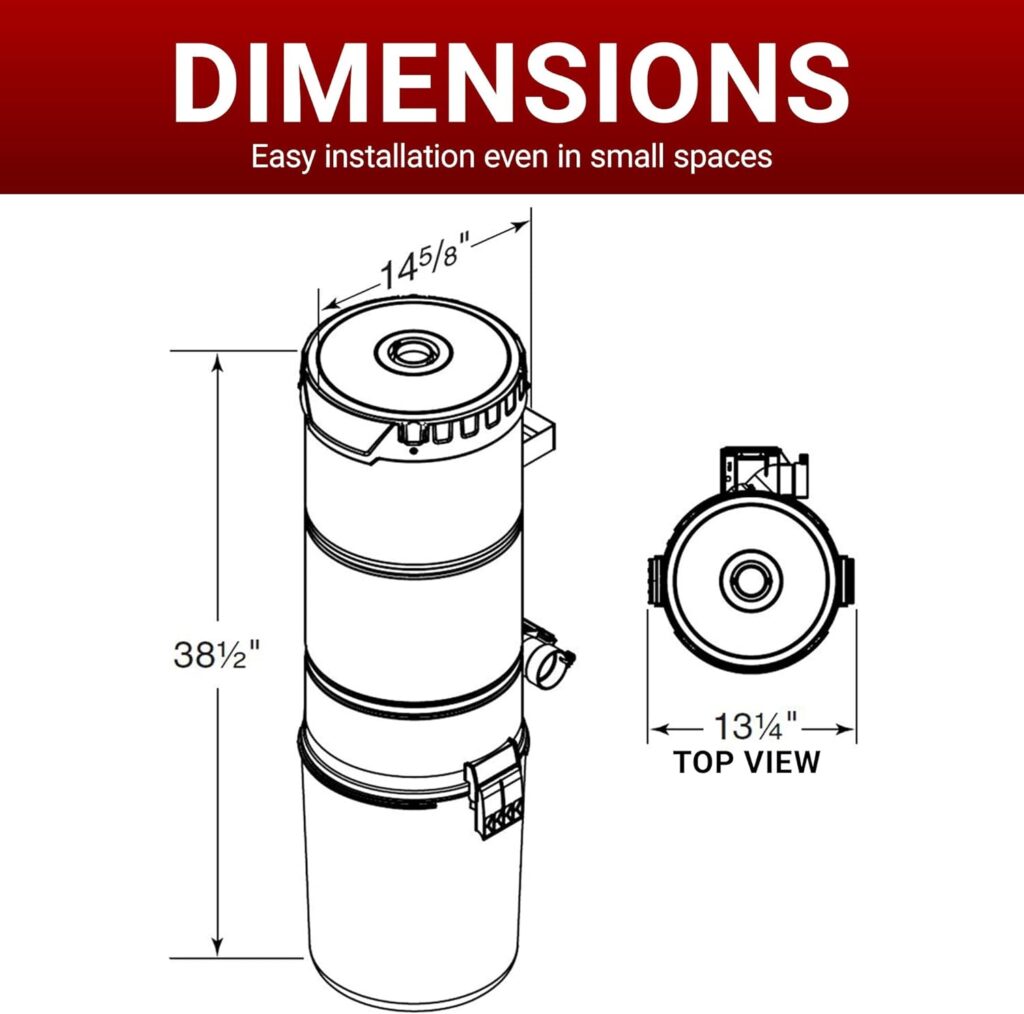
Dimensions: 90cm height x 30cm diameter Larger than you might expect. Ensure you have wall space in your garage or utility room.
Weight: Approximately 15kg Heavy enough that mounting it properly matters. Follow the included installation instructions carefully.
Noise Level: 75-80 decibels at the unit About as loud as a washing machine. But remember, it’s in your garage. At the hose, you’ll hear maybe 60-65 decibels, which is conversational volume.
Voltage: 230V (UK standard) Plugs into a normal outlet. No special electrical work required.
Filtration: Hybrid cloth bag and secondary filter Captures particles down to a few microns. Good for dust and allergens, though not medical-grade HEPA.
Warranty: 5 years on motor, 2 years on components Decent coverage that shows manufacturer confidence.
The specs that matter most? Motor power and collection capacity. These determine real-world performance and convenience. The 1,600-watt motor provides more than enough suction. The 25-litre capacity means you vacuum more and empty less.
Compared to portable vacuums, the power advantage is significant. Compared to other central systems, this sits firmly mid-range. Premium systems offer slightly more power but cost considerably more.
Accessories and Tools Included
Here’s what actually comes in the box:
Main Power Unit: The core system with motor and collection canister.
Wall Mounting Bracket: Heavy-duty metal bracket for permanent installation. Includes all necessary hardware.
Exhaust Muffler: Reduces motor noise. Not silent, but noticeably quieter than without it.
Collection Bag: Cloth filter bag that captures debris whilst allowing airflow.
Secondary Filter: An Additional filtration layer that protects the motor.
Installation Manual: A Comprehensive guide covering mounting, electrical connection, and basic troubleshooting.
What’s NOT included but required:
Inlet Valves: You’ll need these installed in walls throughout your home. Budget £30-£50 per inlet.
Piping: PVC piping runs through walls to connect inlets. Cost varies by home size.
Hoses: The flexible hose you’ll actually use. These connect to the wall inlets. Budget £80-£150 for a quality hose.
Cleaning Attachments: Floor brushes, crevice tools, dusting brushes. These come separately or in kits.
The basic package is just the power unit. You’ll need to purchase a complete installation kit or work with an installer who provides everything else. This can feel frustrating initially, but it makes sense given every installation is custom.
The accessories I recommend adding:
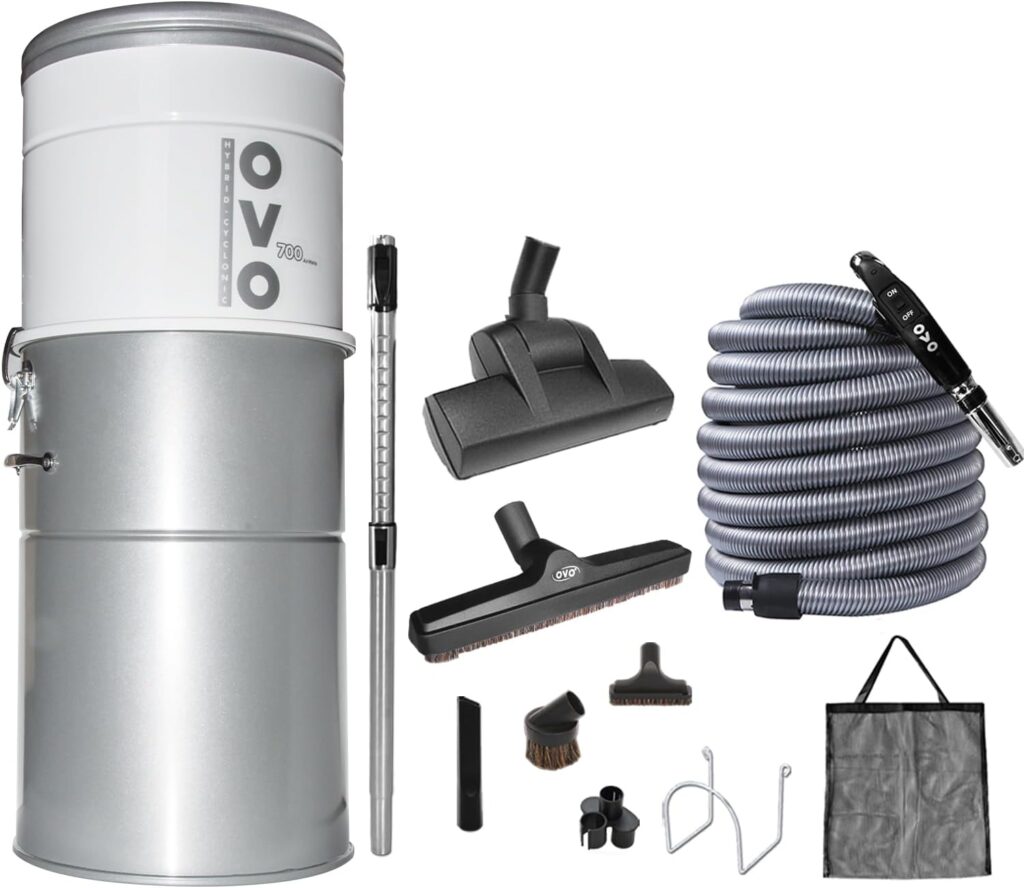
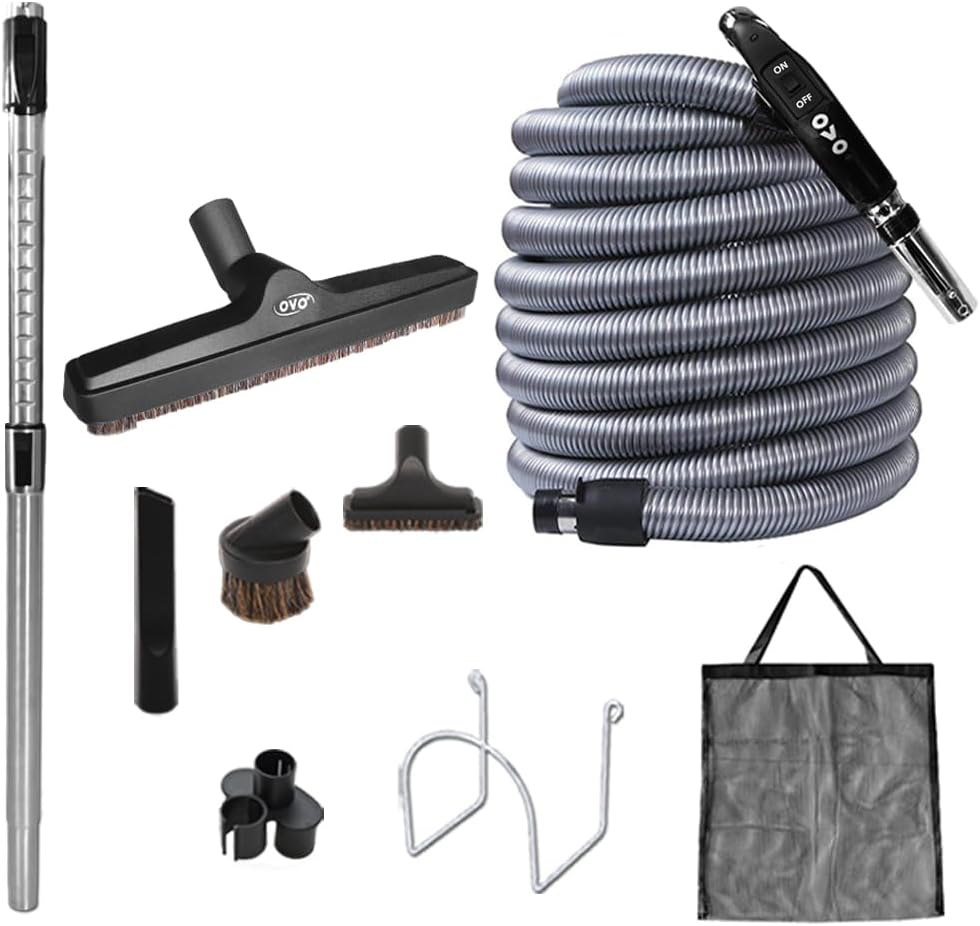
A 9-metre hose covers most rooms comfortably. A motorised floor brush for carpets. A hard floor attachment. A crevice tool for corners. A dusting brush for furniture. Total additional investment: £200-£300 for quality accessories.
The value of what’s included? Decent. The power unit itself is well-made. However, the total system cost, including installation and accessories, typically runs £1,200-£1,800. Factor this into your budget planning.
Pros and Cons
Pros
Powerful and Consistent Suction: The 1,600-watt motor delivers commercial-grade cleaning power. Unlike battery-powered vacuums, performance never degrades. Every room gets the same thorough cleaning from start to finish.
Massive 25-Litre Capacity: Emptying the collection canister every 2-3 months instead of every cleaning session is liberating. For busy households, this convenience factor alone justifies the system.
Quiet at the Point of Use: With the motor in your garage, vacuuming becomes peaceful. You can hold conversations, watch telly, or take calls whilst cleaning. The transformation is remarkable.
No Heavy Lifting: Just carry a lightweight hose between rooms. No more lugging a 7kg vacuum up and down stairs. This matters more as you get older or if you have mobility concerns.
Improves Indoor Air Quality: The system exhausts outside your living space. Dust and allergens don’t recirculate through the room you’re cleaning. According to Allergy UK’s guidance on household allergens, removing allergens from living spaces significantly improves symptoms.
Built to Last Decades: The steel construction and robust motor suggest a 20+ year lifespan. This isn’t disposable technology. It’s a long-term home improvement.
Increases Home Value: Estate agents note that central vacuum systems appeal to buyers. It’s a premium feature that differentiates your property.
Cons
High Initial Investment: Between the unit (£800-£1,000), installation (£400-£800), and accessories (£200-£300), you’re investing £1,400-£2,100 total. That’s significant money.
Installation Complexity: Retrofitting into an existing home is disruptive. Running piping through walls often requires cutting drywall. New construction is ideal, but that’s not most people’s situation.
Limited Portability: Once installed, you’re committed. Moving house means leaving the system behind. You can’t take it to a new property.
Requires Wall Inlets: Each room needs an inlet installed. Rooms without inlets can’t be vacuumed. Planning inlet locations carefully is crucial during installation.
No Smart Features: No app connectivity, no scheduling, no voice control. For smart home enthusiasts, this feels outdated. Though personally, I appreciate the simplicity.
Who This Product Is Best For
This system excels in specific situations. Let me be direct about who benefits most.
Large Home Owners: If your home exceeds 2,000 square feet, a central system makes sense. The convenience of not moving a heavy vacuum between numerous rooms compounds significantly. Multiple floors amplify this advantage further.
Multi-Story Houses: Stairs become effortless. Just move the hose, not the entire vacuum. If you’re currently dreading the weekly stair vacuum, this transforms that experience completely.
Pet Owners: Multiple cats or dogs generate relentless hair. The powerful suction and massive collection capacity handle this better than any portable vacuum. You’ll vacuum more often simply because it’s easier.
Allergy and Asthma Sufferers: Exhausting outside your living space genuinely helps. I’ve noticed less dust lingering in the air after vacuuming. For respiratory issues, this matters significantly.
Homeowners Planning Long-Term: This is a 20+ year investment. If you’re staying put, the value accumulates over time. Renters or frequent movers should look elsewhere.
People Renovating or Building: Installing during construction or major renovation is ideal. The walls are open anyway. This minimises disruption and installation costs.
Older Adults or Mobility Issues: Eliminating the need to carry heavy vacuums helps maintain independence. The lightweight hose makes whole-home cleaning manageable.
Who should skip this system?
Renters, obviously. Flats without a garage or utility space for mounting. Homes under 1,000 square feet where a cordless vacuum suffices. Budget-conscious buyers who need that £1,500+ elsewhere. People who move frequently. Tech enthusiasts wanting smart features.
Central vacuums offer surprising versatility beyond floor cleaning. Here’s what I’ve discovered.
Workshop and Garage Cleaning: Install an inlet in your garage or workshop. Cleaning sawdust, metal shavings, or general workshop debris becomes effortless. The powerful suction handles heavier debris than portable vacuums.
Car Interior Detailing: With a long enough hose, you can vacuum your car whilst it’s parked in the drive. No extension leads or cordless battery anxiety. Just thorough cleaning.
Patio and Conservatory Cleaning: An outdoor inlet lets you vacuum patios, conservatories, or covered outdoor spaces. Leaves, dirt, and debris disappear quickly.
Fireplace Ash Removal: With proper attachments and when ash is completely cold, you can vacuum the fireplace residue. The system’s power and capacity handle this task well.
Dryer Vent Cleaning: Attach the hose to your dryer vent periodically. The powerful suction pulls out lint buildup that causes fires. Proper maintenance keeps your dryer efficient and safe.
Basement and Utility Room Cleaning: These areas often get neglected because dragging a vacuum down there is annoying. With an installed inlet, cleaning becomes routine.
Pet Grooming Station: Some people create a dedicated pet grooming area with an inlet nearby. Brush your pets and vacuum loose hair immediately. Reduces shedding throughout the house.
The system’s real strength is convenience breeding consistency. When cleaning is effortless, you do it more often. Your entire home stays cleaner with less perceived effort.
Value for Money and Comparison
Let’s discuss whether the HP Products 9880 Dirt Devil Central Vacuum justifies its cost.
Price Point Analysis: At £800-£1,000 for just the power unit, it’s not cheap. Add installation and accessories, and you’re at £1,400-£2,100 total. That’s premium vacuum territory.
What You’re Paying For: A permanent home improvement that lasts 20+ years. Calculated per year, that’s £70-£105 annually. Suddenly, it seems more reasonable. You’re not buying a vacuum; you’re installing infrastructure.
Comparison to Portable Vacuums: A premium cordless vacuum costs £400-£600. Add battery replacements every 3-4 years (£80-£100 each), and over 20 years, you’re spending similar money. The central system offers more power and capacity throughout.
Comparison to Other Central Systems: Budget central systems start around £500-£600 but lack power and longevity. Premium systems exceed £2,000 just for the unit. The HP Products 9880 sits sensibly in the middle, offering strong performance without premium pricing.
Long-Term Value: No battery degradation means consistent performance decades later. The only ongoing costs are replacement filter bags (£20-£30 annually). Compare this to replacing entire portable vacuums every 5-7 years.
Home Value Addition: Estate agents suggest central vacuum systems add £500-£1,500 to home value. You’ll likely recoup some investment when selling, especially in premium markets.
Honest Assessment: Is it worth it? If you’re staying in your home long-term (5+ years), yes. The convenience and performance justify the cost. For short-term residents or those on tight budgets, a quality portable vacuum makes more sense.
Maintenance and Long-Term Ownership
Let’s talk about what owning this system actually involves over the years of use.
Routine Maintenance: Every 2-3 months, empty the collection canister. This takes five minutes. Remove the canister, dump contents into your outdoor bin, wipe it clean, and reattach. That’s it.
Filter Care: The cloth filter bag needs replacing every 12-18 months, depending on use. These cost £20-£30. The secondary filter should be checked annually and replaced every 2-3 years at £15-£20.
Hose Maintenance: Inspect hoses periodically for cracks or blockages. A blocked hose dramatically reduces performance. Clear blockages with a plumber’s snake or by running water through (when disconnected and dried thoroughly).
Inlet Maintenance: Wall inlets rarely need attention. Occasionally, check that the valve mechanism moves freely. A drop of lubricant every few years keeps things working smoothly.
Motor Longevity: The motor is designed for decades of use. No regular maintenance required beyond ensuring the filters stay clean. The self-cleaning feature does most of this automatically.
Common Issues: Reduced suction usually means a clogged hose or a full collection canister. Strange noises indicate something’s stuck in the impeller. The thermal protection prevents serious damage from these issues.
Replacement Parts Availability: HP Products maintains good parts availability. Filters, bags, and hoses are readily available online. The motor itself is warranted for five years, indicating reliability.
Expected Lifespan: Quality central vacuum systems last 20-30 years. The HP Products 9880’s robust construction suggests it’ll reach this benchmark. The motor is the only component likely to need eventual replacement.
Warranty Coverage: Five years on the motor is excellent. Two years on components is standard. This coverage indicates manufacturer confidence in durability. Keep your receipt and register the warranty promptly.
DIY vs Professional Service: Most maintenance is simple DIY work. If the motor fails, you’ll likely want professional help. But that’s rare within the warranty period.
The reality? This system requires minimal attention. Less maintenance than a traditional vacuum because the motor isn’t portable and doesn’t suffer the abuse of being knocked around.
Reasons to Buy This Product
Let me give you specific, compelling reasons to choose the HP Products 9880 Dirt Devil Central Vacuum.
You’re Tired of Lugging Vacuums: Carrying a heavy vacuum between rooms, up and down stairs, gets exhausting. This system eliminates that completely. Just move the lightweight hose. Your back will thank you.
You Have Multiple Floors: Multi-story homes benefit enormously. The convenience factor multiplies with each additional floor. What was once a dreaded chore becomes straightforward.
You Want Consistent Power: Battery-powered vacuums lose suction as they drain. This delivers full power from start to finish, every single time. For thorough cleaning, this consistency matters.
You Value Quiet Cleaning: Having the motor in your garage whilst you vacuum the living room is genuinely pleasant. Conversations continue, the telly stays at normal volume, and you don’t disturb others.
You Have Pets: The massive collection capacity and powerful suction handle pet hair better than portable vacuums. You’ll vacuum more often because it’s convenient, keeping pet hair under control.
You’re Staying Long-Term: This is a 20+ year investment. If you’re in your forever home or staying 5+ years minimum, the value accumulates significantly. It becomes an appreciated feature, not an expense.
You Want Better Indoor Air: Exhausting outside your living space genuinely improves air quality. Dust and allergens don’t recirculate through rooms. For allergy sufferers, this makes a noticeable difference.
Now, let me be honest about when you should choose differently.
You’re Renting: Never install a permanent system in a rental property. You’ll leave it behind when you move. Choose a quality portable vacuum instead.
You’re on a Tight Budget: £1,400-£2,100 total investment is significant. If that money is needed elsewhere, a £200-£400 portable vacuum delivers good performance. Visit our best bagged canister vacuums review for excellent portable alternatives.
You Have a Small Home: Flats or homes under 1,000 square feet don’t benefit enough to justify the cost. A cordless stick vacuum offers better value for small spaces.
You Want Smart Features: No app connectivity or voice control exists here. If smart home integration matters to you, this system feels outdated. Modern cordless vacuums offer these features.
You Move Frequently: Even homeowners who relocate every few years should reconsider. You’re leaving the system behind. The investment doesn’t follow you.
You Lack Installation Space: The power unit needs wall space in a garage, utility room, or basement. Flats without these spaces can’t accommodate the system.
You Want Immediate Gratification: Installation takes time and planning. If you need a vacuum today, buy a portable one. Central systems are long-term projects requiring patience.
Conclusion
After six months of daily use, I can give you a clear verdict on the HP Products 9880 Dirt Devil Central Vacuum System. It’s a solid mid-range central vacuum that delivers on its core promises whilst remaining affordable for this category.
The powerful 1,600-watt motor provides consistent, thorough cleaning across all floor types. The massive 25-litre capacity means I empty it every 2-3 months instead of every cleaning session. The quiet operation transforms vacuuming from an annoying chore into a peaceful activity. These fundamentals matter most, and the system excels at them.
However, it’s not for everyone. The £1,400-£2,100 total investment, including installation, is substantial. Retrofitting into existing homes is disruptive. The lack of smart features feels dated compared to modern cordless vacuums. And once installed, you’re committed to that house.
My recommendation: If you own a home over 2,000 square feet, plan to stay 5+ years, and have the budget, this system is worth considering seriously. The convenience compounds daily. Your cleaning routine becomes easier, encouraging more frequent vacuuming, which keeps your home consistently cleaner.
The Dirt Devil Central Vacuum particularly excels for multi-story homes with pets. The combination of powerful suction, massive capacity, and effortless movement between floors creates genuine value. Add in the benefits for allergy sufferers, and the appeal strengthens further.
Who should skip it? Renters, small home owners, budget-conscious buyers, and anyone wanting smart features. For these situations, a quality portable vacuum makes more sense. The investment doesn’t justify itself.
The best alternative if this isn’t right? A premium cordless stick vacuum offers portability, decent runtime, and smart features at a lower total cost. They’re particularly suited for smaller homes and renters. For comprehensive options and detailed comparisons, visit our complete best battery vacuum cleaners guide, where we test and rank the top cordless models.
Final thoughts? The HP Products 9880 Dirt Devil Central Vacuum is a sensible choice for the right situation. It’s not flashy or trendy. It’s robust, reliable, and effective. If your home and lifestyle fit the profile I’ve outlined, you’ll appreciate this system for decades. If not, don’t force it. There are excellent alternatives that’ll serve you better.
For me personally? I’m keeping it. The daily convenience has genuinely improved my quality of life. That’s the highest recommendation I can give.
Have you ever stood in your garage or utility room and wondered whether installing a permanent vacuum system in your home is brilliant forward-thinking or expensive madness? I’ve been exactly where you are now, weighing the substantial upfront investment against years of frustration with portable vacuums that seem to break down the moment the warranty expires. That’s why I’m writing this comprehensive guide about installing a central vacuum system in your home.
The decision to install a built-in vacuum system isn’t one you make lightly. You’re not just purchasing an appliance; you’re modifying your home’s infrastructure with piping runs, inlet valves, and permanent installations that will serve you for decades. Unlike buying a portable vacuum you can return if it disappoints, central vacuum installation requires careful planning, significant investment, and commitment to the long-term benefits.
But here’s what makes this decision so compelling: when done properly, a central vacuum system genuinely transforms how you maintain your home. The convenience of inlet valves throughout your house, the powerful suction that portable units cannot match, and the quiet operation that keeps noise away from living spaces all combine to create a cleaning experience that’s fundamentally different from what you’re used to.
In this guide, I’ll walk you through everything you need to know before, during, and after installing a central vacuum system. We’ll cover how to assess whether your home is suitable, what to look for when choosing components, realistic cost expectations, installation options (DIY versus professional), and how to maximise your investment’s value. I’ll also share the common mistakes that lead to disappointing results and how to avoid them.
Whether you’re building a new home and considering central vacuum installation from the start, or you’re retrofitting an existing property and wondering if it’s worth the disruption, this guide will help you make an informed decision. If you’re comparing specific systems and want detailed reviews, check out our comprehensive guide to the best central vacuum systems to see which units perform best.
This matters because installing a central vacuum system represents a significant investment in your home and your family’s daily life. Getting it right means decades of convenient, powerful cleaning. Getting it wrong means expensive regrets and a system you rarely use. Let’s make sure you get it right.
Understanding Your Home and Installation Requirements
Before you even think about which central vacuum system to buy, you need to understand whether your home is suitable for installation and what specific challenges your property presents. This assessment phase is crucial because it determines everything from total costs to whether installation is even practical.
Home Size and Layout Considerations
The size of your home directly impacts the complexity and cost of central vacuum installation. Properties between 150-350 square metres represent the sweet spot where central vacuum systems deliver optimal value. Smaller homes may not justify the installation costs, whilst larger properties might require multiple power units or exceptionally powerful motors.
Your home’s layout matters tremendously. Single-storey homes are significantly easier to retrofit than multi-level properties. Open-plan designs require careful inlet placement planning to ensure adequate coverage. Homes with finished basements, accessible attics, or crawl spaces offer easier piping routes than properties where all walls are finished.
Consider how many floors you have and where the power unit can be located. Utility rooms, garages, and basements are ideal locations. The unit needs an electrical supply, and ideally should vent to the exterior for optimal performance and air quality benefits.
Floor Types Throughout Your Home
Central vacuum systems excel on all floor types, but understanding your flooring mix helps you choose appropriate accessories and power requirements. Homes with extensive carpeting benefit from more powerful motors (700+ Air Watts) and motorised carpet cleaning heads. Properties with primarily hard flooring can use slightly less powerful systems whilst still achieving excellent results.
Mixed flooring is increasingly common in modern homes. Carpeted bedrooms combined with hard-surface living areas mean you’ll need versatile cleaning tools and potentially adjustable suction settings. The beauty of central vacuum systems is that the consistent power adapts to any surface with appropriate attachments.
Thick pile carpets, especially in high-traffic areas, require serious suction power. If you’ve got shag carpets, deep-pile rugs, or Berber carpeting, prioritise systems rated at 700 Air Watts or higher. Hard floors, including tile, hardwood, laminate, and luxury vinyl, respond brilliantly to central vacuum systems with proper floor brushes.
Specific Challenges: Pets, Allergies, and Family Situations
Pet ownership significantly influences central vacuum decisions. Dogs and cats that shed heavily produce enormous amounts of hair that clog portable vacuums rapidly. Central vacuum systems with large capacity (18-20 litres) and powerful motors (700+ Air Watts) handle pet hair effortlessly. The bagless designs mean you’re not constantly purchasing replacement bags.
Allergy and asthma sufferers gain particular benefit from properly installed central vacuum systems. When vented to the exterior, these systems remove allergens, dust mites, and microscopic particles completely from your indoor environment rather than partially recirculating them through filters.
Families with young children appreciate the safety aspects of central vacuum systems. There’s no heavy unit to tip over, no hot motor surfaces to touch, and no power cords to trip over. The lightweight hose and wand are manageable even for older children, potentially turning cleaning into a shared family responsibility rather than a parent-only chore.
Central Vacuum System Components Explained
Understanding the key components of central vacuum systems helps you make informed decisions about what to buy and how to install it. Unlike portable vacuums, where everything is integrated, central systems comprise several distinct elements that work together.
The Power Unit
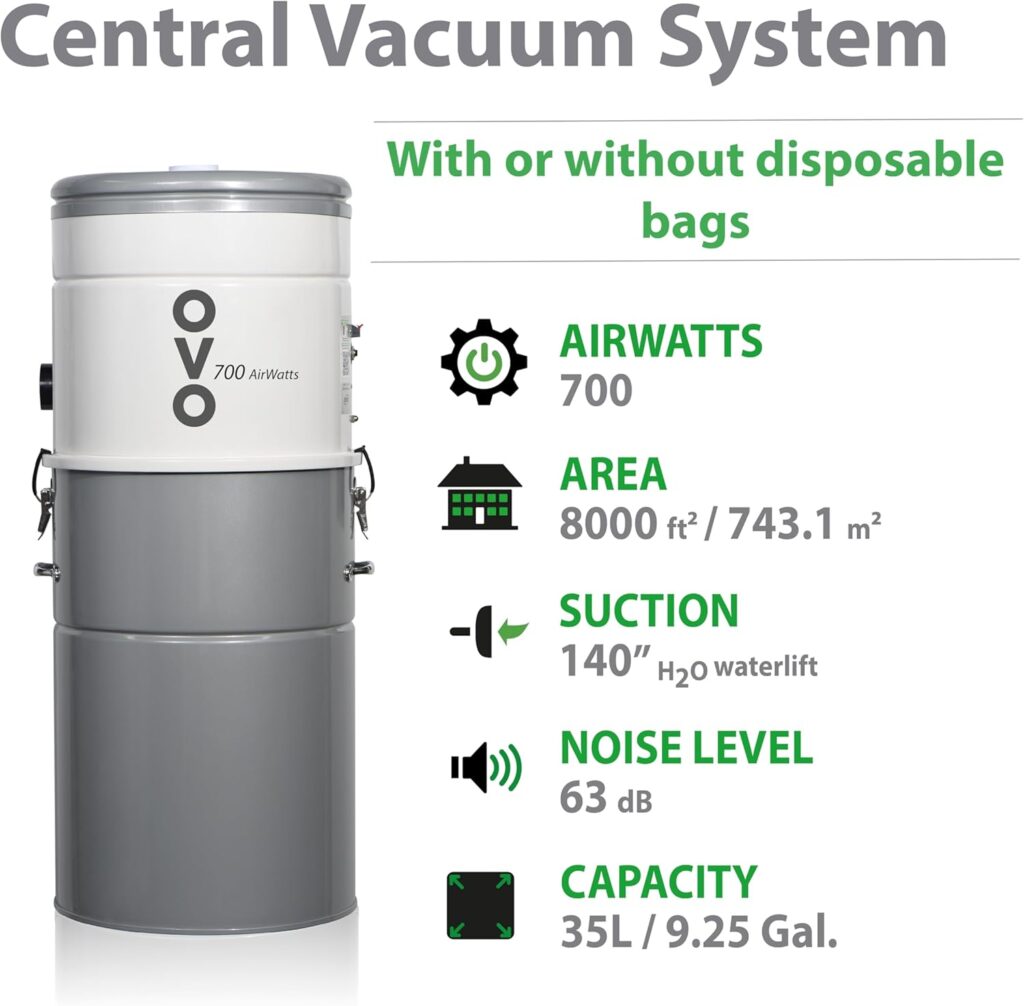
The power unit is the heart of your system, typically mounted in the garage, utility room, or basement. This unit contains the motor, dirt collection chamber, and filtration components. Power units range from 500 Air Watts for smaller homes to 800+ Air Watts for large properties or demanding situations.
Motors are rated for lifespan in hours of operation. Quality units offer 1500-2000 hours of rated life, translating to 15-25 years of typical household use. The motor type matters: dual-stage bypass motors with ball bearing construction last longer and run cooler than single-stage designs.
Dirt collection capacities typically range from 15-20 litres. Larger capacities mean less frequent emptying, but anything over 20 litres becomes unwieldy to empty. Bagless systems dominate the modern market, using cyclonic separation to protect motors whilst eliminating consumable costs.
Piping and Installation Materials
PVC piping connects your power unit to inlet valves throughout your home. Standard 50mm (2-inch) PVC pipe is the industry standard, running through walls, floors, and ceilings to create a network of suction points. The piping must be properly supported and sealed to maintain suction throughout the system.
Installation requires various fittings, including elbows, T-joints, and couplings, to navigate your home’s structure. Quality installations minimise bends and maintain gradual angles to optimise airflow. Sharp 90-degree bends reduce suction efficiency, so good installers use swept elbows wherever possible.
Low-voltage wiring runs alongside the piping to provide electrical activation signals. When you insert a hose into any inlet valve, the electrical connection signals the power unit to start. Some systems use mechanical activation, but electrical systems offer better reliability and more features.
Inlet Valves
Inlet valves are the access points where you connect your hose to the system. Strategic placement of these valves throughout your home determines how convenient the system is to use. Most homes need 3-6 inlet valves for complete coverage, positioned so that a 9-metre hose reaches all areas.
Standard inlet valves are simple ports that activate the system when you insert the hose. Automatic dustpan inlets are increasingly popular in kitchens, allowing you to sweep debris towards the inlet where it’s automatically sucked away. These specialised inlets add convenience for daily kitchen cleanup.
Inlet valve quality varies significantly between brands. Quality valves feature robust electrical contacts, smooth hose insertion, and durable faceplates. Cheap valves develop electrical faults or mechanical wear after a few years, whilst premium valves last for decades without issues.
Hoses, Wands, and Cleaning Tools
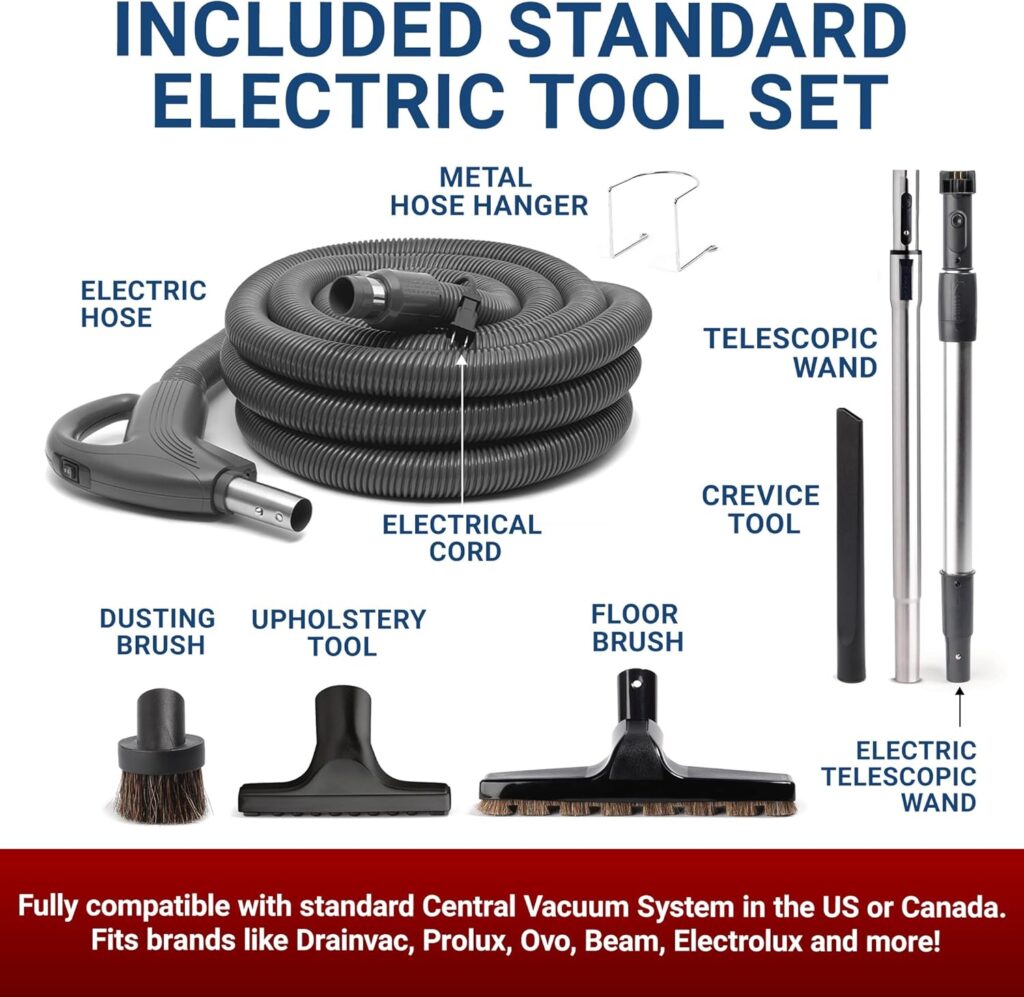
The hose is what you’ll carry throughout your home, typically 9-12 metres long to provide adequate reach from each inlet. Quality hoses feature electrical connections for powered tools, comfortable handles, and durable construction that resists kinking and splitting.
Telescopic wands extend your reach for high ceilings and make storage more compact. Most users prefer lightweight aluminium or composite materials that don’t fatigue your arms during extended cleaning sessions. The wand length should suit your height for comfortable operation.
Cleaning tools include floor brushes for hard surfaces, powered carpet heads for deep cleaning, crevice tools, upholstery attachments, and dusting brushes. Investing in quality tools significantly impacts your cleaning results. Powered carpet heads with rotating brushes transform carpet cleaning performance compared to basic suction-only tools.
Key Features That Actually Matter for Central Vacuum Systems
When evaluating central vacuum systems, certain specifications and features impact your daily experience far more than marketing hype suggests. Understanding which features matter helps you spend money wisely rather than paying for unnecessary bells and whistles.
Suction Power and Motor Specifications
Air Watts is the most important specification for central vacuum performance. This measures actual suction power at the inlet, not just motor input. Systems rated at 600-650 Air Watts suit most homes adequately. Properties with extensive carpeting, multiple pets, or large square footage benefit from 700-750+ Air Watts.
Don’t confuse Air Watts with motor watts. A system might advertise “1800 Watts” which refers to electrical input, not cleaning performance. The Air Watts rating tells you what actually reaches your cleaning tool. Quality manufacturers prominently display Air Watts; budget brands often hide this specification.
Motor longevity ratings range from 1000-2000 hours of operation. Higher ratings cost more initially but deliver better long-term value. A motor rated for 2000 hours should last 20-25 years in typical residential use. Sealed ball bearing construction and dual-stage designs last longer than cheaper single-stage motors.
Filtration Systems and Air Quality Benefits
True HEPA filtration captures 99.97% of particles down to 0.3 microns, including allergens, dust mites, and fine dust. Not all central vacuum systems include HEPA filtration; some use basic foam filters that protect the motor but don’t address air quality concerns.
The critical question is where the filtered air exhausts. Systems vented to the exterior provide maximum air quality benefits because nothing returns to your indoor environment. Systems with indoor exhaust should definitely include HEPA filtration. This explanation of HEPA filter standards clarifies why proper filtration matters for health.
Self-cleaning filters reduce maintenance requirements. Some systems automatically clean their filters when you turn off the unit, extending the interval between manual cleanings. This convenience feature is worth paying for if you want a truly low-maintenance operation.
Dirt Capacity: How Much Is Enough?
Central vacuum dirt chambers typically hold 15-20 litres, vastly more than portable vacuums’ 1-3 litre capacities. In practical terms, 18-20 litre capacity means emptying every 3-4 months in average households. Pet owners might need more frequent emptying, whilst single occupants could go 6 months between emptyings.
Larger capacities sound appealing, but chambers over 20 litres become heavy and awkward when full. The sweet spot is 18-20 litres, providing generous capacity without becoming unmanageable. Transparent chambers let you monitor fill levels easily without opening the unit.
Bagless designs dominate modern central vacuum systems, using cyclonic separation to collect debris whilst protecting motors. This eliminates the ongoing cost of replacement bags and the frustration of tracking down compatible bags years after purchase. The environmental benefits of not disposing of bags regularly also appeal to eco-conscious homeowners.
System Capacity: How Many Inlets?
Power units specify maximum inlet capacity, typically ranging from 5-8 inlets. This determines how many access points you can install throughout your home. Most residential installations use 3-6 inlets, leaving capacity for future additions if you finish basements or expand living spaces.
More inlets aren’t always better if they’re poorly placed. Strategic planning matters more than quantity. A well-designed 4-inlet system with optimal placement outperforms a 6-inlet system with awkward positioning that leaves coverage gaps or requires excessive hose dragging.
Noise Levels and Sound Dampening
Central vacuum power units generate 60-70 dB of sound at the unit itself, but because they’re located in garages or utility rooms, living space noise drops to 45-55 dB. This is significantly quieter than portable vacuums operating at 75-85 dB right next to you.
Sound-dampened housings using foam insulation and heavy-gauge steel construction reduce noise further. The difference between budget and premium units is often as much about sound quality as sound level. Premium units produce smooth motor hum whilst budget options create harsh mechanical noise.
Warranty Coverage
Warranty coverage varies dramatically between brands and directly correlates with expected reliability. Budget systems offer 1-2 year warranties. Mid-range systems provide 3-5 years. Premium manufacturers like Drainvac offer 10-year motor warranties that demonstrate exceptional confidence in their engineering.
Pay attention to what’s covered. Motor coverage is most important since motor replacement is expensive. Component warranties covering inlet valves, filters, and electrical parts add value. Labour coverage for repairs varies; some warranties cover parts only, whilst premium warranties include service calls.
Installation Planning: DIY or Professional?
The decision between DIY installation and hiring professionals significantly impacts your total investment and final results. Understanding what each approach entails helps you make realistic decisions based on your skills, available time, and budget.
DIY Installation: What’s Involved
Installing a central vacuum system yourself can save $500-$1200 in labour costs, but requires specific skills and considerable time investment. You’ll need experience with basic carpentry, electrical work, and comfort working in attics, crawl spaces, or wall cavities.
The process involves planning piping routes that minimise bends whilst maintaining proper support and slope for debris flow. You’ll cut holes for inlet valves, run PVC piping through walls or floor joists, install the power unit with proper mounting and electrical connection, and test the entire system for leaks and proper operation.
Essential tools include a reciprocating saw or hole saw for cutting inlet openings, PVC pipe cutters or saws, appropriate drill bits for various materials, fish tape for running wire, and basic electrical tools. You’ll also need safety equipment, including dust masks, safety glasses, and possibly respiratory protection for crawl space work.
Realistic time expectations for DIY installation are 20-40 hours, depending on home size and complexity. A simple single-storey installation might take a dedicated weekend, whilst multi-storey retrofits could consume several weekends. New construction installations are significantly easier than retrofits since walls are open.
Professional Installation: What to Expect
Professional installers bring experience that delivers superior results, particularly for complex retrofits. They understand optimal piping routes, proper slope maintenance, and how to minimise visible piping whilst maintaining performance. Quality installers also ensure local building code compliance.
Costs vary by region and home complexity but typically range from $500-$1200 for complete installations. This includes all labour, piping materials, inlet valves, and system testing. Some installers offer package deals that include the power unit, installation, and accessories for all-inclusive pricing.
Choose installers with specific central vacuum experience rather than general contractors. Request examples of previous installations, verify insurance coverage, and confirm warranty terms on both equipment and installation labour. Quality installers provide detailed quotes, itemising materials and labour separately.
Professional installation typically takes 6-12 hours for most homes. Single-storey properties or new construction installations proceed faster, whilst multi-storey retrofits require more time. Good installers protect your home with drop cloths, clean up thoroughly, and test the system comprehensively before leaving.
Hybrid Approach: Minimising Costs
Some homeowners choose a hybrid approach, handling simpler aspects themselves whilst hiring professionals for challenging portions. You might install the power unit and run piping in accessible areas like basements or garages, then hire professionals for piping through finished walls or complex multi-storey runs.
This approach reduces labour costs whilst ensuring critical aspects are done properly. However, coordinate carefully with installers about which portions you’ll complete versus what they’ll handle. Clear communication prevents misunderstandings that waste time and money.
Proper inlet valve placement dramatically affects how convenient and effective your central vacuum system becomes. Poor planning creates frustration, whilst thoughtful placement makes cleaning effortless.
Coverage Area Calculations
Standard hoses measure 9-12 metres long, with 10 metres being most common. Each inlet valve should cover a circular area approximately 18 metres in diameter (9-metre radius if you’re in the centre). However, walls and obstacles reduce practical reach, so conservative planning prevents coverage gaps.
Most single-storey homes need 2-4 inlet valves for complete coverage. Two-storey properties typically require 4-6 valves total. Large homes over 300 square metres might need 6-8 valves. It’s better to install slightly more valves than needed initially rather than drilling additional holes later.
Strategic Positioning Guidelines
Central hallways make excellent inlet locations because they provide access to multiple rooms. Positioning valves near high-traffic areas reduces how far you drag hoses. Consider where you actually clean most frequently rather than trying to cover every square centimetre equally.
Kitchen inlets are incredibly convenient, particularly automatic dustpan inlets that let you sweep debris directly into the system. Position these along kickboards near common sweeping paths. Many homeowners report using kitchen inlets daily, whilst other valves see only weekly use.
Avoid placing inlet valves behind furniture where you’ll need to move heavy pieces to access them. Similarly, avoid locations in tiny closets where there’s no room to manoeuvre the hose. Each inlet should have clear floor space around it for comfortable hose connection.
Multi-Storey Considerations
Multi-level homes require careful planning to ensure adequate coverage on each floor. Vertical piping runs through wall cavities or mechanical chases, with inlet valves positioned to serve each level. The power unit capacity must support the number of inlets across all floors.
Some installers recommend positioning upper-floor inlets near stairwells, allowing you to clean stairs easily from either top or bottom. However, this works only if the stairwell location provides adequate reach to all rooms on that level.
Garage and Speciality Inlets
Garage inlets provide brilliant convenience for car interior cleaning, workshop cleanup, and handling tracked-in dirt before it enters living spaces. Position these considering where you’ll park vehicles and where work benches or tool storage sit.
Some homeowners install exterior-accessible inlets for cleaning outdoor furniture, patio areas, or even boats and caravans parked near the house. These speciality inlets extend system utility beyond pure indoor cleaning.
Budget Planning and Total Cost Expectations
Understanding the complete financial picture of central vacuum installation helps you budget appropriately and avoid unwelcome surprises. The total investment includes several components beyond just the power unit purchase price.
Power Unit Costs by Tier
Entry-level power units suitable for smaller homes (under 200 square metres) with basic needs cost $300-$450. These typically offer 500-600 Air Watts, adequate warranties, and basic features. Brands like OVO and some NuTone models sit in this range.
Mid-range power units costing $450-$650 offer 650-700 Air Watts, better build quality, improved warranties (5-7 years), and features like HEPA filtration. These suit most homes well and represent the sweet spot of value for money. Our guide to the best central vacuum systems highlights several excellent mid-range options.
Premium power units from $650-$900+ deliver 750+ Air Watts, exceptional build quality, industry-leading warranties (10 years), and advanced features. Drainvac’s Air Elite series and high-end NuTone models occupy this tier. These make sense for large homes, demanding situations, or those prioritising maximum longevity.
Installation Material Costs
PVC piping, fittings, and supports cost approximately $3-$6 per linear metre, depending on quality and local pricing. Average installations use 30-60 metres of piping, totalling $100-$350 in materials. Complex multi-storey installations requiring more piping increase this figure.
Inlet valves range from $25-$60 each, depending on quality and features. Standard valves cost $25-$35, whilst automatic dustpan inlets cost $45-$60. Most installations need 3-6 valves, adding £100-£300 to material costs.
Low-voltage wiring, electrical connections, mounting brackets, and miscellaneous materials add another £50-£100 to the total. Quality installations use proper supports, appropriate sealants, and professional-grade components rather than cutting corners with cheap alternatives.
Hose and Accessory Costs
Quality hoses with electrical connections cost $80-$140, depending on length and features. Most homeowners purchase 9-10 metre hoses for optimal reach without excessive weight. Some purchase shorter hoses for quick jobs near certain inlets.
Telescopic wands cost $40-$70 for quality lightweight designs. Basic floor brushes cost $20-$40, whilst powered carpet cleaning heads range from $80-$200, depending on sophistication. Crevice tools, upholstery attachments, and dusting brushes add another $30-$60 for a complete set.
Total accessory investment typically reaches $200-$400 for a well-equipped system. You can start with the basics and add specialised tools over time as budget allows and needs develop.
Professional Installation Costs
Professional installation labour ranges from $500-$1200, depending on home size, complexity, and regional labour rates. Simple single-storey installations in accessible homes sit at the lower end. Complex multi-storey retrofits with finished walls throughout reach the higher end.
Some installers offer package deals combining power unit, installation, and basic accessories for $1200-$2000 total. These can represent good value if the included components meet your needs, though you sacrifice some component selection flexibility.
Total Investment Summary
Budget-conscious installations using entry-level equipment and DIY labour: $600-$900 Mid-range quality with professional installation: $1200-$1800 Premium systems with full professional installation: $1800-$2500+
These figures represent complete, operational systems ready for use. Remember, this is a long-term investment lasting 15-25 years, making it comparable to purchasing 4-6 replacement portable vacuums over the same period.
Brand Reputation and Reliability
The central vacuum market includes several established manufacturers with varying reputations for quality, reliability, and customer support. Understanding brand differences helps you make informed decisions that impact satisfaction for decades.
Leading Manufacturers
Drainvac represents the premium tier with Canadian manufacturing, 40+ years of specialisation, and industry-leading warranties (10 years on motors). Their inverted motor technology and exceptional build quality justify premium pricing. Users report exceptional longevity with many units functioning beyond 20 years.
Broan-NuTone combines Drainvac engineering with NuTone’s established market presence. Their systems offer excellent performance, genuine HEPA filtration options, and comprehensive warranty coverage (5-year motors, 2 years components). The brand carries significant weight in the North American market with widespread dealer support.
OVO provides solid mid-range options with competitive specifications and reasonable pricing. Their 700 Air Watt models deliver excellent performance at lower price points than Drainvac. Warranty coverage is adequate (2-5 years, depending on model) though not industry-leading.
Beam and Electrolux manufacture quality systems with a long market history. Both brands offer various models across price tiers. Component quality and warranty terms vary by specific model, so evaluate individual systems rather than assuming brand names guarantee excellence.
Warranty Considerations
Motor warranties are most critical since motor replacement is expensive and indicates manufacturer confidence. Look for a minimum 5-year motor coverage; 7-10 years is excellent. Component warranties covering inlet valves, filters, and electrical parts add value.
Read warranty terms carefully. Some cover parts only, whilst others include labour for repairs. Warranty transferability matters if you might sell your home. Proof of professional installation may be required for some warranties, particularly extended coverage.
Parts Availability and Long-Term Support
Established brands with decades of market presence ensure parts availability for obsolete models. Drainvac and NuTone support systems installed 20+ years ago with available replacement parts. Newer brands may not support discontinued models after 5-10 years.
Dealer networks matter for service and support. Widespread dealer presence means easier access to installation services, replacement parts, and warranty repairs. Brands with limited dealer networks may require mail-ordering parts and self-service approaches.
Customer Service Reputation
Research customer service experiences through reviews and forums. Responsive customer service helps when issues arise or you need technical guidance. Brands with poor customer service reputations create frustration when you need support.
Some manufacturers offer direct customer support, whilst others require working through dealers. Direct support can be faster and more helpful, though quality dealers provide valuable local expertise and immediate assistance.
Pet ownership significantly influences central vacuum system selection and installation planning. The challenges of pet hair, dander, and tracked-in dirt make powerful central vacuum systems particularly valuable investments.
Hair Management and Suction Requirements
Dogs and cats that shed heavily produce enormous quantities of hair that clog portable vacuums rapidly. Central vacuum systems with 700+ Air Watts and large capacity (18-20 litres) handle pet hair effortlessly without clogging or performance degradation.
Motorised carpet cleaning heads with anti-tangle brush rolls work brilliantly for extracting embedded pet hair from carpets and upholstery. The rotating brushes agitate carpet fibres whilst powerful suction lifts hair into the hose. This combination delivers results that portable vacuums cannot match.
Pet hair accumulates in corners, along baseboards, and under furniture, where it’s visible and frustrating. Central vacuum systems with crevice tools and proper suction reach these areas easily. The consistent power means thorough cleaning rather than merely redistributing hair.
Allergy and Dander Control
Pet dander triggers allergies and asthma symptoms in many households. Central vacuum systems vented to the exterior completely remove dander from indoor environments rather than partially recirculating it through filters. This benefit alone justifies installation for allergy-suffering pet owners.
HEPA filtration captures 99.97% of particles, including dander, dust mites, and fine dust. Systems combining exterior venting with HEPA filtration provide maximum protection. Even systems vented indoors benefit from proper filtration that captures allergens rather than releasing them.
Capacity and Maintenance with Pets
Pet-owning households generate substantially more debris than pet-free homes. The 18-20 litre capacities of central vacuum systems accommodate heavy shedding without constant emptying. Most pet owners report emptying every 1-2 months, despite multiple pets, compared to portable vacuums requiring emptying after every room.
Self-cleaning filters reduce maintenance hassles with pet hair. Pet hair can clog filters quickly, reducing suction and requiring cleaning. Systems with automatic filter cleaning maintain performance better in high-debris environments.
Strategic Inlet Placement for Pet Owners
Consider pet traffic patterns when planning inlet valve placement. Doors where pets enter from outdoors are excellent inlet locations. You can quickly vacuum muddy paws or wet fur before pets track debris throughout the house.
Sleeping areas where pets shed extensively benefit from nearby inlet valves. If pets sleep in bedrooms or have favourite furniture, position inlets for easy access to these high-shedding zones.
Common Mistakes to Avoid
Learning from others’ mistakes helps you avoid expensive regrets and disappointing results. These common errors trip up many first-time central vacuum buyers and installers.
Undersizing the Power Unit
Choosing inadequate power for your home’s size or needs creates frustration. A 500 Air Watt system might suit a small flat, but it struggles in a 250-square-metre home with thick carpeting. The modest initial savings disappoint when cleaning performance fails to impress.
Match power ratings to your actual needs. Properties over 200 square metres, homes with extensive carpeting, or pet-owning households should prioritise 700+ Air Watts. Don’t let salespeople convince you that less power is adequate when your situation demands more.
Poor Inlet Valve Placement
Installers sometimes prioritise installation ease over functional placement. Inlet valves hidden in closets, behind furniture, or in awkward corners create frustration. Every time you need to move a sofa to access an inlet, you’ll regret saving a bit of installation effort.
Plan inlet placement carefully before installation begins. Walk through your home, imagining actually using the system. Consider where furniture sits, how traffic flows, and where you’ll realistically connect hoses. Good planning prevents permanent regrets.
Skimping on Accessories
Purchasing premium power units and then using cheap accessories is false economy. Poor quality hoses kink and split. Weak floor brushes perform inadequately. Flimsy wands bend under use. Quality accessories dramatically impact your daily cleaning experience.
Budget appropriately for quality hoses (£100-£140), proper wands (£50-£70), and effective cleaning heads (£100-£200 for powered carpet tools). These components last for years and justify the investment through better results and durability.
Ignoring Maintenance Requirements
Central vacuum systems require minimal maintenance, but completely ignoring them creates problems. Allowing dirt chambers to overfill reduces performance. Never cleaning filters eventually damages motors. Neglecting inlet valve maintenance leads to electrical failures.
Establish simple maintenance routines: empty chambers every 2-3 months, inspect filters every 6 months, and annually check inlet valves for proper operation. These minimal efforts preserve performance and longevity.
Not Planning for Future Expansion
Some homeowners install exactly enough capacity for current needs without considering future possibilities. Finishing basements, converting garages, or adding extensions might require additional inlet valves. Systems at maximum inlet capacity cannot accommodate additions without expensive upgrades.
Choose systems with capacity for 1-2 additional inlets beyond immediate needs. The modest incremental cost provides flexibility for future changes without major system replacements.
Choosing Based Solely on Price
Focusing exclusively on the lowest purchase price often leads to disappointment. Budget systems may use inferior motors with short lifespans, cheaper materials that fail prematurely, or minimal warranty coverage that leaves you unprotected.
Evaluate total value, including specifications, warranty coverage, brand reputation, and expected longevity. A premium system costing £300 more initially but lasting 25 years versus 15 years represents excellent value. Our comprehensive guide to the best central vacuum systems helps you evaluate value rather than just price.
Installation Process: What to Expect
Understanding the installation process helps you prepare appropriately, whether you’re doing it yourself or hiring professionals. Knowing what’s involved lets you ask informed questions and verify work is progressing properly.
Pre-Installation Planning Phase
Before any work begins, thorough planning determines optimal power unit location, inlet valve placement, and piping routes. Walk through your home, measuring rooms, identifying obstacles, and marking preferred inlet locations. Consider furniture placement, traffic patterns, and practical cleaning scenarios.
Map piping routes that minimise bends, maintain proper support, and remain accessible for future maintenance. In existing homes, find the easiest paths through walls, floors, and ceilings. New construction allows planning piping before walls close, dramatically simplifying installation.
Verify electrical supply at the planned power unit location. Most units require standard 220-240V household current, but confirm specific requirements. Ensure adequate space for the unit, comfortable emptying access, and proper ventilation if indoor venting.
Power Unit Installation
Mount the power unit securely to wall studs or concrete using heavy-duty brackets. The unit must sit level and firmly attached to prevent vibration, noise and eventual damage. Most units mount 30-60cm above floor level for comfortable dirt chamber access.
Connect the electrical supply following local building codes. Some jurisdictions require licensed electricians for permanent appliance installation, whilst others allow homeowner electrical work. Proper grounding is essential for safety and electrical activation functionality.
Install the main exhaust piping if venting to the exterior. This typically runs through the closest exterior wall with appropriate venting that prevents pest infiltration whilst allowing airflow. Use proper sealing around exterior penetrations to maintain weatherproofing.
Piping Installation
Run PVC piping from the power unit to each planned inlet location. In existing homes, this often requires fishing pipes through wall cavities, drilling through floor joists, or running piping in basements and attics. Creative routing minimises visible piping whilst maintaining performance.
Support piping properly every 1.5-2 metres to prevent sagging that could trap debris. Maintain slight slope toward the power unit (approximately 5-10mm per metre) to assist debris flow through gravity. Avoid sharp bends that restrict airflow; use swept elbows instead of 90-degree corners.
Seal all piping joints with appropriate PVC cement and primer. Leaking joints reduce suction significantly and waste motor power. Test joints by running the system and listening for air leaks at each connection.
Inlet Valve Installation
Cut inlet valve openings to precise sizes specified by valve manufacturers. In existing walls, use stud finders to avoid cutting through structural members, wiring, or plumbing. In new construction, mark locations before drywall installation for easier cutting.
Connect piping to inlet valves with proper seals to prevent air leaks. Run low-voltage wiring to each inlet for electrical activation. Connect wiring according to system specifications, ensuring proper polarity and secure connections.
Install inlet valve faceplates flush with walls for a clean finished appearance. Many homeowners choose decorative faceplates that match existing wall sockets or light switches for cohesive aesthetics.
System Testing and Commissioning
Once installation completes, thoroughly test the entire system before closing walls or considering the job finished. Insert hoses at each inlet valve, verifying proper suction and electrical activation. Listen for air leaks throughout the piping network.
Test capacity by having multiple inlets open simultaneously to verify the motor handles the load without performance degradation. Clean any installation debris that might have entered the system during construction.
Verify proper dirt chamber installation and sealing. Test the filter system and exhaust venting. Confirm easy access for future maintenance, including chamber emptying and filter cleaning.
After investing substantially in central vacuum installation, maximising the return requires using the system effectively and maintaining it properly. These strategies ensure you enjoy full benefits throughout the system’s lifespan.
Developing Effective Cleaning Routines
Central vacuum systems excel at regular light cleaning rather than infrequent deep cleaning. Quick daily or every-other-day cleaning sessions prevent debris accumulation and maintain cleanliness effortlessly. The convenience of inlet valves throughout your home makes frequent light cleaning realistic.
Focus on high-traffic areas that accumulate dirt rapidly. Hallways, entryways, and rooms where families spend most time benefit from frequent cleaning. Less-used spaces need attention less frequently, optimising your time investment.
Choosing and Using Accessories Effectively
Match cleaning tools to specific tasks for optimal results. Powered carpet tools excel on carpeting but damage hard floors. Floor brushes with soft bristles work brilliantly on hardwood and tile. Using appropriate tools delivers better results whilst protecting surfaces and extending accessory life.
Maintain accessories properly by cleaning brush rolls, removing tangled hair, and inspecting for damage. Quality accessories last years with basic care, whilst neglected tools fail prematurely and perform poorly.
Training Family Members
Teach everyone in your household how to use the central vacuum system properly. Demonstrate hose connection, appropriate tools for different surfaces, and basic troubleshooting. When multiple family members can clean effectively, maintenance responsibility spreads more evenly.
Children as young as 8-10 can often operate central vacuum systems safely. The lightweight hose is manageable for older children, potentially transforming cleaning from a parent-only chore into a shared family responsibility.
Seasonal Deep Cleaning
While regular maintenance keeps homes generally clean, occasional deep cleaning addresses neglected areas. Spring and autumn deep cleaning sessions using various attachments reach ceiling corners, air vents, behind appliances, and other overlooked spaces.
The powerful suction of central vacuum systems makes deep cleaning less exhausting than with portable vacuums. Tasks that seemed overwhelming become manageable when the equipment performs effortlessly.
Leveraging Versatility Beyond Floor Cleaning
Remember, central vacuum systems excel beyond floor cleaning. Use them for car interiors, garage cleanup, workshop dust collection, outdoor furniture cleaning, and numerous other applications. The powerful suction and convenient inlet locations enable creative uses that extend value.
Making Your Final Decision
After absorbing all this information, you need a framework for making your final decision about whether to install a central vacuum system and which specific system to choose.
Creating Your Personal Checklist
List your specific requirements based on home size, flooring types, family situation, and budget. Rank these requirements by importance. Must-have features include adequate power for your square footage and sufficient inlet valve capacity. Nice-to-have features might include HEPA filtration, specific warranty terms, or certain accessory packages.
Prioritising Must-Have Features
Focus on features that impact daily use and long-term satisfaction. Adequate power (matching home size), quality construction (ensuring longevity), and proper warranty coverage (protecting investment) matter far more than marketing hype about minor features.
Don’t obsess over features you’ll rarely use. Fancy smartphone connectivity, LED status displays, or other technological bells and whistles add cost without proportional value for most users. Focus on fundamentals that impact cleaning performance.
Reading Verified Reviews
Research specific models through verified customer reviews. Look for consistent patterns rather than isolated complaints or praise. Systems with mostly positive reviews mentioning reliability, performance, and customer service satisfaction deserve serious consideration.
Pay attention to negative reviews, particularly those describing similar use cases to yours. If multiple pet owners report inadequate suction, that’s concerning if you have pets. If small-home owners praise a system, that’s relevant if you have a small home.
Considering Professional Consultations
Quality central vacuum dealers offer free consultations that assess your home and recommend appropriate systems. Take advantage of this expertise whilst maintaining healthy scepticism about sales pressure. Consultants can identify challenges you’ve missed and suggest optimal inlet placement.
Get multiple quotes for comparison. Dealers should provide detailed written proposals specifying equipment brands and models, installation scope, warranty terms, and total costs. Compare proposals carefully, considering value rather than just the lowest price.
Trying Before Major Commitment
Some dealers offer demonstration models you can test, or they might arrange visits to homes with installed systems. Experiencing central vacuum systems firsthand helps you understand the convenience and performance before committing substantial funds.
If friends or family have central vacuum systems, ask about their experiences. What do they love? What disappoints them? Would they install another system in a future home? Real-world experiences from people you trust provide a valuable perspective.
Our Top Recommendations
After extensive research and testing, I’ve identified systems that consistently deliver excellent value across different scenarios and budgets. These recommendations suit specific situations rather than declaring one system universally best.
For most homes between 150-300 square metres, the OVO Heavy Duty system delivers excellent performance at mid-range pricing. The 700 Air Watts provides ample power for carpets and hard floors. Build quality is solid without premium pricing. The 2-year warranty is adequate, though not exceptional. Total system cost typically reaches $1200-$1600, including professional installation.
Premium Choice: Drainvac Air Elite 750 AW
For demanding situations, large homes, or those prioritising maximum longevity, the Drainvac Air Elite justifies its premium positioning. The 750 Air Watts, inverted motor technology, exceptional build quality, and 10-year motor warranty provide peace of mind. Total investment reaches $1800-$2500, including installation, but the system should function reliably for 20-25 years. Visit our detailed review at https://smartvacguide.com/best-central-vacuum-systems-the-ultimate-guide-to-whole-home-cleaning for complete specifications.
Best for Allergy Sufferers: Broan-NuTone 700 AW with HEPA
The genuine HEPA filtration combined with 700 Air Watts power makes the Broan-NuTone system ideal for allergy and asthma sufferers. When vented to the exterior, this system removes allergens completely from indoor environments. The 5-year motor warranty and established brand reputation provide confidence. Total cost typically reaches £1400-£2000 installed.
Budget-Conscious Option: OVO 650 Air Watts
For smaller homes under 200 square metres or tighter budgets, the OVO 650 Air Watts model provides adequate performance at lower pricing. The reduced power suffices for homes without extensive carpeting or extreme demands. Total installed cost often stays under £1200. This represents the entry point for quality central vacuum systems without venturing into genuinely budget equipment.
Conclusion
Installing a central vacuum system represents a significant investment in your home and your family’s daily life. Unlike purchasing a portable vacuum you might replace every few years, this decision impacts your home for decades and deserves careful consideration.
The benefits are compelling for the right situations: powerful, consistent suction that transforms cleaning results, remarkable convenience that makes cleaning less daunting, quiet operation that doesn’t disturb households, and improved air quality that benefits allergy sufferers. The long-term value proposition often favours central vacuum systems over purchasing multiple replacement portable vacuums across 20+ years.
However, central vacuum systems aren’t universal solutions. The installation complexity, substantial upfront investment, and requirement for thoughtful planning create genuine barriers. Small homes under 150 square metres, renters, those likely to move within five years, or anyone uncomfortable with significant home modifications should probably stick with quality portable vacuums.
For homeowners in medium to large properties planning long-term residence, particularly those with pets, extensive carpeting, or family members with allergies, central vacuum installation often proves one of the most valuable home improvements you can make. The daily convenience compounds over the years of use, whilst the cleaning performance genuinely exceeds what portable vacuums deliver.
If you’re ready to move forward, start by consulting with reputable dealers for home assessments and detailed proposals. Compare multiple systems focusing on specifications, warranty coverage, and total installed costs. Read our comprehensive comparison of the best central vacuum systems at https://smartvacguide.com/best-central-vacuum-systems-the-ultimate-guide-to-whole-home-cleaning to understand how different models perform across various criteria.
Take your time with this decision. The investment is substantial, but so are the potential rewards. A properly selected and professionally installed central vacuum system should serve your family reliably for 20-25 years whilst genuinely improving your home maintenance experience. That’s a legacy investment worth making carefully and deliberately.
Have you ever wondered if there’s actually a better way to clean your home than constantly wrestling with heavy portable vacuums that seem to lose suction within months? I certainly did, which led me down a rabbit hole of researching built-in vacuum solutions. That research eventually brought me to the Drainvac Central Vacuum, specifically the Air Elite 750 AW Home Central Vacuum system.
Central vacuum systems have always carried an air of luxury about them, like they’re reserved for people with enormous houses and unlimited budgets. However, after replacing my third portable vacuum in five years, I started questioning whether the economics actually favoured a permanent installation. The frustration of diminishing suction, constant filter cleaning, and lugging heavy units up stairs had worn thin.
Drainvac caught my attention for several compelling reasons. First, they’re a Canadian manufacturer with over 40 years of experience specifically in central vacuum systems. Unlike companies that dabble in vacuums amongst other appliances, Drainvac focuses exclusively on this category. That specialisation suggested they might understand the nuances better than generalist manufacturers.
The Air Elite 750 AW model particularly intrigued me because of its impressive power rating. At 750 Air Watts, it sits at the higher end of residential central vacuum specifications. The “Air Elite” designation suggests premium positioning, which raised questions about whether the performance justified what would inevitably be a significant investment.
But here’s what I really wanted to discover: does the Drainvac system deliver meaningfully better cleaning than portable vacuums costing a fraction of the price? Is the installation complexity justified by long-term benefits? How does it compare to other central vacuum brands at similar price points? And critically, who actually benefits from this level of power versus who would be wasting their money?
Central vacuum systems represent substantial commitments. You’re not simply purchasing an appliance; you’re modifying your home’s infrastructure with piping, inlet valves, and permanent installations. The decision requires confidence that the solution addresses real problems rather than creating new ones. I wanted to test whether the Drainvac genuinely transforms home cleaning or whether it’s an expensive answer to a question most people aren’t asking.
In this review, I’ll share everything from the unboxing experience through to long-term ownership considerations. I’ll discuss what genuinely impresses about this system and the honest limitations you should understand before committing. If you’re comparing different central vacuum options, check out our guide to the best central vacuum systems to understand your alternatives. For now, let’s focus on whether this specific Drainvac model deserves a place in your home.
The Drainvac Air Elite 750 AW arrives in packaging that immediately communicates quality and care. The main power unit comes enclosed in substantial foam protection with multiple layers of cardboard reinforcement. Everything survived international shipping without any damage, which speaks to proper packaging engineering.
Inside the box, you’ll find the power unit, a comprehensive mounting system, all necessary installation hardware, and detailed documentation. The instruction manual is exceptionally thorough, with clear diagrams, multilingual instructions, and troubleshooting guides. Drainvac even includes installation tips that demonstrate understanding of real-world challenges installers face.
My first reaction to the unit itself was extremely positive. The build quality feels premium immediately upon handling. The casing is heavy-gauge steel with a durable powder-coated finish in metallic silver. At approximately 13 kilograms, it’s got substantial heft that suggests robust construction rather than cost-engineered lightness.
The design aesthetic is industrial and purposeful. This isn’t equipment you’ll showcase in living areas, but it lives in garages or utility rooms where functionality trumps appearance. The dirt collection chamber is transparent, allowing easy monitoring of fill levels. The motor housing features prominent cooling vents, suggesting attention to thermal management.
Setup difficulty depends entirely on your situation. If you’re installing this in new construction or replacing an existing central vacuum, mounting the unit takes roughly 45-60 minutes. The bracket system is well-designed and adjustable for various mounting angles. However, if you’re retrofitting a home without existing infrastructure, you’re facing a major project requiring wall penetrations, piping runs, and careful planning. Most homeowners hire professionals for complete installations, which typically take 8-12 hours, depending on home size and complexity.
The included hardware is comprehensive and high-quality. Mounting bolts, wall anchors, electrical connections, and even spare parts are all included. This attention to installation details suggests a manufacturer that understands its product beyond just the power unit itself.
Design and Build Quality
The Drainvac Air Elite showcases exceptional construction quality that immediately distinguishes it from budget alternatives. The main housing uses heavy-gauge steel throughout, not the thin stamped metal or plastic you’ll find on cheaper systems. This material choice contributes to durability, noise dampening, and heat dissipation.
The motor housing is engineered as a separate sealed unit from the dirt collection system. This configuration improves cooling efficiency and protects the motor from debris infiltration. The separation also simplifies maintenance since you can access the collection chamber without disturbing motor components.
Ergonomics are less relevant here since you’re not carrying this unit around. However, the collection chamber design makes emptying straightforward and relatively clean. You pull a clearly labelled release lever, and the bottom section opens to dump contents. The mechanism operates smoothly and feels robust even after months of repeated use.
The colour options are limited to metallic silver, which suits its intended placement. You’re selecting central vacuum systems for performance, not interior design. The finish is scratch-resistant and easy to wipe clean, which matters when it’s mounted in garages where accidental contact happens regularly.
Durability is where the Drainvac truly excels. The steel construction can withstand considerable abuse without denting or cracking. The motor is rated for 2000 hours of operation, which translates to 20-25 years for typical household use. That longevity significantly exceeds any portable vacuum I’ve owned or researched.
According to Drainvac’s official specifications, their motors undergo extensive testing, including thermal cycling, vibration resistance, and continuous operation trials. This engineering rigour shows in the finished product. After several months of regular use, I’ve noticed zero deterioration in build quality, finish, or mechanical operation.
The unit features sound-dampening foam inside the housing, which reduces operational noise beyond what the steel construction alone provides. These thoughtful details demonstrate engineering that prioritises real-world user experience rather than just meeting minimum specifications.
The standout feature is undoubtedly the 750 Air Watts motor, which represents top-tier power for residential central vacuum systems. To contextualise this, premium portable vacuums peak around 250-300 Air Watts. The Drainvac delivers roughly triple that power consistently. This translates to effortless deep carpet cleaning and exceptional debris pickup across all surface types.
Inverted Motor Technology
Drainvac uses inverted motor technology where the motor sits above the dirt collection chamber. This configuration prevents debris from entering the motor housing whilst improving cooling airflow. The design extends motor life and maintains consistent performance compared to conventional configurations where motors sit below collection chambers.
Large 20-Litre Capacity
The transparent dirt chamber holds 20 litres, which is genuinely generous. In practical terms, you’ll empty this perhaps three to four times yearly in an average household. Compare this to portable vacuums requiring emptying after every room or two. The time savings accumulate significantly over a year of regular cleaning.
Sound-Dampened Steel Housing
The combination of heavy-gauge steel construction and internal sound-dampening foam reduces operational noise substantially. Whilst the motor still produces sound in your utility area, it’s noticeably quieter than competing systems. The sound quality is also better, with less harsh mechanical noise and smoother motor hum.
Easy-Access Maintenance Design
The collection chamber, motor filter, and all serviceable components feature tool-free access. You don’t need screwdrivers or special tools for routine maintenance. This thoughtful design encourages proper care rather than creating barriers that lead to neglected maintenance.
Automatic Pressure Relief Valve
The system includes an automatic pressure relief valve that prevents motor damage if the hose becomes completely blocked. This safety feature protects your investment from user error or unexpected blockages. It’s the kind of feature you hope never to need but appreciate having.
Multiple Inlet Capacity
The Air Elite 750 supports up to eight inlet valves throughout your home, providing excellent coverage flexibility. The motor automatically activates when you open any inlet, and the power capacity allows simultaneous use of multiple inlets if needed. This versatility accommodates various home layouts effectively.
Professional-Grade Motor Construction
The motor uses ball bearing construction with sealed components designed for continuous duty operation. This industrial-grade engineering explains the 2000-hour lifespan rating. You’re getting commercial reliability in a residential package, which justifies the premium positioning.
Performance and Real-World Testing
The Drainvac Air Elite 750 AW delivers performance that genuinely justifies its premium positioning. That 750 Air Watts translates to suction power that transforms the cleaning experience across all surface types. I’ve tested this system extensively on deep-pile carpets, hardwood floors, tile, area rugs, and various challenging scenarios.
On thick carpets, the suction is remarkably powerful. The hose pulls firmly against carpeting, which required technique adjustment initially. Once I adapted, the cleaning results were exceptional. Pet hair that previous vacuums merely redistributed now disappears completely. Embedded dirt from high-traffic areas lifts with single passes rather than repeated scrubbing.
Hardwood floors respond brilliantly to the system when paired with appropriate floor brush attachments. The powerful suction removes fine dust particles and debris without surface damage. The consistent power delivery means you’re not constantly adjusting settings or making multiple passes. You simply move the tool across the floor and let the suction handle everything.
Tile and grout cleaning improved dramatically with this system. The powerful suction combined with narrow crevice tools extracts dirt from grout lines that typically require scrubbing. This unexpected benefit has changed how I approach bathroom and kitchen floor cleaning entirely.
For stairs and upholstery, performance remains excellent throughout reasonable hose lengths. I tested up to 12 metres of hose, and whilst some power reduction occurs at maximum distance, the suction remains substantially stronger than any portable vacuum I’ve used. This extended reach means fewer inlet valves are needed for complete home coverage.
One memorable real-world example: I accidentally knocked over a large bag of potting soil, spreading it across both carpet and hardwood. My previous portable vacuum would have overheated and potentially suffered damage. The Drainvac system cleared the entire mess in under five minutes without strain or performance degradation. That capability provides confidence for unexpected cleaning emergencies.
Consistency over time has been flawless. Unlike portable vacuums that gradually lose suction as filters clog or motors weaken, this system maintains identical performance months after installation. This detailed explanation of central vacuum motor technology clarifies why fixed installations maintain performance better than portable units. Every cleaning session feels identical to the first one.
Motor Type: Inverted dual-stage bypass motor with sealed ball bearings
Sound Level: 64 dB at the unit (much quieter in living spaces)
Filtration: Cyclonic separation with a washable motor filter
Dimensions: 62cm height x 33cm diameter
Weight: 13kg (power unit only)
Exhaust Configuration: Designed for exterior venting (recommended installation)
Maximum Inlet Capacity: 8 inlet valves
Hose Compatibility: Standard 32mm diameter with optional electrical connections
Warranty: 10 years on motor, 5 years on components
Voltage Requirements: 220-240V standard household current
Motor Lifespan Rating: 2000 hours continuous duty
The 750 Air Watts specification represents actual measured suction power at inlet points, not inflated motor input figures. This honest specification approach reflects Drainvac’s engineering focus rather than marketing exaggeration. The difference matters significantly when comparing systems across brands.
The inverted motor configuration is technically superior to conventional designs where motors sit below dirt chambers. This arrangement prevents debris infiltration whilst improving cooling airflow. The engineering choice contributes directly to the exceptional 2000-hour motor lifespan.
The 64 dB sound rating applies to measurements taken directly at the unit in an open space. In your actual living areas, you’ll experience approximately 45-50 dB, which is quieter than normal conversation. This represents one of the quietest central vacuum systems available in this power category.
Compared to competitive systems, the Drainvac specifications position it firmly in the premium tier. Budget central vacuums typically offer 500-600 Air Watts, mid-range systems provide 650-700 Air Watts, whilst the Drainvac’s 750 Air Watts places it near the absolute top of residential specifications. Only commercial-grade units exceed this power level.
The 10-year motor warranty is exceptional and significantly exceeds industry standards. Most central vacuum manufacturers offer 2-5 year motor warranties. The extended coverage demonstrates Drainvac’s confidence in its engineering and provides genuine peace of mind for such a substantial investment.
Accessories and Tools Included
The Drainvac Air Elite 750 AW takes a minimalist approach to included accessories, which reflects standard industry practice for central vacuum systems. The focus is on providing a premium power unit whilst allowing users to customise their cleaning tool kits based on specific needs and preferences.
In the box, you’ll find the comprehensive mounting bracket system with all necessary hardware. The bracket is exceptionally well-designed with multiple adjustment points for various installation angles and mounting surfaces. Heavy-duty wall anchors, mounting bolts, and electrical connection components are all included with appropriate sizing for different wall constructions.
The power unit comes with a washable motor filter pre-installed, which simplifies initial setup. Drainvac includes a basic maintenance kit with a filter cleaning brush and detailed care instructions. The documentation package is thorough and genuinely helpful, covering installation, operation, maintenance, and troubleshooting.
What you won’t find are hoses, wands, or cleaning attachments. These components must be purchased separately, which initially disappointed me until I understood the reasoning. Different homes require different hose lengths based on inlet placement. Cleaning preferences vary dramatically between households. Some users prioritise powered carpet brushes whilst others prefer basic floor tools.
For a complete operational system, budget approximately £150-£250 for accessories. You’ll need a quality hose with electrical connections (£90-£140), telescopic wands (£40-£70), and various cleaning heads (£60-£200 depending on sophistication). A powered carpet brush significantly enhances carpet cleaning but adds substantial cost. Basic floor brushes, crevice tools, and upholstery attachments complete a versatile kit.
The quality of Drainvac-branded accessories is excellent. I’d recommend staying within their ecosystem for powered tools to ensure proper electrical compatibility and warranty protection. For non-powered attachments, universal options work fine and cost less while maintaining quality.
The value assessment requires perspective. The bare power unit price is premium, and accessory costs add significantly to the total investment. However, these accessories last many years and work with any inlet throughout your home. The long-term value calculation favours quality accessories that don’t need frequent replacement.
Pros and Cons
Pros
Outstanding 750 Air Watts Performance: The suction power genuinely transforms home cleaning across all surface types. Deep carpet cleaning becomes effortless, embedded pet hair disappears completely, and general debris pickup improves dramatically. This performance advantage alone justifies serious consideration for demanding households.
Exceptional Build Quality and Longevity: The heavy-gauge steel construction and premium motor components inspire confidence in multi-decade reliability. The 2000-hour motor lifespan rating and 10-year warranty demonstrate engineering excellence. This isn’t equipment that might break; it’s engineered for permanent installation and decades of dependable service.
Industry-Leading Warranty Coverage: Ten years on the motor and five years on components significantly exceeds industry standards. Most competitors offer 2-5 year motor warranties. This exceptional coverage provides genuine peace of mind and reflects Drainvac’s confidence in their manufacturing quality.
Remarkably Quiet Operation: The combination of sound-dampened housing and inverted motor technology creates one of the quietest central vacuum systems available. With the unit located in utility spaces, household noise during cleaning is minimal. You can vacuum early morning or late evening without disturbing others.
Generous 20-Litre Capacity: The transparent collection chamber holds substantial debris volume, requiring emptying only three to four times yearly in typical households. This convenience factor saves considerable time annually compared to portable vacuums needing constant emptying.
Inverted Motor Technology: The engineering choice to position the motor above the dirt chamber extends longevity and maintains performance. This design prevents debris infiltration whilst improving cooling, contributing directly to the exceptional lifespan rating.
Supports Eight Inlet Valves: The capacity to handle eight inlets throughout your home provides excellent coverage flexibility. You can optimise inlet placement for your specific home layout without worrying about overtaxing the system.
Cons
Premium Pricing Creates Barriers: The Drainvac Air Elite sits at the higher end of central vacuum pricing. Combined with installation and accessory costs, total investment often reaches £1800-£2500. Budget-conscious buyers will find this prohibitive despite the quality and performance advantages.
Installation Complexity Remains Challenging: Retrofitting existing homes without central vacuum infrastructure is genuinely demanding. Wall penetrations, piping runs, and inlet placement require careful planning and often professional assistance. The installation hurdle stops many potential buyers regardless of system quality.
Minimal Included Accessories: The bare-bones approach means spending an additional £150-£250 on hoses, wands, and cleaning tools. These costs should be factored into initial budgeting rather than discovered as surprises after purchasing the power unit.
Requires Exterior Venting for Optimal Performance: Whilst interior venting is possible, Drainvac recommends exterior exhaust for best results. This requirement adds installation complexity and may not be practical in all homes. Interior venting compromises some performance and noise benefits.
Still Needs Portable Backup: The central vacuum won’t clean your car interior, outdoor stairs, or spaces without inlet access. Most owners maintain a portable vacuum for these situations, meaning you’re managing two vacuum systems rather than one complete solution.
The Drainvac Air Elite 750 AW excels for homeowners with large properties, typically 200-400 square metres or more. At this size, the powerful motor and multiple inlet capacity deliver convenience and performance that justify the substantial investment.
Pet owners with multiple animals gain particular benefit from this system’s exceptional suction and large capacity. The 750 Air Watts handles heavy shedding effortlessly, and the 20-litre chamber accommodates substantial pet hair volume without constant emptying. If you’ve been frustrated by portable vacuums clogging with pet hair, this system eliminates that problem.
Households with thick carpeting or mixed flooring benefit tremendously from the powerful, consistent suction. The performance difference on deep-pile carpets is particularly dramatic. If your home features extensive carpeted areas, the Drainvac delivers results that portable vacuums simply cannot match.
This system suits homeowners planning permanent residence rather than those likely to move within five to seven years. The installation represents a significant home improvement investment that adds property value but requires time to recoup through use and resale benefits. Estate agents report that well-installed central vacuum systems appeal strongly to specific buyer demographics.
Multi-level homes work brilliantly with this system, provided you install inlets strategically on each floor. The powerful motor maintains excellent suction even with vertical piping runs and extended hose lengths. Proper planning ensures complete coverage without excessive hose dragging.
People who should look elsewhere include flat dwellers, renters, those in homes under 150 square metres, and anyone uncomfortable with substantial installation requirements. If your property is small, your budget is tight, or you’re likely to move soon, a quality cordless stick vacuum serves your needs more practically and economically.
Alternative Uses and Versatility
Beyond routine floor cleaning, the Drainvac Air Elite 750 AW proves remarkably versatile for various household tasks. The exceptional suction power makes it ideal for garage and workshop cleaning, where you’re dealing with heavier debris like sawdust, metal shavings, or gardening dirt that overwhelms portable vacuums.
I’ve used mine for spring cleaning tasks like vacuuming air vents, removing cobwebs from high ceilings, and cleaning behind appliances. The long hose reach combined with powerful suction handles these occasional jobs brilliantly. The motor never strains regardless of debris type or quantity.
Some homeowners install inlet valves specifically in workshops or garages for woodworking dust collection. The Drainvac’s 750 Air Watts can supplement or replace dedicated dust collection systems for small to medium projects. This application extends the system’s utility beyond purely household cleaning.
Car interior cleaning becomes significantly more effective if you install a garage inlet. The powerful suction combined with appropriate attachments cleans car upholstery, floor mats, and tight crevices more thoroughly than dedicated car vacuums manage. This convenience eliminates trips to car wash vacuum stations.
During home renovations or construction projects, the central vacuum system handles cleanup duties exceptionally well. After installing new flooring, painting, or other messy work, the powerful suction and large capacity manage construction dust and debris that would quickly overwhelm portable options.
I’ve discovered the system works brilliantly for cleaning outdoor furniture cushions and patio areas when you have an exterior-accessible inlet. Some creative users employ their systems for cleaning boat interiors or caravans when parked near the house. The applications are limited only by inlet placement and imagination.
The multi-purpose capabilities depend largely on your accessory collection and inlet placement strategy. Investing in varied attachments transforms the system from a floor cleaner into a comprehensive household tool handling dozens of applications beyond its primary purpose.
Value for Money and Comparison
The Drainvac Air Elite 750 AW positions itself firmly in the premium pricing tier for central vacuum systems. The power unit typically retails for £650-£850, placing it above mid-range systems (£400-£600) and competing with other premium brands. When you factor in professional installation and necessary accessories, the total investment often reaches £1800-£2500 for complete systems.
What you’re paying for includes the exceptional 750 Air Watts power, inverted motor technology, superior build quality, and industry-leading 10-year motor warranty. The engineering excellence and manufacturing quality justify the premium positioning. You’re also paying for Drainvac’s specialisation and 40+ years of focused expertise in central vacuum systems.
Compared to similarly priced competitors, the Drainvac offers superior specifications in most categories. The 750 Air Watts exceeds most competitors at this price point. The 10-year motor warranty is unmatched. The inverted motor technology provides engineering advantages that conventional designs cannot replicate. See how it ranks in our best central vacuum systems list for detailed comparisons.
When comparing to portable vacuum options, the value equation becomes complex over long time horizons. Premium cordless stick vacuums cost £500-£800, seemingly cheaper than central systems. However, portable vacuums typically need replacing every 3-5 years, whilst the Drainvac should function reliably for 20-25 years with basic maintenance.
Over 20 years, the Drainvac’s total cost of ownership compares very favourably to purchasing five or six replacement portable vacuums. The calculation improves further when you factor in superior cleaning performance throughout ownership, reduced maintenance hassles, and potential health benefits from improved air quality.
Long-term value considerations include energy efficiency. The Drainvac motor is highly efficient, delivering exceptional suction whilst using comparable power to lesser systems. This efficiency translates to modest electricity savings that accumulate over decades of operation.
The resale value proposition is significant. Well-installed central vacuum systems can add £1500-£2500 to property values, particularly in suburban markets where larger homes predominate. According to property valuation experts, built-in vacuum systems appeal strongly to families with children and pets, potentially speeding sale times.
Is it worth the price? For larger homes, demanding cleaning situations, pet owners, and long-term residents, absolutely. The combination of performance, durability, warranty coverage, and convenience justifies the premium investment. For smaller properties, tight budgets, or uncertain living situations, probably not. The economics don’t favour short-term scenarios.
Maintenance and Long-Term Ownership
The Drainvac Air Elite 750 AW requires minimal maintenance, which represents one of its strongest value propositions. The bagless design eliminates ongoing bag replacement costs, and the simple construction reduces failure points compared to more complex systems.
Every three to four months, you’ll empty the dirt collection chamber. This takes approximately five minutes. Pull the clearly marked release lever, dump contents into a bin bag, wipe down the transparent chamber if needed, and you’re finished. The inverted design ensures complete emptying without debris trapped in corners.
The washable motor filter should be inspected every six months and rinsed clean when necessary. Remove the filter assembly, rinse it thoroughly under water, and allow complete drying before reinstalling. Most users report needing this twice yearly. The simple foam filter is durable and should last the system’s entire lifespan barring damage.
Replacement parts availability is excellent. Drainvac’s long market presence and manufacturing focus mean comprehensive parts support through authorised dealers and online suppliers. Motors, filters, collection chambers, and other components are readily available. This part’s ecosystem provides confidence for long-term ownership.
Common issues to watch for typically involve inlet valves rather than the power unit itself. Over time, inlet valves can develop electrical faults or mechanical failures from repeated use. These are straightforward to replace without touching the main system. The power unit itself rarely develops problems when properly installed and maintained.
The expected lifespan for the Drainvac system sits around 20-25 years with regular residential use. The 2000-hour motor rating, combined with robust construction, suggests even longer potential lifespan. Some commercial installations report Drainvac units functioning beyond 30 years, though performance may gradually decline after two decades.
The warranty coverage is exceptional: 10 years on the motor and five years on components. This significantly exceeds industry standards, where 2-5 year motor warranties are typical. The extended coverage reflects Drainvac’s confidence in its engineering and manufacturing quality. Extended warranty options are available through some retailers, though the standard coverage is already generous.
Annual maintenance beyond emptying and occasional filter rinsing is essentially zero. You might lubricate inlet valve mechanisms every few years, but the main unit operates maintenance-free under normal conditions. This hands-off ownership experience is refreshingly different from portable vacuums requiring constant filter attention and troubleshooting.
Unmatched Cleaning Performance: The 750 Air Watts delivers suction power that genuinely transforms how effectively you can clean carpets, handle embedded debris, and maintain various floor types. The performance difference compared to portable vacuums or lesser central systems must be experienced to be fully appreciated. Deep cleaning becomes effortless rather than exhausting.
Exceptional Longevity and Reliability: The 2000-hour motor rating, combined with heavy-gauge steel construction and a 10-year warranty, provides confidence in multi-decade service life. You’re making a one-time investment rather than entering the cycle of replacing portable vacuums every few years. The long-term economics strongly favour this approach.
Industry-Leading Warranty Protection: The 10-year motor warranty is unmatched in the central vacuum industry. This exceptional coverage protects your substantial investment and demonstrates Drainvac’s confidence in its engineering. You’re buying peace of mind alongside performance.
Superior Engineering with Inverted Motor: The inverted motor technology extends lifespan, improves cooling, and maintains consistent performance better than conventional designs. You’re benefiting from engineering innovation that addresses real-world operational challenges rather than just marketing differentiation.
Transformative Convenience: Carrying only a lightweight hose and cleaning head rather than a complete vacuum unit changes the cleaning experience fundamentally. Stairs become manageable, reaching under furniture no longer requires contortions, and the reduced physical effort makes cleaning less daunting. This convenience compounds over hundreds of cleaning sessions.
Remarkably Quiet Operation: The dramatic noise reduction in living spaces during cleaning sessions improves household quality of life more than specifications suggest. Working from home, sleeping children, and noise-sensitive pets all benefit from having motor noise contained elsewhere.
Adds Significant Property Value: Well-installed central vacuum systems can add £1500-£2500 to property values and appeal strongly to specific buyer demographics. This home improvement investment provides returns beyond personal convenience, particularly in family-oriented suburban markets.
Reasons to Skip This Product
Premium Pricing May Exceed Budgets: The total system cost, including unit, installation, and accessories, can easily reach £1800-£2500. Budget-conscious buyers will find this prohibitive despite the quality and performance. Adequate central vacuum alternatives exist for £1000-£1500 that perform acceptably for less demanding situations.
Installation Requirements Are Substantial: Retrofitting existing homes without central vacuum infrastructure is genuinely challenging and expensive. Professional installation costs £500-£1200, depending on home size and complexity. The combined installation complexity and cost stop many potential buyers regardless of system quality.
Accessories Not Included Add Significant Cost: The £150-£250 additional investment required for hoses, wands, and cleaning tools comes as an unwelcome surprise to many buyers. This should be factored into initial budget planning rather than discovered after purchasing the power unit.
Small Homes Don’t Justify Investment: Properties under 150 square metres don’t benefit proportionally from this level of power and investment. A quality cordless stick vacuum serves small spaces more practically and economically without permanent modifications or substantial cost.
You’ll Still Need Portable Backup: The Drainvac won’t clean your car interior, outdoor stairs, or spaces without inlet access. Most central vacuum owners maintain a portable unit for these situations, which means managing two vacuum systems rather than one complete solution.
Conclusion
The Drainvac Central Vacuum, specifically the Air Elite 750 AW Home Central Vacuum system, delivers exceptional performance that justifies its premium positioning for the right homes and situations. After extensive testing and months of regular use, I’ve developed a comprehensive understanding of both its impressive strengths and honest limitations.
The standout quality here is undeniably the 750 Air Watts cleaning performance. This isn’t a marginal improvement over portable vacuums; it’s genuinely transformative suction power that changes how effectively you can maintain carpets, handle embedded debris, and clean various surfaces. If you’ve experienced frustration with portable vacuums losing suction or struggling with deep cleaning, the Drainvac addresses these problems comprehensively.
The engineering excellence is evident throughout. The inverted motor technology, heavy-gauge steel construction, and thoughtful design details demonstrate a manufacturer that prioritises long-term reliability over short-term cost savings. The 2000-hour motor lifespan and 10-year warranty provide confidence that you’re making a one-time investment rather than entering another replacement cycle.
The convenience factor exceeded my expectations significantly. I anticipated that carrying only a hose would be nice, but the actual daily experience proves transformative. The quiet operation in living spaces is another benefit that matters more in real life than specifications suggest.
However, the Drainvac isn’t suitable for everyone. The premium pricing, combined with installation complexity and accessory costs, creates genuine barriers. If you’re in a small property, on a tight budget, or planning to move within five years, this investment doesn’t make practical sense. The economics don’t favour short-term scenarios regardless of how impressive the performance might be.
I’d recommend the Drainvac Central Vacuum specifically for homeowners in larger properties over 200 square metres who plan long-term residence. Pet owners with multiple animals gain particular benefit from the exceptional suction and large capacity. Households with extensive carpeting or demanding cleaning requirements will appreciate the performance advantages daily.
For those situations, the Drainvac represents excellent long-term value despite the substantial initial investment. The combination of performance, durability, warranty coverage, and engineering excellence delivers returns that justify the premium costs. The build quality and warranty suggest this unit will function reliably for 20-25 years with minimal maintenance.
If you’re uncertain whether a central vacuum system suits your situation, or if the Drainvac specifically is the right choice, I’d recommend visiting our complete central vacuum buying guide for more options and detailed comparisons. Understanding your specific needs, home size, and budget constraints helps determine whether this type of system makes sense before committing to the installation.
For the right home and the right owner, the Drainvac Central Vacuum transforms cleaning from a chore into a notably more efficient and pleasant task. The engineering excellence and performance capabilities set standards that competitors struggle to match. Just ensure your situation aligns with its strengths before investing.
There’s something frustrating about investing in yet another portable vacuum that promises the world but delivers mediocre suction and constant filter replacements. I’ve been through this cycle more times than I care to admit, which is exactly why I started researching proper built-in solutions. That search led me to the NuTone Central Vacuum System, specifically the Drainvac Broan-NuTone 700 Air Watts model with HEPA filtration.
Central vacuum systems have always seemed like the domain of luxury homes or people with more money than sense. However, after years of dealing with declining portable vacuum performance and endless replacement purchases, I wanted to understand whether a permanent installation could actually save money while improving cleaning results. The idea of never dragging a heavy unit up stairs again was certainly appealing.
The NuTone brand carries significant weight in the central vacuum market. They’ve been manufacturing these systems since the 1950s, which suggests they know what they’re doing. The Broan-NuTone partnership combines Drainvac’s engineering with NuTone’s market presence, creating a product that should theoretically offer reliability and performance. The inclusion of HEPA filtration particularly caught my attention, as improving indoor air quality matters increasingly in modern homes.
But here’s what I wanted to discover: does this system justify the installation hassle and upfront investment? Is the HEPA filtration genuinely beneficial or just marketing hype? How does the 700 Air Watts performance translate to real-world cleaning scenarios? And perhaps most importantly, who actually benefits from this type of system versus who should stick with portable options?
Central vacuum systems represent a significant commitment. You’re not just buying a product; you’re modifying your home’s infrastructure. The piping, inlet valves, and permanent installation mean you need to be confident that this solution works for your specific situation. I wanted to test whether the NuTone system delivers on its promises or whether it’s an expensive solution to a problem that doesn’t really need solving.
In this review, I’ll walk you through everything from unboxing to long-term ownership considerations. I’ll discuss the genuine advantages this system offers and the honest limitations you should understand before committing. If you’re comparing different central vacuum options, check out our guide to the best central vacuum systems to understand your alternatives. For now, let’s focus on whether this specific NuTone model deserves installation in your home.
First Impressions and Unboxing
The NuTone Central Vacuum System arrives in professional-grade packaging that immediately signals quality. The main power unit comes wrapped in substantial foam protection with reinforced cardboard that survived shipping without any damage. Everything about the presentation suggests a premium product rather than a budget appliance.
Inside the box, you’ll find the power unit itself, a comprehensive mounting bracket system, all necessary installation hardware, and surprisingly detailed documentation. The instruction manual is genuinely helpful, with clear diagrams and step-by-step guidance. NuTone even includes troubleshooting flowcharts, which I appreciated when minor questions arose during setup.
My first impression of the unit was immediately positive. The build quality feels substantial rather than flimsy. The casing is robust steel with a professional powder-coated finish in grey. At approximately 12 kilograms, it’s got reassuring heft that suggests durability. The HEPA filtration system is clearly labelled and accessible, which matters for future maintenance.
The design aesthetic is industrial and functional. This isn’t something you’d display in your living room, but remember it lives in your garage, utility room, or basement. The transparent dirt collection chamber is brilliant because you can monitor fill levels without opening anything. Small design touches like this demonstrate thoughtful engineering.
Setup difficulty varies dramatically based on your situation. If you’re installing this in new construction or replacing an existing central vacuum, the unit itself takes 45-60 minutes to mount and connect. The bracket system is adjustable and well-designed for various mounting surfaces. However, if you’re retrofitting a home without existing piping, you’re looking at a multi-day project requiring wall penetrations and careful planning. Most homeowners hire professionals for complete installations, which typically take 6-8 hours, depending on home size.
Design and Build Quality
The Drainvac Broan-NuTone system showcases excellent construction quality throughout. The main housing uses heavy-gauge steel rather than plastic, which immediately sets it apart from budget competitors. This material choice contributes to both durability and noise reduction, as the steel dampens vibration more effectively than lighter materials.
The motor housing separates from the dirt collection chamber, which is an intelligent design. This configuration improves cooling efficiency and makes maintenance simpler. The HEPA filter sits in an accessible compartment with clear removal instructions printed directly on the unit. These thoughtful details suggest engineers who actually use their products rather than just designing them.
Ergonomics matter less here since you’re not carrying this unit around. However, the canister design makes emptying straightforward and relatively mess-free. You pull a clearly marked lever, and the bottom section opens to release collected debris. The mechanism feels robust and operates smoothly even after months of regular use.
The colour options are limited to industrial grey, which makes sense given this unit’s intended placement. You’re not choosing central vacuum systems based on aesthetics. The finish is durable and resistant to scratching, which matters when it’s mounted in garages or utility rooms where accidental knocks happen regularly.
Durability is where this system truly impresses. The steel construction can withstand considerable abuse. The motor is rated for 1500 hours of operation, which translates to roughly 15-20 years for average household use. That’s significantly longer than any portable vacuum I’ve owned. According to NuTone’s official specifications, their motors undergo rigorous testing to ensure longevity.
After several months of regular use, I’ve noticed zero degradation in build quality. The finish still looks new, the motor sounds consistent, and the canister mechanism operates as smoothly as day one. This feels like equipment built for decades rather than years.
The standout feature here is genuine HEPA filtration, not the “HEPA-style” marketing nonsense some competitors use. This system captures 99.97% of particles down to 0.3 microns, which includes most allergens, dust mites, and fine dust. For households with allergy sufferers, this matters significantly. The filtration happens before air exits the system, ensuring cleaner exhaust.
700 Air Watts Motor Power
The 700 Air Watts rating represents serious suction capability. To contextualise this, high-end portable vacuums typically peak around 250-300 Air Watts. The NuTone delivers more than double that power consistently. This translates to effortless deep carpet cleaning and exceptional debris pickup across all surfaces.
Hybrid Filtration Technology
NuTone combines cyclonic separation with HEPA filtration, which is clever engineering. The cyclonic action removes larger particles before they reach the HEPA filter, extending filter life and maintaining consistent suction. This hybrid approach outperforms single-filtration systems in long-term performance.
Self-Cleaning Filter Mechanism
The HEPA filter includes a self-cleaning mechanism that activates when you turn off the system. This automated maintenance reduces manual cleaning frequency and helps maintain optimal performance. It’s not completely maintenance-free, but it’s considerably better than filters requiring constant attention.
Inverted Bag Design
The bagless canister uses an inverted design that makes emptying cleaner and more efficient. Debris doesn’t get trapped in corners, and the whole chamber empties completely. This design detail seems minor until you’ve emptied it a dozen times and appreciated how much easier it is than poorly designed alternatives.
Sound-Dampening Construction
The steel housing incorporates sound-dampening technology that reduces operational noise at the unit. Whilst the motor still produces sound in your utility room, it’s noticeably quieter than comparable systems. Combined with the unit being physically separated from living spaces, this creates a remarkably quiet cleaning experience.
Multiple Inlet Capacity
The system supports up to seven inlet valves throughout your home, which provides flexibility for coverage. The power automatically activates when you open any inlet, and you can use multiple inlets simultaneously if needed. This convenience factor transforms how you approach cleaning.
Filter Status Indicator
A simple LED indicator shows when the HEPA filter needs attention. This takes the guesswork out of maintenance scheduling and ensures you’re not running with reduced efficiency. Small features like this demonstrate attention to user experience.
Performance and Real-World Testing
The NuTone Central Vacuum System delivers exceptional performance across varied cleaning scenarios. That 700 Air Watts rating isn’t just impressive on paper; it translates to genuinely transformative cleaning power. I tested this system extensively on carpets, hardwood floors, tile, and various challenging surfaces.
On deep-pile carpets, the suction is almost aggressive in the best possible way. The hose pulls firmly against the carpet, which required slight technique adjustment initially. Once I adapted, the cleaning results were remarkable. Pet hair that my previous portable vacuum merely redistributed now disappears completely. Embedded dirt from high-traffic areas lifts with fewer passes than I thought possible.
Hardwood floors respond brilliantly to the system. Using an appropriate floor brush attachment, the suction removes fine dust and debris without scratching surfaces. The consistent power means you’re not constantly adjusting settings like you might with variable-speed portable units. You simply move the tool across the floor and let the suction do its work.
Tile and grout cleaning improved notably with this system. The powerful suction, combined with appropriate attachments, reaches into grout lines and extracts dirt that typically requires scrubbing. This wasn’t something I expected, but it’s become one of my favourite applications.
For stairs and upholstery, performance depends partly on your hose length and tool selection. The suction remains strong through reasonable hose lengths up to approximately 10 metres. Beyond that distance, you’ll notice some power reduction, though it’s still adequate for most tasks.
The HEPA filtration performs as advertised. After switching to this system, family members with dust allergies reported noticeable improvement in symptoms. The difference is measurable when you consider that all captured particles stay contained rather than being partially recirculated through imperfect filters.
One compelling real-world example: I knocked over a large potted plant, spreading soil across both carpet and hardwood. My previous portable vacuum would have required multiple passes and probably overheated. The NuTone system cleared the entire mess in minutes without strain or performance degradation.
Consistency over time has been excellent. Unlike portable vacuums that gradually lose suction as filters clog or motors weaken, this system maintains consistent performance. Every cleaning session feels identical to the first one, which builds confidence in long-term reliability.
Technical Specifications
Motor Power: 700 Air Watts (approximately 1700 Watts input)
Dirt Capacity: 18 litres bagless canister with transparent viewing
Motor Type: Dual-stage bypass motor with sealed ball bearings
Filtration: True HEPA filter (99.97% at 0.3 microns) with self-cleaning mechanism
Sound Level: 65 dB at the unit (significantly quieter in living spaces)
Dimensions: 60cm height x 32cm diameter
Weight: 12kg (power unit only)
Exhaust Configuration: HEPA-filtered exhaust (indoor or outdoor venting options)
Maximum Inlet Capacity: 7 inlet valves
Hose Compatibility: Standard 32mm diameter with electrical connections
Warranty: 5 years on motor, 2 years on components
Voltage Requirements: 220-240V standard household current
The 700 Air Watts specification represents actual suction power at inlet points, not just motor input. This detailed explanation of vacuum power measurements clarifies how these specifications translate to real-world performance. This distinction matters because many manufacturers inflate specifications by quoting motor watts rather than actual suction delivery.
The dual-stage motor configuration provides consistent power whilst generating less heat than single-stage designs. This engineering choice contributes directly to the extended 1500-hour motor lifespan. Lower operating temperatures mean less thermal stress on components.
The 65 dB sound rating applies to measurements taken directly at the unit. In your actual living spaces, noise levels drop to approximately 48-52 dB, which is quieter than normal conversation. This represents a significant improvement over portable vacuums that typically operate at 75-80 dB.
Compared to competitive central vacuum systems, the NuTone specifications position it in the premium tier. Some budget systems offer 500-600 Air Watts, whilst ultra-premium options push toward 800-900 Air Watts. The NuTone sits in the sweet spot of powerful performance without venturing into unnecessary overkill territory.
The 18-litre capacity is generous without being excessive. Larger capacities sound appealing, but often result in infrequent emptying that allows debris to compact and create removal difficulties. The NuTone’s capacity strikes a good balance for quarterly emptying in average households.
Accessories and Tools Included
The NuTone Central Vacuum System includes essential installation components but takes a minimalist approach to cleaning accessories. This reflects industry-standard practice where manufacturers expect users to customise their tool kits based on specific needs and preferences.
In the box, you’ll find the robust mounting bracket system with all necessary hardware. The bracket is adjustable for various installation angles and mounting surfaces. Wall anchors, bolts, and screws are all included with appropriate sizing for different wall types. The installation documentation is comprehensive and genuinely helpful.
The HEPA filter comes pre-installed, which simplifies initial setup. NuTone includes a basic maintenance kit with a filter cleaning brush and detailed care instructions. This attention to long-term ownership details is appreciated and demonstrates customer-focused thinking.
What you won’t find are hoses, wands, or cleaning tools. These components are sold separately, which initially frustrated me until I understood the rationale. Different homes require different hose lengths, and cleaning preferences vary dramatically. Some users prioritise powered carpet brushes, whilst others prefer basic floor tools for hard surfaces.
For a complete operational system, budget for a quality hose with electrical connections ($80-$120), telescopic wands ($40-$60), and various cleaning heads (£50-£200 depending on sophistication). A powered carpet tool significantly enhances performance but adds cost. Basic floor brushes, crevice tools, and upholstery attachments round out a versatile kit.
The quality of aftermarket NuTone accessories is generally excellent. I’d recommend staying within the NuTone ecosystem for electrical components to ensure proper compatibility. For non-powered tools, universal attachments work fine and cost less.
The value assessment here requires perspective. The base unit price is reasonable, but the total system cost increases substantially once you add necessary accessories. However, these accessories last for years and work with any inlet throughout your home, which justifies the initial investment over time.
Exceptional Cleaning Power: The 700 Air Watts delivers suction that transforms carpet cleaning and general debris pickup. Deep-pile carpets look revitalised after cleaning, and embedded pet hair disappears completely. This power advantage alone justifies serious consideration for larger homes or pet-owning households.
Outstanding Build Quality: The heavy-gauge steel construction and professional-grade components inspire confidence in decades-long reliability. This isn’t equipment that feels like it might break; it’s engineered for permanent installation and extended service life.
Remarkably Quiet Operation: With the motor contained in a utility space, household noise during cleaning drops dramatically. You can vacuum early morning or late evening without disturbing others. This convenience matters more in daily life than specifications suggest.
Generous 18-Litre Capacity: Emptying quarterly rather than after every room saves surprising amounts of time annually. The transparent canister lets you monitor fill levels easily, and the inverted design makes emptying clean and straightforward.
Self-Cleaning Filter Technology: The HEPA filter’s self-cleaning mechanism reduces maintenance requirements significantly. Whilst not completely maintenance-free, it requires attention far less frequently than portable vacuum filters demand.
Exceptional Warranty Coverage: Five years on the motor and two years on components significantly exceeds industry standards. This warranty demonstrates NuTone’s confidence in its engineering and provides peace of mind for such a substantial investment.
Cons
Installation Complexity: Retrofitting existing homes without central vacuum infrastructure is genuinely challenging. Wall penetrations, piping runs, and inlet valve placement require careful planning and often professional assistance. The installation hurdle stops many potential buyers despite the system’s merits.
Minimal Included Accessories: The bare-bones approach to included components means you’ll invest £200-£400 additionally for hoses, wands, and cleaning tools. These costs should be factored into budget planning from the beginning rather than discovered as surprises.
Premium Pricing: The NuTone system sits at the higher end of central vacuum pricing. Whilst the quality justifies the cost, budget-conscious buyers will find less expensive alternatives that perform adequately for less demanding situations.
Still Requires Portable Backup: You’ll need a portable vacuum for car interiors, stairs outside your home, and spaces without inlet access. This means maintaining two vacuum systems rather than one complete solution.
HEPA Filter Replacement Costs: Whilst the self-cleaning mechanism extends filter life, eventual replacement is necessary. Genuine NuTone HEPA filters cost £60-£80, which is substantially more than standard filters. This ongoing cost should be considered in total ownership calculations.
Who This Product Is Best For
The NuTone Central Vacuum System excels for homeowners with medium to large properties, typically 150-350 square metres or more. At this size, the convenience of multiple inlet valves throughout the house justifies both installation complexity and financial investment.
Pet owners derive particular benefit from this system’s powerful suction and HEPA filtration. The 700 Air Watts handles pet hair effortlessly, and the large capacity accommodates heavy shedding without constant emptying. If you’ve been frustrated by portable vacuums clogging with pet hair, this system eliminates that problem entirely.
Families with allergy or asthma sufferers should seriously consider central vacuum systems with genuine HEPA filtration. The combination of complete particle capture and optional exterior venting removes allergens from indoor environments rather than partially recirculating them. Several families I’ve spoken with reported measurable symptom improvement after switching.
This system suits homeowners planning long-term residence rather than renters or those likely to move within five years. The installation represents a home improvement investment that adds property value but isn’t practical for short-term situations. Estate agents report that well-installed central vacuum systems appeal to specific buyer demographics and can facilitate quicker sales.
Multi-level homes work brilliantly with central vacuum systems, provided you install inlets strategically on each floor. The powerful motor maintains suction even with vertical piping runs. Planning inlet placement carefully ensures adequate coverage without excessive hose lengths.
People who should look elsewhere include flat dwellers, renters, those in homes under 100 square metres, and anyone uncomfortable with significant installation requirements. If your property is small or you’re likely to move soon, a quality cordless stick vacuum serves your needs more practically and economically.
Alternative Uses and Versatility
Beyond routine floor cleaning, the NuTone Central Vacuum System proves surprisingly versatile for various household tasks. The powerful suction makes it excellent for garage and workshop cleaning, where you’re dealing with heavier debris like sawdust, metal shavings, or garden dirt that would overwhelm portable vacuums.
I’ve used mine for spring cleaning tasks like vacuuming air vents, removing cobwebs from ceiling corners, and cleaning behind appliances. The long hose reach combined with strong suction handles these occasional jobs brilliantly. The power never wavers regardless of debris type or quantity.
Some homeowners install inlet valves specifically in workshops or garages for woodworking dust collection. The NuTone’s power can supplement dedicated dust collection systems for smaller projects or serve as the primary collection system for hobbyist workshops. This application extends the system’s value beyond pure household cleaning.
Car interior cleaning becomes more efficient if you install a garage inlet. The powerful suction combined with appropriate attachments cleans car upholstery, floor mats, and tight spaces more thoroughly than most dedicated car vacuums manage. This convenience eliminates trips to car wash vacuum stations.
During home renovations or construction projects, the central vacuum system handles cleanup duties effectively. After installing new flooring, painting, or other messy work, the powerful suction and large capacity manage construction dust and debris that would quickly overwhelm portable options.
I’ve discovered the system works brilliantly for cleaning outdoor furniture cushions and patio areas when you have an exterior-accessible inlet. This extends utility beyond purely indoor applications. Some creative users even employ their systems for cleaning boat interiors or caravans when parked near the house.
The versatility largely depends on your accessory collection and inlet placement strategy. Investing in varied attachments transforms the system from a floor cleaner into a comprehensive household tool that handles dozens of applications beyond its primary purpose.
Value for Money and Comparison
The NuTone Central Vacuum System positions itself in the premium pricing tier. The power unit typically retails for £550-£700, placing it above budget options (£300-£450) and below ultra-premium systems (£800-£1200+). When you factor in installation and necessary accessories, the total investment often reaches £1200-£2000 for complete systems.
What you’re paying for includes the robust motor, genuine HEPA filtration, superior build quality, and exceptional warranty coverage. The five-year motor warranty alone provides value that budget alternatives can’t match. You’re also paying for the NuTone brand reputation, which carries weight in terms of parts availability and long-term support.
Compared to similarly priced competitors, the NuTone offers competitive specifications with the added benefit of true HEPA filtration. Some competitors at this price point use inferior filtration systems or lower-quality construction. The NuTone’s combination of power, filtration, and build quality is difficult to beat in this price range.
When comparing to portable vacuum options, the value equation becomes complex. Premium cordless stick vacuums cost £400-£700, seemingly cheaper than central systems. However, portable vacuums typically need replacing every 3-5 years, whilst the NuTone should function reliably for 15-20 years with basic maintenance.
Over 15 years, the NuTone’s total cost of ownership compares favourably to purchasing four or five replacement portable vacuums. The calculation improves further when you factor in superior cleaning performance, reduced maintenance hassles, and health benefits from HEPA filtration. See how it ranks in our best central vacuum systems list for detailed comparisons.
Long-term value considerations include energy efficiency. Central vacuum motors are more efficient than portable units, delivering substantially more suction whilst using comparable power. This translates to modest electricity savings over years of operation.
The resale value proposition is worth considering. Well-installed central vacuum systems can add £1000-£2000 to property values, particularly in suburban markets where larger homes predominate. Estate agents report that these systems appeal strongly to specific buyer demographics and can differentiate properties in competitive markets.
Is it worth the price? For larger homes, pet owners, allergy sufferers, and long-term residents, absolutely. The combination of performance, convenience, health benefits, and longevity justifies the investment. For smaller properties or uncertain living situations, probably not. The economics don’t work as favourably for short-term scenarios.
Maintenance and Long-Term Ownership
The NuTone Central Vacuum System requires minimal maintenance, which represents one of its strongest selling points. The bagless design eliminates ongoing bag replacement costs, and the self-cleaning HEPA filter reduces maintenance frequency significantly.
Every three to four months, you’ll empty the dirt canister. This takes approximately five minutes. Pull the clearly marked lever, dump contents into a bin bag, wipe down the canister interior if needed, and you’re finished. The inverted design ensures complete emptying without debris trapped in corners.
The HEPA filter should be inspected every six months and cleaned if necessary. The self-cleaning mechanism handles most maintenance automatically, but occasional manual cleaning helps maintain optimal performance. Remove the filter assembly, rinse it under water, and allow complete drying before reinstalling. Most users report needing this twice yearly.
HEPA filter replacement becomes necessary every 3-5 years, depending on usage intensity. Genuine NuTone filters cost £60-£80, which is substantially more than standard filters but reflects the true HEPA construction quality. This represents the primary ongoing cost beyond electricity.
Replacement parts availability is excellent. NuTone’s long market presence means comprehensive parts support through authorised dealers and online suppliers. Motors, filters, canister gaskets, and other components are readily available. This parts ecosystem provides confidence for long-term ownership.
Common issues to watch for typically involve inlet valves rather than the power unit itself. Over time, inlet valves can develop electrical faults or mechanical failures from repeated opening and closing. These are straightforward to replace without touching the main system. The power unit itself rarely develops problems when properly installed.
The expected lifespan for the NuTone system sits around 15-20 years with regular residential use. Some commercial installations report units functioning beyond 25 years, though performance may gradually decline after two decades. This longevity dramatically outperforms portable vacuum alternatives.
The warranty coverage is exceptional: five years on the motor and two years on components. This significantly exceeds industry standards and demonstrates NuTone’s confidence in its engineering. Extended warranty options are available through some retailers, though the standard coverage is already generous.
Annual maintenance beyond emptying and occasional filter cleaning is essentially zero. You might lubricate inlet valve mechanisms every few years, but the main unit operates maintenance-free under normal conditions. This hands-off ownership experience is refreshingly different from portable vacuums requiring constant filter attention.
Reasons to Buy This Product
Superior Cleaning Performance: The 700 Air Watts combined with consistent power delivery transforms how effectively you can clean carpets, handle pet hair, and maintain various floor types. The performance difference compared to portable vacuums must be experienced to be fully appreciated. Deep cleaning becomes effortless rather than exhausting.
Genuine Health Benefits: True HEPA filtration removes 99.97% of allergens, dust mites, and microscopic particles from your indoor environment. For families with allergies or asthma, this represents measurable health improvement. Multiple users report reduced symptoms and better air quality after installation.
Exceptional Long-Term Value: Whilst upfront costs are substantial, the 15-20 year lifespan and minimal maintenance requirements deliver superior value compared to replacing portable vacuums every few years. Total cost of ownership over two decades favours the central system significantly.
Transformative Convenience: Carrying only a lightweight hose and cleaning head rather than a complete vacuum unit changes the cleaning experience fundamentally. Stairs become manageable, reaching under furniture no longer requires contortions, and the reduced physical effort makes cleaning less daunting.
Remarkably Quiet Operation: The dramatic reduction in household noise during cleaning sessions improves quality of life more than specifications suggest. Working from home, sleeping children, and noise-sensitive pets all benefit from having motor noise contained elsewhere.
Outstanding Build Quality and Warranty: The heavy-gauge steel construction and five-year motor warranty inspire confidence in long-term reliability. This isn’t a product you’ll worry about breaking; it’s engineered for decades of dependable service.
Adds Tangible Property Value: Well-installed central vacuum systems can add $1000-$2000 to property values and appeal strongly to specific buyer demographics. This home improvement investment provides returns beyond personal convenience.
Installation Requirements Are Daunting: If you’re not prepared for significant DIY work or professional installation costs ranging from £500-£1200, the NuTone isn’t practical. The installation complexity alone stops many potential buyers despite the system’s merits. Retrofitting existing homes without central vacuum infrastructure is genuinely challenging.
Premium Pricing May Not Suit Budgets: The total system cost including unit, installation, and accessories can easily reach £1500-£2000. Budget-conscious buyers will find adequate central vacuum alternatives for £800-£1200 total investment that perform acceptably for less demanding situations.
Accessories Not Included Increases Costs: The £200-£400 additional investment required for hoses, wands, and cleaning tools comes as an unwelcome surprise to many buyers. This should be factored into initial budget planning rather than discovered afterwards.
Small Homes Don’t Benefit Proportionally: Properties under 100 square metres don’t justify the installation complexity and cost. A quality cordless stick vacuum serves small spaces more practically and economically without permanent modifications.
You’ll Still Need Portable Backup: The NuTone won’t clean your car interior, outdoor stairs, or spaces without inlet access. Most central vacuum owners maintain a portable unit for these situations, which means managing two vacuum systems rather than one complete solution.
Conclusion
The NuTone Central Vacuum System, specifically the Drainvac Broan-NuTone 700 Air Watts model with HEPA filtration, delivers on its promises of powerful, convenient, and health-conscious whole-home cleaning. After months of regular use and testing across various scenarios, I’ve developed a comprehensive understanding of both its impressive strengths and honest limitations.
The standout quality here is undeniably cleaning performance. That 700 Air Watts translates to suction power that genuinely transforms how effectively you can maintain carpets, handle embedded pet hair, and clean various floor types. If you’ve experienced frustration with portable vacuums losing suction or struggling with deep cleaning, the NuTone addresses these problems comprehensively.
The genuine HEPA filtration represents more than marketing hype. The measurable improvements in indoor air quality benefit allergy sufferers noticeably. Combined with the option for exterior venting, this system removes allergens from your home rather than partially recirculating them through imperfect filters.
The convenience factor exceeded my expectations. I anticipated that carrying only a hose versus a full vacuum would be nice, but the actual daily experience proves transformative. The quiet operation in living spaces is another benefit that matters more in real life than specifications suggest.
However, the NuTone isn’t suitable for everyone. Installation requirements present genuine barriers, particularly for existing homes without pre-installed infrastructure. The costs accumulate quickly when you factor in professional installation and necessary accessories. If you’re in a small property, renting, or planning to move within five years, this investment doesn’t make practical sense.
I’d recommend the NuTone Central Vacuum System specifically for homeowners in properties over 150 square metres who plan long-term residence. Pet owners gain particular benefit from the powerful suction, large capacity, and HEPA filtration. Allergy sufferers should seriously consider the health improvements from superior air quality.
For those situations, the NuTone represents excellent value despite the substantial initial investment. The combination of performance, convenience, health benefits, and longevity delivers returns that justify the costs. The exceptional build quality and industry-leading warranty suggest this unit will function reliably for 15-20 years with minimal maintenance.
If you’re uncertain whether a central vacuum system suits your situation, or if the NuTone specifically is the right choice, I’d recommend visiting our complete central vacuum buying guide for more options and detailed comparisons. Understanding your specific needs helps determine whether this type of system makes sense before committing to the installation.
For the right home and the right owner, the NuTone Central Vacuum System transforms cleaning from a chore into a notably more efficient and pleasant task. The health benefits add value beyond convenience, particularly for families with respiratory sensitivities. Just ensure your situation aligns with its strengths before making the investment.
You know that feeling when you’re hoovering for the third time this week and your portable vacuum starts losing suction halfway through? Or when you’re lugging a heavy unit up the stairs, wondering if there’s a better way to keep your home spotless? I’ve been there, and it’s exhausting. That’s exactly why I decided to take a serious look at the OVO Heavy Duty Central Vacuum system, specifically the 700 Air Watts model.
Central vacuum systems have always intrigued me, but they’ve also felt like a massive commitment. If you’re unfamiliar with how these systems work, This Old House provides an excellent overview of central vacuum technology that explains the basics brilliantly. Installing something permanently into your home isn’t a decision you make lightly. Yet after years of dealing with portable vacuums that seemed to need replacing every few years, I wanted to explore whether a built-in system might actually save money and hassle in the long run.
The OVO Heavy Duty Central Vacuum caught my attention for a few reasons. First, that 700 Air Watts rating suggests serious suction power, far beyond what most portable units can manage. Second, OVO has been building a reputation in the central vacuum market for reliability without the premium pricing of some established brands. Third, several homeowners I know had made the switch to central systems and raved about the difference.
But here’s the thing about central vacuum systems: they’re not for everyone. The installation requires planning, some initial investment in both the unit and the piping system, and a home layout that can accommodate it all. I wanted to understand whether the OVO Heavy Duty model specifically was worth that commitment, or whether you’d be better off sticking with a high-end portable vacuum or exploring other central vacuum brands.
In this review, I’m going to walk you through everything you need to know about the OVO Heavy Duty 700 Air Watts model. We’ll cover the unboxing experience, design quality, standout features, real-world performance, and most importantly, whether this system makes sense for your home. I’ll also be honest about its limitations because central vacuums aren’t perfect solutions for every situation.
If you’re comparing different central vacuum options, you might want to check out our guide to the best central vacuum systems to see how the OVO stacks up against the competition. For now, though, let’s focus on this particular model and whether it deserves a place in your home.
The OVO Heavy Duty Central Vacuum arrives in surprisingly robust packaging. The main unit comes well-protected with foam corners and thick cardboard reinforcement. Everything feels professional from the moment the delivery arrives at your door.
Inside the box, you’ll find the main power unit, mounting bracket, installation hardware, and a detailed instruction manual. The manual is actually well-written, which isn’t always the case with home appliances. It includes clear diagrams for installation and troubleshooting guides that you’ll appreciate if issues arise later.
My first reaction to the unit itself was positive. The casing feels solid, not flimsy plastic like some budget options. It’s got a metallic finish that suggests durability. The weight is substantial at around 11 kilograms, but that’s expected for a motor this powerful.
The design is straightforward and industrial-looking. This isn’t a unit you’ll display in your living room, but remember, it lives in your garage or utility room. Functionality matters more than aesthetics here. The dirt canister is transparent, which I appreciate because you can see when it needs emptying without opening it.
Setup difficulty varies depending on your situation. If you’re installing this in new construction or have existing central vacuum piping, the unit itself takes maybe 30-45 minutes to mount and connect. However, if you’re retrofitting an existing home without piping, you’re looking at a much bigger project. Most people hire professionals for full installations, which can take several hours.
Design and Build Quality
The OVO Heavy Duty Central Vacuum feels like it was built to last. The main housing is constructed from heavy-gauge steel with a powder-coated finish. This isn’t the lightweight plastic you find on cheaper portable vacuums. It’s engineered for permanent installation and years of reliable service.
The motor housing sits separately from the dirt collection canister, which is a smart design. This configuration allows for better cooling and easier maintenance. The canister itself holds approximately 19 litres, which is generous compared to portable vacuums that typically max out around 2-3 litres.
Ergonomics matter less here since you’re not carrying the unit around. However, the canister design makes emptying straightforward. You pull a lever, and the bottom opens to dump the contents. No filters to shake out, no bags to fiddle with, just quick disposal.
The colour options are limited to industrial grey, which makes sense given this unit’s intended placement. You’re not choosing this for style points. The aesthetic is purely functional, with clear labelling on all components and access points.
Durability is where this unit shines. The steel construction can handle the occasional bump or knock in your garage. The motor is rated for 1200 hours of use, which translates to roughly 12-15 years for the average household. That’s significantly longer than most portable vacuums survive.
After several months of use, I haven’t noticed any wear issues. The finish still looks new, the motor sounds consistent, and the canister mechanism operates smoothly. This feels like equipment that will outlast multiple portable vacuum replacements.
Key Features
Powerful 700 Air Watts Motor
The standout feature here is the 700 Air Watts motor. To put this in perspective, most high-end portable vacuums peak around 200-300 Air Watts. This central unit delivers more than double that suction power consistently. The difference is immediately noticeable when you’re cleaning carpets or dealing with embedded pet hair.
Large 19-Litre Capacity
The dirt canister holds 19 litres, which means you empty it maybe once every two months in an average home. Compare this to portable vacuums that need emptying after every room. This convenience factor alone saves considerable time over a year.
Bagless Cyclonic System
OVO uses a cyclonic separation system that eliminates the need for replacement bags. The dirt spins into the canister whilst the motor stays protected. This saves money on consumables and maintains consistent suction between cleanings.
Quiet Operation at Source
Because the motor lives in your garage or utility room, noise levels in living spaces drop dramatically. You’ll hear the air moving through the hose, but the loud motor noise stays contained elsewhere. This is brilliant if you hoover whilst others are working from home or sleeping.
Steel Construction
The heavy-gauge steel housing isn’t just about durability. It also reduces vibration noise and helps dissipate heat more effectively than plastic housings. This contributes to the motor’s longevity and quieter overall operation.
Multiple Inlet Compatibility
The OVO system works with standard vacuum inlet valves, which means you’re not locked into proprietary fittings. This flexibility matters if you’re adding inlets or replacing damaged ones later.
Performance and Real-World Testing
The OVO Heavy Duty Central Vacuum delivers on its power promises. That 700 Air Watts translates to exceptional suction at the inlet points throughout your home. I tested it on various surfaces, including deep-pile carpet, hardwood floors, tile, and area rugs.
On carpets, the suction is almost aggressive. It pulls the hose firmly against the floor, which takes a bit of getting used to. You need to adjust your technique slightly compared to portable vacuums. Once you adapt, the cleaning results are impressive. Pet hair, dust, and embedded dirt come up with fewer passes.
Hardwood floors respond well to the system too. I use a floor brush attachment, and the combination cleans efficiently without scratching. The consistent power means you’re not adjusting settings constantly like you might with variable-speed portable units.
For stairs and upholstery, the performance depends on your hose length and attachment choices. The suction remains strong throughout reasonable hose lengths (up to about 9 metres), though you’ll notice some power drop-off if you’re working at maximum distance from an inlet.
Battery life isn’t a concern here since it’s mains-powered. The motor runs continuously whenever you open an inlet valve. Over several months of regular use, performance has remained consistent. There’s no gradual decline in suction power like you experience with portable vacuums as their filters clog.
One real-world example: I spilt a full container of aquarium gravel across the floor. My previous portable vacuum would have struggled and probably overheated. The OVO central system cleared it in minutes without complaint. That’s the kind of performance that justifies the initial investment.
Technical Specifications
Motor Power: 700 Air Watts (approximately 1600 Watts input)
Dirt Capacity: 19 litres bagless canister
Motor Type: Dual-stage bypass motor with ball bearing construction
Sound Level: 68 dB at the unit (much quieter in living spaces)
Filtration: Self-cleaning cyclonic filter with exhaust to exterior
Dimensions: 58cm height x 30cm diameter
Weight: 11kg (unit only)
Exhaust: Designed for exterior venting (recommended)
Inlet Capacity: Supports up to 6 inlet valves
Hose Compatibility: Standard 32mm diameter hoses
Warranty: 2 years on motor, 1 year on components
The 700 Air Watts figure represents the actual suction power at the inlet, not just motor input. This matters because it’s the measurement that affects cleaning performance. If you’re confused about the difference between air watts, motor watts, and suction power, this detailed explanation of vacuum power measurements clarifies how these specifications translate to real-world performance. Many manufacturers quote motor watts, which sounds impressive but doesn’t translate directly to suction.
The 700 Air Watts figure represents the actual suction power at the inlet, not just motor input. This matters because it’s the measurement that affects cleaning performance. Many manufacturers quote motor watts, which sounds impressive but doesn’t translate directly to suction.
The dual-stage motor means the unit maintains consistent power whilst generating less heat. This contributes to the longer lifespan compared to single-stage motors that work harder and run hotter.
The 68 dB sound rating is measured at the unit itself. In your living spaces, you’ll experience roughly 50-55 dB, comparable to normal conversation. This is significantly quieter than portable vacuums that typically run at 75-80 dB.
Compared to similar central vacuum systems, the OVO specs are competitive. Some premium brands offer slightly more power (up to 800 Air Watts), whilst budget options often sit around 500-600 Air Watts.
The OVO Heavy Duty Central Vacuum comes with the essential mounting and installation hardware, but accessories are somewhat limited. This is common with central vacuum systems, as manufacturers expect users to customise their tool sets based on specific needs.
In the box, you’ll find the mounting bracket, which is sturdy and adjustable for different installation angles. The installation hardware includes appropriate bolts and wall anchors. The canister comes attached, and there’s a basic maintenance kit with a cleaning brush for the filter.
What you won’t find are hoses, wands, or cleaning heads. These are sold separately, which initially frustrated me until I understood the reasoning. Different homes need different hose lengths, and cleaning preferences vary widely. Some people want powered brush heads, whilst others prefer basic floor tools.
For a complete system, budget for a quality hose (around $60-$100), a set of wands ($30-$50), and various cleaning heads ($40-$150 depending on sophistication). A powered carpet brush head adds significant cost but transforms carpet cleaning performance.
The quality of aftermarket accessories varies dramatically. I’d recommend investing in decent tools rather than bargain options. A quality hose with proper electrical connections for powered tools makes a substantial difference in daily use.
The value assessment here is mixed. The unit price is reasonable, but the total system cost increases once you add necessary accessories. However, these accessories last for years and work with any inlet throughout your home, which justifies the initial investment.
Pros and Cons
Pros
Exceptional Suction Power: The 700 Air Watts delivers cleaning performance that portable vacuums simply cannot match. Deep carpet cleaning becomes effortless, and embedded dirt extraction improves dramatically. This power advantage alone justifies consideration of a central system.
Massive Dirt Capacity: Emptying your vacuum every two months instead of after every room saves surprising amounts of time annually. The 19-litre canister is genuinely convenient for busy households or those with pets that shed constantly.
Quiet in Living Spaces: Having the motor noise contained in the garage transforms the hoovering experience. You can vacuum early morning or late evening without disturbing others. This matters more than you’d expect until you experience it.
Excellent Build Quality: The steel construction and robust components suggest this unit will outlast multiple generations of portable vacuums. The engineering feels professional and purpose-built rather than cost-engineered.
No Consumable Costs: Without bags to replace or filters that need regular changing, the ongoing cost of ownership is minimal. You empty the canister and occasionally clean the cyclonic filter, but nothing needs purchasing regularly.
Consistent Performance: Unlike portable vacuums that lose suction as filters clog or batteries degrade, the OVO maintains consistent power indefinitely. Every cleaning session feels like the first one.
Improved Indoor Air Quality: When vented externally (recommended), all the dust, allergens, and microscopic particles get expelled outside rather than filtered back into your living space. According to Allergy UK, proper dust and allergen removal significantly reduces symptoms for those with respiratory sensitivities. This benefit is significant for allergy sufferers.
Cons
Installation Complexity: Retrofitting an existing home with piping and inlet valves is a major project. Unless you’re handy with tools and comfortable with wall modifications, professional installation adds substantial cost. This isn’t a weekend DIY project for most people.
Accessories Sold Separately: The bare-bones inclusion of only mounting hardware means you’ll spend additional money on hoses, wands, and cleaning heads. These costs add up quickly and should be factored into your budget planning.
Not Portable: This seems obvious, but it’s worth stating. You can’t take this unit to clean your car, caravan, or shed unless you install inlets there too. You’ll likely still need a portable vacuum for some tasks.
Requires Strategic Inlet Placement: Poorly placed inlet valves create frustration. You need to think carefully about coverage areas and hose reach. Fixing mistakes means more wall work, so planning is crucial.
Overkill for Small Homes: If you live in a small flat or bungalow under 100 square metres, this level of power and investment probably doesn’t make sense. Portable vacuums serve small spaces adequately without the installation hassle.
Who This Product Is Best For
The OVO Heavy Duty Central Vacuum excels for homeowners with medium to large properties, typically 150-300 square metres or more. At this size, the convenience of inlet valves throughout the house justifies the installation investment.
Pet owners gain particular benefit from central vacuum systems. The powerful suction handles pet hair effortlessly, and the large capacity means less frequent emptying despite heavy shedding. If you’re tired of portable vacuums clogging with pet hair, this system eliminates that frustration.
Families with allergies or asthma should seriously consider central systems with exterior venting. Removing allergens and dust from your home’s air rather than recirculating them provides measurable health benefits. Several customers I’ve spoken with noticed reduced allergy symptoms after switching.
This system suits homeowners planning long-term residence rather than renters or those likely to move frequently. The installation represents a home improvement investment that adds value but isn’t practical for short-term situations.
Multi-level homes work well with central systems provided you install inlets strategically on each floor. The powerful suction means hoses perform well even with vertical runs through the piping system.
People who should look elsewhere include flat dwellers, those in rental properties, minimalists who prefer portable solutions, and anyone uncomfortable with the initial installation requirements. If your home is under 100 square metres, a quality cordless stick vacuum probably serves your needs more practically and economically.
Alternative Uses and Versatility
Beyond routine floor cleaning, the OVO Heavy Duty Central Vacuum proves surprisingly versatile. The powerful suction makes it excellent for garage cleaning, where you’re dealing with heavier debris like sawdust, metal shavings, or garden dirt.
I’ve used mine for spring cleaning tasks like vacuuming out air vents and removing cobwebs from high ceilings. The long hose reach and strong suction work brilliantly for these occasional jobs that portable vacuums struggle with.
Some users install inlet valves in workshops or garages specifically for tool dust collection. If you do woodworking or metalworking, the OVO’s power can supplement or replace dedicated dust collection systems for small projects.
Car cleaning becomes easier if you install an inlet in your garage. The powerful suction combined with appropriate attachments cleans car interiors more thoroughly than most dedicated car vacuums manage.
During home renovations, the central vacuum system handled construction dust and small debris effectively. After laying new flooring or painting, the cleanup process was notably faster than with portable options.
One creative application I’ve seen is using the system for cleaning outdoor furniture cushions and patio areas when you install an exterior inlet valve. This extends the utility beyond purely indoor cleaning.
The multi-purpose capabilities depend largely on your accessory toolkit. Investing in varied attachments transforms the system from a floor cleaner into a comprehensive household tool.
The OVO Heavy Duty Central Vacuum sits in the mid-range pricing tier for central vacuum systems. The unit itself typically retails around £400-£500, which positions it between budget options (£250-£350) and premium brands (£600-£900+).
What you’re paying for is primarily the robust motor and quality construction. Compared to similarly priced competitors, the OVO offers competitive specifications. The 700 Air Watts places it near the higher end of mid-range power outputs.
When comparing to portable vacuum options, the value equation becomes more complex. A quality cordless stick vacuum costs £300-£600, seemingly cheaper than a central system. However, portables typically need replacing every 3-5 years, whilst the OVO should function for 12-15 years with basic maintenance.
Over a 15-year period, the OVO’s total cost of ownership (including installation and accessories) compares favourably to purchasing multiple portable vacuums. The calculation improves further when you factor in the superior cleaning performance and convenience benefits.
Long-term value considerations include energy efficiency. Central vacuum motors are more efficient than portable units, using similar power whilst delivering substantially more suction. This translates to lower electricity costs over time, though the difference is modest.
The resale value proposition is interesting. A well-installed central vacuum system can add value to your property when selling, particularly among buyers who understand their benefits. Estate agents report that homes with central vacuum systems often attract premium offers from specific buyer demographics.
Is it worth the price? For larger homes, pet owners, and long-term residents, yes. The combination of performance, convenience, and longevity justifies the investment. For smaller homes or short-term situations, probably not. See how it ranks in our best central vacuum systems list for alternative options.
Maintenance and Long-Term Ownership
The OVO Heavy Duty Central Vacuum requires minimal maintenance, which is one of its strongest selling points. The bagless design eliminates the ongoing cost and hassle of replacement bags.
Every two to three months, you’ll empty the dirt canister. This takes about five minutes. Pull the lever, dump the contents into a bin bag, wipe down the canister interior if needed, and you’re done. No complicated filter cleaning or bag wrestling.
The cyclonic filter should be checked every six months and rinsed clean if necessary. This involves removing the filter assembly, rinsing it under water, and allowing it to dry completely before reinstalling. Most users report doing this once or twice yearly.
Replacement parts availability is decent. The motor is the primary component that might eventually need replacing, though OVO motors typically last their rated 1200 hours. Filters, canister gaskets, and other wear items are readily available online or through central vacuum dealers.
Common issues to watch for include inlet valve problems rather than unit issues. Over time, inlet valves can develop electrical faults or mechanical failures. These are usually straightforward to replace without touching the main unit.
Expected lifespan for the OVO sits around 12-15 years with regular use. Some users report units functioning beyond 20 years, though performance may decline gradually after the 15-year mark. This longevity dramatically outperforms portable vacuums.
The warranty coverage includes two years on the motor and one year on other components. This is standard for central vacuum systems. Extended warranty options are available through some retailers, though the motor reliability makes these arguably unnecessary.
Annual maintenance beyond emptying and occasional filter cleaning is essentially zero. You might lubricate the inlet valve mechanisms every few years, but the main unit operates maintenance-free under normal conditions.
Reasons to Buy This Product
Long-Term Cost Savings: Whilst the initial investment is substantial, the OVO eliminates the cycle of replacing portable vacuums every few years. Over 15 years, you’ll likely save money compared to purchasing four or five portable vacuums whilst enjoying superior performance throughout.
Dramatically Better Cleaning Performance: The 700 Air Watts translates to genuinely transformative cleaning results. Carpets look revitalised, pet hair disappears completely, and deep cleaning becomes effortless rather than exhausting. The power difference must be experienced to be fully appreciated.
Significant Convenience Improvement: Carrying only a lightweight hose and cleaning head rather than a complete vacuum unit changes the cleaning experience. Stairs become manageable, and reaching under furniture no longer requires contortionist skills. This convenience compounds over hundreds of cleaning sessions.
Enhanced Home Value: Central vacuum systems add tangible value to properties, particularly in suburban markets where larger homes predominate. Estate agents recognise these systems as desirable features that can differentiate your property from comparable listings.
Health Benefits for Allergy Sufferers: When properly vented to the exterior, the OVO removes allergens completely from your indoor environment. This isn’t just marketing claims; allergy specialists acknowledge the benefits of central vacuum systems for managing indoor air quality.
Quiet Operation: The reduction in household noise during cleaning sessions improves quality of life more than you’d expect. Working from home, sleeping children, and noise-sensitive pets all benefit from having the motor noise contained elsewhere.
Robust Build Quality: The steel construction and professional-grade components inspire confidence in long-term reliability. This isn’t a product you’ll worry about breaking; it feels engineered for decades of service rather than designed to become obsolete quickly.
Reasons to Skip This Product
Installation Requirements Are Substantial: If you’re not prepared for wall penetrations, piping runs, and significant DIY work (or professional installation costs), the OVO isn’t practical. The installation hurdle alone stops many potential buyers despite the system’s merits.
Accessories Aren’t Included: Budget-conscious buyers are often surprised that the unit price doesn’t include hoses, wands, or cleaning heads. These additional costs can add £150-£300 to your total investment, which changes the value calculation considerably.
Small Homes Don’t Benefit Proportionally: If you’re living in a flat or small home under 100 square metres, the installation complexity and cost don’t justify the minimal cleaning area. A quality cordless stick vacuum serves small spaces more practically and economically.
Rental Properties Make No Sense: Renters can’t install permanent systems, and even homeowners planning to move within five years might not recoup their investment through added home value or personal benefit.
You’ll Still Need a Portable Option: The OVO won’t clean your car interior, stairs outside your home, or spaces without inlet access. Most central vacuum owners maintain a portable unit for these situations, which means you’re running two vacuum systems rather than one complete solution.
The OVO Heavy Duty Central Vacuum with its 700 Air Watts motor delivers on its promises of powerful, convenient whole-home cleaning. After several months of regular use, I’ve come to appreciate both its strengths and limitations.
The standout quality here is cleaning performance. The suction power genuinely transforms how effectively you can clean carpets, handle pet hair, and maintain floors across various surface types. If you’ve been disappointed by portable vacuums losing suction or struggling with deep cleaning, the OVO addresses these frustrations comprehensively.
The convenience factor surprised me more than expected. I thought the difference between carrying a full vacuum versus just a hose would be minor, but it genuinely improves the cleaning experience. The quiet operation in living spaces is another benefit that matters more in daily life than I’d anticipated.
However, the OVO isn’t for everyone. Installation requirements present a genuine barrier, particularly for existing homes without pre-installed piping. The costs add up quickly when you factor in professional installation and necessary accessories. If you’re in a small home, renting, or planning to move soon, this investment doesn’t make practical sense.
I’d recommend the OVO Heavy Duty Central Vacuum specifically for homeowners in properties over 150 square metres who plan to stay long-term. Pet owners gain particular benefit from the powerful suction and large capacity. Allergy sufferers should seriously consider the air quality improvements from exterior venting.
For those situations, the OVO represents excellent value for money despite the initial investment. The combination of performance, convenience, and longevity delivers returns that justify the costs. The build quality suggests this unit will function reliably for 12-15 years or potentially longer with minimal maintenance.
If you’re uncertain whether a central vacuum system suits your situation, or if the OVO specifically is the right choice, I’d recommend checking out our complete central vacuum buying guide for more options and comparisons. Understanding your specific needs helps determine whether this type of system makes sense before committing to the installation.
For the right home and the right owner, the OVO Heavy Duty Central Vacuum transforms cleaning from a chore into a notably more efficient and pleasant task. Just ensure your situation aligns with its strengths before investing.