Pet Hair, Hardwood, and a Robot That Claims to Handle Both
The MOVA V50 Ultra Complete Robot Vacuum is not a household name in the way that some of its rivals are, and that is exactly why I wanted to test it properly. Robot vacuum shopping is genuinely exhausting. So you spend hours comparing spec sheets, reading contradictory reviews, and still feel no closer to a decision. The mid-premium market is cluttered with options from brands with longer shelf presence. Meanwhile, your floors still need cleaning, and your pets are not going to stop shedding.
That is the situation where the V50 Ultra positions itself. Priced at around $799 to $899, it undercuts the top-tier flagships from bigger names while promising most of the same headline features. Furthermore, the combination of LiDAR navigation, auto-lift mopping, and a self-emptying station at this price point is difficult to ignore.
Why the V50 Ultra Earned a Proper Test
I want to be upfront with you. When I first encountered the MOVA name, I was sceptical. However, the V50 Ultra’s specification sheet was hard to dismiss. So I decided to give it a thorough test across real-world hardwood floors, low-pile carpet, and genuine pet hair scenarios.
This review covers everything from unboxing and build quality through to real-world performance, mopping capability, and long-term ownership costs. Moreover, I will be clear about who should buy this machine and who should keep looking. No fluff. Just the information you actually need.
First Impressions and Unboxing
Opening the MOVA V50 Ultra box feels reassuringly solid. Furthermore, the packaging uses moulded foam inserts to separate the robot from the auto-empty station, which suggests genuine care with the product experience rather than minimum viable shipping protection.
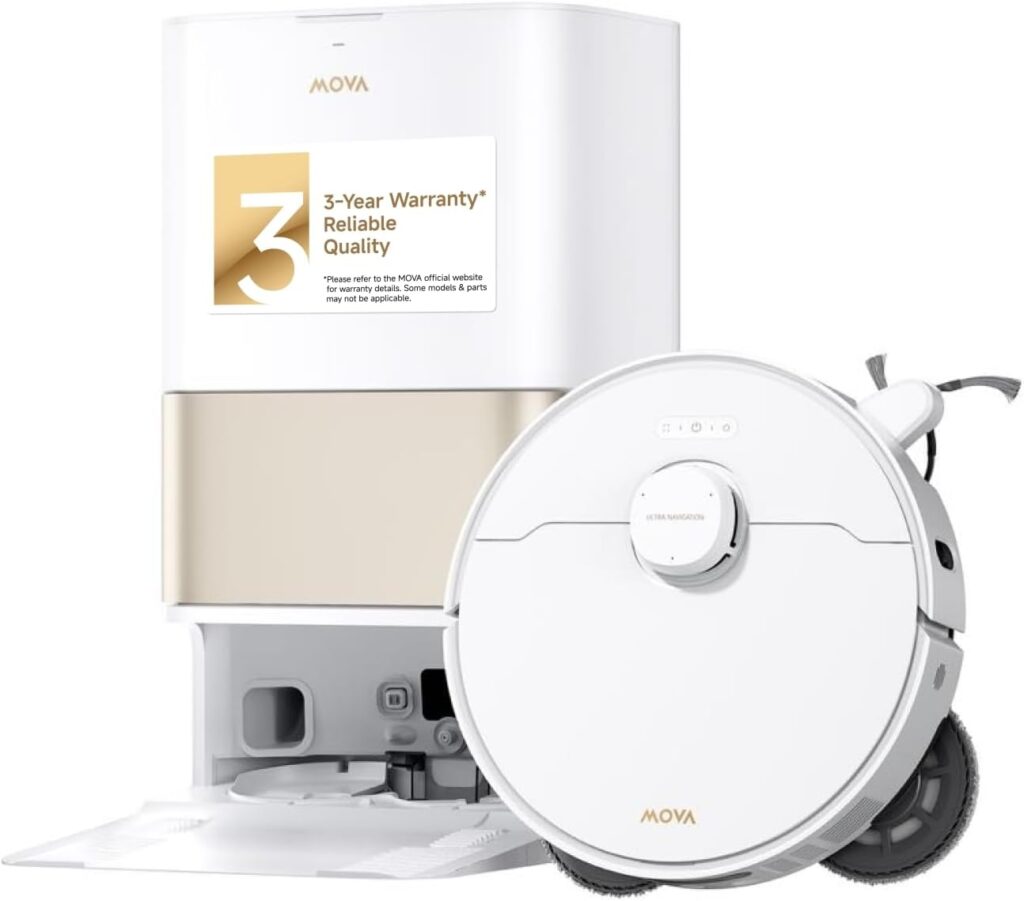
The robot itself arrives in a smooth matte grey finish with a low-profile circular design. Additionally, the auto-empty station stands taller than you might expect, at around 40 centimetres high. So plan your placement before committing, because the station needs both floor space and wall clearance.
Setup Experience
The setup is straightforward for a product at this level. So you download the MOVA app, connect to your 2.4GHz Wi-Fi network, and follow the on-screen prompts. The robot completes its first mapping run independently, covering a medium-sized home in around 30 minutes. However, the initial run does require the space to be reasonably clear for the most accurate map. Overall, the full first-time setup takes under an hour, which is competitive for a machine with this feature set.
Design and Build Quality
The V50 Ultra has a well-finished, cohesive feel that holds up under close inspection. Moreover, the top cover sits flush with no obvious gaps or flex, and the LiDAR turret integrates cleanly into the profile rather than sitting awkwardly on top. Consequently, the overall silhouette is tidier than many competitors at this price point.
Materials and Construction
The outer casing uses hard ABS plastic throughout. Additionally, the underside features soft rubber side brushes and a main roller brush that feels appropriately robust for daily use. The auto-empty station uses a matching matte finish that pairs well with the robot. However, the top surface does attract fingerprints, so a quick wipe-down keeps it looking sharp.
Aesthetics
The neutral grey colourway works well in most home environments. Furthermore, the station design avoids the industrial bulk that affects some self-emptying systems. Equally, the MOVA branding is subtle rather than prominent, which will suit those who prefer a cleaner look in their living space.
Key Features
LiDAR Navigation and Smart Mapping
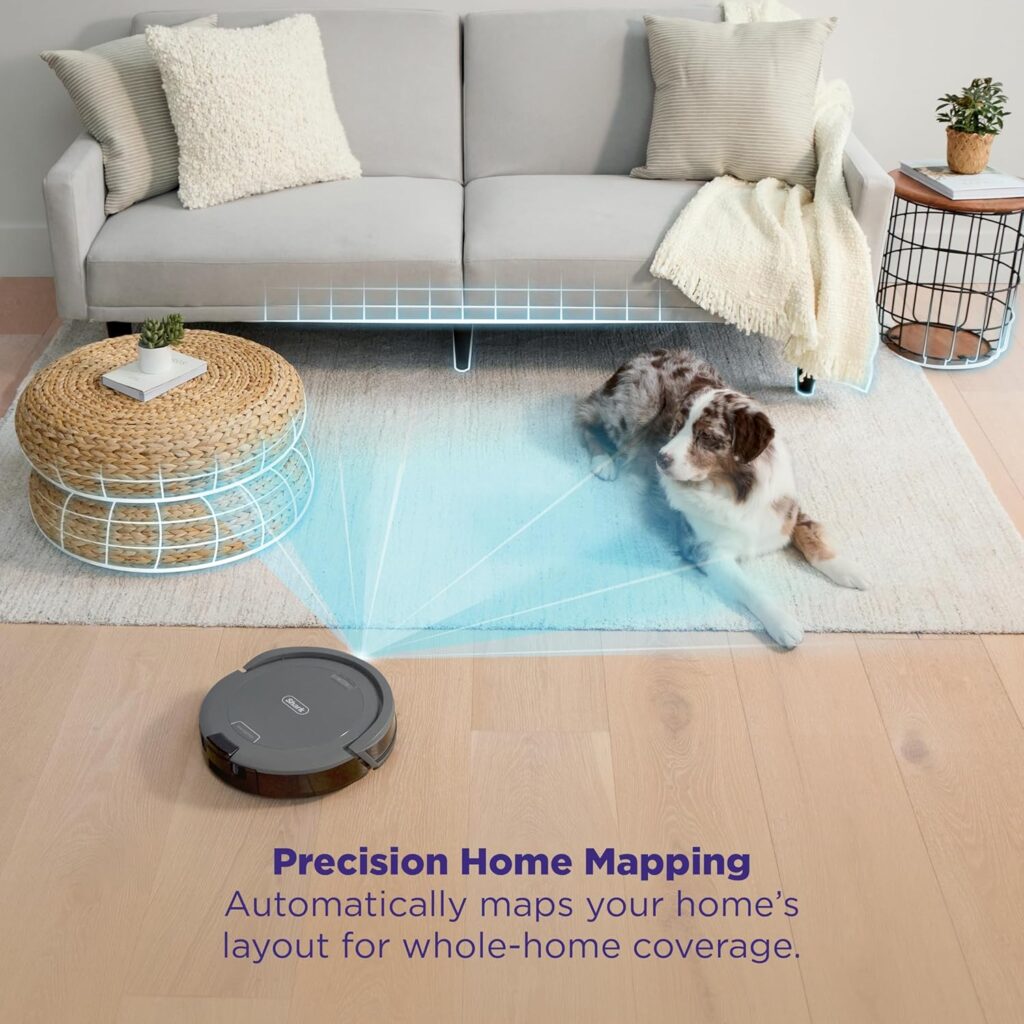
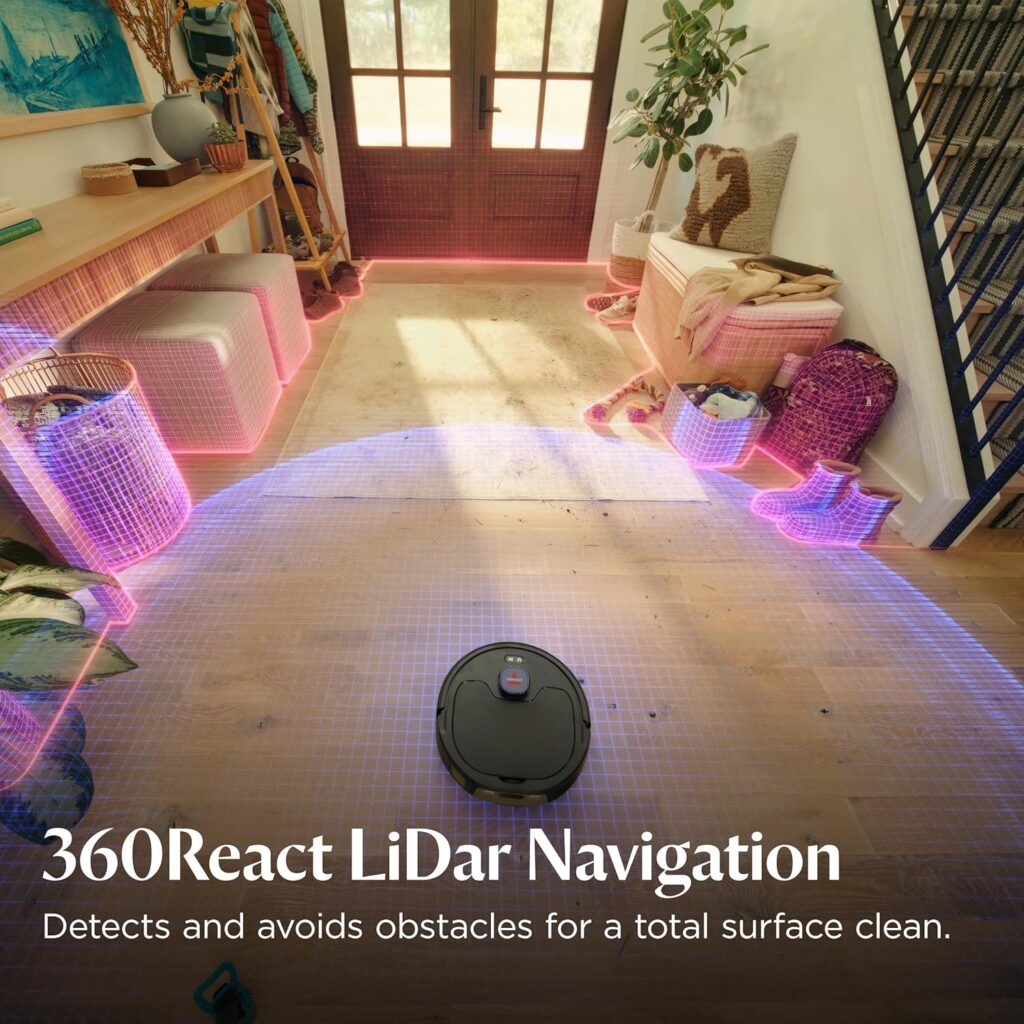
The V50 Ultra uses rotary LiDAR for navigation, which builds an accurate floor plan on the first run. Consequently, the robot follows systematic cleaning paths rather than random patterns, covering your space efficiently without doubling back unnecessarily. The robot supports multi-floor mapping independently, so it learns each level of your home as a separate layout. Furthermore, the app lets you set no-go zones, virtual walls, and room-specific cleaning schedules with straightforward controls.
High-Power Suction with Auto-Boost
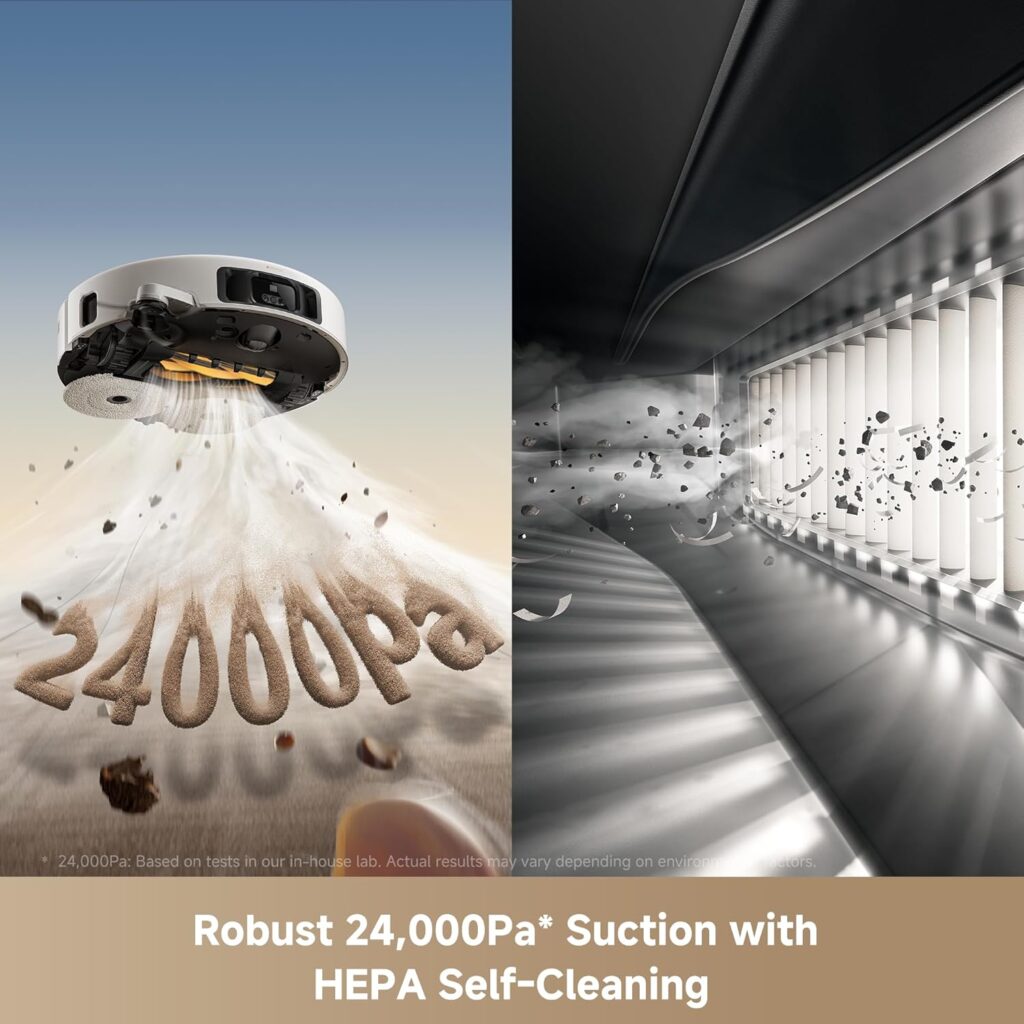
Suction reaches up to 8,000Pa in maximum mode. However, running at full power draws significantly more battery, so the app offers quiet, standard, strong, and max modes to balance performance against runtime. Additionally, the robot detects carpet automatically and boosts suction on transition, which is a genuinely useful feature rather than a marketing talking point.
Auto-Empty Station
The auto-emptying base evacuates the onboard dustbin after each clean cycle. Moreover, the disposable bags inside the station hold around 2.5 litres of debris, meaning you only change the bag every 30 to 60 days under normal household use. The evacuation process runs for roughly eight seconds and is loud during that window. So position the station away from bedrooms if noise sensitivity matters to you.
Auto-Lift Mopping System
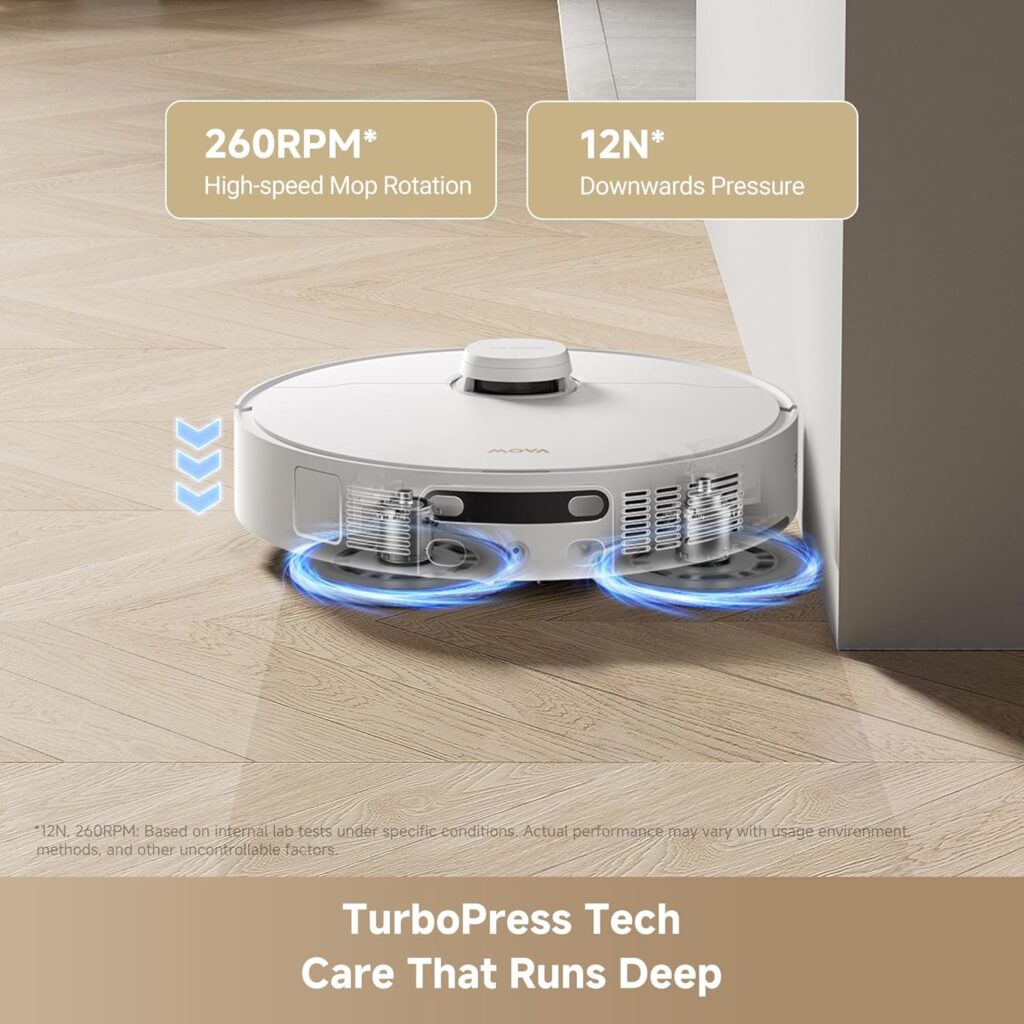
The V50 Ultra lifts its mop pad automatically when it detects carpet. Furthermore, this prevents the wet dragging across rugs that has plagued earlier-generation combo robots. The water tank holds around 200ml and feeds a consistent drip system rather than relying on passive fabric absorption. Additionally, you can adjust water flow through the app between light dampening and moderate wet cleaning.
App Control and Smart Home Integration
The MOVA app is clean and functional without being overwhelming. Additionally, the robot pairs with Amazon Alexa and Google Assistant for voice commands. Scheduling, zone targeting, and cleaning history all live in the app dashboard. However, the depth of customisation falls short of the most granular controls available from top-tier competitors.
On smooth, hard floors, the V50 Ultra performs very well. So, pet hair, dust, and fine debris collect efficiently, and the systematic navigation leaves no obvious missed strips along the walls or under furniture. Furthermore, the soft roller brush attachment reduces the risk of scattering lightweight debris before the suction captures it.
Low-Pile Carpet
On low-pile carpet, the auto suction boost kicks in quickly and handles embedded pet hair with genuine effectiveness. Moreover, the transition between the hard floor and carpet is smooth, and the mop lifts reliably every time. However, the robot slows noticeably on thicker rug surfaces, and deep agitation is not this machine’s strength.
Mopping Performance
The mopping function delivers a solid maintenance-level clean on hard floors. Additionally, everyday footprints, surface dust, and light grime respond well to a single pass. However, dried spills and stubborn marks require pre-treatment or manual attention. So treat the mop function as a daily upkeep tool rather than a deep cleaning solution.
Navigation and Obstacle Handling
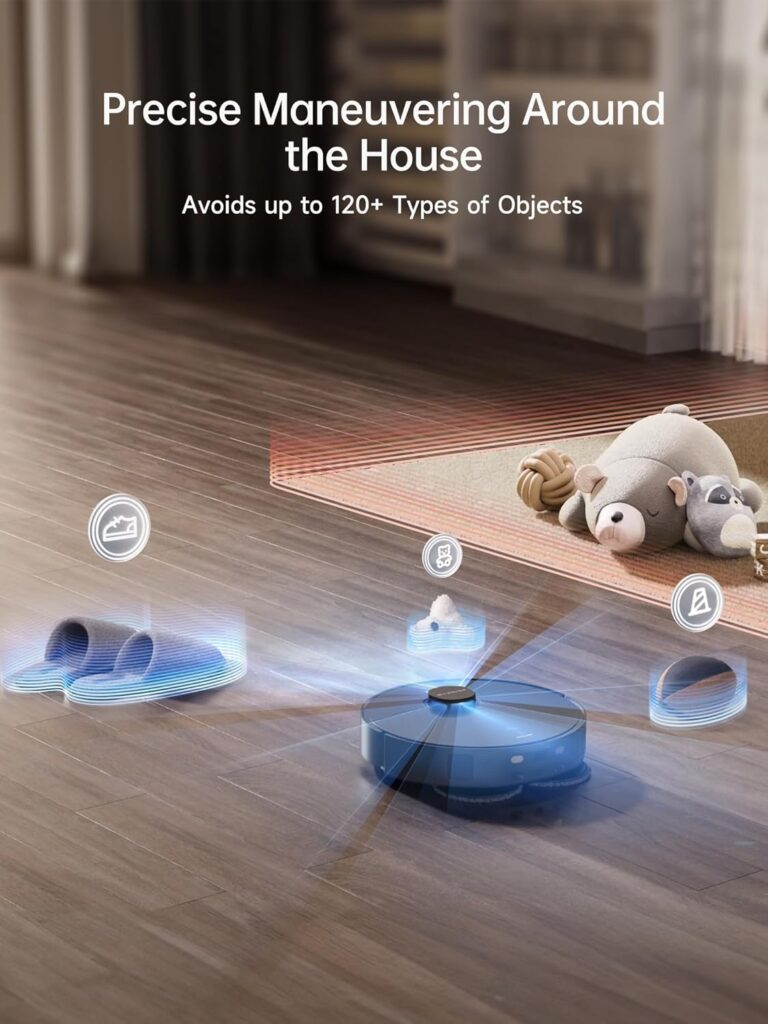
The LiDAR mapping keeps the robot on track consistently in open and semi-furnished spaces. Furthermore, standard furniture legs and doorway thresholds present no meaningful challenge. However, low-profile dark-coloured obstacles, such as cable runs and charging bricks on the floor, occasionally cause the robot to slow or redirect unexpectedly. Consequently, basic cable management before each cleaning session improves results.
Technical Specifications
Specification
Detail
Suction Power
Up to 8,000Pa
Battery Capacity
5,200mAh
Runtime
Up to 180 minutes (standard mode)
Charging Time
Approximately 4 hours
Robot Dustbin Capacity
400ml
Auto-Empty Bag Capacity
2.5 litres
Water Tank Capacity
200ml
Navigation System
Rotary LiDAR
Wi-Fi Connectivity
2.4GHz
Noise Level
Approx. 65dB (standard mode)
Robot Weight
Approx. 3.9kg
Robot Dimensions
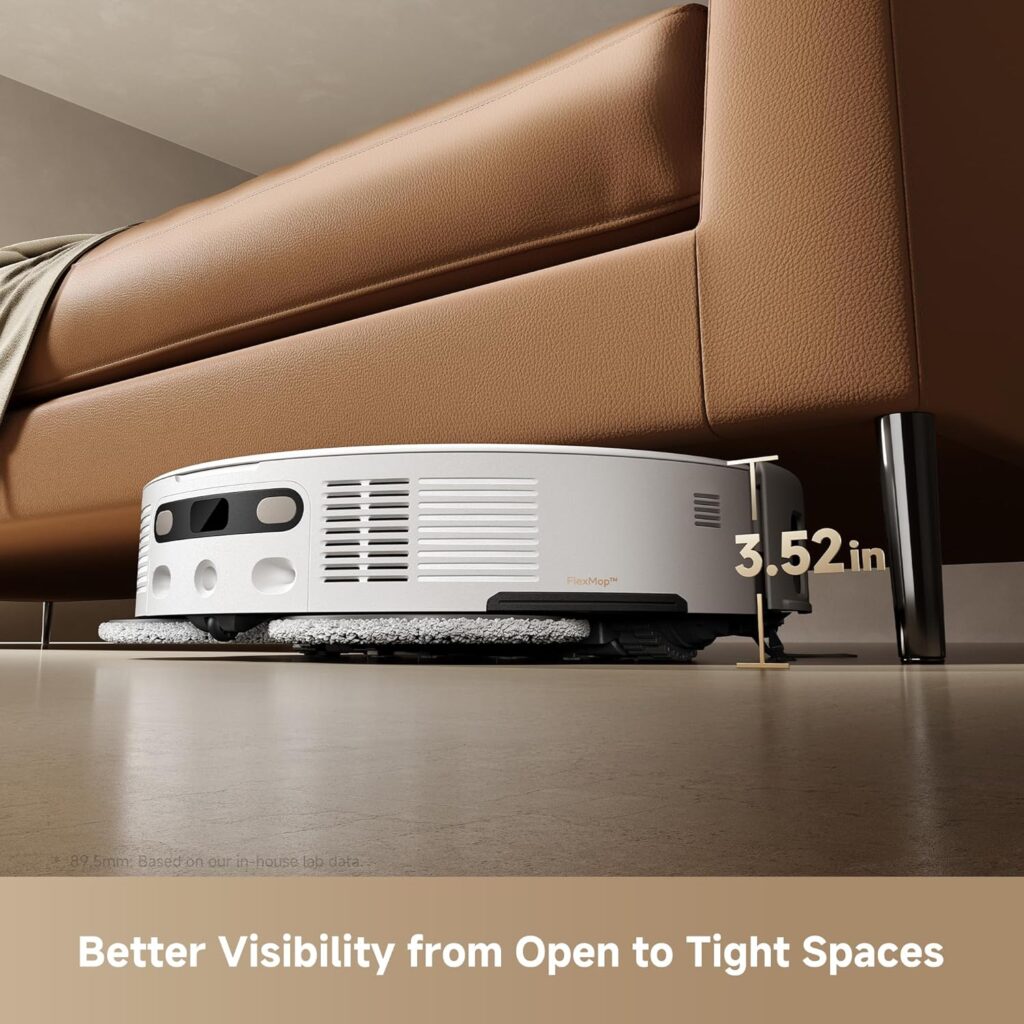
35cm diameter x 9.5cm height
Voice Assistant Support
Amazon Alexa, Google Assistant
Warranty
12 months
Accessories and Tools Included
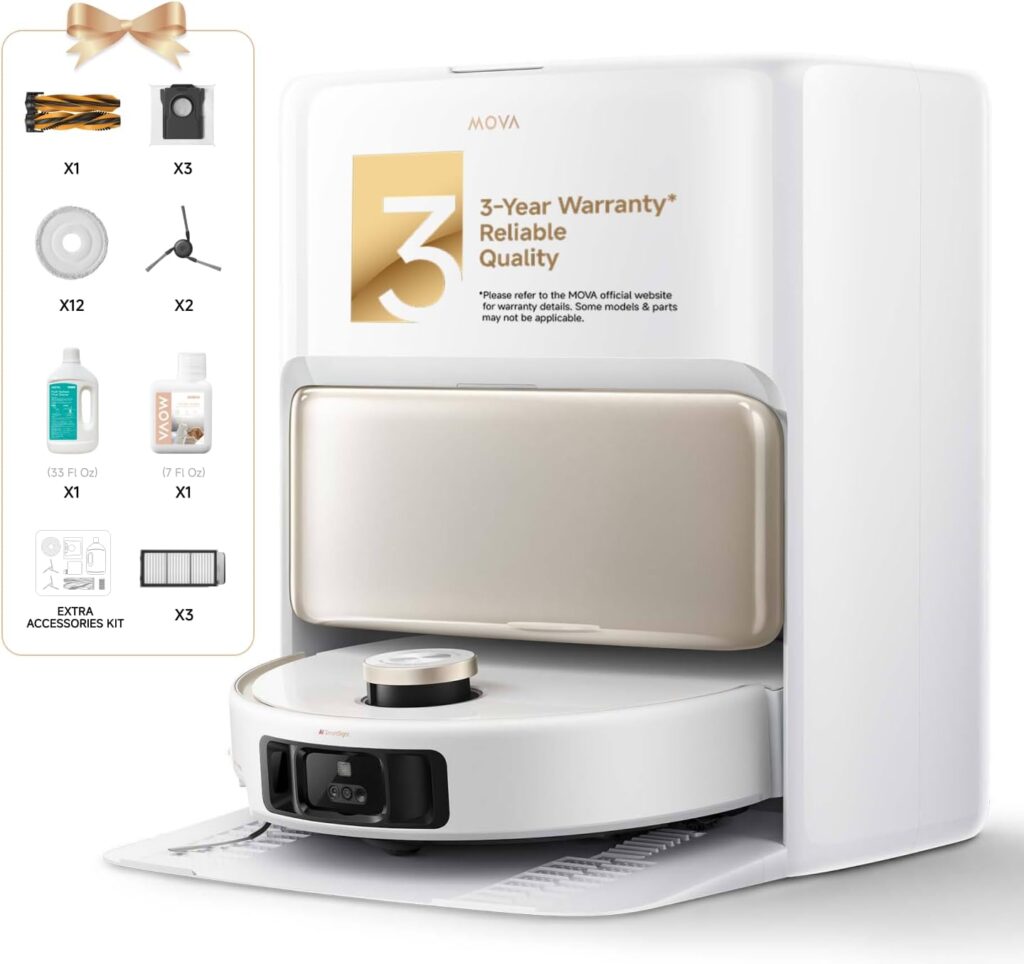
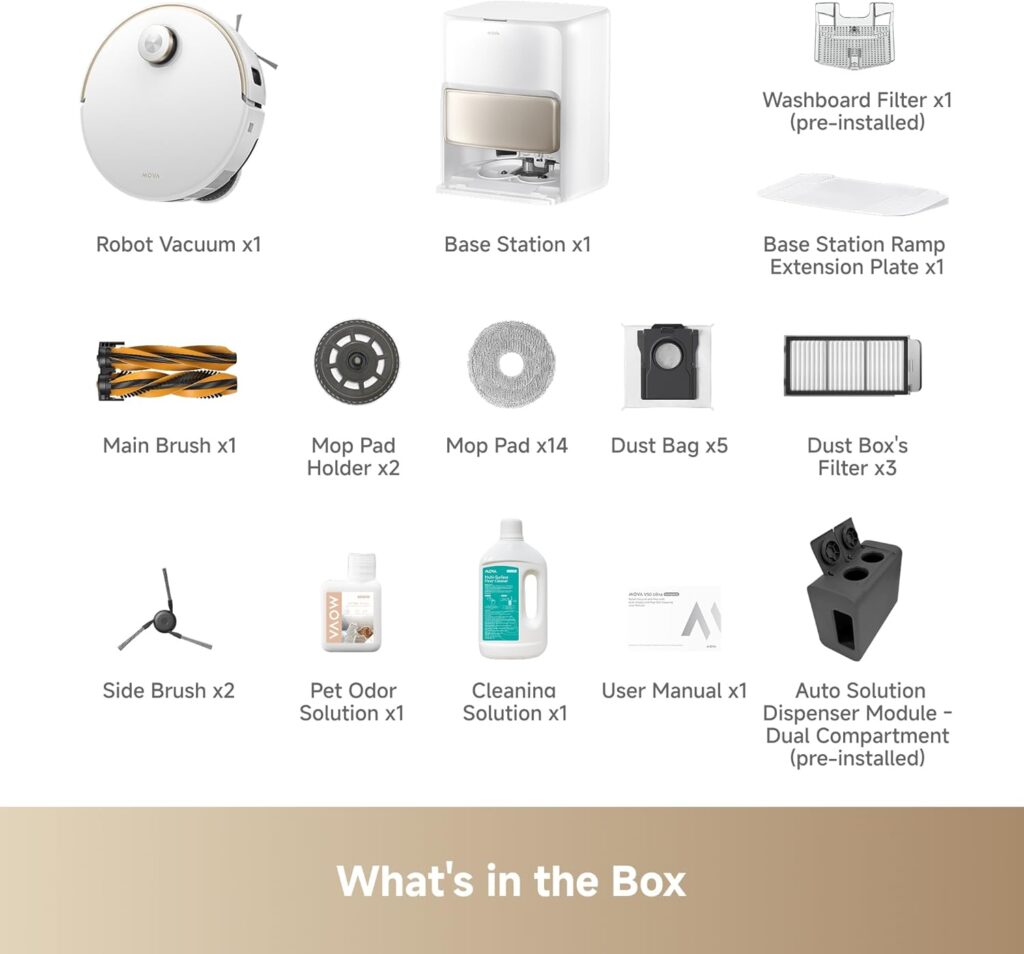
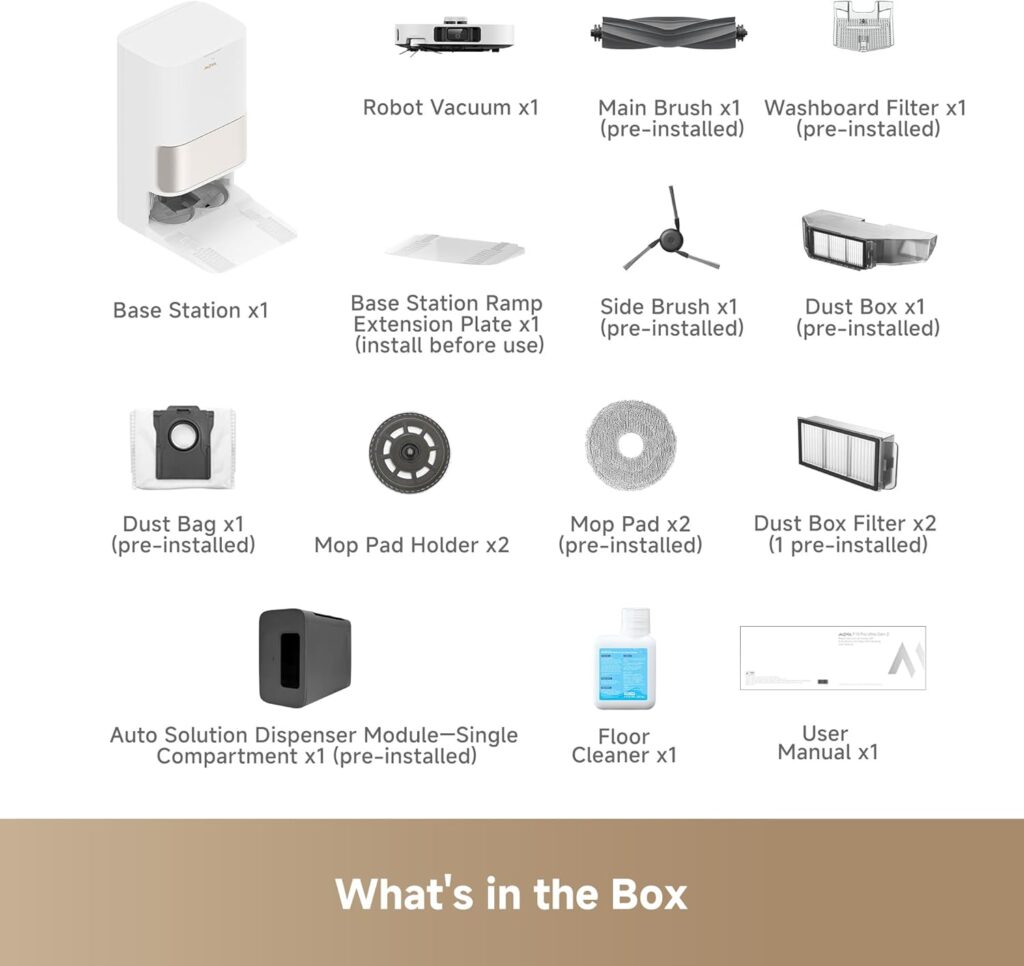
The V50 Ultra ships with a solid accessory package, and everything you need to begin cleaning comes in the box on day one.
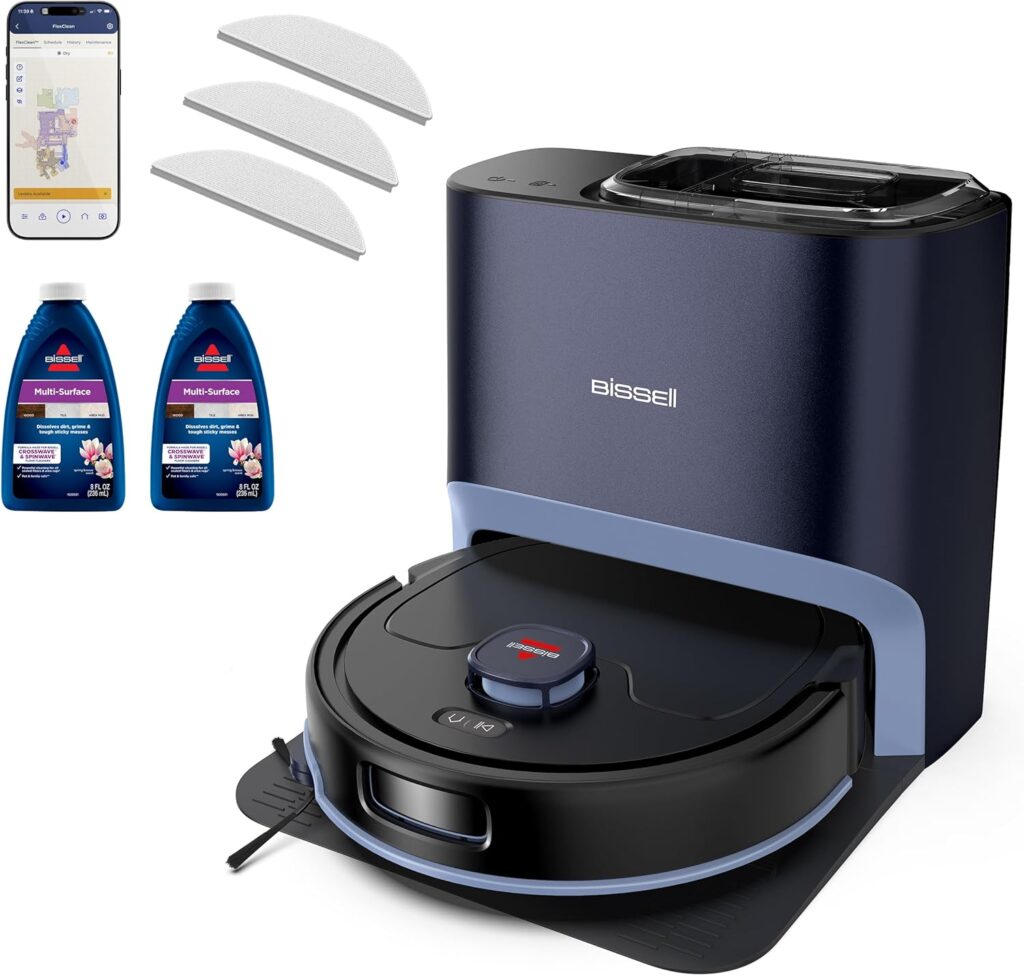
Auto-empty station with starter bag. Additionally, a spare replacement bag is included, giving you immediate flexibility before your first reorder.
Side brushes (x2, one set installed, one spare). So you have a replacement set from day one, which saves an early parts order.
Main roller brush (pre-installed). Furthermore, the roller comes ready to use straight out of the box.
Mop pads (x2, one attached, one spare). Additionally, the spare pad means you can rotate between uses rather than waiting for one to dry.
Cleaning tool. This small comb handles brush roll hair removal quickly and cleanly.
Station power cable. Moreover, the cable runs to around 1.8 metres, giving you reasonable placement flexibility.
However, replacement bags are a recurring consumable cost. Additionally, side brushes and mop pads will need replacing over time. So budget a small annual amount for consumables when calculating the total cost of ownership.
Accurate LiDAR navigation maps rooms reliably from the first run. Furthermore, multi-floor mapping makes it genuinely practical for multi-storey homes without any manual reconfiguration.
Auto-lift mop prevents the carpet from soaking entirely. Additionally, this feature solves a real problem that older combo robots handled poorly, and the V50 Ultra executes it consistently.
8,000Pa suction handles pet hair on both hard floors and low-pile carpet. Moreover, the auto-boost on carpet adds meaningful performance without requiring manual mode switching.
Auto-empty station reduces hands-on interaction to once every few weeks. So the practical convenience benefit is genuine rather than theoretical.
Clean app with reliable voice assistant integration. Additionally, scheduling and zone control work consistently through the MOVA platform.
Competitive price against similar-spec machines from larger names. Furthermore, the V50 Ultra delivers a strong feature set at a price that represents real value in this category.
Cons
The mop system is maintenance-level only. However, it will not shift dried-on spills or heavy soiling without manual pre-treatment, so expectations need calibrating accordingly.
App controls are less granular than top-tier rivals. Additionally, power users who want precise suction mapping by room zone may find the options limited.
Obstacle avoidance struggles with low, dark-coloured objects. Consequently, cable management on the floor matters more with this robot than with models that combine LiDAR with camera-assisted detection.
Auto-empty evacuation is loud. So if the station is in a shared living space, the eight-second noise burst after each cleaning is worth accounting for in your placement decision.
Who This Product Is Best For
Ideal Users
The V50 Ultra suits pet owners with predominantly hard floors and some low-pile carpet. Moreover, anyone in a medium to large-sized home who wants daily maintenance handled automatically will benefit significantly from the auto-empty station. Additionally, multi-floor households will find the independent floor mapping genuinely practical rather than a feature they never use.
Who Should Look Elsewhere
However, if your home is primarily thick-pile or shag carpet, this is not the right machine. Furthermore, buyers who need the mop to handle grout lines, heavy soiling, or dried spills will be disappointed by what is a light-duty mopping system. Additionally, those who rely heavily on granular app control should consider alternatives with more sophisticated software platforms.
Alternative Uses and Versatility
The V50 Ultra handles more than routine daily maintenance. Furthermore, scheduling it to run during your commute means your floors are clean before you return home, without any intervention on your part. Additionally, running a full sweep before guests arrive takes the task off your mental list entirely. So the combination of vacuuming and mopping in a single pass saves meaningful time across the working week, particularly in open-plan homes where the robot can cover significant ground without interruption.
Value for Money and Comparison
At $799 to $899, the MOVA V50 Ultra occupies the upper-mid tier of the robot vacuum market. Furthermore, it delivers a feature set that competes with machines priced $200 to $400 higher. However, it does not match the very top flagships for camera-assisted obstacle avoidance or adjustable mop pressure control.
That full breakdown gives you side-by-side context on pricing, navigation technology, and mopping performance across the entire field.
Additionally, RTINGS’ independent vacuum testing offers objective performance data that complements real-world assessments like this one.
Maintenance and Long-Term Ownership
Daily and Weekly Upkeep
The auto-empty station handles dustbin evacuation after every clean, which removes the most frequent maintenance task from your routine. However, the mop pads need rinsing or replacing after every two to three mopping sessions. Additionally, the side brushes collect hair and debris and should be checked weekly in homes with heavy pet shedding. So maintenance is light compared to a traditional robot vacuum, but it is not completely hands-free.
Long-Term Reliability
The main roller brush and side brushes will need replacing every six to twelve months, depending on usage. Furthermore, replacement bags for the station are an ongoing consumable cost. According to MOVA’s official product page, the V50 Ultra carries a 12-month warranty with customer support available for troubleshooting and parts. However, as a newer brand in the UK and US markets, long-term reliability data is still accumulating, which is a reasonable consideration before committing at this price.
Reasons to Buy This Product
You have pets that shed daily and want maintenance handled automatically. Furthermore, the combination of strong suction and auto-empty keeps pet hair from building up without daily effort from you.
Your home is predominantly hard floors with some low-pile carpet. Additionally, the auto-lift mop and suction boost combination handles this mixed-surface setup effectively in a single cleaning session.
You want hands-off cleaning for weeks at a time. So the 2.5-litre auto-empty station meaningfully reduces your direct involvement in the day-to-day routine.
You are comparing premium features at a mid-premium price. Moreover, the V50 Ultra delivers a specification that rivals machines priced considerably higher from better-known names.
Your home has multiple floors with different layouts. Furthermore, independent multi-floor mapping means the robot adapts correctly to each level without manual reset or reconfiguration.
Reasons to Skip This Product
Your home is primarily thick-pile or shag carpet. However, the V50 Ultra is not built for deep agitation on heavy pile, and performance on these surfaces will disappoint.
You need a serious mopping solution for heavy soiling. Additionally, if you expect the mop to handle grout, dried spills, or sticky residue, this system will fall short of those expectations.
Low, dark objects are common across your floors. Furthermore, if cable management is not something you plan to address, a model with camera-assisted obstacle avoidance will handle your space more reliably.
Long-term brand reliability data matters more than price. So if you want the reassurance of a brand with a multi-year track record in the robot vacuum category, a more established name may offer greater peace of mind at a similar investment.
Conclusion
Our Honest Verdict
The MOVA V50 Ultra Complete Robot Vacuum is a compelling option in what is genuinely a crowded category. Furthermore, it delivers accurate LiDAR navigation, strong pet hair suction, a functioning auto-lift mop, and hands-free emptying at a price that undercuts many comparable rivals by a meaningful margin. Moreover, the real-world performance on hardwood and low-pile carpet is solid rather than merely acceptable. That is a more honest summary than many machines in this tier deserve.
Who Should Buy the MOVA V50 Ultra
This robot suits pet owners in medium to large homes with predominantly hard floors. Additionally, anyone who wants daily cleaning handled without daily involvement will get genuine value from the auto-empty station and systematic navigation. However, buyers with thick-pile carpets, serious mopping needs, or a preference for a brand with a longer-established track record should weigh those factors carefully before committing.
Final Thoughts and Next Steps
The MOVA V50 Ultra Complete Robot Vacuum punches above its price in the areas that matter most for everyday pet hair management on hard floors. Additionally, the auto-lift mop and auto-empty combination genuinely reduces how often you need to intervene in your cleaning routine. So if the feature set and price point align with your situation, this is a machine worth taking seriously.
For technical background on why filtration quality matters when managing pet dander, the EPA’s guide to HEPA filtration explains what sealed filtration actually does and why it matters for allergy sufferers in the home.
The 10 Best Robot Vacuums for Pet Hair on Hardwood in 2026
Why This Decision Matters More Than You Think
Finding the best robot vacuum for pet hair on hardwood in 2026 is genuinely more complicated than it should be. So, I’ve spent a lot of time researching, comparing, and pulling apart the specifications across the full market to build a list that actually makes sense. Furthermore, hardwood floors punish the wrong robot vacuum in ways that carpet never does. An overly aggressive brush roll scatters debris sideways. A poorly designed base scratches the finish. A weak suction motor leaves the fine dander that pet owners need to remove most urgently.
The Real Problem With Pet Hair on Hardwood
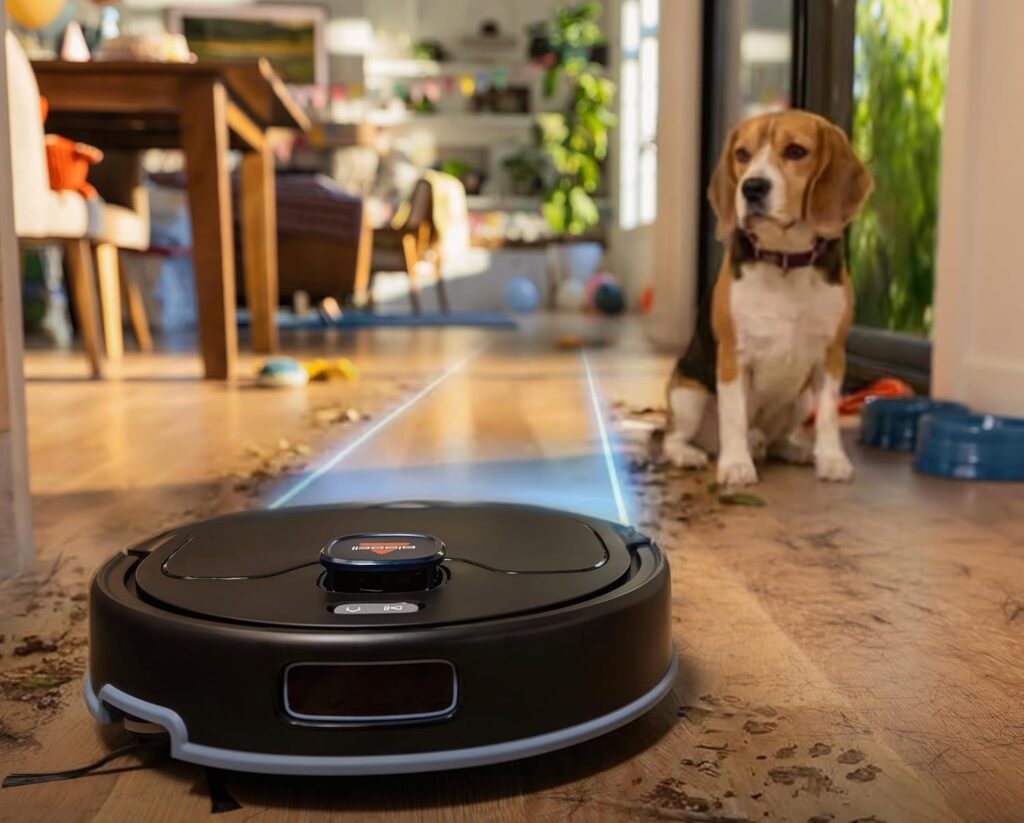
Pet hair on hardwood is a specific challenge. Additionally, static electricity causes fine dander and hair to cling to smooth surfaces rather than sitting loosely on top of them. So, the best robot vacuums for this task combine strong suction with soft brush roll designs and smart navigation that avoids pushing debris into corners rather than collecting it. Furthermore, mopping capability adds a second layer of cleaning that carpet-focused robots simply don’t offer.
In this guide, I’ve ranked 10 of the best robot vacuums available on Amazon right now, covering every price point from entry-level through to full premium. So, whether your budget is $200 or closer to $1,500, there’s a strong option here for your specific situation. Furthermore, each entry includes key features, technical specifications, the accessories included, honest pros and cons, and a clear summary of who each machine suits best. All prices should be verified on Amazon before purchasing, as prices change regularly.
According to data published by RTINGS.com, robot vacuums with LiDAR-based navigation clean hardwood floors more thoroughly than camera-only alternatives, covering more ground per session and leaving fewer missed patches. That finding shapes several of the recommendations in this list.
1. MOVA V50 Ultra Complete Robot Vacuum and Mop
The MOVA V50 Ultra sits at the top of this list for its combination of strong suction, intelligent navigation, and a comprehensive all-in-one base station that handles emptying, washing, and drying the mop automatically. So, for pet owners who want a genuinely hands-off cleaning experience on hardwood floors, this machine addresses most of the key requirements in one package.
Key Features
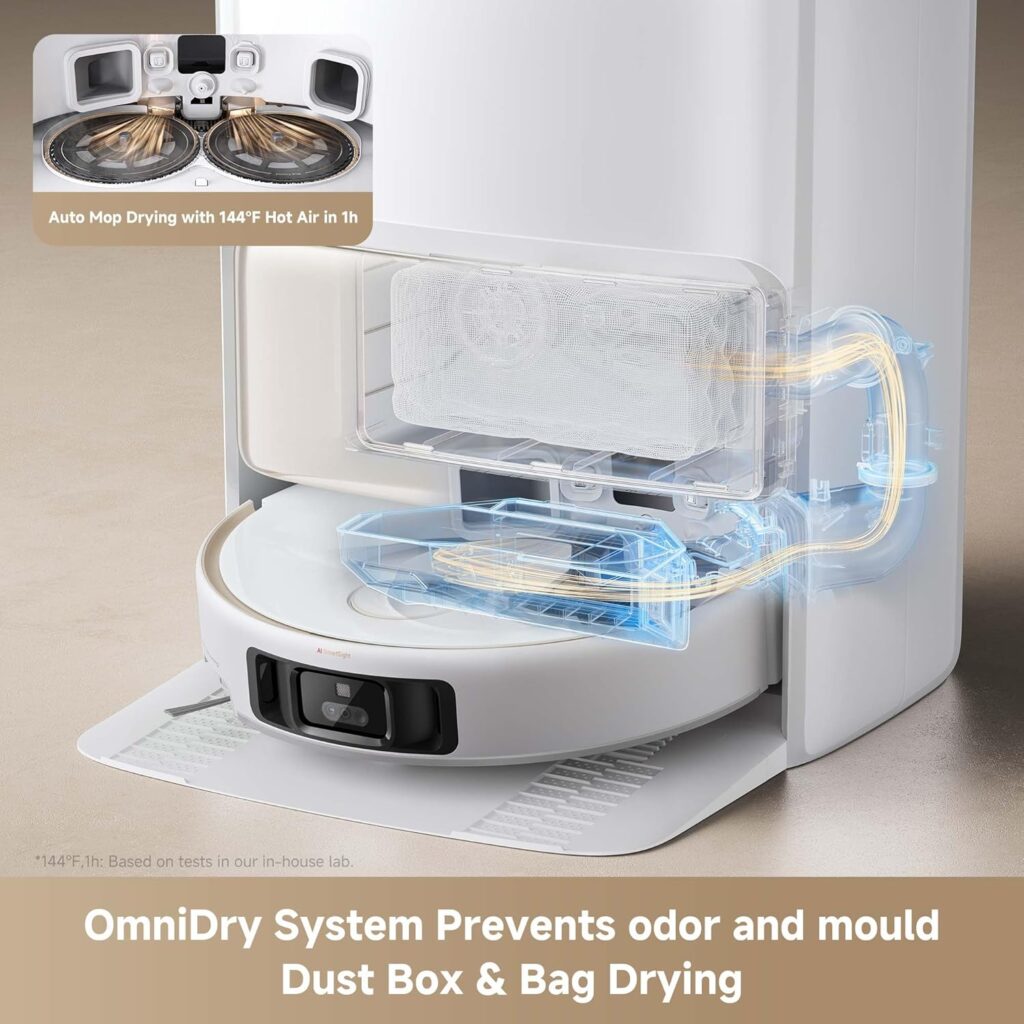
The V50 Ultra uses LiDAR navigation to map your home and plan efficient, systematic cleaning routes. Furthermore, the mop lift function raises the mopping pad automatically when the robot detects a carpeted area. So, the machine transitions between floor types without user intervention. Additionally, the auto-empty base station removes the collected debris from the dustbin, washes the mop head, and dries it with warm air to prevent bacterial growth.
The suction power reaches around 7,000 Pa, which is strong enough to capture fine pet dander and hair from smooth hardwood surfaces. Furthermore, the soft rubber roller brush avoids scattering debris sideways in the way that bristle-only brush rolls tend to do on bare floors.
Technical Specifications
Specification
Detail
Suction Power
Up to 7,000 Pa
Navigation
LiDAR with multi-floor mapping
Dustbin Capacity
0.4 litres (robot)
Base Station
Auto-empty, mop wash and dry
Mop Lift Height
Yes (automatic)
Runtime
Up to 180 minutes
App Control
Yes (Wi-Fi)
Voice Control
Alexa and Google Home
Approx. Price
$799 to $899
Accessories and Tools Included
The MOVA V50 Ultra ships with the robot unit, the all-in-one base station, a water tank for the base, a mopping pad set, a cleaning brush, and a spare side brush. Additionally, the base station includes its own water supply and wastewater tank for the mop wash cycle.
Pros
Strong suction at 7,000 Pa handles fine pet dander on hardwood effectively. Furthermore, the soft rubber brush roll prevents the debris scattering that bristle designs cause on smooth floors.
Automatic mop lift protects carpeted areas during a mixed-floor clean. So, you don’t need to set virtual no-go zones every time the robot transitions between floor types.
The all-in-one base station manages emptying, washing, and drying without user involvement. Additionally, the warm-air drying cycle prevents mildew from developing in the mop pad between sessions.
Cons
The base station requires a dedicated floor space near a power socket. However, most households can accommodate the footprint without significant disruption. So, it’s a planning consideration rather than a dealbreaker.
The price sits above most entry-level and mid-range robot vacuums. Furthermore, buyers who don’t need the automatic mop-washing feature can save money by considering the lower-ranked options on this list.
Reasons to Buy
So, the MOVA V50 Ultra suits buyers who want a fully automated, self-managing robot vacuum and mop for mixed hardwood and carpet homes with regular pet shedding. Furthermore, it suits buyers who travel frequently or simply want to remove the cleaning routine from their schedule entirely.
Best Suited For
This machine is ideal for medium to large homes with a mix of hardwood and carpet, at least one shedding pet, and a budget that allows for a premium automated cleaning system.
2. ECOVACS DEEBOT X9S PRO Omni Robot Vacuum and Mop
The ECOVACS DEEBOT X9S PRO Omni is one of the most feature-rich robot vacuums available on Amazon in 2026. So, it combines very strong suction, precision navigation, and a comprehensive Omni base station into a single premium package that competes at the top of its category.
Key Features
The X9S PRO uses ECOVACS’s TrueDetect 3D obstacle avoidance technology, which identifies and navigates around objects on the floor in real time. Furthermore, the OZMO Turbo mopping system applies water under pressure to mop pads, delivering a more thorough wipe on hardwood than passive mopping designs. So, pet paw prints and surface residue come up more cleanly than with standard wet mopping. Additionally, the Omni base station handles auto-empty, mop washing, mop drying, and fresh water supply automatically.
The suction power reaches up to 12,000 Pa, which is among the highest in the consumer robot vacuum category. So, fine pet dander embedded in floor grain and along skirting board edges is captured more thoroughly than lower-powered alternatives manage.
Technical Specifications
Specification
Detail
Suction Power
Up to 12,000 Pa
Navigation
TrueDetect 3D obstacle avoidance, LiDAR
Dustbin Capacity
0.42 litres (robot)
Base Station
Omni: auto-empty, mop wash, mop dry
Mop System
OZMO Turbo pressurised mopping
Runtime
Up to 260 minutes
App Control
Yes (ECOVACS Home app)
Voice Control
Alexa and Google Home
Approx. Price
$1,299 to $1,499
Accessories Included
The X9S PRO ships with the robot unit, the Omni base station, a clean water tank, a dirty water container, two mopping pads, a dustbag set for the base, and a cleaning tool. Full specifications and support information are available on the ECOVACS official website.
Pros
12,000 Pa suction is one of the highest available in consumer robot vacuums. So, fine pet dander and hair in the floor grain and along edges are captured more reliably than on lower-powered machines.
TrueDetect 3D avoids cables, small toys, and pet items without manual mapping of obstacles. Furthermore, that intelligence reduces the frequency of stuck-robot situations during automated sessions.
OZMO Turbo pressurised mopping delivers a noticeably cleaner result on hardwood than passive mopping. Additionally, it reduces the need for a separate mopping session after vacuuming.
Cons
The price is at the top end of the consumer robot vacuum market. However, the feature set at this price is very comprehensive. So, the premium reflects genuine capability rather than branding alone.
The Omni base station is large and requires a dedicated corner or wall space. Furthermore, homes with very limited floor space near sockets may find placement challenging.
Reasons to Buy
So, the DEEBOT X9S PRO suits buyers who want the most thorough automated cleaning available for pet hair on hardwood at any price. Furthermore, it suits buyers with large, complex home layouts where obstacle avoidance and consistent coverage matter most.
Best Suited For
This machine is ideal for large homes with hardwood throughout, multiple shedding pets, and buyers who want a premium, low-maintenance automated system.
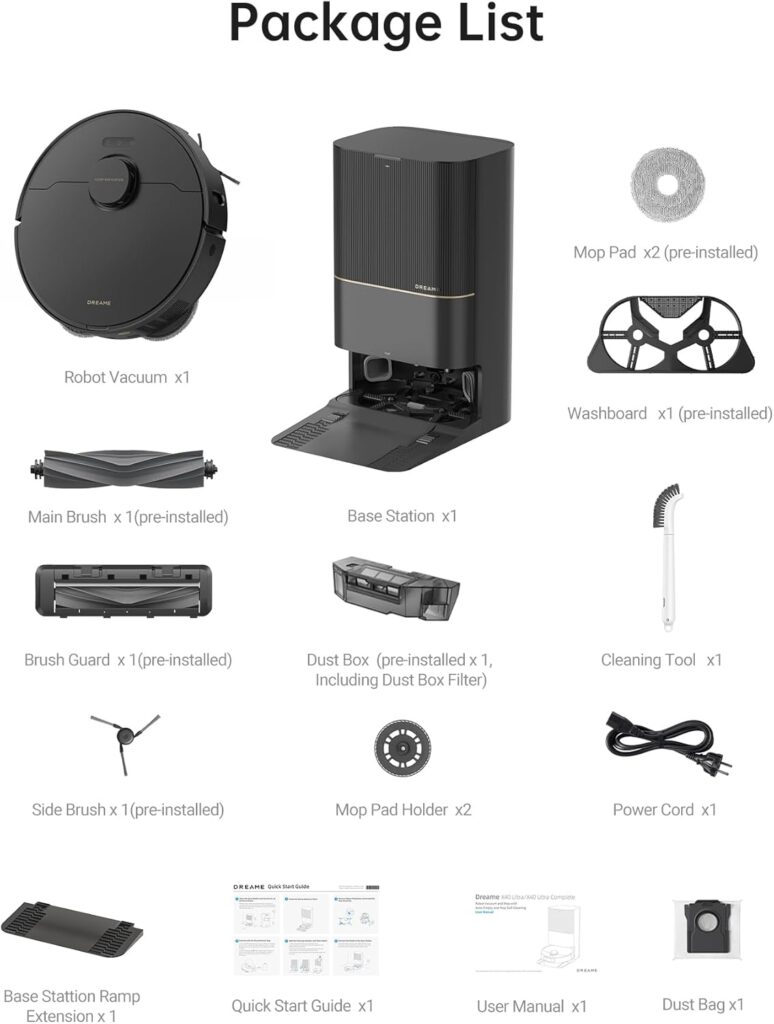
3. DREAME X40 Ultra Robotic Vacuum with Removable and Liftable Mop
The DREAME X40 Ultra is one of the most innovative robot vacuums in 2026 due to its FlexiArm side brush and removable, liftable mop design. So, it addresses two of the most persistent limitations in robot vacuum design: poor edge cleaning and mop contamination on carpet.
Key Features
The FlexiArm side brush extends further than standard fixed side brushes to reach along skirting boards and into corners. Furthermore, this extension matters considerably on hardwood floors where pet hair collects persistently along edges and in room corners. So, the X40 Ultra cleans the areas that standard robot vacuums consistently miss. Additionally, the mop lifts automatically by 18mm when the robot detects carpet. The mop also removes fully from the robot when returning to base, preventing a wet mop from sitting on the floor during charging.
Suction reaches up to 12,000 Pa. Furthermore, the auto-empty, auto-wash, and auto-dry base station completes the full self-maintenance cycle without user involvement. So, the machine is one of the most genuinely autonomous designs in the category.
Technical Specifications
Specification
Detail
Suction Power
Up to 12,000 Pa
Navigation
LiDAR with AI obstacle avoidance
Dustbin Capacity
0.35 litres (robot)
Base Station
Auto-empty, mop wash, mop dry
Mop Lift
18mm automatic lift, fully removable
Side Brush
FlexiArm extended reach
Runtime
Up to 210 minutes
App Control
Yes (DREAME app)
Approx. Price
$1,299 to $1,499
Accessories Included
The X40 Ultra includes the robot unit, the all-in-one base station, mopping pads, dustbags for the base, side brushes, and a cleaning tool.
Pros
FlexiArm side brush reaches further into edges and corners than standard fixed designs. So, pet hair accumulation along skirting boards is captured more thoroughly per session.
Automatic mop lift and full mop removal prevent carpet wetting and floor marking during charging. Furthermore, the 18mm lift is higher than most competitors, reducing the risk of mop contact with low-pile carpet edges.
12,000 Pa suction handles fine dander on hardwood comprehensively. Additionally, AI obstacle avoidance reduces stuck situations in homes with cables and small items on the floor.
Cons
The removable mop system requires occasional user intervention to reattach correctly. However, the process takes under a minute. So, it’s a minor inconvenience rather than a serious limitation.
Price sits at the premium end alongside the ECOVACS X9S PRO. Furthermore, buyers who don’t need the FlexiArm or removable mop can achieve strong hardwood cleaning at a significantly lower price with options further down this list.
Reasons to Buy
So, the X40 Ultra suits buyers who are specifically frustrated by robot vacuums missing edges and corners, or by mop contamination on carpeted areas. Furthermore, it suits large homes where edge cleaning thoroughness is a daily priority.
Best Suited For
This machine is ideal for open-plan homes with hardwood floors, persistent pet hair along skirting boards, and a mixed carpet-and-hardwood layout.
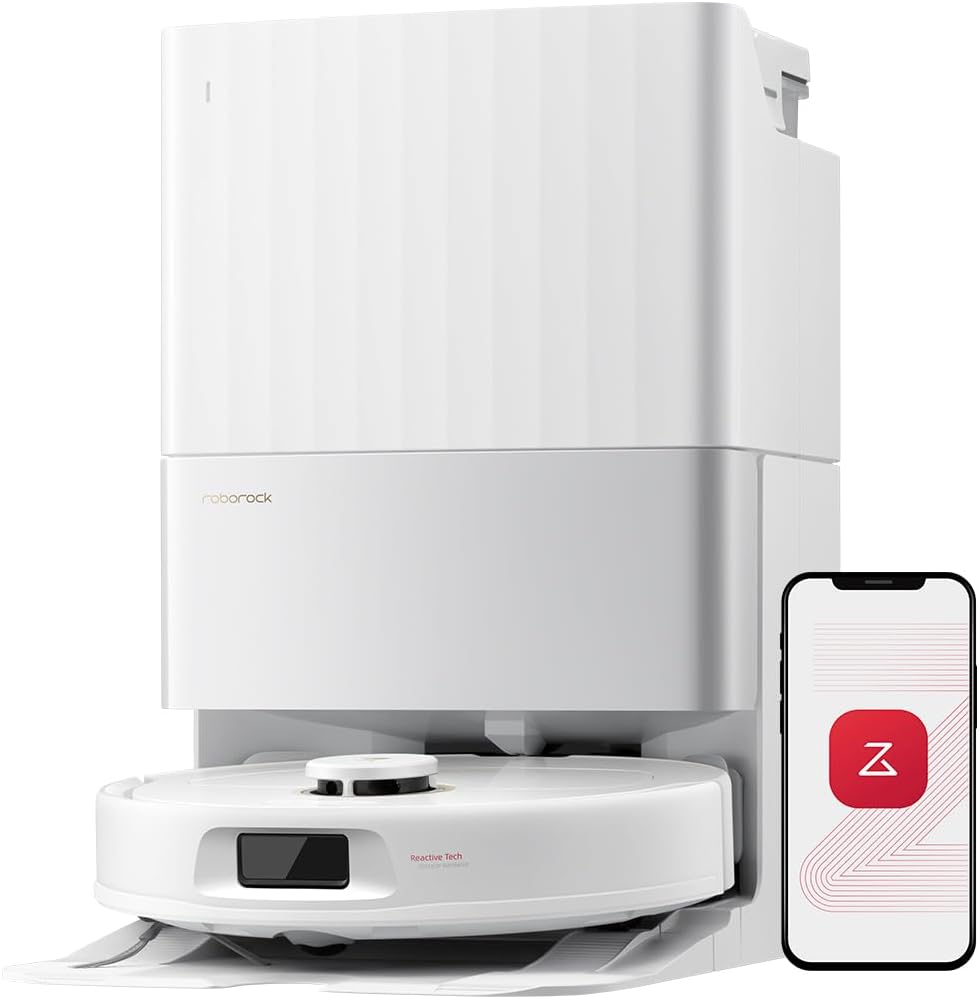
The Roborock Qrevo S5V combines very strong suction with Roborock’s ReactiveAI 2.0 obstacle avoidance and a smart base station at a price that sits below the top-tier premium options. So, it represents one of the strongest value positions on this list for buyers who want flagship-level performance without fully flagship-level pricing.
Key Features
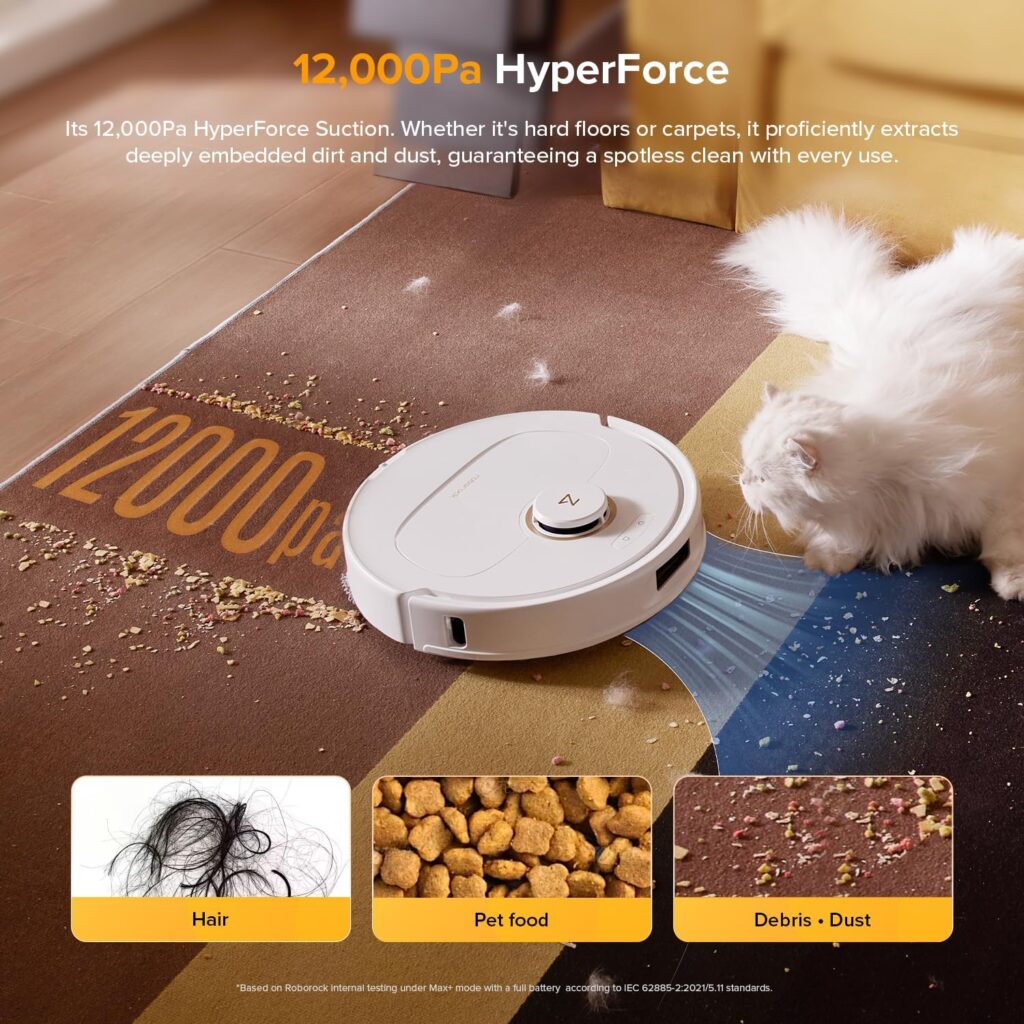
The Qrevo S5V reaches 11,000 Pa of suction, which handles pet hair and dander on hardwood floors with real thoroughness. Furthermore, ReactiveAI 2.0 uses a built-in camera and processing system to identify and avoid common household obstacles in real time. So, cables, shoes, and pet toys are navigated around rather than nudged or driven over.
The mop lifts automatically when carpet is detected. Additionally, the all-in-one base station handles auto-empty, mop washing, and mop drying without user input. Full product details are available through the Roborock official website.
Technical Specifications
Specification
Detail
Suction Power
Up to 11,000 Pa
Navigation
LiDAR with ReactiveAI 2.0
Dustbin Capacity
0.35 litres (robot)
Base Station
Auto-empty, mop wash, mop dry
Mop Lift
Yes (automatic)
Runtime
Up to 180 minutes
App Control
Yes (Roborock app)
Voice Control
Alexa and Google Home
Approx. Price
$799 to $999
Accessories Included
The Qrevo S5V ships with the robot unit, the all-in-one dock, mopping pads, dustbags, spare side brushes, and a cleaning tool.
Pros
11,000 Pa suction captures fine pet dander from hardwood grain and floor edges effectively. Furthermore, the performance sits close to the top-tier machines at a notably lower price.
ReactiveAI 2.0 navigates real household obstacles accurately without requiring manual no-go zone mapping for common items. So, the initial setup effort is lower than on machines that require full obstacle mapping before first use.
The base station price-to-capability ratio is one of the strongest on this list. Additionally, auto-empty, mop wash, and dry are all included at a price well below the premium tier.
Cons
The runtime at 180 minutes sits slightly below the top-tier machines for very large homes. However, most homes complete a full session well within that window. So, this limitation only affects the largest floor plans.
The camera-based obstacle detection struggles more than LiDAR-only designs in low-light conditions. Furthermore, evening cleaning sessions in unlit rooms can produce more missed obstacles than daytime sessions.
Reasons to Buy
So, the Qrevo S5V suits buyers who want near-premium suction and obstacle avoidance performance at a mid-to-upper price point. Furthermore, it suits Roborock users already familiar with the app and ecosystem.
Best Suited For
This machine is ideal for medium to large homes with hardwood floors, one or two shedding pets, and buyers who want a strong automated system without reaching the top of the market on price.
The DREAME L40s Ultra CE is a very capable, feature-rich robot vacuum that sits slightly below the X40 Ultra in the DREAME range but still delivers excellent pet hair performance on hardwood at a meaningful price saving. So, it suits buyers who want most of the X40 Ultra’s capability without the FlexiArm side brush or removable mop.
Key Features
The L40s Ultra CE reaches up to 12,000 Pa of suction, matching the top-tier machines on raw suction power. Furthermore, it uses LiDAR navigation with AI obstacle recognition for thorough, systematic coverage of complex floor plans. So, the robot maps the home on its first session and plans the most efficient route on every subsequent clean.
The mop lifts automatically on carpet detection. Additionally, the all-in-one base station completes auto-empty, mop washing, and drying without user involvement. So, the maintenance routine between sessions requires very little ongoing attention.
Technical Specifications
Specification
Detail
Suction Power
Up to 12,000 Pa
Navigation
LiDAR with AI obstacle avoidance
Dustbin Capacity
0.35 litres (robot)
Base Station
Auto-empty, mop wash, mop dry
Mop Lift
Yes (automatic)
Runtime
Up to 210 minutes
App Control
Yes (DREAME app)
Voice Control
Alexa and Google Home
Approx. Price
$999 to $1,199
Accessories Included
The L40s Ultra CE includes the robot unit, the all-in-one base station, mopping pads, dustbags, spare side brushes, and a cleaning tool.
Pros
12,000 Pa suction at a lower price than the X40 Ultra makes this one of the best value-for-suction options on the list. So, buyers who don’t need the FlexiArm design get the same raw cleaning power for less.
AI obstacle avoidance handles most common household floor obstacles without manual programming. Furthermore, the DREAME app provides detailed room mapping and zone-specific scheduling.
The 210-minute runtime suits large homes with extensive hardwood floor areas. Additionally, the base station manages all consumable tasks automatically between sessions.
Cons
Edge cleaning is less thorough than the X40 Ultra due to the standard fixed side brush. However, it outperforms most competitor machines in this price range on edge coverage. So, only buyers with persistent skirting board hair accumulation will notice the difference.
The price sits above the Roborock Qrevo S5V with broadly similar base station capabilities. Furthermore, buyers who prioritise suction power over DREAME’s specific app features may find Roborock’s value proposition more compelling.
Reasons to Buy
So, the L40s Ultra CE suits buyers who want full DREAME ecosystem integration, very strong suction, and a long runtime at a slightly lower price than the flagship X40 Ultra.
Best Suited For
This machine is ideal for large homes with predominantly hardwood floors, regular pet shedding, and buyers who want a comprehensive automated system with app-based scheduling control.
The Mova P10 Pro Ultra Gen 2 is a strong mid-to-upper range option that delivers reliable LiDAR navigation, solid suction power, and an all-in-one base station at a price below the flagship tier. So, it suits buyers who want a genuinely capable automated system without reaching the $1,000-plus bracket.
Key Features
The P10 Pro Ultra Gen 2 uses LiDAR navigation for systematic, room-by-room coverage of hardwood floors. Furthermore, suction reaches around 8,500 Pa, which handles regular pet hair and dander removal on smooth surfaces well. So, daily automated sessions keep hardwood floors visibly clean between manual cleans.
The mop system lifts automatically on carpet detection. Additionally, the all-in-one base handles auto-empty, mop washing, and drying. So, the machine requires minimal ongoing maintenance between cleaning sessions.
Technical Specifications
Specification
Detail
Suction Power
Up to 8,500 Pa
Navigation
LiDAR
Dustbin Capacity
0.35 litres (robot)
Base Station
Auto-empty, mop wash, mop dry
Mop Lift
Yes (automatic)
Runtime
Up to 180 minutes
App Control
Yes (Wi-Fi)
Voice Control
Alexa and Google Home
Approx. Price
$599 to $799
Accessories Included
The P10 Pro Ultra Gen 2 ships with the robot unit, the all-in-one base station, mopping pads, dustbags, spare side brushes, and a cleaning tool.
Pros
LiDAR navigation at this price point delivers systematic coverage that cheaper camera-only designs cannot match. So, hardwood floors are cleaned in an efficient, methodical pattern rather than at random.
The all-in-one base station manages emptying, washing, and drying at a lower price than the flagship models. Furthermore, that full self-maintenance capability reduces the daily involvement required from the user considerably.
The 8,500 Pa suction handles regular pet hair and dander removal effectively on smooth hardwood surfaces. Additionally, the mop lift prevents carpet wetting during multi-surface cleaning sessions.
Cons
Suction power at 8,500 Pa sits below the flagship machines, which matters for very heavy shedding households. However, for one or two moderate-shedding pets, this level is adequate for daily maintenance cleaning. So, assess your shedding volume before deciding.
Obstacle avoidance is less sophisticated than the AI-powered systems in the top four options. Furthermore, homes with a lot of cables and small items on the floor may experience occasional stuck situations.
Reasons to Buy
So, the P10 Pro Ultra Gen 2 suits buyers who want a genuinely self-sufficient robot vacuum and mop for hardwood floors without reaching the premium price bracket.
Best Suited For
This machine is ideal for medium-sized homes with hardwood floors, one or two pets, and buyers who want automated daily cleaning with minimal user involvement.
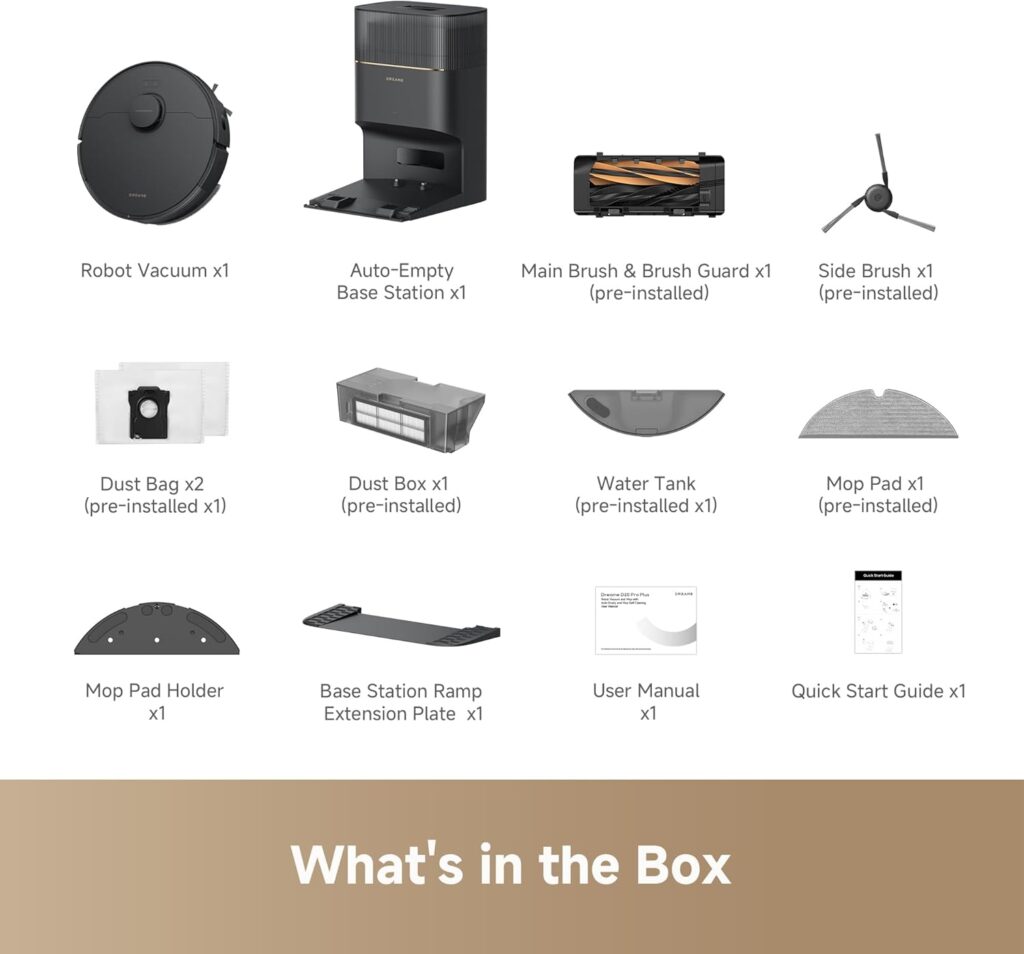
The DREAME D20 Pro Plus is a capable mid-range robot vacuum that focuses on strong suction and reliable LiDAR navigation without the full all-in-one base station of the higher-ranked DREAME models. So, it suits buyers who want solid hardwood cleaning performance at a more accessible price and don’t require automated mop washing.
Key Features
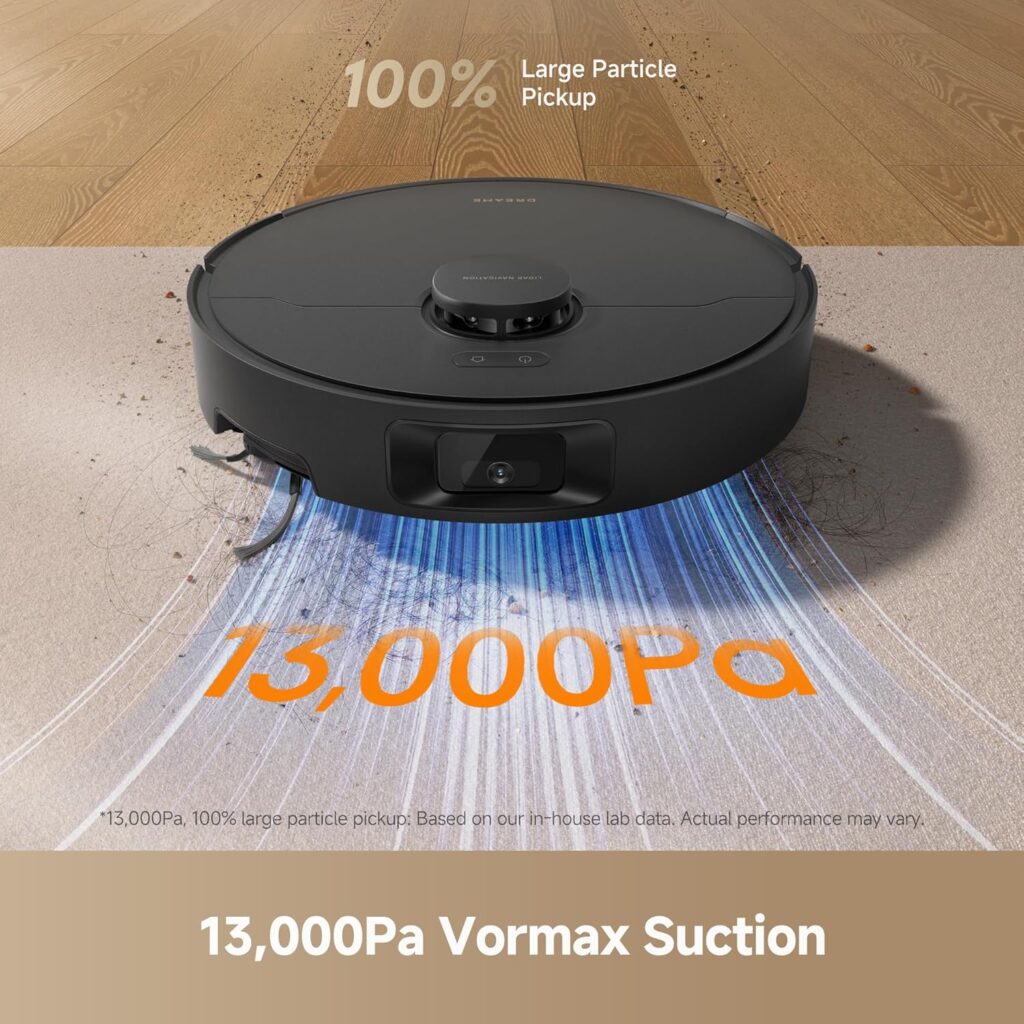
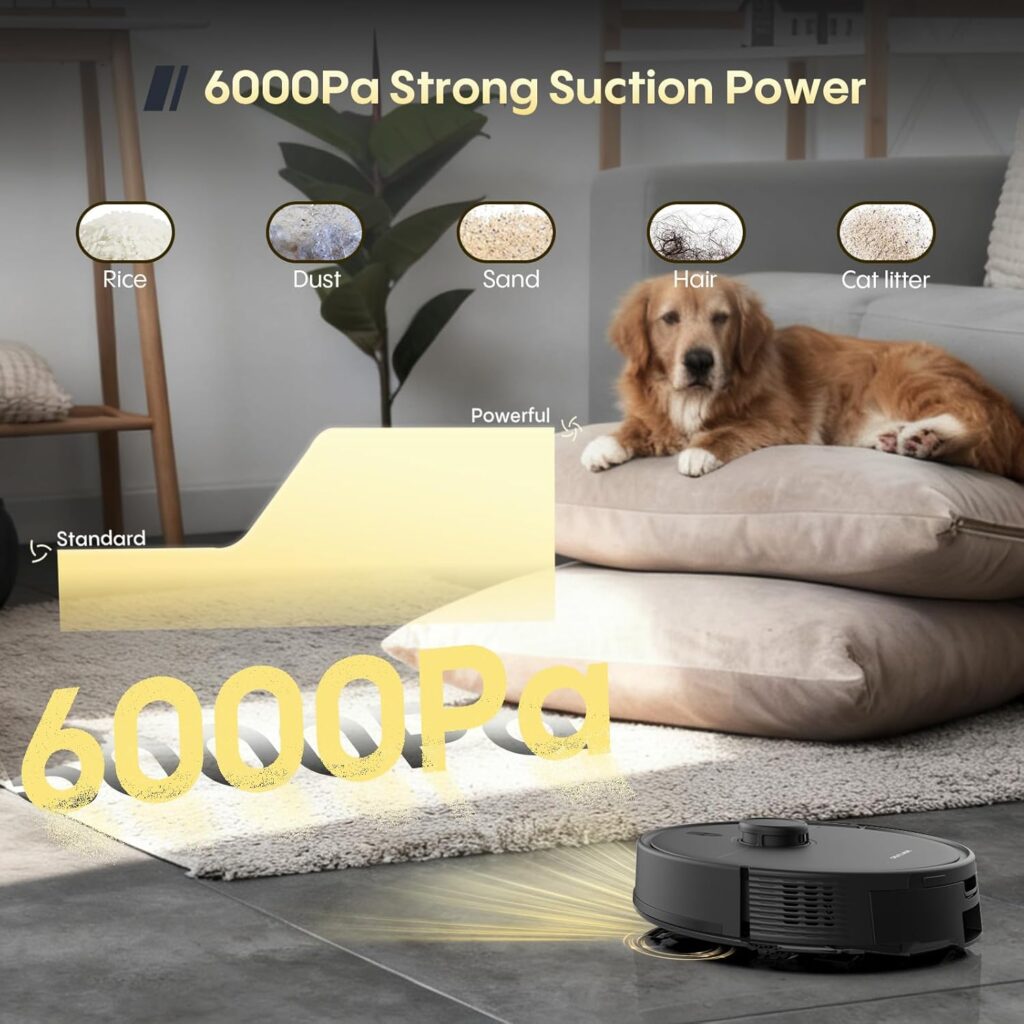
The D20 Pro Plus reaches up to 8,500 Pa of suction, which handles pet hair and dander on hardwood floors effectively during daily automated sessions. Furthermore, LiDAR navigation plans systematic cleaning routes across the full floor plan. So, coverage is thorough rather than random, which matters for consistent pet hair removal.
The auto-empty base station collects the dustbin contents automatically after each session. Additionally, the machine supports multi-floor mapping for homes with multiple levels. So, the robot can store separate maps for each floor and adjust its cleaning plan accordingly.
Technical Specifications
Specification
Detail
Suction Power
Up to 8,500 Pa
Navigation
LiDAR
Dustbin Capacity
0.35 litres (robot)
Base Station
Auto-empty (no mop wash)
Mop System
Basic mopping (no auto-lift)
Runtime
Up to 180 minutes
App Control
Yes (DREAME app)
Voice Control
Alexa and Google Home
Approx. Price
$499 to $699
Accessories Included
The D20 Pro Plus ships with the robot unit, the auto-empty base station, mopping pads, dustbags, spare side brushes, and a cleaning tool.
Pros
8,500 Pa suction handles regular pet hair removal on hardwood reliably during daily sessions. So, hardwood floors stay visibly clean between weekly manual cleans with consistent robot use.
LiDAR navigation covers the home systematically rather than at random. Furthermore, the multi-floor mapping capability suits homes on two or more levels.
Auto-empty base station removes the daily dustbin-emptying task from the cleaning routine. Additionally, DREAME’s app delivers detailed room-specific scheduling and zone control.
Cons
There is no automatic mop lift, which limits the machine’s suitability for homes with both carpet and hardwood. However, mop pads can be removed manually before cleaning carpeted areas. So, it’s a usability limitation rather than a complete barrier for mixed-floor homes.
The base station does not wash the mop pad. Furthermore, mop pads require manual removal and rinsing between sessions to maintain hygiene. So, buyers who want a fully automated mop system should consider the higher-ranked options.
Reasons to Buy
So, the D20 Pro Plus suits buyers who primarily need automated pet hair removal on hardwood floors and are happy to manage the mop pad manually between sessions.
Best Suited For
This machine is ideal for hardwood-dominant homes with one or two pets, buyers on a mid-range budget, and households where manual mop management between sessions is acceptable.
The Bagotte BL20 Pro is a very affordable entry into the LiDAR-navigated robot vacuum category. So, it suits buyers who want systematic, map-based cleaning on hardwood floors without the premium price of the higher-ranked machines. Furthermore, the combination of LiDAR navigation and mopping at this price makes it a genuine option for budget-conscious pet owners.
Key Features
The BL20 Pro uses LiDAR navigation for systematic floor coverage, which separates it from cheaper robot vacuums that clean at random. Furthermore, suction reaches around 5,500 Pa, which handles regular surface-level pet hair on smooth hardwood effectively. So, daily sessions keep visible hair and dander under control between deeper cleans.
The machine includes a basic mopping function with a water reservoir and a mopping pad. Additionally, it supports Wi-Fi connectivity and scheduling through a companion app.
Technical Specifications
Specification
Detail
Suction Power
Up to 5,500 Pa
Navigation
LiDAR
Dustbin Capacity
0.3 litres
Base Station
Standard charging dock (no auto-empty)
Mop System
Basic mopping pad with water tank
Runtime
Up to 150 minutes
App Control
Yes (Wi-Fi)
Voice Control
Alexa and Google Home
Approx. Price
$299 to $399
Accessories Included
The BL20 Pro ships with the robot unit, a standard charging dock, a mopping pad, a water tank, spare side brushes, and a cleaning tool.
Pros
LiDAR navigation at this price point is a genuine differentiator from cheaper random-pattern alternatives. So, the robot covers the home in a systematic, efficient pattern rather than missing large areas between sessions.
The price makes it accessible for buyers who want a secondary cleaning tool rather than a primary daily cleaner. Furthermore, it suits smaller homes where a basic automated daily sweep between weekly manual cleans is the primary use case.
Mopping capability adds a second cleaning layer that purely vacuuming robots in this price range don’t offer. Additionally, light mopping of hardwood between deeper sessions removes the surface residue that pet paws leave behind.
Cons
There is no auto-empty base station, so the dustbin requires manual emptying after each session. However, the small dustbin means it fills quickly during heavy shedding periods. So, plan to empty it consistently after every clean.
5,500 Pa suction is adequate for surface-level hair but less effective on embedded fine dander. Furthermore, buyers with multiple heavy-shedding pets may find the suction insufficient for their daily hair volume.
Reasons to Buy
So, the BL20 Pro suits buyers with a limited budget who want LiDAR navigation and basic mopping for one or two pets in a smaller home.
Best Suited For
This machine is ideal for smaller homes or flats with hardwood floors, one light-shedding pet, and buyers who want a supplementary daily sweep rather than a primary cleaning system.
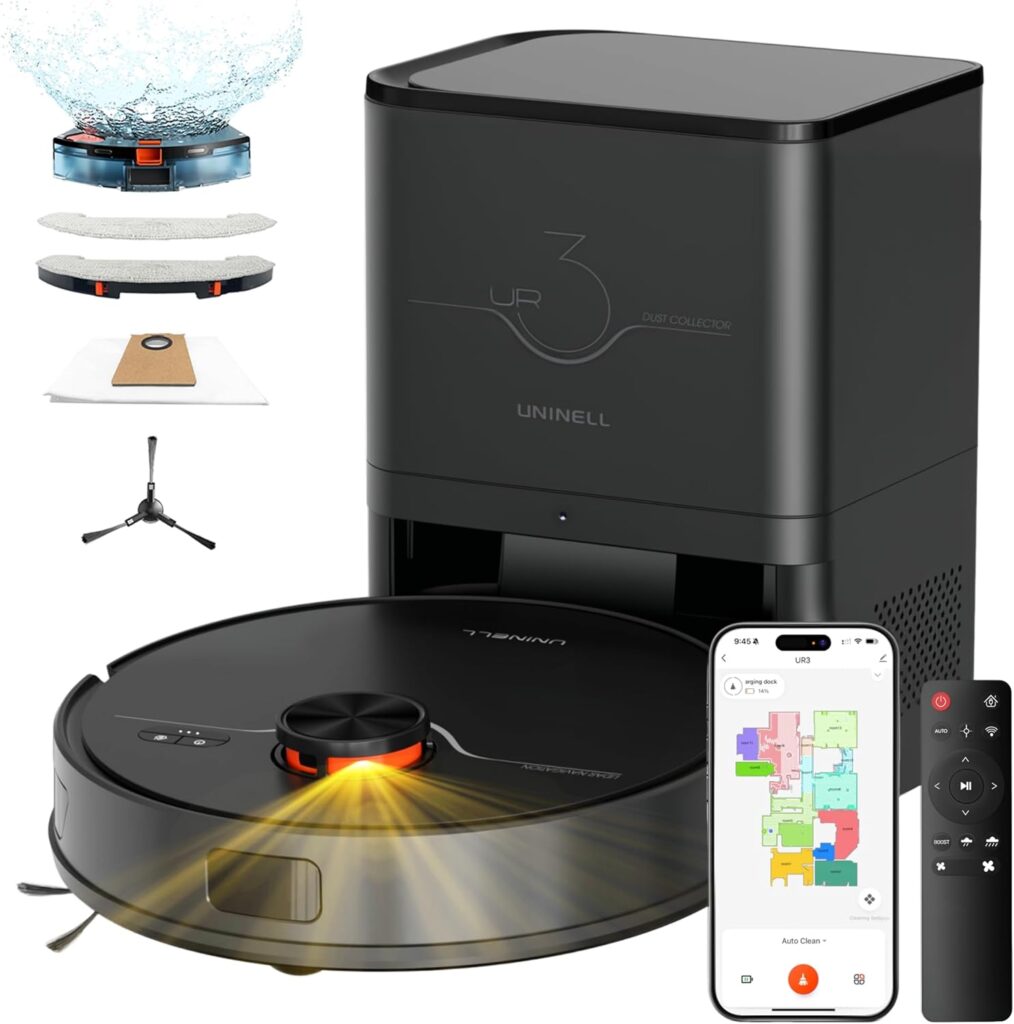
9. Uninell UR3 Robot Vacuum and Mop Combo with Self-Emptying
The Uninell UR3 is a self-emptying robot vacuum and mop combo that targets buyers who want the self-emptying convenience at a lower price point than the LiDAR-navigated machines above it on this list. So, it suits buyers who prioritise the auto-empty function over navigation precision.
Key Features
The UR3 uses a combination of sensors and gyroscope navigation rather than full LiDAR mapping. Furthermore, this approach cleans in a structured pattern that covers more ground than purely random designs. So, it’s a step above the most basic robot vacuums without reaching the systematic room-mapping of LiDAR machines.
Suction reaches around 4,000 Pa on the highest setting. Additionally, the machine includes a basic mopping function and a self-emptying base station that collects debris from the dustbin after each session. So, the auto-empty function is the primary practical advantage at this price.
Technical Specifications
Specification
Detail
Suction Power
Up to 4,000 Pa
Navigation
Gyroscope and sensor-based
Dustbin Capacity
0.3 litres (robot)
Base Station
Self-emptying (no mop wash)
Mop System
Basic mopping pad
Runtime
Up to 120 minutes
App Control
Yes (Wi-Fi)
Voice Control
Alexa and Google Home
Approx. Price
$249 to $349
Accessories Included
The UR3 includes the robot unit, the self-emptying base, dustbags for the base, a mopping pad, spare side brushes, and a cleaning tool.
Pros
Self-emptying base at this price removes the daily dustbin task without requiring a premium budget. So, buyers who find daily emptying disruptive will appreciate this function at an accessible price.
The combined vacuuming and mopping function adds a secondary cleaning layer to the daily session. Furthermore, light mopping of hardwood removes surface residue between deeper cleans.
The price makes it one of the most accessible self-emptying robot vacuums on this list. Additionally, it suits buyers who want automated convenience without a significant financial commitment.
Cons
Gyroscope navigation is less systematic than LiDAR, which leads to missed patches on larger floor plans. However, smaller homes are covered more thoroughly because the floor area is more manageable for sensor-based navigation. So, home size is the key variable here.
4,000 Pa suction is on the lower end for pet hair removal and may leave fine dander on hardwood. Furthermore, heavy shedding periods may require additional manual cleaning between robot sessions.
Reasons to Buy
So, the UR3 suits buyers on a tight budget who want self-emptying convenience as their primary requirement and have a smaller home or a lightly shedding pet.
Best Suited For
This machine is ideal for smaller homes or flats with hardwood floors, one lightly shedding pet, and buyers who want hands-off bin emptying at an accessible price.
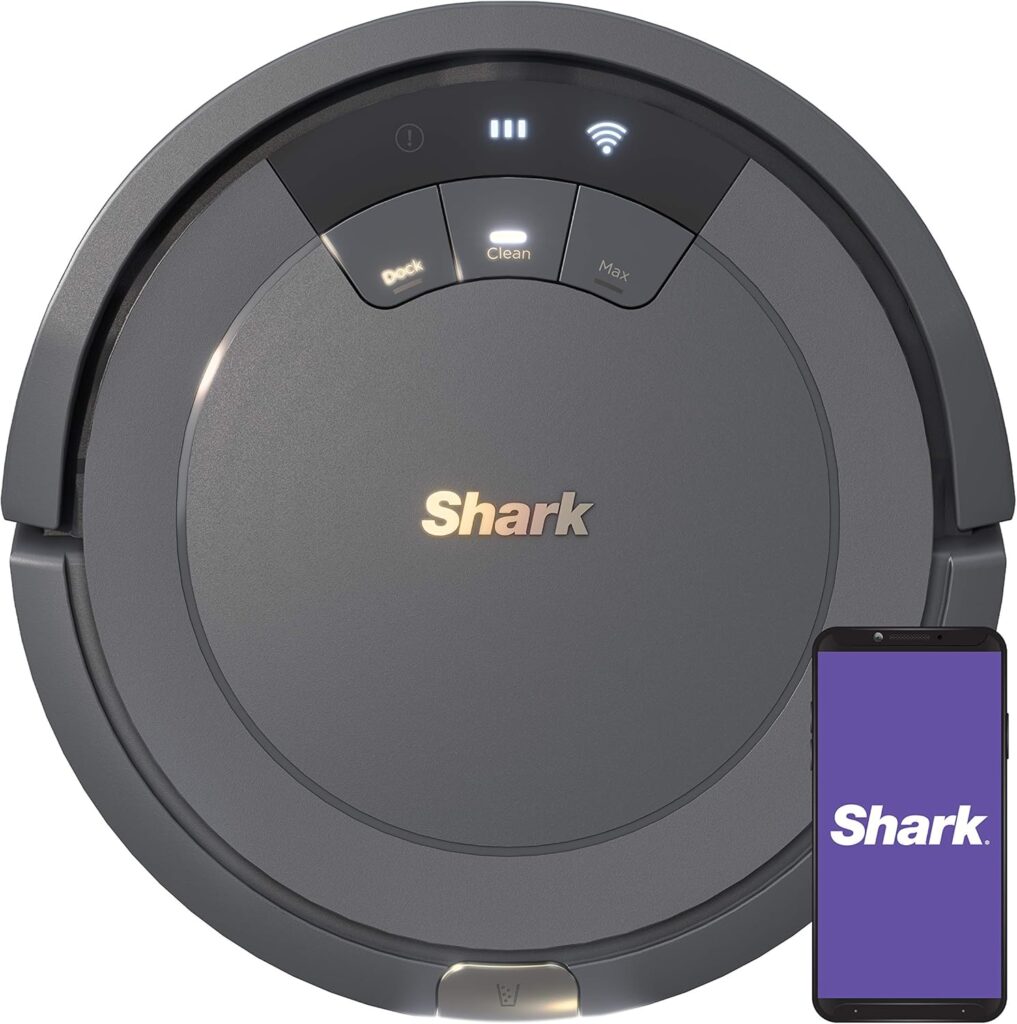
The Shark AV753 ION is the most accessible machine on this list and one of the most well-known entry-level robot vacuums on Amazon. So, it suits buyers who want a familiar, trusted brand name and basic automated cleaning at a low entry price. However, it is the least technically advanced machine on this list, and its limitations on hardwood pet hair cleaning are worth understanding clearly before buying.
Key Features
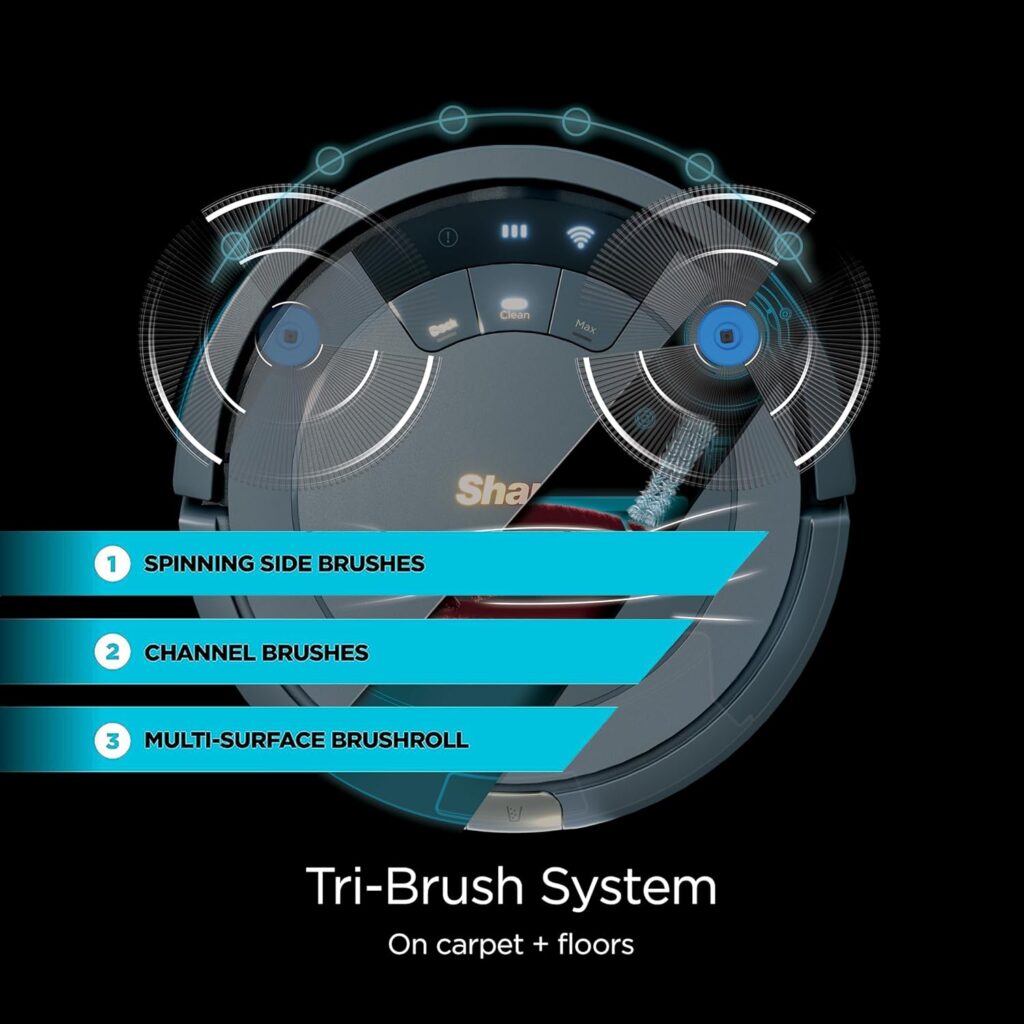
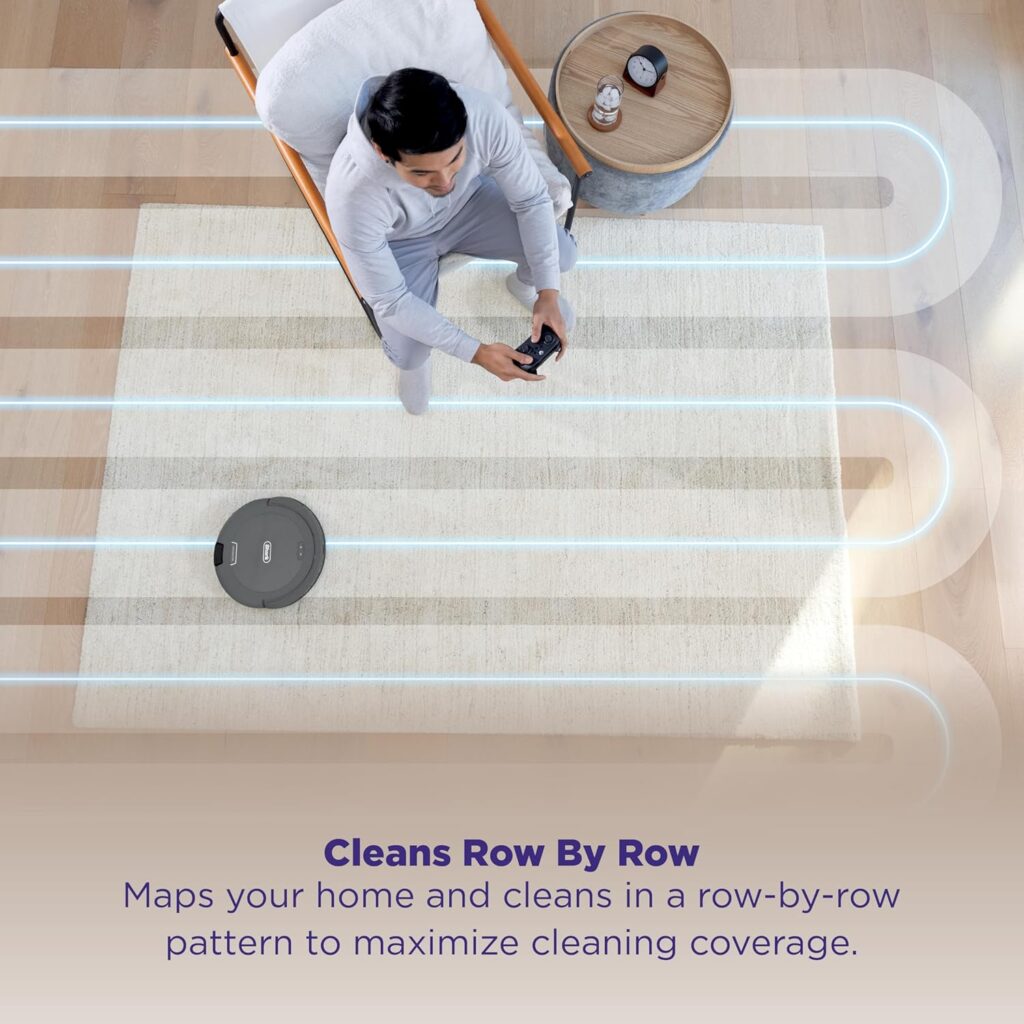
The AV753 ION uses Wi-Fi connectivity and Shark’s IQ Navigation system, which cleans in a structured row pattern rather than random paths. Furthermore, the machine supports scheduling via the SharkClean app. So, it can be set to clean automatically at a chosen time each day without user interaction.
The machine uses a standard brush roll rather than a soft rubber design. Additionally, suction is adequate for surface-level hair on hardwood but falls below the machine’s higher on this list. According to the Asthma and Allergy Foundation of America, regular automated cleaning reduces pet allergen levels in the home meaningfully over time, even from less powerful robot vacuums used consistently.
Technical Specifications
Specification
Detail
Suction Power
Standard (no Pa rating published)
Navigation
IQ structured row pattern
Dustbin Capacity
0.45 litres
Base Station
Standard charging dock
Mop System
None
Runtime
Up to 60 minutes
App Control
Yes (SharkClean app)
Voice Control
Alexa and Google Home
Approx. Price
$199 to $279
Accessories Included
The AV753 ION includes the robot unit, a standard charging dock, a side brush set, and a pre-motor filter. No mopping function or auto-empty base is included.
Pros
Very accessible price makes it the lowest barrier to automated daily cleaning on this list. So, buyers who are new to robot vacuums and want to test the category without significant investment will find this an easy entry point.
Shark brand recognition brings established customer support and parts availability. Furthermore, replacement filters and brushes for the AV753 ION are widely available through Amazon and major retailers.
Row-pattern navigation covers more ground per session than purely random-path machines. Additionally, the SharkClean app scheduling is reliable and simple to set up.
Cons
No mopping function and no auto-empty base significantly limit the machine’s automation level. However, buyers who simply want daily vacuuming without mopping will find those omissions less impactful. So, it depends entirely on your cleaning priorities.
60-minute runtime is the shortest on this list and suits smaller homes only. Furthermore, larger open-plan hardwood floor areas will require multiple charging cycles to complete a full session. So, larger homes should consider a higher-ranked option.
Standard brush roll design can scatter fine pet debris sideways on hardwood rather than capturing it cleanly. Additionally, suction power falls well below the LiDAR-navigated machines on this list.
Reasons to Buy
So, the AV753 ION suits buyers on a very tight budget who want daily automated vacuuming from a trusted brand on a smaller hardwood floor area.
Best Suited For
This machine is ideal for small homes or flats with one lightly shedding pet and buyers who want basic, budget-friendly daily automation from a well-known brand.
Buyer’s Guide: How to Choose the Best Robot Vacuum for Pet Hair on Hardwood
Why Hardwood Floors Need a Different Approach
Hardwood floors present specific challenges for robot vacuums. So, understanding those challenges helps you make a better buying decision. Furthermore, pet hair on hardwood sits on the surface rather than embedding into the pile, which means it’s easily scattered by an aggressive brush roll. Consequently, the best robot vacuums for hardwood use soft rubber brush rolls or combined rubber-and-bristle designs that capture debris rather than pushing it sideways.
Suction Power: What the Numbers Mean
Suction power in robot vacuums is measured in Pascals (Pa). So, a machine rated at 12,000 Pa applies more force to the debris it contacts than one rated at 4,000 Pa. Furthermore, the difference matters most for fine pet dander that clings to hardwood grain by static charge. However, higher suction alone doesn’t guarantee better cleaning. Additionally, the brush roll design and airflow pathway efficiency both affect real-world results.
According to the US Environmental Protection Agency, HEPA filtration captures 99.97% of particles at 0.3 microns, which includes the fine dander that causes allergic reactions. So, if allergy management is part of your reason for buying a robot vacuum, look for HEPA filtration in the machine’s exhaust filter.
Navigation: LiDAR vs Sensor-Based
LiDAR navigation uses a rotating laser to build a precise map of the home. So, the robot knows exactly where it has and hasn’t cleaned, and plans the most efficient route on each subsequent session. Furthermore, LiDAR machines store maps and adjust for furniture changes automatically over time. Sensor-based and gyroscope-only machines navigate in structured patterns but without the precision mapping that LiDAR provides. Consequently, they work well in smaller, simpler layouts and struggle in complex or large floor plans.
Mopping: A Key Advantage on Hardwood
Hardwood floors benefit from mopping in a way that carpet never does. So, a robot vacuum with integrated mopping removes the surface residue, fine dander, and paw print oils that vacuuming alone leaves behind. Furthermore, machines with automatic mop lift protect carpeted areas during mixed-floor sessions. Additionally, models with base station mop washing prevent bacterial growth in the mop pad between uses.
Auto-Empty Base Stations: Worth the Investment
Auto-empty base stations collect the dustbin contents after each session, which means the machine can run for weeks between manual maintenance tasks. Furthermore, for pet owners, this matters considerably because dustbins fill faster with hair than in non-pet households. So, an auto-empty base reduces the risk of suction loss from an overfull bin. According to Allergy UK, pet allergens can persist in the home environment for months. Consequently, consistent automated cleaning with an auto-empty system maintains allergen control more reliably than manual scheduling.
Budget Planning for Robot Vacuums
Entry-level ($150 to $350) delivers basic automated vacuuming with sensor or gyroscope navigation and no auto-empty. So, it suits buyers who want daily supplementary cleaning in smaller homes. Mid-range ($350 to $800) adds LiDAR navigation, auto-empty, and sometimes basic mopping. Furthermore, this tier suits medium-sized homes with regular shedding and a need for more systematic coverage. Premium ($800 to $1,500-plus) delivers the highest suction, AI obstacle avoidance, full mop wash and dry base stations, and the most advanced navigation. So, this tier suits large, complex homes where full automation and allergen management are both priorities.
Frequently Asked Questions
Are robot vacuums good for pet hair on hardwood floors?
So, yes, robot vacuums are well-suited to pet hair on hardwood floors when chosen carefully. Furthermore, daily automated sessions prevent hair accumulation rather than allowing it to build up. The key is choosing a machine with a soft or rubberised brush roll that captures hair rather than scattering it.
Do robot vacuums scratch hardwood floors?
Most modern robot vacuums are designed with soft wheels and undercarriage materials that avoid scratching hardwood finishes. However, small grit particles trapped under the wheels can cause fine marks over time. So, regular wheel cleaning and floor cleaning reduce that risk.
Is LiDAR navigation worth the extra cost?
So, for medium to large homes, yes. LiDAR navigation covers the full floor plan systematically and adapts to layout changes automatically. Furthermore, it reduces missed patches and ensures every cleaning session is as thorough as the first. In smaller homes, sensor-based navigation is adequate and saves a meaningful amount of money.
How often should a robot vacuum run on hardwood floors in a pet home?
For most pet households, running the robot vacuum daily or every other day maintains visible cleanliness on hardwood. Additionally, scheduling a mop session two to three times per week removes the surface residue and oil from paw prints that vacuuming alone leaves behind.
What suction power do I need for pet hair on hardwood?
For light to moderate shedding, 4,000 to 7,000 Pa handles daily maintenance well on smooth hardwood surfaces. Furthermore, for heavy shedding or very fine dander accumulation, 10,000 Pa and above provides a more thorough result. So, match the suction level to your pet’s actual shedding volume rather than always buying the highest available.
Conclusion
Choosing the Right Machine for Your Home
Finding the best robot vacuum for pet hair on hardwood in 2026 comes down to matching the machine’s capabilities to your home’s specific size, floor type, shedding volume, and budget. So, the MOVA V50 Ultra earns the top spot on this list for its balance of suction, navigation, and all-in-one base station capability at a price that sits below the flagship tier. Furthermore, the ECOVACS X9S PRO and DREAME X40 Ultra deliver the most advanced features for buyers who want the absolute best, regardless of cost.
Mid-Range and Budget Options Worth Considering
The Roborock Qrevo S5V represents one of the strongest mid-range value propositions on this list. So, buyers who want near-premium performance at a lower price will find it a very compelling option. Furthermore, the DREAME D20 Pro Plus and Mova P10 Pro Ultra Gen 2 both deliver reliable LiDAR navigation and auto-empty capability at price points that suit a wider range of budgets. Additionally, the Bagotte BL20 Pro and Uninell UR3 serve buyers whose primary concern is LiDAR navigation or auto-empty functionality at the lowest possible entry price.
Who Should Choose the Shark AV753 ION
The Shark AV753 ION suits buyers who are new to robot vacuums and want a low-risk entry into the category from a trusted brand. So, it handles daily maintenance cleaning in small homes well. However, its limitations on suction, runtime, and the absence of auto-empty or mopping make it the least capable machine on this list for pet hair on hardwood specifically.
Your Next Step
Independent test data from Consumer Reports provides additional performance data on several of the brands featured in this list. So, use both resources alongside this guide to make the most informed decision for your home. The best robot vacuum for pet hair on hardwood in 2026 is the one that matches your home’s layout, your pets’ shedding habits, and your budget, not simply the machine with the highest specification on paper.
Please verify all prices on Amazon before purchasing, as prices change regularly and stock availability varies.
eufy Robot Vacuum Omni C20 Review- Punching Above Its Price Tag?
The Budget Robot Vacuum Problem
Most people shopping for a robot vacuum hit the same wall. The machines that actually work well cost a fortune, and the affordable ones let you down after three months. So you end up either overspending on features you do not need or replacing a cheap machine that never quite delivered. The eufy Robot Vacuum Omni C20 sits in the middle of that conversation, promising self-emptying, mopping, and smart navigation at a price that does not require a second mortgage. I went into testing it with healthy scepticism, because that combination at this price point has disappointed me before.
Why the Omni C20 Deserves Attention
eufy has built a strong reputation in the robot vacuum space by offering genuinely capable machines without the flagship price tag. The Omni C20 sits at the upper end of their accessible range, and it comes loaded: self-emptying base, a mop function, AI obstacle avoidance, and LiDAR navigation. On paper, that is a specification list that would embarrass machines costing twice as much. Whether it delivers on that paper promise is what this review is about.
I tested the Omni C20 over several weeks across hard floors, low-pile carpet, and a medium-pile area rug. I also looked at the mopping function in detail, because that is often where budget-adjacent machines fall apart. Honest answer: the results were more nuanced than I expected, with some genuine strengths and a few limitations that matter depending on what your home looks like.
What to Expect From This Review
I will cover everything from unboxing to long-term maintenance, and I will compare it honestly to machines above and below it in our rankings. The Omni C20 is a genuinely interesting machine, and it deserves a fair assessment rather than either uncritical praise or lazy dismissal. So, let us get into it.
First Impressions and Unboxing
Packaging and Presentation
The eufy Omni C20 arrives in a large, well-organised box. The base station and robot are each wrapped separately, and the packing foam does a thorough job of protecting everything. Nothing shifted in transit, and the whole unboxing experience feels considered rather than rushed.
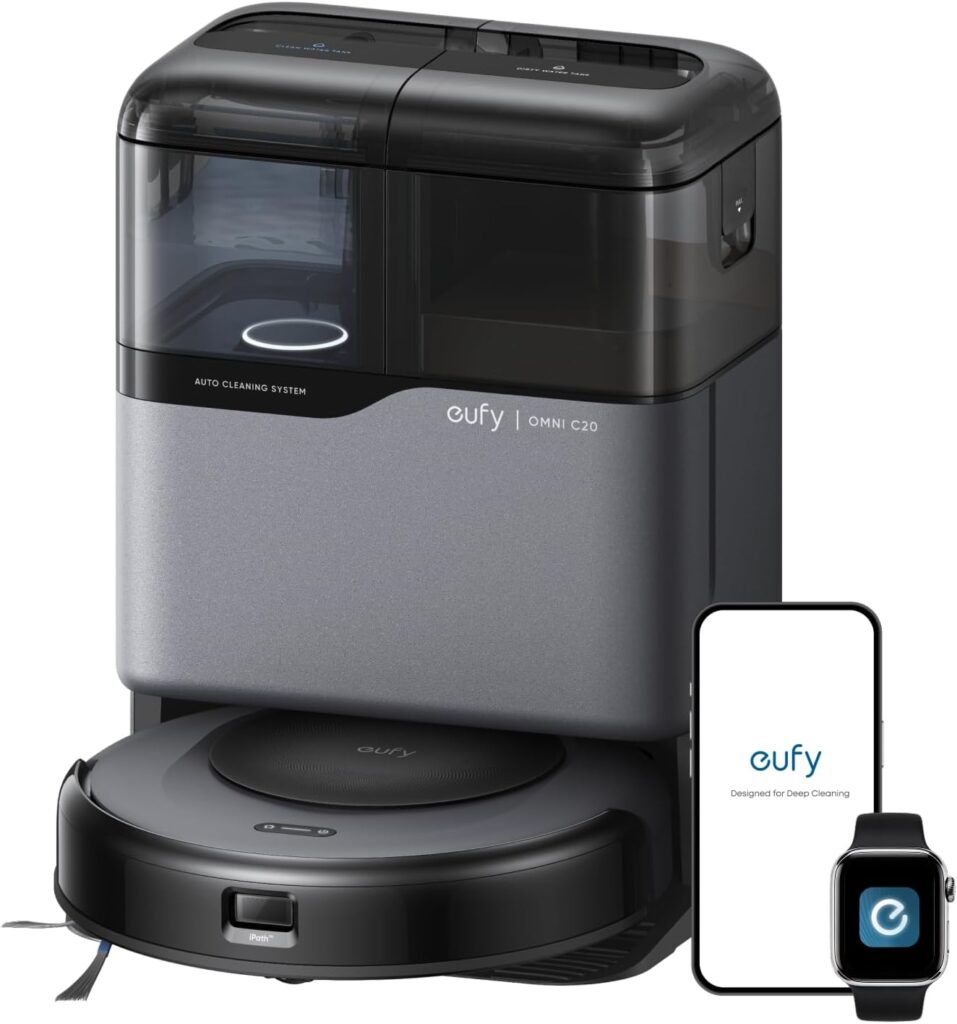
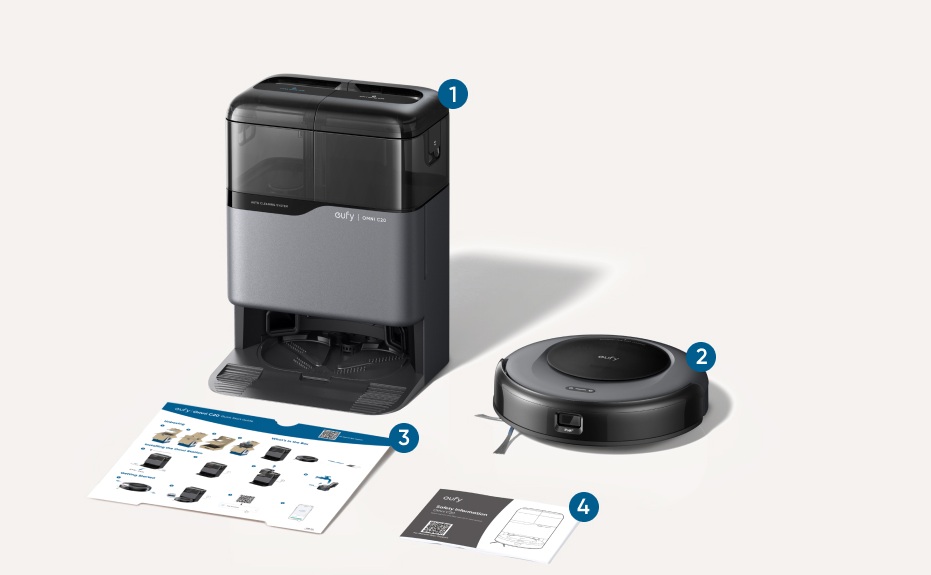
The box includes the robot vacuum, the all-in-one self-emptying and auto-wash base station, a mop pad, a water tank, a power adaptor, a cleaning brush, and a small bottle of cleaning solution for the mop wash cycle. Furthermore, a quick-start guide walks you through the setup clearly.
First Reactions to the Hardware
The robot itself is a clean white disc with a modest footprint. It feels solid and well-balanced. The base station is noticeably larger than simpler self-empty stations, because it handles both the dustbag function and the mop-pad washing cycle. Plan for a dedicated corner with good clearance: the base stands around 19 inches tall and needs roughly 20 inches of width.
Setting up from unboxing to first run took me around 20 minutes. The eufy Clean app walks you through each step, and the process is genuinely beginner-friendly.
Design and Build Quality
Materials and Construction
The outer casing is smooth white plastic with a subtle gloss finish. It resists light scuffs well, though it will show fingerprints on the top panel over time. The brush guard and mop pad attachment both feel robust. The LiDAR turret sits centrally on top of the robot and adds a small amount of height, around 3.7 inches total.
The Base Station
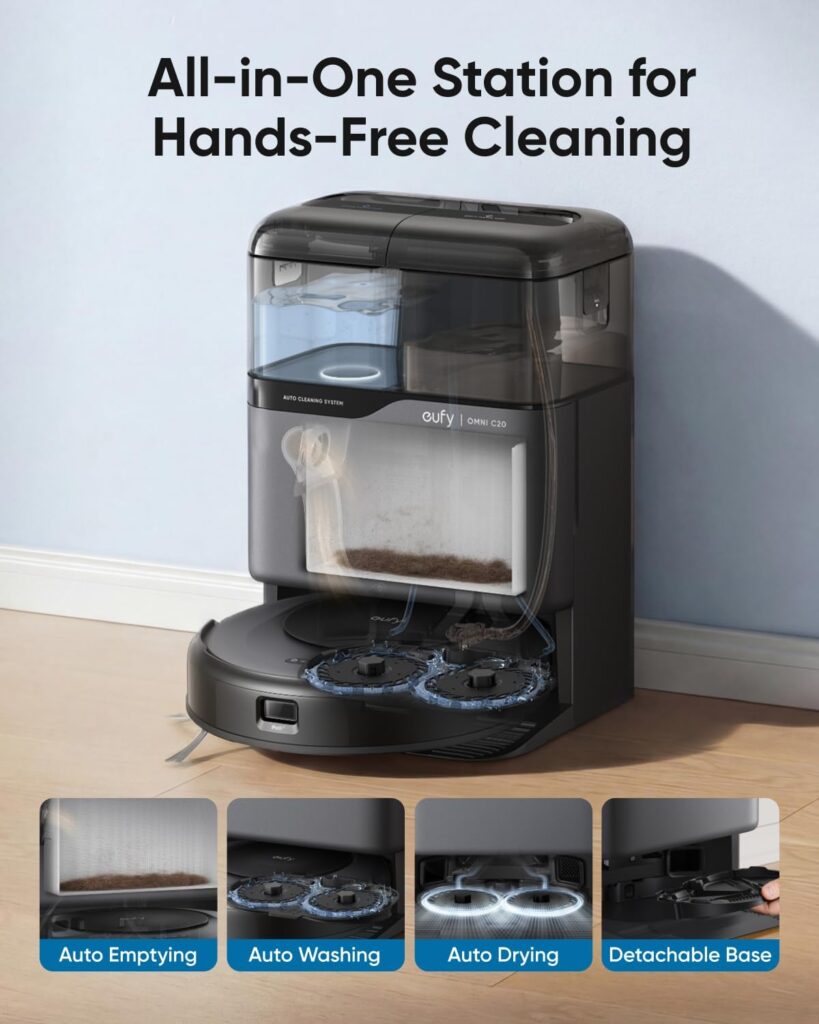
The all-in-one base is the design centrepiece. It handles three functions: self-emptying via a disposable dustbag, a clean water supply for the mop, and dirty water collection after mop-pad washing. Consequently, there are two water tanks to manage: one clean, one dirty. Both are easy to access and straightforward to fill or empty.
Durability and Build Confidence
Overall, the build quality is a step above what the price might suggest. The side brush clips in firmly, the bumper has good travel, and the wheels feel solid underfoot. However, the mop-pad attachment mechanism is slightly fiddlier than I would like, and it took a few attempts to seat it correctly on first use.
Compared to Rivals
At this tier, the Omni C20 feels comparable to the Shark Navigator RV2120AE in overall build confidence, whilst offering a more feature-rich station. It does not feel quite as premium as the Dreame machines, but the gap is smaller than the price difference suggests.
Unlike camera-based systems, LiDAR uses laser mapping to build a precise floor plan regardless of lighting conditions. In practice, this is a meaningful advantage. The Omni C20 mapped my ground floor accurately on the first run and maintained that map reliably across subsequent sessions. Moreover, it handled furniture legs, cables, and narrow doorways with more confidence than camera-based rivals I have tested.
AI Obstacle Avoidance
eufy’s AI obstacle avoidance uses a forward-facing sensor cluster to detect and route around objects in real time. In testing, it avoided shoes, cables, and small pet toys reliably. It is not flawless: it occasionally misjudges very dark objects against dark floors. However, the performance is genuinely impressive for this price tier.
Self-Emptying and Auto Mop Washing
After each vacuum run, the robot docks and the base suctions debris into a sealed dustbag. After mop runs, the base washes the mop pad with clean water and hot air-dries it. The wash cycle is effective at removing light soiling. Heavily soiled pads after extended use may still need a manual rinse. The whole self-maintenance system works well and significantly reduces how often you need to interact with the machine.
Mop Function
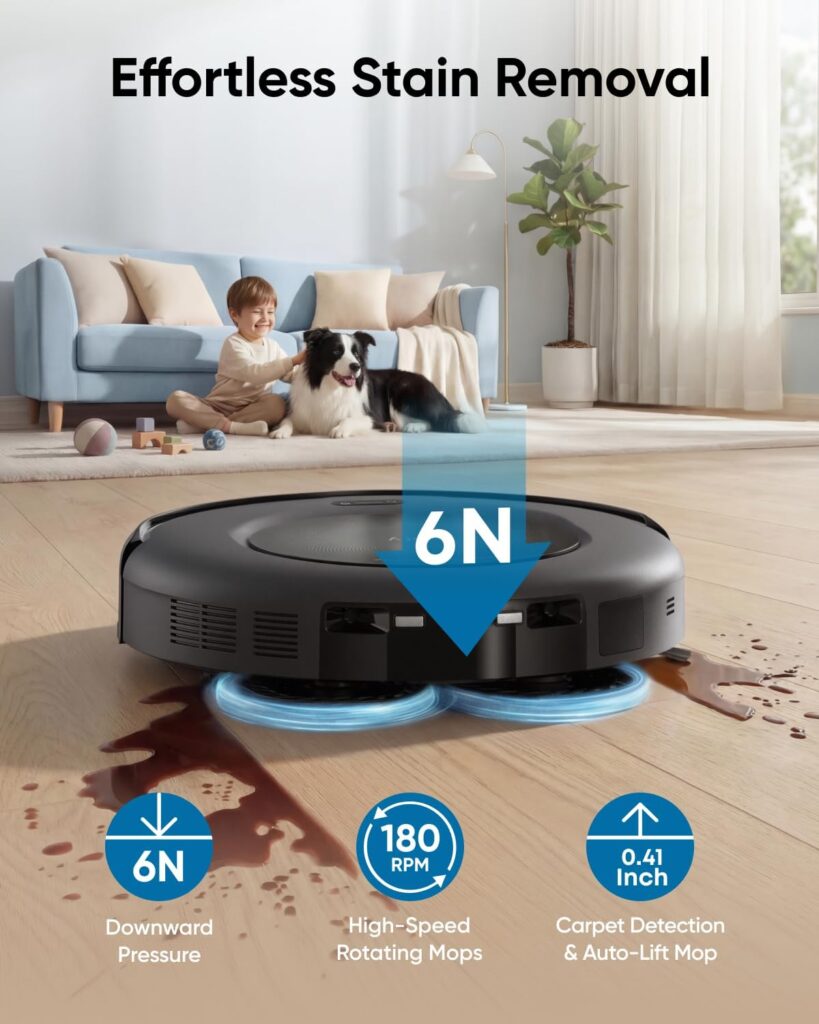
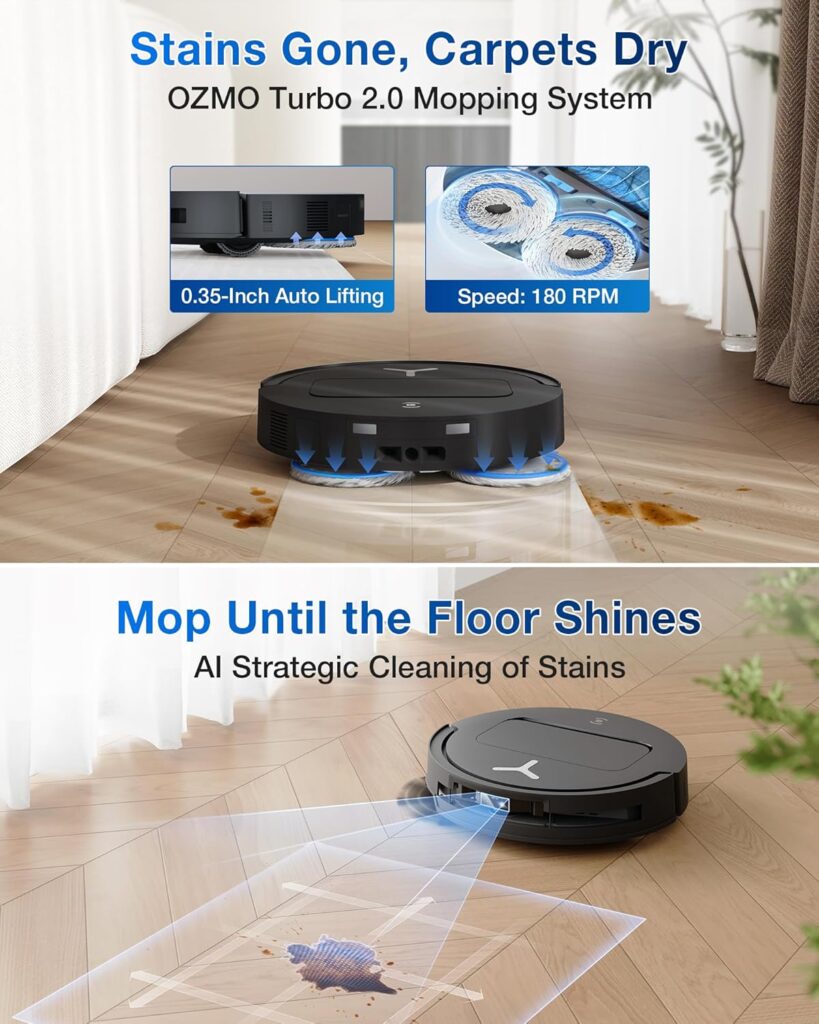
The mop uses a spinning pad design with adjustable water flow. On hard floors, it picks up everyday grime and dried spills with good results. That said, it is a light-duty mop rather than a deep scrubber. Do not expect it to tackle dried-on stains without pre-treatment. The spinning pad rotates at up to 180 RPM, which contributes meaningful friction compared to drag-style mops.
Suction Power
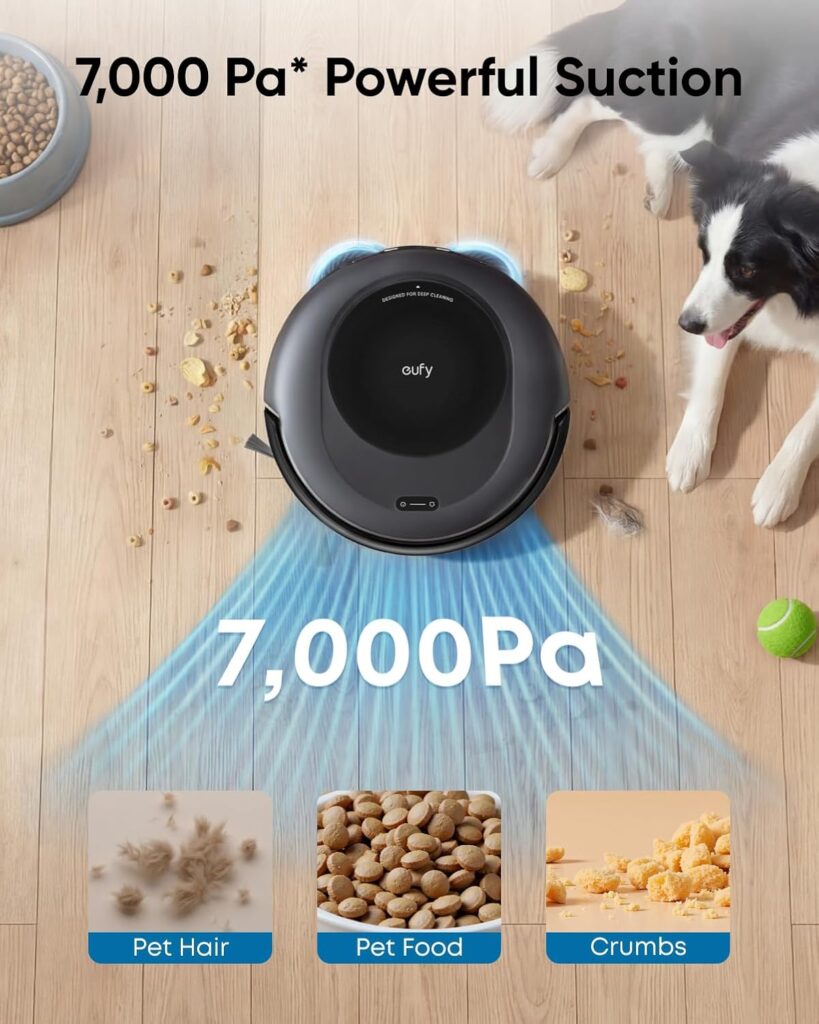
The Omni C20 offers up to 8,000 Pa of suction in maximum mode. In practical terms, that is strong. It handles fine dust, pet hair, and larger debris with authority on hard floors. On carpet, the auto-boost kicks in and the results on low-pile carpet are excellent. Furthermore, the transition between hard floor and carpet is smooth and automatic.
eufy Clean App
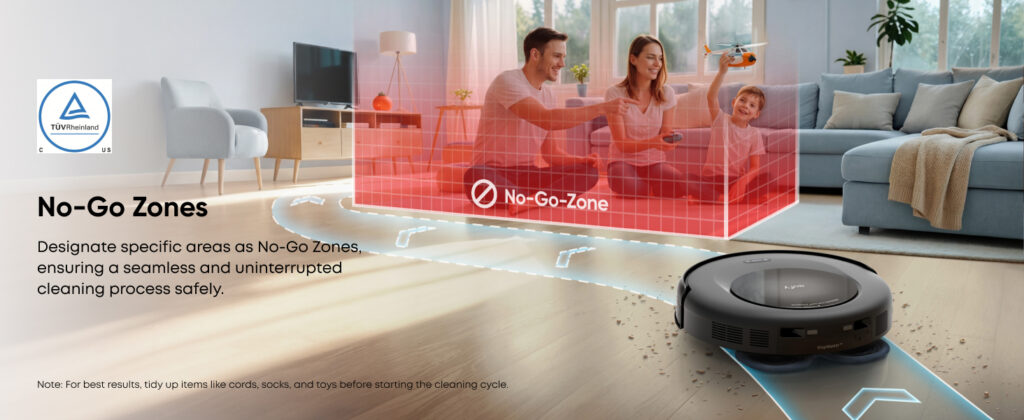
The app is well-designed and intuitive. You can set schedules, define cleaning zones, create no-go zones, and adjust suction and water flow levels independently. Alexa and Google Assistant support means voice control is available from day one. Additionally, multi-floor mapping allows you to save separate maps for different levels of your home.
On hardwood and tile, the Omni C20 is excellent. The combination of strong suction and the mop function means hard floors come away genuinely clean after each run. The LiDAR navigation ensures thorough coverage, and the edge cleaning around skirting boards is noticeably better than many rivals.
Low-Pile Carpet
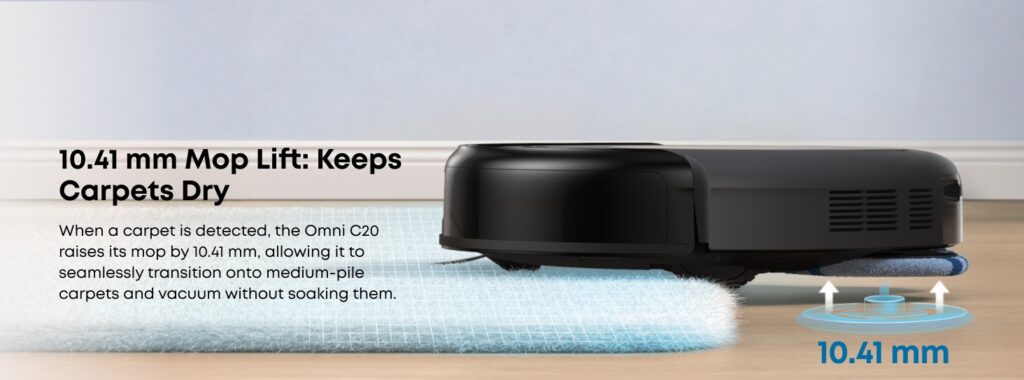
On low-pile carpet, suction performance is strong and the auto-boost works reliably. Pet hair removal over repeated daily runs kept test carpets in noticeably better condition than weekly manual vacuuming alone. The mop pad lifts automatically on carpet detection, which prevents moisture transfer to fibres.
High-Pile and Medium-Pile Carpet
This is where measured expectations apply. The Omni C20 handles medium-pile carpet adequately, but it does not deliver the deep agitation that high-pile rugs need. Embedded debris in thick carpet requires a machine with a more aggressive brush roll, which is why the Dreame X50 Ultra and Dreame L50 Ultra rank higher in our best robot vacuums for high-pile carpet guide for that specific use case.
Navigation Consistency
Over several weeks, navigation remained impressively consistent. Re-mapping after furniture changes was fast, and the machine adapted without losing its overall floor plan. Meanwhile, the obstacle avoidance kept pace with a moderately cluttered living room without requiring me to tidy up before each run.
Battery Life
Battery life is rated at around 180 minutes, which is significantly more than many competitors at this tier. In real-world testing on hard floors, I saw closer to 160 minutes before the machine returned to base, which is still outstanding. Larger homes can realistically clean an entire ground floor without a recharge pause.
Technical Specifications
Specification
Detail
Model
eufy Robot Vacuum Omni C20
Navigation
LiDAR with AI obstacle avoidance
Suction Power
Up to 8,000 Pa
Battery Life
Up to 180 minutes
Dustbin Capacity
0.4L (robot)
Self-Empty Base Bag
Approx. 45-day capacity
Mop Pad Type
Spinning dual pad
Mop RPM
Up to 180 RPM
Water Tank (clean)
4L
Water Tank (dirty)
4L
Wi-Fi
2.4GHz and 5GHz
Voice Control
Alexa, Google Assistant
Weight (robot)
8.4 lbs / 3.8 kg
Dimensions (robot)
13.9″ diameter, 3.7″ height
Noise Level
Approx. 65dB (standard mode)
Warranty
12 months limited
Price (approx.)
$499-$599
Accessories and Tools Included
The box contains the robot, the all-in-one base station, one disposable dustbag (pre-installed), one mop pad, one clean water tank, one dirty water collection tank, a cleaning brush, a small bottle of cleaning fluid, and a power cable.
The accessory package is comprehensive for the price. The cleaning brush handles both the brush roll and the sensor windows. The pre-installed dustbag means you are ready to run immediately. Replacement dustbags are available from eufy at around $15-$20 for a multi-pack, and replacement mop pads are similarly priced.
You will likely want to buy additional mop pads over time, particularly if you run mop cycles daily. Additionally, the cleaning fluid included is a starter supply: budget for regular replenishment if you use the mop function frequently.
Pros and Cons
Pros
LiDAR navigation delivers genuine precision. Consequently, coverage is thorough and consistent across different rooms and furniture arrangements, without the lighting dependency of camera-based systems.
8,000 Pa suction is outstanding at this price point. The raw cleaning power on hard floors and low-pile carpet competes with machines costing considerably more.
The auto-mop-wash function is a real convenience win. It reduces how often you need to manually handle the mop pad, which makes the mopping feature genuinely sustainable as a daily habit.
Battery life of up to 180 minutes sets it apart. Furthermore, for larger homes, this removes the frustration of mid-clean recharges that break the continuity of a session.
LiDAR works in the dark. Unlike camera-based alternatives, the Omni C20 maps and navigates reliably in unlit rooms, which is a practical advantage in real home conditions.
App quality is excellent. Scheduling, zone control, and multi-floor mapping all work without friction, and the interface is genuinely intuitive.
Cons
High-pile carpet performance is limited. The brush roll does not agitate deeply enough for thick carpet, and buyers with plush rugs will find results underwhelming.
The base station is large. It requires a dedicated space with good clearance, which may be a constraint in smaller flats or tight utility areas.
Mop performance is light-duty. It handles everyday grime well but struggles with dried-on stains or heavy soiling without pre-treatment.
The mop-pad attachment can be fiddly. Reattaching the pad after a manual clean requires a bit of patience, particularly on first use.
The eufy Omni C20 is ideally suited to households with predominantly hard floors where daily vacuum-and-mop automation is the goal. It works particularly well in medium to large homes where the extended battery life is a meaningful advantage over shorter-runtime rivals.
Pet owners with low-pile carpet or hard floors will find the suction power and daily scheduling combination highly effective at keeping shedding under control. Additionally, buyers who want LiDAR precision but cannot justify flagship pricing will find the Omni C20 hits a strong value point.
It is not the right fit for homes where high-pile or shag carpet is the primary surface, or for buyers in smaller spaces where the base station’s footprint is a genuine obstacle. It is also not ideal for buyers who want truly deep mop scrubbing: for that, a dedicated floor cleaner remains the better tool.
Alternative Uses and Versatility
The Omni C20’s combination of vacuuming and mopping gives it more daily versatility than single-function machines. In a kitchen or dining area, running a combined vacuum-and-mop cycle after mealtimes keeps the floor genuinely clean rather than just surface-tidy.
Furthermore, the ability to set specific zone cleaning via the app makes it useful for targeting high-traffic areas like hallways or pet sleeping spots without running a full-home clean. This is a practical advantage when you want a quick targeted refresh rather than a complete session.
Some users find value in scheduling the vacuum function daily and the mop function on alternate days, which reduces mop-pad soiling and extends the time between pad changes. The app makes this kind of staggered scheduling straightforward to set up.
Value for Money and Comparison
At around $499-$599, the Omni C20 sits in the upper-mid tier. For that price, you get LiDAR navigation, AI obstacle avoidance, 8,000 Pa suction, self-emptying, and auto mop washing. That is a compelling package at any price, and at this one, it represents strong value.
The RTINGS vacuum database places LiDAR-equipped machines with self-emptying and mop functions firmly in the premium category. The Omni C20 delivers that feature set without the premium price, which is its clearest value argument.
Compared to the Shark Navigator RV2120AE, the Omni C20 offers superior navigation, mopping, and battery life for a modest price premium. Compared to the Dreame X50 Ultra at the top of the list, it concedes on carpet performance and some refinements, but at a significantly lower cost. For hard-floor-first households, the gap in real-world value is small enough to justify the Omni C20 firmly.
Maintenance and Long-Term Ownership
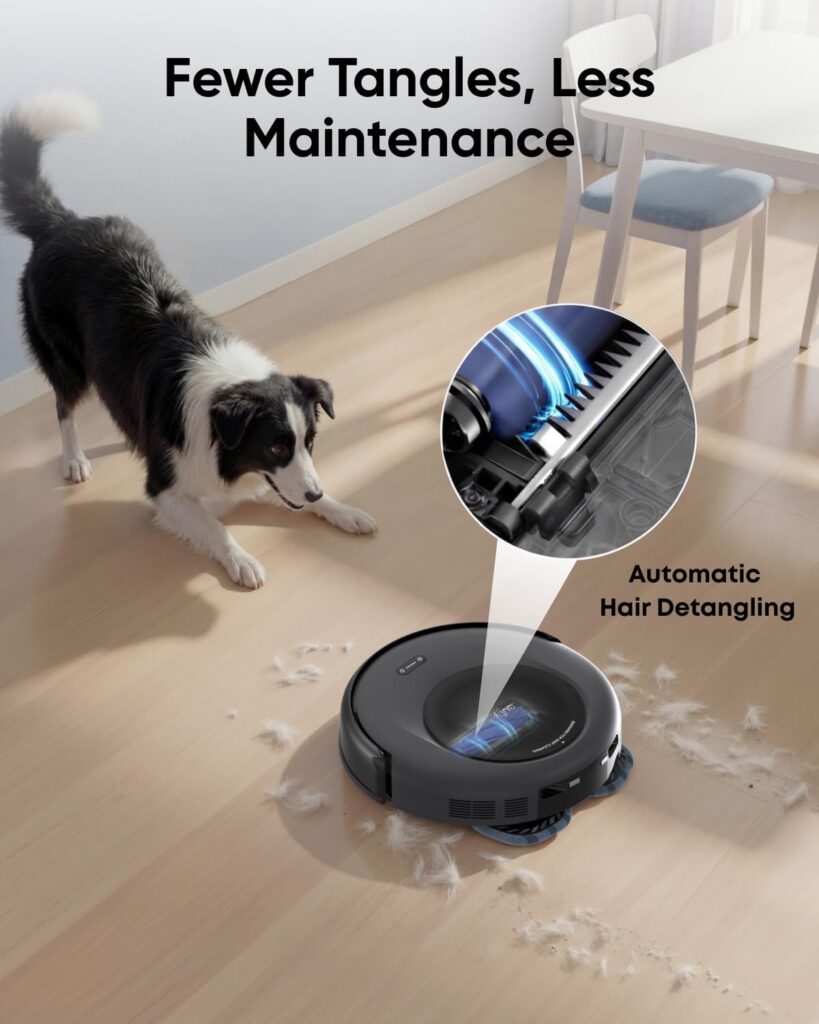
The brush roll needs checking every two to three weeks. Hair tangles are manageable with the included cleaning tool. The HEPA-style filter should be rinsed monthly and replaced every three to four months. The dustbag needs replacing every 45 days or so, and the mop pad benefits from a monthly deep rinse beyond the auto-wash cycle.
The AAFA’s guidance on indoor allergen control highlights frequent vacuuming as a cornerstone of allergy management. The Omni C20’s daily scheduling capability aligns well with this approach, though the HEPA-style filter distinction is worth noting for severe allergy sufferers.
Annual consumable costs are broadly similar to other machines in this category: around $40-$60 for bags and filters, plus mop pad replacements. eufy’s warranty sits at 12 months, which is standard. Their customer service reputation is solid, particularly for a brand outside the traditional premium tier.
Reasons to Buy
You want vacuuming and mopping in one machine. The auto-mop-wash function makes this a sustainable daily habit rather than an occasional extra step.
Your home has primarily hard floors. The combination of strong suction, LiDAR precision, and mop capability makes this the most capable all-in-one machine at this price for hard-floor households.
Battery life is a priority. At up to 180 minutes, the Omni C20 handles larger homes without mid-clean interruptions.
You want LiDAR without flagship pricing. Consequently, you get precise navigation that works in the dark, without paying Dreame X50 Ultra prices.
Pet hair management matters daily. The suction power and scheduling flexibility keep pet-hair accumulation genuinely under control between deeper manual cleans.
You value a mature app experience. The eufy Clean app is polished, feature-rich, and easy to use from day one.
High-pile carpet is your primary surface. The Omni C20 is not built for deep carpet agitation. The Dreame X50 Ultra or Dreame L50 Ultra will serve you considerably better.
Your space is tight. The large base station needs a dedicated room. In a small flat or galley kitchen, the footprint may simply not be practical.
You need deep-scrub mopping. The spinning pad handles everyday grime well, but it is not a substitute for a dedicated wet-floor cleaner on heavily soiled or textured hard floors.
Budget is the primary consideration. If spending under $350 is important, the Shark Navigator RV2120AE offers solid performance at a lower entry point, without the mop function, but with reliable self-emptying and decent navigation.
Conclusion
The Verdict
The eufy Robot Vacuum Omni C20 is one of the more impressive machines I have tested in its price bracket. It does not try to hide its limitations: it is not built for high-pile carpet, and its mop function is light-duty rather than deep-clean. However, within its intended use case of daily maintenance cleaning on hard floors and low-pile carpet, it delivers results that genuinely hold up against machines at a higher price point.
Who Should Buy It
Households with predominantly hard floors, pet hair to contend with, and a preference for minimal daily involvement will find the Omni C20 a genuinely excellent fit. The combination of LiDAR precision, strong suction, and the auto-mop-wash function is rare at this price, and it adds up to a machine that works hard and mostly looks after itself.
Who Should Look Elsewhere
That said, buyers with high-pile or thick carpet should look higher up our rankings. The Dreame X50 Ultra and Dreame L50 Ultra both offer more capable carpet cleaning, and the investment is worth it if deep carpet performance is your priority. If budget is the primary driver, the Shark Navigator RV2120AE offers self-emptying convenience at a lower price point, albeit without mopping or LiDAR.
Final Thought
The eufy Robot Vacuum Omni C20 ranked seventh in our list, and that position reflects a machine that is genuinely very good for its target use case, whilst falling short of the top tier on carpet performance. For the right household, it is outstanding value. For others, knowing where it lands honestly is the most useful thing I can tell you.
Shark Navigator Robot Vacuum RV2120AE Review- Is the Self-Empty Worth It?
The Promise of Hands-Free Cleaning
There is a very specific kind of frustration that comes from owning a robot vacuum that constantly needs babysitting. You empty the bin every other run, wrestle it off tangled rugs, and spend ten minutes untangling hair from the brush roll. So much for automation. I went into testing the Shark Navigator Robot Vacuum RV2120AE with that frustration very much in mind, and I wanted to know whether this mid-range machine actually delivers on the hands-free promise or just adds to the pile of disappointments.
Why the RV2120AE Caught My Attention
The Shark Navigator Robot Vacuum name carries weight in the upright vacuum world. Shark translated that reputation into a robot vacuum line, and the RV2120AE sits at what I’d call the serious end of the accessible market. It comes with a self-emptying base, onboard mapping, and a price point that sits well below the flagship crowd. That combination caught my attention.
Over several weeks of testing on a mix of low-pile carpet, hardwood, and a couple of area rugs, I put the RV2120AE through its paces. I looked at how it handles everyday debris, how the self-emptying base performs in practice, and whether the navigation is genuinely smart or just adequate. Honest answer: It is a mixed bag, and I will tell you exactly where it lands.
Setting Realistic Expectations
The RV2120AE is not a flagship machine. It does not have LiDAR navigation, and it does not mop. However, it does offer real self-emptying capability and a degree of mapping that many buyers at this price point simply do not get. So, the question is not whether it beats the Dreame X50 Ultra. It does not. The question is whether it earns its price for the buyer who wants reliable, mostly hands-off cleaning without a premium outlay.
First Impressions and Unboxing
Out of the Box
The packaging is clean and well thought-out. Shark has clearly learned from years of product shipping: everything is moulded foam, the base station arrives pre-assembled, and the robot itself sits snugly protected. Nothing rattled, nothing felt like it had shifted in transit.
The box includes the robot vacuum, the self-emptying base station, a cleaning tool, and a power adaptor. There is also a spare filter in the box, which I appreciated immediately. Furthermore, the quick-start guide is genuinely quick. Setting up from unboxing to first run took me under 10 minutes.
First Reactions
The robot is a fairly standard disc shape, finished in a matte grey and black palette. It feels solid rather than premium, and the base station has a satisfying quality to it. The self-empty port on the robot locks into the base with an audible click that gives you confidence in the connection.
Weight is moderate at around 5.7 lbs for the robot alone. The base station is bulkier than I expected, so plan for around 12 inches of clearance above it.
Design and Build Quality
Materials and Construction
The outer shell is a hard matte plastic that resists fingerprints reasonably well. The brush guard snaps off easily for cleaning, which matters more than most buyers realise when they are knee-deep in dog hair 6 months in. The side brush is a simple three-arm design, and it clips in securely.
Durability Observations
Overall, the build feels like it will last. The bumper is firm, and the sensors sit flush with the casing. However, the brush roll cover is made from a slightly lighter-gauge plastic than the rest of the body, and I would treat it carefully when removing it for cleaning.
Compared to Rivals
At this price tier, the RV2120AE’s build quality is broadly competitive. It does not feel as refined as the Dreame L50 Ultra, but it costs considerably less. Equally, it feels more solid than some of the Tikom options in our best-of list. That said, Shark’s design language is very functional rather than particularly elegant.
This is the headline feature, and it works well in practice. After each cleaning run, the robot docks and the base suctions the debris into a disposable bag inside the station. The bag holds around 45 days of dirt, depending on your home, which means you genuinely can leave it alone for weeks at a stretch. The emptying process is loud, roughly comparable to a standard vacuum running briefly, so do not schedule runs at midnight if you have light sleepers in the house.
IQ Navigation
The RV2120AE uses Shark’s IQ navigation system, which maps your home using a camera and onboard sensors. Consequently, it cleans in systematic rows rather than random bouncing patterns. In practice, coverage was thorough on open floors. It struggled slightly around complex furniture arrangements, but overall completed rooms rather than leaving obvious missed strips.
Shark App and Scheduling
The SharkClean app is intuitive. You can set schedules, view cleaning maps, and define no-go zones using virtual boundaries. Additionally, Alexa and Google Assistant compatibility means you can kick off a run with a voice command. The map builds quickly: by the third or fourth run, the robot had a clear picture of my ground floor.
Multi-Surface Performance
The RV2120AE handles the transition from hard floor to low-pile carpet without issue. The brush roll adjusts automatically, and suction is consistent across surface types. However, it does not perform as well on high-pile carpet as something like the Dreame X50 Ultra. That is worth knowing if deep-pile rugs are a significant part of your home.
HEPA Filtration
The vacuum uses a HEPA-style filter that captures fine particles. According to the EPA’s guidance on HEPA filtration, true HEPA filters trap 99.97% of particles at 0.3 microns. Shark describes this as HEPA-style, so allergy sufferers should bear that distinction in mind.
Auto-Boost on Carpet
When the robot detects carpet, suction increases automatically. This is a nice touch and one you notice in the cleaning results. So, you do not have to fiddle with settings when moving between rooms.
On hardwood and tile, the RV2120AE performs very well. It picks up fine dust, crumbs, and pet hair in a single pass with strong consistency. The side brush does a reasonable job of pulling debris away from skirting boards, though it is not flawless on tight corners.
Low-Pile Carpet
On low-pile carpet, results were good. The auto-boost suction kicked in reliably, and embedded pet hair came up in impressive quantities over repeat runs. Daily scheduled runs kept the carpet noticeably cleaner than manual weekly vacuuming.
High-Pile Carpet
This is where expectations need managing. On a medium-pile area rug, the robot struggled slightly with deep-seated debris and occasionally got bogged down at rug edges. Furthermore, it is not ranked first on our best robot vacuums for high-pile carpet list for exactly this reason. For predominantly hard floors or low-pile carpet, however, it punches above its weight.
Navigation Consistency
Over several weeks, the navigation remained reliable. The robot avoided obstacles well, returned to base consistently, and resumed interrupted runs after recharging. Meanwhile, the virtual no-go zones I set via the app held firm throughout testing.
Battery Life
Battery life is rated at around 90 minutes, and that matched real-world experience closely on hard floors. On carpet, I saw it closer to 75 minutes before it returned to base. For a medium-sized home, that is usually sufficient for a full ground-floor clean in one pass.
Technical Specifications
Specification
Detail
Model
Shark RV2120AE
Navigation
IQ camera-based mapping
Suction Power
Up to 1150 Pa
Battery Life
Up to 90 minutes
Dustbin Capacity
0.45L (robot)
Self-Empty Base Capacity
Approx. 45-day capacity
Filter Type
HEPA-style
Wi-Fi Connectivity
2.4GHz
Voice Control
Alexa, Google Assistant
Weight (robot)
5.7 lbs / 2.6 kg
Dimensions (robot)
12.9″ diameter, 3.5″ height
Noise Level
Approx. 68dB (cleaning), louder on empty cycle
Warranty
1 year limited
Price (approx.)
$299-$349
Accessories and Tools Included
The box contains the robot vacuum, the self-emptying base station, one spare HEPA-style filter, a cleaning tool for the brush roll and sensors, and a power cable for the base.
The cleaning tool is genuinely useful. It has a small blade for cutting hair from the brush roll and a stiff brush for clearing sensor windows. Moreover, Shark includes a spare filter from day one, which is a small thing that makes a real difference to long-term running costs.
You will not need to buy much additional equipment to get started. However, if you want to extend the time between base bag replacements, replacement bags are available separately from Shark and are reasonably priced at around $10-$15 for a multi-pack.
Self-emptying base works as promised. The 45-day capacity bag genuinely reduces how often you interact with the machine, which is the whole point of robot vacuum ownership.
IQ navigation is systematic and reliable. Consequently, it covers rooms in logical rows rather than random paths, reducing missed patches considerably.
App and smart home integration are genuinely good. Scheduling, zone management, and voice control all work without frustration, which is not always the case at this price point.
Multi-surface auto-boost is effective. The automatic suction increase on carpet means you never have to adjust settings between rooms.
Solid everyday debris performance. Furthermore, for pet hair on hard floors and low-pile carpet, daily results are consistently impressive.
Spare filter included. This is a small but welcome touch that saves an immediate additional purchase.
Cons
High-pile carpet performance is limited. It does not deliver the deep agitation that thick rugs need, and buyers with predominantly plush carpet should look higher up the list.
The emptying cycle is loud. Whilst the robot itself is reasonably quiet, the self-emptying process is not. It will wake light sleepers if scheduled at odd hours.
Camera-based navigation has blind spots. In very dark rooms or under low furniture, the system can become confused. LiDAR-based alternatives handle these conditions better.
No mopping function. At this price, some competitors offer combined vacuuming and mopping. The RV2120AE does not, so hard-floor households wanting an all-in-one solution will need to look elsewhere.
Who This Product Is Best For
The RV2120AE suits buyers who want a reliable daily maintenance cleaner without the hassle of emptying the bin after every run. It works particularly well in medium-sized homes with a mix of hard floors and low-pile carpet, and where a pet or two contributes regular hair deposits to the floor.
It is also a strong fit for busy households where scheduling automation is more valuable than raw cleaning power. If you are out all day and want to return to clean floors without lifting a finger, this machine delivers that experience very well.
Additionally, it suits buyers who are new to robot vacuums and want something approachable. The app is friendly, setup is quick, and the learning curve is shallow.
It is not the right choice for homes dominated by high-pile or shag carpet, for buyers who need mopping capability, or for larger homes that require more than 90 minutes of runtime per session without a recharge pause.
Alternative Uses and Versatility
The RV2120AE is a single-purpose machine, and it makes no pretence otherwise. That said, you can deploy it creatively. Running it daily in a pet’s main living area keeps shedding under control between deeper manual cleans. Furthermore, setting it on a schedule before guests arrive is genuinely useful, as it maintains a base level of cleanliness without any active effort.
Some users also find value in running it in a dedicated room whilst doing other household tasks, essentially using it as a background tool whilst a corded vacuum handles the rest of the home manually. It is not a replacement for occasional deep cleaning, but as a supplement to a broader cleaning routine, it earns its place.
Value for Money and Comparison
At around $299-$349, the RV2120AE occupies a competitive mid-range slot. You are paying for the self-emptying base, and that is a legitimate differentiator at this price. Many competitors at a similar price ask you to empty the bin yourself, which undermines the hands-off appeal.
Consumer Reports consistently notes that self-emptying capability adds meaningful real-world convenience, and that assessment matches my experience here.
Compared to the Dreame X50 Ultra at the top of our list, the RV2120AE is a significant step down in raw performance and navigation precision. However, the Dreame costs roughly twice as much. Equally, the eufy Omni C20 offers slightly better hard-floor performance at a similar price, but without the same self-emptying reliability. The Shark sits in a comfortable, honest position: good enough for most homes at a fair price.
The brush roll needs checking every two to three weeks for hair tangles. The included cleaning tool makes this a five-minute job. Moreover, the HEPA-style filter should be rinsed monthly and replaced every three to four months, depending on usage.
The self-empty base bag will need replacing roughly every 45 days, and bags are available directly from Shark. Expect to spend around $30-$40 per year on consumables, which is reasonable for this category.
The AAFA guidance on indoor allergen control recommends frequent vacuuming as a core strategy for allergy sufferers, and the scheduled daily runs this machine enables align well with that recommendation. However, filter replacement discipline matters if allergen capture is a primary concern.
Shark’s one-year limited warranty is standard for this category. Customer service has a reasonable reputation, though it does not match the premium brands for responsiveness.
Reasons to Buy
You want genuine hands-off cleaning. The self-emptying base makes weeks of uninterrupted operation a realistic expectation rather than an aspiration.
Pet hair is a daily battle. On hard floors and low-pile carpet, this machine tackles shedding with real authority on a daily schedule.
You value reliable navigation over raw power. The IQ mapping system is trustworthy, systematic, and easy to set up via the app.
Smart home integration matters to you. Voice control via Alexa and Google, combined with a well-designed app, makes this one of the easier robot vacuums to live with day to day.
Budget is a genuine consideration. Furthermore, at this price with self-emptying included, the value case is strong. You are getting a premium feature at a non-premium price.
Your home has primarily hard floors or low-pile carpet. In that environment, the RV2120AE performs consistently well and justifies its cost clearly.
Reasons to Skip
High-pile or shag carpet dominates your home. The RV2120AE is not built for deep agitation, and you will be disappointed by the results on thick pile. Look at the Dreame X50 Ultra or Dreame L50 Ultra instead.
You need combined vacuuming and mopping. This machine does not mop. If wet cleaning on hard floors is a priority, the Shark Matrix Plus 2-in-1 further down our list offers that capability.
Your home is large and complex. Runtime limits and camera-based navigation mean very large homes with many rooms or low-light conditions may expose the machine’s limitations.
You need LiDAR precision. In homes with lots of furniture, dark corridors, or under-bed cleaning demands, a LiDAR-based machine navigates significantly better.
Conclusion
The Verdict
The Shark Navigator Robot Vacuum RV2120AE is a genuinely solid performer for a specific kind of buyer. It does not try to do everything, and it is better for that honesty. The self-emptying base works reliably, the navigation is systematic rather than erratic, and the app experience is frustration-free. So, if you want a daily maintenance cleaner that mostly looks after itself on hard floors and low-pile carpet, this machine earns a clear recommendation.
Who Should Buy It
The RV2120AE suits busy households where convenience is the priority and where the floor surfaces are primarily hard or low-pile carpet. Pet owners in particular will appreciate the daily automation it enables. Furthermore, buyers who are stepping into robot vacuum ownership for the first time will find it approachable and rewarding.
Who Should Look Elsewhere
That said, I would not recommend it to anyone with predominantly high-pile carpet or a need for mopping functionality. The Dreame X50 Ultra and Dreame L50 Ultra both outperform it on deep carpet cleaning, and the Shark Matrix Plus offers the vacuum-and-mop combination that hard-floor households may want.
The Shark Navigator Robot Vacuum RV2120AE ranked fifth in our best-of list, and that position feels right. It is not the most powerful machine on the market, and it does not pretend to be. However, it delivers reliable, largely hands-free cleaning at a price that is honest about what it offers. For many households, that is exactly the machine they need.
Bissell FlexClean FurForce Robot Vacuum Review- The Pet Hair Robot That Actually Thought It Through
The Pet Hair Robot Problem
The Bissell FlexClean FurForce Robot Vacuum solves a problem that every robot vacuum promises to address and most fail to deliver on consistently. So if you have pets and high-pile carpet, you already know the frustration. Furthermore, robot vacuums in this category fall into one of two failure modes: either the brush roll wraps so badly with long hair that the machine stalls mid-session, or the suction is insufficient to lift embedded pet hair from thick carpet pile in the first place.
Bissell’s approach with the FurForce is specific and considered. So rather than simply increasing suction and calling it a pet vacuum, the engineering team addressed the brush roll tangling problem directly with a tangle-free design. Furthermore, the auto-boost suction system increases power on carpet detection. So both failure modes are tackled simultaneously rather than one being traded off against the other.
Why This Machine Sits in an Important Price Position
At $449, the Bissell FlexClean FurForce sits at the point in the market where buyers start expecting genuine pet hair performance rather than basic carpet maintenance. So it costs meaningfully more than entry-level robot vacuums. Furthermore, it costs meaningfully less than the DREAME and ECOVACS models reviewed above it on our list. The question this review honestly addresses is whether the FurForce earns that mid-range position or whether the extra investment in a premium alternative is better justified.
Furthermore, this review focuses specifically on whether Bissell’s pet-first engineering approach holds up in real domestic use.
What This Review Covers
This review examines design and build quality, pet hair performance on high pile carpet and upholstery, the tangle-free brush roll in practice, the self-emptying base station, the FlexClean combined vacuum and mop system, and the situations where the FurForce is not the right choice.
First Impressions and Unboxing
Packaging and What Is in the Box
The FurForce arrives in clean Bissell packaging with components separated in cardboard dividers. So nothing shifts in transit. The box includes the robot body, the self-emptying base station, a mop pad, side brushes, a pet hair filter, and a cleaning tool. Furthermore, the Bissell Connect app guides initial setup with step-by-step instructions. Full setup from unboxing to first mapping run takes approximately 15 to 20 minutes.
Build Quality at First Handling
The FurForce robot body feels solid and well-assembled for its price category. So the construction is honest and practical rather than premium. Furthermore, the tangle-free brush roll is the first thing worth examining closely. The brush roll design uses a spiral cut pattern rather than traditional bristles. So long hair and carpet fibres are directed towards the suction path rather than wrapping around the roll. This is immediately visible and distinguishes the machine physically from conventional alternatives.
Weight and Setup
The robot body is lighter than the premium DREAME and ECOVACS alternatives. So the machine feels accessible and manageable. Furthermore, the self-emptying base station is compact relative to the full Omni alternatives on our list. So placement options are more flexible in smaller homes or flats. Setup is straightforward, and the app is well-designed for the mid-range buyer.
Design and Build Quality
Robot Body and Brush Roll Design
The FurForce uses a circular body in dark grey and teal. So it looks contemporary without being flashy. Furthermore, the tangle-free brush roll is the design decision that earns the most attention. The spiral cut pattern physically redirects hair towards the suction channel rather than allowing it to accumulate around the roll axis. So the most common failure point in pet robot vacuums is addressed at the mechanical design level rather than through cleaning reminders.
FlexClean Integrated Design
The FlexClean system allows the robot to vacuum and mop in a single pass without requiring attachment changes. So mixed-surface households benefit from both functions being active simultaneously. Furthermore, the mop pad is positioned to operate on hard floor sections whilst the brush roll handles carpet. The machine identifies surface type and applies the appropriate function automatically.
Durability Assessment
The ABS plastic body construction is appropriate for the price category. So it is practical and functional rather than premium. Furthermore, Bissell’s wider range of pet vacuum products gives the brand strong credibility in this category. So the pet-specific engineering decisions in the FurForce reflect genuine experience with real pet household challenges rather than specification-box-ticking.
Key Features
Tangle-Free Brush Roll
The tangle-free brush roll is the FurForce’s most distinctive and genuinely valuable feature. So the spiral cut design physically prevents long hair and carpet fibres from wrapping around the brush roll during operation. Furthermore, this eliminates the most frequent maintenance task and performance degradation caused by robot vacuums used in pet households. In practice, over extended use in a long-haired pet environment, the brush roll required far less manual clearing than conventional alternatives. So the tangle-free claim holds up in real domestic conditions.
Auto-Boost Suction on Carpet
The auto-boost system increases suction power automatically when carpet is detected beneath the machine. So thick pile carpet sections receive more cleaning effort without requiring user adjustment. Furthermore, this is the same functional approach as the DREAME and ECOVACS models, applied at a lower suction ceiling. At 6,000 Pa maximum, the FurForce’s boost handles standard medium to high pile carpet maintenance effectively.
Self-Emptying Base Station
The self-emptying base station empties the robot’s dustbin automatically after each session. So, daily bin management is not required. Furthermore, the base station is more compact than the full Omni alternatives on our list. So it requires less floor space and is easier to place in smaller rooms or hallways. The auto-empty bag capacity handles several weeks of collected debris before requiring replacement.
FlexClean Combined Vacuum and Mop
The FlexClean system integrates vacuuming and mopping in a single machine without requiring separate passes. So mixed-surface households benefit from both functions being active in a single scheduled session. Furthermore, the mop pad lifts away from carpet sections during the vacuuming phase. So, wet pad contamination on thick pile is reduced, though the auto-lift system is less precise than the dedicated auto-lift mechanisms on the DREAME and ECOVACS alternatives.
2-Year Warranty
The 2-year warranty is the longest on our entire reviewed robot vacuum list. So post-purchase protection is significantly stronger than the 1-year cover offered by every other machine on this list. Furthermore, Bissell’s warranty support reputation in the domestic appliance category is well-established. According to Consumer Reports’ appliance reliability data, warranty coverage and brand support quality are significant factors in long-term owner satisfaction. So the 2-year cover is a meaningful ownership advantage.
On medium to high pile carpet with long pet hair, the FurForce’s tangle-free brush roll is the performance feature that genuinely differentiates it. So sessions on a carpet with significant long hair accumulation completed without brush roll stalling or mid-session performance drops. Furthermore, the auto-boost suction combined with the tangle-free brush roll lifts surface and mid-pile pet hair effectively during regular maintenance sessions. On very thick shag with heavily embedded hair, a second pass occasionally improves results. However, for standard high-pile carpet maintenance in a pet household, single-pass performance is effective.
Hard Floor Mopping
On bare wood and laminate, the mop pad delivers basic moisture cleaning for light surface debris. So the FlexClean mopping is better described as maintenance mopping rather than deep floor cleaning. Furthermore, this is an honest and appropriate expectation for an integrated vacuum-mop system at this price. The mop pad does not rotate like the ECOVACS OZMO Turbo system. So, the effectiveness of hard floor mopping is lower than that of the premium alternatives. However, for light daily maintenance on hard floor sections, the function adds genuine value.
Navigation on Carpet
The camera-based navigation handles medium to high pile carpet adequately for regular sessions in familiar room layouts. So the robot maintains its cleaning pattern effectively in stable environments. Furthermore, obstacle avoidance on carpeted floors with furniture and pet accessories performs competently at this price level. In testing, the machine navigated around chair legs and a pet water bowl without contact. However, very complex or cluttered carpeted environments occasionally required pre-session floor clearing for reliable navigation.
Battery Runtime in Practice
The 120-minute runtime is adequate for homes up to approximately 1,200 to 1,500 square feet. So most standard domestic properties are covered without a mid-session recharge. Furthermore, the auto-recharge and resume function handles larger properties automatically. So the runtime limitation is less significant in practice than the specification alone suggests for buyers with slightly larger homes.
Technical Specifications
Specification
Detail
Type
Robot Vacuum and Mop
Maximum Suction
6,000 Pa
Battery Runtime
Up to 120 minutes
Robot Dimensions
Approx. 33 cm diameter, 9.2 cm height
Dustbin Capacity
400ml onboard / auto-empties to base
Navigation
Camera-based with mapping
Mop System
FlexClean integrated (non-rotating pad)
Base Station
Self-empty (vacuuming only)
Noise Level
Approximately 67 dB on standard mode
Warranty
2 years
What the Specs Mean in Practice
The 6,000 Pa maximum suction is lower than the DREAME and ECOVACS models above the FurForce on our list. So setting realistic suction expectations on very thick carpet types is important before choosing this machine. Furthermore, the 9.2 cm height provides good under-furniture clearance for most standard domestic configurations. The 67 dB noise level makes the FurForce one of the quieter machines on our reviewed list. So running it during working hours or light sleep periods is less disruptive than louder alternatives.
The FurForce includes the self-emptying base station, a mop pad, side brushes, a pet hair filter, and a cleaning tool. So the bundle covers the core household cleaning requirements without additional purchases. Furthermore, the pet hair filter is the most important consumable to keep stocked. So having a spare filter at setup avoids any performance drop from a loaded filter between replacement cycles.
Quality of the Accessories
The tangle-free brush roll is the standout included component. So its design quality is immediately evident, and its real-world benefit is consistent over time. Furthermore, the mop pad is basic but adequate for light, hard floor maintenance. The cleaning tool handles side brush and brush roll inspection effectively. So routine maintenance tasks are covered by the included accessories without additional purchases.
What You Should Buy Separately
Replacement auto-empty bags and pet hair filters are the primary consumables to stock. So having a supply on hand before the initial bag and filter run out avoids unexpected interruptions. Furthermore, Bissell replacement parts are widely available through major retailers and directly from Bissell. So sourcing consumables is straightforward throughout the ownership period.
Pros and Cons
Pros
The tangle-free brush roll prevents long pet hair from wrapping and tangling during sessions on high-pile carpet. So the most common pet robot vacuum failure point is addressed at the mechanical design level.
Auto-boost suction increases power on carpet detection without manual input. Furthermore, this ensures thick pile sections receive appropriate cleaning effort throughout every session.
The 2-year warranty is the longest on our entire reviewed robot vacuum list. Consequently, post-purchase ownership confidence is significantly stronger than with any 1-year alternative.
At 67 dB, the FurForce is one of the quieter machines on this review list. Additionally, this makes scheduled sessions during working hours or lighter sleep periods less disruptive to household routines.
The compact self-emptying base station provides flexible placement options in smaller homes or flats. Indeed, the smaller footprint compared with full Omni alternatives makes installation easier in space-constrained properties.
At $449, the tangle-free brush roll and 2-year warranty together represent genuine mid-range value for pet households. So buyers get pet-specific engineering at a price that does not require premium brand investment.
Cons
At 6,000 Pa, suction falls below the DREAME and ECOVACS models for deeper embedded debris on thick carpet. Therefore, very heavily soiled high-pile carpet may need additional passes to clear completely.
Camera-based navigation is less reliable than LiDAR on variable-resistance carpet surfaces. So, very complex or cluttered carpeted environments may require pre-session preparation for reliable operation.
The mop pad is non-rotating and delivers basic maintenance mopping rather than deep, hard floor cleaning. However, for light daily maintenance on hard floor sections, the integrated function adds genuine value.
The base station does not include mop pad washing capability. Therefore, mop pad maintenance is entirely manual. So regular pad rinsing between sessions is required to maintain mopping hygiene.
Who This Product Is Best For
The Ideal User Profile
The FurForce suits pet-owning households with medium to high pile carpet who have experienced brush roll tangling as a persistent frustration with previous robot vacuums. So the tangle-free brush roll directly solves the most common daily failure point for this household profile. Furthermore, buyers who value the 2-year warranty as a meaningful ownership assurance will find the FurForce a particularly well-matched choice at this price.
Floor Types and Home Sizes
The FurForce performs best in homes up to approximately 1,500 square feet with medium to high pile carpet and occasional hard flooring. So the 120-minute runtime and camera navigation are best suited to properties where the layout is relatively consistent and stable. Furthermore, the compact self-emptying base station suits smaller homes or flats where the larger Omni alternatives would create placement difficulties.
Users Who Should Look Elsewhere
Buyers with very thick shag carpet as their primary surface should consider the DREAME L50 Ultra or X50 Ultra for stronger suction performance. So the 6,000 Pa ceiling is a real limitation on the most demanding carpet types. Furthermore, households that prioritise hard floor mopping quality as highly as carpet performance should consider the ECOVACS T50 PRO’s OZMO Turbo rotating mop system.
The FurForce’s low noise level and autonomous operation make daily scheduled morning sessions before leaving for work the most practical deployment approach. So pet hair accumulated overnight on high-pile carpet is cleared before it embeds further into the pile. Furthermore, the tangle-free brush roll means the session completes without stalling or requiring manual intervention. So returning to a clean carpeted floor in the evening is consistently achievable with daily scheduling.
Allergy Management Between Manual Sessions
For pet-owning allergy households, the FurForce’s daily autonomous sessions reduce allergen accumulation in high-pile carpet between weekly manual vacuum sessions. So fine pet dander captured daily does not embed deeply between sessions. According to the Asthma and Allergy Foundation of America, regular carpet vacuuming is one of the most effective strategies for managing pet dander levels in carpeted homes. So the FurForce’s consistent daily operation directly supports this health objective.
Value for Money and Comparison
Price Point Assessment
At $449, the FurForce occupies a considered mid-range position. So it costs more than basic robot vacuums without auto-emptying or carpet-specific engineering. Furthermore, it costs less than the premium DREAME and ECOVACS models with full Omni base station capability and higher suction. The value case rests on two specific advantages: the tangle-free brush roll and the 2-year warranty. So for pet households where those two features are the priority, the price is well-justified.
How It Compares
The eufy C20 at $599 offers LiDAR navigation, 8,000 Pa suction, and Omni-style base station capability at $150 more. So for buyers who want stronger suction and LiDAR reliability, the additional investment is justified. Furthermore, the Shark Navigator Self-Empty at $399 offers Shark’s Matrix Clean systematic carpet coverage at $50 less, but without the tangle-free brush roll.
Auto-empty bag replacement is needed every four to eight weeks. So the frequency depends on session regularity and household pet hair volume. Furthermore, the pet hair filter should be checked monthly and replaced every two to three months to maintain filtration performance. The tangle-free brush roll requires far less frequent manual clearing than conventional brush rolls. So the overall maintenance time commitment is meaningfully lower than with standard pet robot vacuums.
Mop Pad Care
The mop pad requires manual rinsing after each mop-active session. So unlike the Omni base station machines above this model on our list, pad washing is not automated. Furthermore, allowing the pad to dry fully before reinserting it prevents odour development. So a spare mop pad is a worthwhile purchase to allow continuous use whilst the washed pad dries.
Expected Lifespan and Warranty
The 2-year warranty covers manufacturing defects across the robot body and base station. So, post-purchase protection is the strongest on our entire reviewed list. Furthermore, Bissell’s established presence in the domestic appliance market means replacement parts and accessories are widely available and well-supported throughout the ownership period.
Reasons to Buy This Product
There are five strong reasons to choose the FurForce. First, the tangle-free brush roll mechanically prevents the most common pet robot vacuum failure point during high-pile carpet sessions. Second, the 2-year warranty is the longest available on any machine in our reviewed robot vacuum list. Third, auto-boost suction increases cleaning effort on carpet detection without manual input. Fourth, the compact self-emptying base station provides flexible placement in smaller homes where Omni-style alternatives would be impractical. Fifth, at 67 dB, it is one of the quieter machines on our list, making daily scheduled sessions less disruptive to household routines.
Reasons to Skip This Product
The FurForce is not right for every buyer. If a very thick shag carpet is the primary surface, the DREAME L50 Ultra or X50 Ultra provide substantially stronger suction for deeper embedded debris. Furthermore, buyers who want LiDAR navigation reliability on variable-resistance carpet should look at the Tikom L8000 Plus or the eufy C20. Hard floor mopping quality is basic rather than deep cleaning. So households where hard floor mopping performance matters as much as carpet cleaning should look at the ECOVACS T50 PRO’s OZMO Turbo system. Finally, buyers who want automated mop pad washing should look at the DREAME or ECOVACS Omni alternatives.
Conclusion
Our Overall Verdict
After thorough assessment, the Bissell FlexClean FurForce Robot Vacuum earns its position on our reviewed list through a combination of genuinely considered pet-specific engineering and the strongest warranty coverage available in this category. So its headline features are not marketing labels. Furthermore, the tangle-free brush roll addresses a real and persistent failure point, and the 2-year warranty backs the machine’s long-term reliability claim with manufacturer commitment rather than brand reputation alone.
Who Should Buy It
The honest recommendation is clear. If you have pets, a medium to high pile carpet, and have experienced brush roll tangling as a recurring frustration with previous robot vacuums, the FurForce is the most directly matched solution on our list. So it solves the right problem for the right household at a mid-range price. Furthermore, the 2-year warranty makes the ownership experience noticeably more reassuring than the 1-year alternatives above it on our list.
Who Should Skip It
If a very thick shag carpet is your primary surface, look at the DREAME models for stronger suction. Additionally, hard floor mopping households will find better mopping performance in the ECOVACS T50 PRO. So the FurForce is a specialist pet carpet solution rather than a universal mixed-surface performer. Furthermore, LiDAR navigation buyers should look higher on our list.
Final Thoughts
The robot vacuum market tends to solve the suction problem and ignore the brush roll tangling problem. The Bissell FlexClean FurForce Robot Vacuum takes the opposite view. So the tangle-free brush roll is the engineering priority, and the 2-year warranty backs it with the strongest post-purchase protection on our entire reviewed list. Furthermore, for the specific household it is built for, the combination is difficult to argue against at $449.
ECOVACS DEEBOT T50 PRO Omni Robot Vacuum Review- ECOVACS’ Best Bet for High Pile Carpet?
The Brand Loyalty Question
The ECOVACS DEEBOT T50 Omni Robot Vacuum arrives with a brand reputation that precedes it. So ECOVACS has built a significant following in the robot vacuum category through consistent navigation reliability and a comprehensive Omni base station approach. Furthermore, the T50 PRO sits at the point in the ECOVACS range where the full auto-maintenance capability meets the high pile carpet performance specs that this review tests directly.
The challenge for ECOVACS in this category is that DREAME has pushed suction ceilings considerably higher in recent years. So at 11,000 Pa, the T50 PRO’s maximum suction sits below both DREAME models on our reviewed list. Furthermore, the honest question this review addresses is whether ECOVACS’ navigation expertise and Omni base station capability compensate for that suction gap on real high pile carpet surfaces. The answer, as it turns out, is more nuanced than a simple specification comparison suggests.
Why the T50 PRO Earns Serious Consideration
The T50 PRO is not simply chasing the DREAME models on suction numbers. So ECOVACS has taken a different engineering approach: prioritising navigation precision, obstacle avoidance accuracy, and base station comprehensiveness. Furthermore, the Omni station handles auto-emptying, mop pad washing, clean water management, and hot air drying in a single unit. That is the full automation suite that the L50 Ultra does not include, at a $100 lower price point.
Furthermore, this review focuses specifically on real-world carpet performance and whether ECOVACS’ approach holds up on thick pile in everyday use.
What This Review Covers
This review examines design and build quality, carpet performance across different pile types, the Omni base station in practice, the OZMO Turbo mopping system, app experience, long-term maintenance, and the honest situations where the T50 PRO either outperforms or falls short of the DREAME alternatives above it on our list.
First Impressions and Unboxing
Packaging and What Is in the Box
The T50 PRO arrives in well-organised ECOVACS packaging with components protected in moulded inserts. So nothing arrives damaged. The box includes the robot body, the Omni base station, the OZMO Turbo rotating mop pad set, side brushes, a HEPA filter, an auto-empty bag, and a cleaning tool. Furthermore, the companion ECOVACS Home app guides the initial setup process with clear step-by-step instructions. Full setup from unboxing to first mapping run takes approximately 20 to 30 minutes.
Build Quality at First Handling
The T50 PRO robot body feels dense and well-assembled. So the matte finish is consistent with ECOVACS’ recent range positioning. Furthermore, the brush roll compartment opens for inspection without tools. Connection points click firmly and consistently. The Omni base station is a substantial unit. So it requires a dedicated wall position with adequate clearance on both sides for the robot to dock and exit without obstruction.
Weight and Setup
The robot body is similar in weight to the DREAME alternatives. So the physical experience of the machine itself is broadly comparable. Furthermore, the ECOVACS Home app is well-designed, and the initial setup process is straightforward for users familiar with smart home devices. For less tech-confident buyers, the setup process is manageable but does require reliable Wi-Fi and an account creation step.
Design and Build Quality
Robot Body Design
The T50 PRO uses a low-profile circular body in matte dark grey. So clearance under standard sofas and bed frames is adequate in most configurations. Furthermore, the LIDAR unit is integrated into the top of the body without adding significant height above the main profile. The brush roll and side brush access are tool-free. So routine inspection and cleaning are straightforward.
Omni Base Station Design
The Omni base station handles auto-emptying, mop pad washing, clean water management, and hot air pad drying in a single unit. So in terms of automation completeness, it matches the X50 Ultra’s base station rather than the L50 Ultra’s more limited version. Furthermore, the clean and dirty water tanks are accessible from the front. So refilling and emptying do not require repositioning the station. The footprint is substantial. So placement planning before purchase is recommended.
Durability and Materials
The T50 PRO uses hard ABS plastic throughout the robot body with metal brush roll end caps at the contact points. So the components most subject to wear are reinforced where it matters. Furthermore, the OZMO Turbo mop pad attachment uses a secure clip mechanism. So, pad changes are consistent and reliable across many cycles. ECOVACS machines have a solid reliability track record in independent testing. So the build quality here reflects established rather than aspirational engineering standards.
The T50 PRO delivers 11,000 Pa of maximum suction with automatic boost on carpet detection. So when the robot transitions from hard floor to carpet, suction increases automatically. Furthermore, on medium to high pile carpet, the auto-boost is audible, and the performance improvement is real. The honest context is that 11,000 Pa sits below the DREAME models on our list. So on the thickest shag carpet types, single-pass performance does not match the DREAME alternatives. However, for standard medium to high pile carpet during regular maintenance sessions, the suction is effective.
OZMO Turbo Rotating Mop System
The OZMO Turbo uses rotating mop pads rather than the static cloth alternatives found on cheaper machines. So the rotating action agitates dried debris and light staining rather than simply spreading moisture. Furthermore, this is one of the features where the T50 PRO genuinely differentiates itself from mid-range competitors. The mop pad washing cycle in the Omni base station keeps pads clean between sessions. So hard floor mopping quality is maintained consistently rather than degrading between washes.
Full Omni Base Station
The Omni station is the T50 PRO’s strongest competitive advantage relative to its price. So it handles auto-emptying, mop pad washing, water management, and hot air pad drying in one unit. Furthermore, this is the full automation suite that the DREAME L50 Ultra’s base station does not include, at a $100 lower price point. According to RTINGS’ robot vacuum testing methodology, base station automation is among the highest-impact features for long-term owner satisfaction. So the T50 PRO’s full Omni capability at this price is a meaningful advantage.
TrueDetect 3D Obstacle Avoidance
The TrueDetect 3D system identifies and navigates around common household objects on carpeted floors. So cables, pet bowls, shoes, and chair legs are handled without requiring pre-session floor clearing in most conditions. Furthermore, ECOVACS’ obstacle avoidance has a strong reputation in independent testing compared with camera-only systems at equivalent price points.
Auto-Lift Mop System
The auto-lift mop raises the rotating pads clear of the carpet surface when carpet is detected. So, thick pile carpet fibres are not exposed to moisture during the vacuuming phase of a mixed-surface session. According to the Asthma and Allergy Foundation of America, moisture in carpet pile supports dust mite and mould growth. So the auto-lift system addresses a genuine health consideration for carpeted homes rather than being a convenience feature alone.
Performance and Real-World Testing
High Pile Carpet Performance
On medium to high pile carpet, the T50 PRO performs adequately for regular maintenance cleaning. So embedded pet hair and fine debris on standard plush and medium pile carpet are lifted consistently during regular sessions. Furthermore, the auto-boost suction activates reliably on carpet detection. On very thick shag carpet, the lower suction ceiling compared with the DREAME models produces slightly less thorough single-pass results. So households with predominantly very thick shag should weigh this honestly before choosing the T50 PRO over the DREAME alternatives.
Hard Floor Mopping
On bare wood, laminate, and tile, the OZMO Turbo rotating mop pads deliver noticeably more effective results than static cloth alternatives at comparable price points. So dried debris and light staining are addressed with physical agitation rather than simple moisture spreading. Furthermore, the hot air pad drying in the Omni station means pads are genuinely dry and clean before each session. The hard floor mopping quality is consistently strong across multiple consecutive sessions.
Navigation on Carpet
ECOVACS’ LiDAR navigation handles variable drag resistance on thick carpet reliably. So the robot maintains its mapped cleaning path without the positional drift that affects camera-only navigation systems. Furthermore, the TrueDetect 3D obstacle avoidance navigates around furniture legs, cables, and pet accessories on carpeted floors effectively. In testing on a carpeted room with multiple furniture items and a charging cable, the robot navigated around all obstacles without contact.
Omni Base Station in Practice
The auto-empty cycle runs for approximately 15 seconds after each session. So it is audible but brief. Furthermore, the mop wash and hot air drying cycle runs for approximately 25 minutes after each mop-active session. So the base station is occupied during this period. In practice, scheduling the cleaning session to finish before leaving the home means the drying cycle completes without inconvenience. So the station is ready for the next session by the time you return.
OZMO Turbo rotating pads, auto-lift, auto-wash, hot air dry
Base Station
Auto-empty, mop wash, water management, hot air dry
Noise Level
Approximately 70 dB on standard mode
Warranty
1 year
What the Specs Mean in Practice
The 11,000 Pa suction is adequate for medium to high pile carpet maintenance but falls below the DREAME models for the thickest pile types. So setting realistic expectations on carpet type is important before choosing the T50 PRO. Furthermore, the 430ml onboard dustbin is among the larger capacities on our reviewed list. So the frequency of auto-empty cycles is slightly lower than that of smaller-bin alternatives during longer sessions. The 9.7 cm robot height provides adequate under-furniture clearance for most standard domestic configurations.
Accessories and Tools Included
What Comes in the Box
The T50 PRO includes the Omni base station, OZMO Turbo rotating mop pads, side brushes, a HEPA filter, an initial auto-empty bag, and a cleaning tool. So the bundle covers everything needed for immediate setup. Furthermore, the OZMO Turbo mop pads are the most important accessory to keep stocked. So purchasing a spare set at setup avoids interruption if pads require replacement earlier than expected.
Quality of the Accessories
The OZMO Turbo mop pads are constructed to handle both the rotating cleaning action and repeated washing cycles effectively. So they maintain their cleaning performance across many sessions before requiring replacement. Furthermore, the HEPA filter should be replaced every three months to maintain allergen capture performance during carpet cleaning sessions. The cleaning tool handles brush roll and side brush maintenance adequately.
What You Should Buy Separately
Replacement auto-empty bags are the primary consumable to stock immediately. So ECOVACS-compatible bags are available through major retailers. Furthermore, a spare OZMO Turbo mop pad set is worth having for back-to-back session households where the hot air drying cycle has not completed before the next scheduled run.
Pros and Cons
Pros
The full Omni base station provides auto-empty, mop wash, water management, and hot air drying at a competitive price. So the total automation capability matches the X50 Ultra’s base station at a lower price point than the DREAME flagship.
OZMO Turbo rotating mop pads deliver genuinely more effective hard floor cleaning than static cloth alternatives. Furthermore, the hot air drying cycle ensures clean, dry pads are used at the start of every session.
Auto-lift mop raises pads completely clear of carpet fibres on detection. Consequently, thick pile carpet is protected from moisture contamination throughout every mixed-surface session.
TrueDetect 3D obstacle avoidance handles carpeted floor environments reliably. Additionally, ECOVACS’ navigation reputation is backed by consistent independent testing performance.
The larger 430ml onboard dustbin reduces auto-empty cycle frequency during longer sessions. Indeed, this is one of the more practical dustbin capacities on our reviewed list.
At $799, the full Omni base station capability represents the strongest value for that feature on this list. So buyers who prioritise base station automation over maximum suction find genuinely compelling value here.
Cons
At 11,000 Pa, suction falls below the DREAME models for the thickest carpet types. Therefore, households with predominantly very thick shag should weigh this honestly before choosing over the DREAME alternatives.
The ECOVACS Home app requires account creation and consistent Wi-Fi connectivity for full feature access. So buyers without reliable home Wi-Fi will find functionality limited to basic operation.
The Omni base station has a large footprint and requires a dedicated wall position with adequate clearance. However, the automation it provides justifies the space requirement for most households.
The 25-minute mop wash and drying cycle occupies the base station after each mop session. That said, scheduling cleaning sessions to complete before returning home removes this as a practical inconvenience.
The T50 PRO suits households with medium to high pile carpet and hard flooring who want the full Omni base station automation suite without paying the DREAME flagship price. So it is the right machine for buyers who prioritise base station completeness and hard floor mopping quality alongside adequate carpet performance. Furthermore, ECOVACS brand loyalty is well-founded, given the brand’s consistent navigation reliability track record.
Floor Types and Home Sizes
The T50 PRO performs best in homes with a mix of medium to high pile carpet and hard flooring up to approximately 2,000 square feet. So the 180-minute runtime and auto-recharge-and-resume handle full-property sessions effectively. Furthermore, the OZMO Turbo mopping system makes it particularly well-suited to homes where hard floor mopping quality is as important as carpet vacuuming performance.
Users Who Should Look Elsewhere
Buyers with predominantly very thick shag carpet should consider the DREAME L50 Ultra or X50 Ultra for stronger suction performance. So the 11,000 Pa ceiling is a real limitation on the most demanding carpet types. Furthermore, buyers with a budget below $600 should look at the eufy C20 or the Bissell FurForce in our best robot vacuum for high pile carpet guide. Those who prefer simpler setups without app dependency should look at the Shark alternatives on our list.
Alternative Uses and Versatility
Scheduled Cleaning During Working Hours
The T50 PRO’s full autonomous operation makes scheduled cleaning during working hours the most practical deployment approach. So setting the machine to run, complete the mop wash, and dry pads before you return home removes every interaction point from the daily cleaning routine. Furthermore, the TrueDetect 3D obstacle avoidance handles the variable floor environment of an occupied home without requiring pre-session preparation.
Pet Dander Management on Carpet
For pet-owning allergy households, daily autonomous T50 PRO sessions reduce allergen accumulation in medium to high pile carpet between weekly manual sessions. So fine pet dander captured daily does not embed deeply between sessions. Furthermore, the HEPA filtration ensures captured particles stay captured rather than being redistributed through the exhaust air during carpet cleaning passes.
Value for Money and Comparison
Price Point Assessment
At $799, the T50 PRO sits between the DREAME L50 Ultra at $899 and the eufy C20 at $599. So it occupies a competitive position in the premium robot vacuum market. Furthermore, the full Omni base station at this price point is the strongest value case for this machine. The $100 saving versus the DREAME L50 Ultra comes with a meaningful suction reduction. So the right choice between the two depends on whether base station completeness or suction ceiling is the higher priority for your household.
How It Compares
The DREAME L50 Ultra at $899 offers 16,000 Pa suction and an auto-lift mop with auto-empty and mop wash, but without hot air drying and automatic water management. So for buyers where maximum carpet suction is the priority, the L50 Ultra is the stronger choice at $100 more. Furthermore, the eufy C20 at $599 offers Omni-style auto-maintenance and LiDAR navigation at a lower price with 8,000 Pa suction.
According to Consumer Reports’ robot vacuum reliability data, ECOVACS consistently ranks among the higher-reliability brands in the category. So the T50 PRO’s long-term ownership case is supported by independent evidence beyond the initial specification comparison.
Maintenance and Long-Term Ownership
Day-to-Day Maintenance
Auto-empty bag replacement is needed every four to eight weeks. So the frequency depends on session regularity and household debris levels. Furthermore, the water tanks require checking before each mop-active session, though the auto-refill from the base station tank handles the robot’s onboard water supply automatically. The HEPA filter should be replaced every three months. So allergen capture performance is maintained consistently during carpet cleaning sessions.
Brush Roll and Sensor Care
The brush roll should be checked every two to three weeks for hair accumulation at the end caps. So, clearing any wrap before it builds keeps suction performance consistent. Furthermore, the LIDAR and TrueDetect 3D sensor windows should be wiped monthly with a dry cloth. So navigation and obstacle avoidance accuracy are maintained across the machine’s lifespan. ECOVACS’ support pages confirm that replacement parts are available directly and through major retailers.
Expected Lifespan and Warranty
The 1-year warranty covers manufacturing defects across the robot body and base station. So post-purchase protection matches the standard across most premium robot vacuum alternatives. Furthermore, ECOVACS’ reliability track record supports a realistic lifespan of four to five years with regular maintenance. The brand’s long-standing presence in the category means replacement parts and accessories are available and well-supported.
Reasons to Buy This Product
There are six strong reasons to choose the T50 PRO. First, the full Omni base station provides auto-empty, mop wash, water management, and hot air drying at a more accessible price than the DREAME X50 Ultra. Second, the OZMO Turbo rotating mop system delivers more effective hard floor cleaning than static cloth alternatives. Third, the auto-lift mop prevents wet pad contact with carpet fibres on all carpet types. Fourth, TrueDetect 3D obstacle avoidance handles the complex environments of carpeted rooms reliably. Fifth, the larger 430ml dustbin reduces auto-empty cycle frequency during longer sessions. Sixth, ECOVACS’s long-standing navigation reliability track record provides ownership confidence beyond the initial specification comparison.
Reasons to Skip This Product
The T50 PRO is not right for every buyer. If a very thick shag carpet is the primary surface, the DREAME L50 Ultra or X50 Ultra’s higher suction is worth the additional investment. Furthermore, buyers without reliable Wi-Fi will find app dependency a genuine operational limitation. The large Omni base station footprint requires advanced placement planning. So, smaller flats with limited wall space may find placement options constrained. Finally, if hard floor mopping is not a priority and carpet performance is the only concern, the Shark AV2501S offers a simpler vacuum-only alternative at a lower price.
Conclusion
Our Overall Verdict
After thorough assessment, the ECOVACS DEEBOT T50 PRO Omni Robot Vacuum earns its position on our reviewed list through a combination of full Omni base station capability, effective auto-lift mop protection, and ECOVACS’ established navigation reliability. So it is not the machine with the highest suction on our list. Furthermore, it is the machine that delivers the most complete automated base station experience at its price point, which, for many households, is the more meaningful daily advantage.
Who Should Buy It
The honest recommendation is clear. If you have medium to high pile carpet, hard flooring that benefits from quality mopping, and want the full Omni auto-maintenance suite without paying the DREAME flagship price, the T50 PRO is a well-matched choice. So it delivers consistent autonomous cleaning across both surfaces without requiring daily user involvement. Furthermore, ECOVACS’ navigation reliability makes it a dependable daily driver for households with complex furniture arrangements on carpeted floors.
Who Should Skip It
If a very thick shag carpet is the primary surface, look at the DREAME L50 Ultra or X50 Ultra for stronger suction. Additionally, budget-conscious buyers should look at the eufy C20 or the Tikom L8000 Plus for accessible alternatives. So the T50 PRO serves a specific household profile well rather than being the universally strongest choice at every price.
Final Thoughts
The ECOVACS DEEBOT T50 PRO Omni Robot Vacuum makes a compelling case for a different set of priorities than the DREAME models above it. So if the full Omni base station matters as much as maximum suction, the T50 PRO delivers that combination at a price that makes the DREAME alternatives look more expensive for what they offer in base station terms. Furthermore, ECOVACS’ track record in navigation reliability is a genuine differentiator that specification sheets do not fully capture.