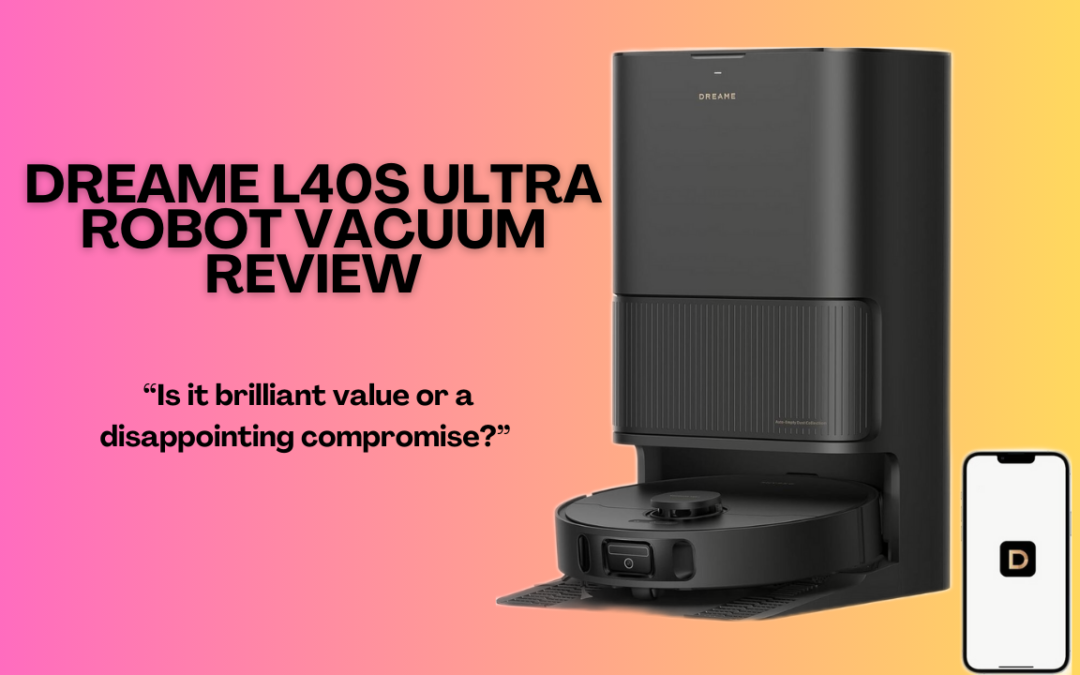
I’m going to be brutally honest with you: the Dreame L40s Ultra Robot Vacuum CE confuses me. Not because it’s a bad robot vacuum, but because Dreame’s naming scheme makes it nearly impossible to understand what you’re actually buying without reading an encyclopedia of model differences. The “CE” designation apparently stands for “Compact Edition,” though there’s nothing compact about either the robot or the base station. What it really means is “cut features to hit a price point.”
Here’s why I decided to review the Dreame L40s Ultra Robot Vacuum CE specifically. After testing the eufy E25, Roborock QV35A, and DREAME D20 Pro Plus over recent months, I wanted to understand where Dreame’s mid-range offering positioned itself against both budget alternatives and premium siblings. The L40s series represents Dreame’s attempt to bring flagship features down to attainable prices, with three variants occupying different price tiers. The CE sits at the bottom of this family tree.
This robot solves a real problem for busy households: maintaining clean floors without dedicating weekend hours to vacuuming and mopping. The 100-day dust bag capacity, automatic mop washing, and hot air drying promise genuinely hands-off operation. Yet the omissions compared to its more expensive siblings raise important questions about value propositions.
What makes this model stand out centres on its 13,000Pa Vormax suction paired with a comprehensive all-in-one dock at approximately $650-1,100 pricing depending on sales. The TriCut brush system promises zero hair tangling. The ultrasonic carpet detection intelligently lifts mops to protect rugs. Hot air drying prevents mildew buildup on mop pads. These aren’t budget-tier features.
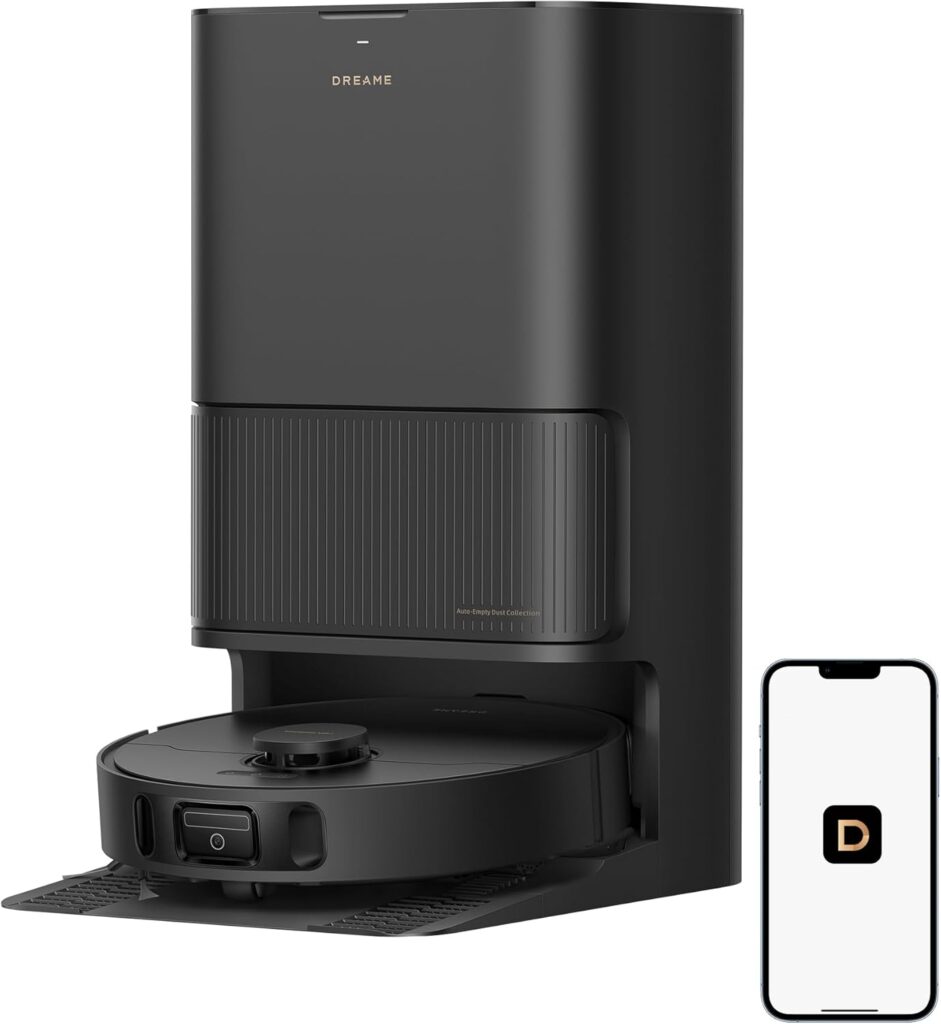
However, the CE variant sacrifices the extending side brush, dual-roller DuoBrush system, and AI camera obstacle avoidance found in the standard L40s Ultra, costing $300-400 more. It lacks the automatic detergent dispenser without purchasing a separate module. Edge cleaning suffers. Navigation feels more basic. If you’re weighing options across different technologies and price points, our guide to the best robot vacuums for pet hair provides essential context for understanding these trade-offs.
I’ve tested the Dreame L40s Ultra Robot Vacuum CE for three weeks across hardwood, tile, and medium-pile carpet in a 1,800 square foot home with one long-haired cat. I’ve compared it directly against budget alternatives and premium competitors. I’ve pushed it through daily cleaning cycles and deliberately created messes to stress-test performance.
The verdict? It’s complicated. At $1,100 MSRP, the CE represents questionable value against alternatives. At $650 during sales, it transforms into an entirely different proposition. This review will help you determine whether the compromises inherent in the “Compact Edition” designation align with your specific cleaning priorities, floor types, budget constraints, and tolerance for imperfect technology.
The Dreame L40s Ultra Robot Vacuum CE delivers surprisingly capable vacuuming performance at sale prices, whilst revealing frustrating limitations in edge cleaning and mopping effectiveness.
See Where The Dreame L40s Ultra Robot Vacuum Ranks On Our List Of The Best Robots For Pet Hair
First Impressions and Unboxing
The packaging arrives in substantial cardboard with minimal marketing fluff. Dreame prioritises protection over presentation, surrounding both robot and base station in dense foam inserts, preventing shipping damage. Everything feels industrial rather than consumer-premium.
Opening reveals efficient organisation. The robot vacuum occupies the top compartment, the PowerDock base station sits in a separate section beneath, and accessories nestle in organised cardboard dividers. The manual and quick-start guide provide clear setup instructions without excessive complexity.
What’s included feels adequate without generosity: the L40s Ultra CE robot, PowerDock all-in-one base station, power cable, two spinning mop pads, TriCut main brush (pre-installed), side brush (pre-installed), 3.2-litre dust bag (pre-installed in dock), additional filter, user manual, and quick-start documentation. The package omits the automatic detergent dispenser module despite the dock featuring mounting points for this accessory.
Initial build quality observations lean towards solid mid-range construction rather than premium materials. The robot feels substantial without excessive weight, suggesting quality plastics throughout. The base station construction prioritises function over aesthetics, appearing workmanlike rather than sophisticated. Nothing feels cheap or poorly manufactured, but neither does anything suggest premium engineering.
My first reaction to the design registered as pleasantly neutral. The circular robot measures standard dimensions for this category. The matte finish resists fingerprints reasonably well. The base station, whilst large, incorporates clean lines without unnecessary embellishments. Both black and white colour options suit most home aesthetics without drawing excessive attention.
Setup difficulty proved minimal, requiring approximately 12-15 minutes from box opening to first cleaning cycle. You’ll install the dust bag into the base station, fill the clean water tank, attach mop pads, connect power, download the Dreamehome app, and complete pairing through straightforward app instructions. The only complication emerged during initial mapping when the robot interpreted a large glass door as an accessible passage requiring manual map editing.
Design and Build Quality
The L40s Ultra CE employs quality ABS plastic throughout construction without premium materials or metal accents. The robot’s circular design follows conventional wisdom for robot vacuum engineering, measuring approximately 350mm in diameter and 96mm in height, allowing access under most furniture whilst remaining taller than ultra-slim alternatives, prioritising low-profile navigation.
Materials feel appropriate for the price bracket. The top surface uses matte-finish plastic resisting fingerprints adequately. The bumper features sufficient rubber protection without excessive padding. The LiDAR tower positions centrally atop the robot, adding height but enabling precise navigation. Underneath, the TriCut brush, spinning mop pads, and climbing wheels appear designed for durability rather than cost-cutting.
The PowerDock base station represents functional engineering without aesthetic pretensions. It measures substantial dimensions requiring floor space approximately 400mm wide, 500mm deep, and 400mm tall. The clean water tank (4 litres) and dirty water tank (3.5 litres) occupy internal compartments accessed through top panels. The magnetic dust bag compartment opens smoothly without complicated latches.
Ergonomics matter less for robot vacuums than handheld alternatives, though handling during maintenance proves comfortable. The water tanks feature integrated handles, simplifying removal and installation. The mop pad attachment uses straightforward clips requiring minimal force. The dust bag compartment magnetic panel opens with one hand.
Colour options remain limited to black or white, both featuring matte finishes suitable for most home aesthetics. The black variant I tested shows dust accumulation requiring occasional wiping, whilst the white alternative likely displays dirt more prominently. Neither option screams premium sophistication or budget compromise.
Durability concerns after three weeks centre primarily on the mop pad attachment mechanism. The clips securing mop pads feel adequate but not overbuilt, suggesting potential long-term wear. The TriCut brush maintains its shape without visible degradation. The climbing wheels show minimal wear despite daily use. The dock’s water tanks exhibit no leaking or seal degradation.
Compared to competitors, the build quality sits comfortably in mid-range territory. It matches alternatives like the Roborock QV35A whilst falling short of premium options. The functional design prioritises capability over sophistication, suiting pragmatic buyers better than design-conscious consumers.
Key Features
Let me walk you through the features genuinely impacting daily cleaning performance rather than marketing specifications.
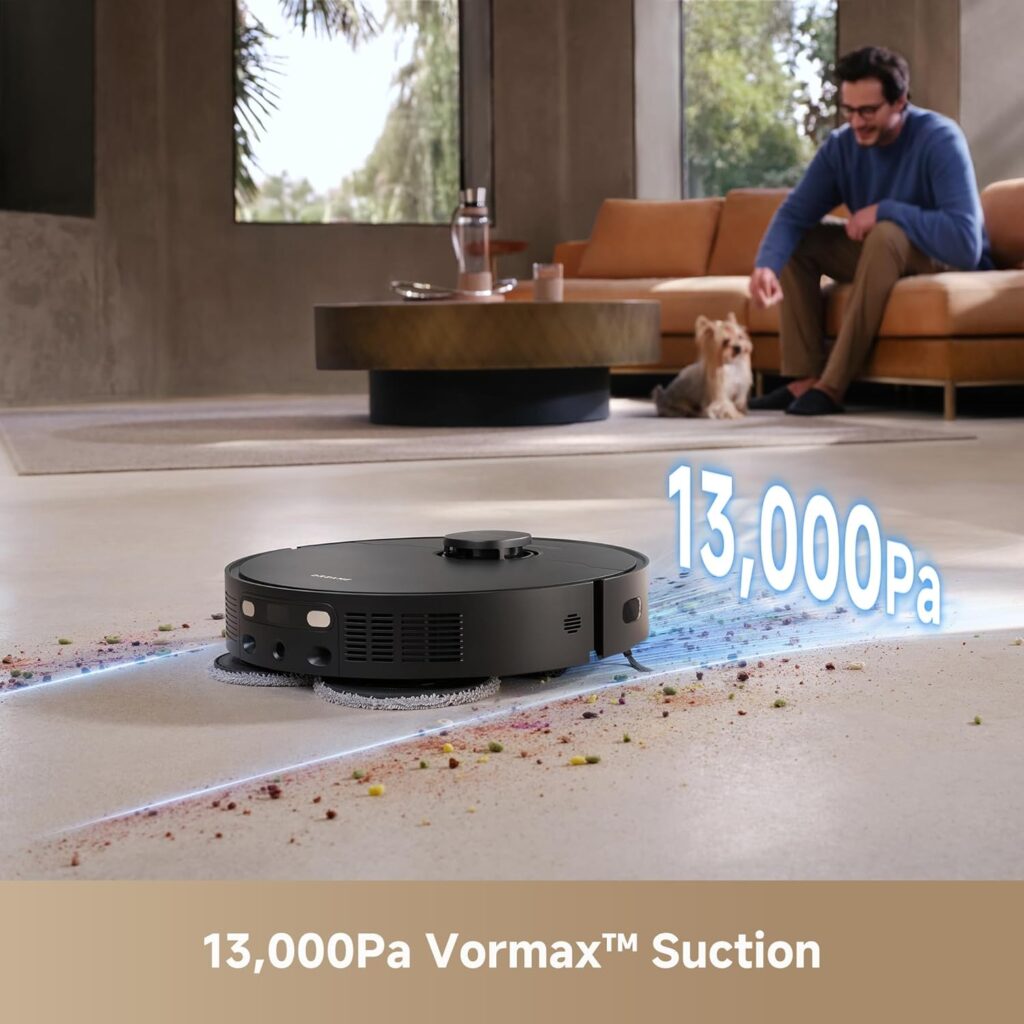
13,000Pa Vormax Suction delivers impressive power for mid-range pricing. This represents significant capability, extracting embedded carpet dirt and handling hard floor debris with authority. In practical terms, the powerful suction tackles everything from fine dust to cereal debris without requiring multiple passes on most surfaces. It’s not flagship-level 19,000Pa territory, but it substantially exceeds budget alternatives offering 5,000-8,000Pa.
TriCut Brush Anti-Tangle System addresses the single most frustrating aspect of robot vacuum ownership: hair-wrapped brushes requiring scissors. The V-shaped blade design cuts long hair into shorter segments before directing them into the dustbin rather than allowing wrapping around the roller. After three weeks with a long-haired cat, I’ve experienced zero tangling requiring manual intervention. This feature alone justifies consideration for pet owners or households with long hair.
100-Day Dust Bag Capacity transforms maintenance expectations fundamentally. The massive 3.2-litre bag inside the PowerDock holds substantially more debris than typical 2-2.5 litre alternatives. Dreame’s 100-day estimate assumes average residential use, and my three-week testing suggests this calculation holds reasonable accuracy. The bag currently sits perhaps 20% full after daily cleaning cycles across 1,800 square feet.
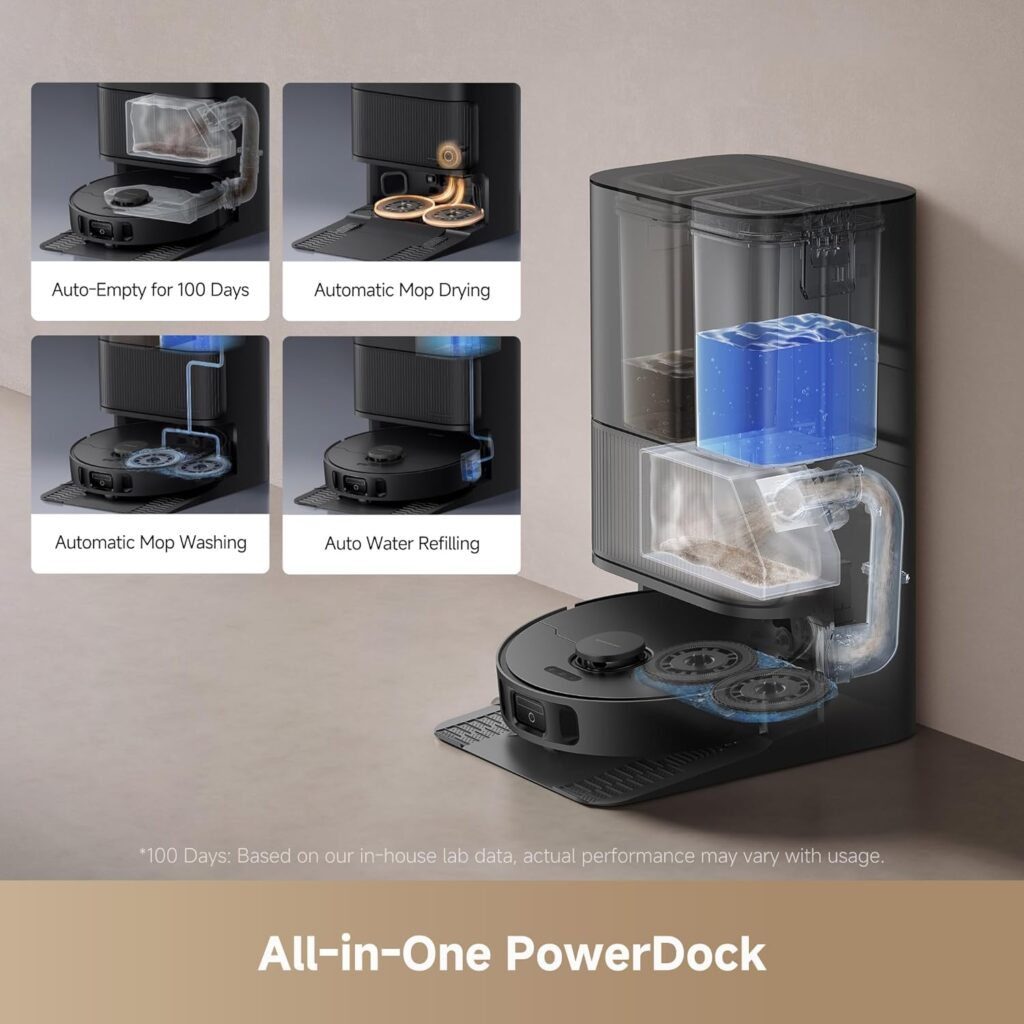
All-in-One PowerDock Automation handles multiple maintenance tasks automatically: dust emptying, water tank refilling for mopping, mop pad washing, and hot air drying. The dock essentially eliminates daily interaction requirements. You’ll occasionally need to empty the dirty water tank and refill the clean water reservoir, but the robot handles everything else independently.
Ultrasonic Carpet Detection with Mop Lift intelligently identifies carpets and rugs using ultrasonic sensors, then lifts mop pads approximately 10mm, preventing carpet wetting. The system works reliably on larger area rugs, though occasionally struggles with small doormats or thin floor mats. You can configure the app to avoid carpets entirely during mopping cycles.
EasyLeap Threshold Climbing enables the robot to climb thresholds and transitions up to 40mm (1.57 inches) high. The four-wheel climbing system proves reasonably effective on standard door transitions and modest height changes. However, it failed to overcome a kitchen step in my testing, requiring a small ramp solution.
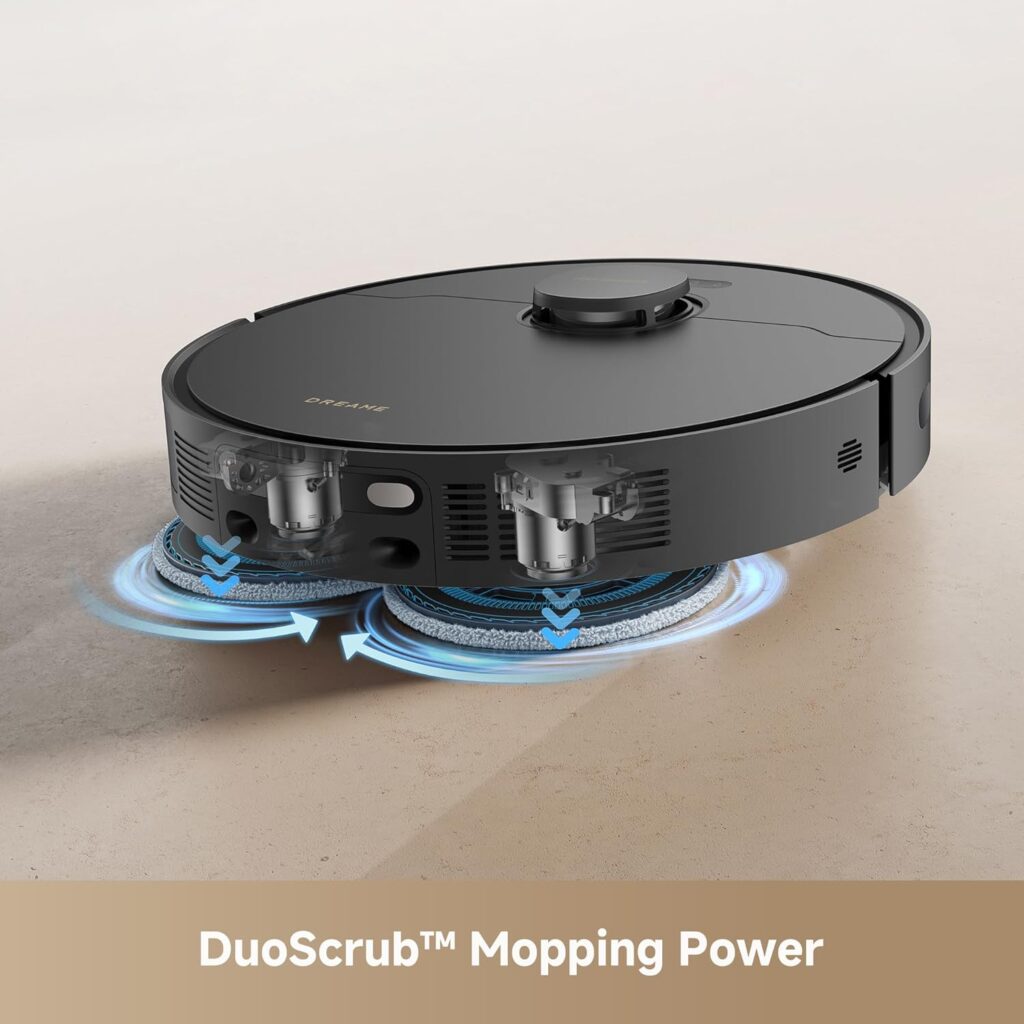
DuoScrub Spinning Mop System features two rotating mop pads providing basic mopping capability. The pads spin at modest speeds whilst the robot moves across hard floors. However, this represents passive wiping rather than active scrubbing. It handles light dust and fresh spills adequately, but struggles with dried or sticky messes requiring actual cleaning pressure.
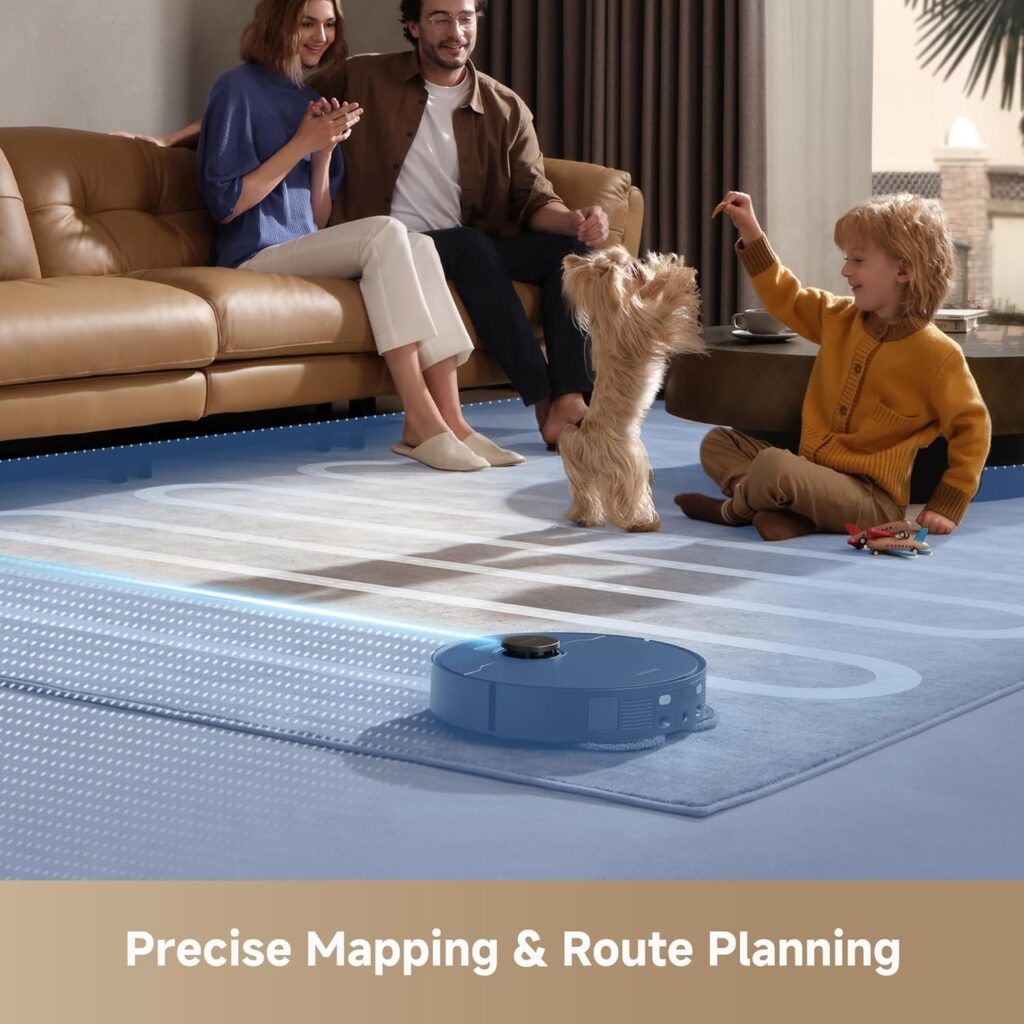
Smart Pathfinder Navigation employs LiDAR laser mapping, creating detailed home layouts. The system plans efficient cleaning routes, minimising redundant coverage. Multi-room support, virtual barriers, and no-go zones provide flexible scheduling. However, the CE variant lacks the AI camera obstacle avoidance found in more expensive siblings, relying instead on depth sensors that occasionally result in gentle obstacle contact.
Performance and Real-World Testing
Let me share specific scenarios revealing actual performance beyond marketing specifications.
Hard Floor Vacuuming: The 13,000Pa suction excels on hardwood, tile, and laminate. Fine dust, scattered rice, cereal debris, and tracked-in dirt collection proved excellent. I deliberately created test messes including flour, coffee grounds, and pet kibble, and the robot collected everything efficiently in single passes without pushing debris around or leaving residue.
Carpet Cleaning: Medium-pile carpet performance met expectations without exceeding them. The powerful suction extracted embedded dirt and pet hair effectively from standard carpeting. On thicker shag or high-pile carpets, performance remained adequate, though not matching dedicated carpet-focused alternatives. The automatic carpet detection boosted suction appropriately when sensing carpet surfaces.
Pet Hair Collection: The TriCut brush genuinely works as advertised. Three weeks of daily cleaning with a shedding cat produced zero tangling incidents requiring manual intervention. Hard floor pet hair collection proved exceptional. Carpet pet hair performance remained strong, though occasionally requiring second passes on thick carpets with heavy shedding accumulation.
Edge and Corner Cleaning: This represents the most disappointing aspect. The L40s Ultra CE lacks the extending side brush found in the standard L40s Ultra model. Edge cleaning suffers noticeably compared to premium alternatives. The static side brush reaches reasonably close to walls and baseboards, but misses the tight corner coverage that extending brush systems achieve. You’ll find occasional dust bunnies in right-angle corners.
Mopping Performance: The basic mopping system provides maintenance-level cleaning only. Fresh spills and light dust wiping prove adequate. However, dried coffee stains, sticky juice spills, and embedded kitchen grease require manual mopping intervention. The dock washes mop pads with water only since the automatic detergent dispenser requires a separate purchase, limiting mopping effectiveness further.
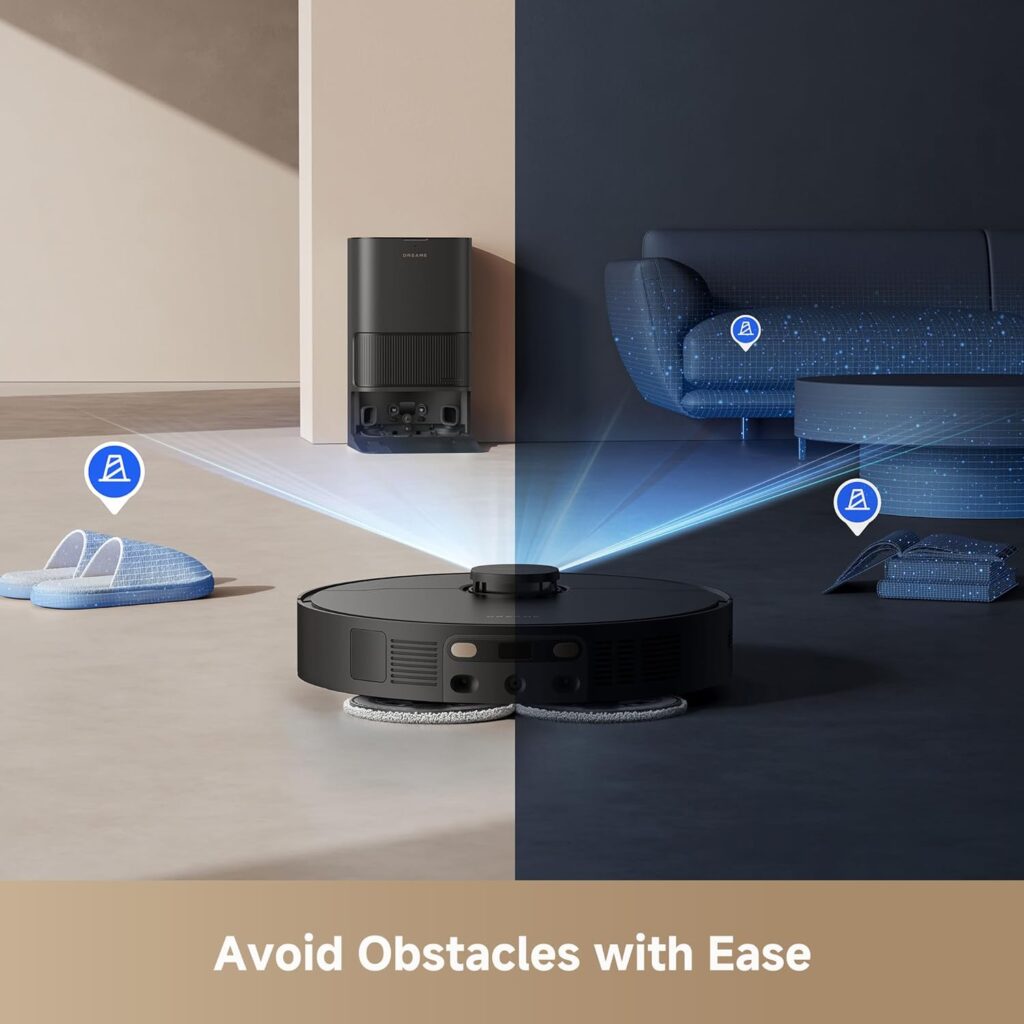
Obstacle Avoidance: The depth-only sensor system navigates reasonably well without the AI camera found in premium variants. It successfully avoided larger obstacles like furniture legs, shoes, and pet toys most of the time. However, smaller objects like cables, small toys, and thin obstacles occasionally result in gentle bumping rather than complete avoidance.
Threshold Climbing: The EasyLeap system handled standard door transitions and modest height changes successfully. However, a small kitchen step measuring approximately 50mm exceeded its capabilities, requiring a ramp solution. Most homes with standard transitions won’t encounter problems.
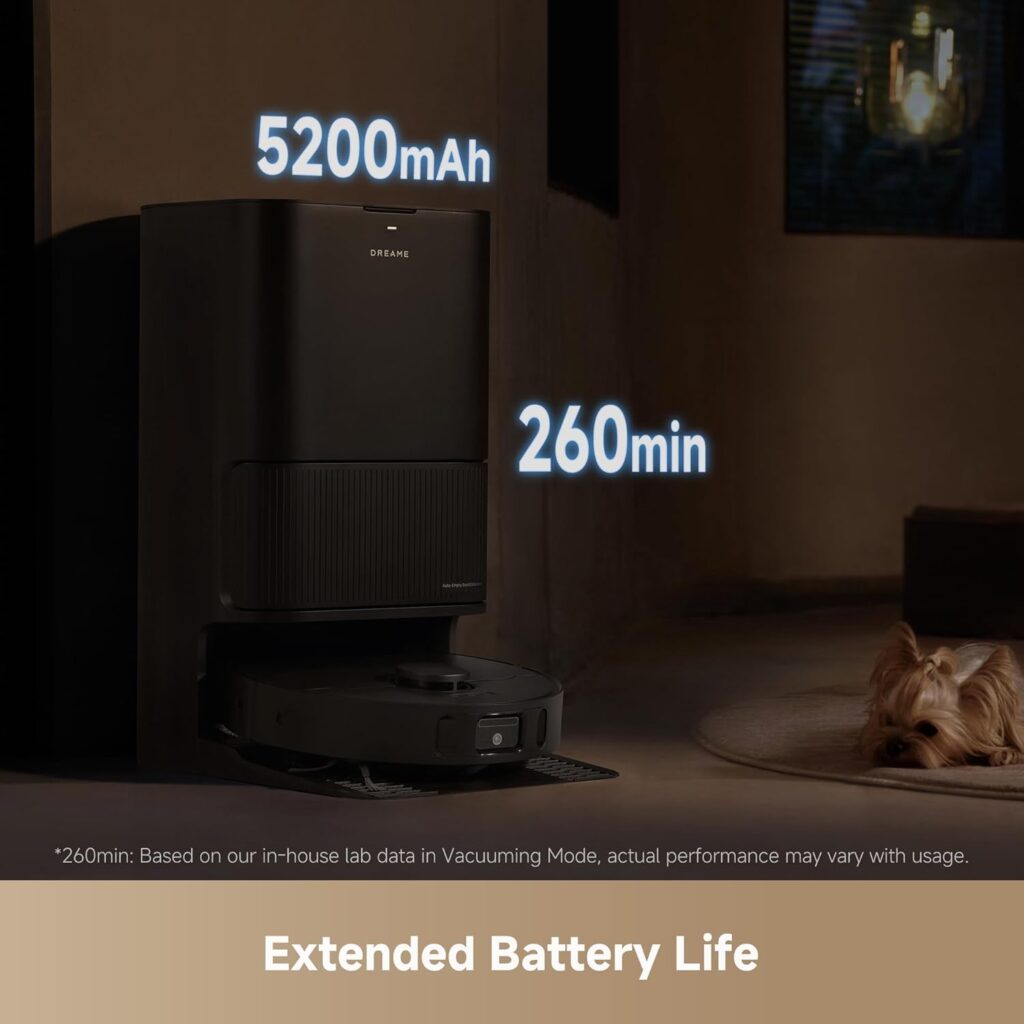
Battery and Runtime: Runtime specifications aren’t prominently published, but the robot completed my 1,800 square foot home with approximately 30% battery remaining. The system efficiently manages the battery by returning to the dock for recharging when necessary, then resuming cleaning automatically.
Consistency Over Time: Performance remained stable across three weeks of testing. Suction power hasn’t diminished. The TriCut brush continues collecting hair without degradation. The mop pads maintain adequate condition. The app delivered one firmware update during testing, improving navigation slightly.
Noise Levels: Operation noise sits below average for robot vacuums. Vacuuming produces a noticeable but not intrusive sound, allowing conversation in the same room. The base station generates moderate whooshing noise during dust emptying, lasting approximately 20-30 seconds. Mop pad washing produces a similar brief noise. Overall, it’s quieter than traditional upright vacuums but not whisper-silent.
See Where The Dreame L40s Ultra Robot Vacuum Ranks On Our List Of The Best Robots For Pet Hair
Technical Specifications
Here’s what powers this robot, explained practically:
- Suction Power: 13,000Pa Vormax (strong mid-range capability; doubles budget alternatives whilst falling short of 19,000Pa flagship models)
- Brush System: TriCut anti-tangle brush (V-shaped blade cuts hair before wrapping; single roller rather than dual DuoBrush system found in L40s Ultra)
- Side Brush: Standard fixed-position brush (adequate but not extending like premium L40s Ultra variant)
- Navigation: Smart Pathfinder LiDAR laser mapping with depth-only obstacle avoidance (no AI camera; less sophisticated than L40s Ultra AE variant)
- Dimensions: Approximately 350mm diameter × 96mm height (3.8 inches tall; standard sizing fitting under most furniture)
- Weight: Approximately 3.8kg robot only (8.4 lbs; feels substantial without excessive heaviness)
- Dustbin Capacity: Onboard capacity not prominently specified (relies on automatic emptying to 3.2L dock bag)
- Dust Bag Capacity: 3.2 litres in PowerDock (approximately 100 days between replacements according to manufacturer testing)
- Water Tanks: 4-litre clean water tank, 3.5-litre dirty water tank in the dock
- Mop System: DuoScrub dual spinning mop pads with 10mm auto-lift capability
- Threshold Climbing: Up to 40mm (1.57 inches) with the EasyLeap four-wheel system
- Connectivity: Wi-Fi 2.4GHz only; compatible with Alexa, Google Home, Siri
- App Control: Dreamehome app (iOS/Android) with mapping, scheduling, and virtual barriers
- Dock Features: Auto-emptying, water refilling, mop washing, hot air drying (auto-detergent dispenser requires separate purchase)
- Runtime: Not officially specified; completed 1,800 sq ft with 30% remaining in testing
The specifications that matter most: 13,000Pa suction provides solid mid-range performance. The 3.2-litre dust bag dramatically reduces maintenance frequency. The TriCut brush eliminates hair-tangling frustrations. The comprehensive dock automation handles most maintenance tasks. However, the lack of extending side brush, dual roller system, and AI camera represents meaningful omissions compared to the standard L40s Ultra costing $300-400 more.
Accessories and Tools Included
The L40s Ultra CE ships with essentials without excessive extras:
Primary Components:
- Dreame L40s Ultra CE robot vacuum
- PowerDock all-in-one base station
- Power cable for the dock
- 3.2-litre dust bag (pre-installed in dock)
Consumables and Maintenance Items:
- Two spinning mop pads (basic microfibre quality; adequate for light mopping)
- TriCut anti-tangle brush (installed on robot; V-shaped blade design)
- Fixed-position side brush (installed on robot; does not extend)
- Additional filter (washable; requires replacement every 6-12 months)
Documentation:
- User manual (comprehensive with helpful diagrams)
- Quick-start guide (covers essential setup efficiently)
Notably Absent:
- Automatic detergent dispenser module (dock features mounting points, but requires a separate purchase)
- Spare brushes or additional mop pads beyond the initial pair
Accessory quality throughout meets mid-range standards without premium materials. The mop pads feature basic microfibre construction adequate for light wiping. The TriCut brush suggests reasonable longevity with proper maintenance.
What You’ll Actually Use: Everything included serves a genuine purpose. The TriCut brush requires eventual replacement after extensive use. Dust bags need changing approximately every 100 days with average use. Mop pads wear out, requiring replacement if mopping regularly.
Additional Purchases to Consider: Dreame sells replacement dust bags, brushes, filters, and mop pads through their website and Amazon. The automatic detergent dispenser module costs approximately $50-70 separately if mopping effectiveness matters significantly. Pricing remains reasonable compared to some competitors charging premium prices for consumables. Third-party alternatives exist with varying compatibility.
Value Assessment: The included package provides fair value for the price point. Having complete brush systems, a substantial dust bag, and basic mopping accessories means you’re ready for months of use without immediate additional purchases. However, the lack of a detergent dispenser feels like a deliberate feature segmentation encouraging upgrades.
Pros and Cons
Pros
- Powerful 13,000Pa Suction for Price: At $650-1,100, depending on sales, the 13,000Pa Vormax suction delivers mid-range capability rivalling alternatives costing substantially more. Hard floor debris collection and carpet dirt extraction prove excellent for the price bracket.
- Genuine Zero-Tangling TriCut System: The V-shaped blade design genuinely eliminates hair tangling. Three weeks with a long-haired cat produced zero instances requiring manual hair removal from the brush roller. This feature alone dramatically improves the ownership experience for pet households or anyone with long hair.
- Exceptional 100-Day Dust Bag Capacity: The massive 3.2-litre dust bag provides 100-day capacity and transforms the hands-off ownership experience. Most alternatives require monthly or bi-monthly emptying. This genuinely delivers set-and-forget convenience.
- Comprehensive PowerDock Automation: Auto-emptying, water refilling, mop washing, and hot air drying handle essentially all maintenance tasks automatically. The dock eliminates daily interaction requirements beyond occasional water tank management.
- Hot Air Mop Drying Prevents Mildew: Unlike budget alternatives with passive air drying, hot air actively dries mop pads, preventing mildew buildup and unpleasant odours. This feature substantially improves long-term hygiene.
- Ultrasonic Carpet Detection Works Well: The intelligent carpet sensing lifts mops reliably on larger area rug,s preventing carpet wetting. The system works better than optical-only alternatives in varied lighting conditions.
- Strong Value at Sale Prices: At $650 during promotions, the CE delivers exceptional value. The comprehensive dock automation and powerful suction justify pricing against budget alternatives costing $400-500.
Cons
- Basic Mopping Limited to Water Only: Without the automatic detergent dispenser (sold separately), mopping uses plain water, providing minimal cleaning capability. Dried or sticky messes require manual intervention. This represents a significant limitation for mopping-focused households.
- No Extending Side Brush Hurts Edge Cleaning: The fixed-position side brush creates noticeable edge and corner coverage gaps compared to the extending brush system in the standard L40s Ultra. You’ll find occasional dust bunnies in tight corners.
- Depth-Only Obstacle Avoidance Less Capable: Without the AI camera found in the L40s Ultra AE variant, obstacle avoidance relies on depth sensors, occasionally resulting in gentle object contact. Small obstacles like cables sometimes get bumped rather than avoided.
- Mapping Requires Manual Editing: Initial mapping interpreted glass doors as passable thresholds requiring manual map correction. Small rug detection struggles occasionally. The system works adequately after corrections, but it isn’t flagship-level intuitive.
- 2.4GHz Wi-Fi Only Feels Dated: Modern devices supporting 5GHz networks feel more future-proof. Whilst most homes maintain 2.4GHz capability, this restriction limits flexibility and potentially network performance.
Who This Product Is Best For
The L40s Ultra CE excels in specific scenarios and user profiles.
Budget-Conscious Households Prioritising Vacuuming: If powerful suction and zero-tangling technology matter more than premium mopping or perfect edge cleaning, the CE maximises vacuuming value per pound spent at sale prices.
Pet Owners with Moderate Shedding: The TriCut brush eliminates hair-tangling frustrations completely. Homes with one or two moderate-shedding pets benefit significantly without requiring flagship-level specifications.
Medium-Sized Single-Level Homes: Properties between 1,000 and 2,000 square feet on one level suit the navigation capabilities and battery capacity well. Larger homes may strain the runtime, requiring mid-clean recharging.
Set-and-Forget Preference Over Premium Features: The 100-day dust bag capacity and comprehensive dock automation provide genuine hands-off operation. Users frustrated with frequent maintenance requirements gain significant convenience.
Predominantly Hard Floor Homes: Properties with 60%+ hard flooring and modest area rugs suit the capable hard floor vacuuming, whilst accepting basic mopping limitations.
First-Time Robot Vacuum Buyers: The mid-range pricing reduces risk for buyers uncertain whether robot vacuums suit their lifestyle, whilst delivering genuine performance insights.
Sale Price Monitors: At $650-750 during promotions, the value becomes exceptional. Patient buyers willing to wait for sales gain flagship-adjacent features at mid-tier pricing.
Situations to Avoid: Homes requiring exceptional mopping performance should explore alternatives with genuine scrubbing systems. Edge-cleaning perfectionists wanting zero dust in corners. Buyers needing AI camera obstacle avoidance for complex floor clutter. Multi-level homes requiring stair navigation (no robot vacuum climbs stairs without human intervention).
See Where The Dreame L40s Ultra Robot Vacuum Ranks On Our List Of The Best Robots For Pet Hair
Alternative Uses and Versatility
Beyond standard floor cleaning, I’ve discovered several applications.
Scheduled Room-Specific Cleaning: The app enables programming different schedules for different rooms. I’ve configured daily kitchen and bathroom cleaning whilst running bedrooms three times weekly, optimising efficiency and battery usage based on actual traffic patterns.
Targeted Zone Cleaning: The app allows designating specific areas for immediate cleaning without full home sessions. I’ve used this extensively for tracked-in mud near the entrance and localised kitchen messes.
Allergy Season Management: Running daily vacuum cycles during high pollen seasons reduces allergen accumulation significantly. The powerful suction captures fine particles that manual vacuuming sometimes misses.
Pre-Guest Preparation: Scheduling comprehensive vacuum and mop sessions before guests arrive ensures spotless floors without manual effort, allowing focus on other hosting preparations.
Custom Power Level Strategies: The adjustable suction levels allow tailoring cleaning intensity. I’ve set gentle mode for delicate area rugs and maximum power for high-traffic carpets, extending brush longevity whilst maintaining cleaning effectiveness.
Carpet-Only or Mop-Only Modes: The app enables removing mop pads for vacuum-only operation or configuring mop-only sessions for hard floors. This flexibility suits varying seasonal needs and flooring types.
Value for Money and Comparison
At $1,099 MSRP with frequent sales around $650-750, the L40s Ultra CE occupies complicated value territory.
What You’re Paying For: The pricing reflects intelligent feature prioritisation. Dreame included powerful 13,000Pa suction, zero-tangling brush technology, 100-day dust capacity, and comprehensive dock automation whilst omitting an extending side brush, dual roller system, AI camera, and auto-detergent dispenser. This creates genuine value for vacuuming-focused buyers, accepting mopping and edge cleaning limitations.
Comparison to Standard L40s Ultra: The L40s Ultra costs $1,399 MSRP (approximately $300-400 more), offering 19,000Pa suction, HyperStream DuoBrush dual roller system, extending side brush, and auto-detergent dispenser. If edge cleaning perfection and maximum suction matter significantly, the premium justifies itself. If vacuuming capability suffices, the CE saves substantial money. See how they rank in our best robot vacuums list for a detailed side-by-side analysis.
Comparison to Roborock QV35A: The Roborock QV35A offers 8000Pa suction at $429-649 pricing. The L40s Ultra CE provides 62% more suction (13,000Pa vs 8000Pa) at similar pricing during sales. The Roborock features spinning mop pads and cold air drying, whilst the CE offers hot air drying and larger dust capacity.
Comparison to DREAME D20 Pro Plus: The budget-tier D20 Pro Plus delivers 13,000Pa suction at $320-400 pricing with much simpler dock automation (basic auto-emptying only, no mopping automation). The CE adds comprehensive mopping capabilities and hot air drying, justifying the $250-350 premium for buyers wanting mopping functionality.
Comparison to eufy E25: The eufy E25 costs $899 MSRP, offering 20,000Pa suction and revolutionary HydroJet roller mopping at $700-750 on sale. The eufy delivers superior mopping and higher suction but costs $50-100 more than the CE during sales. If mopping matters significantly, the eufy justifies the premium. If vacuuming capability and longer dust bag capacity matter more, the CE provides better value.
Long-Term Value: Ongoing costs remain reasonable. Dust bags cost approximately $20-25 for multi-packs lasting months. Replacement brushes, filters, and mop pads maintain affordable pricing. The solid build quality suggests 3-5 years of reliable service with proper maintenance.
Is It Worth the Price? At $1,099 MSRP, the CE represents questionable value against the standard L40s Ultra, costing $300 more with substantially better features. At $650-750 during sales, the CE delivers exceptional value for vacuuming-focused households, accepting mopping and edge cleaning limitations. Patient buyers monitoring for sales gain the best value proposition.
Maintenance and Long-Term Ownership
Real-world maintenance proved lighter than expected, though not entirely hands-off.
Daily Maintenance: Essentially none if mopping regularly. Occasionally, check water levels and ensure the dock area remains clear for autonomous docking.
Weekly Maintenance: Empty and refill water tanks if mopping regularly (dirty water tank fills approximately every 3-5 days with daily mopping). Visually inspect the TriCut brush for any accumulated debris. Wipe down the robot’s sensors, maintaining navigation accuracy.
Monthly Maintenance: Remove and clean mop pads manually if mopping regularly (the dock washes them automatically, but occasional deeper cleaning extends lifespan). Check brushes for wear. Wipe down charging contacts. Clean the dock’s dirty water collection area, preventing residue buildup.
Quarterly Maintenance (or Every 100 Days): Replace the dust bag when full or approximately every 100 days. Clean or replace filters according to app reminders (washable filters typically extend 6-12 months typically). Inspect brushes and wheels for wear requiring replacement.
Replacement Parts Availability: Dreame maintains reasonable parts availability through their website and Amazon. Dust bags, filters, brushes, mop pads, and the optional automatic detergent dispenser module ship relatively quickly at affordable prices.
Common Issues to Watch For: Some users report occasional navigation confusion in complex floor plans. Performing thorough initial mapping whilst ensuring cleared floors resolves most issues. The basic mopping requires realistic expectations. Small rug detection struggles occasionally require manual map editing, designating no-mop zones.
Expected Lifespan: With proper maintenance, I’d expect 3-5 years of reliable service. The solid mid-range build quality and relatively simple mechanisms suggest durability, though long-term data remains limited given the mid-2025 launch timing.
Warranty Coverage: Dreame typically provides a one-year limited warranty covering manufacturing defects. Some retailers offer extended warranty options. Read warranty terms carefully, as they often exclude normal wear items like brushes, filters, and mop pads.
Reasons to Buy This Product
Let me outline compelling scenarios where the L40s Ultra CE makes excellent sense.
Strong Vacuuming at Mid-Tier Pricing: If you need 13,000Pa suction and zero-tangling technology without a $1,000+ investment, the CE delivers exceptional vacuuming value per pound spent at sale prices around $650-750.
Pet Hair Without Tangling Frustration: The TriCut brush genuinely eliminates hair wrapping completely. Pet owners frustrated with constant brush cleaning gain a dramatic quality-of-life improvement.
100-Day Dust Capacity Maximises Automation: If minimal maintenance appeals more than perfect edge cleaning or premium mopping, the exceptional dust bag capacity provides genuine set-and-forget convenience rarely matched at this price point.
Comprehensive Dock Automation on Budget: The PowerDock handles dust emptying, water management, mop washing, and hot air drying automatically. You’re getting flagship-level automation at mid-tier pricing.
Vacuuming Matters More Than Mopping: If you primarily need consistent vacuuming with light maintenance mopping capability, the CE focuses engineering investment where it matters most for your specific needs.
You Monitor Sales Aggressively: At $650-750 during frequent promotions, the value becomes extraordinary. The already-solid value proposition improves dramatically at sale prices, making compromises more acceptable.
Predominantly Hard Floor Home: Properties with 60%+ hard flooring suit the capable hard floor vacuuming, whilst accepting that mopping won’t replace manual deep cleaning.
See Where The Dreame L40s Ultra Robot Vacuum Ranks On Our List Of The Best Robots For Pet Hair
Reasons to Skip This Product
Honesty demands acknowledging scenarios where alternatives make more sense.
Mopping Performance Matters Significantly: The water-only mopping (without an automatic detergent dispenser included) provides minimal cleaning capability. Premium alternatives with genuine scrubbing systems or the eufy E25’s HydroJet roller deliver dramatically superior mopping.
Edge Cleaning Perfection Required: The lack of extending the side brush creates noticeable corner coverage gaps. Buyers wanting zero dust in tight corners should explore the standard L40s Ultra with an extending brush or alternatives with superior edge cleaning systems.
You Need AI Camera Obstacle Avoidance: The depth-only sensors work adequately, but occasionally bump into smaller obstacles. Homes with significant floor clutter or buyers wanting flagship-level navigation should consider the L40s Ultra AE variant with AI camera.
You Want Included Detergent Dispensing: Having to purchase the automatic detergent dispenser separately feels like deliberate feature segmentation. If mopping matters, buying the standard L40s Ultra with included auto-dosing makes more financial sense.
You’re Buying at Full MSRP: At $1,099 retail pricing, the CE represents questionable value against the standard L40s Ultra costing $300 more with substantially better features. Only consider the CE during sales when dropping prices below $800.
Conclusion
After three weeks living with the Dreame L40s Ultra Robot Vacuum CE, I can confidently state it occupies a frustratingly complicated value territory where pricing determines everything. The combination of genuine 13,000Pa suction, TriCut zero-tangling technology, 100-day dust capacity, and comprehensive PowerDock automation delivers daily cleaning performance that consistently meets expectations for vacuuming-focused priorities. Yet the deliberate omissions compared to its more expensive siblings create meaningful limitations in edge cleaning and mopping effectiveness.
The verdict hinges entirely on pricing and priorities. At $1,099 MSRP, the L40s Ultra CE represents questionable value. Spending $300 more for the standard L40s Ultra gains you 46% more suction (19,000Pa), the extending side brush dramatically improves edge cleaning, and the HyperStream DuoBrush dual roller system includes automatic detergent dispensing. Those additions justify the premium for buyers wanting comprehensive performance.
However, at sale prices around $650-750 that Dreame offers frequently, the equation transforms completely. Suddenly, you’re getting mid-range vacuuming capability, zero-tangling technology eliminating pet hair frustrations, 100-day automation reducing maintenance burden, and comprehensive dock features at pricing matching or undercutting simpler alternatives. The compromises become acceptable trade-offs rather than disappointing omissions.
For homes with predominantly hard flooring and low-to-medium pile carpets, particularly those with moderate pet shedding, the Dreame L40s Ultra Robot Vacuum CE delivers solid daily cleaning performance when purchased at sale pricing. The TriCut brush genuinely eliminates hair-tangling frustrations. The powerful suction extracts embedded dirt effectively. The massive dust bag provides genuine set-and-forget convenience.
However, critical limitations prevent universal recommendation. The basic water-only mopping provides maintenance wiping only, not deep cleaning capability. The lack of extending side brush creates noticeable edge and corner coverage gaps. The depth-only obstacle avoidance occasionally bumps smaller objects. The dock lacks an automatic detergent dispensing without a separate module purchase.
See Where The Dreame L40s Ultra Robot Vacuum Ranks On Our List Of The Best Robots For Pet Hair
Who should buy immediately? Vacuuming-focused households are catching sales below $750. Pet owners needing zero-tangling technology without a $1,000+ investment. Buyers prioritise dust capacity and dock automation over perfect edge cleaning. Predominantly hard floor homes accepting basic mopping limitations. First-time robot vacuum buyers wanting solid capability with acceptable risk.
Who should explore alternatives? Buyers requiring exceptional mopping performance with genuine scrubbing systems or automatic detergent dispensing. Edge cleaning perfectionists wanting zero dust in corners. Buyers needing AI camera obstacle avoidance for complex floor clutter. Anyone considering purchase at full $1,099 MSRP (spend $300 more for substantially better standard L40s Ultra).
The Dreame L40s Ultra Robot Vacuum CE earns my conditional recommendation for appropriate use cases at sale pricing with a clear understanding of its strengths and limitations. At $650-750 during frequent promotions, it delivers exceptional vacuuming value whilst accepting mopping and edge cleaning compromises. At regular $1,099 pricing, better alternatives exist spending slightly more.
For comprehensive comparisons across all technologies, price points, and feature sets, explore our complete guide to the best robot vacuums for pet hair, where you’ll find detailed analysis helping you make informed decisions. The Dreame L40s Ultra Robot Vacuum CE represents one capable option amongst many robots, each with distinct advantages depending on your specific cleaning priorities, floor types, budget flexibility, and tolerance for imperfect automation. This robot proves that mid-tier positioning creates complicated value propositions where sales timing determines whether compromises feel acceptable or disappointing.