Best Robot Vacuums for Small Houses | Expert Buying Guide
Living in a small house presents unique cleaning challenges that most robot vacuum guides completely ignore. The advice written for sprawling 3,000 square foot homes simply doesn’t apply when you’re working with 800 square feet and limited storage. That’s exactly why understanding how to find the best robot vacuums for a small house requires a completely different approach than choosing one for a mansion.
Most people assume small houses need cheap, basic robot vacuums. That couldn’t be more wrong. Compact spaces demand specific features that expensive flagship models often lack. The £1,200 premium robot with 240-minute battery life and massive base station? It’s absolute overkill that wastes your precious space. Meanwhile, that £200 budget model without mapping? It’ll bump randomly for an hour in your 600-square-foot flat.
I’ve lived in flats ranging from 500 to 1,200 square feet. I’ve tested dozens of robot vacuums in compact spaces. I’ve learned through frustrating experience which features actually matter and which are expensive marketing gimmicks for small-home owners.
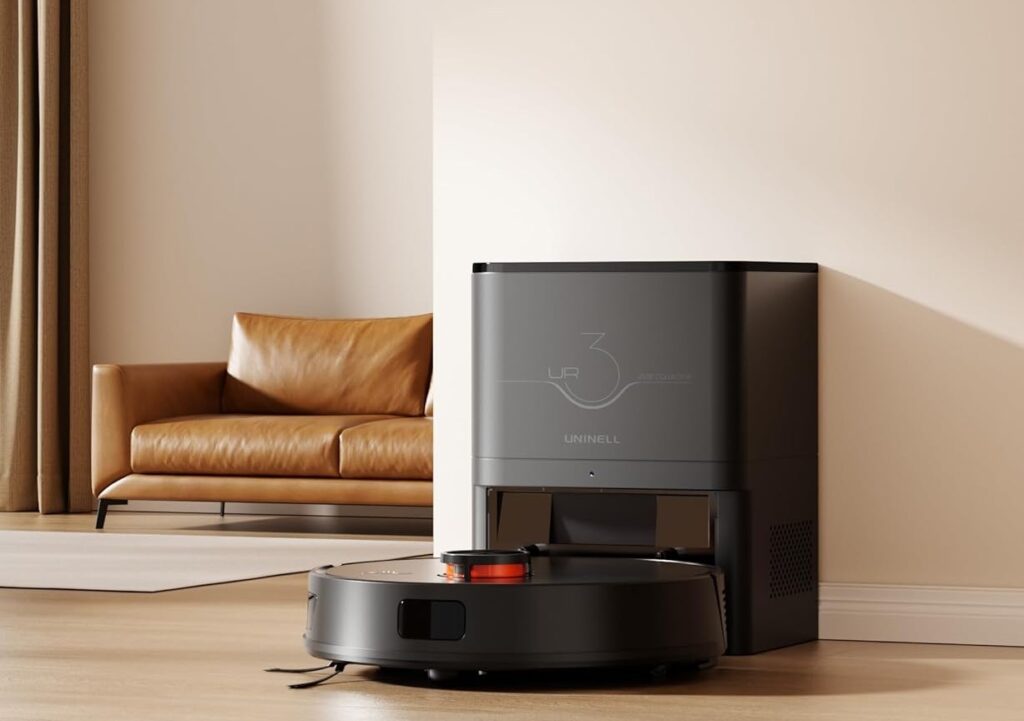
Here’s what surprised me most: the “best” robot vacuum for large homes is often terrible for small houses. Premium features scale for spacious living. Small-space priorities are entirely different: compact base stations, efficient cleaning patterns, appropriate capacity, and smart storage solutions.
Small houses need thoughtful robot vacuum selection. You’re optimising for different priorities than large-home owners. Getting this right transforms your cleaning routine whilst saving money on features you don’t need. Getting it wrong means an expensive dust-gathering ornament dominating your limited space.
This guide teaches you exactly what matters when choosing robot vacuums for compact spaces. You’ll learn which features genuinely benefit small houses. I’ll explain what to look for, what to avoid, and how specifications translate to real-world performance in tight quarters.
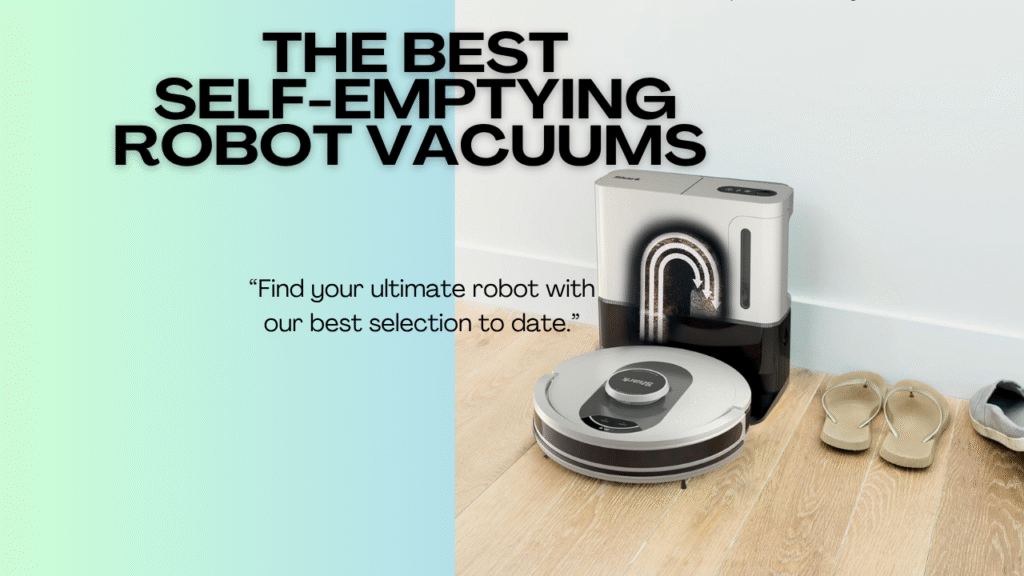
If you’re comparing specific models after reading this guide, check out our comprehensive ranking of the best self-emptying robot vacuums where we test robots across all home sizes.
Small houses deserve excellent cleaning automation. You just need to know what actually matters for your space. Let’s discover exactly that.
Understanding Small House Challenges
Small houses present unique robot vacuum challenges that larger homes never encounter. Understanding these issues helps you prioritise the right features when shopping.
Space Constraints
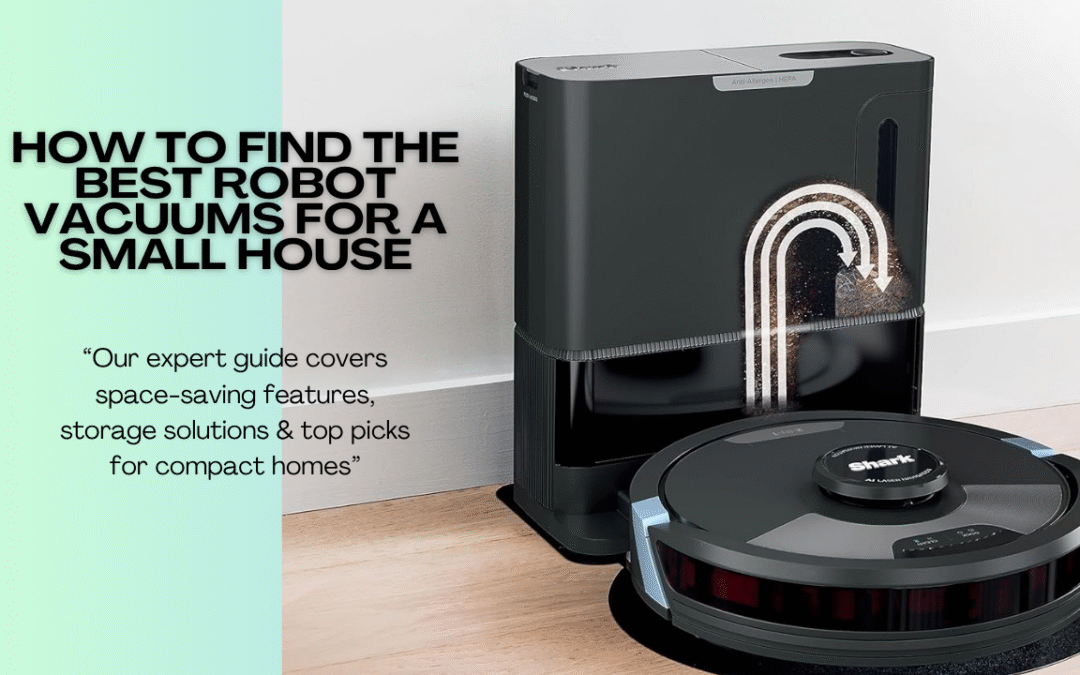
The most obvious challenge is physical space. Small houses mean limited storage. A massive self-empty base station that’s perfect for a 3,000 square foot home becomes a furniture-dominating monstrosity in a 700 square foot flat.
Base stations range from compact 30cm x 35cm models to sprawling 50cm x 55cm behemoths. In small spaces, every centimetre of floor space matters. That extra 20cm can mean the difference between fitting comfortably in a corner and blocking a hallway. The EPA’s guide to improving indoor air quality notes that regular vacuuming with HEPA filtration is especially important in smaller spaces where airborne particles concentrate more quickly.
Consider where the base will actually live. Utility rooms are rare in small houses. You’re likely placing it in a living area, kitchen, or bedroom. Aesthetics and footprint matter significantly more than in spacious homes with dedicated cleaning cupboards.
Furniture Density
Small houses typically have higher furniture density. You’re fitting normal amounts of furniture into less space. This creates navigation challenges for robot vacuums.
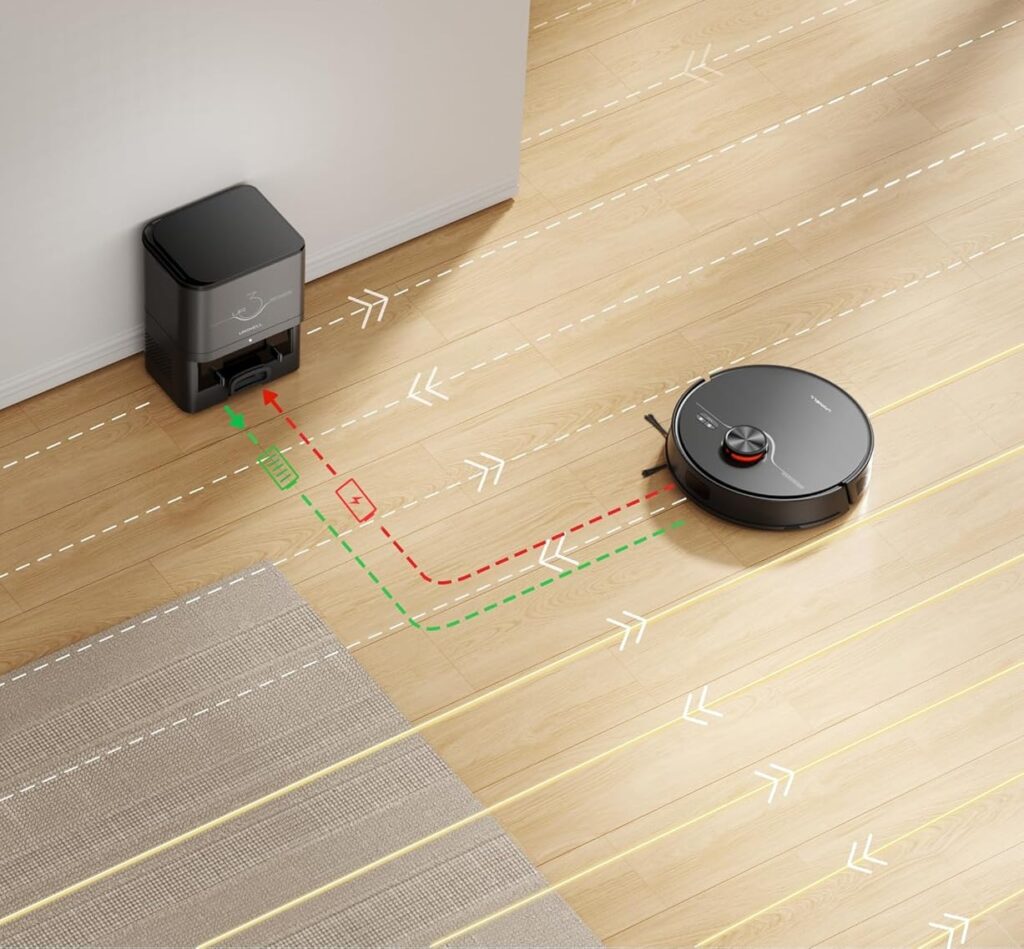
More furniture means more obstacles per square metre. Budget robots with random navigation bump endlessly. Premium models with smart mapping navigate efficiently. In compact spaces, navigation intelligence matters enormously.
Tight spaces between furniture test robot manoeuvrability. A 35cm diameter robot struggles in narrow gaps. Height matters too. Low-profile robots (under 9cm) access more areas in furniture-dense small homes.
Quick Cleaning Cycles
Small houses don’t need 180-minute battery life. A 500 square foot studio cleans completely in 20-30 minutes. A 1,200 square foot house finishes in 45-60 minutes.
This changes priorities. Battery capacity matters less. Charging time matters less. What matters more? Efficient cleaning patterns that don’t waste time re-covering areas unnecessarily.
Random-pattern budget robots take 60+ minutes to clean 500 square feet through inefficient coverage. Mapping robots finish in 25 minutes. Time efficiency scales dramatically in small spaces.
Storage Solutions
Small houses demand creative storage solutions. The robot and base need somewhere to live when not cleaning. Closet storage, under-furniture placement, or corner tucking all become important considerations.
Compact base designs enable closet storage. Some users keep the base in a cupboard, manually placing the robot for cleaning. This works in small spaces where visible bases feel intrusive.
Robot height determines under-furniture storage viability. Robots under 8cm fit under most sofas and beds. This doubles as a cleaning access and storage solution.
Key Features for Small Houses
Certain features matter disproportionately for small house robot vacuums. Understanding these priorities helps you shop effectively.
Compact Base Station Design
For self-emptying models, the base station footprint is critical. Measure carefully before purchasing. A base that’s perfect for a large utility room becomes problematic in a small kitchen.
Compact bases measure roughly 30cm x 35cm x 40cm. Bulky premium bases exceed 45cm x 50cm x 50cm. That size difference is massive in small spaces.
Some manufacturers prioritise compact design. Others maximise capacity regardless of footprint. For small houses, compact wins. You don’t need 90-day capacity when your home generates minimal debris.
Bagless designs are often more compact than bag-based systems. The cyclonic separation mechanism is smaller than bag storage compartments. This space saving benefits small-home owners significantly.
Efficient Navigation Systems
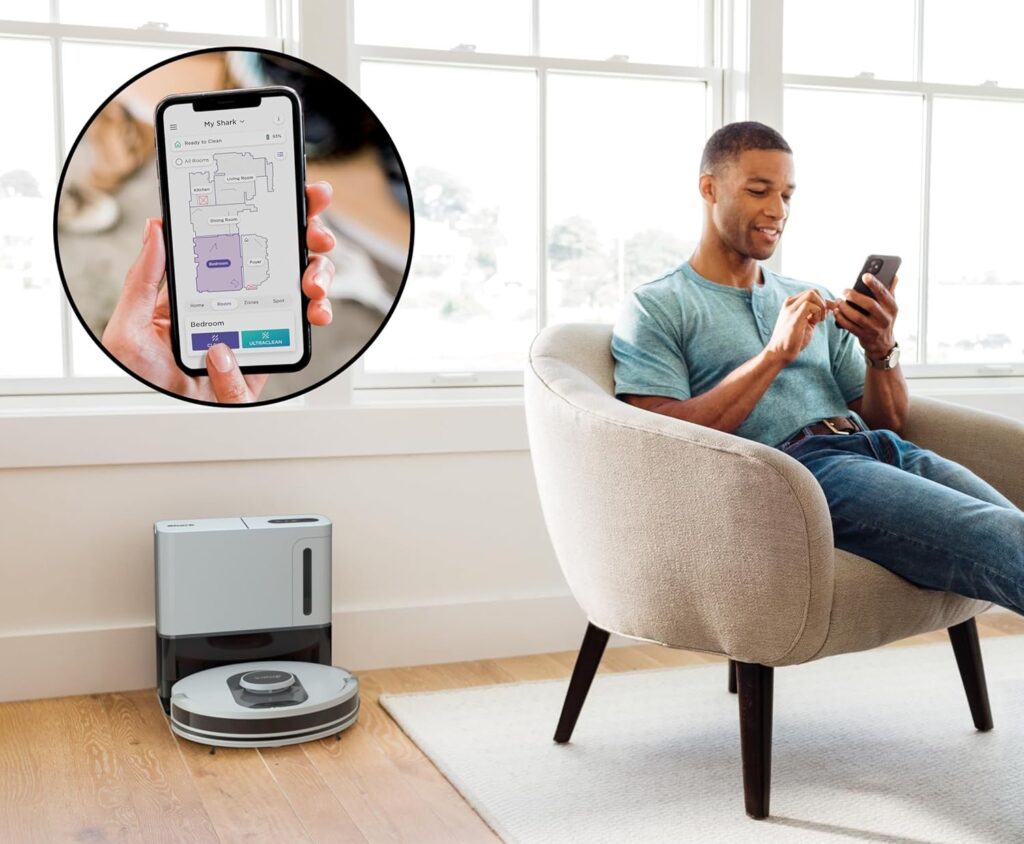
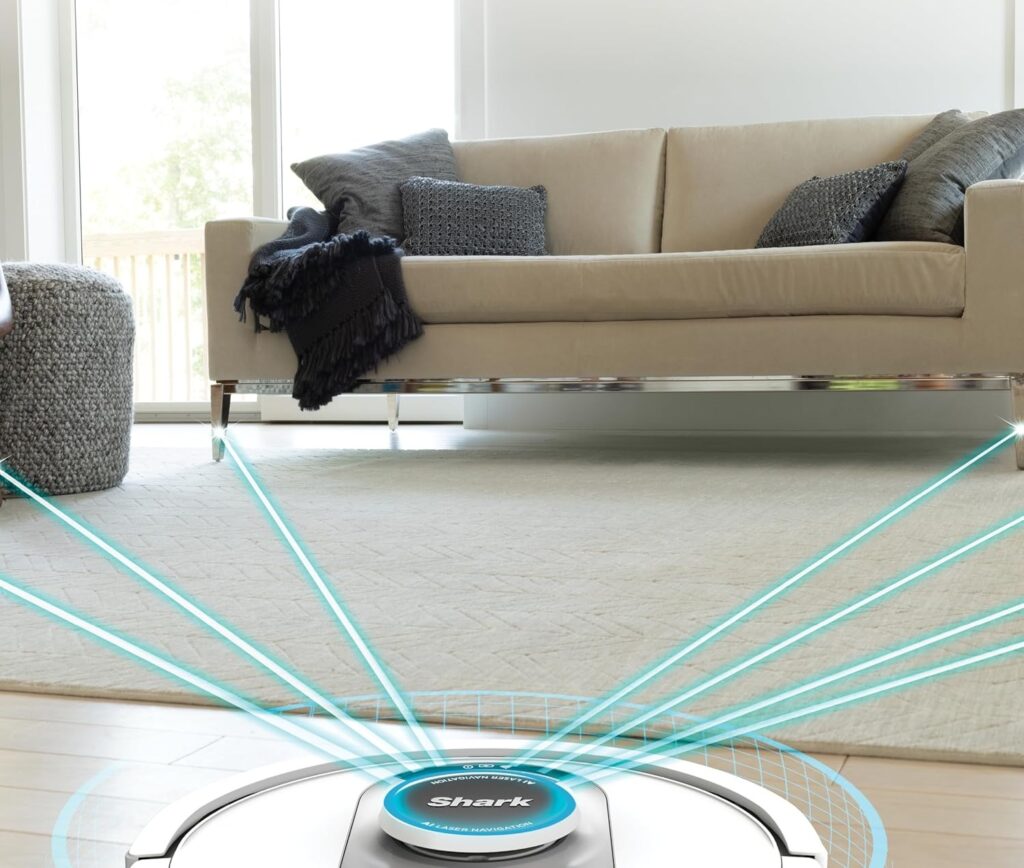
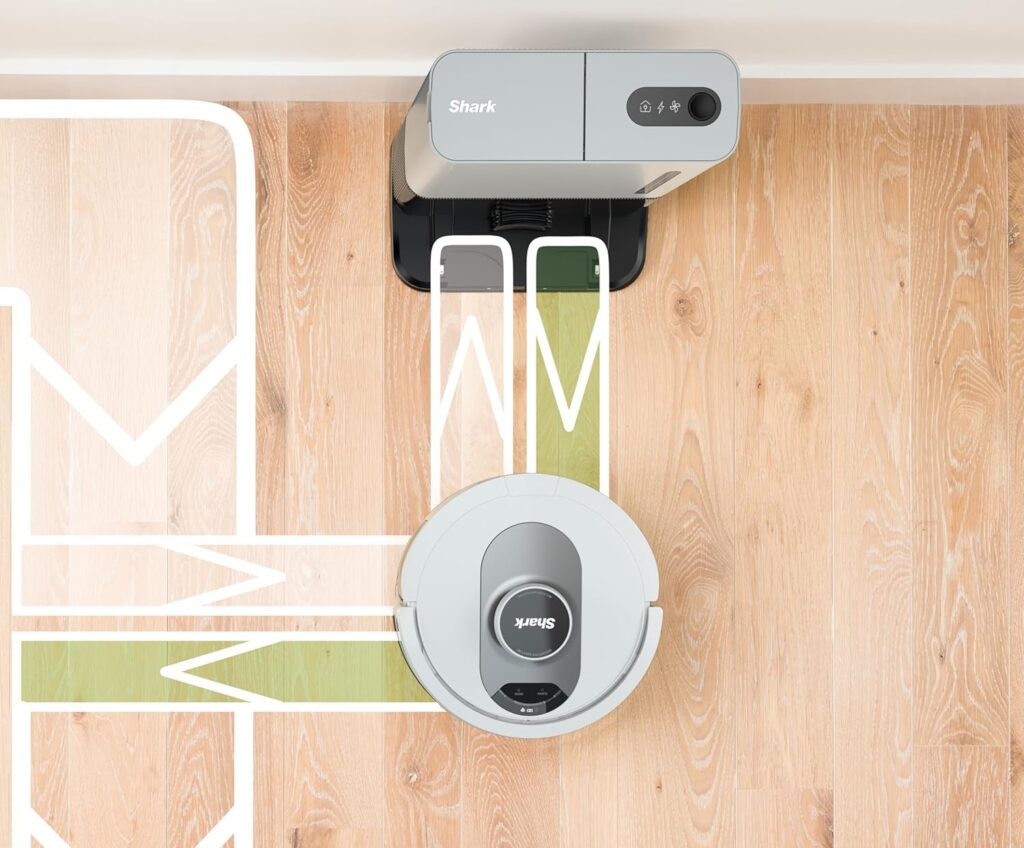
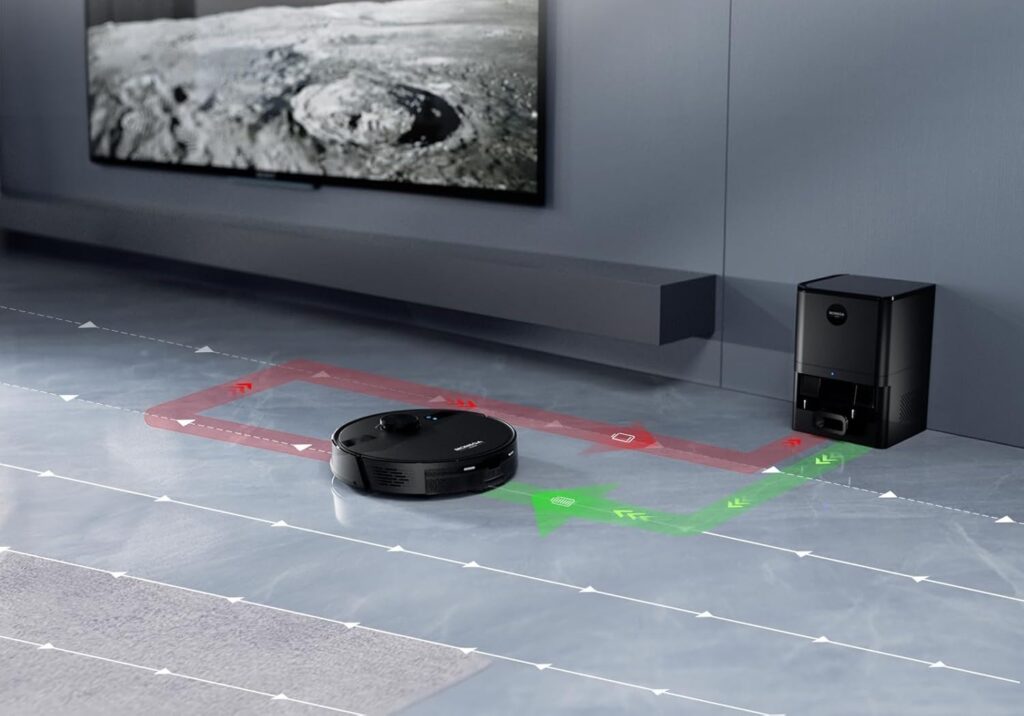
Navigation technology dramatically impacts cleaning time in small spaces. Random-pattern robots waste time. Mapping robots clean efficiently then return to base quickly.
LiDAR navigation creates accurate maps and plans efficient routes. Camera-based systems work similarly. Both vastly outperform random bumping for small-space efficiency. Advanced navigation systems can reduce cleaning time by up to 50% compared to random-pattern robots, making them particularly valuable in compact spaces.
Room-specific cleaning becomes incredibly useful in small houses. “Clean the bedroom” finishes in 10 minutes. Whole-home cleaning takes 30 minutes. This flexibility suits small-space living perfectly.
Multi-floor mapping matters for two-storey small houses. Save separate maps for each level. The robot recognises which floor it’s on automatically. This convenience is worth paying for in compact multi-storey homes.
Appropriate Battery Capacity
Small houses don’t need massive batteries. A 60-90 minute runtime covers up to 1,500 square feet easily. Anything beyond that is unnecessary capacity you’re paying for without benefit.
Smaller batteries mean lighter robots. They also mean faster charging. A 90-minute battery charges in 2-3 hours. A 180-minute battery requires 4-6 hours. Faster charging enables multiple daily cleans if needed.
Focus on cleaning efficiency over raw battery capacity. An efficient mapping robot cleans 800 square feet in 35 minutes. An inefficient random robot takes 75 minutes for the same space. The efficient one finishes on 40% battery. The random one depletes completely.
Low-Profile Design
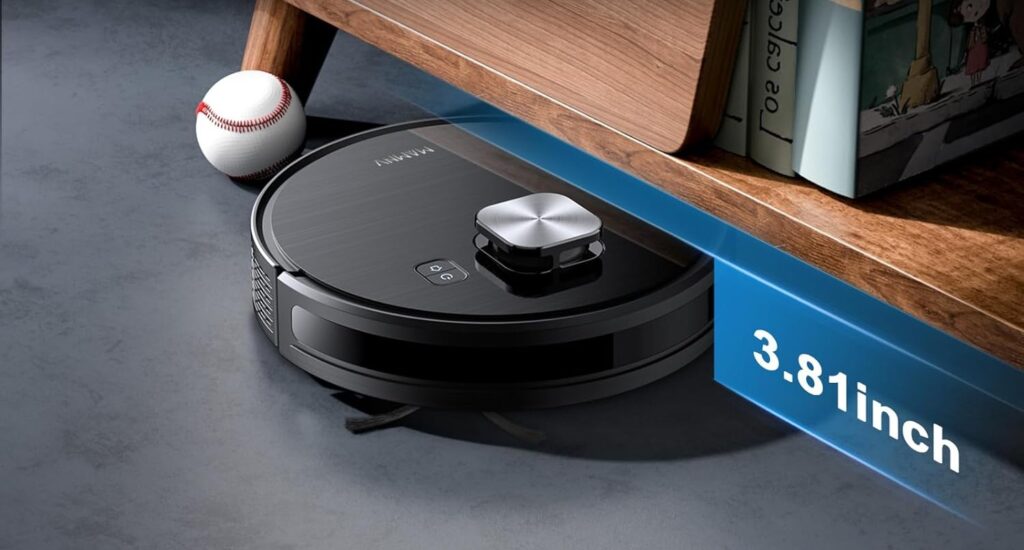
Height matters enormously in furniture-dense small houses. Low-profile robots (under 9cm) access significantly more area than taller models (10cm+).
Under-sofa cleaning is particularly valuable. Small houses maximise every square foot. If your robot can’t reach under furniture, you’re manually vacuuming regularly. That defeats automation’s purpose.
Measure your lowest furniture clearance. Ensure any robot you consider fits underneath. This single specification determines whether you achieve truly hands-off cleaning or need regular manual supplementation.
Check out our comprehensive ranking of the best self-emptying robot vacuums, where we test robots across all home sizes.
What to Look For When Shopping
Shopping for small-house robot vacuums requires evaluating specific criteria. Use this framework to assess any model you’re considering.
Measure Your Space First
Before shopping, measure three things: total square footage, base station placement area, and lowest furniture clearance. These measurements guide every subsequent decision.
Total square footage determines required battery life. Under 800 square feet needs 60-90 minutes. 800-1,200 square feet needs 90-120 minutes. Anything larger isn’t really a “small house” for robot vacuum purposes.
Base station space determines maximum acceptable base dimensions. Measure the width, depth, and height of your intended placement. Add 5cm to each dimension for clearance. Only consider bases fitting these constraints.
Furniture clearance determines maximum robot height. Measure the lowest furniture you want the robot to clean under. Subtract 1cm for a safety margin. This is your maximum robot height specification.
Prioritise Navigation Over Power
In small spaces, navigation efficiency matters more than raw suction power. A moderately powerful robot (3,500-4,500Pa) with excellent mapping outperforms a powerful random robot (5,000Pa+) every time.
Mapping robots plan efficient routes. They clean systematically without redundant coverage. They finish faster and return to base immediately. This efficiency is incredibly valuable in small spaces where quick cleaning cycles are the norm.
Random robots bump endlessly. They re-cover areas multiple times. They miss spots randomly. In small furniture-dense homes, they get stuck frequently. The time and frustration wasted isn’t worth any power advantage.
Look for LiDAR or camera-based navigation. Both create accurate maps. Both enable room-specific cleaning. Both deliver the efficiency small houses demand.
Consider Bagless Self-Empty Systems
Self-emptying convenience is brilliant. But in small houses, bagless systems offer significant advantages over bag-based alternatives.
Bagless bases are typically more compact. They use cyclonic separation instead of bag storage. This design saves space. The difference ranges from 5-15cm in footprint dimensions.
Bagless systems eliminate recurring costs. Bags cost $30-45 annually. Over a robot’s 4-5 year lifespan, that’s $120-225 saved. For budget-conscious small-home owners, this matters.
The downside? Bagless requires manual emptying every 6-8 weeks. You empty the base dustbin into your rubbish. It takes two minutes. For most small-house owners, this trade-off, favouring compact size and zero recurring costs is worthwhile.
Evaluate Storage Flexibility
How will you store the base station? This question dramatically affects which models suit your situation.
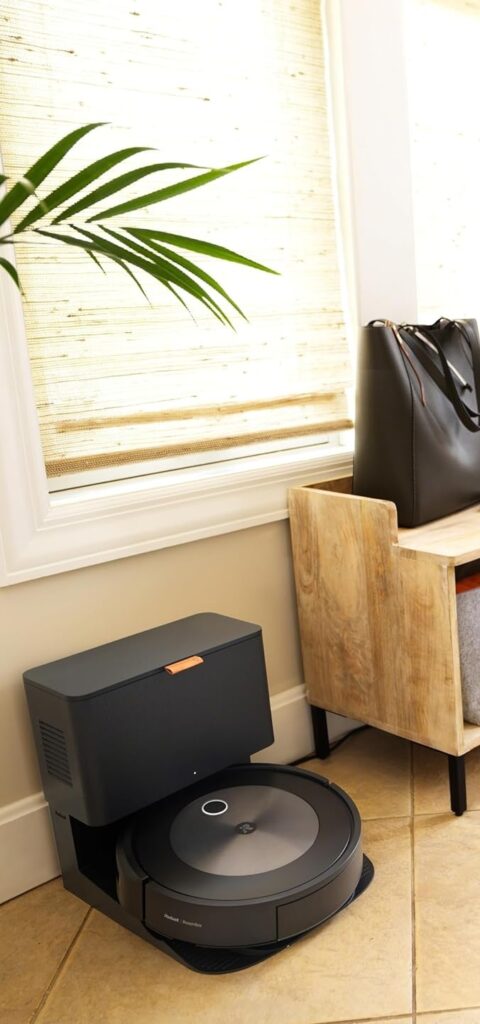
Visible placement demands an attractive design. You’re living with this appliance daily. Bulky, ugly bases feel more intrusive in small spaces. Compact, clean designs integrate better aesthetically.
Closet storage enables hiding the base completely. Pull the robot out, start cleaning, then return both to storage. This approach requires compact bases that actually fit in small cupboards.
Some users keep robots stored away, manually placing them for cleaning. This works with non-self-emptying models. You’re sacrificing automation convenience for space savings. It’s a valid trade-off for very small spaces.
Think creatively about where the robot lives. Corner placement, under-furniture storage, inside cabinets, or dedicated shelving all work. The right robot makes your preferred storage solution viable.
Essential Specifications for Small Houses
Certain specifications matter more for small houses than large ones. Use these benchmarks when comparing models.
Square Footage Coverage
Match coverage capacity to your actual space. Oversized capacity wastes money. Undersized capacity means multiple cleaning cycles.
For homes under 800 square feet, robots covering 1,000-1,500 square feet are perfect. For 800-1,200 square foot homes, 1,500-2,000 square foot coverage works well.
Don’t be tempted by models advertising 3,000+ square foot coverage. You’re paying for battery capacity you’ll never use. That money could buy better navigation or a more compact base instead.
Dustbin Capacity
Small houses generate less debris than large ones. Smaller dustbins are perfectly adequate and save weight and space.
Robot dustbins between 350-500ml suit small houses excellently. Larger 600ml+ bins are unnecessary. They add weight without practical benefit.
For self-emptying models, a base capacity between 1.5-2.5 litres is sufficient. Small houses don’t need 3-4 litre bases. The compact designs using smaller bases benefit you more than extended capacity.
Dimensions and Weight
Robot dimensions determine furniture accessibility. Base dimensions determine placement options. Weight affects portability for multi-floor cleaning.
Ideal robot diameter: 32-35cm (navigates tight spaces whilst maintaining capacity). Maximum robot height: 8-9cm (accesses under most furniture). Robot weight: 3-4kg (light enough for easy relocation)
Ideal base dimensions: 28-35cm wide, 30-38cm deep, 35-42cm tall. Base weight matters less since it stays stationary
These dimensions balance capability with small-space practicality. Smaller is better until you sacrifice essential features.
Noise Levels
Small houses mean closer proximity to the robot during operation. Noise levels matter more than in sprawling homes where you can be rooms away.
Look for robots operating at 65dB or quieter. That’s conversational volume. You can watch television or work whilst it cleans.
Self-emptying process will be louder (70-75dB typically). This lasts 15-20 seconds. It’s tolerable. The actual cleaning noise matters more since it lasts 30-60 minutes.
Some robots offer quiet modes, sacrificing slight power for reduced noise. In small spaces where you’re always nearby, this trade-off is often worthwhile.
Check out our comprehensive ranking of the best self-emptying robot vacuums, where we test robots across all home sizes.
Features That Don’t Matter (For Small Houses)
Certain features sound impressive but offer minimal value for small-house owners. Don’t overpay for these.
Extended Battery Life
Anything beyond 120 minutes is wasted in houses under 1,500 square feet. Marketing loves advertising 180-240 minute runtimes. For small houses, this is paying for capacity you’ll never use.
A 90-minute battery covers 1,000 square feet comfortably with efficient navigation. That’s sufficient for most small houses. The extra cost of 180+ minute batteries is better spent elsewhere.
Longer batteries mean longer charging times too. A 180-minute battery takes 5-6 hours to charge. A 90-minute battery charges in 3 hours. Faster charging matters more in small spaces where multiple daily cleans are feasible.
Massive Water Tanks
For mopping robots, small houses don’t need enormous water tanks. A 150-180ml tank covers 800 square feet easily. Tanks exceeding 250ml are an unnecessary capacity that adds weight and size.
Smaller tanks mean lighter robots. They also mean less water to carry when refilling. In small spaces, these practical benefits outweigh any capacity advantage.
Refilling takes 30 seconds. Doing it slightly more frequently isn’t a burden. The size and weight savings benefit small-house owners more.
Maximum Suction Power
Beyond about 4,000Pa, additional suction offers diminishing returns for typical small-house flooring. Marketing loves advertising 6,000Pa+ as if it’s automatically better.
For hard floors and low-pile carpet (common in small houses), 3,500-4,500Pa is perfectly adequate. That extra power you’re paying for cleans no better in real-world conditions.
More power drains batteries faster too. High-power modes reduce runtime significantly. In small spaces where efficient cleaning matters more than raw power, this is counterproductive.
Focus on navigation efficiency and brush design over maximum suction specifications. These factors impact cleaning effectiveness more than Pa ratings beyond reasonable thresholds.
Advanced Obstacle Avoidance
Camera-based obstacle avoidance, identifying specific objects, is impressive technology. It’s also expensive and somewhat unnecessary in small houses, where you can easily pre-tidy.
In a 700 square foot flat, picking up cables and shoes before cleaning takes two minutes. In a 3,000 square foot home, pre-tidying is tedious. The effort-to-benefit ratio differs dramatically.
Basic obstacle detection (bumping and avoiding) works fine in small, tidied spaces. Advanced AI recognition justifies its premium cost more in large homes where pre-tidying is burdensome.
If your budget is tight, skip advanced obstacle avoidance. Use the savings for better navigation mapping or a more compact base instead. These features deliver more practical value in small spaces.
Common Mistakes to Avoid
Small-house owners frequently make these purchasing mistakes. Avoid them to choose successfully.
Buying for Space You Don’t Have
The biggest mistake is choosing robots designed for large homes. That flagship model with a 240-minute battery and massive base is perfect for 3,000 square feet. It’s absolute overkill for 900 square feet.
Marketing targets aspirational large homes. Features scale for spacious houses. Small-home owners get seduced by premium features they don’t actually need.
Match specifications to your reality, not marketing aspirations. Smaller, simpler, more compact robots often suit small houses better than flagship models.
Ignoring Base Station Dimensions
Many buyers focus entirely on the robot itself. They forget the base station must live somewhere too. Then that enormous base arrives and dominates their small kitchen.
Always check base station dimensions before purchasing. Measure your intended placement. Ensure the base actually fits with adequate clearance. This avoids expensive buyer’s remorse.
For small houses, the base station footprint is equally important as robot features. A compact base that fits your space beautifully beats a bulky base with extra capacity you don’t need.

Choosing Random Navigation to Save Money
Budget robots with random navigation are tempting. They cost $150-250 less than mapping models. Those savings feel significant.
But in small furniture-dense spaces, random navigation is maddening. The robot bumps endlessly. It takes three times longer. It gets stuck constantly. It misses areas randomly.
Mapping navigation is worth the premium in small houses. The efficiency gains are enormous. You’ll use it consistently because it actually works. Budget random robots often end up abandoned in cupboards.
Save money on features you don’t need (extended battery, maximum power). Spend appropriately on navigation that enables actual, reliable automation.
Overlooking Multi-Floor Capability
Many small houses are two or three storeys. Vertical space compensates for limited horizontal space. Yet buyers often forget to check the multi-floor mapping capability.
Manually remapping floors each time is tedious. Robots remembering multiple floor plans automatically are worth the premium. This single feature dramatically improves usability in multi-storey small homes.
If you have multiple floors, prioritise this feature. The convenience justifies any cost premium. It transforms a potentially frustrating robot into a genuinely useful tool.
Check out our comprehensive ranking of the best self-emptying robot vacuums, where we test robots across all home sizes.
Budget Considerations for Small Houses
Small houses enable strategic budget allocation. Understanding where to spend and where to save optimises value.
Expected Price Ranges
Self-emptying robots with mapping suitable for small houses range from $400-800. This mid-range pricing delivers practical features without flagship excess.
Budget models ($250-400) lack self-emptying and often use random navigation. For small houses, the automation compromise usually isn’t worthwhile unless the budget is extremely tight.
Premium models ($800-1,400) offer features that small houses don’t fully utilise. The extra spending rarely justifies the marginal benefit for compact-space owners.
The sweet spot is $500-700. This range delivers self-emptying, mapping navigation, adequate power, and often compact designs. It balances cost with genuine small-house suitability.
Where to Spend Money
Prioritise these features for small houses:
- Mapping navigation (LiDAR or camera-based)
- Compact base station design
- Self-emptying capability (bagless if possible)
- Low-profile height (under 9cm)
- Multi-floor mapping (for multi-storey homes)
These features deliver practical daily value. They make the robot genuinely useful rather than frustrating. The premium cost justifies itself through consistent use.
Where to Save Money
Small houses don’t need:
- Extended battery life (beyond 120 minutes)
- Maximum suction power (beyond 4,500Pa)
- Advanced obstacle avoidance
- Mopping capability (unless specifically desired)
- Large capacity bases (beyond 2.5L)
Marketing emphasises these features. For small houses, they’re nice-to-have rather than essential. Saving here enables spending on features that actually matter.
Choose mid-range models with excellent core features over flagship models with impressive but unnecessary specifications. This strategy maximises practical value.
Long-Term Cost Considerations
Consider total ownership cost, not just purchase price. Bagless systems save $30-45 annually on bags. Over five years, that’s $150-225 saved.
Replacement parts cost roughly the same regardless of price tier. Budget and premium robots both need filters, brushes, and occasional battery replacement. Annual maintenance runs $30-50 typically.
Factor in your space’s opportunity cost. That enormous base station occupying 0.3 square metres in a small flat represents significant space value. Compact designs justify premium pricing through space savings alone.
For detailed model recommendations suited to small houses, see our comprehensive best self-emptying robot vacuums guide, where we rank options by home size.
Recommended Features by Home Size
Different small house sizes benefit from different feature priorities. Use these recommendations as shopping frameworks.
Studio Flats and Under 500 Square Feet
Ultra-compact spaces need specific considerations. A 400 square foot studio has different requirements than even an 800 square foot house.
Priority features:
- Ultra-compact base (under 32cm wide)
- Low battery requirement (60-90 minutes is sufficient)
- Slim robot profile (under 34cm diameter)
- Quick charging (2-3 hours maximum)
- Simple app interface
Studios often lack dedicated storage. The base lives visibly in the main space. Aesthetics and compact size matter enormously. Fancy features matter less.
Consider non-self-emptying models if the base footprint is problematic. Manual emptying every 2-3 cleans is manageable in tiny spaces. The space savings might justify the automation trade-off.
500-800 Square Foot Homes
This size represents typical one-bedroom flats and small two-bedroom houses. You have slightly more flexibility than studios, whilst still facing genuine space constraints.
Priority features:
- Compact base (32-35cm wide)
- 90-minute battery life
- Mapping navigation
- Self-emptying capability
- Multi-floor mapping (if multi-storey)
At this size, self-emptying becomes genuinely valuable. You’re generating enough debris to justify the automation. Choose compact bagless systems that fit your space without dominating it.
Mapping navigation is essential at this size. The robot must clean efficiently without endlessly bumping. The time savings matter when cleaning takes 25-35 minutes efficiently versus 60+ minutes randomly.
800-1,200 Square Foot Homes
This range covers larger one-bedroom flats, two-bedroom houses, and small three-bedroom homes. You’re approaching the upper boundary of “small house” where feature priorities shift slightly.
Priority features:
- Standard compact base (35-38cm wide acceptable)
- 90-120 minute battery life
- Advanced mapping with room selection
- Self-emptying capability (bagless or bagged both viable)
- Multi-floor mapping
- Decent suction (3,500-4,500Pa)
At this size, you have more feature flexibility. Standard-size bases fit without overwhelming spaces. Battery capacity matters more since cleaning takes 45-60 minutes typically.
Room-specific cleaning becomes particularly valuable. You’re large enough to want targeted cleaning rather than always cleaning everything. “Clean the kitchen and hallway” is a common use case.
Consider the mopping capability at this size. You have enough hard floor area to benefit from automated mopping. Ensure any mopping-capable model still maintains compact base dimensions.
Check out our comprehensive ranking of the best self-emptying robot vacuums, where we test robots across all home sizes.
Storage and Placement Solutions
Small houses demand creative thinking about where robots and bases actually live. These solutions help optimise space.
Corner Placement Strategies
Corners are dead space in small homes. They’re perfect for base stations. Choose compact bases specifically to enable corner placement.
Measure corner dimensions. Most corners provide 40-45cm of usable space diagonally. A 35cm wide base fits comfortably. A 45cm wide base doesn’t.
Corner placement works best for:
- Kitchen corners (near power outlets)
- Living room corners (behind doors)
- Bedroom corners (under windows)
- Hallway corners (if wide enough)
Use corner shelving above the base to reclaim vertical space. The base occupies floor space necessarily. Stack other items above to maximise efficiency.
Closet and Cupboard Storage
Storing bases inside closets completely hides them. This works brilliantly in small spaces where visible bases feel intrusive.
Requirements for closet storage:
- Compact base dimensions (must fit through door)
- Power outlet inside closet (or extension cord)
- Ventilation for base (self-emptying generates dust)
- Easy access for robot docking
Some users keep bases in closets, manually placing robots for cleaning. The robot returns when finished. You then manually empty its dustbin. This hybrid approach offers storage benefits with partial automation.
Full automation requires the robot to dock in the closet. Ensure adequate space for the robot to dock properly. Measure carefully before committing to this solution.
Under-Furniture Integration
Low-profile robots can be stored under furniture between cleanings. This eliminates visible storage requirements.
Best under-furniture storage locations:
- Under sofas (measure clearance first)
- Under beds (particularly platform beds)
- Under dressers and cabinets
- Under coffee tables with storage
This works best with non-self-emptying models. The robot lives under furniture. You manually place it for cleaning. It returns to under-furniture storage when finished.
For self-emptying models, the base must be accessible. You can’t put bases under furniture. But the robot can retreat under furniture after docking and emptying.
Decorative Integration
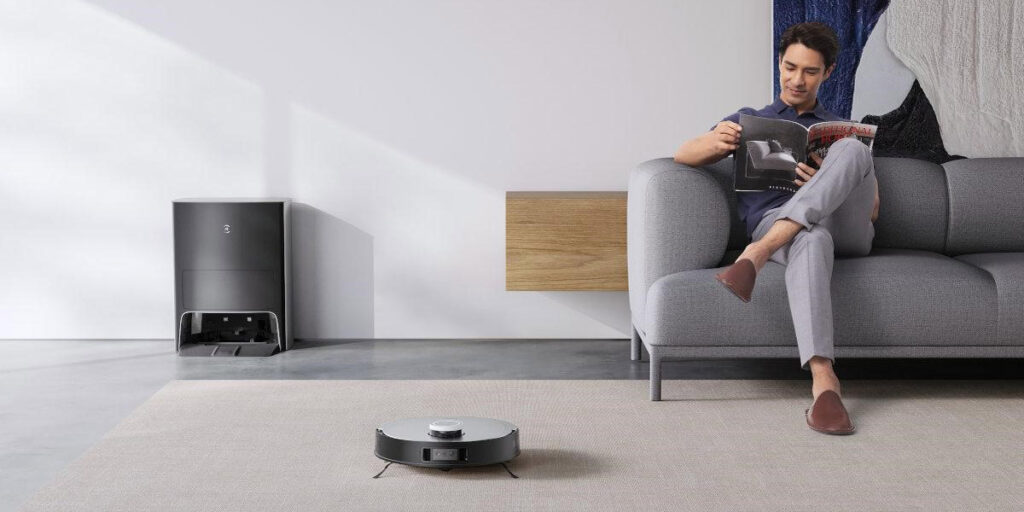
Some small-home owners embrace the base as a design element. Choose attractive compact bases that coordinate with your decor.
Decorative integration strategies:
- Match the base colour to your walls or furniture
- Place base near other electronics (looks intentional)
- Use decorative boxes or covers when not in use
- Incorporate into gallery walls or shelf displays
Modern compact bases in white or grey coordinate with most contemporary interiors. They’re appliances, but needn’t be eyesores. Thoughtful placement makes them blend naturally.
Testing and Evaluation Process
Before purchasing, evaluate candidates systematically. This process ensures you’re choosing appropriately for your small house.
Measure Your Space Precisely
Take specific measurements before shopping. These numbers guide every subsequent decision.
Measure:
- Total square footage (determines battery needs)
- Intended base location dimensions (determines maximum base size)
- Lowest furniture clearance (determines maximum robot height)
- Typical debris volume (determines required dustbin capacity)
Write these measurements down. Bring them when shopping or keep them visible when shopping online. Never rely on memory for specifications this important.
Read Small-Space Reviews Specifically
Many reviews test robots in large homes. The reviewer’s 3,000 square foot house doesn’t reflect your 700 square foot flat’s reality.
Look for reviews specifically mentioning small spaces, flats, or apartments. These reviewers understand your challenges. Their observations are more relevant than large-home perspectives.
Pay attention to base station footprint comments. Small-space reviewers consistently mention this. Large-home reviewers often ignore it completely.
Check Return Policies Before Buying
Small-space suitability is difficult to assess until the robot is in your actual home. Generous return policies enable risk-free testing.
Look for:
- 30+ day return windows
- Free return shipping
- No restocking fees
- Original packaging not required
Amazon and major retailers typically offer these terms. Direct manufacturer purchases sometimes have stricter policies. Factor this into your purchasing decision.
Plan to actually test in your space. Set up the base in your intended location. Run multiple cleaning cycles. Evaluate whether it fits your reality before the return window closes.
Ask Specific Questions About Dimensions
When researching models, don’t just read specifications. Ask specific questions in reviews, forums, or customer service.
Useful questions:
- “Does this base fit in a 33cm wide space?”
- “Can this robot clean a 600 square foot flat on one charge?”
- “Does the base fit in a standard cupboard?”
- “How does this perform in furniture-dense spaces?”
Specific questions get specific answers. Generic questions get marketing responses. The specificity demonstrates you understand what actually matters.
Check out our comprehensive ranking of the best self-emptying robot vacuums, where we test robots across all home sizes.
Top Considerations Summary
Let me consolidate the most important considerations for finding the best robot vacuums for small houses.
The Three Non-Negotiables
Every robot for small houses must have:
1. Compact Base Station: Maximum dimensions: 38cm wide x 40cm deep x 45cm tall. Anything larger dominates small spaces unacceptably. Measure your space first. Choose robots fitting your reality.
2. Mapping Navigation: LiDAR or camera-based mapping is essential. Random navigation is maddening in furniture-dense small spaces. The efficiency difference is dramatic. This feature is worth any reasonable premium.
3. Appropriate Battery Capacity: Match capacity to your space. 60-90 minutes for under 800 square feet. 90-120 minutes for 800-1,200 square feet. Don’t overpay for 180+ minute capacity you’ll never use.
The Valuable Add-Ons
These features significantly improve small-space usability:
Low-Profile Design (Under 9cm): Accesses under furniture effectively. Doubles as a storage solution. Cleans more of your limited square footage.
Multi-Floor Mapping: Essential for multi-storey small homes. Remembers separate floor plans automatically. Saves tedious re-mapping effort.
Bagless Self-Empty Base: Typically more compact than bag-based systems. Eliminates recurring costs. Both benefits matter in small spaces.
Room-Specific Cleaning: Target individual rooms rather than always cleaning everything. Saves time and battery. Particularly useful at 800+ square feet.
The Optional Luxuries
These features are nice but not essential for small houses:
Advanced obstacle avoidance (pre-tidying is manageable). Mopping capability (unless specifically desired). Voice control (convenient but not crucial). Maximum suction power (adequate power suffices).
Spend your budget on essentials first. Add luxuries only if the budget permits without compromising core features.
For specific model recommendations matching these criteria, visit our best self-emptying robot vacuums for small spaces guide.
Final Selection Framework
Use this decision framework to choose your perfect small-house robot vacuum.
Step 1: Define Your Space Requirements
Answer these questions:
- What is your exact square footage?
- Where will the base station live?
- What are your space’s dimensions for base placement?
- What is your lowest furniture clearance?
- Do you have multiple floors?
These answers create your requirements baseline. Any robot failing to meet these basic requirements is immediately eliminated, regardless of other features.
Step 2: Determine Your Budget
Establish realistic budget expectations. For small houses with self-emptying and mapping, expect $400-800. Lower budgets mean compromising features. Higher budgets offer luxury additions.
Decide which features justify premium spending:
- Will you pay extra for bagless vs bagged?
- Is ultra-compact worth $100 more?
- Do you need mopping capability?
- Is advanced obstacle avoidance worth the cost?
Your budget allocates resources to features you value most. There’s no universally “right” answer. Match spending to your priorities.
Step 3: Shortlist 3-5 Candidates
Research models meeting your space requirements and budget. Create a shortlist of 3-5 serious candidates.
For each candidate, verify:
- Base dimensions fit your space
- Battery life matches your square footage
- Navigation is mapping-based (not random)
- Price aligns with your budget
- Reviews mention small-space suitability
Having multiple candidates enables comparison. You’re not committed to any single option yet. Flexibility improves final decision quality.
Step 4: Compare Specifications Directly
Create a comparison spreadsheet. List your candidates and key specifications:
- Base dimensions
- Robot dimensions and height
- Battery life and charging time
- Navigation type
- Dustbin capacities
- Bagless vs bagged
- Price
- Warranty coverage
Visual comparison reveals trade-offs clearly. One model might have a more compact base but less battery life. Another offers better navigation but costs more. Seeing trade-offs explicitly helps you choose wisely.
Step 5: Read Small-Space Specific Reviews
For your final 2-3 candidates, seek out small-space specific reviews. These provide the most relevant insights.
Look for reviews mentioning:
- Flats or apartments
- Small houses under 1,200 square feet
- Space constraints or storage solutions
- Base station footprint concerns
These reviewers share your challenges. Their experiences predict your satisfaction more accurately than large-home reviews.
Step 6: Make Your Decision
Choose the model that best balances your priorities. Perfect robots don’t exist. Every choice involves trade-offs.
The “best” robot for small houses varies by individual priorities:
- Ultra-compact space? Prioritise the smallest base dimensions.
- Multi-storey? Prioritise multi-floor mapping.
- Tight budget? Prioritise core features over luxuries.
- Pet owner? Prioritise self-cleaning brushes and adequate capacity.
Trust your analysis. You’ve done the research. You understand your space. Your informed decision will serve you well.
Check out our comprehensive ranking of the best self-emptying robot vacuums, where we test robots across all home sizes.
Conclusion
Understanding how to find the best robot vacuums for a small house means recognising that compact spaces demand entirely different priorities than sprawling homes. The features that matter most are compact base design, efficient mapping navigation, appropriate battery capacity, and low-profile dimensions that actually work in furniture-dense environments.
Small houses present unique challenges that most robot vacuum marketing completely ignores. Limited space demands compact base stations that don’t dominate your living areas. Higher furniture density requires intelligent navigation that cleans efficiently without endless bumping. Quick cleaning cycles mean extended battery life is wasted capacity you’re paying for unnecessarily.
The features that genuinely benefit small houses are clear: mapping navigation delivers efficiency that random patterns can’t match. Compact bagless bases save both space and recurring costs. Low-profile designs access more of your limited square footage. Multi-floor mapping matters enormously in vertical small homes. These specifications translate directly to better daily experiences.
Conversely, features that sound impressive but offer minimal small-space value include extended battery life beyond your needs, maximum suction power with diminishing returns, and advanced obstacle avoidance when pre-tidying takes two minutes. Marketing emphasises these specifications because they sound premium. For small houses, they’re expensive distractions from what actually matters.
The ideal small-house robot costs $500-700, features mapping navigation and self-emptying capability, uses a compact bagless base under 38cm wide, and matches battery capacity to your actual square footage. This combination delivers practical automation without wasting money or space on unnecessary features.
My recommendation: Measure your space meticulously before shopping. Define your non-negotiable requirements based on actual dimensions, not aspirations. Budget appropriately for mapping, navigation and self-emptying capability. Choose compact designs that fit your reality rather than flagship models designed for sprawling homes you don’t have.
Small houses deserve excellent automated cleaning. The key is choosing thoughtfully, prioritising features that genuinely benefit compact spaces whilst avoiding expensive marketing gimmicks that large-home owners might need but you don’t.
For specific model recommendations tailored to different small-house sizes and budgets, visit our comprehensive guide to the best self-emptying robot vacuums where we rank options specifically for space-constrained homes.
Your perfect small-house robot vacuum exists. It’s compact, efficient, and appropriate for your actual needs rather than someone else’s large home. Use this guide’s framework to find it. Master how to find the best robot vacuums for a small house by focusing on what genuinely matters: space efficiency, intelligent navigation, and practical features that improve your daily life without dominating your limited square footage.