iRobot Roomba i3+ EVO Robot Vacuum Review: Worth the Hype?
I’ll be honest with you: I bought the iRobot Roomba i3+ EVO Robot Vacuum expecting it to solve exactly one problem. My partner and I both work full-time, we’ve got a golden retriever who sheds like it’s an Olympic sport, and vacuuming twice a week felt like a part-time job I didn’t sign up for. The promise of a self-emptying robot vacuum that could handle itself for 60 days sounded almost too good to be true.
And in some ways, it was.
After four months of daily use, I’ve formed strong opinions about this mid-range marvel from iRobot. The iRobot Roomba i3+ EVO sits in an interesting spot in the Roomba lineup. It’s not the budget option, but it’s nowhere near the premium territory either. At around $550-600, it bridges the gap between basic robot vacuums and the feature-packed flagships. What makes it special? The self-emptying Clean Base comes included, smart mapping capabilities arrived via software update, and it promises enough suction to tackle pet hair without breaking your budget.
But here’s what drew me specifically to review this model: the “EVO” designation. Back in 2022, iRobot took the original i3+ and transformed it with a crucial software upgrade that added Imprint Smart Mapping. Suddenly, this mid-tier robot could learn your home’s layout, clean specific rooms on command, and remember multiple floor plans. On paper, it seemed like iRobot had created the perfect mid-range option by combining self-emptying convenience with intelligent navigation.
Reality proved more nuanced. The i3+ EVO excels in specific scenarios whilst falling frustratingly short in others. It’s transformed how I maintain hard floors, yet I still reach for my upright vacuum weekly. It navigates my open-plan kitchen brilliantly but gets confused in my cluttered home office. The self-emptying feature genuinely delivers on its 60-day promise, but the noisy emptying cycle makes me schedule cleanings around my work-from-home days.
This review comes from genuine, extended use rather than a week of testing. I’ve watched it evolve through software updates, struggled through setup frustrations, celebrated when it flawlessly cleaned whilst I was away on holiday, and cursed when it tangled itself in charging cables I forgot to move. If you’re considering the i3+ EVO, you deserve to know both the brilliant bits and the genuinely annoying limitations before spending over $500.
Let’s explore whether this self-emptying robot vacuum deserves a spot in your home.
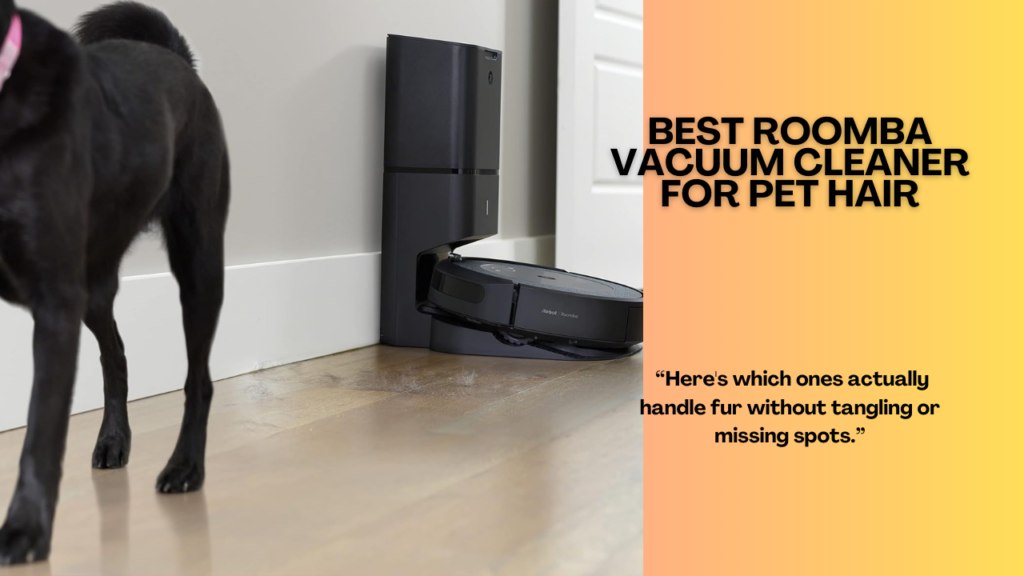
See Where The iRobot Roomba i3+ EVO Robot Vacuum Ranks On Our List Of The Best iRobot Vacuums For Pet Hair
First Impressions and Unboxing
The iRobot Roomba i3+ EVO arrives in substantial packaging that immediately communicates “premium product.” The box isn’t unnecessarily large, but it’s heavier than expected at roughly 21 pounds total. Everything sits securely in moulded cardboard inserts rather than excessive plastic, which I appreciated from an environmental standpoint.
Opening the box reveals the robot vacuum, the Clean Base Automatic Dirt Disposal station, one AllergenLock bag already installed in the base, one spare bag, the power adapter, and documentation. iRobot includes a Quick Start guide that proved genuinely helpful, plus warranty information and a QR code card for app setup. No extra filters or brushes come included beyond the spare vacuum bag, which felt slightly stingy for a $550 product.
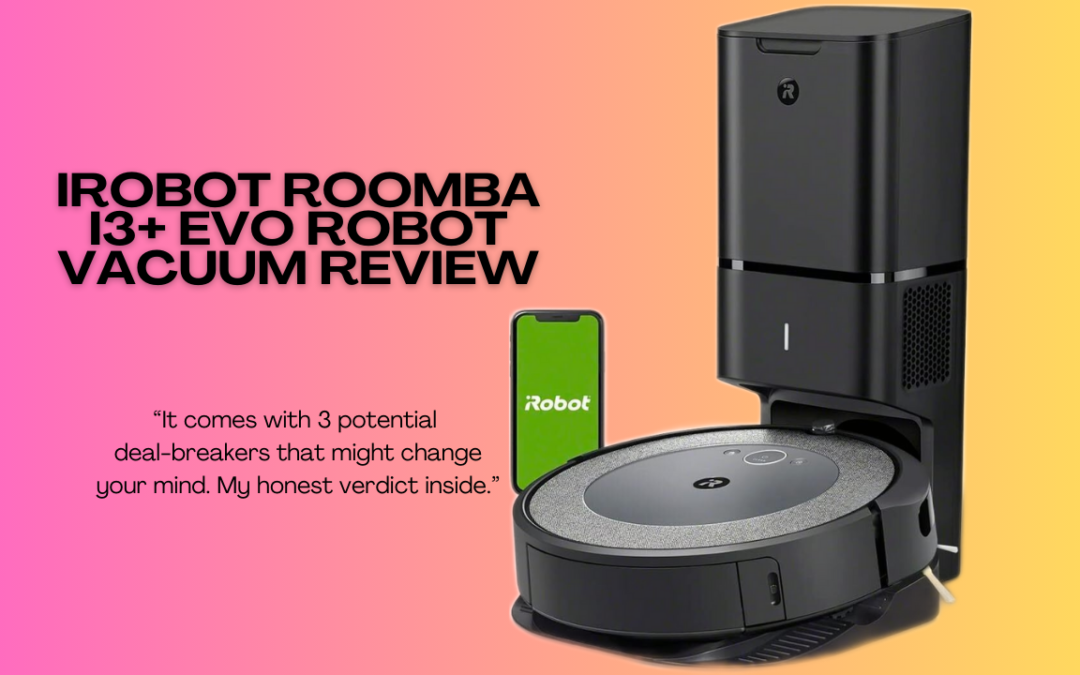
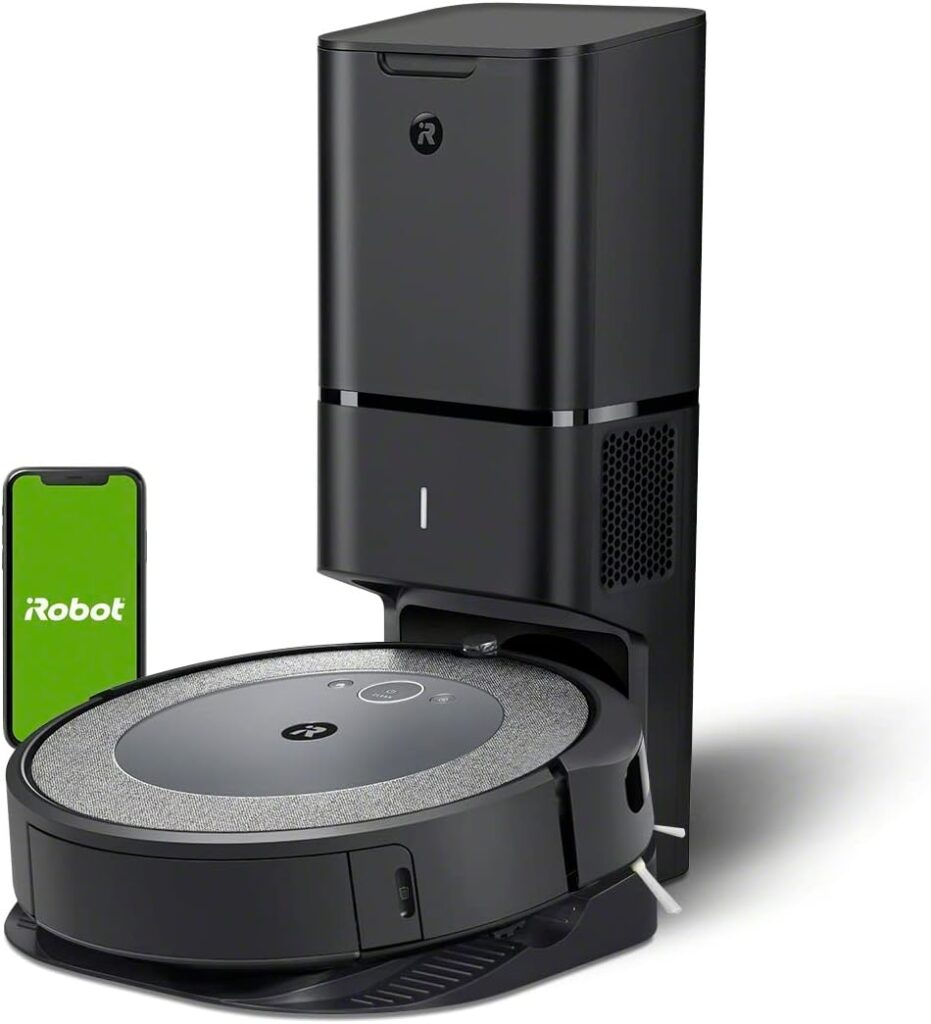
First impressions of the robot itself surprised me positively. Unlike the glossy black plastic that dominates the robot vacuum market, the i3+ EVO sports a textured grey ring around its perimeter that successfully hides fingerprints and dust. The centre features a black panel, and the whole design reads more “sophisticated appliance” than “gadget.” At 13.26 inches in diameter and 3.63 inches tall, it’s compact enough to slide under most furniture in my home.
The build quality immediately felt substantial. At 7.44 pounds, it’s reassuringly hefty without being cumbersome. Picking it up revealed sturdy construction with tight panel gaps and quality plastics that don’t feel cheap. The wheels felt robust, the top button had satisfying tactile feedback, and flipping it over showed the dual rubber brush system that iRobot champions.
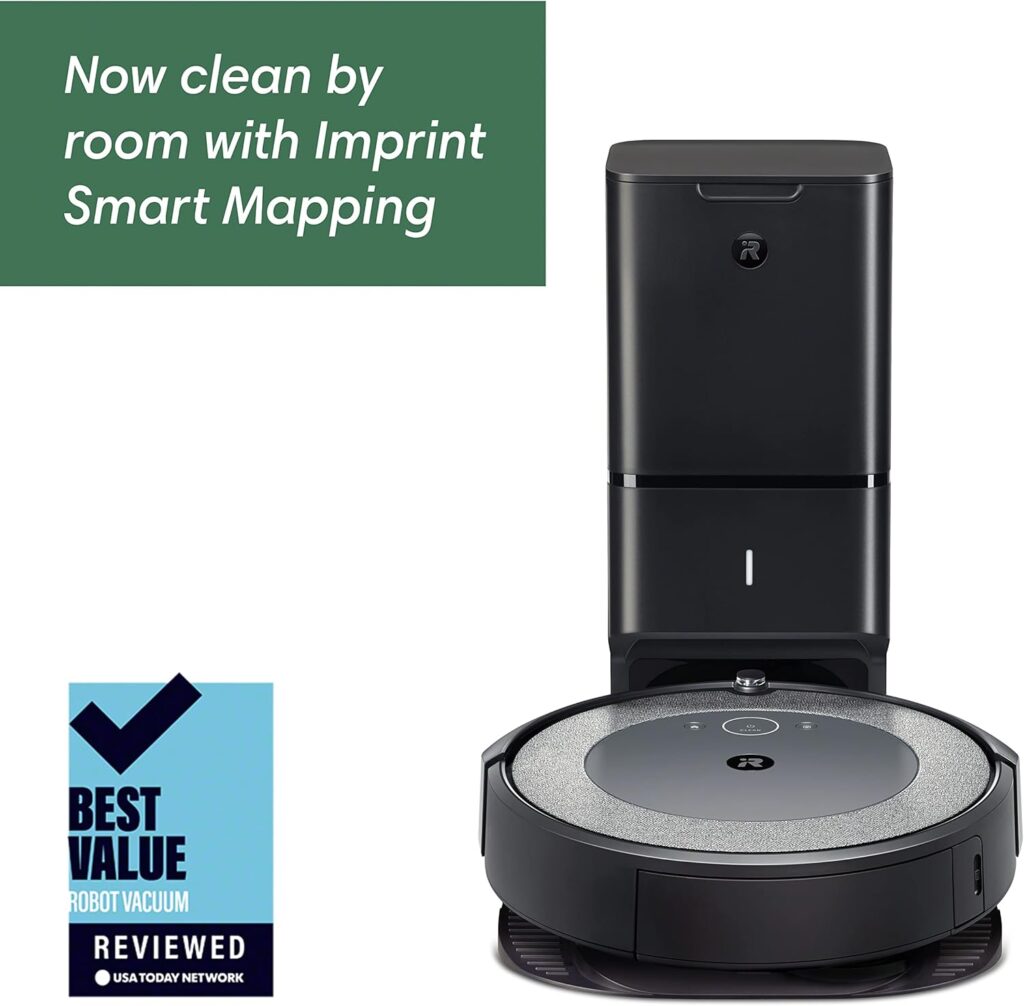
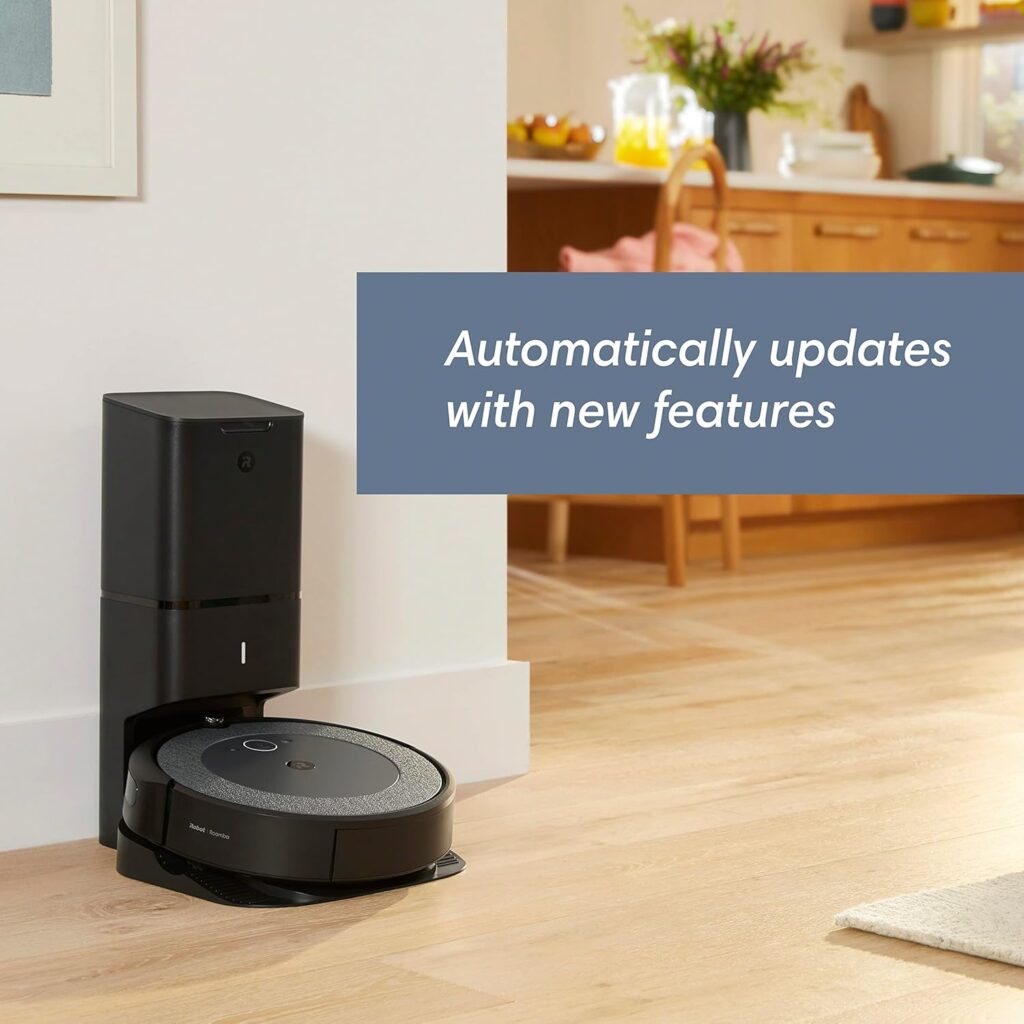
The Clean Base docking station measures 12.2 inches wide, 15.1 inches deep, and 19 inches tall, making it considerably larger than a simple charging dock. It’s not ugly, but it definitely commands floor space. The matte grey finish matches the robot, and the overall aesthetic works in modern homes. A red indicator light on the base provides status information, though I’d prefer a less prominent design choice.
The setup required approximately 25 minutes from opening the box to the first cleaning run. Plugging in the base, downloading the iRobot Home app, creating an account, and connecting the robot to Wi-Fi all proceeded smoothly. The app prompted a firmware update immediately, which took another 10 minutes. My only frustration came when scanning the QR code failed repeatedly, and I needed to manually enter the robot’s serial number instead.
One pleasant surprise: the robot came about 70% charged out of the box, letting me run an initial mapping session without waiting hours for a full charge. After placing it on the dock and confirming the app connection, I pressed the “Map” button in the app and watched it methodically explore my ground floor whilst building its first map. The entire first-run experience felt polished and well-considered, even if the QR code scan failure proved annoying.
Design and Build Quality
The iRobot Roomba i3+ EVO breaks from traditional Roomba aesthetics in subtle but meaningful ways. That textured grey outer ring isn’t just decorative; it’s genuinely practical. After four months of daily use, it still looks clean, whilst black-plastic competitors show every fingerprint and dust particle. The fabric-like texture feels pleasant to touch and provides good grip when carrying the robot between floors.
Materials throughout feel durable and well-selected. The top cover uses quality ABS plastic that withstands daily handling without developing scratches or wear marks. The bumper features softer plastic that compresses slightly on contact, protecting both the robot and your furniture. Underneath, the brush housing, wheel assemblies, and sensors all demonstrate thoughtful engineering rather than cost-cutting compromises.
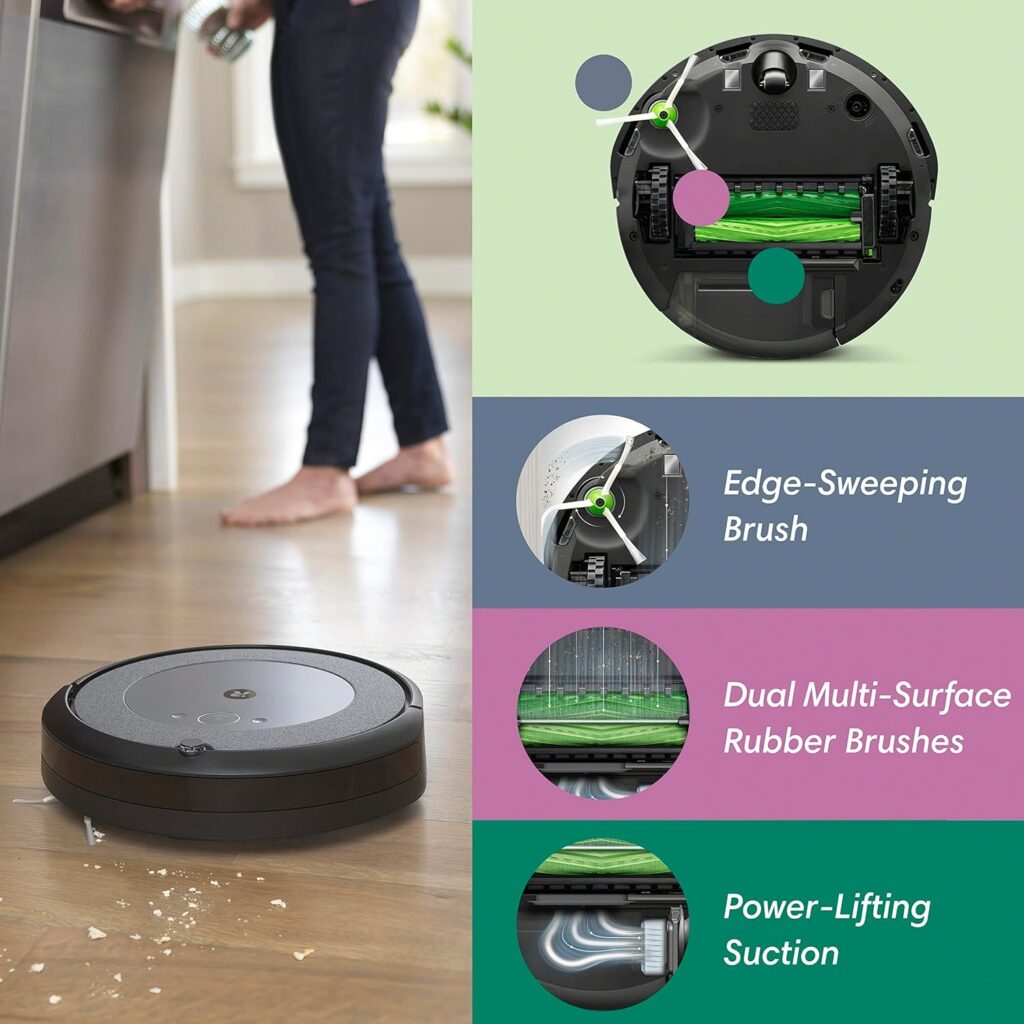
Those dual rubber brushes deserve specific mention. Unlike bristle brushes that tangle hopelessly with pet hair, these counter-rotating rubber extractors genuinely resist tangling. They’re removable for cleaning, though I’ve rarely needed to remove hair manually. The brushes flex to maintain contact with the flooring whilst adapting to surface transitions. After four months of abuse from our golden retriever’s shedding, they show minimal wear and still extract hair effectively.
The single-sided brush extends from the right edge to sweep debris toward the main brushes. It’s a simple design that works adequately, though it sometimes flings lighter debris outward rather than inward. The brush is easily replaceable, which matters because it takes more abuse than the main brushes.
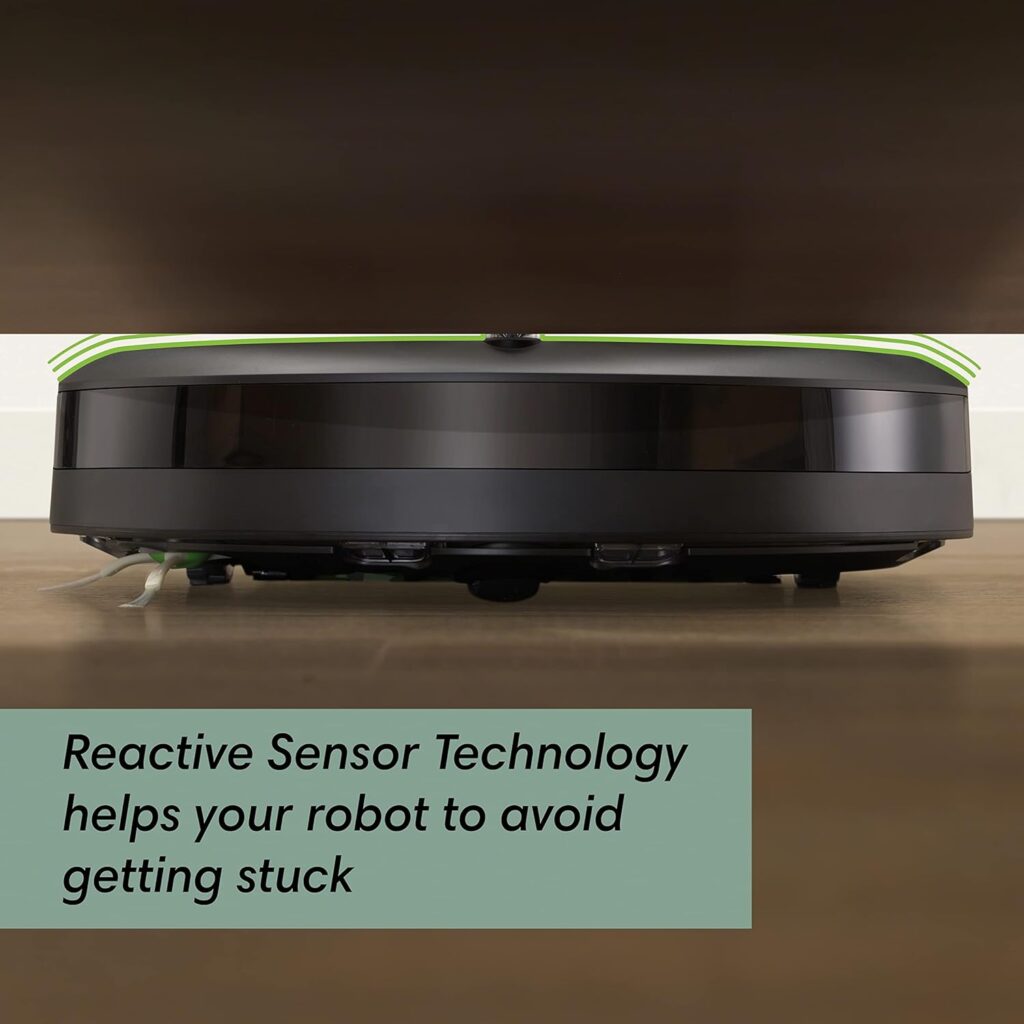
Ergonomically, the i3+ EVO handles well. The low 3.63-inch profile lets it slide under sofas, beds, and cabinets where dust bunnies hide. However, this profile prevents it from reaching under furniture with less than 4-inch clearance. The 13.26-inch diameter feels standard for robot vacuums, neither particularly compact nor oversized.
The dustbin design requires accessing the back of the robot. A simple button press releases the bin, which pulls out smoothly. The 0.5-litre capacity seems adequate, though the robot rarely fills it because the Clean Base empties it automatically after each session. The filter slots into the bin easily, though it requires proper alignment or dust escapes during removal.
Colour options remain limited to the grey and black scheme. No premium finishes or alternative colours exist, which feels appropriate for a mid-tier product. The design won’t win awards, but it looks professional and ages gracefully.
Durability concerns? After four months of daily collisions with furniture, occasional drops off the dock, and constant interaction with pet hair, the robot shows minimal wear. The rubber brushes remain flexible, the wheels roll smoothly, and all sensors continue functioning properly. The textured finish genuinely hides the minor scuffs and marks that would be obvious on glossy black plastic.
One design frustration: the lack of a handle or designated grip point. Carrying the robot means awkwardly grasping the dustbin area or the side edges. A simple recessed handle would improve usability significantly.
Compared to competitors, the i3+ EVO feels more substantial than budget robots, whilst lacking the premium touches of flagship models. It’s solidly built without feeling luxurious, which matches its mid-range positioning perfectly.
Key Features
The iRobot Roomba i3+ EVO packs several standout features that justify its mid-range pricing, though not all deliver equally impressive results.
Clean Base Automatic Dirt Disposal:
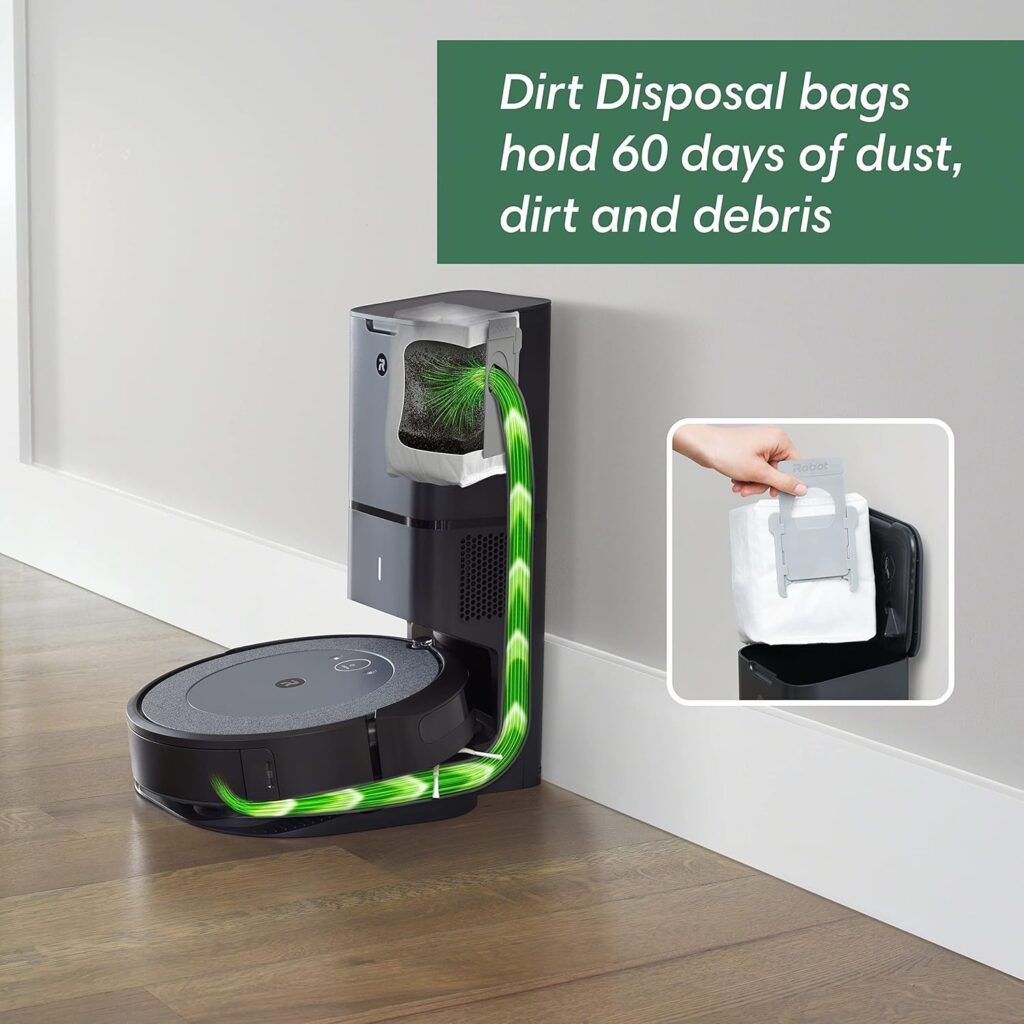
The star attraction empties the robot’s dustbin automatically after each cleaning session. The Clean Base uses AllergenLock bags that hold approximately 60 days of debris for typical households. When the robot finishes cleaning, it returns to the base, aligns precisely with the suction port, and the base’s powerful vacuum empties the dustbin in roughly 10-15 seconds.
In practice, this feature genuinely transforms ownership. I’ve gone eight weeks between bag changes in my 1,200-square-foot ground floor with daily cleaning sessions. The bags trap 99% of particles down to 0.7 microns, keeping allergens contained. Emptying bags proves satisfyingly simple, though replacement bags cost approximately $15 for three, adding ongoing expenses.
The emptying process is loud, producing around 80-85 decibels for 10-15 seconds. It’s not deafening, but it definitely announces itself. I schedule cleaning sessions for when I’m out specifically to avoid the noise.
Imprint Smart Mapping:
The “EVO” designation indicates this robot received smart mapping capabilities through a 2022 software update. The i3+ EVO learns your home’s layout, remembers it permanently, and lets you direct room-specific cleaning through the app or voice commands.
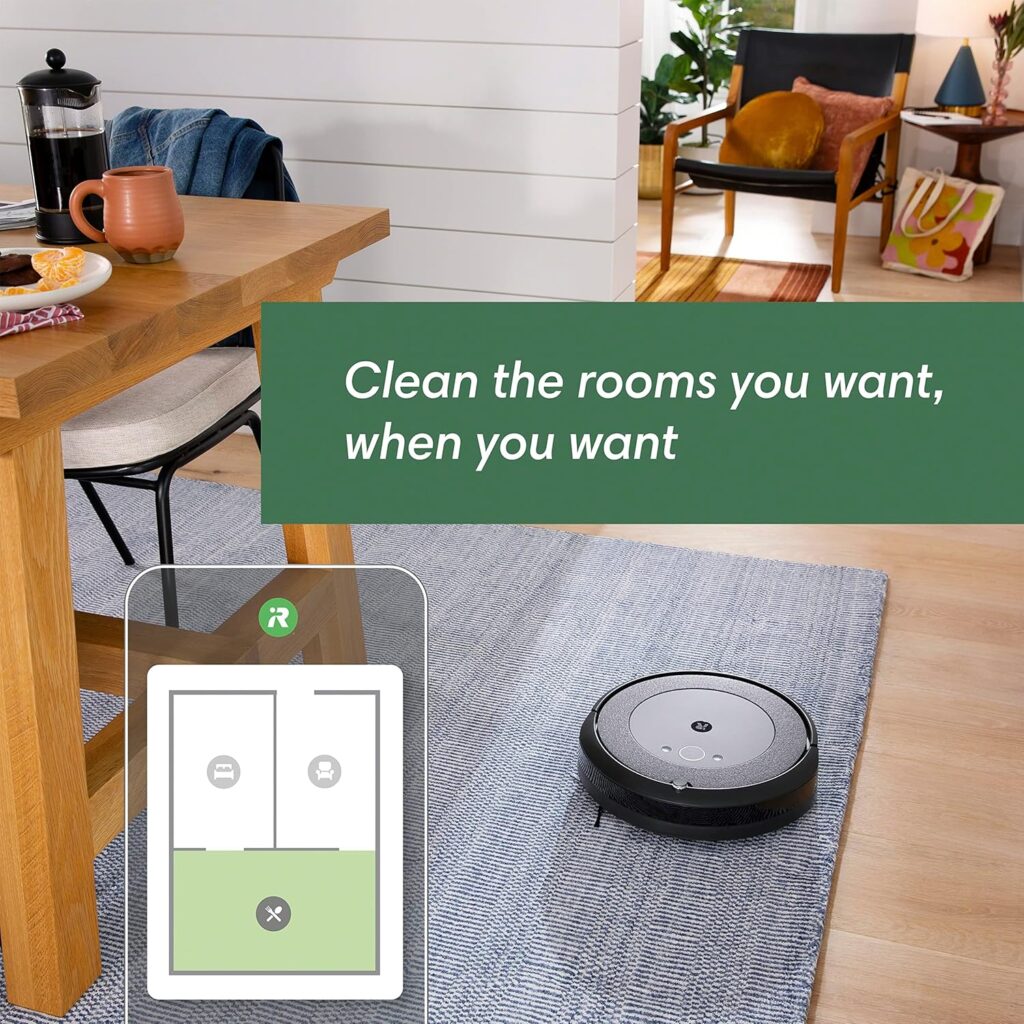
Mapping proved accurate in my home after two complete runs. The app displayed my floor plan with recognisable room shapes, though it occasionally merged adjacent spaces incorrectly. I manually divided and named rooms, which the robot remembered consistently. Room-specific cleaning works reliably, with the robot navigating directly to requested rooms rather than bumbling around randomly.
However, mapping limitations exist. The i3+ EVO creates maps using floor tracking sensors rather than cameras or LiDAR, which means less precision than premium models. It remembers where rooms are but doesn’t identify specific furniture pieces or create keep-out zones without physical barriers. For mid-range mapping, it performs adequately without matching flagship capabilities.
10x Power-Lifting Suction:
iRobot claims the i3+ EVO delivers 10 times more suction than the 600 series Roomba. Whilst I can’t independently verify that specific multiplier, the suction definitely impresses for a mid-range robot. Hard floors come away genuinely clean, low-pile carpet sees noticeable improvement after cleaning, and pet hair disappears effectively.
On medium-pile carpet, performance drops noticeably. The robot makes multiple passes but sometimes leaves visible debris behind. Deep carpet fibres seem to challenge the suction system, though it performs better than budget robots. Comparing it to my upright vacuum shows the robot achieves perhaps 80-85% of the upright’s effectiveness on carpet.
Premium 3-Stage Cleaning System:
The cleaning system combines the edge-sweeping brush, dual multi-surface rubber brushes, and powerful suction in sequence. The side brush sweeps debris from edges toward the centre, the rubber brushes agitate and lift dirt, and suction pulls everything into the dustbin.
This system works brilliantly on hard floors. Dust, crumbs, pet hair, and tracked-in dirt disappear after a single pass. The rubber brushes adapt well to surface transitions, maintaining contact when moving from tile to carpet or hardwood to area rugs.
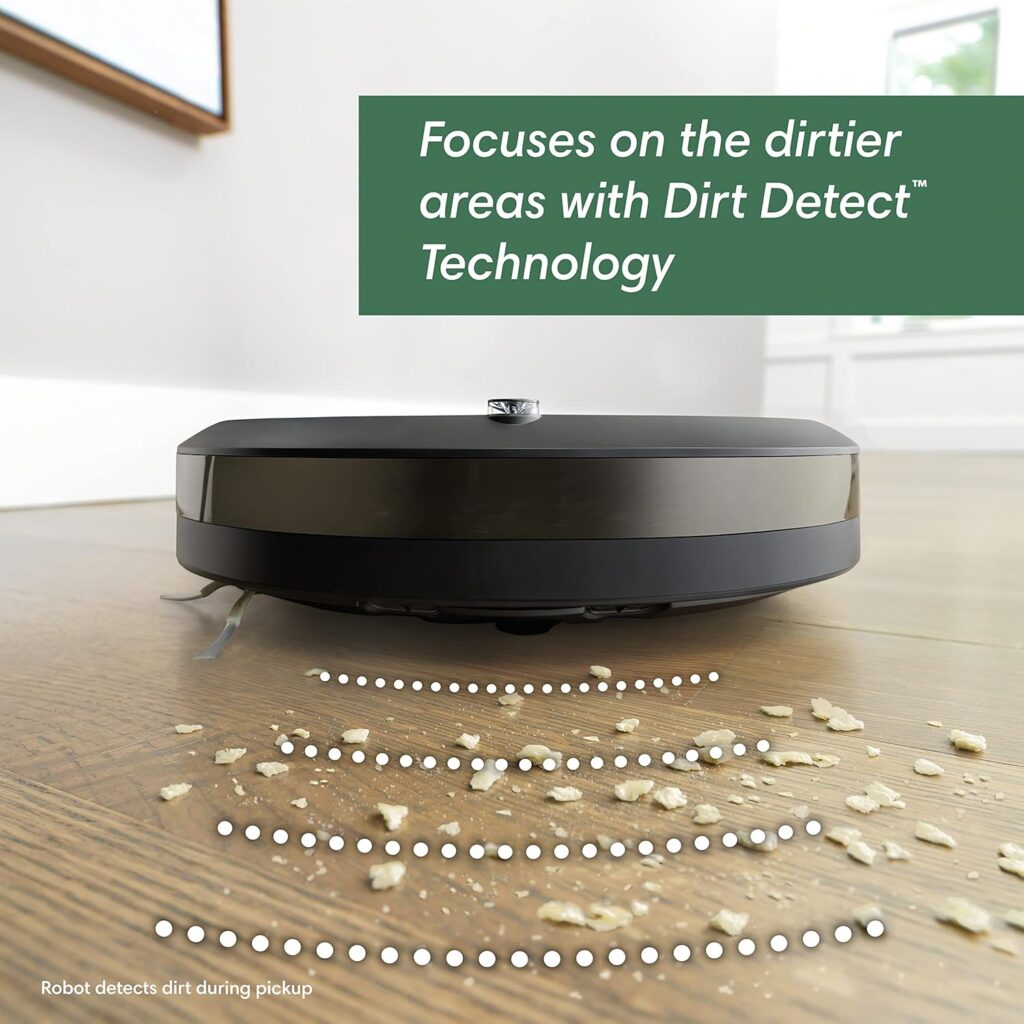
Dirt Detect Technology uses acoustic sensors to identify concentrated debris areas and automatically increases cleaning intensity. In practice, I’ve noticed the robot spending extra time on high-traffic areas like my kitchen entrance, though it’s impossible to verify if Dirt Detect triggered this behaviour or if systematic navigation simply covered those areas more thoroughly.
Voice Control Integration:
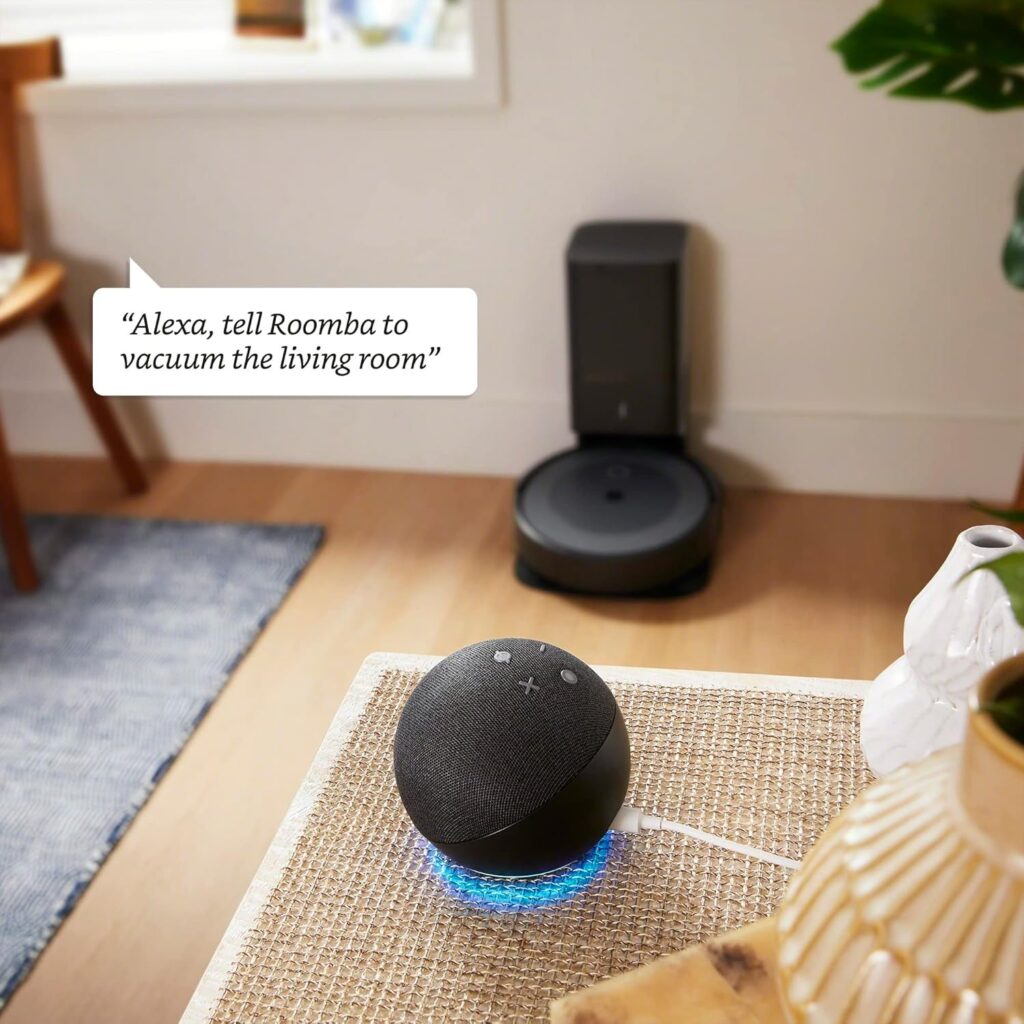
The i3+ EVO works with Alexa, Google Assistant, and Siri for voice-commanded cleaning. Setting up through the iRobot Home app took minutes, and voice commands work reliably. I primarily use “Hey Google, tell Roomba to clean the kitchen,” which sends the robot directly to that room.
Voice control feels genuinely useful rather than gimmicky, especially when you notice a mess and want immediate cleaning without opening the app. However, more complex commands like “clean the kitchen and living room” don’t work reliably, limiting its versatility.
Scheduled Cleaning:
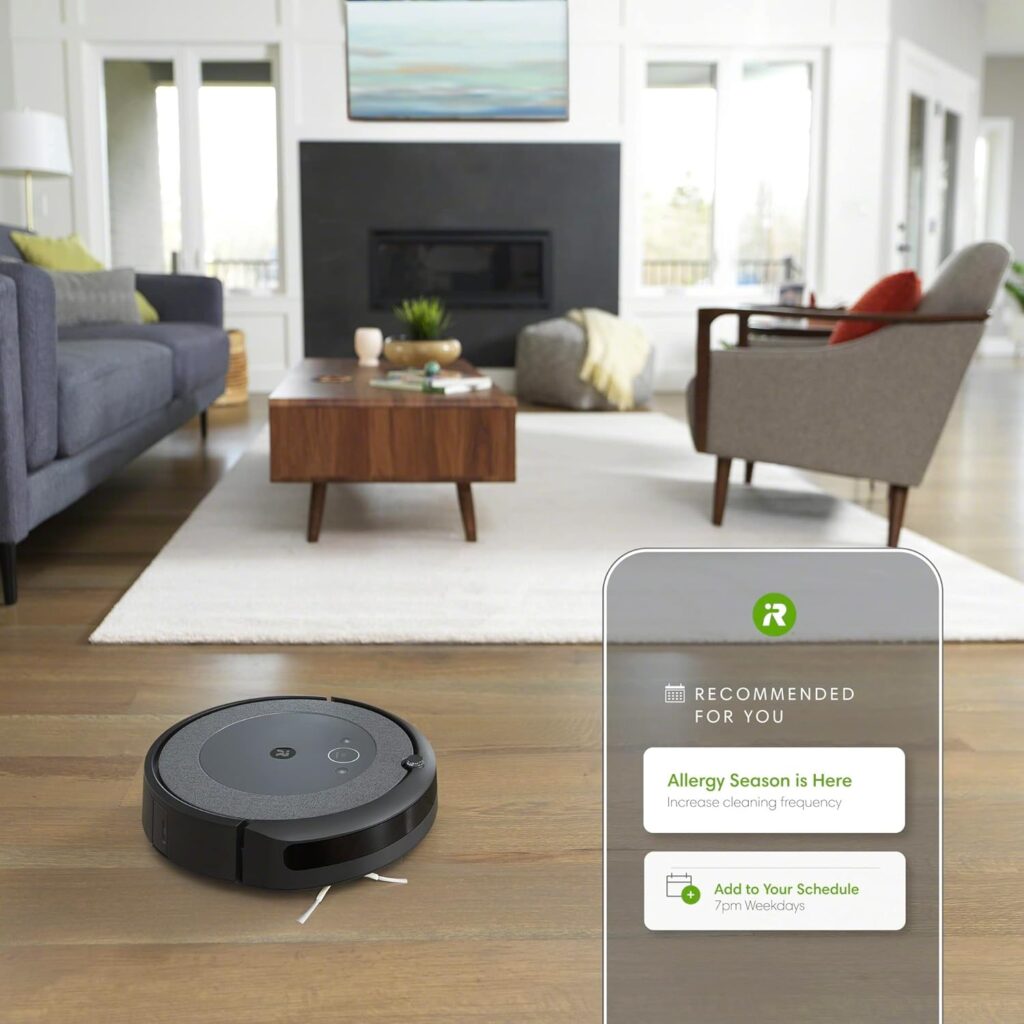
The app lets you schedule daily or weekly cleaning sessions for specific rooms at designated times. I’ve scheduled weekday cleaning for 10 AM when I’m working upstairs, which the robot follows religiously. The smart scheduling suggestions based on usage patterns and seasonal factors (pollen counts, pet shedding seasons) occasionally appear in the app, though I’ve found them less useful than manual scheduling.
These features collectively create a capable mid-range robot vacuum, though none achieve the flawless execution of premium competitors. They work well enough to satisfy most users without delivering the “wow” factor you’d expect from flagship models.
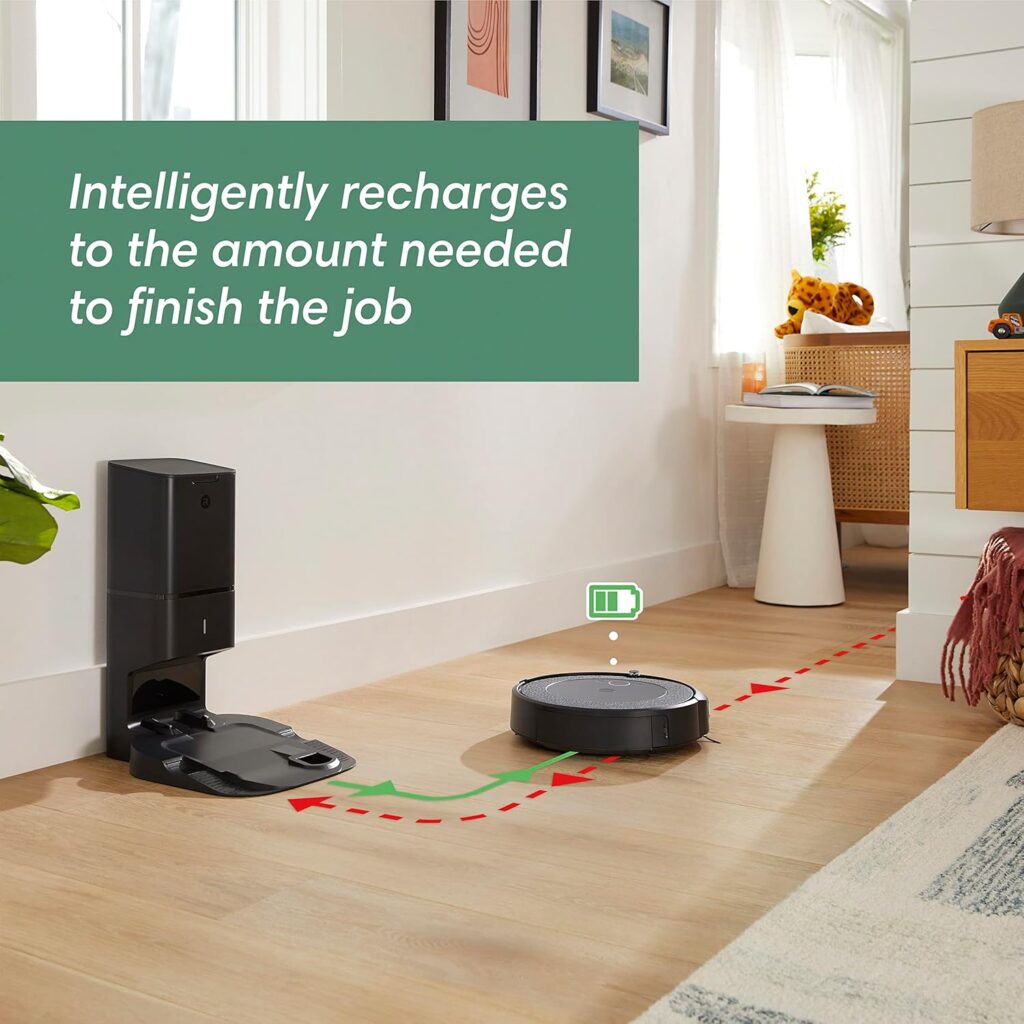
Recharge and Resume:
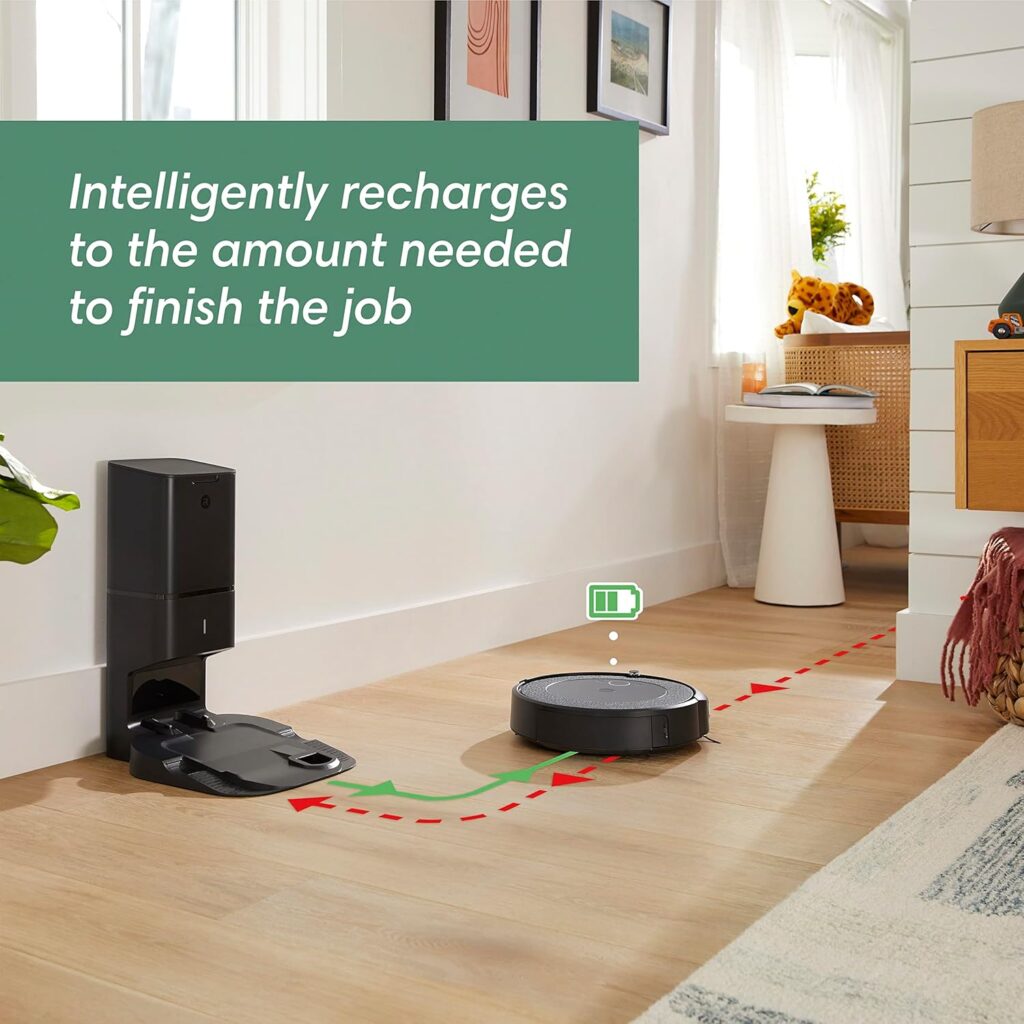
When battery levels drop below approximately 15%, the robot automatically returns to the base, recharges itself, and resumes cleaning where it stopped. This feature proves essential for larger homes or extended cleaning sessions.
In my testing, the battery lasted 90-96 minutes consistently before requiring a recharge. That’s sufficient for my 1,200-square-foot ground floor in a single session. For larger spaces, Recharge and Resume work seamlessly, though it adds 2-3 hours to total cleaning time whilst the robot recharges. The robot remembers its position accurately and picks up where it left off without redundantly cleaning already-finished areas.
Performance and Real-World Testing
After four months of daily use across multiple floor types and conditions, I’ve formed clear opinions about how the iRobot Roomba i3+ EVO actually performs beyond marketing claims.
Hard Floor Performance:
The i3+ EVO genuinely excels on hard floors. My ground floor combines tile, laminate, and vinyl plank flooring across the kitchen, dining area, and living room. The robot removes visible dust, crumbs, pet hair, and tracked-in debris in a single pass. After cleaning, running a microfibre mop reveals minimal residual dirt, indicating thorough pickup.
Edge cleaning performs adequately, though not exceptionally. The side brush sweeps most debris from baseboards and corners, though I’ve noticed small accumulations of dust in tight corners after several cleaning cycles. It’s not terrible, but it’s not flawless either.
Surface transitions between different hard floor types are handled smoothly. The robot maintains suction and brush contact when moving from tile to laminate or hardwood to vinyl plank without hesitation or reduced performance.
See Where The iRobot Roomba i3+ EVO Robot Vacuum Ranks On Our List Of The Best iRobot Vacuums For Pet Hair
Low-Pile Carpet Performance:
On area rugs and low-pile carpet, the i3+ EVO delivers respectable results. Visible debris disappears, embedded dust lifts reasonably well, and pet hair extracts effectively thanks to those rubber brushes. The automatic Carpet Boost feature increases suction when it detects carpet, though the performance gain feels modest rather than dramatic.
After cleaning, the carpet looks noticeably cleaner and feels fresher underfoot. However, comparing it against a deep clean with my upright vacuum reveals the robot achieves perhaps 75-80% of the upright’s thoroughness. It’s maintenance cleaning rather than deep cleaning.
Medium-Pile Carpet Challenges:
This is where the i3+ EVO’s limitations become obvious. On my bedroom’s medium-pile carpet, the robot struggles visibly. Multiple passes over the same area still leave occasional pet hair visible, and embedded debris in deeper carpet fibres resists extraction. The robot makes an effort, spending extra time in these areas, but the results disappoint compared to hard floors.
For homes with predominantly medium-pile or high-pile carpeting, the i3+ EVO probably isn’t sufficient as a primary vacuum. It works for daily maintenance between deep cleans, but you’ll still need a powerful upright for weekly thorough cleaning.
Pet Hair Handling:
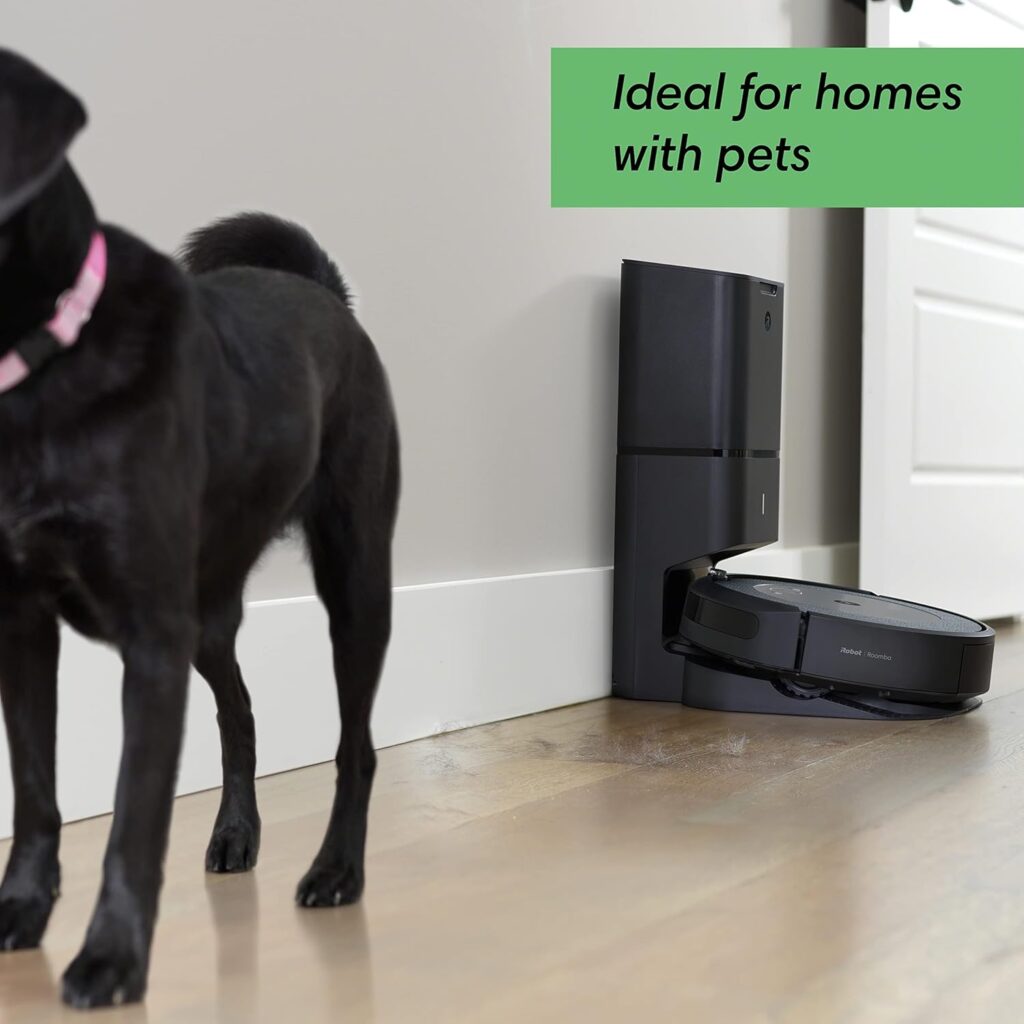
Our golden retriever sheds continuously, and pet hair accumulates everywhere. The i3+ EVO handles this challenge impressively well. Those dual rubber brushes genuinely resist tangling, which shocked me after previous experiences with bristle-brush robots that required constant hair removal.
After four months of daily use in a heavy-shedding household, I’ve needed to remove tangled hair from the rubber brushes perhaps five times total. Each time required less than two minutes using just my fingers. Compare that to my previous robot vacuum that needed weekly brush cleaning with scissors, and the improvement feels substantial.
The self-emptying base handles pet hair without clogging. I’ve watched the dustbin empty whilst partially full of golden retriever fur, and the base’s powerful suction pulls everything through without issues.
Battery Life Reality:
iRobot claims 75 minutes of runtime, but consistent testing showed 90-96 minutes before recharging. That’s sufficient for my 1,200-square-foot ground floor in a single session, with 15-20% battery remaining. Larger homes will trigger Recharge and Resume, adding 2-3 hours to total cleaning time.
Charging from empty to full takes approximately 2.5-3 hours. The robot displays charging status via indicator lights, and the app shows remaining battery percentage.
Navigation Accuracy:
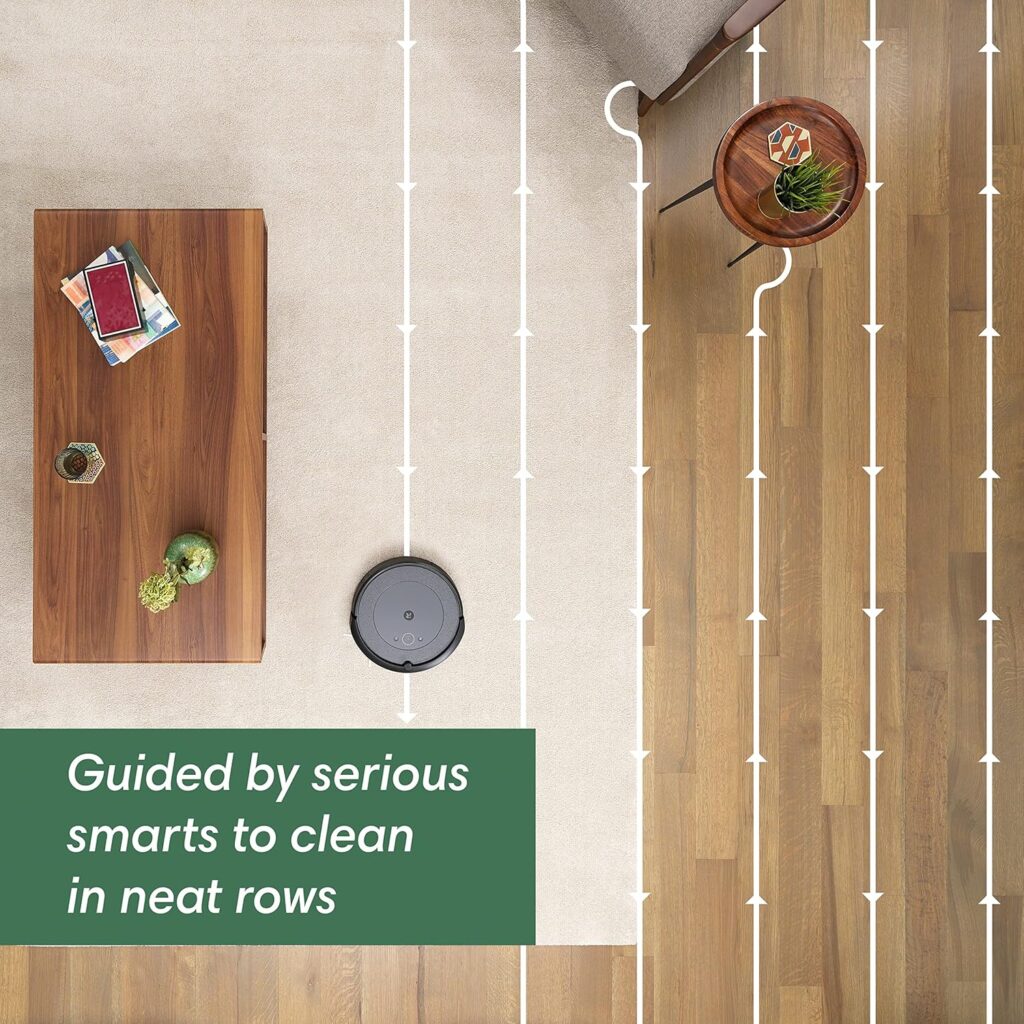
The floor tracking sensors navigate methodically in relatively clean, open spaces. The robot moves in neat rows back and forth, covering areas systematically rather than randomly. This approach looks professional and provides consistent coverage.
However, obstacle avoidance proves less impressive. The robot lacks camera-based object recognition found in premium models, relying instead on bump sensors and cliff detection. It bumps gently into furniture, walls, and obstacles before rerouting around them. Most collisions are gentle, but I’ve watched it push lightweight items like shoes or pet toys rather than recognising and avoiding them.
Cables present particular challenges. Phone chargers, laptop cables, and extension cords occasionally tangle the robot, requiring rescue. After learning this the hard way, I now ensure all cables are lifted off the floor before cleaning sessions.
Stairs and drop-offs were detected perfectly. The cliff sensors prevented any tumbles down my stairs across hundreds of cleaning sessions.
Consistency Over Time:
Four months of daily use revealed admirable consistency. Cleaning performance hasn’t degraded noticeably. The mapping remains accurate without requiring periodic retraining. The self-emptying function works as reliably on day 120 as on day one. Software updates arrive occasionally, though they haven’t dramatically changed performance or added game-changing features.
The robot occasionally develops quirks. About once a month, it “forgets” where the base is located and wanders around confused after completing cleaning. Restarting the robot via the app resolves this immediately. Similarly, the robot occasionally declares cleaning complete despite missing obvious sections, though this happens rarely enough that it doesn’t significantly impact overall satisfaction.
Technical Specifications
Here’s what powers the iRobot Roomba i3+ EVO, explained without unnecessary jargon:
Dimensions and Weight:
- Robot Diameter: 13.26 inches (33.7 cm)
- Robot Height: 3.63 inches (9.2 cm)
- Robot Weight: 7.44 pounds (3.37 kg)
- Clean Base: 12.2″ W x 15.1″ D x 19″ H
- Clean Base Weight: 9.66 pounds
The compact profile fits under most furniture, though the height prevents access beneath extremely low-clearance pieces. The weight feels substantial without being cumbersome for carrying between floors.
Battery and Runtime:
- Battery Type: Lithium-ion rechargeable
- Advertised Runtime: 75 minutes
- Actual Runtime (tested): 90-96 minutes
- Charging Time: 2.5-3 hours (0-100%)
- Recharge and Resume: Yes
The lithium-ion battery maintains consistent performance across cleaning sessions without the degradation issues that plagued older nickel-metal hydride batteries. The extended runtime beyond advertised specifications pleasantly surprised me, providing sufficient power for most single-level homes.
Cleaning System:
- Suction Power: 10x vs Roomba 600 series (specific Pa measurement not published)
- Brush Type: Dual Multi-Surface Rubber Brushes (counter-rotating)
- Side Brush: Single 3-arm edge-sweeping brush
- Cleaning Width: Approximately 6.7 inches
- Dirt Detect Technology: Acoustic sensor-based
The rubber brush system represents a significant advantage over bristle brushes for homes with hair. Whilst iRobot doesn’t publish Pascal (Pa) measurements like some competitors, the “10x more powerful” claim translates to adequate real-world performance for mid-range expectations.
Dust Collection:
- Onboard Dustbin: 0.5 litres (500ml)
- Clean Base Capacity: 60 days of typical use
- Bag Type: AllergenLock disposable bags
- Filtration: High-efficiency filter (captures 99% of particles 0.7+ microns)
The relatively small onboard dustbin matters less with automatic emptying after each session. The 60-day base capacity proved accurate in my testing, though pet owners may need more frequent bag changes.
Navigation and Sensors:
- Navigation Type: Floor tracking sensors (not camera or LiDAR)
- Mapping: Imprint Smart Mapping (room recognition)
- Cliff Detection: Yes (prevents stair falls)
- Obstacle Avoidance: Bump and touch sensors
- Dirt Detect Sensors: Acoustic debris detection
The sensor-based navigation works adequately without matching the precision of camera or LiDAR systems. Think of it as competent rather than exceptional.
Smart Features:
- Wi-Fi: 2.4 GHz (required for setup and operation)
- App Control: iRobot Home App (iOS and Android)
- Voice Assistants: Amazon Alexa, Google Assistant, Siri
- Smart Home Integration: Works with IFTTT
- Scheduling: Yes, customisable per room
- Personalised Suggestions: Seasonal cleaning recommendations
See Where The iRobot Roomba i3+ EVO Robot Vacuum Ranks On Our List Of The Best iRobot Vacuums For Pet Hair
Connectivity:
- Required: 2.4 GHz Wi-Fi network
- Bluetooth: Yes (for initial pairing)
- App Requirements: iOS 13.0+ or Android 7.0+
Warranty and Support:
- Standard Warranty: 1-year limited warranty
- Extended Warranty: Available for purchase
- Customer Support: Phone, email, and live chat
What These Specs Actually Mean:
The 90+ minute runtime provides sufficient cleaning time for most single-floor homes under 2,000 square feet in one session. The floor tracking navigation successfully maps and cleans systematically, but lacks the precision for advanced features like keep-out zones without physical barriers. The 10x suction claim translates to adequate performance on hard floors and low-pile carpet, though it struggles with deep-pile carpeting.
The 0.5-litre dustbin would feel small without automatic emptying, but the Clean Base transforms this potential limitation into a non-issue. The high-efficiency filtration captures allergens effectively, though it’s not technically true HEPA filtration.
The 2.4 GHz Wi-Fi requirement occasionally causes setup frustration for users with dual-band routers set to auto-select frequency. The simple solution involves temporarily disabling 5 GHz during setup, then re-enabling it afterwards.
Accessories and Tools Included
The iRobot Roomba i3+ EVO package includes:
Robot Vacuum Main Unit:
- Roomba i3+ EVO robot vacuum (model I355420)
- Dual Multi-Surface Rubber Brushes (pre-installed)
- Single 3-arm edge-sweeping brush (pre-installed)
- High-efficiency filter (pre-installed in dustbin)
- Onboard dustbin (0.5L capacity)
Clean Base Automatic Dirt Disposal:
- Clean Base docking station
- Power cable (approximately 6 feet)
- One AllergenLock bag (pre-installed)
- One spare AllergenLock bag
Documentation and Setup Materials:
- Quick Start guide
- Owner’s manual (or QR code linking to digital version)
- Warranty registration information
- QR code card for app setup
What You’ll Actually Use:
The robot and Clean Base constitute your daily interaction. Everything else lives in a drawer until you need replacement parts. The Quick Start guide proved genuinely helpful during initial setup, though the app’s guided process largely duplicates this information.
Quality Assessment:
The included components feel appropriate for the price point. The robot itself demonstrates solid construction, the Clean Base performs its function reliably, and the accessories meet expectations without exceeding them.
The two AllergenLock bags included with purchase provide approximately three to four months of use, depending on household conditions. After that, you’ll need to purchase replacement bags at approximately $15 for a three-pack or $20 direct from iRobot. This ongoing expense adds up over time, though the convenience justifies it for most users.
What’s Missing:
Notably absent are extra filters, additional side brushes, or cleaning tools specifically designed for maintenance. For a $550-600 product, including at least one spare filter and side brush would have improved the value proposition. Instead, you’ll need to purchase these separately when replacement time arrives in 2-6 months, depending on usage.
iRobot doesn’t include physical virtual wall barriers, which the i3+ EVO can’t use anyway due to its sensor-based navigation. Premium Roombas support virtual walls through the app, but the i3+ EVO requires physical barriers to block doorways or areas you want protected.
Additional Accessories to Consider:
Based on four months of ownership, here are the accessories you’ll eventually need:
High-Efficiency Filters: Replacement recommended every 2-3 months ($18 for 3-pack aftermarket)
Side Brushes: Replacement every 3-6 months, depending on floor types ($12 for 3-pack aftermarket)
Rubber Brush Extractors: Rarely need replacement, but available if needed (approximately $40 for genuine iRobot pair)
AllergenLock Bags: Essential ongoing expense (approximately $5-7 per bag)
Replacement Parts Availability:
iRobot maintains excellent parts availability through their website, Amazon, and third-party sellers. Finding replacement filters, brushes, and bags proves straightforward. Aftermarket alternatives exist at lower prices, though quality varies. I’ve successfully used aftermarket filters and bags without issues, saving approximately 30-40% compared to genuine iRobot parts.
Pros and Cons
After four months of daily use, these are the genuine strengths and limitations you should know before purchasing.
Pros:
- Genuinely Effective Self-Emptying: The Clean Base reliably empties the robot after each session and holds approximately 60 days of debris in my heavy-shedding household. This transforms robot vacuum ownership from “convenient but requires regular attention” to “genuinely hands-off cleaning.” I’ve gone eight weeks between bag changes, which exceeds expectations.
- Anti-Tangle Rubber Brushes Actually Work: After years of wrestling with bristle brushes hopelessly tangled with pet hair, the dual rubber brush system feels revolutionary. Four months into ownership with a shedding golden retriever, I’ve cleaned tangled hair perhaps five times total. Each time required under two minutes using just fingers. This single feature justifies the price for pet owners.
- Reliable Smart Mapping: The Imprint Smart Mapping learns your home accurately and remembers it permanently. Room-specific cleaning works consistently, and the robot navigates directly to requested areas rather than wandering randomly. For a mid-range robot using floor tracking sensors rather than cameras or LiDAR, the mapping impresses.
- Excellent Hard Floor Performance: Hard floors come away genuinely clean after the robot passes through. Dust, debris, crumbs, and pet hair disappear effectively. Comparing against manual vacuuming reveals the robot achieves 90-95% of manual thoroughness on hard floors, which feels sufficient for daily maintenance.
- True Recharge and Resume: Battery management works flawlessly. When power drops low, the robot returns to base, recharges, and picks up exactly where it stopped. Large homes benefit significantly from this feature, as the robot completes cleaning sessions regardless of runtime limitations.
- Solid Build Quality: After four months of daily collisions with furniture, interaction with pet hair, and constant use, the robot shows minimal wear. The textured grey finish hides fingerprints and dust better than glossy black alternatives. Components feel durable rather than cheap, suggesting a multi-year lifespan.
- Voice Control Works Reliably: Integration with Alexa, Google Assistant, and Siri functions consistently. Voice commands for room-specific cleaning feel genuinely useful rather than gimmicky. “Hey Google, tell Roomba to clean the kitchen” becomes a habit when you notice a mess.
Cons:
- No Camera-Based Obstacle Avoidance: The i3+ EVO bumps into obstacles rather than recognising and avoiding them proactively. It navigates adequately in uncluttered spaces but gets confused by shoes, pet toys, and especially cables. Premium robots with camera AI avoid these obstacles entirely, whilst the i3+ EVO requires constant rescue.
- Medium-Pile Carpet Performance Disappoints: Hard floors and low-pile carpet receive excellent cleaning, but medium-pile carpet reveals the i3+ EVO’s limitations. Multiple passes still leave visible pet hair, and embedded debris resists extraction. Homes with predominantly medium-pile or high-pile carpeting should consider more powerful alternatives.
- Noisy Self-Emptying Cycle: The Clean Base produces approximately 80-85 decibels for 10-15 seconds when emptying the dustbin. It’s not deafening, but it definitely announces itself. I schedule cleaning sessions for when I’m away, specifically to avoid the noise. Work-from-home situations require careful scheduling.
- Ongoing Bag Costs Add Up: AllergenLock replacement bags cost approximately $5-7 each, adding $30-50 annually to ownership costs. Whilst the convenience justifies this expense, it’s worth factoring into total cost calculations. Bagless alternatives exist in other models, though they sacrifice allergen containment.
- Mapping Limitations vs Premium Models: The i3+ EVO remembers room layouts and enables room-specific cleaning, but it can’t create keep-out zones, identify specific furniture pieces, or achieve the precision of camera or LiDAR-based navigation. The mapping works adequately without matching flagship capabilities.
These pros and cons paint an accurate picture: the i3+ EVO excels as a mid-range self-emptying robot for homes with predominantly hard floors and light carpet coverage, especially in pet-owning households. It disappoints users expecting premium navigation capabilities or excellent carpet performance.
Who This Product Is Best For
After extensive testing, I’ve identified specific user profiles who will genuinely benefit from the iRobot Roomba i3+ EVO:
Pet Owners with Hard Floors: If you’ve got shedding pets and predominantly hard flooring, the i3+ EVO hits a sweet spot. Those rubber brushes resist tangling brilliantly, the self-emptying base handles massive amounts of pet hair without clogging, and the daily maintenance keeps fur accumulation manageable. Our golden retriever sheds enough to fill the vacuum twice weekly, yet the robot handles it effortlessly.
Busy Professionals Wanting Automation: The 60-day self-emptying capacity genuinely delivers hands-off cleaning for people with demanding schedules. Set the cleaning schedule once, forget about it for eight weeks, then spend two minutes changing the bag. For time-poor professionals, this convenience transforms floor maintenance from a recurring chore to an invisible background task.
Homes Under 2,000 Square Feet: The 90+ minute runtime provides sufficient coverage for most single-floor homes under 2,000 square feet in one session. Larger homes trigger Recharge and Resume, which works but adds hours to total cleaning time. Modest-sized homes benefit most from the i3+ EVO’s capabilities.
Budget-Conscious Buyers Wanting Self-Emptying: At $550-600 (and often on sale for less), the i3+ EVO represents the most affordable way to get self-emptying convenience from a reputable brand. Premium robots offer better performance but cost $200-400 more. If budget matters but you want automatic emptying, this hits the target.
First-Time Robot Vacuum Buyers: The i3+ EVO provides enough smart features to feel genuinely capable without overwhelming new users with complexity. The app interface proves intuitive, setup proceeds smoothly, and operation requires minimal intervention. It’s sophisticated enough to impress whilst remaining approachable for newcomers.
Allergy Sufferers: The high-efficiency filtration captures 99% of particles down to 0.7 microns, and the AllergenLock bags trap allergens during disposal. Daily cleaning reduces allergen accumulation, and you never touch dust during bag changes. Compared to manually emptying robot dustbins, this significantly reduces allergen exposure.
Apartment Dwellers or Flat Residents: The 3.63-inch profile fits under most furniture, and the compact size navigates flats effectively. The automatic emptying reduces dustbin disposal frequency, which matters when rubbish chutes or outdoor bins require effort to access.
Types of Users Who Should Look Elsewhere:
Homes with Predominantly Medium-Pile Carpet: The i3+ EVO struggles with deeper carpet fibres. If your home features mostly medium-pile or high-pile carpeting, consider more powerful alternatives with stronger suction and advanced brush systems.
Users Wanting Premium Navigation: If you expect camera-based obstacle avoidance, precise keep-out zones, or advanced mapping features, the i3+ EVO will disappoint. Premium robots from iRobot’s own lineup or competitors offer significantly better navigation capabilities.
Cable-Heavy Environments: Homes with unavoidable floor-level cables, charging stations, or electronics will frustrate the i3+ EVO’s basic obstacle avoidance. It tangles on cables repeatedly, requiring constant rescue.
Multi-Level Homes Requiring Frequent Transport: Whilst the i3+ EVO can map multiple floors, it requires manual transport between levels and lacks integrated carrying handles. Multi-level homes might prefer lightweight models designed for frequent movement.
See Where The iRobot Roomba i3+ EVO Robot Vacuum Ranks On Our List Of The Best iRobot Vacuums For Pet Hair
Alternative Uses and Versatility
Beyond standard floor cleaning, the iRobot Roomba i3+ EVO proves surprisingly versatile in specific scenarios:
Holiday Home Maintenance: I’ve started scheduling the robot to run twice weekly whilst we’re away for extended periods. The self-emptying capability means it maintains floor cleanliness without requiring anyone to empty dustbins. Returning to genuinely clean floors after a fortnight away feels luxurious.
Post-Party Cleanup: After hosting gatherings, running the robot overnight handles the inevitable crumbs, tracked-in dirt, and general mess. Waking up to clean floors the morning after a party significantly reduces the cleanup burden.
Garage and Workshop Cleaning: The powerful suction handles sawdust, drywall dust, and workshop debris on hard workshop floors. Obviously, avoid metal shavings or sharp debris that could damage components, but for general dust accumulation, it works surprisingly well.
Basement Floor Maintenance: Unfinished or partially finished basements with hard floors benefit from regular robot cleaning without requiring you to haul a full-size vacuum downstairs. Schedule weekly cleaning and forget about basement dust accumulation.
Pet Feeding Area Patrol: Scheduling a cleaning run immediately after typical feeding times automatically handles scattered kibble and litter tracked from nearby boxes. This targeted use keeps feeding areas consistently cleaner.
Elderly or Mobility-Limited Assistance: For relatives with mobility challenges, the robot provides floor cleaning without physical effort. The self-emptying feature reduces even the minimal physical requirements of traditional robot vacuums.
Seasonal Deep-Cleaning Companion: During spring cleaning or preparing for guests, running the robot daily for a week intensively improves baseline cleanliness whilst you focus on other tasks. It’s not a replacement for thorough manual cleaning, but it enhances overall results.
RV or Caravan Cleaning: The compact size works well in recreational vehicles with hard flooring. The robot navigates confined RV spaces adequately, though you’ll need to manually empty the dustbin since the Clean Base won’t fit.
These alternative uses demonstrate versatility beyond standard daily floor maintenance, though they require creative thinking about how robot vacuums fit into your lifestyle.
Value for Money and Comparison
At approximately $550-600 retail (frequently on sale for $450-500), the iRobot Roomba i3+ EVO occupies mid-range territory with self-emptying capabilities typically reserved for premium models. Understanding its value requires comparing it against alternatives.
Price Point Analysis:
The i3+ EVO costs significantly more than basic robot vacuums ($200-300) but substantially less than premium self-emptying models ($700-1,200). This positioning makes sense when you consider what you’re paying for: reliable self-emptying, competent smart mapping, adequate cleaning performance, and iRobot’s established reliability and parts availability.
Breaking down the pricing reveals you’re essentially paying $300-350 for the robot itself plus $250-300 for the Clean Base. iRobot sells the i3 EVO without the base for approximately $350, and the base separately for $250, confirming this breakdown.
Brief Comparison to Similar Products:
vs Roomba i7+ ($700-800): The i7+ adds camera-based navigation, keep-out zones through the app, and slightly better carpet performance. Whether these features justify $150-250 more depends on your specific needs. For most users, the i3+ EVO delivers 85% of the i7+’s capabilities at 65-70% of the cost.
vs Shark AI Ultra ($400-500): Shark offers self-emptying at lower pricing but with less refined navigation, noisier operation, and inferior parts availability. The Shark performs adequately, but iRobot’s established ecosystem and reliability justify the price premium for risk-averse buyers.
vs Roborock Q5+ ($400-500): Roborock provides LiDAR navigation, excellent carpet performance, and competitive self-emptying at similar or lower pricing. The Q5+ technically outperforms the i3+ EVO in several areas, though iRobot offers better customer support and parts availability in Western markets.
Long-Term Value Considerations:
Ongoing costs include AllergenLock bags ($30-50 annually), filters ($18-25 annually), and occasional brush replacements ($12-20 annually). Total annual ownership costs approximate $60-95 beyond the initial purchase price.
iRobot’s strong parts availability and established repair ecosystem add value for long-term ownership. Finding replacement components proves straightforward, and third-party alternatives reduce costs significantly. Compare this to lesser-known brands where parts availability might evaporate if the company discontinues support.
The i3+ EVO’s durability suggests a realistic 3-5 year lifespan with proper maintenance, potentially longer. At $550 initial cost plus $60-95 annually in consumables, the total five-year cost approximates $850-1,025. Divide that across 1,825 cleaning sessions (daily for five years), and per-session cost approaches $0.47-0.56, which feels reasonable for automated floor maintenance.
See Where The iRobot Roomba i3+ EVO Robot Vacuum Ranks On Our List Of The Best iRobot Vacuums For Pet Hair
Is It Worth the Price?
For the right user profile (pet owners, hard floor homes, allergy sufferers wanting self-emptying), yes. The i3+ EVO delivers sufficient performance and convenience to justify $550-600, especially when on sale. The self-emptying capability alone transforms robot vacuum ownership from “convenient appliance requiring regular attention” to “genuinely automated solution.”
For wrong-fit users (heavy carpet homes, people wanting premium navigation, cable-heavy environments), it disappoints relative to cost. Spending $550-600 on a robot that constantly gets stuck or leaves carpets inadequately cleaned feels wasteful.
The value proposition ultimately depends on alignment between your specific needs and the i3+ EVO’s particular strengths. When that alignment exists, it represents excellent value. When misalignment occurs, even discounted pricing doesn’t compensate for daily frustration.
Maintenance and Long-Term Ownership
Four months into ownership provides early insight into maintenance requirements and long-term considerations for the iRobot Roomba i3+ EVO.
Routine Maintenance Requirements:
The i3+ EVO requires minimal but consistent maintenance for optimal performance. Weekly tasks include checking the rubber brushes for tangled hair (rarely needed but worth verifying), wiping sensors clean with a dry cloth, and ensuring the charging contacts on both robot and base remain dust-free.
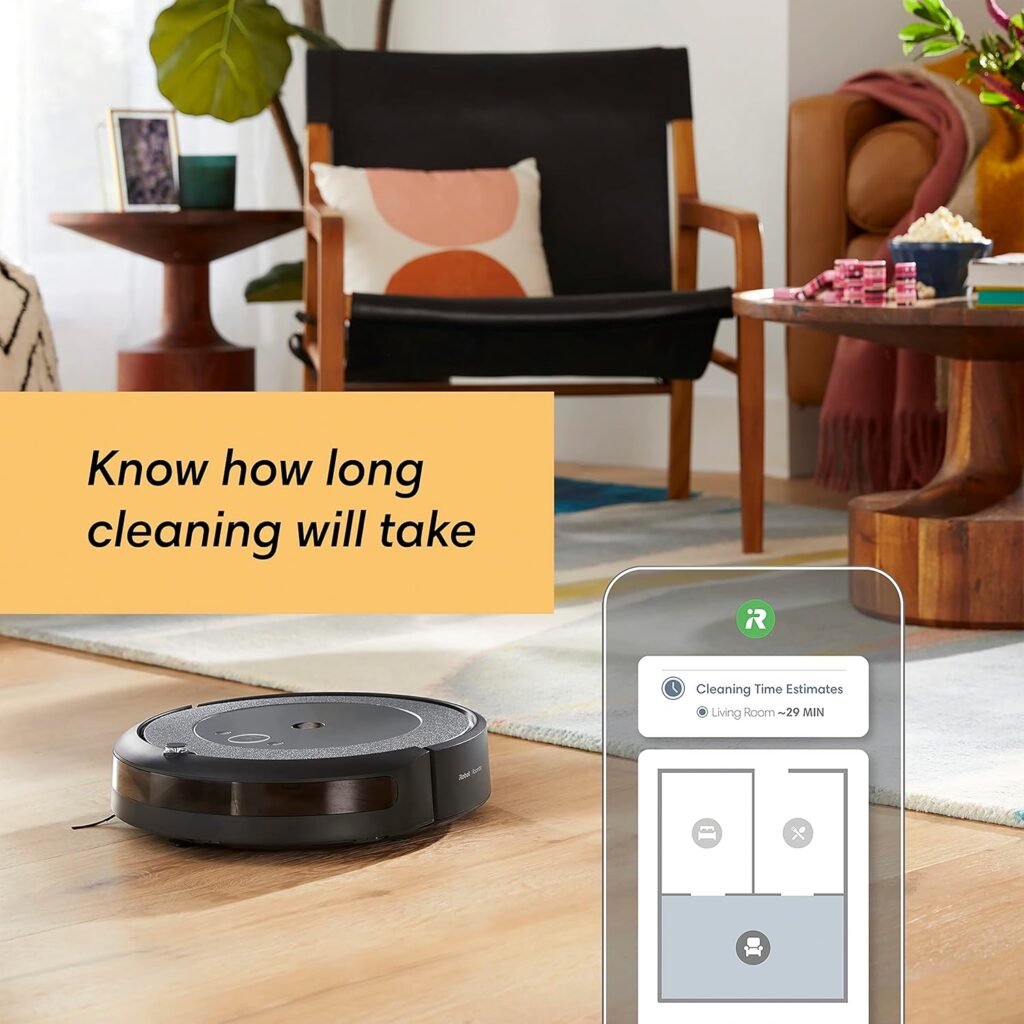
Monthly maintenance involves removing and rinsing the dustbin under warm water (after removing the filter), wiping down the robot’s exterior, and checking the side brush for wear or damage. The app conveniently tracks component health and notifies when replacements approach due dates.
The dual rubber brushes rarely require deep cleaning thanks to their anti-tangle design. When they do need attention, simply pulling the brush module out, removing the brushes, and rinsing them under warm water suffices. The entire process takes perhaps five minutes monthly.
Replacement Parts Timeline:
Filters: Require replacement every 2-3 months, depending on household dust levels and pet ownership. The app tracks filter health and sends replacement reminders. Aftermarket filters cost approximately $18 for three, whilst genuine iRobot filters run about $25 for three.
Side Brushes: Need replacement every 3-6 months. The plastic bristles gradually wear down and lose effectiveness. Genuine replacements cost around $15 for three, and aftermarket options cost approximately $12 for three.
Rubber Brush Extractors: Demonstrate impressive durability. After four months of daily use with heavy pet hair exposure, mine show minimal wear and maintain full effectiveness. iRobot suggests annual replacement, though many users report 18-24 months of use. Genuine replacements cost approximately $40 for the pair.
AllergenLock Bags: The ongoing expense you can’t avoid. Each bag lasts 30-60 days, depending on household conditions. Heavy shedding, large floor areas, and frequent cleaning reduce lifespan toward the 30-day end. Bags cost approximately $15-20 for three-packs.
Replacement Parts Availability:
iRobot maintains excellent parts availability through their website, Amazon, and authorised retailers. Finding genuine components proves straightforward even years after purchase. This contrasts favourably with lesser-known brands, where parts availability often evaporates when models age.
Third-party aftermarket alternatives exist for most consumables at 30-50% lower cost. Quality varies, but reputable aftermarket sellers provide adequate performance for filters, bags, and brushes. I’ve successfully used aftermarket options without issues.
Common Issues to Watch For:
The robot occasionally “forgets” the base location and wanders confused after completing cleaning. This happens perhaps once monthly in my experience. Restarting the robot via the app resolves it immediately, suggesting a software glitch rather than a hardware failure.
The dustbin full sensor sometimes triggers falsely, causing the robot to return for emptying despite adequate capacity remaining. This occurs rarely, perhaps twice over four months, and resolves itself on subsequent cleaning sessions.
The side brush occasionally works loose from its mounting, causing rattling noises during operation. Tightening the mounting screw solves this in seconds.
Expected Lifespan:
iRobot robots typically last 3-5 years with proper maintenance, potentially longer with component replacements. The i3+ EVO’s solid construction and quality components suggest it should reach or exceed this range. The self-emptying base appears even more durable, potentially lasting through multiple robot generations.
Battery degradation represents the most common long-term failure point. Lithium-ion batteries gradually lose capacity, reducing runtime from 90+ minutes to 60-70 minutes after 2-3 years. Battery replacement proves possible, though expensive at approximately $80-100 for genuine iRobot batteries.
Warranty Coverage Assessment:
iRobot provides a standard one-year limited warranty covering manufacturing defects and component failures. This feels adequate for the price point, though premium competitors sometimes offer two-year coverage. Extended warranties available for purchase provide additional protection but add upfront cost.
The warranty specifically excludes damage from misuse, normal wear-and-tear on consumables, and issues resulting from aftermarket parts. Read warranty terms carefully before using third-party components if warranty protection matters.
Long-Term Ownership Satisfaction:
Four months represent early ownership, but the current trajectory suggests positive long-term satisfaction provided expectations align with capabilities. The robot performs its intended function reliably, maintenance requirements remain manageable, and build quality inspires confidence in multi-year durability.
See Where The iRobot Roomba i3+ EVO Robot Vacuum Ranks On Our List Of The Best iRobot Vacuums For Pet Hair
Reasons to Buy This Product
After four months of daily use, here are compelling reasons to purchase the iRobot Roomba i3+ EVO:
1. Self-Emptying at Accessible Pricing: The i3+ EVO delivers genuine two-month hands-off cleaning at the lowest price point in iRobot’s self-emptying lineup. For allergy sufferers, busy professionals, or anyone valuing convenience over perfection, the Clean Base transforms robot vacuum ownership. Going eight weeks between bag changes genuinely feels liberating compared to manually emptying dustbins multiple times weekly.
2. Exceptional Pet Hair Performance: Those dual rubber brushes resist tangling brilliantly, making the i3+ EVO outstanding for pet-owning households. Four months into ownership with a heavy-shedding golden retriever, I’ve cleaned tangled hair perhaps five times total. Each cleaning took under two minutes. This single feature alone justifies purchase for multi-pet households exhausted by constant brush maintenance.
3. Reliable Smart Mapping Works Consistently: The Imprint Smart Mapping learns your home accurately and remembers it permanently, enabling room-specific cleaning through voice commands or app control. Saying “Hey Google, tell Roomba to clean the kitchen” after cooking sends it directly there without navigating the entire house. This targeted cleaning proves genuinely useful for daily maintenance.
4. Excellent Daily Maintenance Solution: The i3+ EVO excels at maintaining baseline cleanliness rather than deep cleaning. Running it daily keeps hard floors genuinely clean, reduces dust accumulation, and manages constant pet hair shedding. It won’t replace thorough manual cleaning entirely, but it dramatically reduces frequency. I vacuum manually, perhaps monthly now, rather than twice weekly.
5. Established Ecosystem and Reliability: iRobot’s 30+ years of robot vacuum experience translates to refined operation, excellent parts availability, and responsive customer support. When issues arise, solutions exist through established channels. Compare this to newer brands where parts availability might evaporate if the company pivots or fails.
6. Solid Build Quality Suggests Longevity: The substantial construction, quality components, and thoughtful engineering inspire confidence in multi-year reliability. After four months of daily collisions and constant use, the robot shows minimal wear. The textured finish genuinely hides the scuffs and marks that would be obvious on glossy black alternatives.
7. Genuine Time Savings for Busy Lifestyles: Calculating actual time saved proves tricky, but conservatively estimating 20 minutes twice weekly in manual vacuuming equals approximately 35 hours annually. That’s nearly a full work week reclaimed for other priorities. For busy families juggling work, children, and life responsibilities, that time value significantly outweighs the purchase price.
These reasons apply most strongly to specific user profiles: pet owners, hard floor homes, allergy sufferers, and busy professionals prioritising convenience. When your situation aligns with these profiles, the i3+ EVO represents compelling value.
Reasons to Skip This Product
Honesty requires acknowledging situations where the iRobot Roomba i3+ EVO disappoints relative to expectations or cost:
1. Predominantly Medium-Pile or High-Pile Carpet: The i3+ EVO struggles visibly with deeper carpet fibres. Multiple passes still leave occasional pet hair embedded, and the suction simply can’t extract debris from deep pile like powerful uprights. If your home features mostly medium-pile or high-pile carpeting, you’ll find yourself manually vacuuming frequently to supplement the robot, diminishing its value proposition.
2. Advanced Navigation Features Required: Users expecting camera-based obstacle avoidance, precise app-based keep-out zones, or advanced mapping capabilities will find the i3+ EVO frustratingly limited. It bumps into obstacles rather than recognising them, requires physical barriers rather than virtual zones, and occasionally gets stuck in predictable locations. Premium robots offer better navigation.
3. Cable-Heavy Environments: Homes with unavoidable floor-level cables, electronics, or charging stations will constantly rescue the i3+ EVO from tangles. Whilst educating the robot through cable management helps, some homes simply can’t eliminate all floor-level cables. The basic bump sensors can’t recognise and avoid cables like camera-equipped competitors.
4. Noise Sensitivity During Work-From-Home: The 80-85 decibel emptying cycle announces itself loudly for 10-15 seconds. If you work from home with frequent video calls, the robot’s emptying during meetings creates awkward disruptions. Whilst scheduling mitigates this, spontaneous cleaning runs become problematic. Quieter alternatives exist at similar pricing.
5. Want to Avoid Ongoing Consumable Costs: The AllergenLock replacement bags add $30-50 annually to ownership costs indefinitely. Some users prefer bagless alternatives that eliminate this expense, trading allergen containment and convenience for reduced ongoing costs. If bag expenses bother you philosophically or financially, bagless competitors deserve consideration.
6. Multi-Level Homes Requiring Frequent Transport: The i3+ EVO can map multiple floors but requires manual transport between levels. Without integrated carrying handles and weighing 7.44 pounds, daily transport between floors proves awkward. Single-level homes benefit most from the i3+ EVO’s capabilities.
These limitations don’t make the i3+ EVO a bad product; they simply identify poor fits. Recognising misalignment before purchase prevents disappointment and wasted money.
See Where The iRobot Roomba i3+ EVO Robot Vacuum Ranks On Our List Of The Best iRobot Vacuums For Pet Hair
Conclusion
So, does the iRobot Roomba i3+ EVO Robot Vacuum deserve a place in your home? After four months of daily use across multiple floor types and conditions, my answer is: it absolutely does for the right buyer, whilst falling frustratingly short for others.
The iRobot Roomba i3+ EVO represents iRobot’s most successful attempt at democratising self-emptying convenience. By combining adequate cleaning performance, reliable smart mapping, and that game-changing Clean Base at accessible pricing, they’ve created a robot vacuum that genuinely transforms daily floor maintenance for specific households. The 60-day self-emptying capacity delivers on its promise, those rubber brushes resist tangling brilliantly with pet hair, and the smart mapping works consistently enough to enable useful room-specific cleaning.
For pet-owning households with predominantly hard floors and realistic expectations, the i3+ EVO hits a sweet spot. It won’t achieve the thoroughness of manual vacuuming with a premium upright. It won’t navigate obstacle courses like camera-equipped flagships costing twice as much. It won’t extract deeply embedded debris from plush carpeting. But it will maintain baseline cleanliness day after day with minimal intervention, dramatically reducing the time you spend thinking about floor maintenance.
My recommendation splits clearly along user profiles. Buy the i3+ EVO if you’re a pet owner with shedding animals, have predominantly hard floors with light carpet coverage, suffer from allergies and value enclosed bag disposal, live in a modest-sized home under 2,000 square feet, and prioritise convenience over perfection. For these buyers, the i3+ EVO delivers exceptional value at $550-600, especially when discounted during sales.
Skip the i3+ EVO if your home features mostly medium-pile or deeper carpeting, you need advanced navigation with camera-based obstacle avoidance, your environment includes unavoidable floor-level cables, or you expect premium performance matching $800-1,200 competitors. For these situations, either opt for iRobot’s premium i7+ or j7+ models, or explore competitors offering LiDAR navigation and superior carpet performance at similar pricing.
The best alternative if this isn’t quite right? For pure cleaning performance, consider the Roborock Q5+, which offers LiDAR navigation and better carpet handling at similar pricing. For iRobot loyalists wanting advanced features, the extra $150-200 for an i7+ adds camera navigation, keep-out zones, and improved cleaning performance. For budget-conscious buyers who can sacrifice self-emptying, the i3 EVO (without the base) at $350 provides the same cleaning performance with manual dustbin emptying.
After four months together, the i3+ EVO has earned permanent residence in my home. It handles daily maintenance brilliantly, manages our golden retriever’s shedding effectively, and genuinely reclaimed hours I’d rather spend doing anything except vacuuming. The limitations I’ve identified frustrate me occasionally, but the convenience benefits outweigh these annoyances decisively.
Here’s my final actionable advice: before purchasing, honestly assess your flooring types, evaluate your cable management situation, and determine whether you value convenience over perfection. If you’re still uncertain, read through our comprehensive guide to the best robot vacuums, comparing the i3+ EVO against alternatives across different price points and use cases.
For the right buyer, the iRobot Roomba i3+ EVO represents one of the smartest home investments you’ll make this year. Just make absolutely certain you’re the right buyer before committing over $500 to the purchase.
External Links:
- iRobot Official Roomba i3+ EVO Product Page – Manufacturer specifications and warranty information
- EPA Guide to Indoor Air Quality and Allergens – Understanding particle filtration and allergen control
- Consumer Reports Robot Vacuum Buying Guide – Independent testing and comparison data