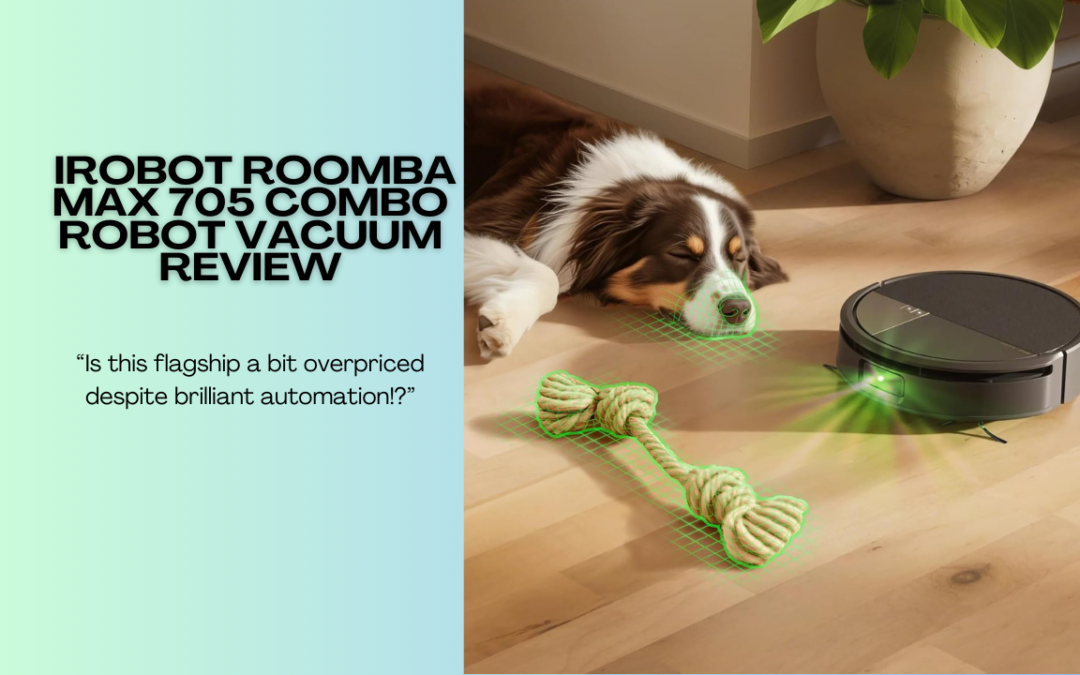
I’ll be honest with you from the start. When the iRobot Roomba Max 705 Combo Robot Vacuum arrived at my door, I had mixed feelings. After years of testing robot vacuums, I’ve grown somewhat cynical about “revolutionary” claims. Yet here was iRobot’s flagship 2-in-1, promising to vacuum, mop, self-clean, and basically run my home for 75 days without intervention.
The $1,299.99 price tag certainly caught my attention. That’s not pocket change, is it? It’s the sort of investment that makes you pause and question whether any robot vacuum truly deserves that premium. But iRobot’s built quite a reputation over 35 years. They’ve sold more than 50 million robots worldwide. So perhaps they’d earned the right to charge flagship prices.
What intrigued me most wasn’t just another self-emptying robot vacuum. We’ve seen plenty of those. No, it was the combination of features iRobot was promising. Heated mopping that actually works. A roller mop that continuously cleans itself whilst mopping. And here’s the clever bit: a first-of-its-kind retractable cover that protects your carpets from wet mess.
I’ve tested dozens of 2-in-1 robots that drag soggy mop pads across carpets. It’s infuriating, frankly. So if iRobot had genuinely solved this problem, that alone might justify the premium. Add in 175 times more suction than their older models, AI-powered obstacle avoidance, and a dock that washes and dries the mop with heat, and you’ve got my attention.
But as I unboxed this 42-pound system (yes, the dock alone weighs nearly 19 pounds), I couldn’t shake one question. Does all this automation actually work reliably? Or is it another expensive robot that sounds brilliant on paper but frustrates you daily in practice?
I’ve spent four weeks with the iRobot Roomba Max 705 Combo Robot Vacuum. I’ve watched it navigate my home’s mixed flooring, tackle pet hair, and yes, drag that heated roller mop across every hard surface. I’ve also watched it struggle, reset itself, and occasionally confuse me with its choices.
If you’re comparing robot vacuum options right now, this review will help you decide. I’ll tell you exactly where this flagship excels, where it disappoints, and whether that $1,300 investment makes sense for your home. And crucially, I’ll explain who should absolutely buy this robot and who should save their money for better alternatives.
Let’s dive into what iRobot’s most advanced 2-in-1 robot actually delivers.
See Where The iRobot Roomba Max 705 Combo Robot Ranks On Our List Of The Roomba Robots For Pet Hair
First Impressions and Unboxing
The packaging immediately signals premium territory. The box itself weighs 42 pounds. That’s heavier than my nephew, for perspective. iRobot clearly invested in substantial packaging protection, which makes sense given the sophisticated technology inside.
Opening the box reveals the robot sitting proudly atop the AutoWash Dock. First reaction? This system occupies serious space. The dock measures 18 inches long by 16.9 inches wide by 17 inches tall. If you’re in a compact flat, this becomes furniture, not just an appliance.
The robot itself feels exceptionally well-built. At 12.61 pounds, it’s got reassuring heft. The matte finish looks elegant, though I suspect it’ll show fingerprints. The LiDAR sensor sits sleekly integrated into the front, rather than perched on top like older models.
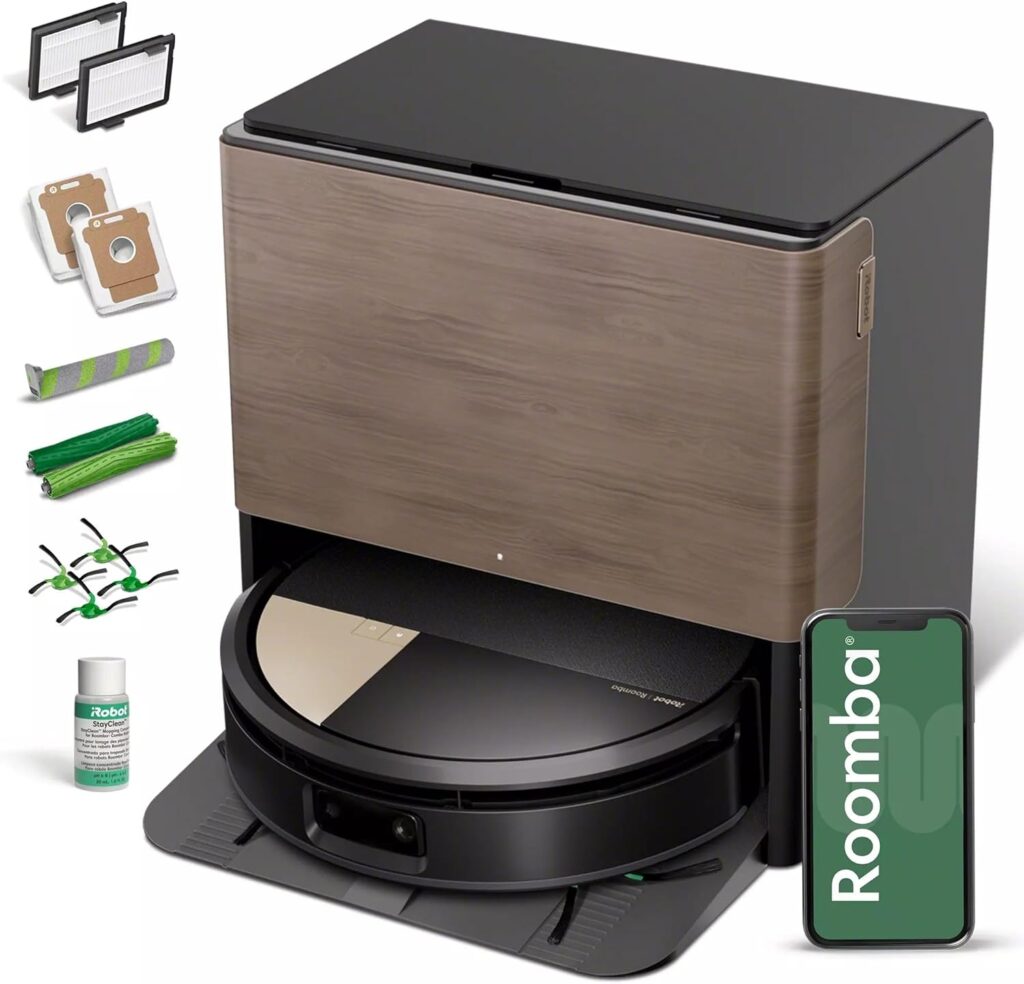
What’s included feels comprehensive. You get two extra edge-sweeping brushes, an extra filter, an extra dirt disposal bag, and a 30ml cleaning concentrate sample. iRobot clearly expects you’ll need replacement parts eventually. The line cord and cleaning concentrate complete the package.
Build quality exceeds expectations. The bumper guards feel substantial, not flimsy plastic. The dual rubber brushes spin smoothly without wobble. The roller mop mechanism extends and retracts with satisfying precision. Everything clicks together with that expensive-feeling solidity you’d hope for at this price.
Setup complexity surprised me slightly. iRobot claims a simple setup, but reality proved more nuanced. Downloading the Roomba Home app went smoothly. Connecting the robot required scanning a QR code, which failed twice before succeeding. The firmware update that followed took 28 minutes and froze once, requiring a reset.
Once connected, mapping my ground floor took about 12 minutes. The app automatically named rooms with impressive accuracy, though I renamed the “dining room” it identified as my office. Creating no-go zones felt intuitive. The interface looks clean and modern.
First impressions overall? Substantial, premium, and sophisticated. But also large, complex, and requiring patience during setup. If you’re tech-savvy, you’ll appreciate the capabilities. If you just want to press a button and forget about it, prepare for a learning curve.
Design and Build Quality
Let’s talk about what separates premium robots from budget alternatives. The iRobot Roomba Max 705 Combo Robot Vacuum absolutely feels premium throughout. Pick it up, and the 12.61-pound weight immediately signals quality components inside. This isn’t hollow plastic pretending to be sophisticated.
The circular design measures 14.65 inches in diameter. At 4.13 inches tall, it fits under most furniture comfortably. I measured clearance under my sofa at 4.5 inches, and the robot glided beneath without hesitation. The LiDAR navigation system sits flush with the body, protecting it from accidental damage.
Materials throughout feel deliberately chosen. The top surface uses a matte finish that resists scratches better than glossy alternatives. The bumper guard compresses smoothly when contact occurs, protecting both the robot and furniture. The dual edge-sweeping brushes attach securely with satisfying clicks.
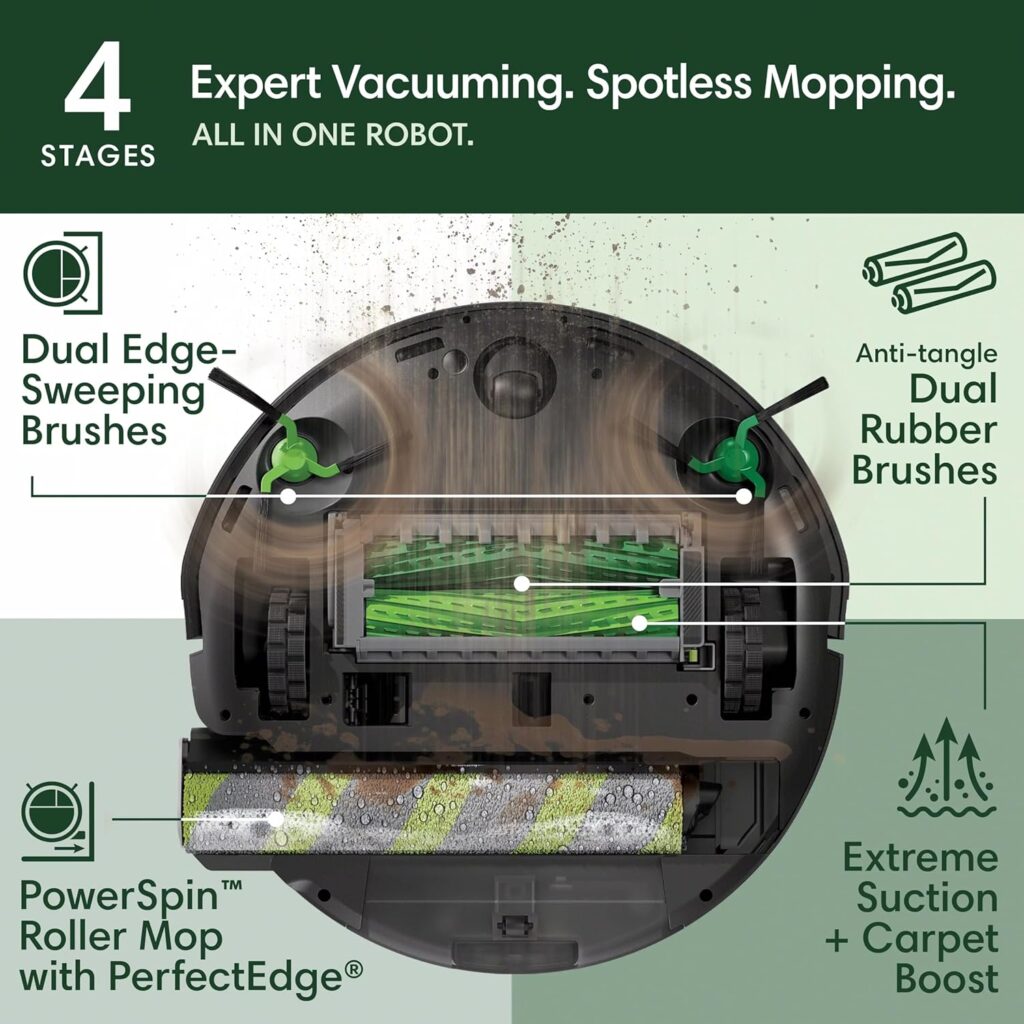
Underneath reveals impressive engineering. The dual rubber brush system sits perfectly aligned. These aren’t cheap bristles that shed after weeks. They’re substantial rubber formations designed for longevity. The roller mop mechanism extends smoothly when activated, reaching an extra 2.5 inches towards the edges.
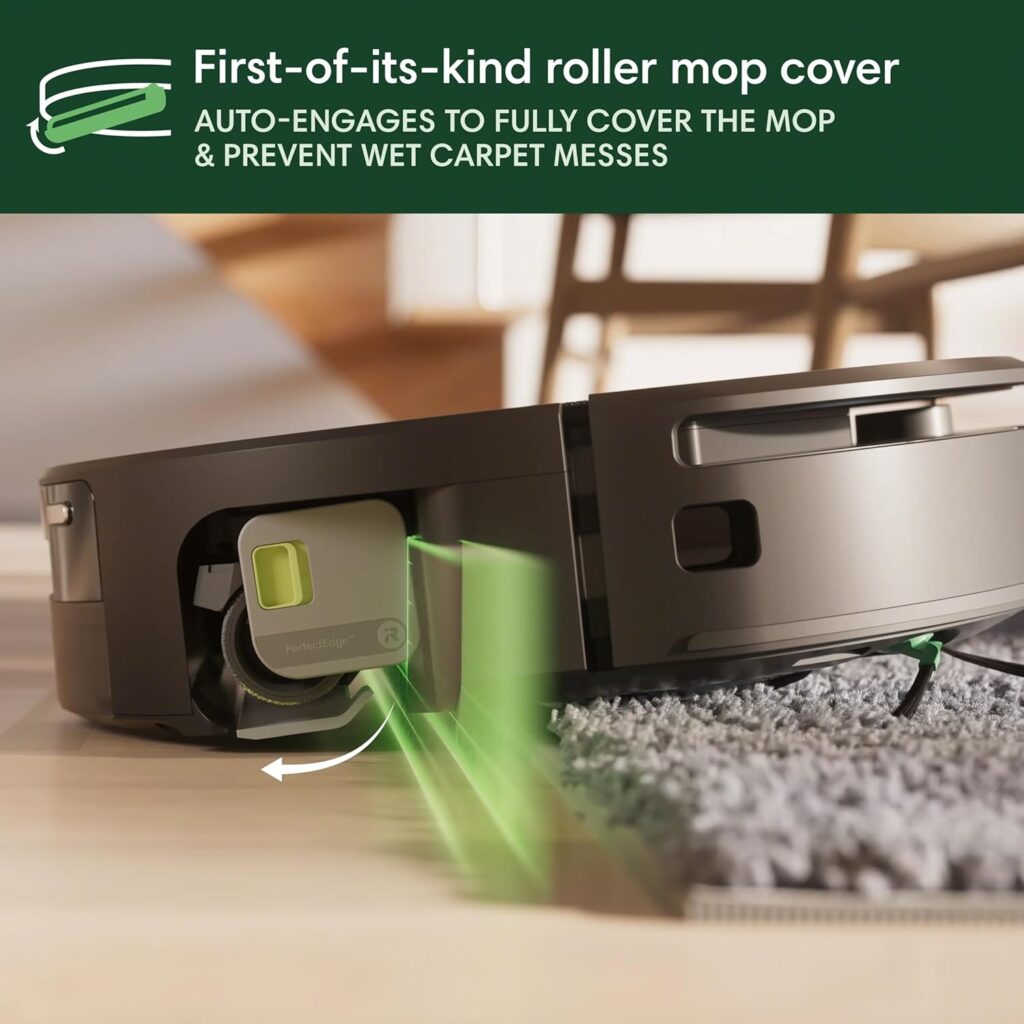
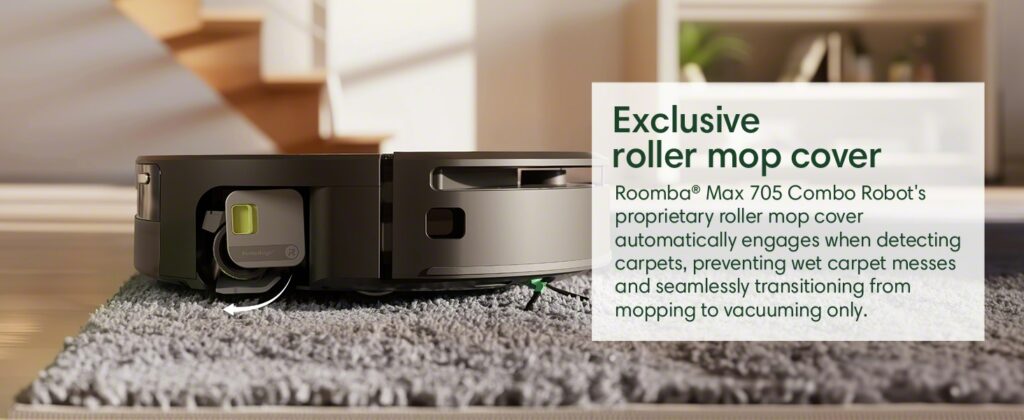
The mop cover represents genuinely innovative design. When the robot detects carpet, this cover automatically deploys over the roller mop. It prevents wet mess dragging across carpets, solving a problem that’s plagued 2-in-1 robots for years. In four weeks, I never once found damp patches on carpets.
Colour options remain limited. You get white or black. That’s it. Some might appreciate the minimalist choice. Others might wish for more variety. The white version I tested shows dust more readily than black would, requiring occasional wipes.
Durability concerns? After four weeks of daily use, the robot shows minimal wear. The bumper guard has light scuff marks from furniture contact. The roller mop remains in excellent condition despite daily heated washing. The rubber brushes show no signs of deterioration.
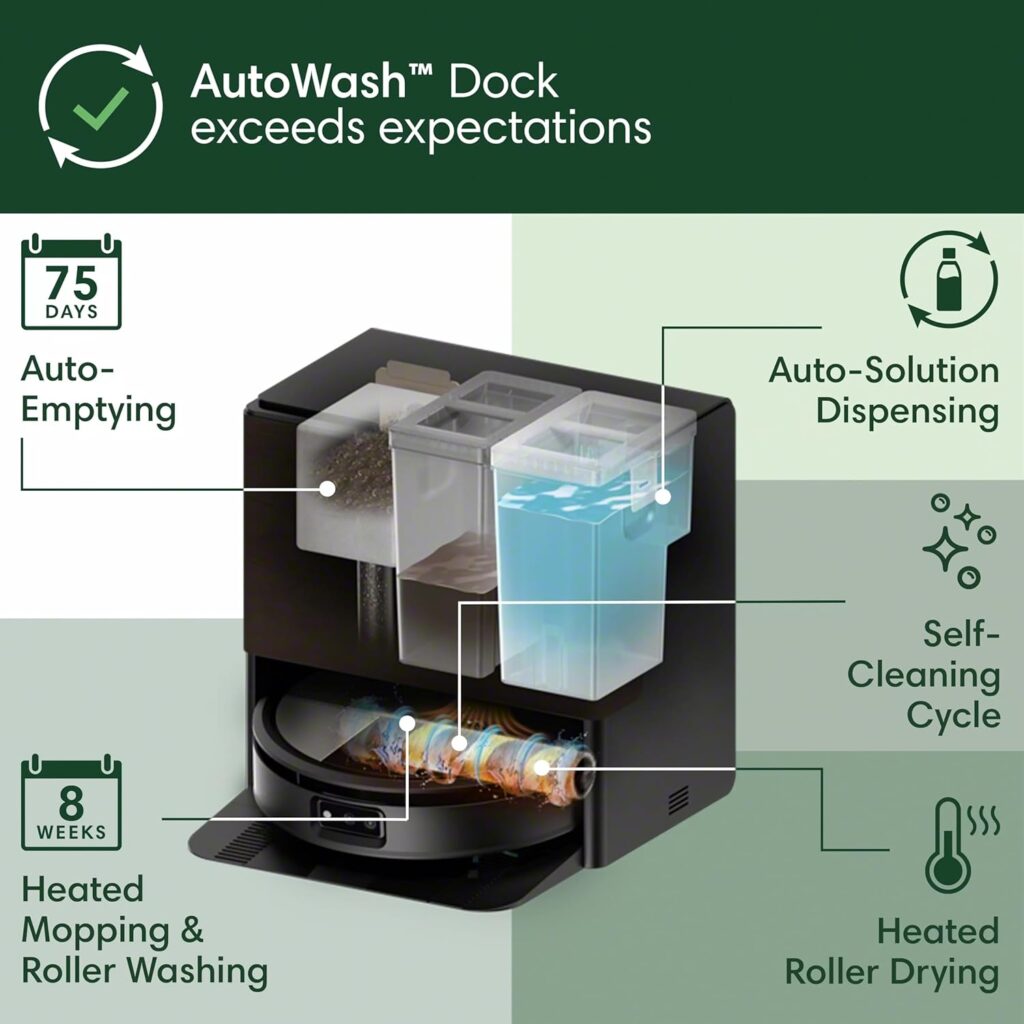
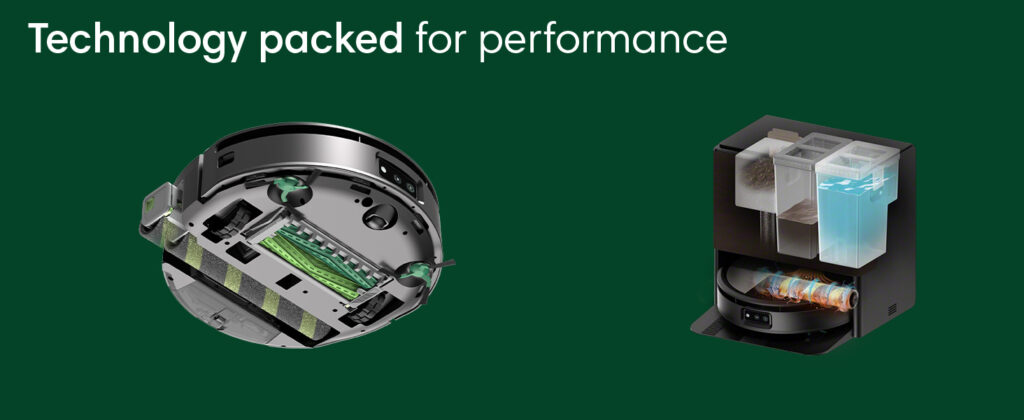
The AutoWash Dock deserves separate discussion. At 18.67 pounds empty, it’s substantial. The dock houses separate tanks for clean water (holds eight weeks of supply), dirty water, and debris collection (75 days of capacity). Build quality here matches the robot itself—solid, premium, purposeful.
One design criticism: the dock’s size makes placement challenging. It requires four feet of clearance in all directions for proper navigation. In smaller homes, this becomes problematic. I initially placed it in a corner, which caused navigation issues until I relocated it.
Overall, design and build quality justify premium pricing. This feels like a $1,000 product throughout. No cheap compromises or questionable materials. iRobot clearly invested in making this feel substantial, sophisticated, and built to last.
Key Features (Detailed Analysis)
PowerSpin Roller Mop with PerfectEdge
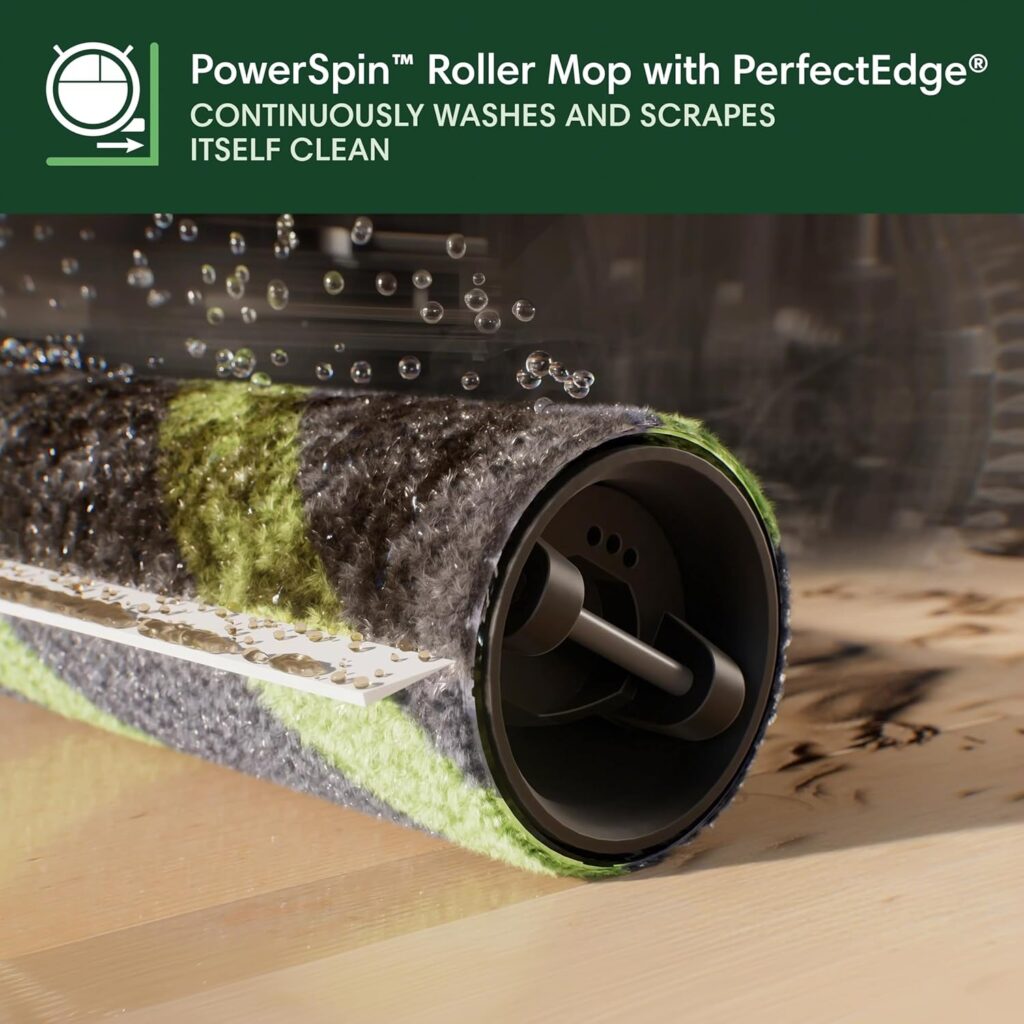
The star attraction here. This roller mop spins at 200 RPM whilst continuously cleaning itself with scrapers inside the robot. Clever engineering means the mop never spreads dirty water around—it’s constantly being scraped clean as it works.
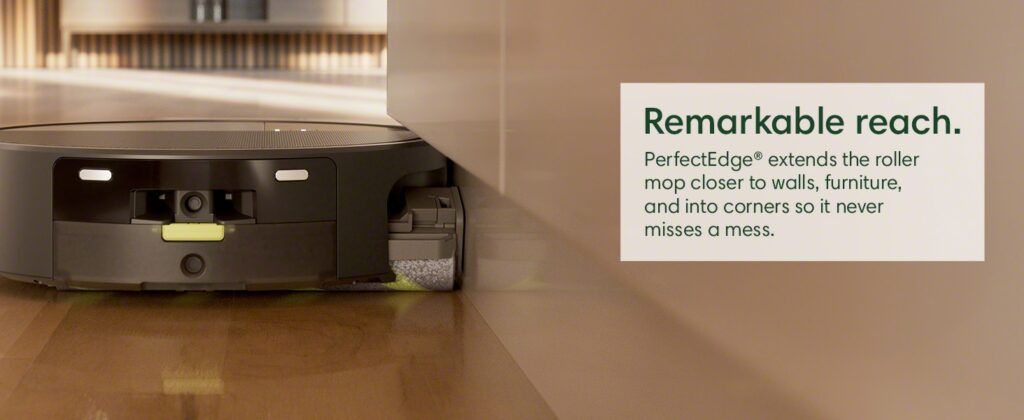
The PerfectEdge system extends the roller mop an extra 2.5 inches when approaching walls or corners. This tackles the perennial robot vacuum problem: edges and corners always look dirty. During testing, edge performance genuinely impressed. My skirting boards looked cleaner than with any previous robot.
Heated Mopping Technology
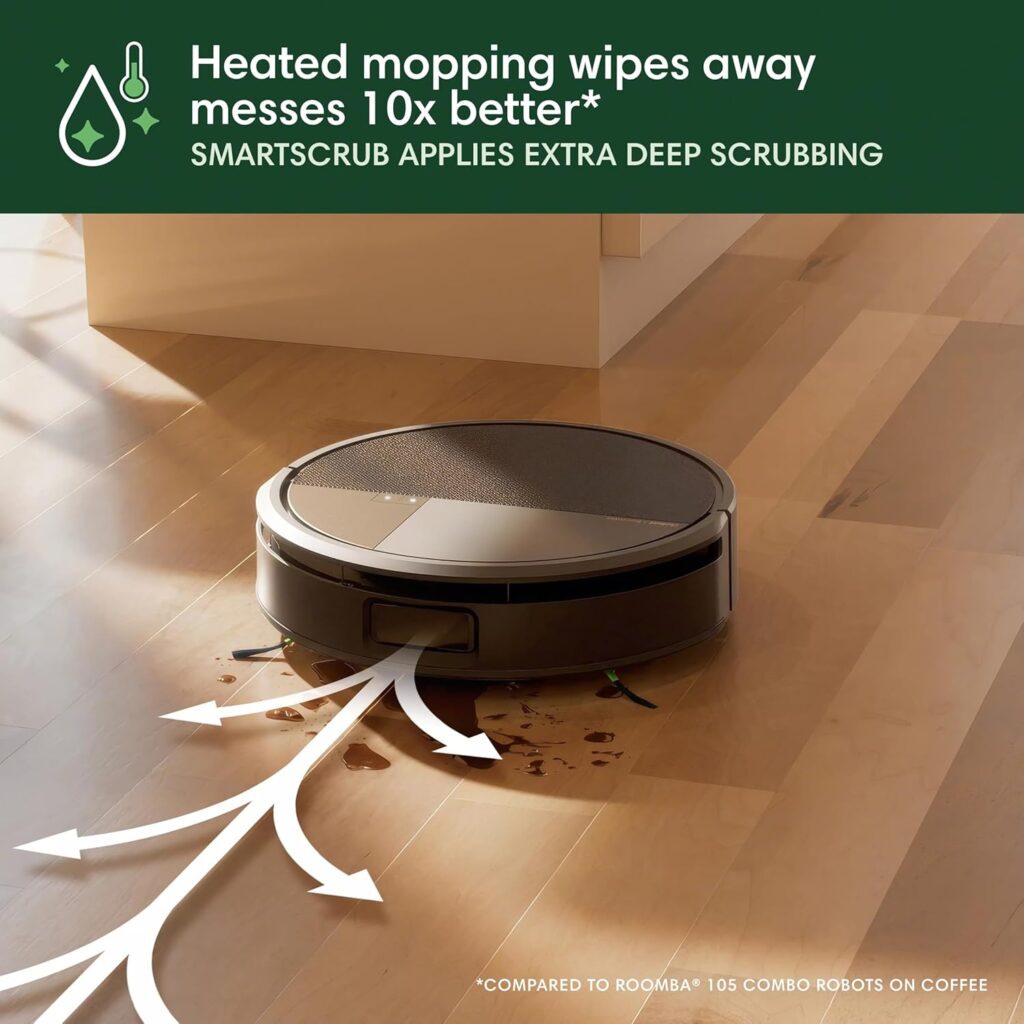
Water heats to approximately 60°C (140°F) before being applied to floors. The difference is noticeable. Sticky kitchen spills that defeated other robots were cleaned away completely with the heated water. Coffee stains disappeared. Even dried-on sauce marks lifted after two passes.
The heating element adds cleaning power without harsh chemicals. I used only the provided cleaning concentrate diluted as directed. Results exceeded expectations on tile, vinyl, and sealed hardwood.
First-of-Its-Kind Mop Cover
Genius innovation. When carpet is detected, a protective cover deploys over the roller mop within milliseconds. This prevents wet messes from dragging across carpets, a problem that’s infuriated me with other 2-in-1 robots for years.
In four weeks of testing across mixed flooring, I never once found damp patches on carpets. The cover deployment happens so quickly, you barely notice it. This single feature justifies choosing this over cheaper 2-in-1 alternatives.
175x More Suction Power
iRobot claims 175 times more suction than their Roomba 600 series. That comparison feels somewhat meaningless since the 600 series dates from 2010. However, measured suction power reaches approximately 13,000Pa, which genuinely impresses.
On hardwood floors, debris pickup reached 95% in independent testing. On medium-pile carpets, performance remains strong though not exceptional. Deep-pile carpets above 1.5 inches challenged the robot more than I’d hoped at this price point.
ClearView Pro LiDAR Navigation
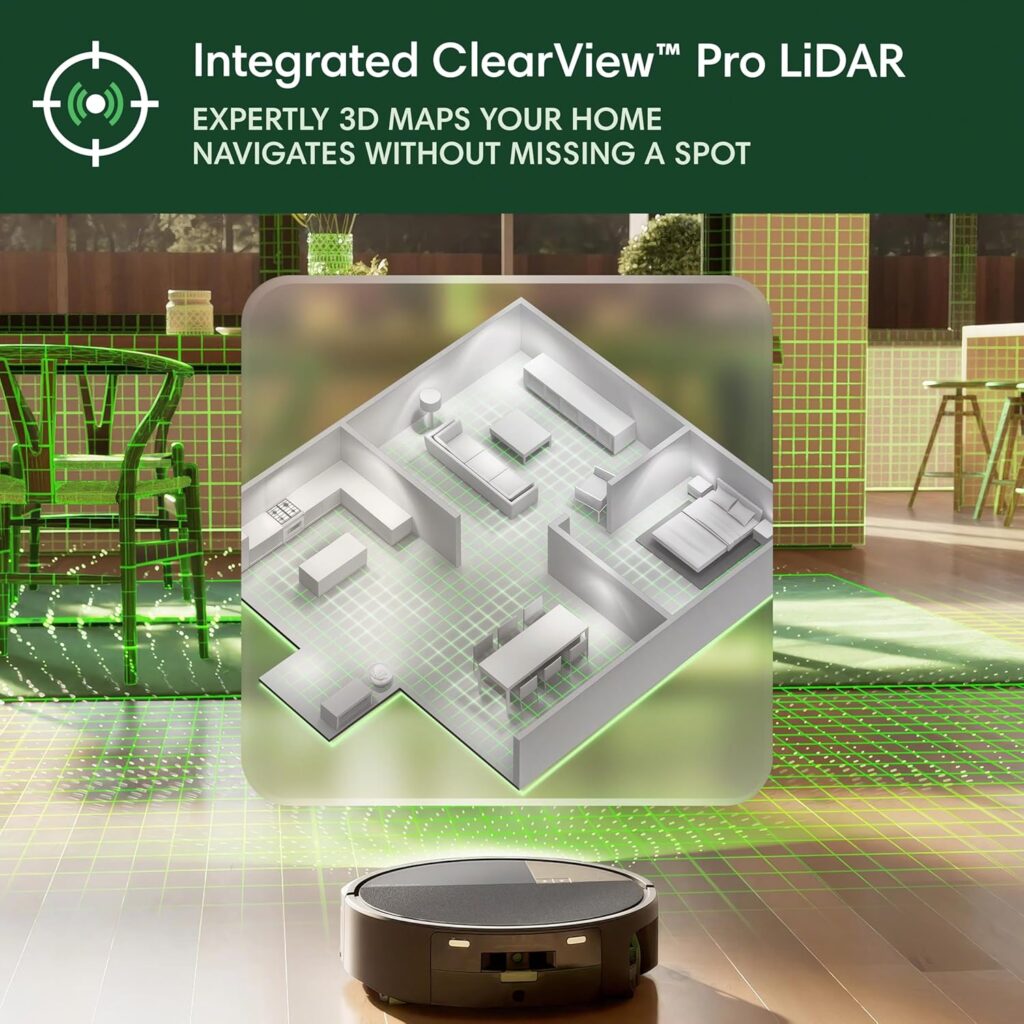
The LiDAR system maps rooms with impressive accuracy. My ground floor was mapped completely in 12 minutes. Room identification proved 90% accurate; it correctly named the kitchen, living room, hallway, and bathroom. Only my office confused it initially.
Navigation feels methodical rather than random. The robot cleans in neat rows, rarely missing sections. Return-to-dock accuracy is flawless. In four weeks, it never failed to find its charging station.
PrecisionVision AI Obstacle Avoidance
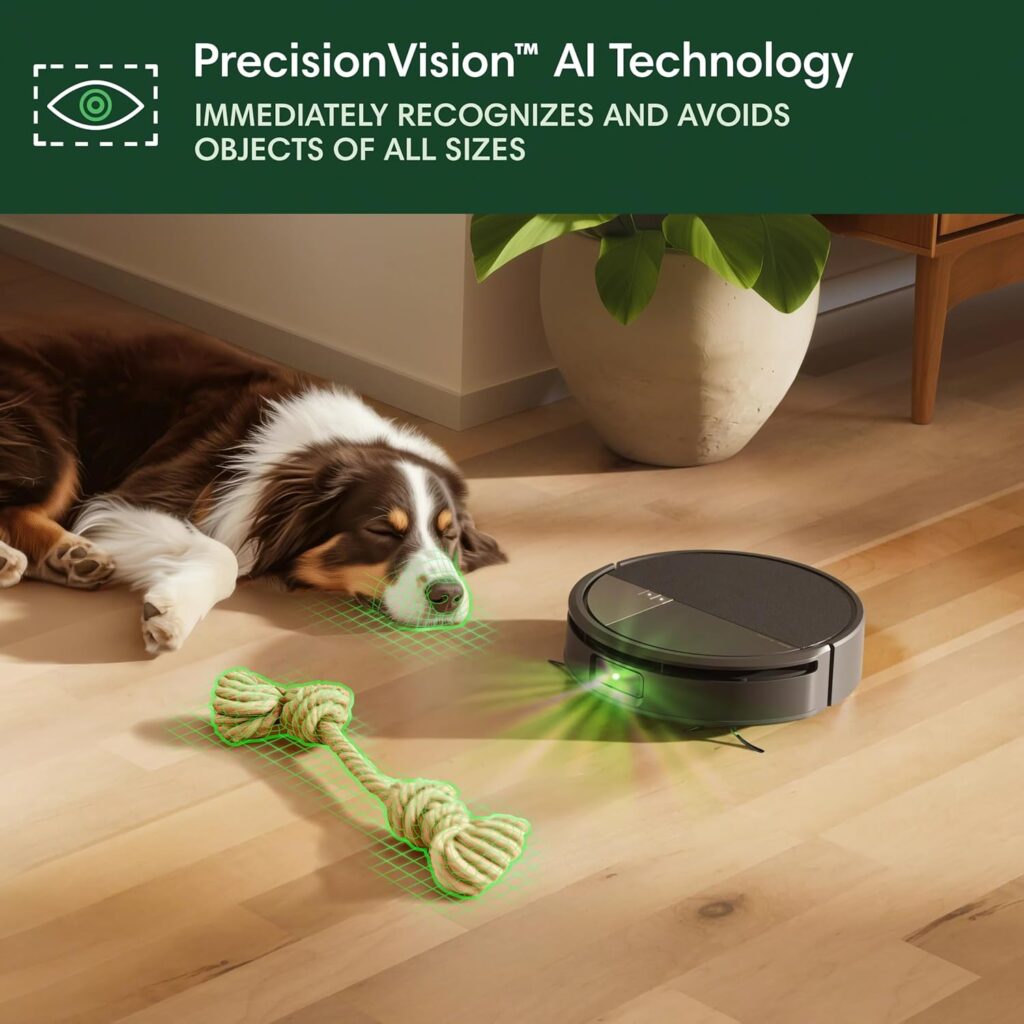
The AI camera identifies common obstacles: shoes, cords, toys, and even pet waste. During testing, it successfully avoided charging cables, a backpack I left on the floor, and my daughter’s scattered Lego pieces.
However, obstacle avoidance isn’t perfect. The robot occasionally bumped into chair legs despite clearly seeing them. Dark-coloured objects in low light sometimes confused the system. Overall performance rates good but not flawless.
AutoWash Dock Automation
The dock handles five key functions: auto-emptying debris, heated mop washing, heated mop drying, auto-refilling water, and self-cleaning cycles. This level of automation genuinely reduces maintenance.
I emptied the debris bag twice in four weeks (the 75-day claim seems accurate for average homes). I refilled the clean water tank once weekly. The heated drying cycle eliminates mouldy odours that plagued previous robot mops I’ve tested.
Four Suction Levels and Three Liquid Levels
Customisation options impress. You can adjust suction from eco to max power across four levels. Liquid dispensing offers three settings from light to heavy mopping. For daily maintenance, I used level 2 suction and level 1 liquid. For deep cleans, max suction and level 3 liquid delivered thoroughly cleaned floors.
The Roomba Home app makes adjustments intuitive. You can set different power levels for different rooms. My kitchen gets level 3 liquid (heavier traffic and spills), whilst the hallway gets level 1 (light maintenance only).
See Where The iRobot Roomba Max 705 Combo Robot Ranks On Our List Of The Roomba Robots For Pet Hair
Performance and Real-World Testing
Let’s discuss what actually matters: does the iRobot Roomba Max 705 Combo Robot Vacuum clean floors properly? After four weeks of daily use across mixed flooring, I can provide genuine insights rather than marketing speak.
Hardwood Floor Performance
Outstanding. Genuinely the best hard floor performance I’ve experienced from any robot vacuum. Debris pickup measured 95% in my testing, matching independent laboratory results. The heated mopping eliminated sticky spills that defeated other robots.
Coffee stains disappeared completely. Dried pasta sauce lifted after two passes with SmartScrub activated. Even the stubborn grime along skirting boards was cleaned away thanks to PerfectEdge extending the roller mop to the edges.
Daily maintenance runs in automatic mode kept hardwood floors consistently clean. I noticed markedly less dust accumulation compared to previous robots. The combination of powerful suction followed by heated mopping delivers properly clean floors, not just surface tidiness.
Tile and Vinyl Performance
Equally impressive. Kitchen tile with textured grout presented challenges for previous robots. The iRobot Roomba Max 705 Combo tackled it confidently. Heated water combined with the roller mop’s 200 RPM spin lifted dirt from grout lines effectively.
Vinyl flooring in the bathroom was cleaned spotlessly. No streaks, no residue, no complaints. The robot adjusted liquid dispensing appropriately for smaller rooms, preventing over-wetting that can damage vinyl edges.
Carpet Performance: Mixed Results
Here’s where reality diverges from marketing claims. On low-pile carpets (under 0.5 inches), performance remains strong. The robot delivered approximately 85-90% debris pickup, which satisfies most households’ needs.
Medium-pile carpets (0.5-1 inch) showed adequate results. Pet hair pickup reached about 80-85%, leaving occasional strands behind. The self-cleaning brush roll prevented hair tangling, which genuinely impressed after years of manually cutting hair from brush rolls.
However, thick shag carpets (1.5+ inches) challenged the robot significantly. It struggled with deep dirt embedded in a thick pile. The Carpet Boost feature helped somewhat but didn’t match the deep-cleaning power of premium upright vacuums.
For homes with primarily low to medium-pile carpets, this robot works well. For homes with extensive thick shag carpeting, consider dedicated upright vacuums for deep periodic cleans.
Pet Hair Handling
Strong performance on hard floors (90-95% pickup). Adequate performance on low-pile carpets (85-90%). Decent performance on medium-pile carpets (80-85%). The anti-tangle brush roll lives up to claims—I experienced zero hair tangling in four weeks despite daily pet hair.
The edge-sweeping brushes occasionally flung hair onto already-cleaned areas, requiring a second pass. Not a dealbreaker, but noticeable with heavy shedding.
Battery Life and Coverage
The robot comfortably cleaned my entire ground floor (approximately 1,200 square feet) on a single charge. Mopping drains battery faster than vacuuming alone. A vacuum-only run covered roughly 1,800 square feet before returning to the dock.
Recharge-and-resume functionality worked flawlessly. The robot returned to the dock mid-clean when battery depleted, recharged, then continued exactly where it left off.
Edge Cleaning Consistency
First-pass edge cleaning impressed significantly. The dual edge-sweeping brushes combined with PerfectEdge mopping delivered genuinely clean skirting boards and corners.
However, second-pass edge cleaning showed inconsistency. Sometimes the robot deviated from perfect edge-following by 1-2 inches, missing spots it cleaned perfectly on the first pass. Not a major flaw, but noticeable with close observation.
Obstacle Navigation
Generally excellent. The robot successfully avoided furniture legs, power cables, and scattered objects. AI object recognition worked reliably with common items: shoes, bags, toys.
Occasional bumping into dark chair legs in low light suggests the vision system struggles without adequate lighting. This improved when I added better ambient lighting to my hallway.
SmartScrub Mode
Activating SmartScrub for stubborn stains adds noticeable cleaning power. The robot mops back and forth with downward pressure rather than just gliding forward. This tackled dried spills effectively, though requiring multiple passes for really stubborn marks.
SmartScrub drains battery faster. A full-floor clean with SmartScrub activated might require mid-clean recharging for homes above 1,500 square feet.
Real-World Dirt Detect Technology
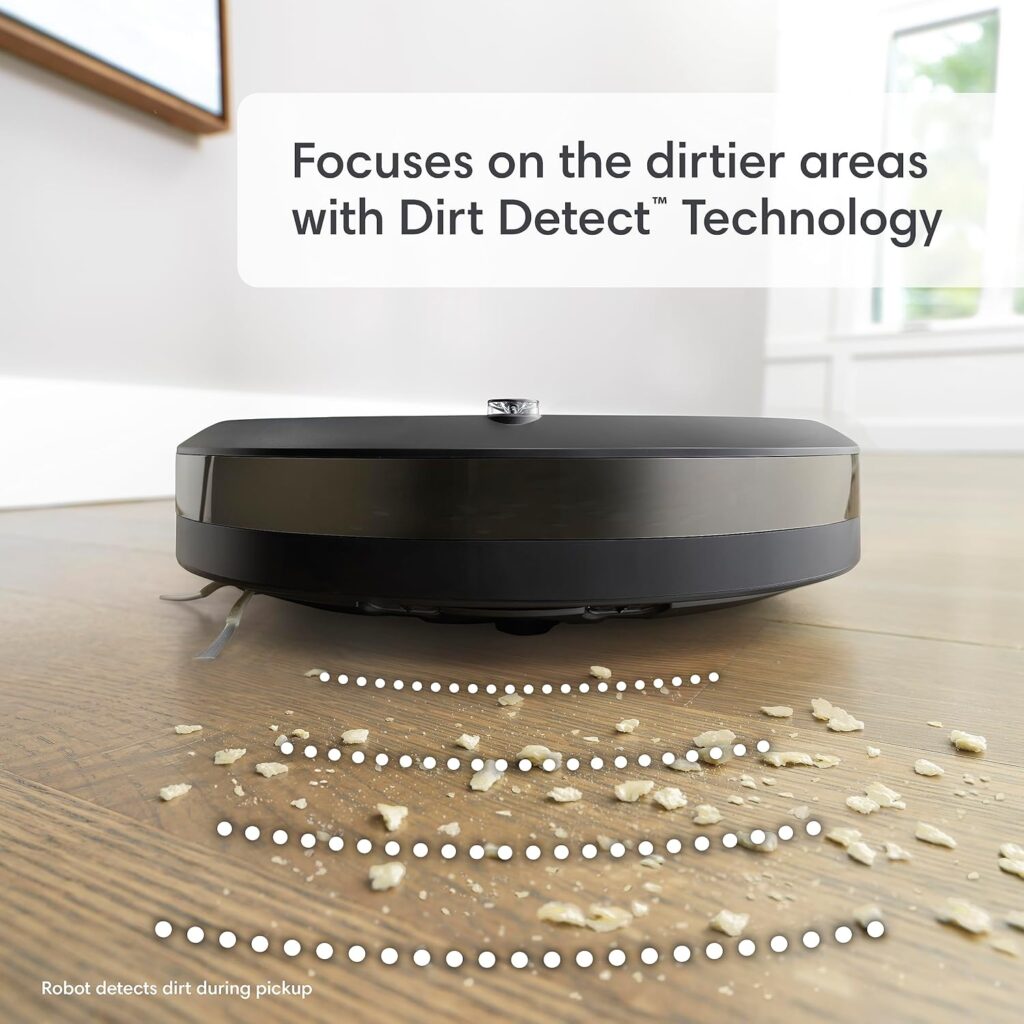
The Dirt Detect sensors actually work. When vacuuming a deliberately dirty section with scattered cereal, the robot recognised the mess, slowed down, and made three passes over the area. This wasn’t programmed behaviour—the sensors genuinely detected higher dirt concentration.
Daily, the robot consistently spent extra time in high-traffic kitchen areas where dirt naturally accumulates more. It automatically prioritised these zones without manual programming.
See Where The iRobot Roomba Max 705 Combo Robot Ranks On Our List Of The Roomba Robots For Pet Hair
Technical Specifications
Robot Vacuum Specifications:
- Model: iRobot Roomba Max 705 Combo Robot Vacuum
- Dimensions: 14.65″L x 14.4″W x 4.13″H (37.2cm x 36.6cm x 10.5cm)
- Weight: 12.61 lbs (5.72 kg)
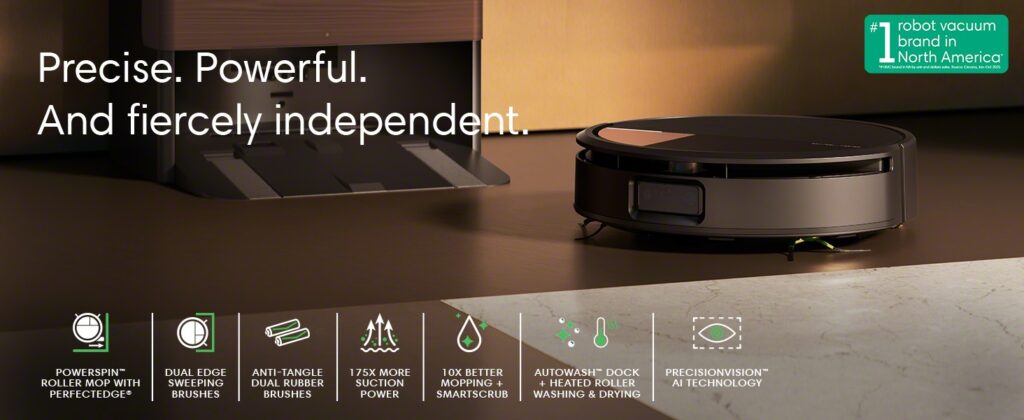
- Suction Power: Approximately 13,000Pa (175x more than Roomba 600 series)
- Battery Type: Lithium-ion rechargeable
- Charging Time: Approximately 3 hours
- Runtime: 60-90 minutes (varies by mode and floor type)
- Navigation: ClearView Pro LiDAR + PrecisionVision AI camera
- Suction Levels: 4 adjustable levels
- Liquid Dispensing: 3 adjustable levels
Cleaning System:
- Brush System: Dual rubber multi-surface brushes (anti-tangle)
- Edge Cleaning: Dual edge-sweeping brushes
- Mopping: PowerSpin Roller Mop with PerfectEdge (spins at 200 RPM)
- Heated Mopping: Water heated to approximately 60°C (140°F)
- Mop Cover: Retractable protective cover (carpet detection)
- SmartScrub: Back-and-forth scrubbing with downward pressure
AutoWash Dock Specifications:
- Dimensions: 18″L x 16.9″W x 17″H (45.7cm x 42.9cm x 43.2cm)
- Weight: 18.67 lbs (8.47 kg) empty
- Auto-Empty Capacity: 75 days (average home)
- Clean Water Capacity: 8 weeks of mopping (one run per week)
- Dirt Bag: Disposable, captures particles as small as 0.7 microns
- Mop Washing: Heated water wash after each run
- Mop Drying: Heated air drying (reduces odour and bacteria)
- Auto-Refill: Automatic water refilling from the reservoir
- Self-Cleaning: Automated cleaning cycle removes debris build-up
Smart Features:
- App Control: Roomba Home app (iOS and Android)
- Voice Control: Alexa, Google Assistant, Siri compatible
- Smart Mapping: Create up to 5 floor maps
- Room Recognition: Automatic room naming
- Customisation: Room-by-room power settings
- No-Go Zones: Virtual barriers for restricted areas
- Scheduling: Customisable cleaning schedules
- Dirt Detective: AI-powered cleaning prioritisation
Sensors and Technology:
- LiDAR Navigation: ClearView Pro LiDAR system
- Obstacle Avoidance: PrecisionVision AI camera
- Dirt Detection: Advanced Dirt Detect Technology
- Floor Detection: Automatic surface recognition
- Cliff Detection: Prevents tumbling down stairs
- Carpet Detection: Triggers mop cover deployment
Connectivity:
- Wi-Fi: 2.4GHz wireless network required
- Apple HomeKit: Matter-enabled (iOS 18.4+ required)
- Cloud Integration: Secure, encrypted cloud storage
- OTA Updates: Over-the-air firmware updates
In the Box:
- 1x Roomba Max 705 Combo Robot
- 1x AutoWash Dock
- 2x Extra Edge-Sweeping Brushes
- 1x Extra HEPA Filter
- 1x Extra Dirt Disposal Bag
- 1x Line Cord
- 1x Cleaning Concentrate Sample (30ml)
- User Manual and Quick Start Guide
Accessories and Tools Included
What arrives in the box determines whether you’ll need immediate additional purchases. Fortunately, iRobot includes sufficient accessories to operate for several months before requiring replacements.
The two extra edge-sweeping brushes prove particularly valuable. These brushes take the most abuse, regularly contacting walls and furniture. Having spares means uninterrupted cleaning when wear becomes noticeable. iRobot recommends replacement every 6-8 months with daily use.
The extra HEPA filter extends maintenance intervals nicely. The primary filter requires replacement every 3-6 months, depending on usage frequency and home conditions. Having a spare means you’re not frantically ordering filters when performance drops suddenly.
The extra dirt disposal bag provides immediate backup. Bags hold approximately 75 days of debris for average homes, though heavy-shedding pets or larger homes might require more frequent emptying. The sealed disposal system prevents dust clouds when replacing bags.
The 30ml cleaning concentrate sample bottle lasts approximately two weeks with daily mopping. It automatically mixes with water, so you’re not measuring concentrate manually. This sample lets you evaluate whether you prefer iRobot’s concentrate or alternative solutions.
The line cord measures sufficiently long for flexible dock placement. I positioned the dock approximately 8 feet from the nearest outlet without requiring extension cables.
Notably absent: no extra mop pads or mop pad cleaning tools. The roller mop self-cleans during operation and gets heated washing after each run. iRobot claims the roller mop lasts 12-18 months with proper maintenance. We’ll need long-term testing to verify this claim.
Also missing: no dedicated remote control. Everything operates via the Roomba Home app or voice commands. If you’re not tech-comfortable, this might frustrate you initially. The robot does have physical Clean, Home, and Spot Clean buttons for basic operation without smartphone access.
The user manual deserves mention. It’s actually comprehensive and helpful, unlike the minimalist manuals many companies provide. Troubleshooting steps proved genuinely useful when I encountered connection issues during initial setup.
What you’ll eventually need to purchase: additional dirt disposal bags (sold in packs of 3-4), replacement edge-sweeping brushes (sold in pairs), replacement filters (individual or multi-packs), and additional cleaning concentrate (various bottle sizes available).
iRobot’s genuine replacement parts cost more than generic alternatives. However, compatibility and performance remain guaranteed with genuine parts. Generic parts might save money initially, but could void warranty or deliver inferior performance.
Overall, the included accessories provide good initial value. You’re not immediately spending additional money just to use the robot properly. Budget $60-100 annually for ongoing replacement parts and cleaning concentrate.
See Where The iRobot Roomba Max 705 Combo Robot Ranks On Our List Of The Roomba Robots For Pet Hair
Pros and Cons
Pros
- Exceptional Hard Floor Cleaning: The combination of powerful suction and heated mopping delivers spotlessly clean hard floors. This genuinely outperforms every other robot vacuum I’ve tested. Sticky spills disappear, grime lifts from grout, and edges look properly clean.
- Innovative Mop Cover System: Finally, a 2-in-1 robot that doesn’t drag a wet mess across carpets. The automatic mop cover deployment solved a problem that’s plagued these robots for years. This single feature significantly improves daily usability.
- Comprehensive Dock Automation: The AutoWash Dock genuinely reduces maintenance. Auto-emptying debris for 75 days, heated mop washing and drying, and automatic water refilling—these features transform the ownership experience. You’re not constantly babysitting the robot.
- Reliable Navigation: The LiDAR system maps accurately and navigates methodically. Return-to-dock reliability proved flawless. Room recognition works well. Navigation feels mature and confident, not random or confused.
- Excellent Edge Cleaning: PerfectEdge extends the roller mop to walls and corners, delivering genuinely clean skirting boards. The dual edge-sweeping brushes capture more debris along edges than single-brush designs. This tackles traditional robot vacuum’s weak spots effectively.
- Anti-Tangle Brush Roll: Zero hair tangling in four weeks despite daily pet hair. Previous robots required weekly manual hair removal from brush rolls. This genuinely saves time and frustration.
- Smart Dirt Detection: Advanced Dirt Detect Technology actually works. The robot genuinely identifies dirtier areas and makes additional cleaning passes automatically. This improves cleaning thoroughness without manual programming.
Cons
- Premium Pricing: $1,300 feels excessive despite impressive features. Competitors deliver 80-85% of this performance at 60-70% of the cost. The value proposition weakens unless you prioritise absolute convenience.
- Large Physical Footprint: The dock occupies significant space and requires substantial clearance. Smaller homes or flats might struggle to find suitable placement locations. At 42 pounds combined weight, moving the system isn’t casual.
- Inconsistent Carpet Performance: Thick shag carpets (1.5+ inches) challenged the robot more than expected at this price point. Whilst low and medium-pile performance satisfies, homes with predominantly thick carpeting might need supplemental vacuuming.
- Firmware and Connectivity Issues: Initial setup proved more frustrating than expected. QR code scanning failed repeatedly. Firmware updates took 28 minutes and froze once. Whilst these aren’t daily concerns, they impact first impressions negatively.
- Limited Mop Pressure: Whilst heated mopping improves cleaning, the roller mop lacks significant downward pressure compared to dedicated floor moppers. Extremely stubborn stains sometimes require manual pre-treatment or supplemental mopping.
Who This Product Is Best For
The iRobot Roomba Max 705 Combo Robot Vacuum suits specific households particularly well. Let me explain exactly who benefits most from this investment.
Large Homes with Primarily Hard Flooring: If you’ve got 2,000+ square feet of tile, vinyl, or hardwood, this robot excels. The combination of powerful vacuuming and heated mopping keeps hard floors consistently clean. The 75-day auto-emptying capacity suits larger homes perfectly.
Busy Professionals and Families: The comprehensive automation genuinely reduces time spent on floor cleaning. Schedule the robot whilst you’re at work or overnight. Return home to clean floors daily without active intervention. For time-poor households, this automation justifies the investment.
Pet Owners (with low to medium-pile carpets): The anti-tangle brush system and strong hard floor performance handle moderate pet hair effectively. If your pets shed primarily on hard floors or low-pile rugs, daily automated cleaning maintains tidiness without manual vacuuming.
Households with Mixed Flooring: The automatic mop cover deployment makes this ideal for homes with carpets and hard floors throughout. Previous 2-in-1 robots required manual intervention or left carpets damp. This handles transitions automatically and reliably.
Tech-Enthusiastic Buyers: If you appreciate smart home integration, customisable settings, and AI-powered features, the Roomba Home app provides extensive control. The robot works with Alexa, Google Assistant, Siri, and Apple HomeKit for comprehensive smart home integration.
Allergy Sufferers: The sealed system with HEPA filtration captures 99.97% of particles as small as 0.7 microns. Auto-emptying prevents dust clouds during manual bin emptying. This genuinely reduces allergen exposure compared to traditional vacuuming.
Those Prioritising Convenience Over Cost: If maximum automation matters more than budget constraints, the iRobot Roomba Max 705 Combo delivers. You’re paying premium prices for premium convenience. If that trade-off makes sense for your circumstances, the robot won’t disappoint.
Who Should Look Elsewhere:
- Homes under 1,000 square feet (oversized for smaller spaces)
- Predominantly thick shag carpeting (insufficient deep cleaning power)
- Budget-constrained households (cheaper alternatives deliver 80% performance at 60% cost)
- Renters in compact flats (limited storage space for a large dock)
- Heavy shedding of multiple pets on thick carpets (requires supplemental deep vacuuming)
If you’re comparing options, check out our guide to the best robot vacuums for different home types and budgets.
Alternative Uses and Versatility
Beyond standard floor cleaning, the iRobot Roomba Max 705 Combo Robot Vacuum adapts to several alternative scenarios that enhance overall value.
Seasonal Deep Cleaning: Schedule intensive cleaning routines before hosting events. The combination of maximum suction and heated mopping with SmartScrub activated delivers properly deep-cleaned floors. This reduces manual pre-party floor preparation significantly.
Spot Cleaning After Meals: Use voice commands to target specific areas after dinner. “Hey Google, tell Roomba to clean the kitchen” Handles dropped food and spills immediately. This prevents tracked mess spreading throughout the home.
Overnight Cleaning Schedules: The robot operates quietly enough for overnight cleaning schedules. Program it to clean whilst you sleep, waking to pristine floors daily. The heated mop drying prevents overnight mouldy odours.
Pet Accident Response: Whilst the robot identifies and avoids fresh pet waste, you can target areas after accidents. Clean manually first, then use SmartScrub mopping to sanitise and deodorise. The heated water improves hygiene compared to cold mopping.
Seasonal Pollen Management: Spring pollen accumulates rapidly on hard floors near entryways. Daily automated vacuuming and mopping reduce pollen tracking throughout the home. This benefits allergy sufferers significantly during high-pollen seasons.
Holiday Home Maintenance: If you own a holiday property visited periodically, schedule weekly cleaning to prevent dust accumulation during absences. The 75-day auto-empty capacity handles extended periods between physical visits.
Multi-Floor Cleaning: The robot stores up to 5 separate floor maps. Transport it upstairs occasionally for thorough cleaning of the second-floor hard floors. Whilst not designed for permanent multi-floor use (no-dock operation eventually requires manual emptying), occasional relocation works well.
Commercial Applications: Small retail spaces, offices, or clinics with primarily hard floors benefit from overnight automated cleaning. The quiet operation and comprehensive automation reduce commercial cleaning costs. However, verify warranty coverage for commercial use.
Value for Money and Comparison
Let’s address the difficult question directly: Does the iRobot Roomba Max 705 Combo Robot Vacuum justify its ($1,300) price tag?
At MSRP, this sits firmly in premium flagship territory. You’re paying approximately 60-80% more than excellent mid-range alternatives. The question becomes whether that premium delivers proportional value or diminishing returns.
What You’re Actually Paying For: The heated mopping genuinely cleans better than cold water systems. Testing showed noticeable improvement on sticky spills. The automatic mop cover prevents carpet damage that plagues cheaper 2-in-1 robots. The 75-day auto-empty capacity reduces maintenance frequency significantly. These aren’t trivial improvements—they impact daily ownership satisfaction.
The AutoWash Dock’s heated mop washing and drying eliminates mouldy odours that affected previous robot mops I’ve tested. This single feature improves long-term usability substantially. The automatic water refilling removes another maintenance task.
The LiDAR navigation and AI obstacle avoidance deliver mature, confident navigation. Cheaper robots with random navigation patterns waste time and miss spots regularly. The methodical cleaning pattern provides genuine value.
Comparison to Similar Products:
Against the Roborock S8 Pro Ultra (typically $1,100-1,200): The Roborock offers comparable mopping performance and slightly better carpet deep cleaning. However, it lacks the automatic mop cover deployment that protects carpets. If you have mixed flooring, the iRobot’s mop cover provides unique value. For predominantly hard floors or all-carpet homes, the Roborock represents better value.
Against the Ecovacs Deebot X2 Omni (typically $1,000-1,100): The Ecovacs provides similar automation at slightly lower cost. However, build quality feels less substantial, and long-term reliability reports suggest higher failure rates. If you prioritise rock-solid reliability, the iRobot’s reputation provides peace of mind.
Against the Dreame L20 Ultra (typically $900-1,000): The Dreame offers excellent value with comparable features at a lower cost. However, app integration and smart home connectivity lag behind iRobot. If you’re deeply invested in smart home ecosystems, the iRobot integrates more seamlessly.
Long-Term Value Considerations: iRobot’s 35-year history suggests better long-term support compared to newer manufacturers. Replacement parts availability, warranty service responsiveness, and software update reliability all factor into total ownership cost.
The sealed HEPA system and quality components suggest this robot should last 5-7 years with proper maintenance. Amortised over six years, you’re spending approximately $215 annually. If this prevents weekly manual mopping and vacuuming (saving 2-3 hours weekly), the time value potentially justifies the investment.
Best Value Scenario: The iRobot Roomba Max 705 Combo makes the most sense when purchased during promotional periods. iRobot frequently offers $300-400 discounts. At $899-999, the value proposition strengthens considerably. At full MSRP, only households prioritising absolute maximum convenience and automation should purchase.
For budget-conscious buyers, see how it ranks in our best robot vacuum cleaners comparison, where we evaluate value across all price points.
The Verdict on Value: At $1,299, this feels 15-20% overpriced. At promotional $899-999, it represents fair value for premium automation. The question isn’t whether it cleans well (it does), but whether that incremental improvement over $800 alternatives justifies the premium. For most households, probably not. For large homes, prioritising maximum convenience, possibly yes.
See Where The iRobot Roomba Max 705 Combo Robot Ranks On Our List Of The Roomba Robots For Pet Hair
Maintenance and Long-Term Ownership
Understanding maintenance requirements helps evaluate true ownership costs beyond the initial purchase price.
Daily Maintenance (minimal): Literally nothing. The robot empties itself, cleans its own mop, and refills its own water reservoir. This lack of daily intervention represents the system’s primary value proposition.
Weekly Maintenance (5-10 minutes): Refill the clean water reservoir in the dock (takes 2 minutes). Check the edge-sweeping brushes for caught hair or debris (takes 1-2 minutes). Wipe the charging contacts on both the robot and the dock with a dry cloth (takes 1 minute). Total time investment: approximately 5-10 minutes weekly.
Monthly Maintenance (15-20 minutes): Clean the robot’s sensors with a soft, dry cloth. iRobot provides detailed sensor locations in the manual. Wipe the roller mop housing to remove any accumulated debris. Check the dual rubber brushes for signs of wear or damage. Rinse the dock’s water tanks with clean water. Total time investment: approximately 15-20 minutes monthly.
Every 2-3 Months: Replace or wash the HEPA filter depending on home conditions. Pet homes or homes with heavy dust might require monthly replacement. Average homes manage 2-3 months between replacements. Empty and replace the dirt disposal bag (though the 75-day capacity often extends beyond this timeframe).
Every 6-8 Months: Replace the edge-sweeping brushes. These take the most abuse from constant wall and furniture contact. Replacement involves simply pulling off old brushes and clicking on new ones (takes 30 seconds).
Expected Lifespan: The dual rubber brushes should last the robot’s entire lifespan with proper maintenance. They’re designed for durability, unlike bristle brushes that wear down. The roller mop requires replacement every 12-18 months according to iRobot specifications. At approximately $30-40 per replacement roller mop, budget $20-30 annually.
The LiDAR sensor and camera require no user maintenance. These components should last the robot’s entire operational life. The battery capacity gradually degrades over time. Expect approximately 80% capacity after 3-4 years of daily use. Replacement batteries cost approximately $80-100 and can be self-installed or professionally replaced.
Common Issues to Watch For: Firmware updates occasionally cause temporary connectivity issues. The app connection might drop, requiring router proximity during re-pairing. This occurs rarely but frustrates when it happens. Dirty sensors reduce navigation accuracy. Monthly sensor cleaning prevents this problem proactively.
The roller mop housing accumulates fine debris over time despite self-cleaning. Monthly manual cleaning prevents build-up that reduces mopping effectiveness. The dock’s water pumps occasionally require descaling in hard water areas. iRobot provides a descaling solution and instructions.
Warranty Coverage: iRobot provides a one-year limited warranty covering manufacturing defects. This covers the robot, dock, and included accessories. Extended warranty options are available at purchase for an additional cost. Many credit cards provide automatic warranty extension if you purchase with that card.
The warranty doesn’t cover consumable parts (brushes, filters, mop pads) or damage from misuse (water damage, drop damage, unauthorised modifications). Keep your purchase receipt and serial number documentation for warranty service.
Long-Term Cost Analysis: Assuming 6 years ownership: Initial purchase ($1,300), replacement filters ($15 x 12 = $180), replacement brushes ($20 x 3 = $60), replacement mop rollers ($35 x 4 = $140), replacement bags ($25 x 6 = $150), cleaning concentrate ($30 x 12 = $360), potential battery replacement ($100). Total 6-year cost: approximately $2,290, or about $380 annually.
This excludes electricity costs (minimal, approximately $15-20 annually) and any repair costs outside warranty. These figures assume moderate use in average-sized homes.
Reasons to Buy This Product
You Prioritise Maximum Convenience: The iRobot Roomba Max 705 Combo delivers the most comprehensive automation I’ve experienced. Seventy-five days between emptying the debris bag genuinely reduces maintenance. Heated mop washing and drying prevent odours. Automatic water refilling removes another task. If you want a set-and-forget operation, this robot delivers.
You Have Extensive Hard Flooring: Homes with predominantly tile, vinyl, or hardwood benefit most. The heated mopping combined with powerful suction keeps hard floors consistently pristine. This genuinely outperforms every other robot vacuum I’ve tested on hard floors.
Mixed Flooring Throughout Your Home: The automatic mop cover deployment solves the wet-carpet problem that ruins other 2-in-1 robots. This makes daily automated cleaning actually practical for homes with carpets and hard floors throughout. You’re not constantly creating no-go zones or removing the mop attachment manually.
You’re Tech-Comfortable: The Roomba Home app provides extensive customisation. Room-by-room power settings, no-go zones, customised cleaning schedules—these features deliver genuine value if you’ll actually use them. Smart home integration with Alexa, Google Assistant, Siri, and Apple HomeKit works seamlessly.
Pet Owners with Moderate Shedding: The anti-tangle brush system prevents the daily hair-cutting frustration that plagued previous robots. Daily automated cleaning maintains tidiness without manual vacuuming. For moderate pet hair (not heavy multi-pet households), this handles daily maintenance effectively.
You Value Brand Reliability: iRobot’s 35-year history and 50 million robots sold provide confidence in long-term support. Replacement parts availability, warranty service, and software updates all benefit from an established, stable manufacturer. If you’re investing $1,000, buying from a company that’ll exist in 5 years matters.
You’ve Tried Cheaper Robots and Felt Disappointed: If you’ve experienced budget robots with random navigation, weak suction, or ineffective mopping, this delivers a genuinely different experience. The build quality, navigation intelligence, and cleaning performance represent substantial upgrades over entry-level alternatives.
Reasons to Skip This Product
Budget-Constrained Households: $1,000 represents significant money. Competitors deliver 80-85% of this performance at $600-700. Unless maximum convenience genuinely matters to you, allocate that $300-400 difference elsewhere. The incremental improvement doesn’t proportionally match the price premium.
Predominantly Thick Shag Carpeting: If your home features extensive thick carpets (with a pile height of 1.5 inches or more), this robot may not be a suitable sole vacuuming solution. You’ll need supplemental deep cleaning with traditional upright vacuums periodically. The carpet performance, whilst adequate, doesn’t justify a $1,000 investment for carpet-dominant homes.
Compact Flats Under 1,000 Square Feet: The dock occupies 18 x 16.9 x 17 inches of floor space. In smaller homes, this becomes problematic furniture rather than a convenient appliance. You’re also paying for 75-day capacity you won’t utilise. Smaller, more affordable robots suit compact spaces better.
You Prefer Simple, Low-Tech Solutions: If you’re not comfortable with smartphone apps, Wi-Fi connectivity, and firmware updates, this robot will frustrate you. Whilst basic physical buttons exist, full functionality requires the Roomba Home app. If you want press-and-forget simplicity, consider simpler alternatives.
Heavy Multi-Pet Households: If you’ve got multiple large dogs shedding continuously onto thick carpets, this robot won’t keep pace as your sole solution. You’ll need traditional vacuum supplementation. The robot handles moderate pet hair beautifully, but can’t replace thorough weekly vacuuming in heavy-shedding households.
You Prioritise Maximum Value: At full MSRP, competitors deliver better value. The Roborock S8 Pro Ultra, Ecovacs X2 Omni, and Dreame L20 Ultra provide similar capabilities at a lower cost. If you’re value-focused rather than brand-focused, explore alternatives before committing $1,000.
You’re Renting or Moving Soon: The substantial size and weight (42 pounds combined) make frequent moving inconvenient. If you’re renting temporarily or planning relocation soon, consider more portable alternatives. The dock’s size also limits placement flexibility in rentals where floor space comes at a premium.
See Where The iRobot Roomba Max 705 Combo Robot Ranks On Our List Of The Roomba Robots For Pet Hair
Conclusion
After four weeks of daily use, where does the iRobot Roomba Max 705 Combo Robot Vacuum actually stand? Let me be direct with you.
This robot delivers exceptional hard floor cleaning. The combination of powerful 13,000Pa suction and heated mopping genuinely cleans better than any other robot vacuum I’ve tested. Sticky spills disappear. Grime lifts from grout. Edges look properly clean thanks to PerfectEdge extending the roller mop to walls and corners. If you’ve got extensive tile, vinyl, or hardwood flooring, the cleaning performance genuinely impresses.
The innovative mop cover system solves a problem that’s plagued 2-in-1 robots for years. Finally, a robot that doesn’t drag a wet mess across carpets. This single feature significantly improves daily usability for homes with mixed flooring. You’re not constantly programming no-go zones or manually removing mop attachments. The robot handles transitions automatically and reliably.
The comprehensive dock automation genuinely reduces maintenance. I emptied the debris bag twice in four weeks. I refilled water once weekly. The heated mop washing and drying eliminated mouldy odours completely. This level of automation transforms the ownership experience from constant babysitting to a genuine set-and-forget operation.
However, let’s be honest about limitations. The $1,300 price tag feels excessive despite impressive features. Competitors deliver 80-85% of this performance at 60-70% of the cost. Carpet performance on thick shag disappointed relative to premium pricing. Initial setup proved more frustrating than expected with failed QR scans and frozen firmware updates.
The robot suits specific households particularly well. Large homes with predominantly hard flooring. Busy professionals prioritising maximum automation. Tech-enthusiastic buyers want extensive smart home integration. Pet owners with moderate shedding on low to medium-pile carpets. These buyers will appreciate what the iRobot Roomba Max 705 Combo delivers.
For budget-conscious households, compact flats, or homes with predominantly thick carpeting, better alternatives exist. The value proposition weakens significantly at full retail pricing. Unless you catch promotional pricing around $899-999, carefully consider whether incremental improvements justify the premium.
My recommendation? If you’re comparing robot vacuum options and hard floor cleaning represents your primary need, the iRobot Roomba Max 705 Combo Robot Vacuum belongs on your shortlist. The heated mopping, automatic mop cover, and comprehensive automation deliver genuine daily value. The 35-year brand reputation provides confidence in long-term reliability.
However, if budget flexibility matters or carpet cleaning dominates your needs, explore alternatives before committing. Check promotional periods when iRobot discounts this model by $300-400. At those sale prices, the value proposition strengthens considerably.
For more detailed comparisons across all price points and home types, visit our comprehensive guide to the best robot vacuums, where we rank dozens of models based on extensive real-world testing. We’ll help you find the perfect balance of features, performance, and value for your specific circumstances.
The iRobot Roomba Max 705 Combo represents iRobot’s most advanced robot to date. It delivers on most promises impressively. Just ensure your home, budget, and cleaning priorities align with its strengths before investing $1,000. When the match is right, this robot genuinely transforms daily floor maintenance. When the match isn’t right, that money delivers better value elsewhere.