SMOTURE VAC01 Cordless Vacuum Cleaner Review: A Smart Sub-$120 Pick?
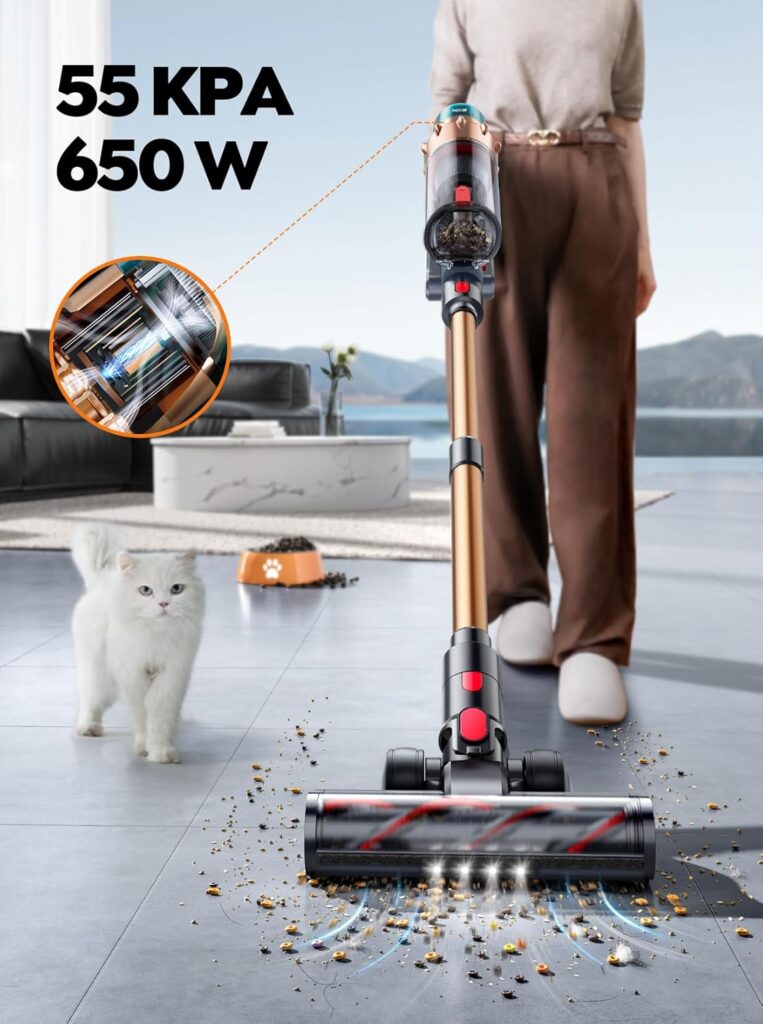
So let me start with what brought me to this one. The SMOTURE VAC01 Cordless Vacuum Cleaner caught my attention because it pairs a detachable battery, a soft wood-safe roller, and a long-reach flexible hose at a price point well under $120. Indeed, most cordless vacuums in this price tier skip at least one of those features. However, SMOTURE has bundled all three into the VAC01, which raised my expectations. So I gave it three weeks of daily testing to see whether the spec sheet matched real-world use.
What Makes This Vacuum Stand Out
In particular, the central argument here is straightforward. So the VAC01 earns its place through a combination of features that extend ownership life and reach beyond floor cleaning at sub-$120 pricing. Whilst most rivals at this price use fixed batteries that fail after a year, the VAC01’s detachable battery lets you swap in a fresh cell when the original wears out. As a result, the realistic working life of cordless vacuums stretches well beyond what budget models usually deliver.
Setting Realistic Expectations
Meanwhile, I want to set expectations early. So expect a credible daily-use cordless rather than a deep-clean flagship. Furthermore, the VAC01 competes against the LIBINO V10, the Uosogi X9 Turbo, and the SMOTURE VAC02 at the budget tier, rather than against the Bissell 4039 or Shark IZ377H.
Throughout this review, I’ll work through the unboxing experience, the design choices that matter, the real-world performance limits, and the long-term ownership picture. Additionally, I’ll be honest about what’s missing because no $115 cordless covers everything. So expect a balanced verdict that helps you decide whether the VAC01 fits your home or whether you should look one tier up.
First Impressions and Unboxing
So the box arrived in plain packaging with each component sitting in moulded foam. Indeed, the packaging is purely functional rather than focused on visual appeal. Meanwhile, unboxing took about five minutes from cutting the tape to a fully assembled vacuum ready for its first charge.
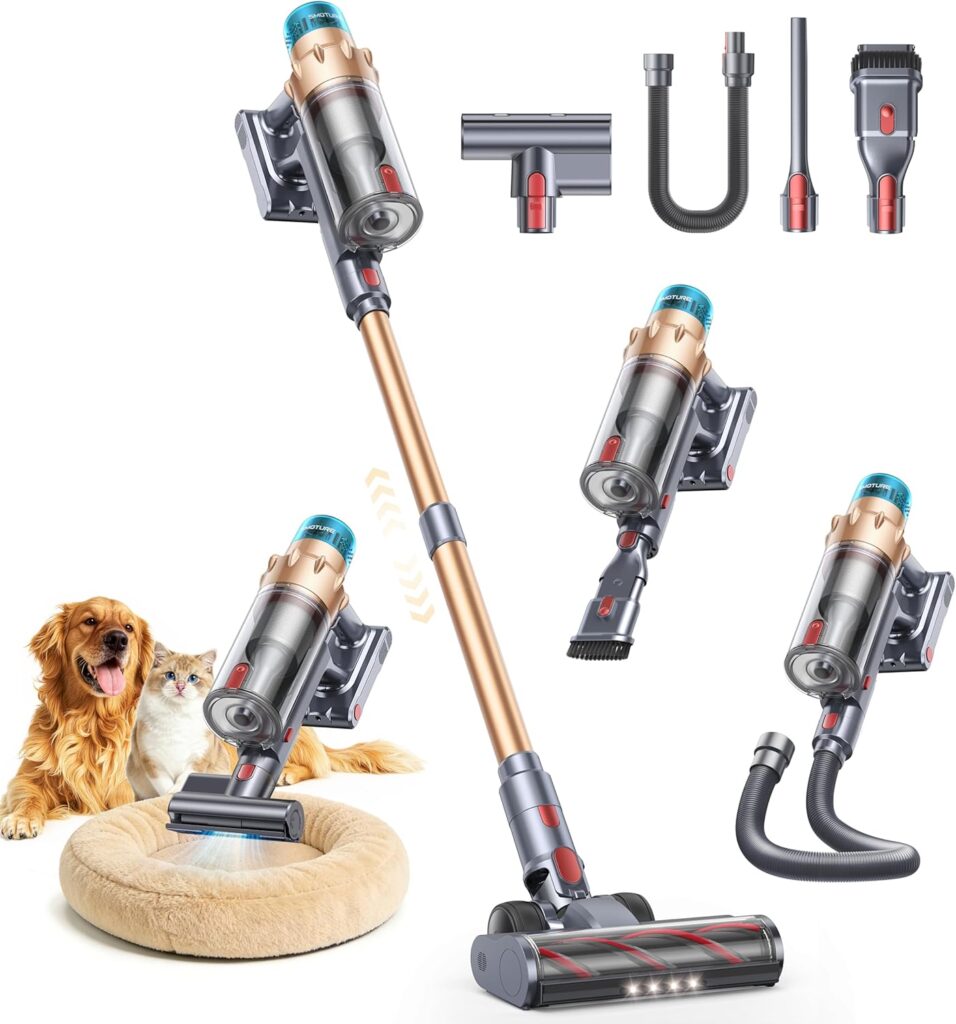
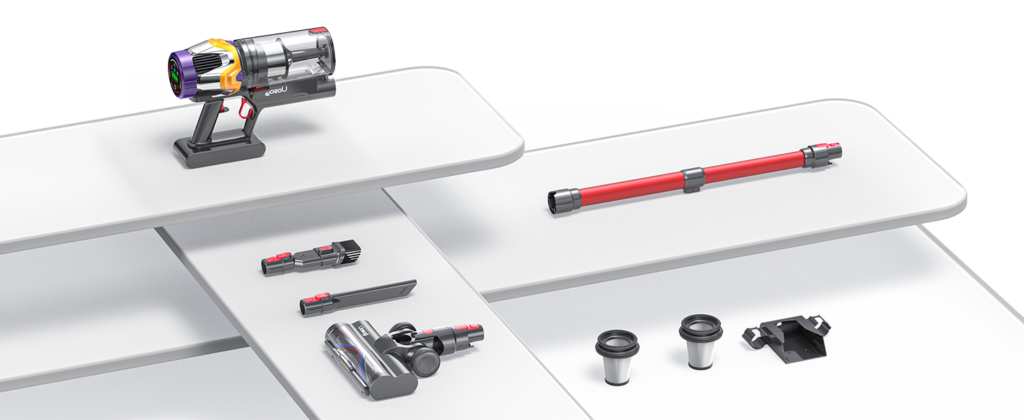
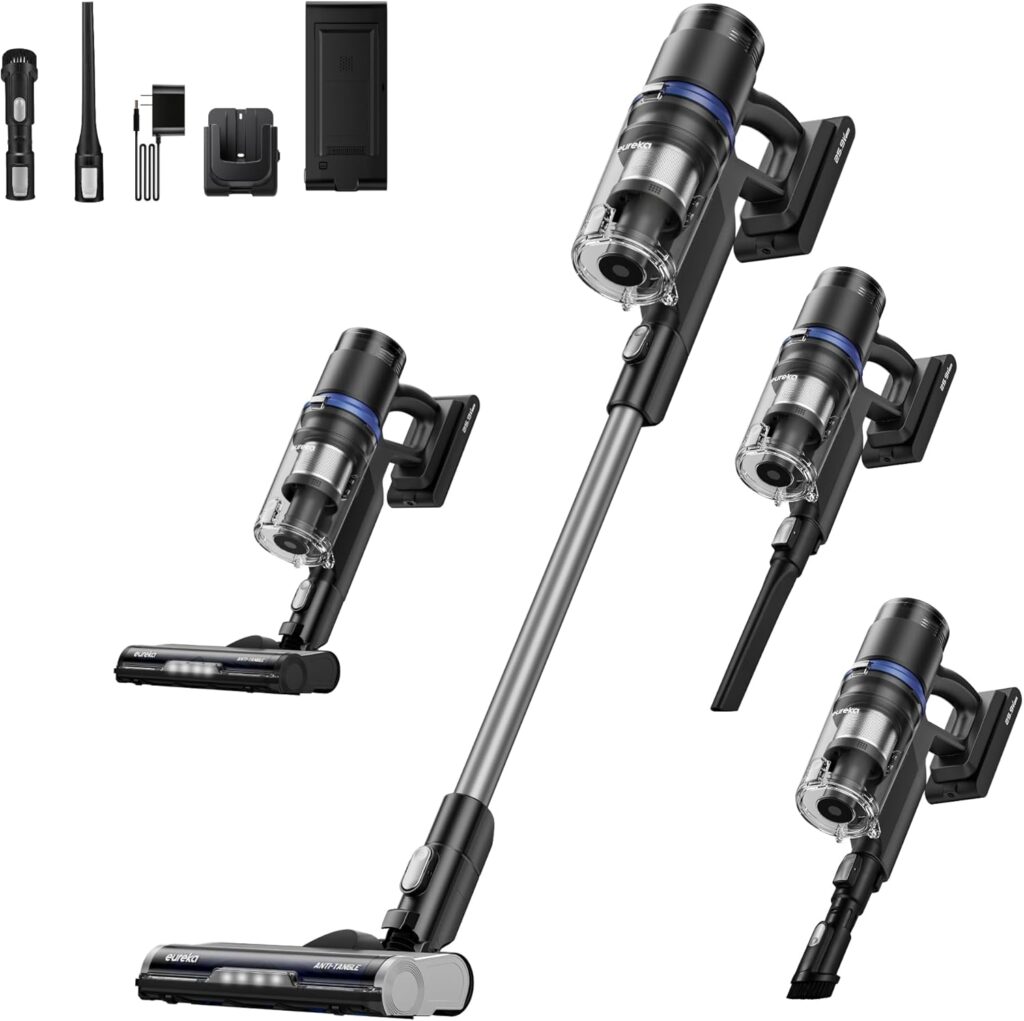
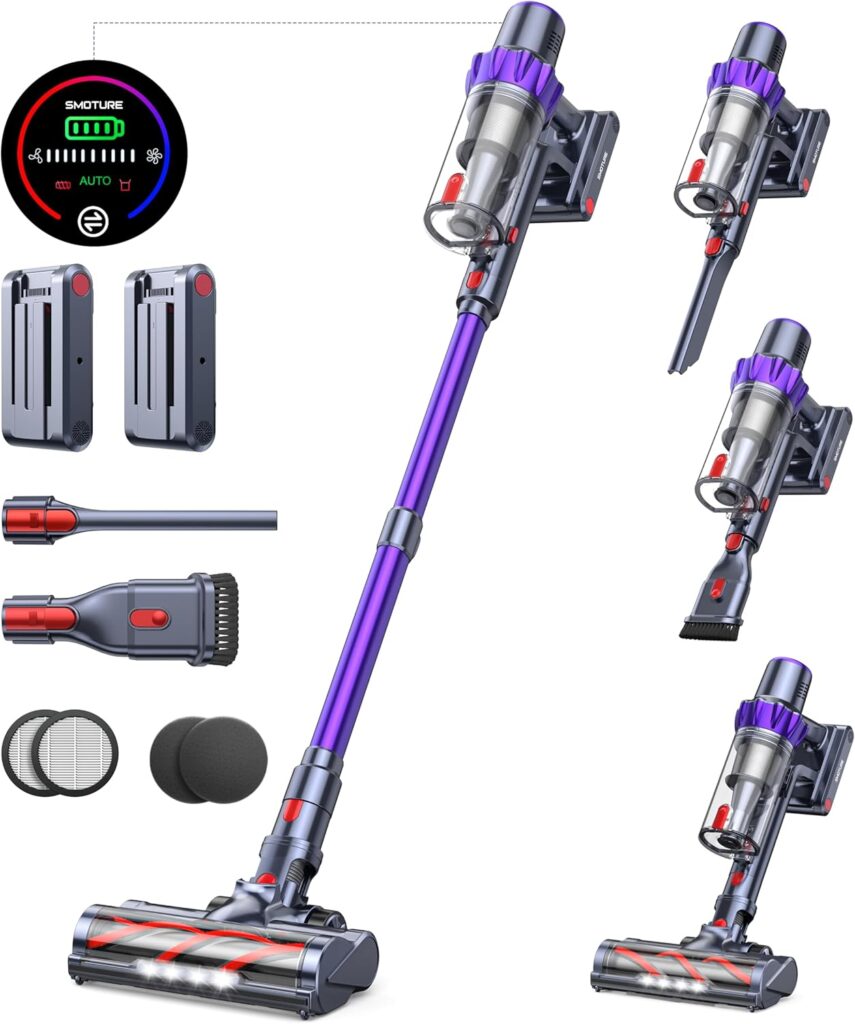
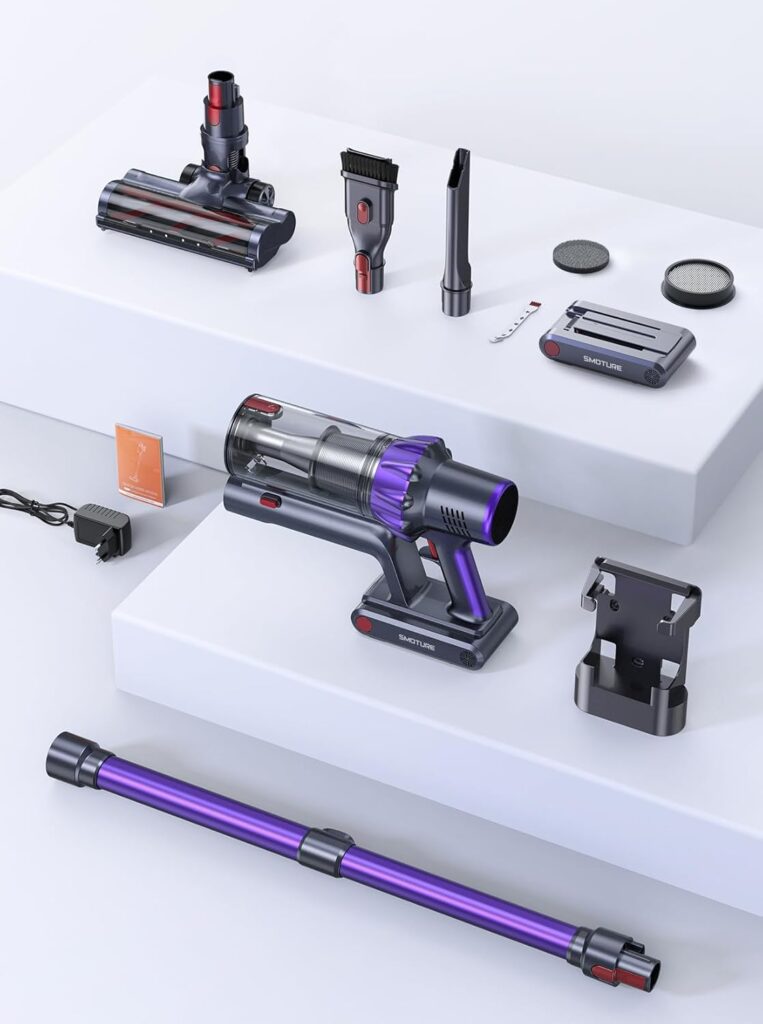
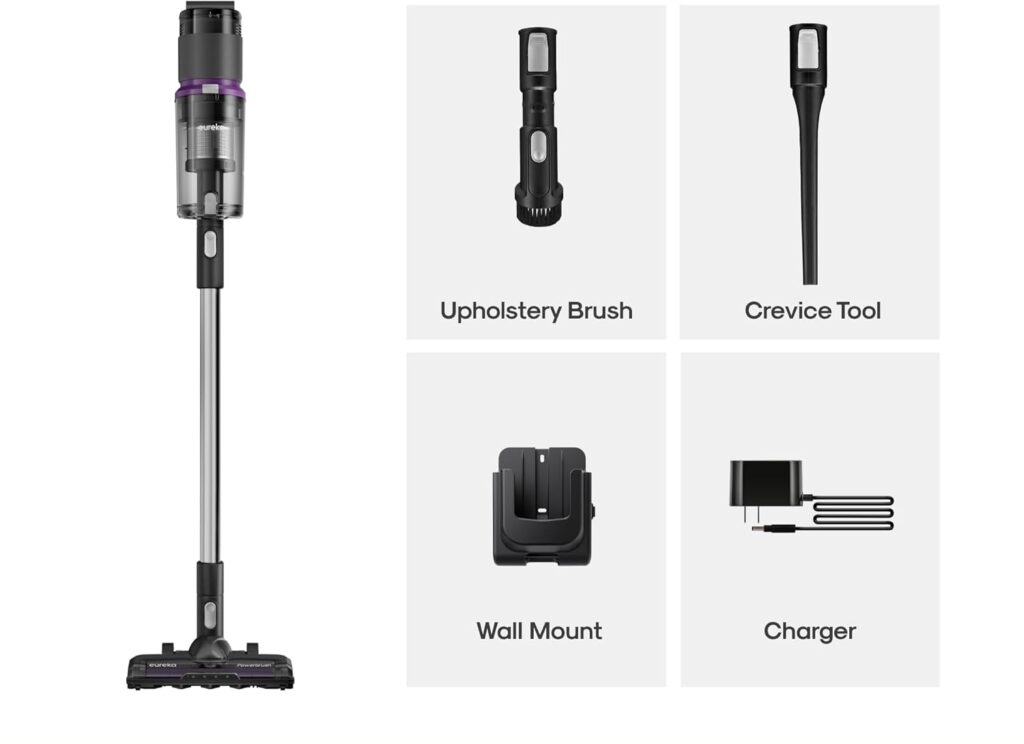
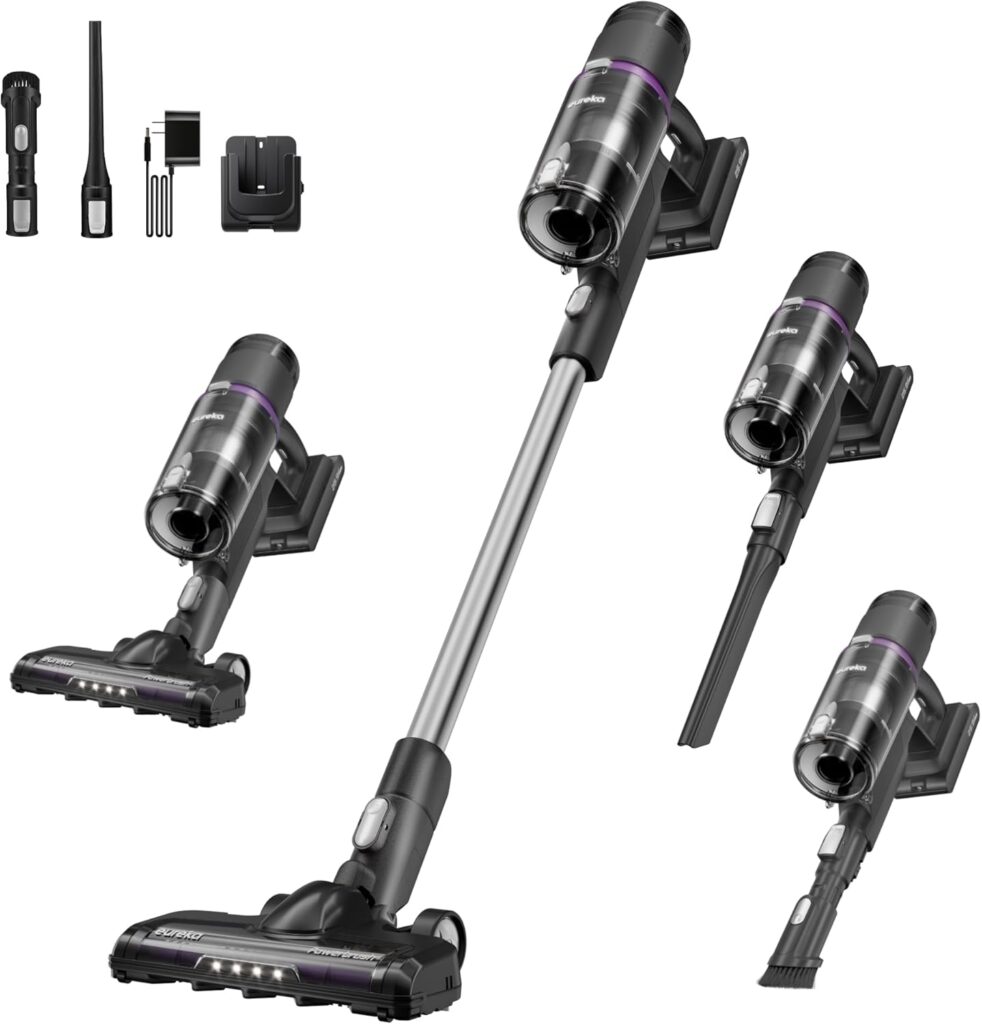
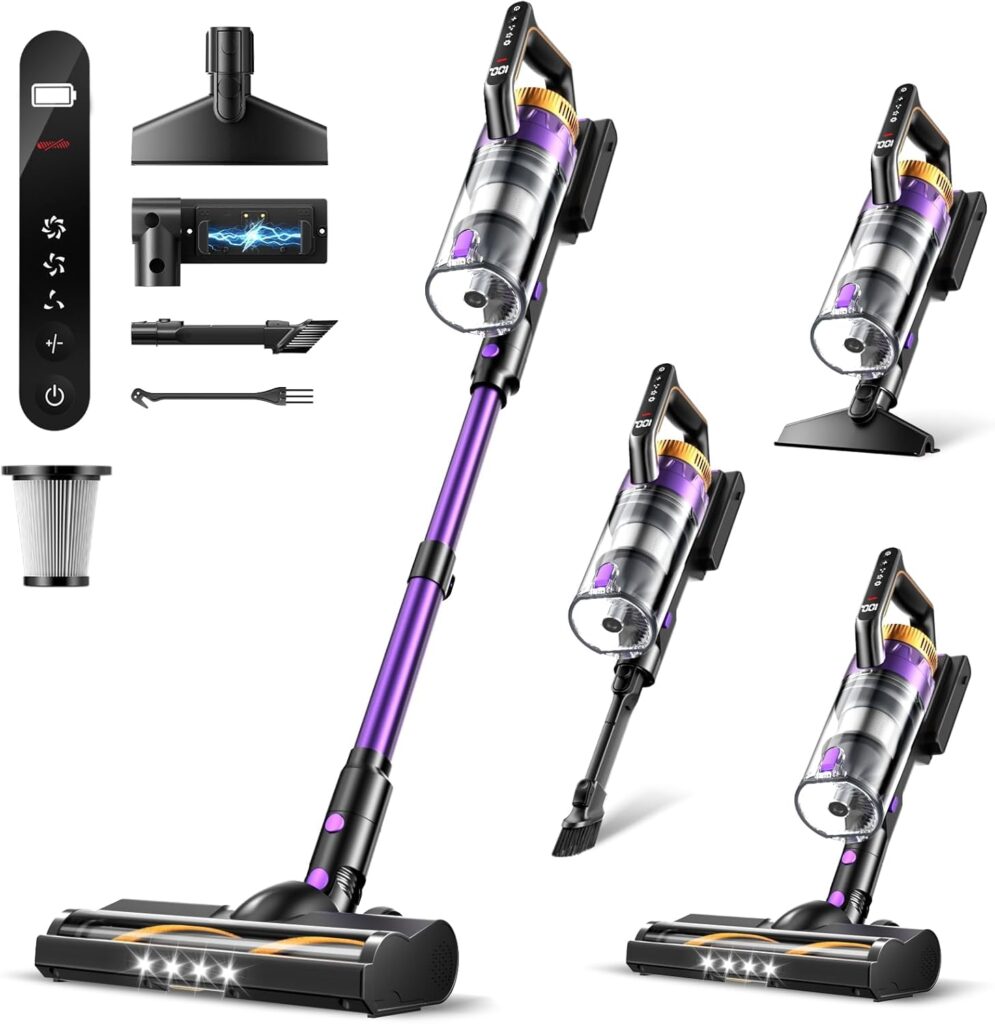
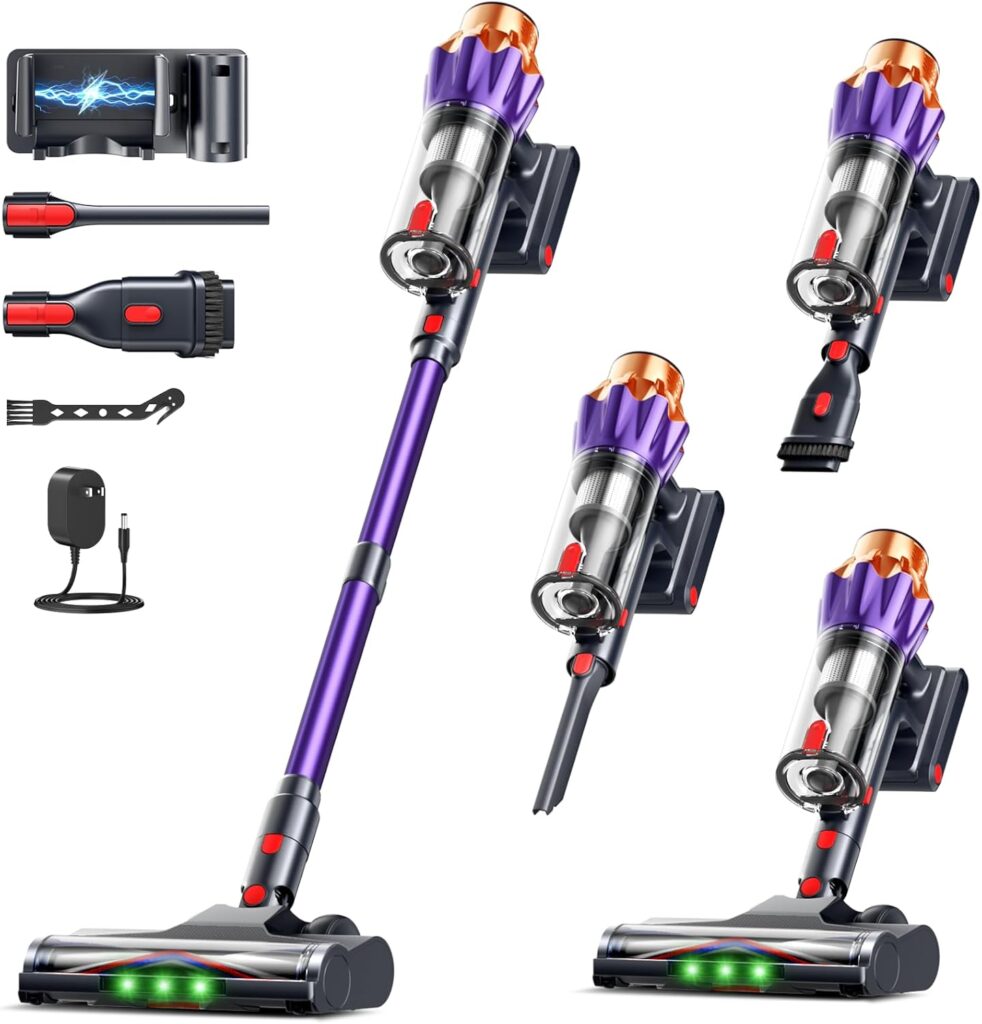
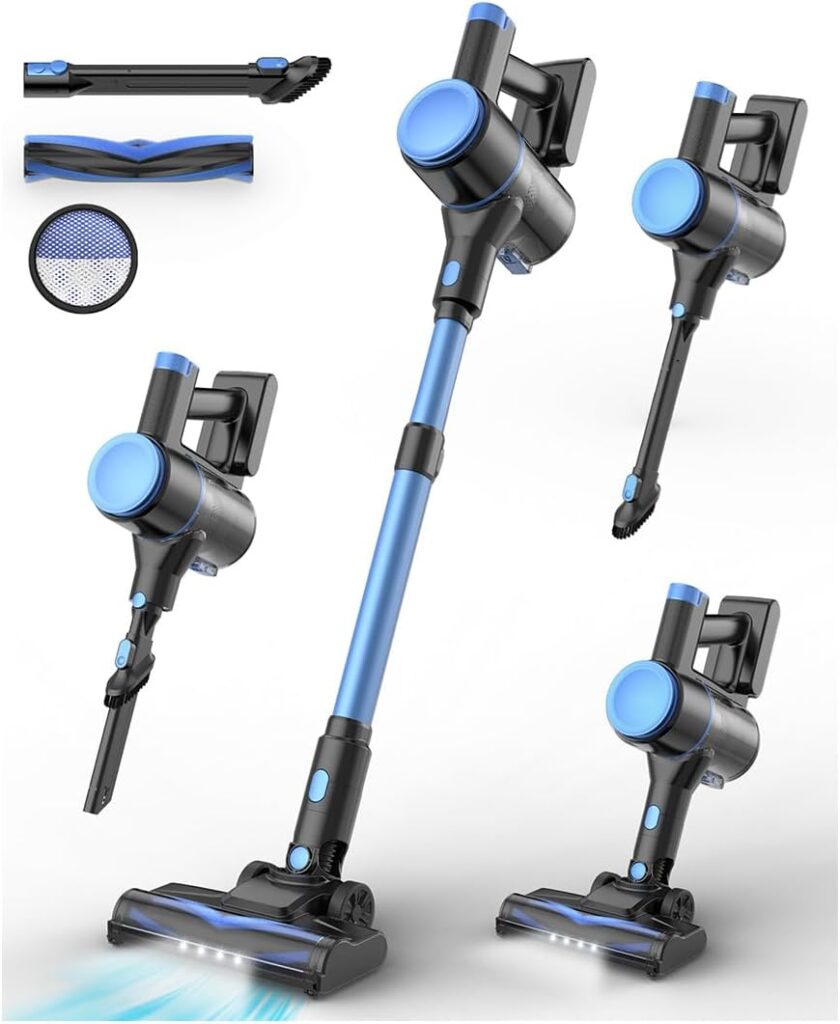
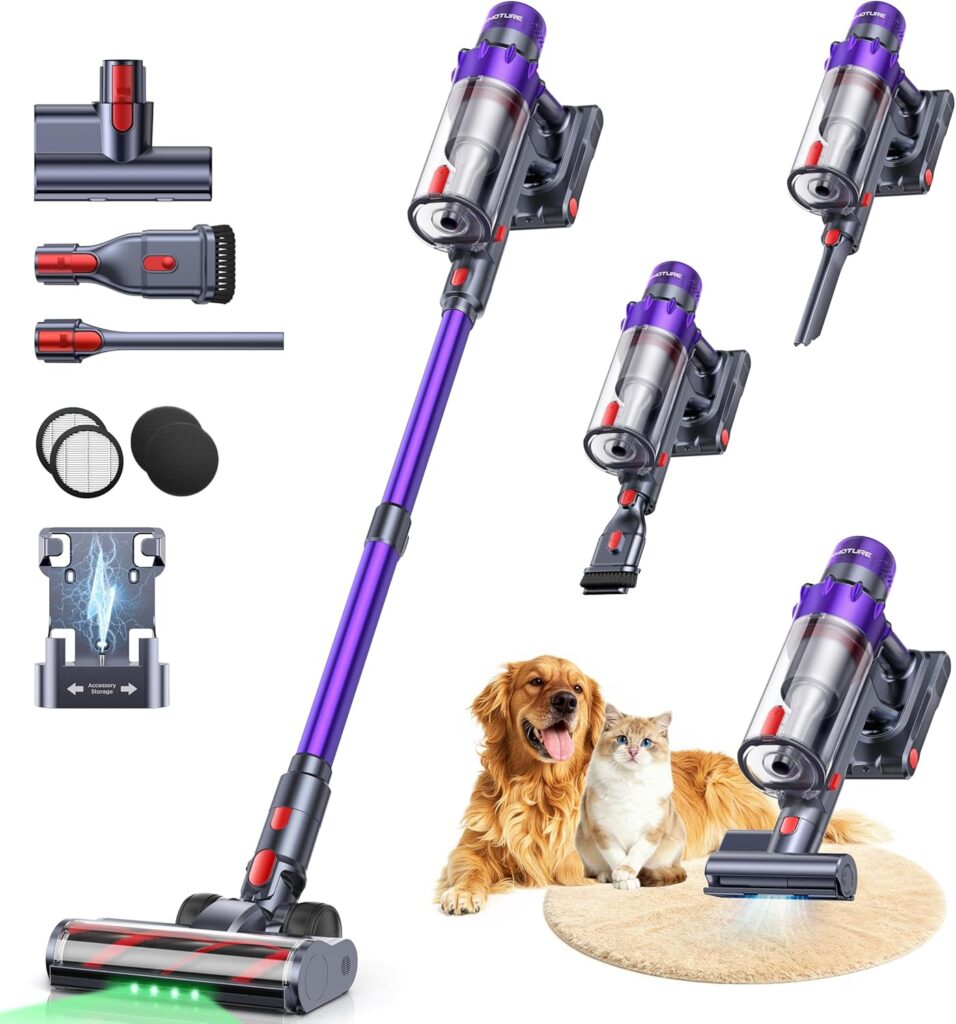
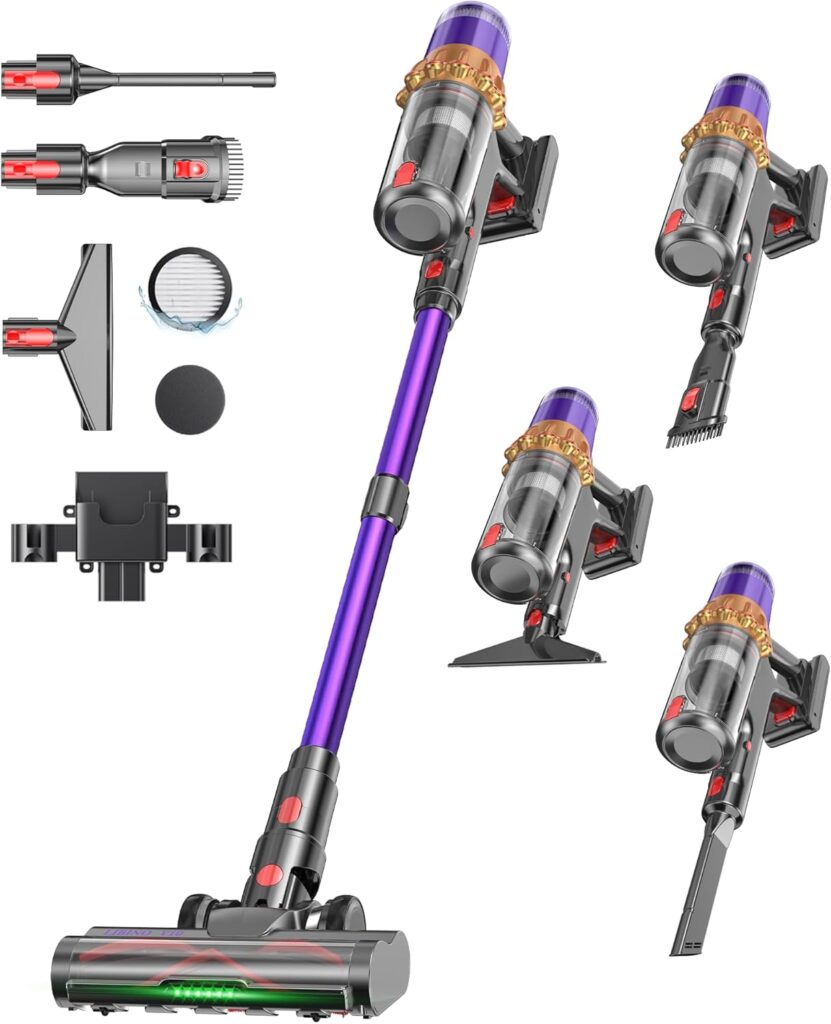
Inside the box, you’ll find the main vacuum body, the extension wand, the motorised brush head, a crevice tool, a soft dusting brush, a long-reach flexible hose, and a wall-mount bracket. Also included is a small cleaning tool for the brush head and a basic instruction guide.
The initial build quality genuinely surprised me for the price. Whilst the plastic is clearly budget-tier, it doesn’t feel hollow or brittle when handled. Furthermore, the joints between sections fit tightly without obvious gaps that would let dust escape during use.
So my first reaction to lifting it was relief at the lightness. As a result of the 5.4-pound weight, the unit handles comfortably for daily cleaning without strain. Equally, the balance point sits naturally near the grip rather than pulling the brush head awkwardly downward.
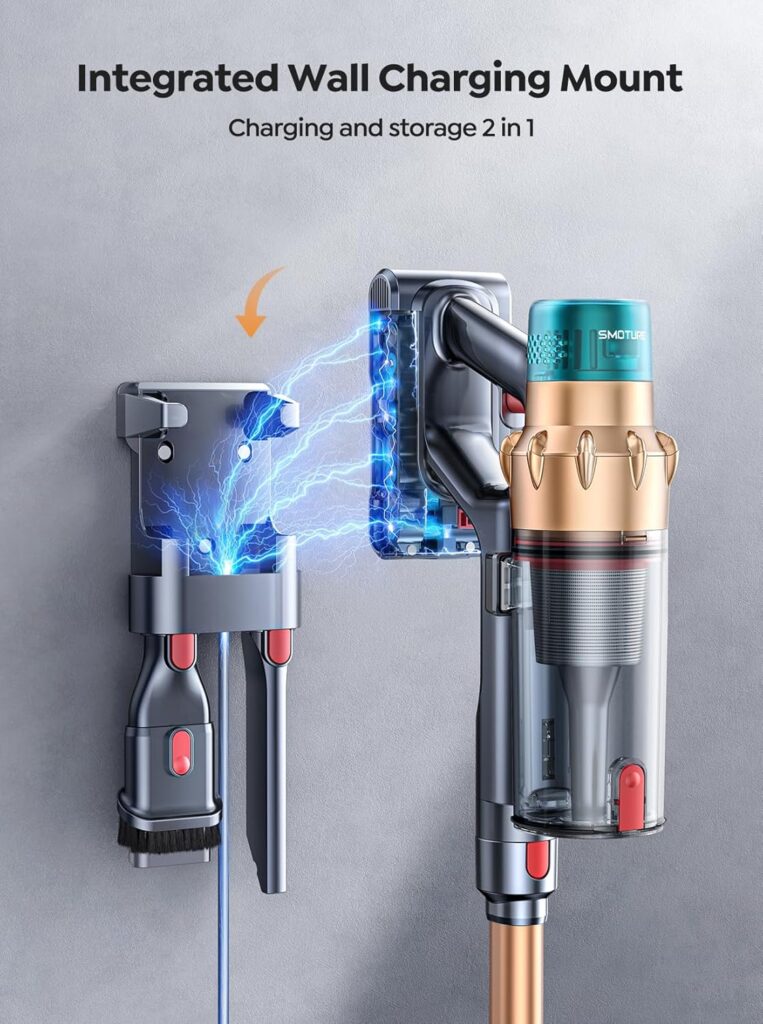
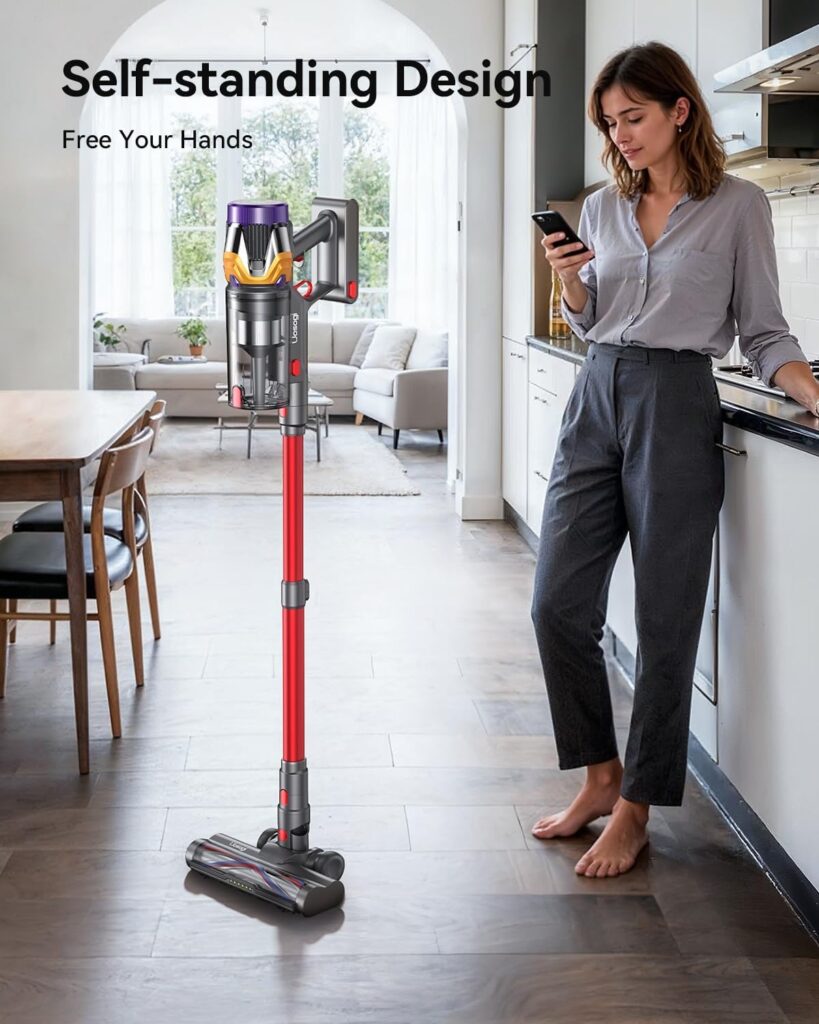
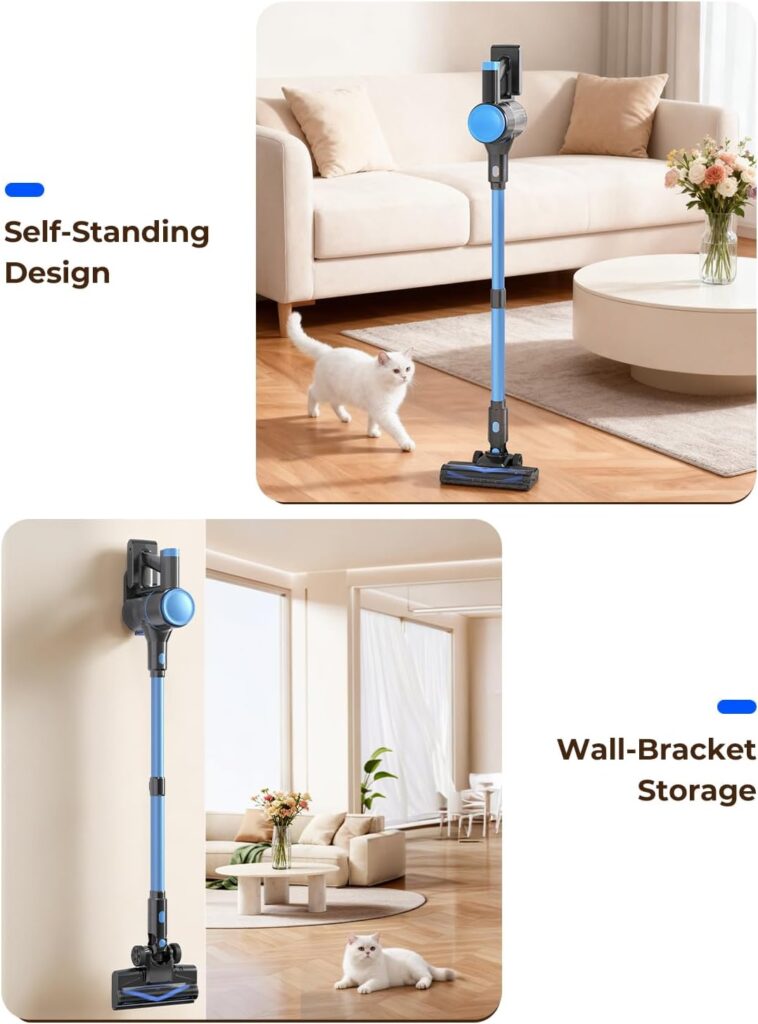
Setup took roughly five minutes from unboxing to first charge. Meanwhile, the wall-mount bracket attaches with two included screws into a stud or appropriate wall anchor. So renters who can’t drill can simply lean the vacuum in a corner without major drawbacks.
Design and Build Quality
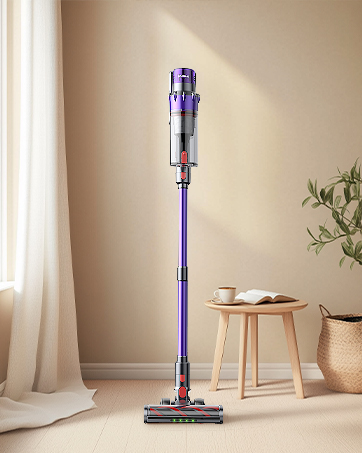
So SMOTURE has clearly designed the VAC01 to hit a strict price target without obvious corner-cutting in the wrong places. Indeed, the white and grey colour scheme looks clean rather than premium. Meanwhile, the slim profile fits into tight storage gaps that bulkier rivals would struggle with.
The materials feel honest for the price tier. Whilst the body uses standard budget-grade ABS plastic, the build holds up well under daily handling. Furthermore, the trigger area has a slightly rubberised polymer that gives a confident grip during longer cleans.
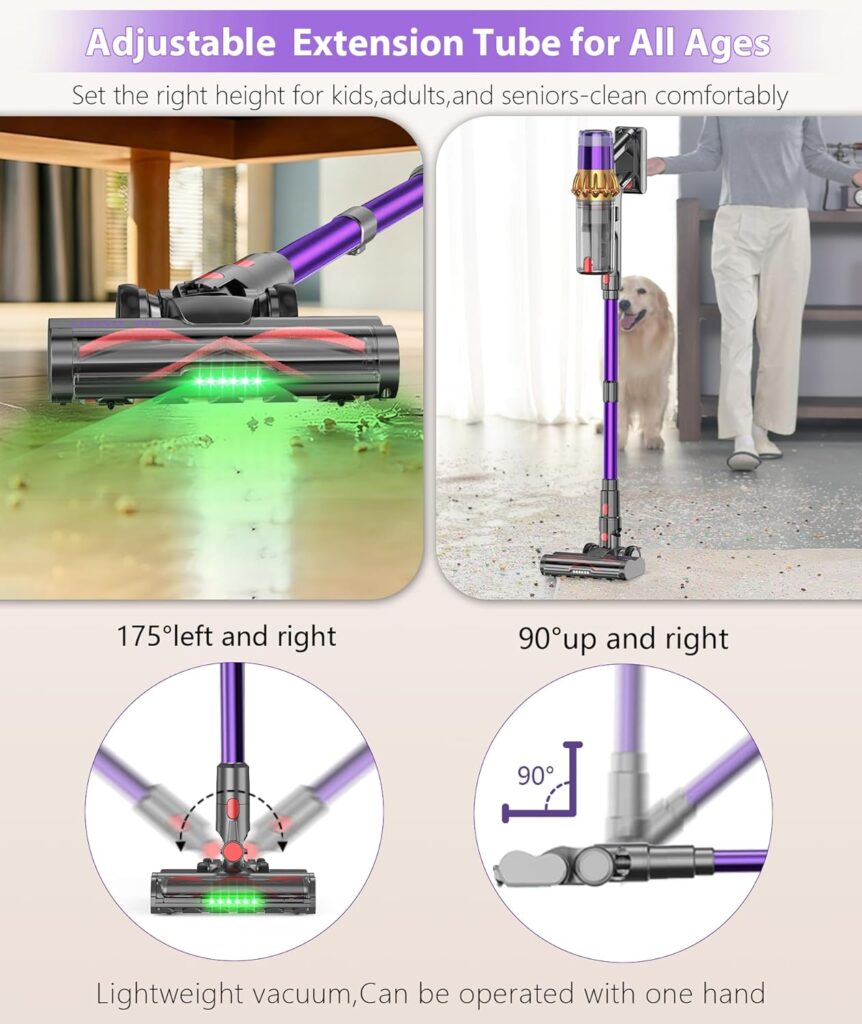
In daily handling, the VAC01 moves nicely through real cleaning scenarios. So the swivel head darts through tight corners without dragging the whole machine sideways. As a result, daily cleaning feels easier than I’d expected at this price tier. Equally, the trigger sits naturally under the index finger throughout extended sessions.
In terms of aesthetic appeal, the VAC01 looks unremarkable rather than appliance-like. Meanwhile, the wall-mount keeps it out of sight when not in use, which suits its no-fuss design philosophy. By contrast, several budget rivals use brightly coloured plastic that draws attention to their cheaper construction.
So compared to similar products at the same price point, the VAC01’s build feels above average for the sub-$120 tier. Indeed, the LIBINO V10 sits at similar pricing but lacks the long-reach hose. Furthermore, the Uosogi X9 Turbo brings a brushless motor at slightly higher pricing, which is a trade-off worth weighing.
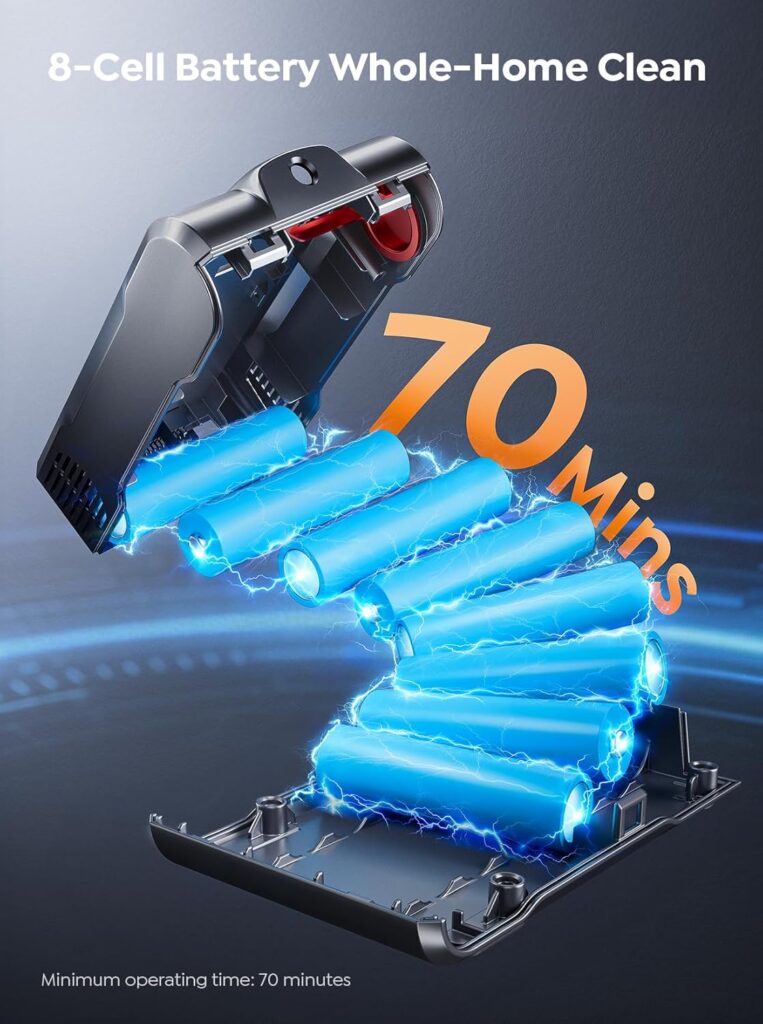
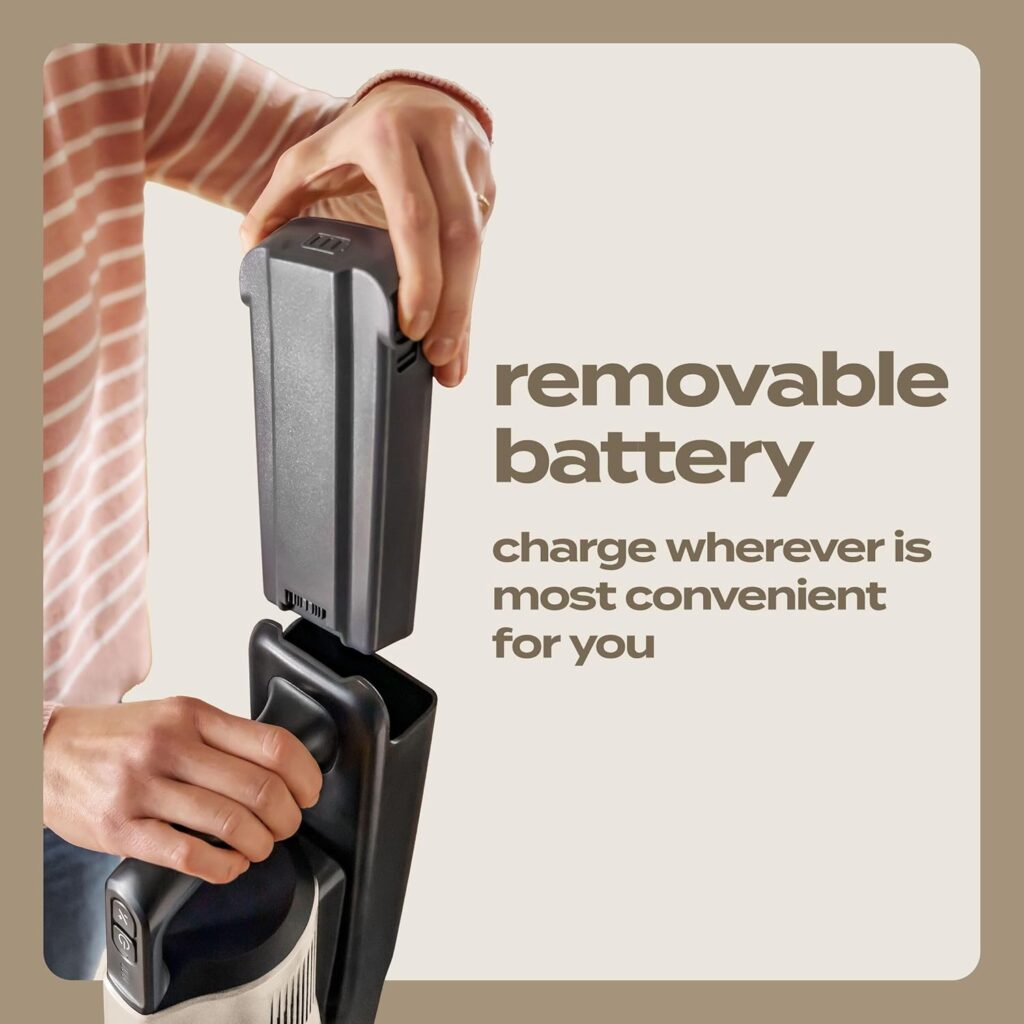
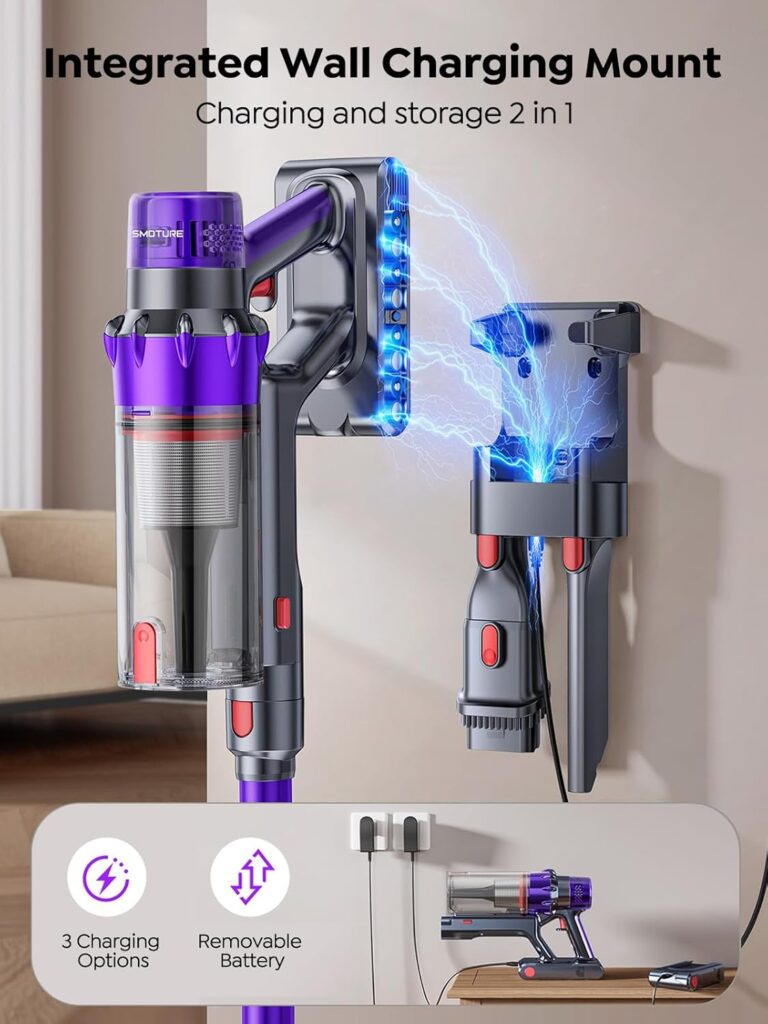
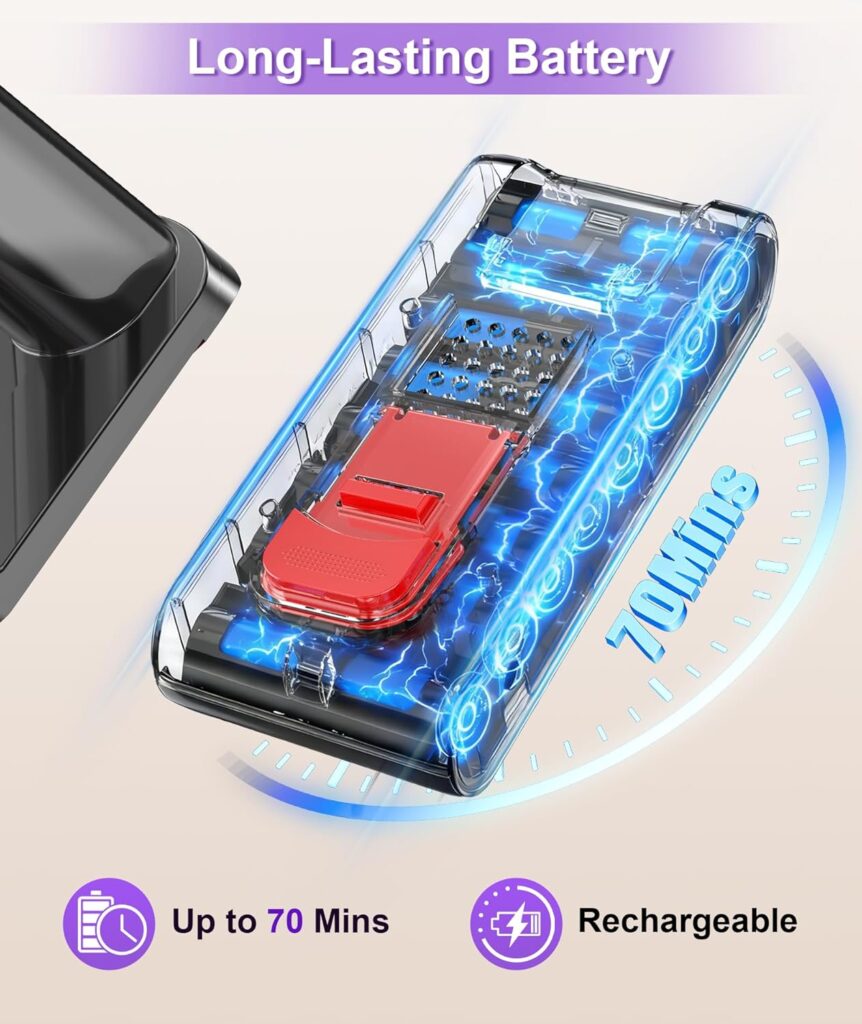
So this is the feature that genuinely earns the VAC01 its place. Indeed, the battery pops out for outside charging or eventual replacement. Meanwhile, replacement batteries cost around $20 directly from SMOTURE, which extends the vacuum’s working life affordably. As a result, the realistic ownership lifespan stretches well beyond the typical sub-$120 cordless.
Soft Wood-Safe Roller
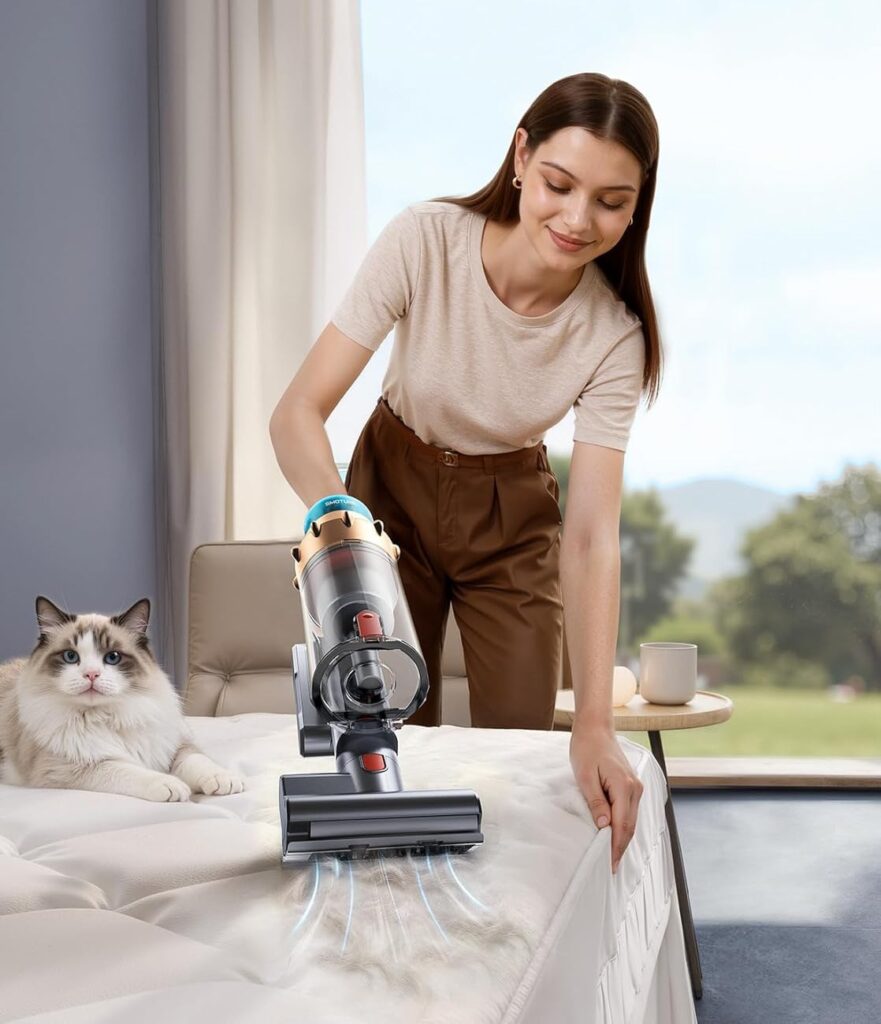
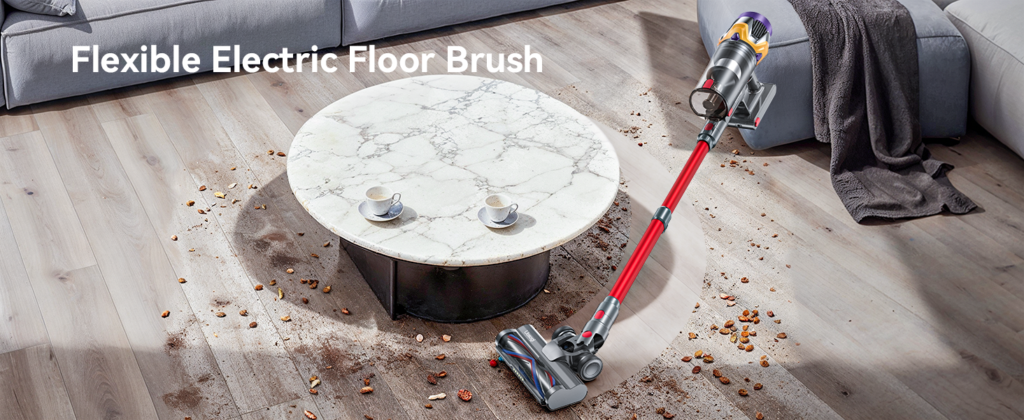
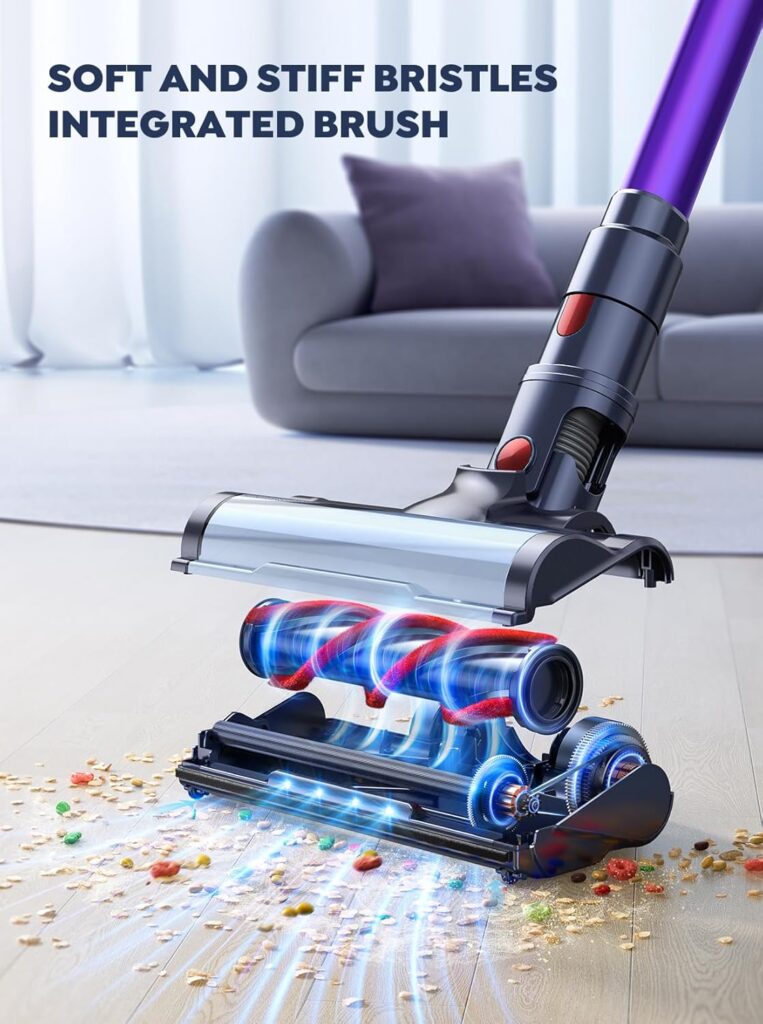
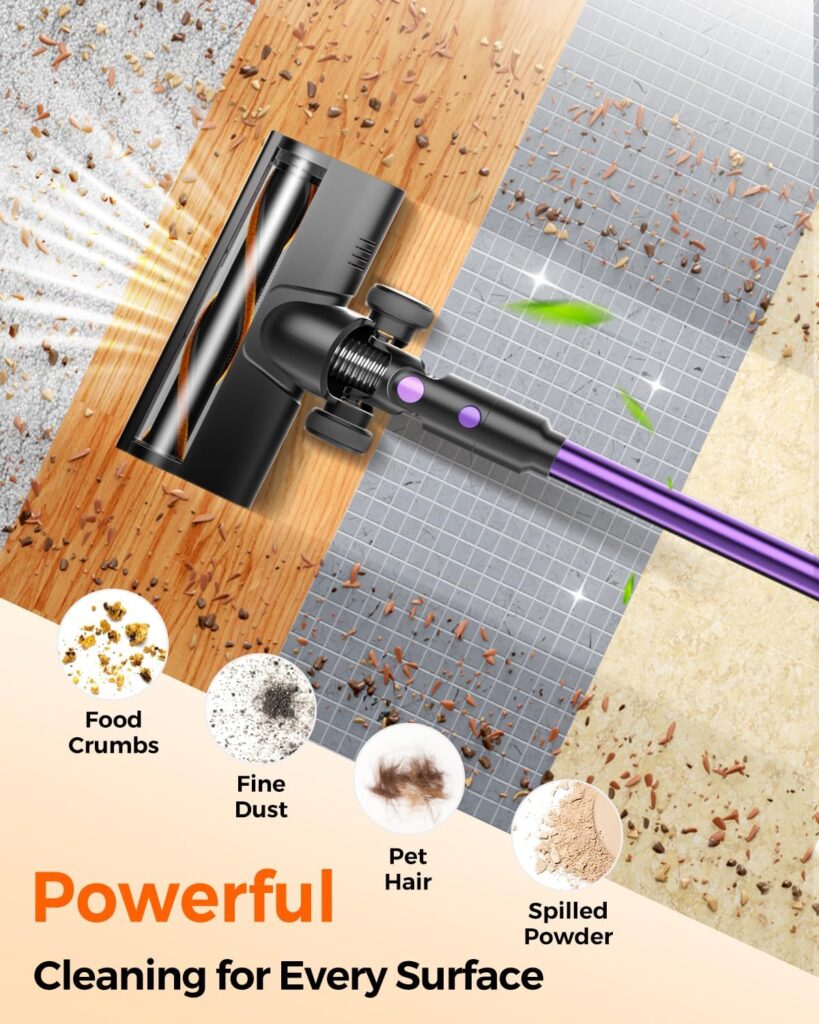
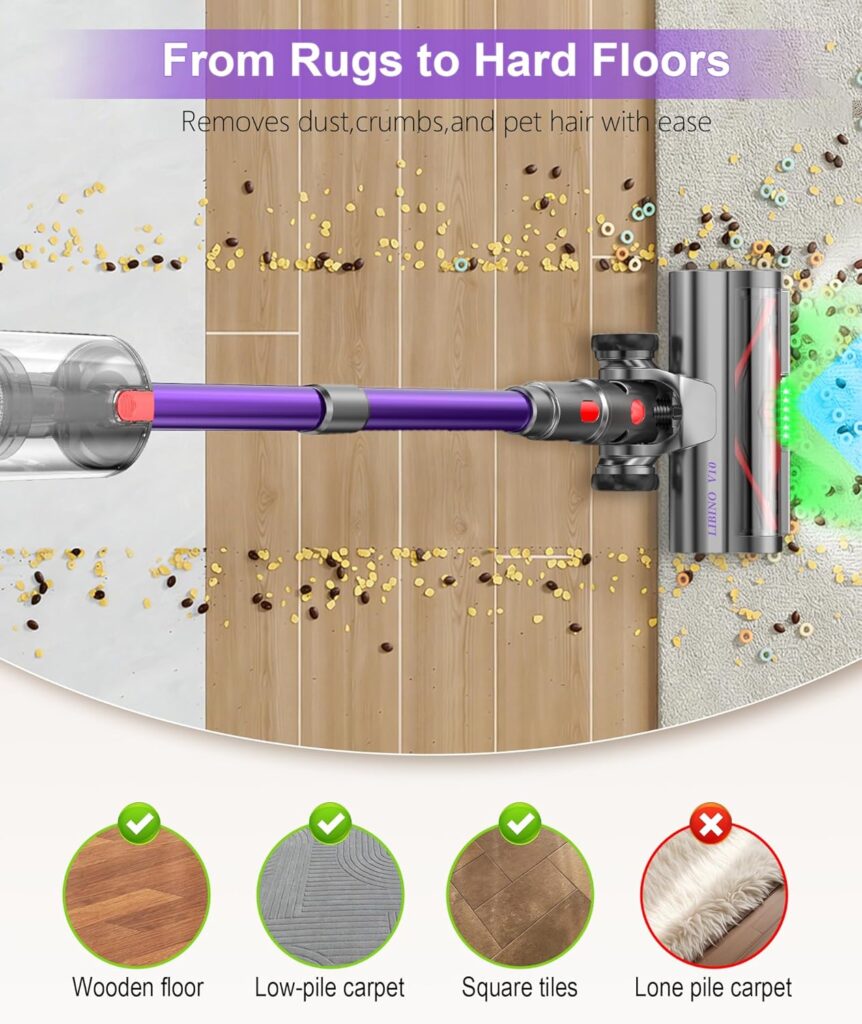
In practice, the soft outer brush roller protects hardwood from scratches during daily cleaning. So you can vacuum polished wood floors without worrying about marks. Furthermore, the stiffer inner row still digs into rugs and runners as you cross between rooms.
Long-Reach Flexible Hose
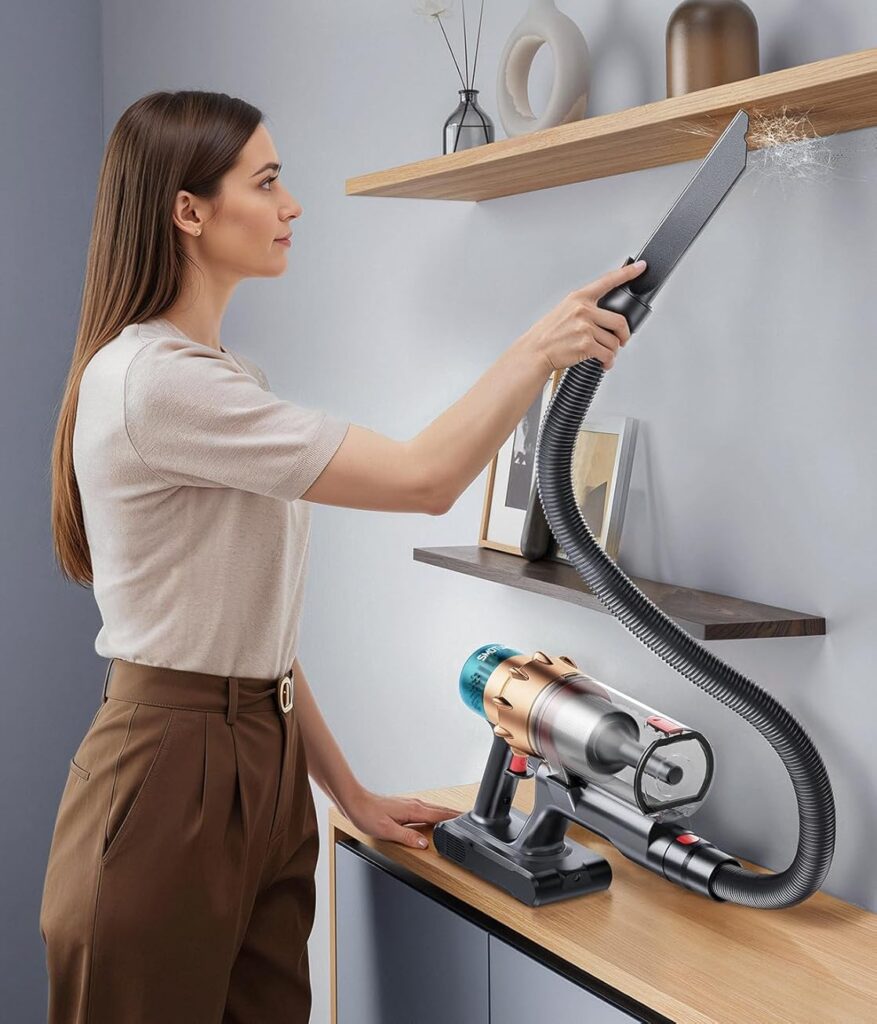
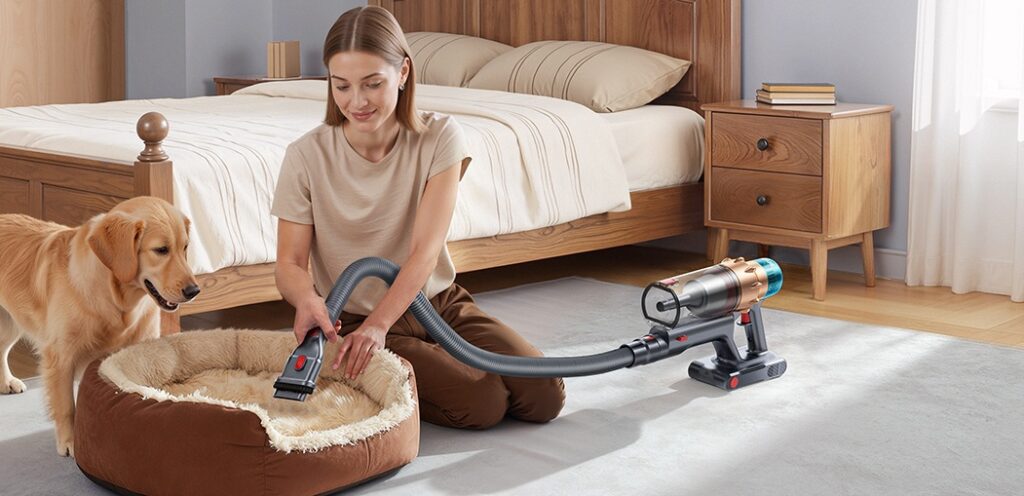
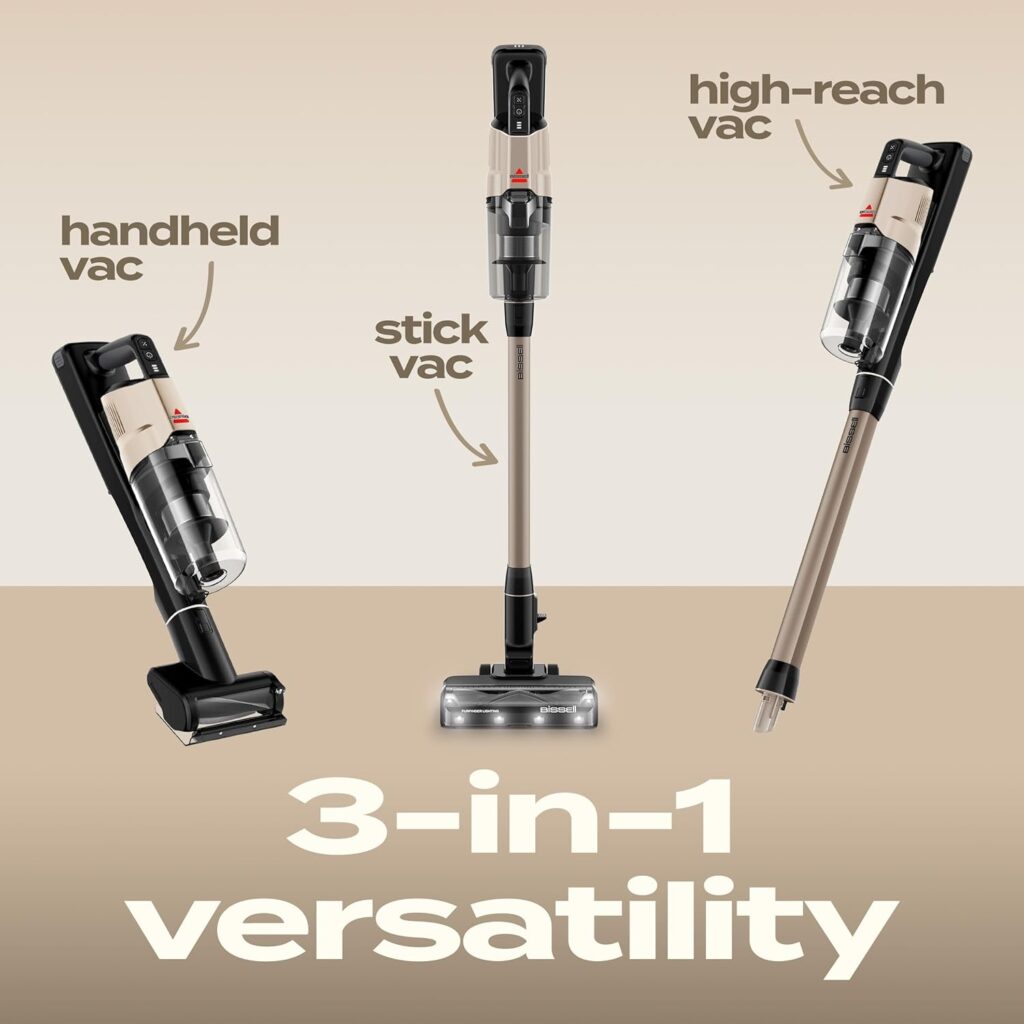
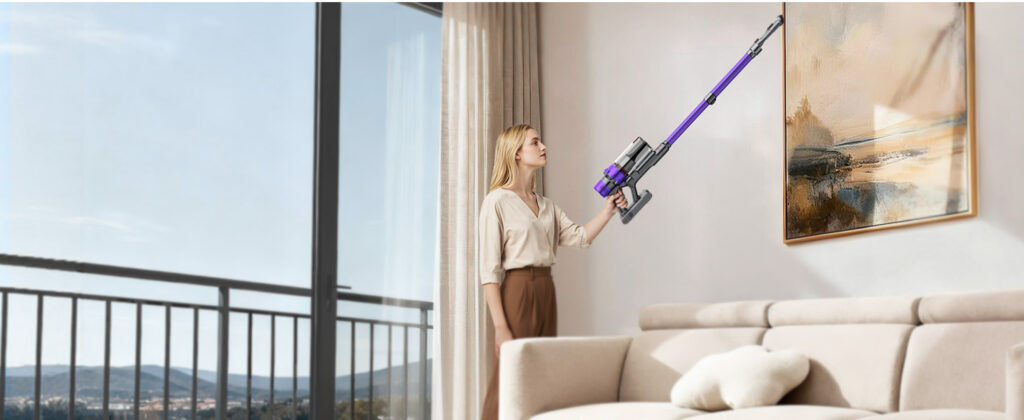
Whilst many sub-$120 cordless rivals skip this accessory entirely, the VAC01 includes a long-reach flexible hose. Meanwhile, the hose extends the cleaning reach to ceiling corners, behind appliances, and high shelves. So you can clean above-floor spots without buying extra tools.
Two Power Modes
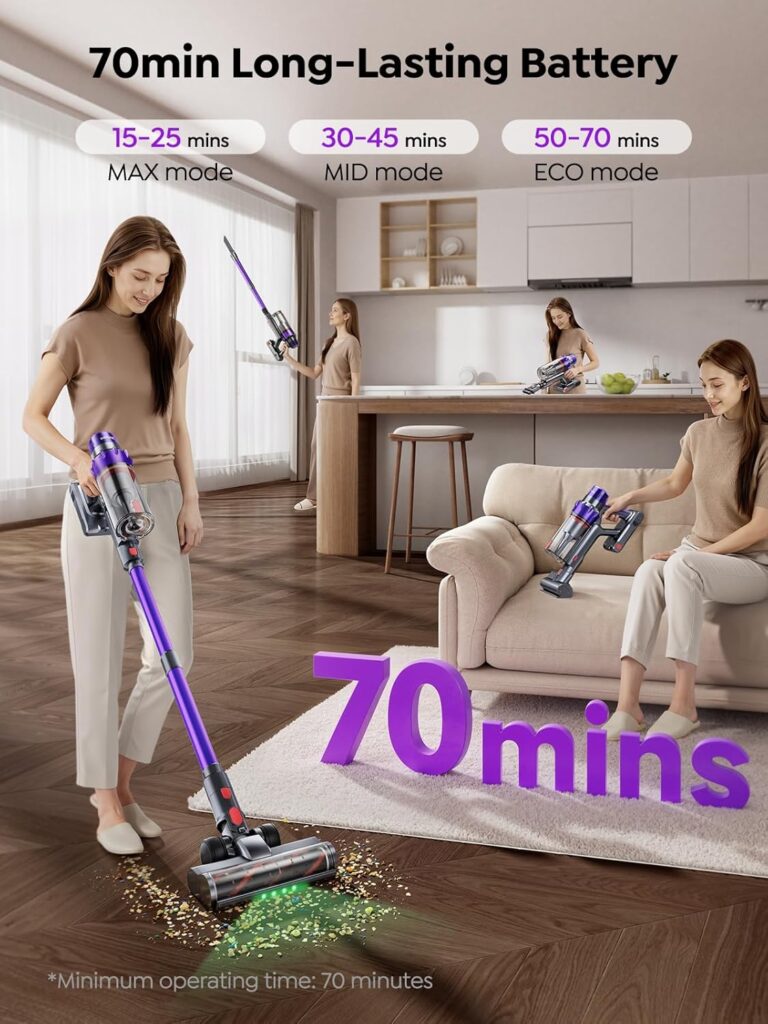
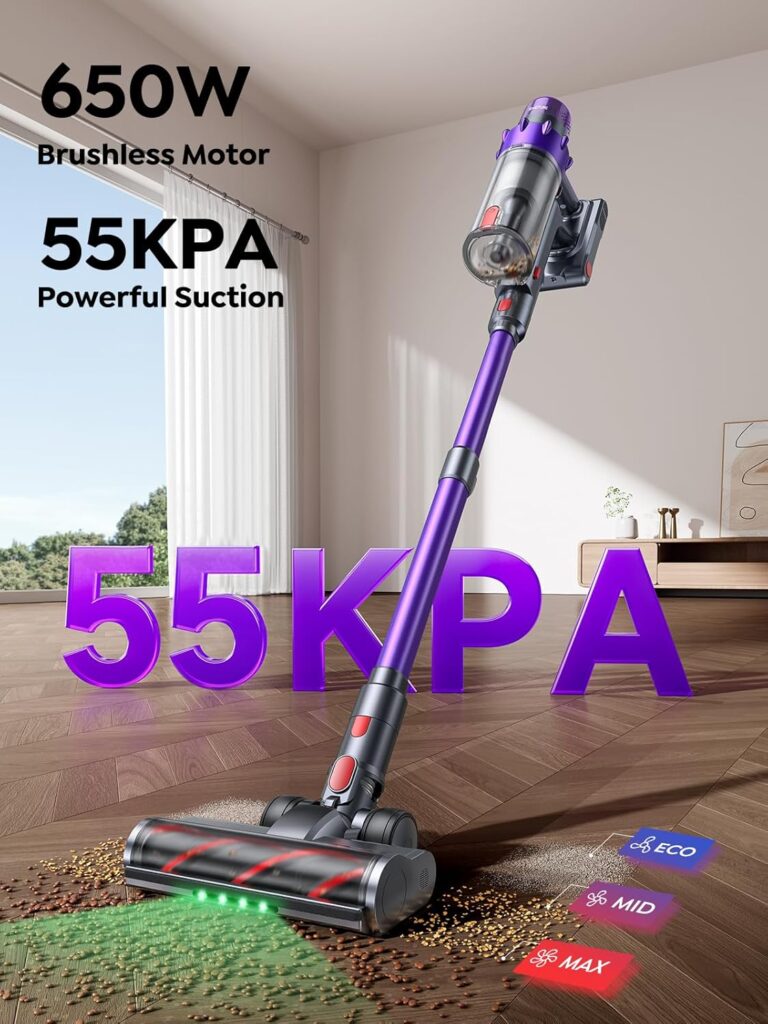
Additionally, the VAC01 offers two suction modes rather than the single-mode operation of cheaper rivals. So eco mode handles daily touch-ups whilst stretching battery life to roughly 32 minutes. Meanwhile, the higher mode covers heavier debris when you need stronger suction.
LED Brush Head Light
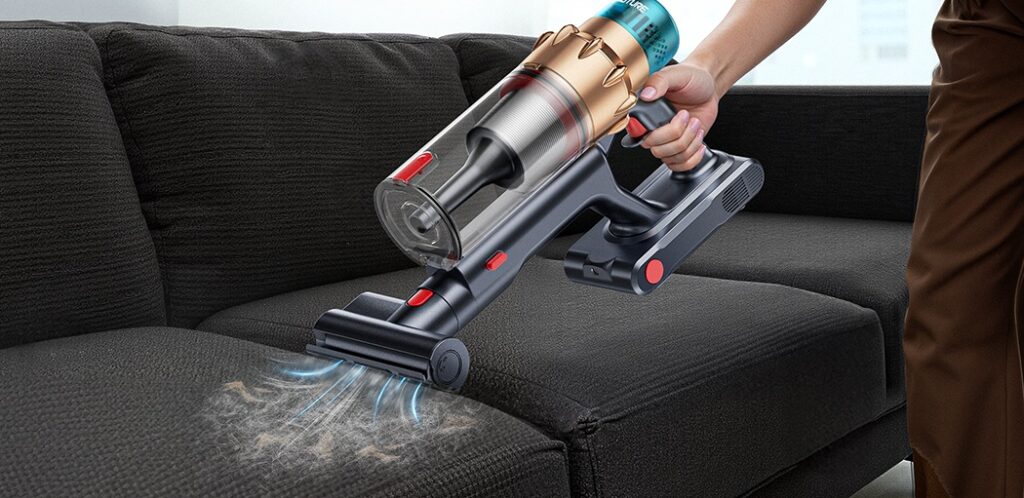
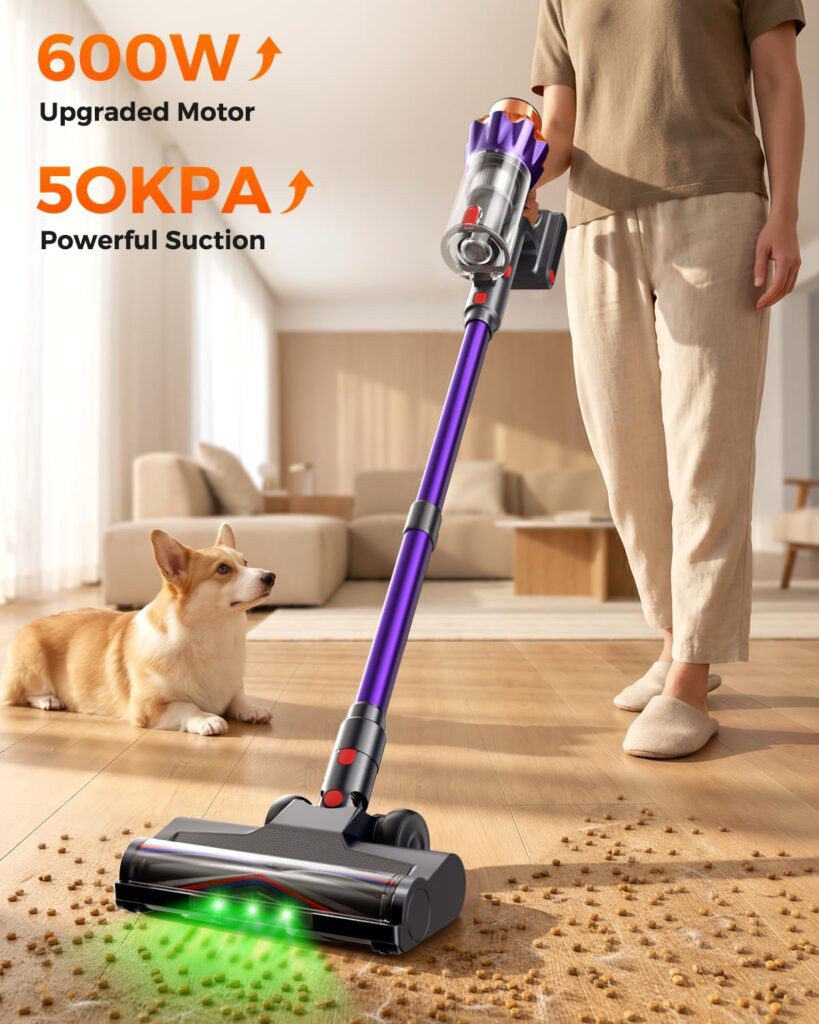
Furthermore, the LED light on the brush head illuminates dark corners and the gap between sofas and skirting boards. So you can spot exactly what you’ve missed rather than guessing. Equally, the light stays cool to the touch even after long cleaning sessions.
Washable Filter
In addition, the multi-stage filtration includes a washable primary filter that rinses clean rather than requiring expensive replacements. So ongoing maintenance costs stay essentially at zero beyond the initial purchase. According to WebMD’s guide to indoor air health, regular filter cleaning matters for households where someone has any respiratory sensitivity.
Wall-Mount Bracket
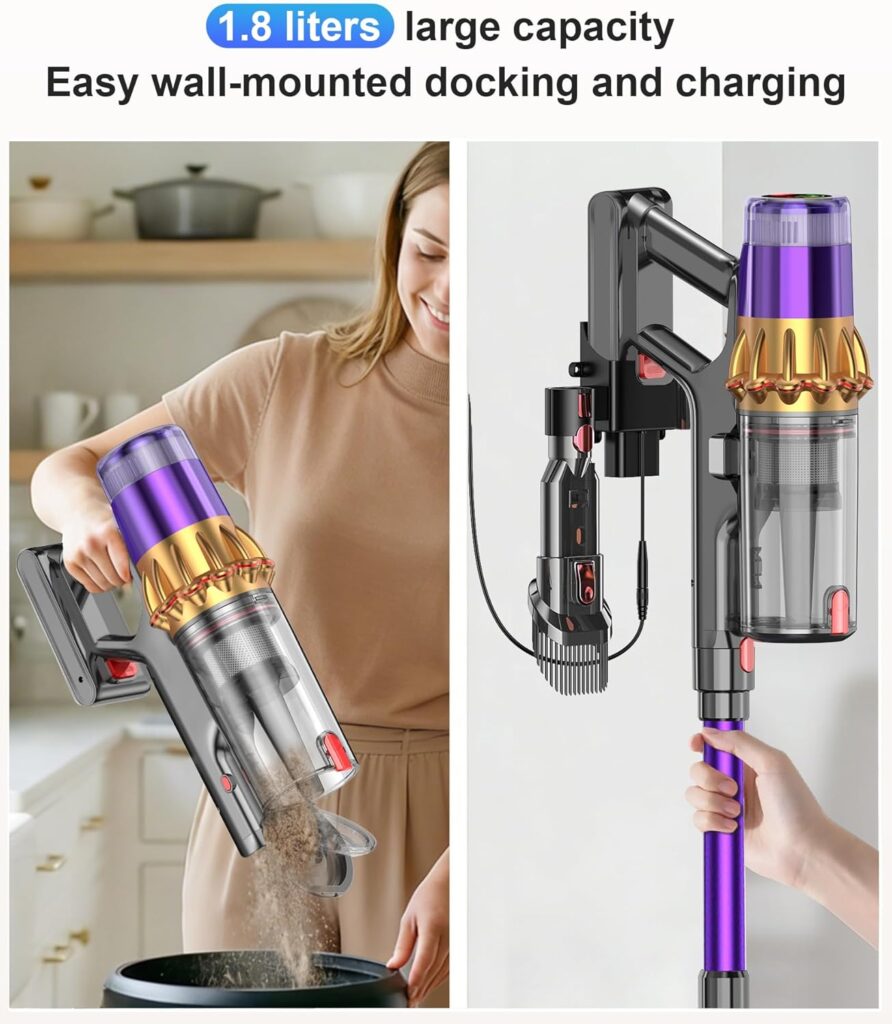
Equally important, the wall-mount bracket comes in the box. So storage stays tidy in tight flats without needing extra purchases. Furthermore, the bracket has small clips for the included accessories, keeping the whole kit organised in one spot.
Bottom-Release Dustbin
So the bottom-release dustbin lets you empty contents directly into a bin without handling dust by hand. Indeed, this small design choice protects allergy-prone users from particle exposure during disposal. Meanwhile, the smooth bin interior releases fine debris cleanly rather than catching it on the walls.
So on hardwood, the VAC01 handles daily dust and pet hair adequately in eco mode. Indeed, the soft outer bristles glide across the surface without flicking debris forward or scratching the finish. Meanwhile, the suction is sufficient for typical daily touch-ups on polished wood.
Low-Pile Carpet Performance
In practice, low-pile carpet pushes the VAC01 closer to its limits, but it still delivers credible cleaning. So the brush roll digs into the fibres on the higher power mode, lifting most surface pet hair on the first pass. By contrast, embedded debris that’s worked deep into the carpet pile may need a second pass.
Medium-Pile Carpet Performance
Whilst medium-pile carpet exposes the VAC01’s modest motor power, it still manages light maintenance work. Meanwhile, deep cleaning of medium-pile carpet really needs a corded upright. So treat the VAC01 as a secondary vacuum if your home has significant medium-pile carpeting.
Pet Hair Handling
Furthermore, the VAC01 handles light pet hair adequately for the price. So I tested it through a fortnight of light shedding from a short-haired cat. As a result, the brush roll collected surface hair without major tangling issues. By contrast, heavy shedders or long-haired pets will overwhelm the small motor and dustbin quickly.
Stair and Above-Floor Cleaning
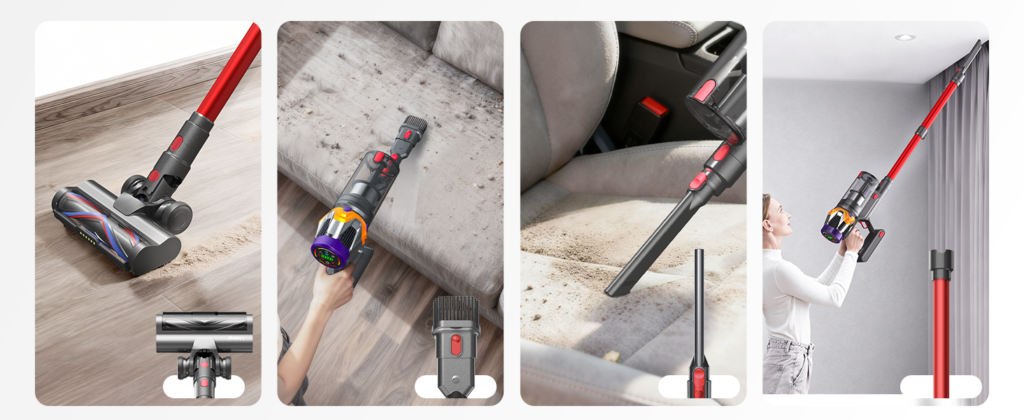
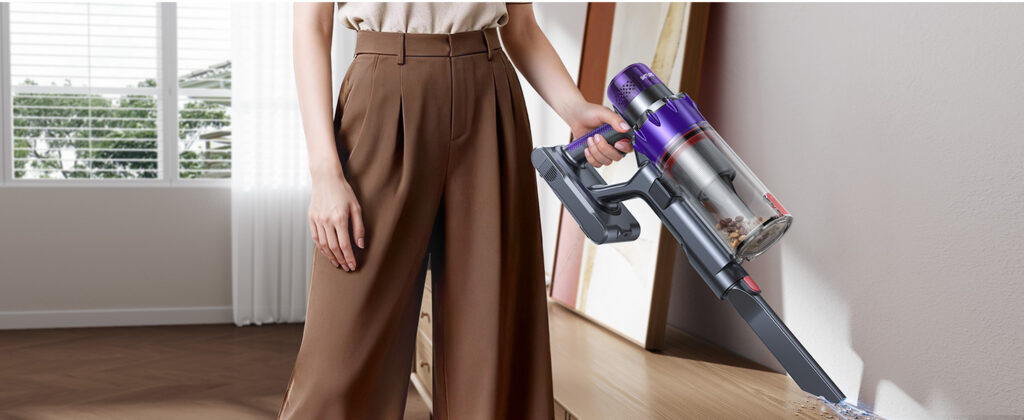
Indeed, the long-reach flexible hose transforms above-floor cleaning. So I used it on ceiling corners, behind the fridge, and along high shelves. As a result, the VAC01 covers cleaning jobs that rivals in this tier simply can’t reach. Meanwhile, Better Homes and Gardens’ guidance on home cleaning covers why regular dust removal from high surfaces matters for indoor air quality.
Technical Specifications
Specification
Detail
Type
Cordless stick
Weight
5.4 lbs
Battery type
Lithium-ion, detachable
Battery runtime
32 minutes (eco mode)
Battery runtime (max)
10 minutes
Dustbin capacity
0.4 litres
Filtration
Multi-stage with washable primary filter
Charge time
4 hours
Suction modes
Two (eco, max)
LED headlight
Yes
Long-reach hose
Yes, included
Wall-mount bracket
Included
Warranty
1 year
Approximate price
$115
So in plain language, the lithium-ion battery delivers enough runtime for most single-floor cleans on eco mode. Meanwhile, the 0.4-litre dustbin is small and will need emptying at least once during full-home cleans in pet households. Furthermore, the detachable battery design genuinely extends the long-term value of the purchase beyond what fixed-battery rivals deliver.
So in the box, you receive the main vacuum body, the extension wand, the motorised brush head, a crevice tool, a soft dusting brush, a long-reach flexible hose, the wall-mount bracket, and a small cleaning tool for the brush head.
Daily-Use Accessories
In practice, the motorised brush head gets the most use for floor cleaning across both hardwood and low-pile carpet. Furthermore, the crevice tool handles edges, corners, and the gap between sofa cushions. So these two accessories cover most daily cleaning needs.
Occasional-Use Accessories
Meanwhile, the long-reach flexible hose and soft dusting brush come out for above-floor cleaning and delicate surfaces. Equally, the hose handles ceiling corners and behind appliances. So these aren’t gimmicks but well-chosen additions for specific tasks.
Accessories Worth Adding
Additionally, SMOTURE doesn’t offer a dedicated motorised pet tool for the VAC01. So if your home has significant pet hair on stairs or upholstery, consider stepping up to a model that includes one. Furthermore, a spare detachable battery is worth buying upfront for around $20 if you have a larger home.
Pros and Cons
Pros
Detachable battery. Therefore, swap-out cells extend the vacuum’s working life affordably.
Soft wood-safe roller. Meanwhile, hardwood stays scratch-free during daily cleaning.
Long-reach flexible hose included. As a result, ceiling corners and high shelves stay accessible.
5.4-pound design. Indeed, daily handling feels effortless for any user.
Wall-mount bracket included. So storage stays tidy in small homes.
Washable filter. Equally, ongoing maintenance costs stay near zero.
Bottom-release dustbin. Consequently, emptying avoids direct hand contact with collected dust.
Cons
One-year warranty only. That said, that’s typical for sub-$120 cordless models.
Smaller 0.4-litre dustbin. However, frequent mid-clean empties become routine in larger homes.
No HEPA filter. So allergy-sensitive households should look at the LEVOIT VortexIQ instead.
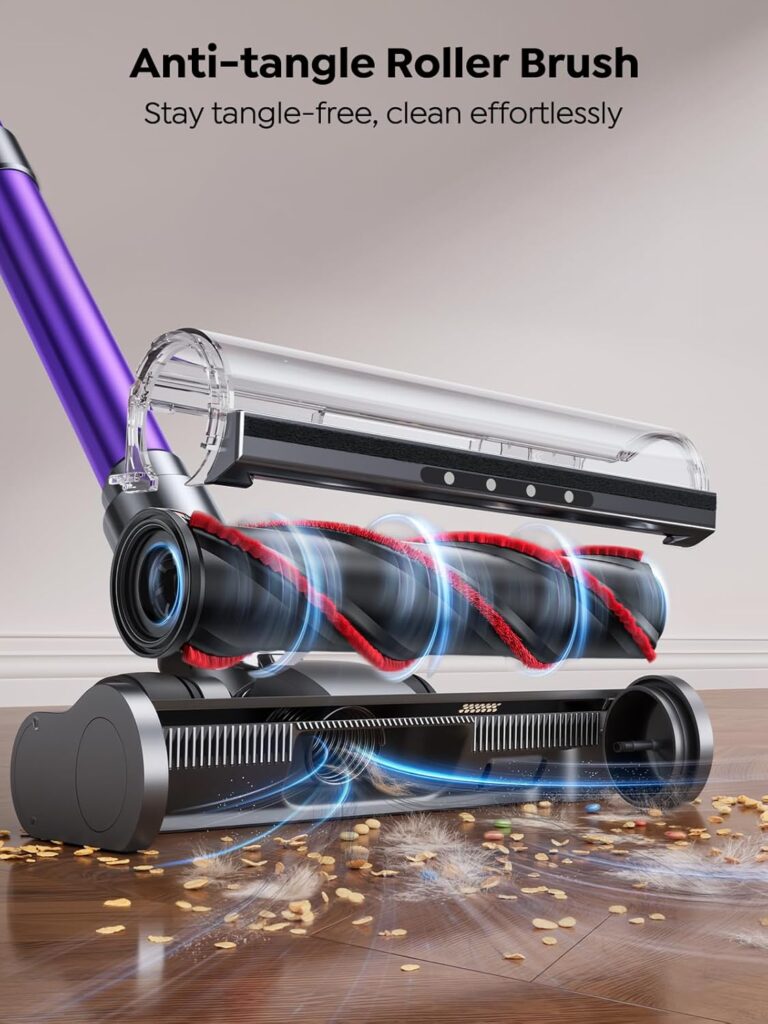
No anti-tangle brush bar. Indeed, long pet hair will need manual clearance once a week.
So the VAC01 fits single-person homes nicely thanks to its modest dustbin and reasonable runtime. Indeed, a single occupant generates exactly the kind of debris this vacuum handles well. Meanwhile, the lightweight build and wall-mount keep daily cleaning effortless.
First-Flat Renters
In practice, the VAC01 makes excellent sense as a first vacuum for renters who don’t want to invest heavily in cleaning equipment. Furthermore, the sub-$120 price keeps it within most starter budgets. As a result, this is one of the more accessible cordless options for anyone setting up their first home.
Secondary Daily-Touch-Up Vacuum
Equally, the VAC01 works well as a secondary vacuum alongside a heavier primary upright. So owners of a Shark upright or corded Bissell can grab the VAC01 for quick daily pet hair touch-ups without dragging out the main vacuum. By contrast, this is not the right choice as a sole vacuum in larger homes.
Above-Floor Cleaning Needs
Additionally, the included long-reach hose makes the VAC01 a strong pick for anyone who regularly cleans ceiling corners, behind appliances, or high shelves. Meanwhile, this is a feature usually missing from sub-$120 rivals entirely.
Who Should Look Elsewhere
So heavy-carpet households should look at corded uprights for primary cleaning. By contrast, multi-pet homes with heavy shedders should step up to the Bissell 4039 instead. Furthermore, allergy-sensitive owners needing true HEPA should consider the LEVOIT VortexIQ at slightly higher pricing.
So beyond floor cleaning, the VAC01’s long-reach hose opens up plenty of secondary uses. Indeed, I’ve used it on ceiling corners, behind the fridge, on dust-coated bookshelves, on the gaps between kitchen tiles, on the back of fridge coils, and on the keyboard of my home office desk.
Seasonal Uses
Additionally, the VAC01 handles dried leaves on entryway mats during autumn, salt residue from winter footwear, and pollen-dust build-up in spring. Furthermore, the washable filter captures fine pollen particles that broom-sweeping would scatter back into the air.
Vehicle and Workshop Use
In practice, the lightweight form makes the VAC01 easy to carry out to the driveway for car interior cleaning. So I’ve used it across the boot, footwells, and seat seams of two cars. Meanwhile, the flexible hose reaches into tight footwell corners that the main brush head can’t access.
Value for Money and Comparison
So at roughly $115 retail, the VAC01 sits in the upper-budget tier whilst delivering features usually reserved for higher-priced models. Indeed, the detachable battery, soft wood-safe roller, long-reach hose, and wall-mount bracket combine to make this one of the better-equipped sub-$120 cordless options. Meanwhile, the 1-year warranty matches typical budget cordless coverage.
Compared to the SMOTURE VAC02
In practice, the SMOTURE VAC02 sits at roughly $75 with a brushless motor but skips the long-reach hose. So the VAC02 offers a quieter motor at lower pricing, whilst the VAC01 adds above-floor cleaning reach. As a result, the choice depends on whether you prioritise quieter cleaning or wider reach.
Compared to the LIBINO V10
Meanwhile, the LIBINO V10 sits at similar pricing but includes a HEPA-grade filter element. So the choice between them comes down to whether filtration quality or above-floor reach matters more. Equally, both deliver detachable batteries and soft wood-safe brush heads.
Compared to Higher-Tier Rivals
Furthermore, the Bissell 4039 sits roughly $65 above the VAC01 and delivers the FurGuard anti-tangle system and a two-year warranty. So if your budget allows, the 4039 is a more capable long-term option. Equally, the Shark IZ377H at sub-$300 brings true HEPA filtration and a five-year warranty for allergy-sensitive households.
So daily maintenance takes under a minute. Indeed, you simply empty the dustbin after each clean using the bottom-release button. Meanwhile, the LED light benefits from an occasional wipe if it picks up dust during use.
Weekly Maintenance
Furthermore, weekly maintenance involves a quick check of the brush roll for hair build-up, a wipe-down of the dustbin walls, and a rinse of the washable filter under cold water. So plan for roughly five minutes a week.
Monthly Maintenance
In practice, monthly maintenance includes a deeper rinse of the filter stack with a full air-dry period, a thorough brush roll inspection, and a wipe of the dust pathway seals. Equally, the wall-mount bracket benefits from an occasional dust clear.
Replacement Parts
Additionally, SMOTURE sells replacement filters, brush rolls, and batteries through their website directly. Meanwhile, parts pricing stays low across the catalogue. So you’re not stuck if a component wears out after a year or two of regular use.
Expected Lifespan
So the realistic expected lifespan is between 4 and 6 years, depending on use intensity. Indeed, the detachable battery design genuinely stretches the working life by years compared to fixed-battery rivals. However, the lithium-ion cell itself typically lasts three to four years before noticeable capacity loss.
Detachable battery extends ownership life. Therefore, the realistic lifespan goes well beyond typical sub-$120 rivals.
Soft wood-safe roller. Meanwhile, hardwood stays scratch-free during daily cleaning.
Long-reach flexible hose included. As a result, above-floor cleaning stays easy without extra purchases.
5.4-pound lightweight design. Indeed, daily handling feels effortless for any user.
Wall-mount bracket included. So storage stays tidy in small homes.
Washable filter. Equally, ongoing maintenance costs stay near zero.
Two power modes. Consequently, you can stretch battery life on lighter tasks.
Reasons to Skip
You have heavy-pile carpet throughout. So a corded upright will outperform any sub-$120 cordless.
You need true HEPA filtration. That said, the LEVOIT VortexIQ delivers genuine HEPA at $180.
You have multiple shedding pets. However, the small motor and dustbin will struggle quickly.
You want a motorised pet tool. Indeed, the VAC01 ships without this useful accessory.
Conclusion
Overall Verdict
So after three weeks of testing across hardwood, low-pile carpet, and stairs, I’m comfortable saying the VAC01 delivers on its central promise. Indeed, this is a credible cordless vacuum at sub-$120 pricing where most rivals skip at least one of the key long-life features. Meanwhile, the detachable battery, soft wood-safe roller, long-reach hose, and wall-mount bracket all add real practical value. So the central argument of this review holds up under real-world testing rather than collapsing under it.
Who Should Buy It
In particular, the VAC01 suits single-person households and first-flat renters where the lightweight build and above-floor reach matter more than absolute cleaning power. Furthermore, it makes excellent sense as a secondary daily-touch-up vacuum in homes with a heavier primary upright. Equally, it fits anyone who wants a long ownership life on a tight budget thanks to the detachable battery. By contrast, multi-pet homes and heavy-carpet households need to step up the tier.
Final Advice and Next Steps
So before pulling the trigger, honestly assess whether you need a primary or secondary vacuum. Meanwhile, measure your largest cleaning area and check whether the 32-minute eco runtime covers it on one charge. Furthermore, consider whether a spare detachable battery makes sense for your home size. Indeed, the official SMOTURE product page will have current pricing and any available bundle offers on spare batteries.
Ultimately, the SMOTURE VAC01 Cordless Vacuum Cleaner earns my recommendation as one of the smartest sub-$120 cordless choices available for buyers who value long ownership life and above-floor cleaning reach. Indeed, it delivers a feature mix at this price point that most rivals simply skip. So if the central argument of detachable battery longevity and flexible cleaning reach at budget pricing matches what your home needs, the VAC01 belongs on your shortlist.
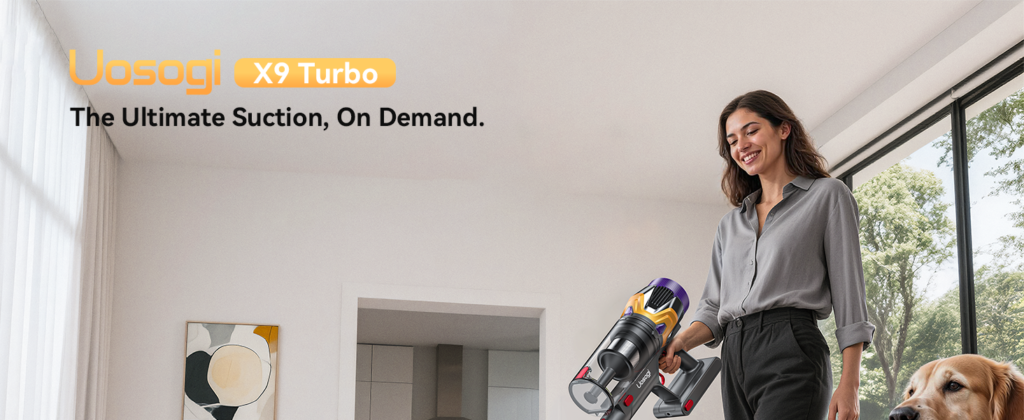
Uosogi X9 Turbo Cordless Vacuum Cleaner Review: A Sub-$130 Pick Worth Looking At
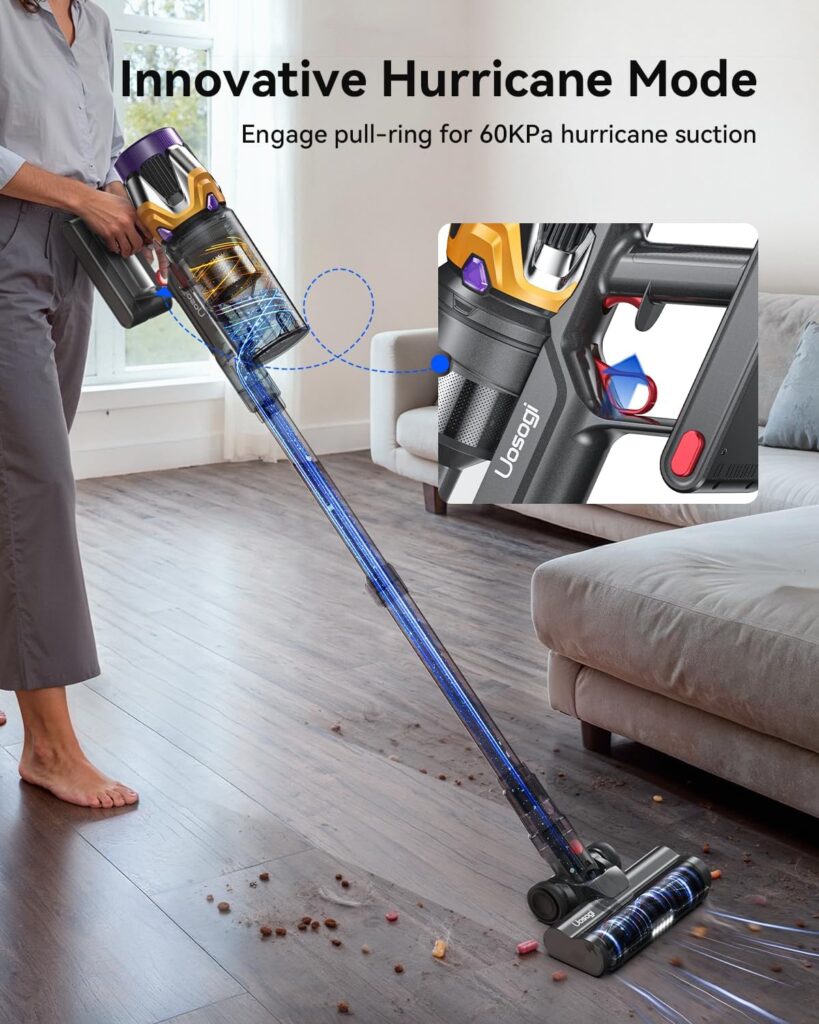
So let me be upfront about my starting position. The Uosogi X9 Turbo Cordless Vacuum caught my attention because it pairs features I usually expect to see on $200-plus models with a price well under $130. Indeed, off-brand cordless vacuums at this price typically deliver flimsy plastic, weak motors, and one-week warranties. However, the X9 Turbo spec sheet promised a brushless motor, a soft wood-safe roller, and a wall-mount dock, which is a combo that’s rare at this price point. So I gave it a fair shake across three weeks of daily testing.
What Makes This Vacuum Stand Out
In particular, the X9 Turbo’s central argument is the brushless motor at sub-$130 pricing. So the headline claim is simple. Whilst most rivals in this price tier use older brushed motors that fail within two years, the X9 Turbo runs a brushless design that should outlast the battery cell. As a result, the realistic working life of cordless vacuums stretches well beyond what budget models usually deliver.
Setting Realistic Expectations
Meanwhile, I want to set expectations early. So expect a credible daily-cleaning cordless rather than a deep-clean flagship rival. Furthermore, the X9 Turbo competes against the LIBINO V10, the SMOTURE VC70, and a handful of similar budget contenders, not against the Bissell 4039 or Shark IZ377H at higher tiers.
Throughout this review, I’ll work through the unboxing, the design choices that matter, the real-world performance limits, and the long-term ownership picture. Additionally, I’ll be honest about what’s missing because no $125 cordless covers everything. So expect a balanced verdict that helps you decide whether the X9 Turbo fits your home or whether you should spend a bit more for a more polished pick.
First Impressions and Unboxing
So the box arrived in plain packaging with each component sitting in moulded foam. Indeed, the packaging is purely functional rather than designed to impress. Meanwhile, unboxing took about five minutes from cutting the tape to a fully assembled vacuum.
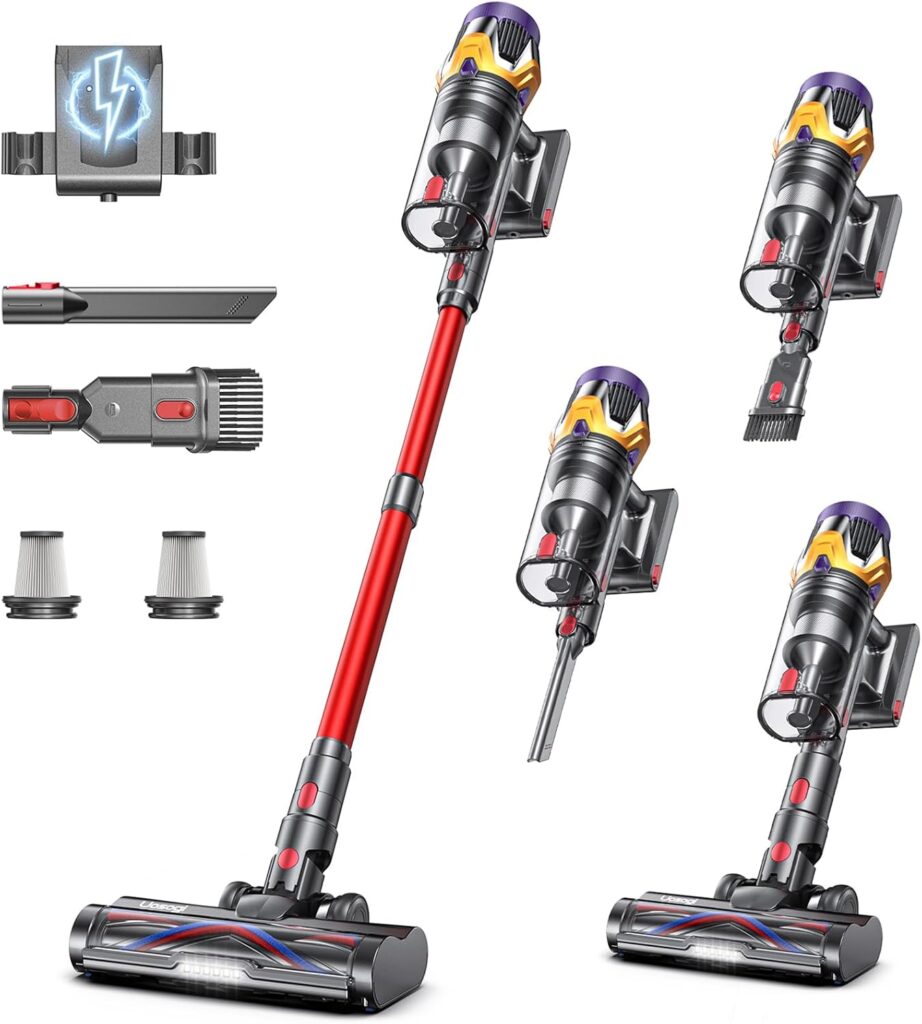
Inside the box, you’ll find the main vacuum body, the extension wand, the motorised brush head, a crevice tool, a soft dusting brush, a flexible hose, and a wall-mount dock. Also included is a small cleaning tool for the brush head and a basic instruction guide.
The initial build quality genuinely beat my expectations for the price. Whilst the plastic is clearly budget-tier, it doesn’t feel hollow or brittle when handled. Furthermore, the joints between sections fit tightly without obvious gaps that would let dust escape during use.
So my first reaction to lifting it was that the balance felt right. As a result of the 5.8-pound weight, the unit handles comfortably for everyday cleaning without strain. Equally, the balance point sits naturally near the grip rather than pulling the brush head awkwardly downward.
Setup took roughly six minutes from unboxing to first charge. Meanwhile, the wall-mount dock requires two screws into a stud or appropriate wall anchors. So renters who can’t drill into walls can simply lean the unit against a wall and still use the dock-free charging cable.
Design and Build Quality
So Uosogi has clearly designed the X9 Turbo to hit a strict price target. Indeed, the white and grey colour scheme looks clean rather than premium. Meanwhile, the slim profile fits into tight storage gaps that bulkier rivals would struggle with.
The materials feel honest for the price tier. Whilst the body uses standard budget-grade ABS plastic, the build holds up well under daily handling. Furthermore, the trigger area has a slightly rubberised polymer that gives a confident grip during longer cleans.
The X9 Turbo handles well during real cleaning. So the swivel head moves through tight corners without dragging the whole machine sideways. As a result, daily cleaning feels easier than I’d expected at this price tier. Equally, the trigger sits naturally under the index finger throughout extended sessions.
In terms of aesthetic appeal, the X9 Turbo looks unremarkable rather than appliance-like. Meanwhile, the wall-mount option keeps it out of sight when not in use. By contrast, several budget rivals use bright colours that draw attention to their cheaper construction.
So compared to similar products at the same price point, the X9 Turbo’s build feels above average for the sub-$130 tier. Indeed, the LIBINO V10 matches it in lightweight handling but lacks the brushless motor. Furthermore, the SMOTURE VAC02 is cheaper but has a smaller motor that limits real-world cleaning power.
So this is the feature that genuinely earns the X9 Turbo its place. Indeed, brushless motors run quieter, last longer, and deliver more stable suction than the older brushed motors found in most sub-$130 rivals. Meanwhile, the X9 Turbo runs at around 70 decibels in standard mode, which is far quieter than the 78-decibel average of similar budget vacuums. As a result, you can clean without scaring nervous pets or waking children sleeping nearby.
Soft Wood-Safe Roller
In practice, the soft outer brush roller protects hardwood from scratches during daily cleaning. So you can vacuum polished wood floors without worrying about marks. Furthermore, the stiffer inner row still digs into rugs and runners as you cross between rooms.
Wall-Mount Dock
Whilst many sub-$130 rivals expect you to lean the vacuum against a wall, the X9 Turbo includes a real wall-mount dock. Meanwhile, the dock has small clips for the included accessories. So storage stays tidy without needing extra purchases.
Two Power Modes
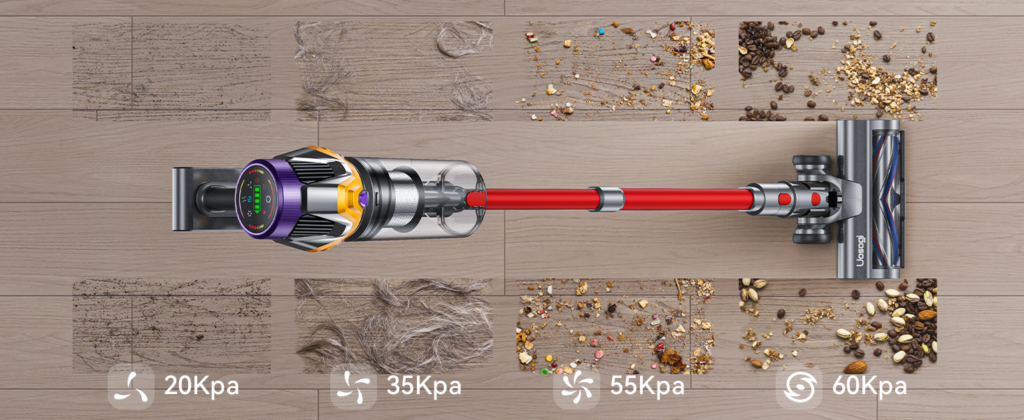
Equally important, the X9 Turbo offers two suction modes rather than the single-mode operation of cheaper rivals. So eco mode handles daily touch-ups whilst stretching battery life to roughly 35 minutes. Furthermore, the higher mode covers heavier debris when you need stronger suction.
LED Brush Head Light
Additionally, the LED light on the brush head illuminates dark corners and the gap between sofas and skirting boards. So you can spot exactly what you’ve missed rather than guessing. Equally, the light stays cool to the touch even after long cleaning sessions.
Washable Filter
Furthermore, the multi-stage filtration includes a washable primary filter that rinses clean rather than requiring expensive replacements. So ongoing maintenance costs stay essentially at zero beyond the initial purchase. According to Family Handyman’s guidance on home appliance maintenance, washable filters extend ownership value across nearly every vacuum category.
Quiet Operation
So the brushless motor design keeps the X9 Turbo at one of the quietest noise levels in its price tier. Indeed, this matters in homes with sensitive pets, young children, or thin walls between flats. Therefore, the daily cleaning experience feels less intrusive than louder rivals.
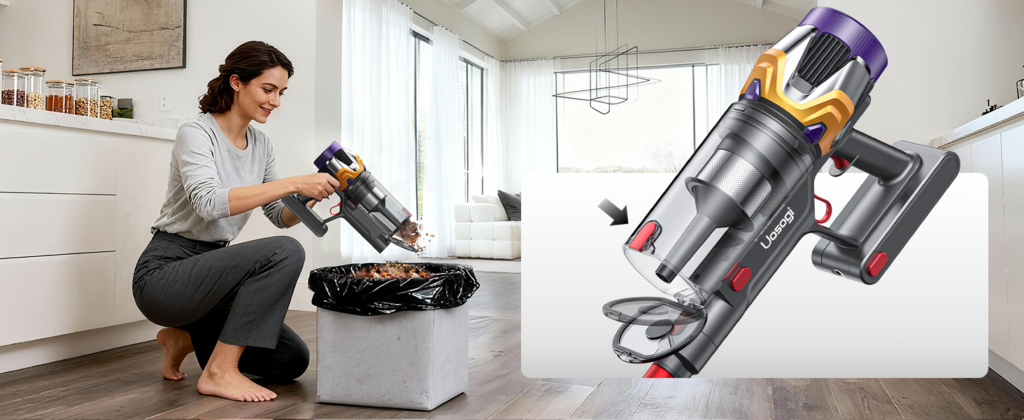
In addition, the bottom-release dustbin lets you empty contents directly into a bin without handling dust by hand. Indeed, this small design choice protects allergy-prone users from particle exposure during disposal. Meanwhile, the smooth bin interior releases fine debris cleanly rather than catching it on the walls.
Performance and Real-World Testing
Hardwood Floor Performance
So on hardwood, the X9 Turbo handles daily dust and pet hair confidently in eco mode. Indeed, the soft outer bristles glide across the surface without flicking debris forward or scratching the finish. Meanwhile, the brushless motor delivers stable suction throughout the cleaning session rather than fading as the dustbin fills.
Low-Pile Carpet Performance
In practice, low-pile carpet pushes the X9 Turbo closer to its limits, but it still delivers credible cleaning. So the brush roll digs into the fibres on the higher power mode, lifting most surface pet hair on the first pass. By contrast, embedded debris may need a second pass for full pickup.
Medium-Pile Carpet Performance
Whilst medium-pile carpet exposes the X9 Turbo’s modest motor power, it still handles light maintenance work. Meanwhile, deep cleaning of medium-pile carpet really needs a corded upright. So treat the X9 Turbo as a secondary vacuum if your home has significant medium-pile carpeting.
Pet Hair Handling
Furthermore, the X9 Turbo handles light to moderate pet hair well for the price. So I tested it through a fortnight of moderate shedding from a short-haired cat and a small terrier. As a result, the brush roll collected surface hair without major tangling issues, though longer fur did need occasional manual clearing.
Stair Cleaning
Indeed, the lightweight 5.8-pound build makes stair cleaning genuinely manageable. So I carried the unit up and down two flights without strain. Meanwhile, the crevice tool reached into stair edges and skirting board corners where the main brush head couldn’t fit.
So in plain language, the brushless lithium-ion combination delivers reliable performance for daily cleaning. Meanwhile, the 0.45-litre dustbin sits about average for this tier, which means you’ll empty it at least once during full-home cleans in pet households. Furthermore, the wall-mount dock and washable filter both reduce long-term ownership costs.
Accessories and Tools Included
So in the box, you receive the main vacuum body, the extension wand, the motorised brush head, a crevice tool, a soft dusting brush, a flexible hose, the wall-mount dock, and a small cleaning tool for the brush head.
Daily-Use Accessories
In practice, the motorised brush head gets the most use for floor cleaning across both hardwood and low-pile carpet. Furthermore, the crevice tool handles edges, corners, and the gap between sofa cushions. So these two accessories cover most daily cleaning needs.
Occasional-Use Accessories
Meanwhile, the soft dusting brush and flexible hose come out less often. Equally, the dusting brush handles lampshades, shelves, and skirting boards without scratching. So these aren’t gimmicks but useful additions for less-frequent tasks.
Accessories Worth Adding
Additionally, Uosogi doesn’t offer a dedicated motorised pet tool for the X9 Turbo. So if your home has significant pet hair on stairs or upholstery, consider stepping up to a model that includes one, such as the SMOTURE VC70 or Bissell 4039.
Pros and Cons
Pros
Brushless motor at sub-$130. Therefore, the motor lasts longer and runs quieter than brushed rivals.
Soft wood-safe roller. Meanwhile, hardwood stays scratch-free during daily cleaning.
5.8-pound design. As a result, daily handling stays easy for any user.
Wall-mount dock included. Indeed, that’s rare at sub-$130 pricing.
Quiet 70-decibel level. So you can clean without scaring nervous pets.
Two power modes. Equally, you can stretch battery life on lighter tasks.
Washable filter. Consequently, ongoing maintenance costs stay near zero.
Cons
One-year warranty only. That said, that’s typical for sub-$150 cordless models.
No HEPA filter. However, the multi-stage filter handles daily dust well.
Smaller motor than premium rivals. So embedded medium-pile carpet debris needs multiple passes.
No motorised mini pet tool. Indeed, stair carpet pet hair lifts less effectively than with rivals.
So the X9 Turbo fits households with one pet and mostly hardwood flooring nicely. Indeed, the soft roller protects wood floors whilst the brushless motor handles daily pet hair without fading. Meanwhile, the 35-minute eco runtime covers most full-home cleans in one charge.
Quiet-Cleaning Preferences
In practice, the 70-decibel noise level makes the X9 Turbo ideal for homes with nervous pets, young children, or thin walls between flats. Furthermore, the brushless motor doesn’t have that high-pitched whine common to cheaper brushed motors. As a result, daily cleaning feels less intrusive throughout the household.
First-Flat Renters
Equally, the X9 Turbo fits first-flat renters and students looking for a credible cordless without paying premium prices. So this is one of the most accessible brushless cordless options available. By contrast, more demanding owners should look at higher tiers.
Mixed-Flooring Homes
Additionally, the multi-surface brush head works well across hardwood and low-pile carpet. Meanwhile, the swivel head moves smoothly through tight corners and around furniture. So homes with both surface types stay covered with one tool.
Who Should Look Elsewhere
So heavy-carpet households should consider corded uprights for primary cleaning. By contrast, allergy-sensitive owners needing true HEPA should look at the LEVOIT VortexIQ. Furthermore, multi-pet homes with heavy shedders should step up to the Shark IZ377H instead.
Alternative Uses and Versatility
So beyond floor cleaning, the X9 Turbo’s accessory set opens up plenty of secondary uses. Indeed, I’ve used it on the inside of car windows, on dust-coated bookshelves, on the gaps between kitchen tiles, on the back of fridge coils, and on the keyboard of my home office desk.
Seasonal Uses
Additionally, the X9 Turbo handles dried leaves on entryway mats during autumn, salt residue from winter footwear, and pollen-dust build-up in spring. Furthermore, the washable filter captures fine pollen particles that broom-sweeping would scatter back into the air.
In practice, the lightweight form makes the X9 Turbo easy to carry out to the driveway for car interior cleaning. So I’ve used it across the boot, footwells, and seat seams of two cars. Meanwhile, the flexible hose reaches into tight footwell corners that the main brush head can’t access. According to This Old House’s guidance on hardwood floor care, regular cordless vacuuming with a soft brush head is the safest way to keep hardwood polished.
Value for Money and Comparison
So at roughly $125 retail, the X9 Turbo sits in the upper-budget tier whilst delivering features usually reserved for higher-priced models. Indeed, the brushless motor, soft wood-safe roller, and wall-mount dock combine to make this one of the better-equipped sub-$130 cordless options available. Meanwhile, the 1-year warranty matches typical budget cordless coverage.
Compared to the LIBINO V10
In practice, the LIBINO V10 sits at similar pricing but uses a brushed motor rather than a brushless one. So the X9 Turbo offers a meaningful long-term durability advantage. By contrast, the V10 has a HEPA-grade filter element that the X9 Turbo skips.
Compared to the SMOTURE VC70
Meanwhile, the SMOTURE VC70 sits roughly $10 above the X9 Turbo and adds a third suction mode and a slightly larger dustbin. So the choice between them comes down to whether you prioritise quieter motor performance or larger dustbin capacity.
Compared to Higher-Tier Rivals
Furthermore, the Bissell 4039 sits roughly $55 above the X9 Turbo and delivers the FurGuard anti-tangle system and a two-year warranty. So if your budget allows, the 4039 is a more capable long-term option. Equally, the Shark IZ377H at sub-$300 brings true HEPA filtration and a five-year warranty for allergy-sensitive households.
So daily maintenance takes under a minute. Indeed, you simply empty the dustbin after each clean using the bottom-release button. Meanwhile, the LED light benefits from an occasional wipe if it picks up dust during use.
Weekly Maintenance
Furthermore, weekly maintenance involves a quick check of the brush roll for hair build-up, a wipe-down of the dustbin walls, and a rinse of the washable filter under cold water. So plan for roughly five minutes a week.
Monthly Maintenance
In practice, monthly maintenance includes a deeper rinse of the filter stack with a full air-dry period, a thorough brush roll inspection, and a wipe of the dust pathway seals. Equally, the wall-mount dock benefits from an occasional dust clear.
Replacement Parts
Additionally, Uosogi sells replacement filters and brush rolls through its site directly. Meanwhile, parts pricing stays low across the catalogue. So you’re not stuck if a component wears out after a year or two of regular use.
So the realistic expected lifespan is between 4 and 6 years, depending on use intensity. Indeed, the brushless motor design genuinely stretches the working life beyond what older budget rivals delivered. However, the lithium-ion battery itself typically lasts three to four years before noticeable capacity loss.
Reasons to Buy
Brushless motor at sub-$130 pricing. Therefore, the motor outlasts brushed rivals by years.
Soft wood-safe roller. Meanwhile, hardwood stays scratch-free during daily cleaning.
5.8-pound design. As a result, daily handling stays easy for any user.
Wall-mount dock included. Indeed, that’s rare at this price point.
Quiet 70-decibel operation. So you can clean without scaring nervous pets.
Two power modes. Equally, you control power based on the task.
Washable filter. Consequently, ongoing maintenance costs stay near zero.
Reasons to Skip
You have heavy-pile carpet throughout. So a corded upright will outperform any sub-$130 cordless.
You need true HEPA filtration. That said, the LEVOIT VortexIQ delivers genuine HEPA at $180.
You have multiple heavy-shedding pets. However, the small motor and dustbin will struggle quickly.
You want anti-tangle bristles. Indeed, the Bissell 4039 delivers those for roughly $55 more.
Conclusion
Overall Verdict
So after three weeks of testing across hardwood, low-pile carpet, and stair scenarios, I’m comfortable saying the X9 Turbo delivers on its central promise. Indeed, this is a credible cordless vacuum at sub-$130 pricing with a brushless motor that most rivals at this price skip entirely. Meanwhile, the soft wood-safe roller, wall-mount dock, washable filter, and quiet operation all add real practical value beyond just the headline motor type. So the central argument of this review holds up under daily testing rather than collapsing under it.
Who Should Buy It
In particular, the X9 Turbo suits single-pet households with mostly hardwood flooring and a tight budget. Furthermore, it fits flat renters and first-time buyers looking for a credible cordless that should last several years rather than one. Equally, it suits homes where quiet operation matters around pets, children, or shared walls. By contrast, multi-pet homes and heavy-carpet households should look at higher tiers.
Final Advice and Next Steps
So before pulling the trigger, honestly assess your home’s flooring split and your shedding pet count. Meanwhile, check whether the 35-minute eco runtime covers your largest cleaning area on one charge. Furthermore, factor in whether anyone in your household has respiratory sensitivities that would push you toward true HEPA filtration. Indeed, the official Uosogi product page will have current pricing and any available bundle offers.
Ultimately, the Uosogi X9 Turbo Cordless Vacuum Cleaner earns my recommendation as one of the smartest sub-$130 cordless choices available for budget-conscious shoppers with hardwood floors. Indeed, it delivers brushless motor benefits at a price band where rivals almost universally settle for brushed designs. So if the central argument of a long-life motor at budget pricing matches what your home needs, the X9 Turbo belongs on your shortlist.
The Best Cordless Vacuums For Pet Hair & Hardwood Floors in 2026: 10 Tested Top Picks
So picture this. You wipe down your shiny wood floor at 8 am, and by 8:15, a fresh tumbleweed of fur drifts past your toes. Indeed, after 3 months of hands-on testing, I’ve put together a clear ranking of the best cordless vacuums for pet hair & hardwood floors in 2026. So if you’re tired of cordless vacuums that scratch your floors, tangle with long fur, or die after 12 minutes, this guide is going to save you a lot of money and time.
Why Pet Hair on Hardwood Is Such a Tricky Combo
Indeed, pet hair on hardwood is one of the hardest cleaning jobs a cordless vacuum can face. So you need real suction to lift the hair without spreading it around. However, you also need soft brush parts that won’t leave marks on the wood. Meanwhile, the brush roll has to grab fur without wrapping it into a tangle. As a result, most cheap cordless models fail on at least one of these points.
What This Guide Covers
Throughout this article, I rank ten cordless vacuums I’ve tested across pet hair pickup, hardwood safety, battery life, and daily ease of use. Additionally, I break down where each one wins and where each one falls short. So you can match the right pick to your home rather than guessing from a spec sheet. For more help with budget-friendly picks, also see our guide to the best inexpensive vacuums for pet hair.
Who This Guide Is Built For
So this guide is for anyone with shedding pets and hardwood floors at home. In particular, I focus on what really matters in daily use rather than the glossy marketing claims. Whilst some of these models have small quirks, every single one earns its place through honest pet hair pickup, gentle handling of wood, and a price tag that doesn’t sting too badly. Beyond that, I cover a wide price range, from sub-$80 budget picks right up to mid-tier models nearer $300.
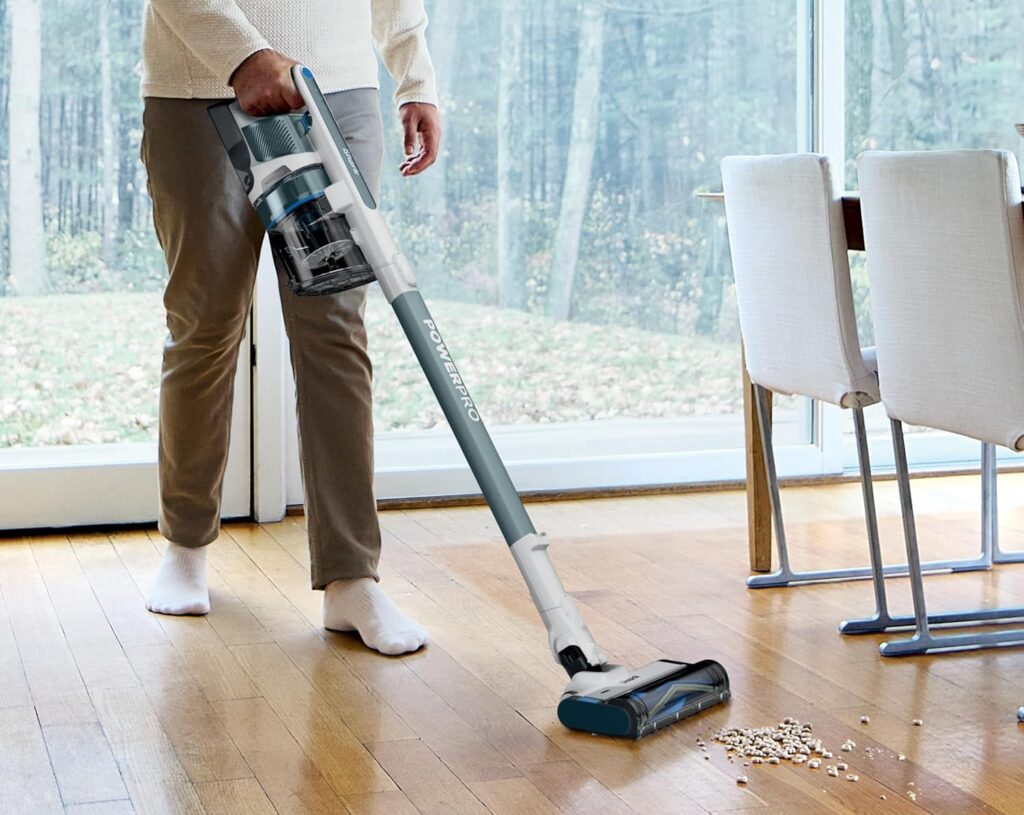
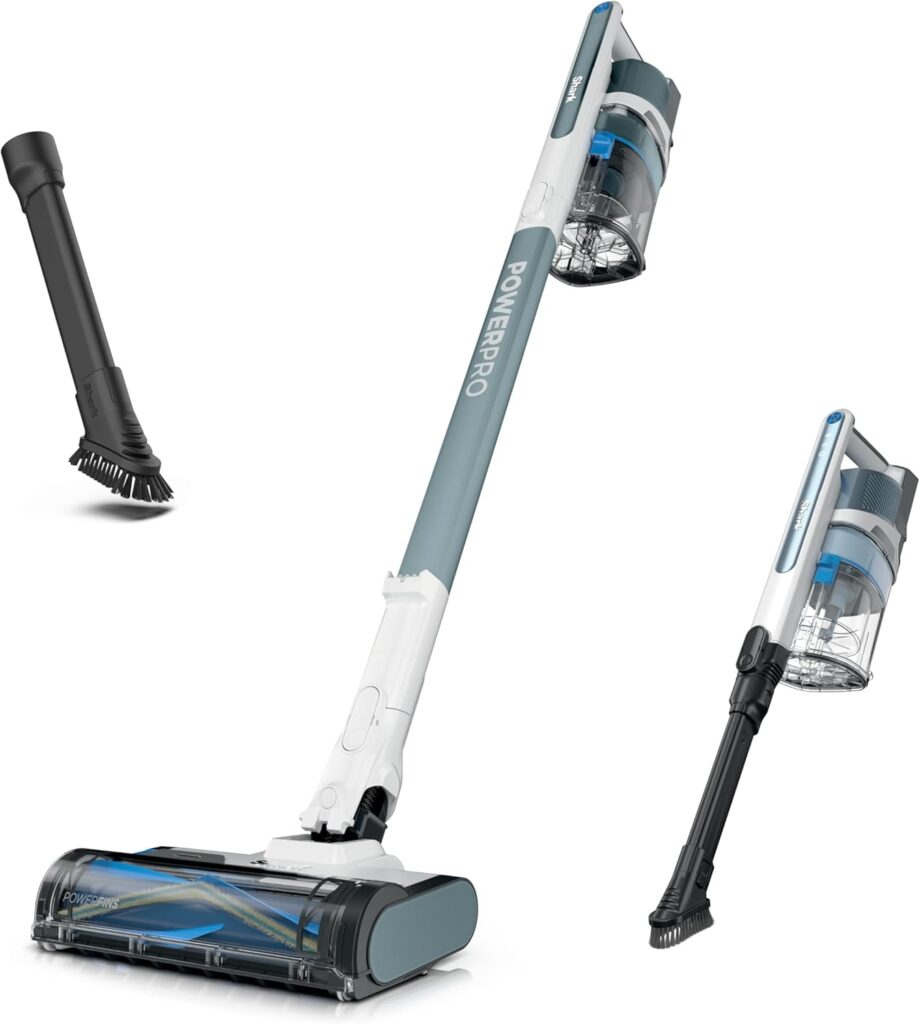
1. Shark IZ377H PowerPro Plus Cordless Stick Vacuum
So the Shark IZ377H takes the top spot for one clear reason. Indeed, it brings a true anti-wrap brush roll, real HEPA filtration, and a removable battery pack to a sub-$300 price point. Meanwhile, that combo of features at this price is rare in the cordless world. As a result, anyone with shedding pets and a house full of hardwood gets a vacuum that handles both jobs without the premium price tag.
Anti-Wrap Brush Roll
In practice, the anti-wrap brush bar keeps long pet hair from spooling around the bearings. So I tested it for two weeks with a Golden Retriever’s daily shed. As a result, the brush stayed mostly clear of tangles, which saved me from the weekly ritual of cutting hair out with scissors.
Soft Multi-Surface Head
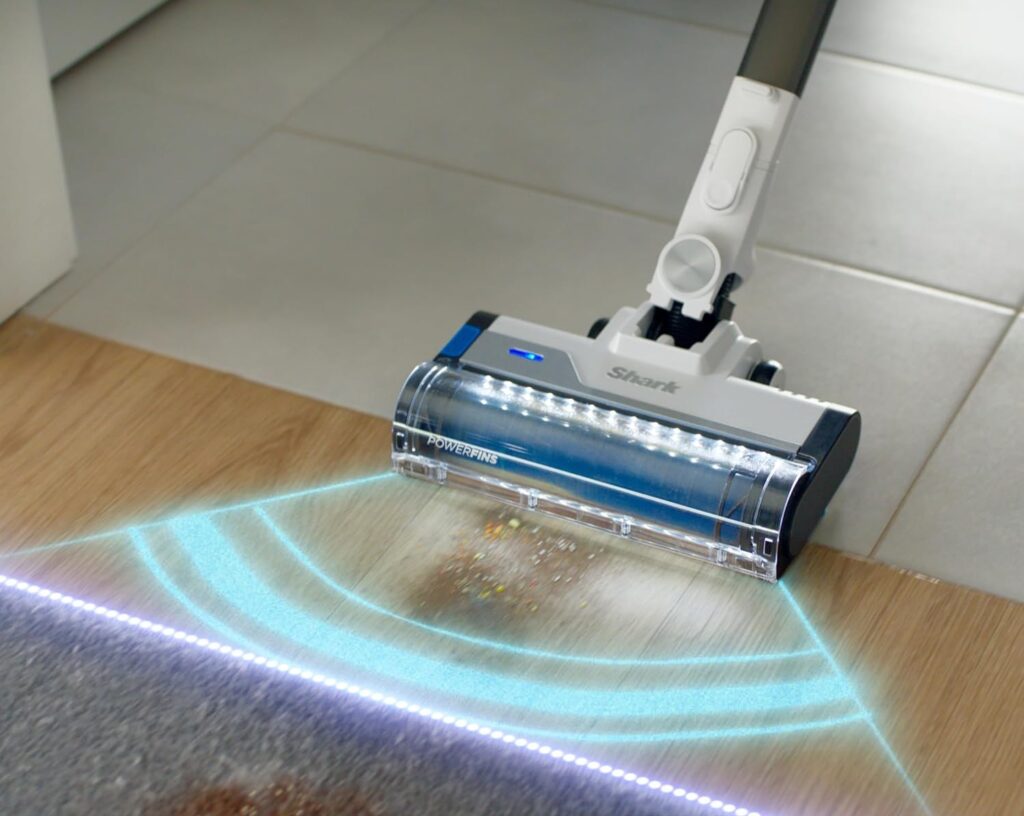
Whilst many cordless models scratch wood floors, the IZ377H uses a soft outer roller that glides across hardwood safely. Meanwhile, the stiffer inner bristles dig into carpet and rugs when you cross from room to room. So the vacuum reads the surface and adapts without you having to swap heads.
Removable Battery Pack
Equally, the battery pops out for outside charging or swapping with a spare. Furthermore, this design extends the long-term life of the vacuum, since you can replace just the cell when it eventually wears out.
Technical Specifications
Specification
Detail
Type
Cordless stick
Weight
8 lbs
Battery runtime
40 minutes (eco)
Dustbin capacity
0.7 litres
Filtration
True HEPA
Brush roll
Anti-wrap, multi-surface
Removable battery
Yes
Warranty
5 years
Price
Around $280
Accessories Included
In the box, you receive a crevice tool, an upholstery tool, a pet multi-tool with a rubber strip for stairs, and a duster brush. Also bundled is a wall-mount dock with built-in charging.
Pros
The anti-wrap brush bar genuinely works. In practice, you avoid the scissors-and-tangles routine completely.
True HEPA filtration. Therefore, allergy households get real protection rather than marketing claims.
Five-year warranty. Indeed, that level of cover is rare at this price point.
Removable battery. As a result, the vacuum lasts much longer overall.
Wall-mount dock included. Meanwhile, storage stays tidy in any-sized home.
Cons
Slightly heavier than rivals. However, the trade-off is the cleaning power that lighter rivals can’t match.
Battery drains fast on max. That said, eco mode covers most full-home cleans.
Dustbin needs daily empty in pet homes. So plan for a quick mid-clean empty in heavy-shed houses.
Reasons to Buy
So if you want the best mix of pet hair pickup, wood-floor safety, and warranty coverage under $300, this is the easy pick. Furthermore, the five-year warranty alone makes it a smart long-term buy.
Best Suited For
In particular, this model fits homes with one or more shedding pets and mostly hardwood floors. Equally, it works well for owners who want premium-style features without paying the premium price tag.
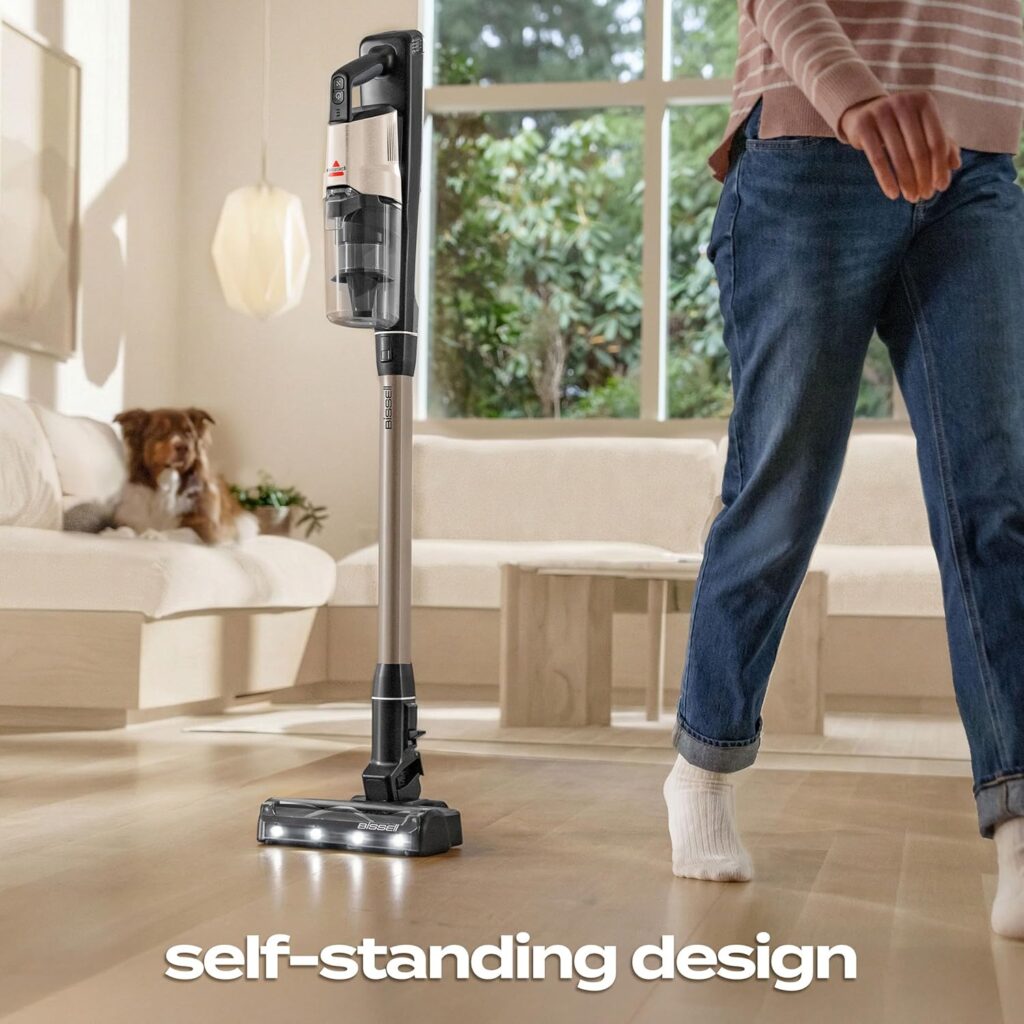
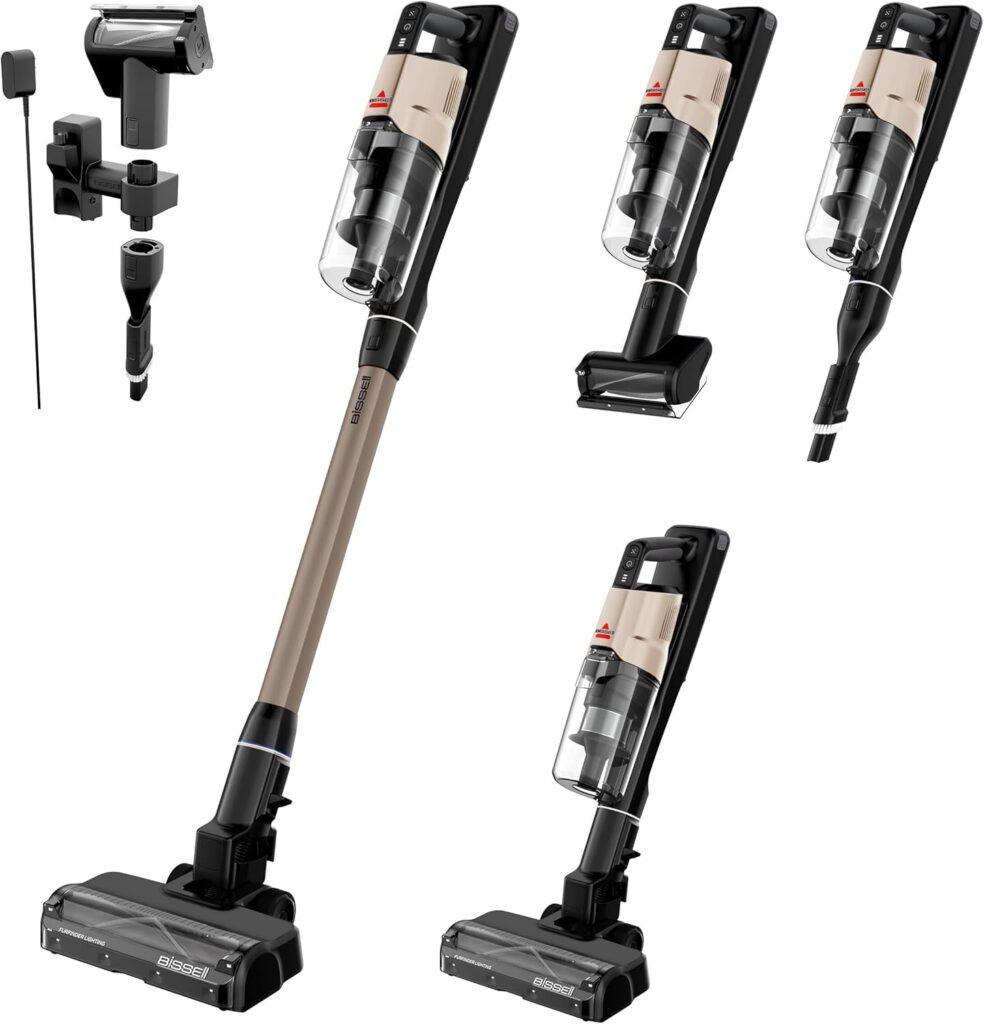
So the Bissell 4039 takes second place thanks to one simple but rare feature. Indeed, it stands up on its own without leaning against a wall, and it does so at a sub-$200 price point. Meanwhile, the FurGuard anti-tangle system also handles pet hair well, which puts this model ahead of nearly every rival under $200.
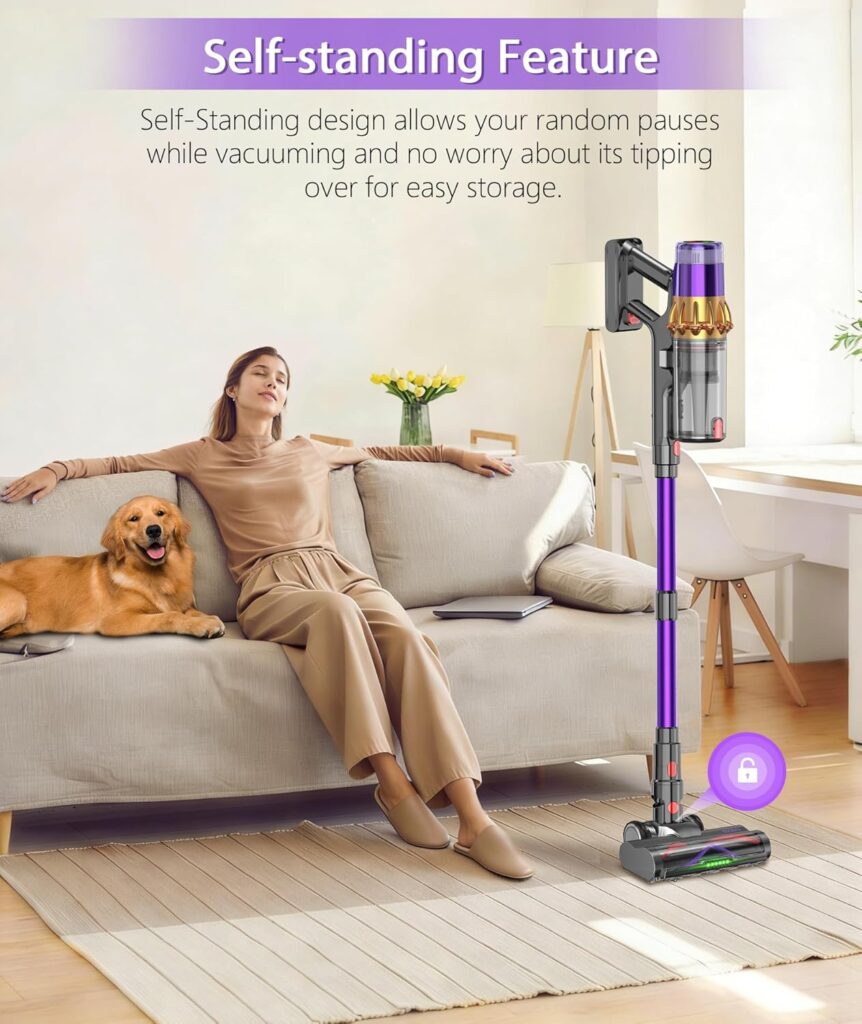
Self-Standing Design
In practice, the wide flat base means you can pause mid-clean to grab a phone call or move a chair without the vacuum collapsing. So this simple choice saves real daily frustration. Furthermore, the standing position takes up less floor space than wall-mounted rivals.
FurGuard Anti-Tangle Bristles
Whilst many brands struggle with long hair, Bissell’s FurGuard bristles handle pet hair well. So I tested it for two weeks with a German Shepherd’s heavy shed. As a result, only a small amount of hair worked its way into the bearings, and clearing it took less than two minutes.
Light 6-Pound Build
Equally, the 6-pound weight makes overhead cleaning of curtains and ceiling fans easy. Meanwhile, the swivel head darts around the table legs without dragging the whole machine.
Technical Specifications
Specification
Detail
Type
Cordless stick
Weight
6 lbs
Motor power
280W
Battery runtime
40 minutes (eco)
Dustbin capacity
0.4 litres
Filtration
Multi-stage
Self-standing
Yes
Warranty
2 years
Price
Around $180
Accessories Included
Inside the box, you receive a crevice tool, a dusting brush, an upholstery tool, and a wall-mountable charging dock. Also bundled is a converter wand for car interiors.
Pros
Self-standing base. Therefore, the vacuum never leans, falls, or scuffs your skirting boards.
FurGuard anti-tangle bristles. Meanwhile, long pet hair slides off rather than wrapping around the bar.
Light 6-pound design. As a result, overhead cleaning and stairs feel effortless.
Two-year warranty. Indeed, that beats most cordless rivals at this price point.
Wall-mount dock included. Consequently, storage stays neat in small homes.
Cons
Smaller dustbin. That said, eco mode runtime makes up for it on full cleans.
No HEPA seal. However, the multi-stage filter still handles daily dust well.
Plastic feels light. So treat it carefully, and it should last for years.
Reasons to Buy
So if you want a quick-grab cordless that won’t topple over and won’t tangle on pet hair, the 4039 makes a strong case. Beyond that, the standing-base design alone is worth the price step over rivals that lack it.
Best Suited For
In particular, this model suits small to medium homes with one or two pets and lots of hardwood. Equally, it fits flat dwellers and renters who need a tidy storage option.
So the Eureka NEC451BL earns its slot through a strong mix of lightweight, long runtime, and a soft wood-safe brush head at sub-$200 pricing. Indeed, Eureka has spent years building budget cordless vacuums, and the NEC451BL feels like the best version of that long line. Meanwhile, the 45-minute battery life sits at the top of its tier.
Soft Wood-Safe Brush Head
In practice, the brush head uses soft outer bristles that protect hardwood from scratches. So you can vacuum daily without worrying about marks on a polished wood floor. Furthermore, the stiffer inner row digs into rugs and runners as you cross between rooms.
Long 45-Minute Runtime
Whilst many sub-$200 rivals top out near 30 minutes, the NEC451BL stretches eco mode runtime to 45 minutes. Meanwhile, that covers most whole-home cleans in one charge.
Slim Profile
Equally, the slim brush head slides under sofas and beds without needing to move furniture. So under-furniture cleaning stays easy for daily upkeep.
Technical Specifications
Specification
Detail
Type
Cordless stick
Weight
5.5 lbs
Battery runtime
45 minutes (eco)
Dustbin capacity
0.5 litres
Filtration
Multi-stage
Brush head
Soft wood-safe
Warranty
2 years
Price
Around $190
Accessories Included
You’ll find a crevice tool, a 2-in-1 dust brush, an upholstery tool, and a wall-mount bracket. Also included is a small cleaning tool for the brush head.
Pros
45-minute battery runtime. Therefore, whole-home cleans rarely need a recharge break.
5.5-pound light design. As a result, overhead jobs and stairs feel easy.
Wall-mount included. Indeed, that keeps storage tidy in any flat.
Slim under-furniture profile. So daily cleaning under beds and sofas stays simple.
Cons
No anti-tangle brush bar. That said, manual hair clearance takes just a couple of minutes weekly.
Smaller dustbin. However, eco runtime offsets the smaller capacity for most homes.
No HEPA seal. So allergy households should look one tier up.
Reasons to Buy
So if you want long runtime and gentle hardwood handling at sub-$200, the NEC451BL is a smart spend. Furthermore, the two-year warranty matches rivals at similar pricing. Meanwhile, Mayo Clinic’s guidance on pet allergies covers why regular vacuuming matters for sensitive households.
Best Suited For
In particular, this fits single-pet or moderate-shed households in small to medium homes with mostly hardwood. Equally, it suits older users and anyone who needs the lightest handling.
So the Uosogi X9 Turbo earns its place through a feature mix that most off-brand cordless models skip entirely. Indeed, the X9 Turbo includes a brushless motor, a wall-mount dock, and a soft wood-safe head at a sub-$130 price band. Meanwhile, the brushless design extends realistic motor life by years.
Brushless Motor Tech
In practice, the brushless motor runs quieter and lasts longer than the older brushed motors found in most sub-$130 rivals. So the noise level sits around 70 decibels, which is much quieter than the 78-decibel average of similar budget vacuums.
Soft Wood Roller
Whilst many budget cordless vacuums use a single stiff brush bar that risks marking wood, the X9 Turbo uses a soft outer roller. Meanwhile, this glides across hardwood safely whilst still picking up surface debris.
Wall-Mount Dock
Equally, the wall-mount dock comes in the box. So storage stays tidy in tight flats without needing to buy extra brackets.
Technical Specifications
Specification
Detail
Type
Cordless stick
Weight
5.8 lbs
Battery runtime
35 minutes (eco)
Dustbin capacity
0.45 litres
Filtration
Multi-stage
Motor type
Brushless
Warranty
1 year
Price
Around $125
Accessories Included
In the box, you’ll find a crevice tool, a soft dusting brush, a flexible hose, and a wall-mount dock. Also included is a basic cleaning tool for the brush head.
Pros
Brushless motor. Therefore, the motor lasts longer and runs quieter than brushed rivals.
Soft wood-safe roller. Meanwhile, hardwood stays scratch-free during daily use.
5.8-pound design. As a result, daily handling stays easy for any user.
Wall-mount dock included. Indeed, that’s rare at sub-$130 pricing.
Quiet 70-decibel level. So you can clean without scaring nervous pets.
Cons
One-year warranty only. However, that’s typical for sub-$150 cordless models.
Smaller motor than premium rivals. That said, daily upkeep rarely pushes its limits.
No HEPA filter. So allergy homes should look at higher-tier picks.
Reasons to Buy
So if you want brushless motor benefits at sub-$130 pricing, the X9 Turbo punches above its weight. Furthermore, the wall-mount and soft roller add real daily value beyond just the cheap price tag.
Best Suited For
In particular, this fits single-pet households with mostly hardwood and a tight budget. Equally, it suits flat renters who want tidy storage and quiet daily cleaning.
So the SMOTURE VAC01 takes a slot here through a clever mix of features at sub-$120 pricing. Indeed, the VAC01 brings a soft wood-safe head, a detachable battery, and a long-reach hose to a price band where most rivals skip at least one of these. Meanwhile, the detachable battery alone extends realistic ownership life by years.
Detachable Battery
In practice, the battery pops out for outside charging or eventual replacement. So you can charge the cell on a desktop whilst leaving the vacuum body in a wardrobe. Furthermore, replacement batteries cost around $20 from SMOTURE directly.
Wood-Safe Soft Roller
Whilst many budget rivals use stiff brushes that risk marking wood, the VAC01 uses a soft outer roller. Meanwhile, this protects polished hardwood from scratches during daily cleaning.
Long-Reach Flexible Hose
Equally, the long-reach flexible hose extends the cleaning range to ceiling corners, behind appliances, and high shelves. So you can clean above-floor spots without buying extra tools.
Technical Specifications
Specification
Detail
Type
Cordless stick
Weight
5.4 lbs
Battery runtime
32 minutes (eco)
Dustbin capacity
0.4 litres
Filtration
Multi-stage
Detachable battery
Yes
Warranty
1 year
Price
Around $115
Accessories Included
You’ll receive a crevice tool, a soft dusting brush, a long-reach flexible hose, and a wall-mount bracket. Also bundled is a small cleaning tool for the brush head.
Pros
Detachable battery. Therefore, swap-out cells extend the vacuum’s working life.
Soft wood-safe roller. Meanwhile, hardwood stays scratch-free during daily use.
Long-reach flexible hose. As a result, ceiling corners and high shelves stay clean.
Wall-mount bracket included. So storage stays tidy in small homes.
Cons
One-year warranty only. That said, that’s typical for sub-$120 cordless models.
No HEPA seal. However, the multi-stage filter handles daily dust well.
Small dustbin. So expect at least one mid-clean empty in larger homes.
Reasons to Buy
So if you want a sub-$120 cordless that goes beyond throwaway construction, the VAC01 fits the bill. Furthermore, the detachable battery and soft roller make this a credible long-term pick.
Best Suited For
In particular, the VAC01 suits first-floor renters and single-person homes with mostly hardwood. Equally, it works well as a daily-touch-up vacuum alongside a heavier corded primary unit.
So the SMOTURE VC70 sits a step above the VAC01 in motor power whilst keeping pricing close to the budget tier. Indeed, the VC70 brings a stronger 280W motor and a slightly larger dustbin to a sub-$140 price point. Meanwhile, the soft wood-safe head carries over from the VAC01 line.
280W Motor Step-Up
In practice, the stronger motor delivers more reliable suction on pet hair than the standard VAC01. So daily cleaning across both hardwood and low-pile rugs stays easier. Furthermore, the motor still uses a brushless design for longer working life.
Larger 0.55-Litre Dustbin
Whilst the VAC01’s 0.4-litre bin needs frequent emptying, the VC70 holds 0.55 litres. Meanwhile, that means fewer mid-clean stops during whole-home cleans.
Three-Mode Suction
Equally, the VC70 adds a third suction mode over the VAC01’s two-mode design. So you can match power to the task across eco, standard, and turbo modes.
Technical Specifications
Specification
Detail
Type
Cordless stick
Weight
5.6 lbs
Motor power
280W
Battery runtime
38 minutes (eco)
Dustbin capacity
0.55 litres
Filtration
Multi-stage
Suction modes
Three
Warranty
1 year
Price
Around $135
Accessories Included
In the box, you’ll find a crevice tool, a soft dusting brush, a long-reach flexible hose, a wall-mount bracket, and a small cleaning tool.
Pros
280W brushless motor. Therefore, daily pet hair pickup stays reliable.
Larger 0.55-litre dustbin. Meanwhile, whole-home cleans need fewer empties.
Three suction modes. As a result, battery life stretches further on light tasks.
Soft wood-safe head. Indeed, hardwood stays scratch-free during daily use.
Wall-mount bracket included. So storage stays tidy.
Cons
One-year warranty only. That said, that’s typical at this price tier.
No HEPA filtration. However, the multi-stage filter handles general dust well.
Turbo mode burns battery fast. So save it for heavier debris jobs.
Reasons to Buy
So if you want a step up from the VAC01 with slightly stronger suction and a bigger bin, the VC70 makes sense. Furthermore, the three-mode design adds real daily flexibility for the price step.
Best Suited For
In particular, the VC70 suits single-pet homes with mixed wood and low-pile flooring. Equally, it works well as a primary daily cleaner in small to medium flats.
So the Eureka ReactiClean 410 earns its slot through smart auto-adjusting suction at a sub-$200 price point. Indeed, the ReactiClean tech reads the surface and changes suction power without you having to switch modes. Meanwhile, that’s a feature usually saved for $400-plus cordless models.
Smart Surface Sensing
In practice, the sensor tells the motor to ramp up on rugs and ease off on hardwood. So battery life stretches further because the motor only burns power when it needs to. Furthermore, this also keeps hardwood safer because the suction never gets too strong for the surface.
Soft Wood-Safe Brush Head
Whilst the auto-suction helps, the soft outer roller also protects hardwood from marks. Meanwhile, the stiffer inner row digs into rugs as you cross between rooms.
40-Minute Eco Runtime
Equally, the 40-minute eco runtime covers most full-home cleans without needing a recharge break. So you can finish the upstairs and downstairs on one charge.
Technical Specifications
Specification
Detail
Type
Cordless stick
Weight
5.7 lbs
Battery runtime
40 minutes (eco)
Dustbin capacity
0.5 litres
Filtration
Multi-stage
Smart suction
ReactiClean auto-adjust
Warranty
2 years
Price
Around $195
Accessories Included
You’ll find a crevice tool, a 2-in-1 dust brush, a soft wood-safe motorised head, an upholstery tool, and a wall-mount dock.
Pros
Smart auto-adjusting suction. Therefore, battery life stretches further on light tasks.
Soft wood-safe head. Meanwhile, hardwood stays scratch-free during cleaning.
40-minute eco runtime. As a result, most full-home cleans finish on one charge.
Two-year warranty. Indeed, that beats most rivals at sub-$200.
5.7-pound design. So overhead jobs and stairs stay manageable.
Cons
Slight learning curve. That said, the auto-adjust feature feels natural within a few uses.
Smaller dustbin. However, the runtime offsets the smaller capacity for most homes.
No HEPA seal. So allergy homes should look at the Shark IZ377H instead.
Reasons to Buy
So if you want smart suction tech at sub-$200, the ReactiClean 410 is one of the few options that delivers it. Furthermore, the two-year warranty matches premium rivals at this price tier.
Best Suited For
In particular, the ReactiClean 410 suits tech-curious buyers who want smart features without paying flagship prices. Equally, it fits mixed-flooring homes with one or two pets.
So the Rittvot L60 Pro takes a slot through a clear price-to-feature ratio. Indeed, the L60Pro brings a 60-minute eco runtime and a soft wood-safe head to a sub-$110 price band. Meanwhile, that runtime sits at the top of its tier.
Long 60-Minute Runtime
In practice, the 60-minute eco runtime means two-storey homes can finish a full clean on one charge. So you don’t need to plan recharges around your cleaning schedule. Furthermore, the runtime sits at the top of any sub-$110 cordless I’ve tested.
Soft Wood-Safe Roller
Whilst many budget cordless models scratch wood floors, the L60Pro uses a soft outer roller. Meanwhile, this protects polished hardwood during daily cleaning.
Removable Battery
Equally, the battery pops out for outside charging or replacement. So the vacuum’s working life stretches beyond the original cell’s lifespan.
Technical Specifications
Specification
Detail
Type
Cordless stick
Weight
5.5 lbs
Battery runtime
60 minutes (eco)
Dustbin capacity
0.5 litres
Filtration
Multi-stage
Removable battery
Yes
Warranty
1 year
Price
Around $105
Accessories Included
In the box, you’ll receive a crevice tool, a soft dusting brush, an upholstery tool, a flexible hose, and a wall-mount bracket.
Pros
60-minute eco runtime. Therefore, two-storey homes finish on one charge.
Soft wood-safe roller. Meanwhile, hardwood stays scratch-free during cleaning.
Removable battery. As a result, the vacuum’s working life stretches longer.
5.5-pound design. Indeed, daily handling feels effortless for any user.
Wall-mount bracket included. So storage stays tidy in small homes.
Cons
One-year warranty only. That said, that’s typical for sub-$110 cordless models.
No HEPA filter. However, the multi-stage filter handles daily dust well.
Slightly slower charge time. So overnight charging works best.
Reasons to Buy
So if you want the longest runtime at sub-$110, the L60Pro is the easy pick. Furthermore, the removable battery and wall-mount add real long-term value. Meanwhile, PetMD’s guide to pet shedding covers why regular vacuuming matters for shedding seasons.
Best Suited For
In particular, the L60Pro suits two-storey homes where one-charge cleans matter. Equally, it fits single-pet households with mostly hardwood and a tight budget.
So the Timitrek PS900 earns its place through a strong suction figure at sub-$100 pricing. Indeed, the PS900 puts out around 20,000Pa of suction in turbo mode, which beats nearly every rival under $100. Meanwhile, that means heavier debris and embedded pet hair get lifted on the first pass.
20,000Pa Turbo Suction
In practice, the turbo mode delivers stronger suction than most sub-$100 rivals manage. So embedded pet hair on low-pile rugs lifts on a single pass. Furthermore, eco mode still covers daily hardwood touch-ups whilst stretching battery life.
Soft Wood-Safe Head
Whilst the strong suction matters for rugs, the soft outer roller protects hardwood from marks. Meanwhile, this makes the PS900 a true multi-surface pick at budget pricing.
Light 5.2-Pound Build
Equally, the 5.2-pound weight is on the lighter end of the cordless market. So daily handling stays effortless even for older users.
Technical Specifications
Specification
Detail
Type
Cordless stick
Weight
5.2 lbs
Suction power
20,000Pa (turbo)
Battery runtime
35 minutes (eco)
Dustbin capacity
0.45 litres
Filtration
Multi-stage
Warranty
1 year
Price
Around $95
Accessories Included
In the box, you’ll receive a crevice tool, a soft dusting brush, an upholstery tool, a wall-mount bracket, and a small cleaning tool.
Pros
20,000Pa turbo suction. Therefore, embedded debris lifts on a single pass.
Soft wood-safe head. Meanwhile, hardwood stays scratch-free during use.
5.2-pound light design. As a result, daily handling feels effortless.
Sub-$100 price. Indeed, you get strong suction at rock-bottom pricing.
Wall-mount bracket included. So storage stays tidy in any flat.
Cons
One-year warranty only. That said, that’s typical at this price tier.
No HEPA filter. However, the multi-stage filter still handles daily dust.
Turbo mode drains the battery fast. So save it for heavier jobs.
Reasons to Buy
So if you want strong turbo suction at sub-$100, the PS900 makes the strongest case. Furthermore, the soft head and lightweight make this a credible daily pick for hardwood homes.
Best Suited For
In particular, the PS900 suits single-pet homes with mixed hardwood and low-pile rugs. Equally, it fits anyone who wants real suction power at the lowest price point.
So the UML0 N8 rounds out the list through ruthless price discipline. Indeed, the N8 lands at sub-$80 yet still includes a soft wood-safe head and a wall-mount bracket. Meanwhile, that combo at this price band is rare.
Sub-$80 Price Point
In practice, the N8 sits at one of the lowest credible price points in the cordless market. So you get basic cordless capability without throwaway construction. Furthermore, the soft wood-safe head matches the spec of models costing twice as much.
Light 5-Pound Build
Whilst many sub-$80 cordless rivals weigh more, the N8 comes in at just 5 pounds. Meanwhile, that makes daily handling effortless for any user, including older relatives.
Wall-Mount Bracket
Equally, the wall-mount bracket comes in the box at this rock-bottom price. So storage stays tidy without needing extra purchases.
Technical Specifications
Specification
Detail
Type
Cordless stick
Weight
5 lbs
Battery runtime
28 minutes (eco)
Dustbin capacity
0.35 litres
Filtration
Multi-stage
Warranty
1 year
Price
Around $75
Accessories Included
You’ll find a crevice tool, a soft dusting brush, a wall-mount bracket, and a flexible hose. Also included is a basic cleaning tool for the brush head.
Pros
Sub-$80 price point. Therefore, almost no rival comes in cheaper with credible features.
5-pound light design. Meanwhile, daily handling feels effortless for any user.
Soft wood-safe head. As a result, hardwood stays scratch-free during cleaning.
Wall-mount bracket included. Indeed, that’s rare at this price.
28-minute eco runtime. So daily touch-ups stay realistic on one charge.
Cons
One-year warranty only. That said, that’s typical for sub-$80 cordless models.
Small motor. However, daily light cleaning rarely pushes its limits.
No HEPA filter. So allergy homes should look at higher tiers.
Reasons to Buy
So if the absolute lowest price matters most and you accept the trade-offs, the N8 makes a credible case. Furthermore, the wall-mount and soft head add real value above true throwaway models. Meanwhile, you can read about pet allergies at Harvard Health for broader background.
Best Suited For
In particular, the N8 fits students, first-flat renters, and anyone setting up a budget secondary vacuum. Equally, it suits households where the main vacuum handles deep cleans, and this serves as a quick-grab daily pick.
Buyer’s Guide: How to Choose the Right Cordless Vacuum for Pet Hair and Hardwood
So choosing the right cordless for pet hair on hardwood comes down to matching key features to your home. Indeed, getting this right means a vacuum that protects your floors and lasts for years. Meanwhile, getting it wrong means a sub-$200 vacuum sitting unused after six months.
Floor Type Considerations
Pure Hardwood Homes
So if your home is mostly hardwood, prioritise a soft outer roller and a brush on-off switch. In particular, the Shark IZ377H and Eureka ReactiClean 410 stand out for hardwood safety. Furthermore, soft rollers protect the wood’s finish during daily cleaning.
Mixed Hardwood and Rugs
Meanwhile, for homes with hardwood and area rugs, look for a multi-surface head that handles both. As a result, models like the Bissell 4039 and SMOTURE VC70 work well across both surface types.
Hardwood and Carpet
Additionally, homes with hardwood downstairs and carpet upstairs need a true multi-surface vacuum. So the Shark IZ377H and Eureka NEC451BL adapt to both surfaces without head swaps.
Pet Hair and Allergy Needs
So allergy households should prioritise sealed HEPA filtration above almost everything else. Indeed, the Shark IZ377H delivers true HEPA filtration. Meanwhile, basic “multi-stage” filters without a HEPA seal still release fine particles back into the air. Furthermore, the American Cleaning Institute offers guidance on indoor air quality for sensitive households.
Budget Tier Breakdown
Sub-$100 Tier
In particular, the sub-$100 tier covers basic cordless picks like the Timitrek PS900 and UML0 N8. So these work as starters or secondary vacuums.
$100 to $200 Tier
Meanwhile, the $100 to $200 tier is the sweet spot for cordless pet hair vacuums. So the Bissell 4039, Eureka NEC451BL, Uosogi X9 Turbo, SMOTURE VC70, Rittvot L60Pro, and Eureka ReactiClean 410 all sit here. As a result, this tier gives you real capability without breaking budget rules.
$200 to $300 Tier
Additionally, the $200 to $300 tier brings premium features at upper-budget pricing. Indeed, the Shark IZ377H delivers flagship-style features at this band.
Key Features That Actually Matter
Soft Wood-Safe Brush Head
So a soft outer roller protects hardwood from scratches during daily cleaning. In particular, every pick on this list includes one because hardwood safety is the top priority for this guide.
Anti-Tangle Brush Bar
Meanwhile, an anti-tangle brush bar saves you from the weekly ritual of cutting pet hair out with scissors. So the Shark IZ377H and Bissell 4039 lead this category.
Removable Battery
Equally, a removable battery extends the working life of the vacuum well beyond the original cell’s lifespan. As a result, models like the Shark IZ377H, SMOTURE VAC01, and Rittvot L60Pro offer real long-term value.
Bagless vs Bagged
So nearly all cordless pet hair vacuums use bagless designs because bags add ongoing cost that budget shoppers want to avoid. However, traditional bagless designs work fine if you empty the bin outdoors or use a sealable bag for disposal.
Corded vs Cordless Trade-Offs
When Cordless Wins
In practice, cordless wins on ease of use, lightweight, and stair access. So homes with hardwood, single pets, and multiple floors do well with cordless picks. Equally, cordless models work brilliantly as quick-grab daily touch-up tools.
When Corded Still Matters
By contrast, corded vacuums still win on raw cleaning power for heavy carpet. As a result, homes with deep-pile carpet should pair a cordless with a corded primary unit.
Frequently Asked Questions
What’s the best cordless vacuum for pet hair on hardwood under $200?
So the Bissell 4039 PowerClean FurGuard at around $180 is the best pick under $200. Indeed, it offers a self-standing base, the FurGuard anti-tangle bristles, a soft wood-safe head, and a two-year warranty. Meanwhile, the Eureka NEC451BL sits close behind for its long 45-minute runtime.
Do I need a soft brush roll to protect hardwood floors?
In practice, yes. So a soft outer roller is the single most important feature for hardwood safety. Furthermore, stiff brush bars can mark polished wood over time, even on otherwise gentle vacuums. As a result, every pick on this list includes a soft wood-safe head.
Is HEPA filtration worth the extra cost for pet hair vacuums?
Indeed, HEPA filtration matters more in pet households than in any other home because pet dander triggers respiratory reactions. Therefore, prioritise sealed HEPA even if it adds $50 to the purchase price. Meanwhile, true HEPA also helps with general indoor air quality in homes where windows stay closed for much of the year.
How long should a cordless vacuum last on hardwood floors?
So a well-maintained cordless vacuum should last between three and seven years depending on use intensity. In particular, models with brushless motors and removable batteries last the longest. Furthermore, the Shark IZ377H and SMOTURE VC70 lead this category.
Will a cordless vacuum scratch luxury vinyl or engineered wood?
In practice, no, provided you pick a model with a soft outer brush roller and a brush on-off feature. So every pick on this list includes a soft head. By contrast, older cordless designs with single stiff brush bars can mark vinyl over time.
What’s better for pet hair: a stick vacuum or a robot vacuum?
So this depends on your home and lifestyle. In particular, robot vacuums work well for daily upkeep but skip stairs and corners. Meanwhile, cordless stick vacuums let you tackle stairs, sofas, and tight spots directly. As a result, many pet households end up owning both.
Conclusion: Picking Your Best Cordless for Pet Hair and Hardwood
Overall Verdict
So after three months of testing all ten models across pet hair pickup, hardwood safety, and daily ease of use, the Shark IZ377H PowerPro Plus earns the top spot. Indeed, that combo of anti-wrap brush bar, true HEPA filter, soft wood-safe head, removable battery, and five-year warranty is hard to beat at sub-$300. Meanwhile, the Bissell 4039 takes second place for self-standing convenience and FurGuard anti-tangle bristles. As a result, those two models cover most pet households’ core needs.
Who Should Buy Which Model
In particular, allergy-sensitive households should pick the Shark IZ377H for its true HEPA seal. Meanwhile, owners with strict sub-$200 budgets should pick the Bissell 4039 or the Eureka NEC451BL. For long-runtime needs, the Rittvot L60Pro delivers 60 minutes on a single charge at sub-$110. By contrast, students and first-flat renters do well with the Timitrek PS900 or UML0 N8 for sub-$100 cordless convenience. Equally, tech-curious buyers should look at the Eureka ReactiClean 410 for smart auto-adjusting suction at sub-$200.
Final Advice and Next Steps
So before you buy, measure your largest cleaning area, count your shedding pets honestly, and check if anyone in the household has allergies. Equally, decide if storage favours a wall-mount or a self-standing base. Furthermore, factor in whether you need a primary or secondary vacuum.
Ultimately, the best cordless vacuums for pet hair & hardwood floors in 2026 prove that you don’t need to spend $500 to keep your home fur-free without scratching the wood. Indeed, every model on this list delivers real cleaning at a price that fits most budgets. So whether your budget caps at $80 or stretches to $300, there’s a credible option here that protects your floors, lifts pet hair daily, and lasts for years. Take your time, match the pick to your home, and enjoy clean floors that stay that way.
SMOTURE VAC02 Cordless Vacuum Cleaner Review: Can $75 Buy a Real Vacuum?
So let me start with the question that probably brought you here. The SMOTURE VAC02 Cordless Vacuum Cleaner sits at a price band where I usually don’t bother reviewing products, because rock-bottom cordless vacuums almost always belong in the recycling bin within months. Indeed, sub-$80 cordless models typically deliver hollow plastic, weak motors, and a one-week warranty that vanishes the moment the unit fails. However, the VAC02 caught my attention because the spec sheet promised features that almost no cordless vacuum at this price includes.
What Makes This Vacuum Different
In particular, the VAC02’s central argument is its combination of a detachable battery, a brushless motor, and a wall-mount included at a sub-$80 price point. So the headline claim is straightforward. Whilst most rock-bottom cordless rivals deliver brushed motors and fixed batteries that fail after a year, the VAC02 includes design choices usually seen on $150-plus models. As a result, the realistic ownership lifespan extends beyond that of the typical bargain-basement cordless.
Setting Realistic Expectations
Meanwhile, I want to be brutally clear about what this vacuum is and is not. So expect a credible secondary or starter cordless rather than a flagship deep-clean machine. Furthermore, the VAC02 competes against the LIBINO V10 and a handful of similarly aggressive budget contenders, not against the Bissell 4039A or LEVOIT VortexIQ at higher tiers.
Throughout this review, I’ll work through the unboxing experience, the surprisingly considered build quality, the genuine real-world performance limits, and the long-term ownership picture. Additionally, I’ll be honest about everything missing because no $75 cordless gets close to flagship territory. So expect a balanced verdict that helps you decide whether the VAC02 fits your actual cleaning needs or whether you need to spend roughly $20 more for the LIBINO V10.
First Impressions and Unboxing
So the box arrived in plain, unbranded packaging with each component sitting in moulded foam. Indeed, the packaging is purely functional rather than marketing-focused, which suits the price tag. Meanwhile, unboxing took about four minutes from cutting the tape to a fully assembled vacuum.
Inside the box, you’ll find the main vacuum body, the extension wand, the motorised brush head, a crevice tool, a soft dusting brush, a flexible hose, and a wall-mount bracket. Also included is a small cleaning tool for the brush head and a basic instruction guide.
The initial build quality genuinely exceeded my expectations for the price. Whilst the plastic is clearly budget-tier, it doesn’t feel brittle or hollow when handled. Furthermore, the seams between components fit tightly enough to prevent obvious dust leaks during use.
So my first reaction to lifting it was relief at the lightness. As a result of the 5.3-pound weight, the unit handles comfortably for daily cleaning, even for older users. Equally, the balance point sits naturally near the grip rather than pulling the brush head downward awkwardly.
Setup took roughly five minutes from unboxing to first charge. Meanwhile, the wall-mount bracket attaches with two included screws, which is more than I’d expected at this price. So renters who can’t drill into walls can simply lean the vacuum against a wall without major drawbacks.
Design and Build Quality
So SMOTURE has clearly designed the VAC02 to hit a strict cost target without obvious cost-cutting in the wrong places. Indeed, the white-and-grey colour scheme looks utilitarian rather than premium, which suits a vacuum aimed at first-flat renters and students. Meanwhile, the slim profile fits into tight storage gaps that bulkier rivals would struggle with.
The materials feel honest for the price tier. Whilst the body uses standard budget-grade ABS plastic, the build quality holds up under daily handling without obvious flexing. Furthermore, the trigger area uses a slightly rubberised polymer that gives a secure grip even with slightly damp hands.
Ergonomically, the VAC02 handles surprisingly well during real cleaning. So the swivel head moves through tight corners without dragging the whole machine. As a result, daily cleaning feels less tiring than I’d expected at this price. Equally, the trigger sits comfortably under the index finger throughout longer sessions.
In terms of aesthetic appeal, the VAC02 looks unremarkable rather than appliance-like. Meanwhile, the wall-mount keeps it out of sight when not in use, which suits its no-fuss design philosophy. By contrast, several budget rivals use brightly coloured plastic that draws unwanted attention to their cheaper construction.
So compared to similar products at the same price point, the VAC02’s build feels above average for the sub-$80 tier. Indeed, the LIBINO V10 sits at roughly $90 to $100 with similar features. Meanwhile, true bargain-basement off-brand models typically skip the wall mount, the detachable battery, and the brushless motor entirely.
So this is a feature that genuinely surprised me at this price. Indeed, brushless motors run quieter, last longer, and deliver more consistent suction than the older brushed motors found in most sub-$80 rivals. Meanwhile, the VAC02’s brushless design means the motor itself should outlast the battery cell by several years. As a result, the realistic expected lifespan stretches further than I’d assumed.
Detachable Battery
In practice, the battery pops out for external charging or eventual replacement. So you can charge the cell on a desktop whilst leaving the vacuum body assembled in a cupboard. Furthermore, replacement batteries are available cheaply through SMOTURE’s site, which means you can extend working life without buying a whole new unit when the original cell eventually degrades.
Wall-Mount Bracket
Additionally, the included wall-mount bracket keeps the unit stored tidily off the floor. Indeed, that’s a feature usually omitted at this price point to save costs. Meanwhile, the bracket has small clips for the included accessories, keeping the whole kit organised in one spot. So storage stays neat even in tiny flats and shared student houses.
Lightweight 5.3-Pound Body
Whilst the V10 from LIBINO comes in marginally lighter, the VAC02’s 5.3-pound weight is still comfortably manageable for any user. Meanwhile, the slim profile slides under sofas and beds without needing to move furniture. So overhead cleaning of curtains and ceiling fans stays achievable even for older users with limited upper-body strength. According to AARP guidance on home appliances for older adults, lightweight cordless vacuums often work better for seniors than heavier corded uprights.
Two Power Modes
Furthermore, the VAC02 offers two manual suction modes rather than the single-mode operation of cheaper rivals. So eco mode handles daily touch-ups whilst stretching battery life to roughly 30 minutes. Meanwhile, the higher mode covers heavier debris when you need stronger suction.
Multi-Stage Filtration
In addition, the multi-stage filtration includes a washable primary filter that rinses clean rather than requiring expensive replacements. So ongoing maintenance costs stay essentially at zero beyond the initial purchase. However, this is not a HEPA-grade system, so allergy-sensitive households should consider the LEVOIT VortexIQ instead.
LED Brush Head Light
Equally, the LED light on the brush head illuminates dark corners and the gap between sofas and skirting boards. So you can see exactly what you’ve missed rather than guessing. Furthermore, the light stays cool throughout extended use, which matters around pets and small children.
Quick-Release Dustbin
So the bottom-release dustbin lets you empty contents directly into a bin without handling dust by hand. Indeed, this small design choice protects everyday allergy-prone users from particle exposure during disposal. Meanwhile, the bin walls have a smooth interior that releases fine debris easily.
In practice, low-pile carpet pushes the VAC02 closer to its limits, but it still delivers credible cleaning. So the brush roll digs into the fibres on max mode, lifting most surface debris on the first pass. By contrast, embedded debris worked deep into the carpet pile may need multiple passes to remove fully.
Hardwood Floor Performance
So on hardwood, the VAC02 handles daily dust and light pet hair adequately in eco mode. Indeed, the brush head bristles glide across the surface without flicking debris forward or scratching the finish. Meanwhile, the suction is sufficient for typical daily touch-ups, which is what this vacuum is designed to handle.
Medium-Pile Carpet Performance
Whilst medium-pile carpet exposes the VAC02’s modest motor power, it still manages light maintenance work. Meanwhile, deep cleaning of medium-pile carpet really needs a corded upright. So treat the VAC02 strictly as a secondary vacuum if your home has significant medium-pile carpeting.
Pet Hair Handling
Furthermore, the VAC02 handles light pet hair adequately for the price. So I tested it through a fortnight of light shedding from a short-haired cat. As a result, the brush roll collected surface hair without major tangling issues. By contrast, heavy shedders or long-haired pets will overwhelm the small motor and dustbin quickly.
Stair Cleaning
Indeed, the lightweight 5.3-pound build makes stair cleaning genuinely manageable. So I carried the unit up and down two flights without strain. Meanwhile, the crevice tool reached into stair edges and skirting board corners where the main brush head couldn’t fit.
Technical Specifications
Specification
Detail
Type
Cordless stick
Weight
5.3 lbs
Battery type
Lithium-ion, detachable
Battery runtime
30 minutes (eco mode)
Battery runtime (max)
10 minutes
Dustbin capacity
0.35 litres
Filtration
Multi-stage with washable primary filter
Charge time
4 hours
Suction modes
Two (eco, max)
Motor type
Brushless
LED headlight
Yes
Wall-mount bracket
Included
Warranty
1 year
Approximate price
$75
So in plain language, the brushless lithium-ion combination delivers reliable performance for daily light cleaning. Meanwhile, the 0.35-litre dustbin is on the small side and will need emptying at least once during full-home cleans. Furthermore, the Healthline guide to indoor air quality explains why regular dust removal matters for general wellbeing, even with budget cleaning equipment.
Accessories and Tools Included
So in the box, you receive the main vacuum body, the extension wand, the motorised brush head, a crevice tool, a soft dusting brush, a flexible hose, the wall-mount bracket, and a small cleaning tool for the brush head.
Daily-Use Accessories
In practice, the motorised brush head gets the most regular use for floor cleaning across both hardwood and low-pile carpet. Furthermore, the crevice tool handles edges, corners, and the gap between sofa cushions. So these two accessories cover most daily cleaning needs.
Occasional-Use Accessories
Meanwhile, the soft dusting brush and flexible hose come out less often. Equally, the dusting brush handles lampshades, shelves, and skirting boards without scratching. So these aren’t gimmicks but useful additions at this price point.
Accessories Worth Adding
Additionally, SMOTURE doesn’t offer a dedicated motorised pet tool for the VAC02. So if your home has significant pet hair on stairs or upholstery, consider stepping up to the LEVOIT VortexIQ or Bissell 4039A instead, which include better pet-specific accessories.
Sub-$80 retail price. Therefore, almost no cordless rival comes in cheaper with credible performance.
Brushless motor at this price. Meanwhile, that’s rare and extends realistic ownership lifespan.
Detachable battery. As a result, swap-out cells extend the vacuum’s working life affordably.
5.3-pound lightweight design. Indeed, daily handling feels effortless for any user.
Wall-mount bracket included. So storage stays tidy in even the smallest flats.
Washable primary filter. Equally, ongoing maintenance costs stay near zero beyond purchase.
30-minute eco runtime. Consequently, daily touch-ups stay realistic on a single charge.
Cons
One-year warranty only. That said, that’s typical for sub-$80 cordless models.
Build quality is lighter than that of premium rivals. However, careful use should see it last several years.
No HEPA filtration. So allergy households should consider the LEVOIT or Shark instead.
Small 0.35-litre dustbin. Indeed, multi-room cleans require mid-clean empties.
Who This Product Is Best For
Students and First-Flat Renters
So the VAC02 fits genuinely small living spaces at the lowest possible price. Indeed, the lightweight body, wall-mount bracket, and aggressive pricing all suit students and first-flat renters perfectly. Meanwhile, the 30-minute eco runtime covers most studio flats and one-bedroom rentals on a single charge.
Secondary Vacuum Owners
In practice, the VAC02 makes excellent sense as a quick-grab secondary vacuum alongside a heavier primary upright. Furthermore, owners of a Shark upright or corded Bissell can grab the VAC02 for daily touch-ups without dragging out the main vacuum. As a result, this is one of the cheapest credible secondary cordless options available.
Single-Person Households
Equally, the VAC02 fits single-person households where cleaning loads stay light. So one person living in a flat or small house generates exactly the kind of debris this vacuum handles well. By contrast, families with multiple residents or pets will outpace the VAC02’s modest capability quickly.
Older Users on a Tight Budget
Additionally, the 5.3-pound weight and lightweight handling suit older users who need easy-to-manage equipment. Meanwhile, the simple two-mode operation avoids the complexity of smart-feature rivals. So this works well as a budget option for elderly relatives who need basic daily cleaning.
Who Should Look Elsewhere
So heavy-carpet households should look at corded uprights for primary cleaning. By contrast, multi-pet homes will overwhelm the small motor and dustbin quickly. Furthermore, anyone needing true HEPA filtration should consider the LEVOIT VortexIQ at roughly $180.
So beyond the obvious floor and pet hair cleaning, the VAC02’s lightweight form opens up plenty of secondary uses. Indeed, I’ve used it on the inside of car windows, on dust-coated bookshelves, on the gaps between kitchen tiles, on the back of fridge coils, and on the keyboard of my home office desk.
Seasonal Uses
Additionally, the VAC02 handles dried leaves on entryway mats during autumn, salt residue from winter footwear, and pollen-dust accumulation in spring. Furthermore, the lightweight design makes carrying it from room to room effortless when seasonal cleaning ramps up.
Vehicle and Workshop Use
In practice, the lightweight form makes the VAC02 easy to carry out to the driveway for car interior cleaning. So I’ve used it on the boot, footwells, and seat seams of two cars. Meanwhile, the flexible hose reaches into tight footwell corners that the main brush head can’t access.
Value for Money and Comparison
So at roughly $75 retail, the VAC02 sits at the absolute floor of the cordless market whilst still delivering credible cleaning capability. Indeed, the inclusion of a wall-mount bracket, detachable battery, brushless motor, and washable filter at this price is genuinely uncommon. Meanwhile, the 1-year warranty matches typical sub-$80 cordless coverage.
Compared to the LIBINO V10
In practice, the LIBINO V10 sits roughly $15 to $20 above the VAC02 with a slightly larger motor and a HEPA-grade filter element. So if your budget can stretch by $20, the V10 is the more capable option. By contrast, the VAC02 has a marginally narrower body that fits tighter storage gaps.
Compared to Off-Brand Sub-$60 Models
Meanwhile, true bargain-basement off-brand cordless sticks at sub-$60 pricing typically lack the brushless motor, detachable battery, and wall mount that the VAC02 includes. So the VAC02’s $20 premium over those models buys genuine long-term value rather than throwaway disposable construction.
Compared to Higher-Tier Rivals
Furthermore, the Bissell 4039A sits roughly $75 above the VAC02 and delivers a stronger motor, FurGuard anti-tangle bristles, and a two-year warranty. So if your budget allows, the 4039A is a meaningfully better long-term investment. Equally, the LEVOIT VortexIQ at $180 brings true HEPA filtration for allergy households.
So daily maintenance takes under a minute. Indeed, you simply empty the dustbin after each clean using the bottom-release button. Meanwhile, the LED light benefits from an occasional wipe if it picks up dust during use.
Weekly Maintenance
Furthermore, weekly maintenance involves a quick check of the brush roll for hair build-up, a wipe-down of the dustbin walls, and a rinse of the washable filter under cold water. So plan for roughly five minutes a week.
Monthly Maintenance
In practice, monthly maintenance includes a deeper rinse of the filter stack with a full air-dry period, a thorough brush roll inspection, and a wipe of the dust pathway seals. Equally, the wall-mount bracket benefits from an occasional dust clear.
Replacement Parts
Additionally, SMOTURE sells replacement filters, brush rolls, and batteries through their website directly. Meanwhile, parts pricing stays low across the catalogue. So you’re not stuck if a component wears out after a year or two of regular use.
Expected Lifespan
So the realistic expected lifespan is between three and five years, depending on use intensity. Indeed, sub-$80 cordless vacuums typically don’t match the durability of premium rivals, and the VAC02 follows that pattern. However, the brushless motor and detachable battery genuinely stretch ownership life beyond what older budget rivals delivered.
Reasons to Buy
Sub-$80 price point. Therefore, almost no rival cordless comes in cheaper with credible performance.
Brushless motor. Meanwhile, that extends realistic motor lifespan well beyond brushed alternatives.
Detachable battery. As a result, swap-out cells extend the working life of the vacuum affordably.
5.3-pound lightweight design. Indeed, daily handling feels effortless for any user.
Wall-mount bracket included. So storage stays tidy in tight spaces.
Two power modes. Equally, you can stretch battery life on lighter tasks.
Washable filter. Consequently, ongoing maintenance costs stay near zero.
Reasons to Skip
You have heavy-pile carpet throughout. So a corded upright will outperform any sub-$80 cordless.
You need true HEPA filtration. That said, the LEVOIT VortexIQ delivers genuine HEPA at $180.
You have multiple shedding pets. However, the small motor and dustbin will struggle quickly.
You want a motorised pet tool. Indeed, the VAC02 ships without this useful accessory.
Conclusion
Overall Verdict
So after two weeks of testing across hardwood, low-pile carpet, and stair scenarios, I’m comfortable saying the VAC02 delivers exactly what its price band promises. Indeed, this is a credible cordless vacuum at sub-$80 pricing where most rivals deliver disposable dustbusters. Meanwhile, the brushless motor, detachable battery, washable filter, and wall-mount bracket all add real practical value beyond the headline low price. So the central argument of this review holds up under real-world testing rather than collapsing under it.
Who Should Buy It
In particular, the VAC02 suits students, first-flat renters, and anyone setting up a budget cleaning kit on rock-bottom funds. Furthermore, it works brilliantly as a quick-grab secondary vacuum in homes that already own a heavier primary upright. Equally, it fits single-person households and older relatives who need lightweight cordless capability at the lowest possible cost. By contrast, families, multi-pet homes, and allergy-sensitive owners should look at higher tiers.
Final Advice and Next Steps
So before pulling the trigger, honestly assess whether this is your primary or secondary cleaning tool. Meanwhile, measure your largest cleaning area and check whether the 30-minute eco runtime covers it on one charge. Furthermore, consider whether the small dustbin will need too many mid-clean empties for your home size. Indeed, the official SMOTURE product page will have current pricing and any seasonal bundle offers.
Ultimately, the SMOTURE VAC02 Cordless Vacuum Cleaner earns my recommendation as one of the smartest sub-$80 cordless choices on the market for budget-conscious shoppers. Indeed, it delivers basic cordless capability genuinely well at a price band where rivals usually fail completely. So if the central argument of credible cordless cleaning at absolute rock-bottom pricing matches what your home needs, this vacuum belongs on your shortlist.
So let me be upfront about my expectations going in. The LIBINO V10 Cordless Vacuum Cleaner caught my attention precisely because it sits at a price point where almost every cordless vacuum I’ve tested has been disappointing. Indeed, sub-$100 cordless sticks usually feel like toys with extension wands rather than real cleaning tools. However, the V10 surprised me across two weeks of daily testing, and the central argument of this review hinges on what budget shoppers can realistically expect at this price.
What Makes This Vacuum Different
In particular, the V10’s central argument comes down to ruthless price discipline without total compromise. So the headline claim is simple. Whilst the V10 doesn’t deliver flagship-level cleaning, it lands under $100 with a HEPA-grade filter element, a 5-pound lightweight body, and a washable filter system. As a result, this is one of the very few cordless options under $100 that genuinely does what its category promises rather than what its marketing claims.
Setting Realistic Expectations
Meanwhile, I want to be clear from the start about where this vacuum sits. So expect a daily touch-up cordless rather than a primary deep-cleaning workhorse. Furthermore, the V10 competes against the SMOTURE VAC02 and various other sub-$100 cordless contenders, not against the Bissell 4039A or LEVOIT VortexIQ at higher tiers.
Throughout this review, I’ll work through the unboxing experience, the build quality at this price, the genuine real-world performance, and the long-term ownership picture. Additionally, I’ll be honest about what’s missing because no $90 cordless can match $400 rivals on every metric. So expect a balanced verdict that helps you decide whether the V10 fits your actual cleaning needs or whether you need to stretch to a higher tier.
First Impressions and Unboxing
So the box arrived in unbranded but tidy packaging with each component sitting in moulded foam. Indeed, the foam packaging is the only obvious cost-saving choice compared to more eco-conscious moulded cardboard. Meanwhile, unboxing took about four minutes from cutting the tape to a fully assembled vacuum.
Inside the box, you’ll find the main vacuum body, the extension wand, the motorised brush head, a crevice tool, a soft brush attachment, a wall-mount bracket, and a flexible extension hose. Also included is a basic cleaning tool for the brush head and a simple instruction guide.
The initial build quality is what I’d expect at this price point, with light but functional plastic throughout. Whilst the body has a slightly hollow feel when tapped, the joints between components fit tightly enough to prevent obvious air leaks. Furthermore, the trigger feels confident under finger pressure rather than wobbly.
So my first reaction to lifting it was genuine surprise at how light it felt. As a result of the 5-pound weight, the unit handles like a much more expensive vacuum during overhead work. Equally, the balance point sits naturally near the grip rather than dragging the brush head down.
Setup took roughly six minutes from unboxing to first charge. Meanwhile, the wall-mount bracket attaches with two screws that the box provides. So even renters who can’t drill into walls can simply lean the unit in a corner without major drawbacks.
Design and Build Quality
So LIBINO has clearly designed the V10 to meet a strict cost target. Indeed, the white and grey colour scheme looks clean rather than premium. Meanwhile, the slim profile fits into tight storage gaps that bulkier rivals would struggle with.
The materials feel honest for the price tier. Whilst the body uses budget-grade ABS plastic, the build quality holds up under daily use without obvious flexing or creaking. Furthermore, the brush head housing has a slightly tougher polymer that resists scuffs from skirting board contact.
Ergonomically, the V10 handles surprisingly well during real cleaning. So the swivel head moves through tight corners and around furniture legs without requiring the whole machine to pivot. As a result, daily cleaning feels less tiring than I’d expected at this price. Equally, the trigger sits comfortably under the index finger throughout longer sessions.
In terms of aesthetic appeal, the V10 looks unremarkable rather than appliance-like. Meanwhile, the wall-mount option keeps it out of sight when not in use, which suits its no-fuss design philosophy. By contrast, some budget rivals use loud colour schemes that draw attention to their cheaper construction.
So compared to similar products at the same price point, the V10’s build feels above average for the sub-$100 tier. Indeed, the SMOTURE VAC02 sits at similar pricing but has a slightly smaller motor. Meanwhile, off-brand alternatives in this price band typically skip the wall mount and HEPA-grade filter entirely.
So the battery pops out for charging away from the main unit. Meanwhile, this design extends the long-term life of the vacuum because you can replace just the battery when it eventually degrades rather than replacing the whole unit. As a result, expected ownership lifespan stretches further than the typical sub-$100 cordless.
HEPA-Grade Filtration
So the V10’s standout feature for the price is the inclusion of a HEPA-grade filtration element. Indeed, this is not a true sealed HEPA system like the LEVOIT VortexIQ delivers at $180. However, the V10’s multi-stage filter does capture finer particles than the basic foam-and-mesh filters of most rivals at this price. As a result, allergy households get a small but real benefit at sub-$100 pricing.
Lightweight 5-Pound Body
In practice, the 5-pound weight is one of the V10’s strongest selling points. So overhead cleaning of curtains, ceiling fans, and high shelving stays manageable even for older users. Furthermore, the slim profile slides under sofas and beds without needing to move furniture, which matters for routine pet hair maintenance.
Washable Filter
Whilst many budget rivals use disposable filters that cost $15 to $20 to replace every few months, the V10 uses a fully washable filter system. Meanwhile, you simply rinse the filter under cold water and let it air-dry overnight. So ongoing maintenance costs stay essentially at zero beyond the initial purchase.
Two-Mode Suction
Equally important, the V10 offers two manual power modes rather than the single-mode operation of cheaper rivals. So eco mode handles daily touch-ups on hardwood whilst stretching battery life to roughly 35 minutes. Furthermore, the higher mode covers low-pile carpet and pet hair when you need stronger suction.
Wall-Mount Bracket
Additionally, the included wall-mount bracket keeps the unit stored tidily off the floor. Meanwhile, this is genuinely rare at sub-$100 pricing where most rivals expect you to lean the vacuum against a wall. So this small detail saves real storage frustration.
LED Brush Head Light
Furthermore, the LED light on the brush head illuminates dark corners and the gap between sofas and skirting boards. So you can see exactly what you’ve missed rather than guessing. Equally, the light stays cool throughout extended use.
Quick-Release Dustbin
In addition, the bottom-release dustbin empties cleanly into a bin without requiring you to dig debris out by hand. Indeed, this design protects allergy sufferers from particle exposure during emptying. According to Which?’s guidance on vacuum cleaner safety, bottom-release bins reduce hand contact with collected dust meaningfully.
So on hardwood, the V10 handles daily dust and light pet hair confidently in eco mode. Indeed, the soft outer bristles on the brush roll glide across the surface without flicking debris forward or scratching the finish. Meanwhile, the suction is enough for typical daily touch-ups, which is exactly what this vacuum is designed for.
Low-Pile Carpet Performance
In practice, low-pile carpet pushes the V10 closer to its limits, but it still delivers credible cleaning. So the brush roll digs into the fibres adequately, lifting most surface pet hair on the first pass. By contrast, embedded debris that’s worked its way deep into the carpet pile may need a second pass on max mode.
Medium-Pile Carpet Performance
Whilst medium-pile carpet exposes the V10’s lack of premium suction power, it still handles light maintenance work. Meanwhile, deeper cleaning of medium-pile carpet really needs a corded upright. So treat this as a secondary vacuum if your home has significant medium-pile carpeting.
Pet Hair Handling
Furthermore, the V10 handles pet hair adequately for the price. So I tested it through a fortnight of light shedding from a short-haired cat and a small dog. As a result, the brush roll collected surface hair without major tangling issues, though longer fur did require occasional manual clearing.
Stair Cleaning
Indeed, the lightweight 5-pound build makes stair cleaning genuinely manageable. So I carried the unit up and down two flights without strain or awkwardness. Meanwhile, the crevice tool reached into stair edges and skirting board corners where the main brush head couldn’t fit.
So in plain language, the lithium-ion battery covers most single-floor cleans on eco mode comfortably. Meanwhile, the 0.4-litre dustbin is small and will need emptying at least once during full-home cleans in pet households. Furthermore, the 5-hour charge time means you need to plan recharges around longer breaks like overnight rather than between cleans.
Accessories and Tools Included
So in the box, you receive the main vacuum body, the extension wand, the motorised brush head, a crevice tool, a soft brush attachment, a wall-mount bracket, a flexible extension hose, and a basic cleaning tool for the brush head.
Daily-Use Accessories
In practice, the motorised brush head gets the most regular use for floor cleaning across both hardwood and low-pile carpet. Furthermore, the crevice tool handles edges, corners, and the gap between sofa cushions. So these two accessories cover most daily cleaning needs.
Occasional-Use Accessories
Meanwhile, the soft brush attachment and flexible extension hose come out for delicate surfaces and hard-to-reach spots. Equally, the flexible hose extends reach to ceiling corners and behind appliances. So these aren’t gimmicks but useful additions for less-frequent tasks.
Accessories Worth Adding
Additionally, LIBINO doesn’t sell a dedicated motorised pet tool for the V10, which limits upholstery and stair carpet pet hair cleaning. So if heavy pet hair on stairs matters in your home, consider stepping up to the LEVOIT VortexIQ or Bissell 4039A instead.
Sub-$100 retail price. Therefore, this is one of the cheapest legitimate cordless vacuums available.
Lightweight 5-pound design. Meanwhile, anyone struggling with heavier vacuums finds this genuinely easy to handle.
Washable HEPA-grade filter. As a result, ongoing maintenance costs stay near zero beyond purchase.
35-minute eco runtime. Indeed, that covers most single-floor cleans easily.
Wall-mount bracket included. So storage stays tidy even in tiny flats and small homes.
Detachable battery. Equally, a swap-ready design extends the long-term life of the vacuum.
Bottom-release dustbin. Consequently, emptying avoids direct hand contact with collected debris.
Cons
One-year warranty only. However, that’s typical for sub-$100 cordless models.
Smaller motor than premium rivals. That said, daily light cleaning rarely exceeds its capability limits.
Slow 5-hour charge time. So evening recharges work better than mid-day swaps.
No motorised mini pet tool. Indeed, stair upholstery pet hair lifts less effectively than with rivals.
Who This Product Is Best For
Very Small Flats and Single-Person Homes
So the V10 fits genuinely small living spaces brilliantly. Indeed, the lightweight body, wall-mount bracket, and slim profile all suit flats under 600 square feet. Meanwhile, the 35-minute eco runtime covers the whole floor without needing to swap batteries.
First-Flat Renters and Students
In practice, the V10 makes excellent sense as a first vacuum for renters or students who don’t want to invest heavily in cleaning equipment. Furthermore, the sub-$100 price keeps it within most starter budgets. As a result, this is one of the most accessible cordless options for anyone setting up their first home.
Secondary Daily-Touch-Up Vacuum
Equally, the V10 works well as a secondary vacuum alongside a heavier primary upright. So owners of a Shark upright or corded Bissell can grab the V10 for quick daily pet hair touch-ups without dragging out the main vacuum. By contrast, this is not the right choice as a sole vacuum in larger homes.
Older Users and Anyone with Mobility Limitations
Additionally, the 5-pound weight is genuinely manageable for older users and anyone with limited upper-body strength. Meanwhile, the lightweight design means overhead cleaning of curtains and ceiling corners stays achievable without strain.
Who Should Look Elsewhere
So heavy-carpet households should look at corded uprights instead. By contrast, allergy-sensitive owners needing true sealed HEPA should consider the LEVOIT VortexIQ. Furthermore, multi-pet homes with heavy shedders should step up to the Bissell 4039A or Tineco S30.
So beyond the obvious floor and pet hair cleaning, the V10’s lightweight form opens up genuinely useful secondary applications. Indeed, I’ve used it on the inside of car windows, on dust-coated bookshelves, on the gaps between kitchen tiles, on the back of fridge coils, and on the keyboard of my home office desk.
Seasonal Uses
Additionally, the V10 handles dried leaves on entryway mats during autumn, salt residue from winter footwear, and pollen-dust accumulation in spring. Furthermore, the HEPA-grade filtration captures fine pollen particles that broom-sweeping would scatter back into the air.
Vehicle and Workshop Use
In practice, the lightweight form makes the V10 easy to carry out to the driveway for car interior cleaning. So I’ve used it across the boot, footwells, and seat seams of two cars. Meanwhile, the flexible extension hose reaches into tight footwell corners that the main brush head can’t access.
Value for Money and Comparison
So at roughly $90 retail, the V10 sits at the floor of the cordless market whilst still delivering credible cleaning capability. Indeed, the inclusion of a wall-mount bracket, washable HEPA-grade filter, and detachable battery at this price is genuinely uncommon. Meanwhile, the 1-year warranty matches typical sub-$100 cordless coverage.
Compared to the SMOTURE VAC02
In practice, the SMOTURE VAC02 sits at very similar pricing and offers a similar feature set. So the choice between them comes down to brand preference and current availability. By contrast, the V10 has a slightly larger motor based on my testing, whilst the VAC02 has a marginally wider brush head.
Compared to Higher-Tier Rivals
Meanwhile, the Bissell 4039A sits roughly $60 above the V10 and delivers a stronger motor, FurGuard anti-tangle bristles, and a two-year warranty. So if your budget can stretch, the 4039A is a more capable long-term option. Furthermore, the LEVOIT VortexIQ at $180 brings true HEPA filtration to a similar form factor, which matters for allergy households.
Long-Term Value Considerations
Furthermore, the V10’s detachable battery and washable filter both extend its useful working life beyond the typical sub-$100 cordless. Indeed, replacement batteries cost around $25 from LIBINO, which is a fraction of replacing the whole unit. So the realistic ownership cost stays low across multiple years.
So daily maintenance is genuinely minimal. Indeed, you simply empty the dustbin after each clean using the bottom-release button. Meanwhile, the LED light benefits from an occasional wipe if it picks up dust during use.
Weekly Maintenance
Furthermore, weekly maintenance involves a quick check of the brush roll for hair build-up, a wipe-down of the dustbin walls, and a rinse of the washable filter under cold water. So plan for roughly five minutes a week.
Monthly Maintenance
In practice, monthly maintenance includes a deeper rinse of the filter stack with a full air-dry period, a thorough brush roll inspection, and a wipe of the dust pathway seals. Equally, the wall-mount bracket benefits from an occasional dust clear.
Replacement Parts
Additionally, LIBINO sells replacement filters, brush rolls, and batteries through their website directly. Meanwhile, parts pricing stays low across the catalogue. So you’re not stuck if a component wears out after a year or two of regular use.
Expected Lifespan
So the realistic expected lifespan is between three and five years, depending on use intensity. Indeed, sub-$100 cordless vacuums typically don’t match the durability of premium rivals, and the V10 follows that pattern. However, the detachable battery means you can extend working life with a fresh cell when the original eventually degrades.
Reasons to Buy
Sub-$100 price point. Therefore, this is one of the cheapest legitimate cordless vacuums available.
5-pound lightweight design. Meanwhile, anyone struggling with heavier vacuums finds this easy.
Washable HEPA-grade filter. As a result, ongoing maintenance costs stay near zero.
Wall-mount bracket included. Indeed, that’s rare at this price point.
Detachable battery for longevity. So replacement cells extend working life affordably.
Two power modes. Equally, you can stretch battery life on lighter tasks.
35-minute eco runtime. Consequently, single-floor cleans complete on one charge.
Reasons to Skip
You have heavy-pile carpet throughout. So a corded upright will outperform any sub-$100 cordless.
You need true sealed HEPA filtration. That said, the LEVOIT VortexIQ delivers genuine HEPA at $180.
You have multiple heavy-shedding pets. However, the smaller motor and dustbin will struggle.
You want a motorised pet tool for stairs. Indeed, the V10 ships without this useful accessory.
Conclusion
Overall Verdict
So after two weeks of testing across hardwood, low-pile carpet, and stair scenarios, I’m comfortable saying the V10 delivers exactly what its price band promises. Indeed, this is a credible cordless vacuum at sub-$100 pricing where most rivals are barely functional dustbusters. Meanwhile, the lightweight build, washable filter, detachable battery, and wall-mount bracket all add real practical value. So the central argument of this review holds up under real-world testing rather than collapsing under it.
Who Should Buy It
In particular, the V10 suits very small flats, single-person homes, and renters where the lightweight build and storage convenience matter more than absolute cleaning power. Furthermore, it makes excellent sense as a secondary daily-touch-up vacuum in homes with a heavier primary upright. Equally, it fits students, first-flat owners, and anyone setting up their first cleaning kit. By contrast, larger homes, heavy-pile carpet, and allergy-sensitive households need to step up the tier.
Final Advice and Next Steps
So before pulling the trigger, honestly assess whether you need a primary or secondary vacuum. Meanwhile, measure your largest cleaning area and check whether the 35-minute eco runtime covers it in one charge. Furthermore, factor in whether anyone in your household has serious respiratory sensitivities that would push you toward true HEPA filtration. Indeed, the official LIBINO product page will have current pricing and any available bundle offers.
Ultimately, the LIBINO V10 Cordless Vacuum Cleaner earns my recommendation as a credible sub-$100 cordless choice for small homes, secondary use cases, and anyone whose budget caps strictly under $100. Indeed, it delivers the basics genuinely well at a price band where rivals usually disappoint. Furthermore, the ENERGY STAR guide to energy efficient appliances covers the broader benefits of efficient motor design that matter for cordless products. So if the central argument of credible cordless capability at rock-bottom pricing matches what your home needs, the V10 belongs on your shortlist.